
Robin S Webber
This transcript was generated by AI and may contain errors. It is provided to assist those who may not be able to listen to the message.
Well, I'm looking forward to bringing this message and building upon the message that was given before, even in these times of which are challenging, and to recognize that hopefully the message that I'm going to bring to you is going to challenge you with your hearts, with your mind, with your soul, and with your entire being. And there's a purpose in this message. I want to give it as we move towards the very last of this year as a bridge into next year, because what we're going to be talking about is one of the great spiritual GPS's that God gives us to guide us to follow that light of Jesus Christ, who has many other titles that we'll be bringing out in this message. And I think more than ever, as we're in 2020, which is going to be a year for all of us to remember, and almost sometimes say to forget, but to remember, and to come out of it better on this side than when we went in, and to remember that our God and His Christ are with us. So to begin this message, which is going to be hopefully an anchoring message, it's where my heart and my mind is prompted right now, and prompted to share with you. I have a very important question to ask all of you right now, and it's directed to each and every one of you that are listening. That'll be listening to this later on, perhaps on video, and it is simply that it's a question, and only you can fill in the blanks. And that is simply this. Would God recognize that you observe the seventh-day Sabbath?
You say what? What do you mean? We're here! Well, I'm going to repeat it again. Would God recognize that you observe the seventh-day Sabbath? And He said, well, I'm hearing that. That sounds so negative, you know. What else do you want me to do? Well, I want you to be able to hear this message and to recognize the extent and the expansiveness of what God wants us to understand and incorporate into our lives, not just simply on this day, but on the principles that come to fore on this day that can then spill out on our Mondays and Tuesdays and Wednesdays.
To recognize the Sabbath is not just merely an event, but it's experiential, and it is expansive to guide us into the coming week and towards the coming kingdom of God Almighty. Join me if you would. Let's open up the scriptures. We are people of the book, so let's look at scripture here for a moment. Would you please join me over in Exodus 20? In Exodus 20, we're going to pick up a thought here beginning in verse 8. Exodus 20 in verse 8. Allow me to share who is sharing this with us. It's God Almighty. To recognize that our God is sovereign, He is loving, He is a deliverer, and He is a freedom-loving God. That's a big concept that I'd like to share with you as we move through these days of darkness and challenge in a way that we have not experienced as a people in a long time collectively with our fellow citizens. But above all, God is a freedom-loving God. After all, what we're reading from is the book of Exodus, where the freedom-loving God drew out of people out of the darkness of slavery and brought them before His presence. Let's look at Exodus 20 in verse 8. It says, To remember the Sabbath day, and to keep it holy. Six days shall you labor and do all your work. But the seventh day is the Sabbath of the Lord your God, and in it you shall do no work. You, nor your son, nor your daughter, nor your male servant, nor your female servant, nor your cattle, nor your stranger, who is within your gate. Okay, that's what we're supposed to do before Almighty God. But then He doesn't just simply tell us what, then He tells us why. For in six days the Lord made the heavens and the earth, the sea, and all that is in them, and rested on the seventh day. Therefore the Lord blessed the Sabbath and hallowed it. That's the totality of the commandment that is given at this time. But just a few thoughts, kind of an undergirding to understand, especially that first verse when it says, Remember the Sabbath day to keep it holy. The word there, remember, is the Hebrew word zakar. Z is in zoo, a-k-a-r. To the word zakar, that means literally translated into English, we get a sense of to imprint, to engrave, to stamp, to kind of make an impression that is just deeper than the skin. It is to imprint, something to hold on to, to remember. Another sense of the word is to, as we observe this fourth commandment, is to do it with all of our desire, with all of our heart, and to be zealous, to be on fire with what we do when God gives us the day to understand what it's all about. As we go from 2020 to 2021, I couldn't help but think, other than his own dear son, Jesus Christ, what gift would I really say, wow, thank you so much for giving it to us and having it there be in our lives this year. And as we go into another human calendar year, that it's something that can ground us, it's something that we can bank on, it's something that can enlighten us.
And it's a gift. I want you to think about that for a moment. The Sabbath from the freedom-loving God is a gift. What do I mean by that? Join me, if you would, in Ephesians for a moment in the New Testament in the book of Ephesians. And we pick up the thought, if we could please, in Ephesians 1, and picking up the thought here. Well, we'll just start with verse 1 in Ephesians. Okay? In Ephesians 1, Paul, an apostle of Jesus Christ by the will of God to the saints—that's a word which comes from hagos, which means holy or in a sense set apart—who are in Ephesus, and that are faithful in Jesus Christ. So again, understand some of the words and the descriptions that are being given here of where the people of God are and ought be. Grace to you, and peace from Christ—excuse me—from God our Father and the Lord Jesus Christ. Now notice verse 3.
Blessed, blessed, happy are you! Blessed be the God and Father of our Lord Jesus Christ.
So we give them praise who has blessed us, created a joy, created a happiness, with every spiritual blessing in the heavenly places in Christ. Now what I want to share with you is to begin to lay up a foundation here. I've already mentioned the Sabbath. The Sabbath day is not just simply a day on a calendar that we kind of circle and say, oh, that's it. The Sabbath day, the Sabbath experience that God wants us to have with him on this day, it is a blessing, and it is a gift. Well, some people say, well, but wait a minute, you know, the Sabbath—isn't that something that, you know, ancient Israel did? And we no longer are enjoined to observing this quote-unquote day. Well, join me if you would for just a second. Let's go to Romans 7. I want to share something with you. In Romans 7, we kind of lay down the planks here. In Romans 7—and let's pick up a thought if we could here—in verse 12.
Now, let's go to verse 11. Therefore—notice what it says here—therefore the law is holy. The law is holy. The commandment holy and just and good. It speaks of the law, and it speaks of the commandment as being holy. God is the one that makes things holy. We cannot make matters holy. We can't make things holy. We can't make people of and by themselves holy. And notice further down here where it says in verse 14, for we know that the law is spiritual. Oh yes, God wrote it out on tablets of stone to put it in the face of the Israelites. But it's more than stone.
It's spiritual. Notice what it says here. Spiritual. Then Paul goes on to say, but I am carnal and sold under sin. So we come to understand that God's holy law and the Ten Commandments, not the Ten Suggestions, are holy. And they're not just physical, and they're spiritual. Join me in one other verse here, please, as we build towards a thought.
In the book of James, James 1. And remember, as you stay with me, please, that we said that God gives gifts. He gives us spiritual blessings. And here in the book of James, you find in verse 17—notice what it says here. Every good gift and every perfect gift is from above and comes down from the Father of lights with whom there is no variation or shadow of turning.
So what I want to plan in your mind is the importance of the holy Sabbath day.
And to recognize that it is literally a gift that sets us apart before our Father and before His Christ. And we have to know how to unwrap that gift day by day as we approach the Sabbath, and then to hold on to the principles of that Sabbath through the rest of the week.
And that's very important to understand. Join me if you would in Exodus 31.
13. In Exodus 31—back to this book now, the book of Exodus 31. 13—and notice what it says here, how important the Sabbath day is and how important it is to show up, to be present before God, and to obey that commandment. Notice what it says, speak also to the children of Israel, saying, Surely, my Sabbath, you shall keep for it is a sign. It is a sign between me and you throughout all of your generations, that you may know that I am the Lord who sets you apart. The Sabbath is a sign, but more than just simply a sign and or somehow what we might call a seal or a brand.
The Sabbath is more than a rule. It's a relationship.
If we just simply look at the Sabbath as being a rule and, okay, we're going to be rulekeepers, and we keep the rules, we're losing the greater magnified aspect of why God asked us.
He commands us to keep the Sabbath day because he wants a relationship, that same relationship that Dave was talking about in the first message.
And that has in a sense sealed God's people down through the ages to this point.
So with all that said now, I want to share something with you, and then we're going to move, going to pick up the pace. There were many years ago, there was a Seventh-day Adventist scholar, wrote a lot of books. His name was Samuel Bakiyoki. Samuel Bakiyoki. And he was a great help to the people in the Church of God back in 1994, 1995, when we were going through a challenge. And many people were having to really hunker down and reestablish their understanding about the Sabbath day, the Seventh-day Sabbath. And Dr. Bakiyoki would put it this way, that a holy God has given a holy commandment to a holy people for a holy purpose.
And I would say that holy completes the thought of the importance of the Sabbath. Allow me to share that one more time. You might want to jot it down. A holy God, not just any God, not just a God of stone or marble or thought, but a holy God gives a holy commandment to a holy people for a holy purpose.
So we need to understand that. And the message that I'm giving you today is to recognize that when we say that, that God just doesn't simply want us to circle a day of the week on a calendar.
And he said not only, and we should circle that day, because it is holy time, but he also wants us to have our hearts circled. He wants our hearts circled, because the Sabbath, if it does not enter into our heart and into that spiritual experience that God wants for us, it's of not. Join me if you would in John 4, verse 24. In John 4, verse 24, let's take a look here for a second. The Gospel, John. This knows what it says here. And this is where Jesus is talking to the woman at the well, the Samaritan woman.
And he says here in John 4, and I'm picking up the thought here, verse 19, the woman said, Sir, I perceive that you are a prophet. Our father is worshipped on this Mount, and you Jews say that in Jerusalem is the place where one ought to worship. Jesus said to her, Woman, believe me, the hour is coming when you will neither on this mountain nor in Jerusalem worship the Father.
You worship what you do not know. We know what we worship for salvation is of the Jews. But, but, the hour is coming, and now it is, because he is the inauguration of that kingdom, the Christ. When true worshipers will worship the Father in notice, in spirit, and in truth, in spirit and in truth. For the Father is seeking such to worship him. God is the Spirit. And in verse 24, and those who worship him must worship in spirit and truth.
The understanding of the Seventh-day Sabbath is a great truth, and it's revelatory in nature, where God has opened up our eyes in the 20th, 21st century, and shown us the majesty of this gift that he gives us. But it's not just something that we're to have on the exterior, where it comes and it goes.
When it comes and it goes, and all the principles that are in the Sabbath just stay on or from Friday night, sunset, Saturday night sunset. God wants this to kind of be like a living stream, the principles that we have as we go out and meet our Sundays and Mondays and Tuesdays, so that people will know that there's a difference in us, because the Prince of Peace has given us a day that brings us to peace.
I know it's very interesting. When I was growing up in Pasadena, California, we would often, even from the pulpit, as we were greeting people or during the announcement period, we would use a Hebrew phrase. We don't use a lot of Hebrew for those that are first, you know, we speak the the Queen's English or American English, but we'd often say sabat shalom, and then people would answer back sabat shalom. And it's interesting that when you use those two Hebrew words, it's almost like it's contradictory, or it's like what we might call another Greek word. It's not, it's an oxymoron. It shouldn't seem the same, because think about it for a moment.
Shabbat, shabbat, or the Sabbath, comes from the word sabat, which means to stop, to cease, to rest. But shalom, shalom means peace, shalom, peace to you. But in that greeting that the Jews to this day use, it's not talking have a carefree life. It's talking about may God's shalom is a greeting and a farewell, like aloha in Hawaiian, and it means that will God be with you and keep you. He's not, the peace that we're talking about is not a peace that is free of conflict.
And so it's interesting that you have sabat and shalom. And what's being talked about is the peace of God that Mr. Hall was talking about in that first message. So let's talk about this. Let's understand that God has given us something very, very special here to understand. We know that God interrupted an uncreated God, interrupted human space, created this day, and He's interrupted our lives by His grace, as we talked about in Ephesians to give us a spiritual blessing that needs to not only saturate one day of the week, but to spill over and to fill as a GPS as to what we're going to be doing the rest of the week, and that people will know that there's something different about us, that there is that witness in us.
So let's get right to it. Let's talk about it. I've got some points that I'd like to give you about the Sabbath, the Seventh-day Sabbath, and we're going to go right to it. Boom, boom, boom. Are you ready with me? Because here we go. If you want to take notes, this is one that you'd like to, maybe like to take notes on. We're going to go right down the line. As we experience the Sabbath, and the Sabbath, again, is not just an event, it is an experience. Number one, it reminds us, it brings us in remembrance that the Seventh-day Sabbath reminds us who owns it and why. The Seventh-day Sabbath reminds us who owns it and why.
Join me if you would in Matthew 5.14. In Matthew the first Gospel. It's interesting here, Matthew 5.14. We know this is Jesus speaking, and he says here, in, actually we're going to go down to Matthew 5.17.
Do not think that I am come to destroy the law or the prophets. I did not come to destroy but to fulfill. For surely I say to you till heaven and earth pass away, one jot or one tittle will by no means pass from the law until it is fulfilled. Now let's understand what Jesus is saying. Jesus came to his people, the people that God was dealing with, the firstfruits of Israel, of the Jews, and he mentioned to them what he was doing, and that he came to fulfill. Let's understand something what that fulfillment means. He was not doing the way with, quote-unquote, the Ten Commandments. He came to fulfill what you and I could never in this lifetime or the next of and by ourselves, by our works, by our merits, the law of God. But he also—let me stretch you for a moment—he came to fulfill it not only by the letter, not only by what people are seeing on the outside, not just showing up at synagogue and or at temple in that day, or we today on this Zoomcast showing up.
But the Spirit, because, remember Jesus said, I've come, and what my Father wants is to worship in Spirit and Truth, that we are saturated, because again the law is spiritual, and it's holy, and it's to have an effect on us. It is to be that compass. It is to be that guide. It is to be that GPS, and we are to be anchored in it more than ever. Thank God Almighty that He has given us this, the seventh-day Sabbath. Now, let's go over to Mark 2, 27 for a second, and some of you may be hearing this for the very first time, and we welcome you to understanding the truth of God, because a lot of people say, well, Jesus came, and He came to do away with the law. It could be nothing further than the truth, and or people today are not joined or incumbent to observe the seventh-day Sabbath. It's no longer expected within the body of Christ, but we have a situation here, okay? Notice what it says here. And He said to them, this is again Jesus speaking in Mark 2, 27. The Sabbath was made for man and not man for the Sabbath. Therefore, the Son of Man is also the Lord of the Sabbath. Let's understand what Jesus is expressing to us 2,000 years down the line.
When you use the word Lord, that comes out of the Greek, and the word is kureos with a k, kureos, and that means literally He's the Master of the Sabbath. He is, in a sense, the owner of the Sabbath. He is, in a sense, the Lord. He is the King of the Sabbath. And the reason why Jesus Christ came to this earth—here me please, okay? Are you with me?—is that He came as He came to fulfill the law, and not one shot or tittle was taken away. His expression or His experience is to recognize He came to this earth in part to show us that if God were a man and in human flesh—and there's no ifs, ands, or buts about this, because that is who Jesus was—as to how God would observe the Sabbath, not with the traditions, not with the overlay of rules that you don't find in the Scripture that were laid upon the covenant people of His time, but how God would keep the Sabbath, how He would observe the Sabbath, that there would be a freedom of expression, of enlightenment, of giving, not being bound up, not being put in a box, but to recognize the light and the joy and the freedom that the Sabbath brings to each and every one of them that experiences it. It's interesting that people again will say, well, Jesus came and we no longer have to keep the Sabbath because they'll go to different verses or stories that are in the Gospel. But each and every one of them, again, it was not doing the way with the Sabbath, but showing how God would observe them, that it's a day of outward expansion. It's a day of loving. It's a day of giving. It's a day of touching people that perhaps you've never touched before. And He set a glorious example of all that, and His very example is a gift. So let's understand that, most importantly. And if you'll join me again with that thought now in Hebrews 4. In Hebrews, the book of Hebrews is interesting, friends, because Hebrews is written, the author is probably writing in the 60s AD, and again, the whole book of Hebrews, the major theme is to lift this man of Nazareth, Jesus, that they knew in His time as Yeshua, but now in the Greek Jesus. And the role of Hebrews is to lift Jesus up so high, it's above Moses, it's above the prophets, it's above the priesthood, it's above the angels, it's above this, and it's above that. You think, oh, maybe with all of this happening that the Sabbath was kind of flicked out, and we no longer have to keep it. Join me in Hebrews 4 for a second, because the expression here is talking about people that did not enter into the rest of God, and what God's plan ultimately was about. But yet, you notice here, there's two words that are used. I'm not going to go through it all. That's going to be your homework and heartwork. But in Hebrews 4, two different words are used. One is cataposis, cataposis with the K, Greek, and that is basically talking about entering into an ultimate spiritual rest, to the ultimate purpose of God. But join me now, having said that, notice what it says here in verse 9. And again, remember this is just lifting Jesus up so high, he can't go any higher, because he's the throne room of God in that heavenly tabernacle. So, we must just kind of, you know, virtually keep the law and not show up or do this. No, no, it's what it says. There in verse 9 remains a rest. There remains a rest for the people of God. In the middle of all the spirituality and this ultimate hope and purpose that God has for humanity, he says, at this time, there remains a rest for the people of God.
The word there remains is like left alone. It has not been touched. It remains intact.
Leave off your list of doing away. It remains this rest. The word there, rest, is sabatismos.
Sabatismos. And this is the only place that it appears in Scripture. We find it in extra biblical literature, extra what we call fancy word canonical, canonical canon, outside of what we look at as holy written word. And the only time that it is used is as a technical observance of the Sabbath day. A technical observance of the Sabbath day. And here it is in the book of Hebrews, 35, 30, 35 years after Jesus has lived, died, and is resurrected. And Paul has come along as well.
It says here, there remains a rest for the people of God. Matthew 7, verse 20, says that by their fruits you shall know that.
Jesus was concerned as disciples of his, as to our fruits, as to that they would be known, that we are not just circling a day on a week, but we're circling our hearts and opening up to God, and having that peace and that rest that Jesus mentioned in John 14, 27, where he says, My peace, my rest, I give to you. And that is something that has got to move to just simply beyond Friday night sunset to Saturday sunset. But what we experience this rest is to set us up for that week, which is coming up, which is so important. Number two, when we remember the lessons of the Seventh-day Sabbath, we remember we were created. We were created.
How many people out in this world of ours today know that they were created? We come to recognize that there was a first cause. It didn't just happen. There was a creation, and that creation had a design from the beginning of that creation. Think about this for a moment. In Genesis 1 and verse 1, it says, In the beginning God. For the most important words in all of the scriptures, because it all starts with God. It's not about us. It starts with Him.
In the beginning, God. Everything else from there to the end of Revelation starts with those verses.
And in the beginning, He created the heavens, and He created the earth. He also did a lot of separating. The light from the darkness, the land from the sea, the birds from the animals.
So, contrast was being set up. Delineation and thought and a creative process was occurring at that time. Let's notice what it says here if you'll come with me in Genesis 1.26. In Genesis 1.26, let's take a look here. Notice what it says.
Then God said, Let us make man in our image according to our likeness, let them have dominion over the fish of the sea and over all the dominions of the earth. So God created.
God created man in His own image, and in the image of God He created Him male and female, and He created them. I know how many times do you have to say created?
Then God blessed them, and God said be fruitful and be to multiply. How important is that word that says that He created? And notice who did created. He that was outside of time and space, created time and space, and interrupted that time and space into this physical world, and took that clay and Eden and made man, and then made the woman out of man.
When you understand the universe and the world and all that is in us, this person that is in front of you and your person, we are creation. Bottom line, the difference between believing in a creator, God, and evolution is to believe that you were created for a purpose, and that there is a design within that purpose. You're not an accident. You're not the end result of a lovesick amoeba bumping into another lovesick amoeba in a slimy Pliostocene period era pond where light all of a sudden hit them and boom! You know, things begin to happen.
You were created for a purpose, and when you understand that and then you understand that you've been touched and called by God, you begin to live your purpose. You begin to live a purpose, a purposeful existence, not just simply on the seventh-day Sabbath, but you take that understanding and you move it to Sunday and Monday and Tuesday and Wednesday and recognize that you were created by the sovereign God for a purpose, that you wake up in the morning with your God, with your Creator, and with your Sustainer, who's more than a first cause but an ongoing element and essence in your life. And you begin every day with those four words, because He is our Creator in the beginning God. As you deal with your heart, as you deal with your motives, and those motives turn into thoughts, and those thoughts turn into words, and those words turn into action, and those actions become deeds, and those deeds affect others. Each and every one of those stages were called and created and invited into relationship to remember in the beginning God. We need to understand that. Let's go to point number two.
Point number two. When we remember the lessons—excuse me, point number three—when we remember the lessons of the Seventh-day Sabbath, we come to understand that God is continuing to create.
He's continuing to create, and that's very important. The Seventh-day Sabbath, as that compass or as that guide, reminds us not only what God has done in the past, but what He is doing right now. The Sabbath is so relevant to understand what He is doing today in your and my life, in the life, the body of Christ around the world. See, the Sabbath day is a little bit like a verb. Remember how when we were in eighth grade, we would conjugate a verb, or at least we cry, get into some of those tenses. There'd be a past, there'd be a present, and there'd be a future—a verb that is past, present, and they are all interrelated, moving towards a meaning, depending upon how you use it. That's exactly how the Sabbath is, and that's what allows us to have that wisdom that comes from above.
You ask how many people know their purpose in life. Are you with me? How many people know where humanity started, other than a slimy pond in the Ploestocene period, that we are made in God's image? But God started with dust, but now in the present, in this time, since the advent of Christ coming to this world, that now He's gone from dust to spirit.
The creative process continues. Show me if you would, in Genesis 1, real quickly for a second.
In Genesis 1, notice what it says at the end of six days, and we look at verse 31. And are you there with me now? Genesis 1, Then God saw everything that He'd made, and indeed it was very good, so the evening, the morning, with the sixth day. Chapter 2, verse 1, Thus the heavens and the earth, which are all one in God's orb, and the way He looks at things, and all of the hosts of them were finished. But what's that mean? And on the seventh day, God ended His work, or He ceased, or He stopped, which He had done, and He rested on the seventh day from all His works, which He had done. Man, He must have gotten tired, creating the heavens and the earth. God must have become a couch potato. It just worn out, wouldn't you be? I think you know that I'm being facetious. God does not get tired, as we do in time and space. He's uncreated, and He's holy. So what's going on here? And then God blessed. That means He hallowed it. He blessed the seventh day, and He sanctified it, because in it He rested from all His work, which God had created and made. It says that He blessed it. That means He literally breathed into it. He brought His presence into this time frame. That's incredible. See, God can make things holy by establishing presence, and He created what you might want to call—you know, we think of the Tabernacle of Old or the Temple of Solomon's or Herrard's time. What He did is He made a temple in time.
We think of His presence in the Holy Apollos, in the Temple. But what He did when He blessed the seventh day, He created. He set a boundary and moved into that and literally put Himself into this day for a purpose. See, He stopped from His physical work, but His spiritual work, His spiritual activity, continues. He's got to work, and He's in a creative process. Ephesians 2—join me if you would here for a second—in Ephesians 2. Let's take a look at what it says here. In Ephesians 2, God's still at work. It's just that, yeah, the dust has turned into clay, turned into man, but there's something else going on down here. Notice what it says here. Verse 8, For by grace you have been saved through faith, and that not of yourselves, but it's the gift of God, not of works lest any one should boast.
Okay, we're not saved by our works. For we are His workmanship created in Christ Jesus for good works, which God prepared beforehand that we should walk in them. For we are His workmanship.
God is still in the process of creating, but no longer just simply of the dust, but of the Spirit, of that new man. Let's go to 2 Corinthians 5 and verse 17. Would you join me, please, in 2 Corinthians 5? Notice what it says here.
Therefore, if anyone is in Christ, that second Adam, he is a—notice a new creation, something brand new, not new and just simply new and improved, but brand new.
Old things have passed away, and behold, all things have become new. God is creating a family of immortal children to join Him, to join Christ, and invite them into eternity.
And it's got to be by His Spirit, as it says in Ezekiel, and as it says in Hebrews, He gives us a new mind. He gives us a new heart, and He infuses and brings in His very essence, His very Spirit, and the Spirit of His Son, as it says in Romans 8, 13, 14, and 15, that it is their Spirit that comes into us and thus allows us to be the temple of God, as it says in Corinthians. So we have this Holy God, and He gives us a holy law, and He gives it to a holy people. And that holiness derives from Him that He puts His Spirit in us, which is that Holy Spirit. Thus, that's why Paul can say that you don't know you, not that your bodies are the temple of the Holy Spirit. And then he commands us out of love to take this temple that is in time called the Sabbath, to honor it, to keep it, to give this day to Him, and to come at rest, and to fast, to fast from the world around us in our own industrial activity, in our own thoughts. Not like we say, give it a break! Stop! Time out! Because God is not taking time out to bring many sons to glory into His kingdom, and it's His work. It's His effort.
I'm here today talking to you about the Seventh-Day Sabbath, not because up here it was me. It was a revelation that was given to my family from the time I was a young boy. God opened up hearts, opened up minds, and no matter why do I observe the Sabbath day, I observed the Sabbath day because God in His mercy and His giftedness entered my life, entered the life of Susan, entered your life. It's not about us. He did it. It's not by our works. No amount of works, no amount of Sabbath-keeping of and by itself alone merits salvation. It is God that saves, and it is His free gift, and it is by His grace. I don't keep the Sabbath simply to be saved because no amount of what I'm doing alone is going to merit salvation, but because I am in that process of salvation, and because God is an overall ruler, and because Jesus Christ is the Lord of our lives, and because He is the Lord of the Sabbath, and because He's given us this good gift, this freedom-loving God has given us the freedom to be a part of this new creation that becomes because of His Son's sacrifice that you and I can be free of sin, free of self, free of society, free of worrying about Satan, that you and I have this experience of the Exodus that is moving forward into our time and our age, that we are being delivered from slavery. You know, when people are out there—remember the song by the Beatles back in the 60s, you know, eight days a week, for those of you that are baby boomers—people are like working eight days a week. They never stop. This world never rests. It's a restless world, and God gives us the gift to stop and say, God, it's about you, and I want to be tuned into you. I want you to be the Lord of my life, and not the clock, not the freeway, not the darkness that's out there. You just think about it when God told Israel to remember the Sabbath day. They had been in darkness for hundreds of years in slavery, and the freedom-loving God gave a gift.
He said, I'm going to not only be your God, and you're going to be my people, but I'm going to give you a holy day to you that grew nothing, but are now a holy people to me for a holy purpose. I hope I'm not the only one getting excited about keeping the Sabbath here. It is so incredible, and I want you to experience that joy as well as to what the Sabbath day means.
Let's go to the last point here that I want to share with you. We've talked about the Sabbath past as we bring it into the present every day of our life, to recognize what, that we are a creation. We do not desire any longer to live on our own and to live by accident, but by design, just like the creation was designed in Genesis 1 and 2. We're reporting to somebody because he loves us.
And his son, the Lord of the Sabbath, gave himself for us. How incredible is that?
And that needs to reach below your epidermis, right into your interdermis, right down into your heart, and it needs to anchor you for every day of the week, these principles. And then to recognize that it's removed to the present, that we are not alone. That the Lord of the Sabbath said, I will never leave you nor forsake you. He said, I am the light of the world.
I am the light of the world. You will not be alone. Whatever you're going through right now in 2020, you are not alone. And then to recognize that always the Sabbath is not just about us, it's about God. Past, present, and what He's going to do in the future. Let's go to point number three when we remember—this is going to go real quickly—when we remember the lessons of the seventh-day Sabbath, not only on Friday night and Saturday, but every day of the week. Are you with me? So that God knows that you got it, that you get it, that you're on board, that you understand your holy purpose as a witness, as a follower, and a disciple, and Jesus Christ, and a child of the Father. When we remember the lesson of the seventh-day Sabbath, we are reminded there is a better and a brighter future for all of humanity. Hope! The ultimate vaccine. You know, so much is being talked about in this vaccine and that vaccine. Are you going to take it, or are you not going to take it? What do you think? There is a spiritual vaccine that is going to be offered to all of humanity as God rolls out His plan. And the Sabbath day is the GPS for us to get there and to understand. Let's go to Colossians 2, verse 16. Are you with me? Let's go to Colossians here.
Dave Hall's book, Dave, we were listening, nothing like Colossians. And a lot of people use those words to say, well, we don't have to observe the seventh-day Sabbath anymore, and it's quite the contrary. Where it says here, so in verse 16, so let no one judge you in food or in drink or regarding a festival, a new moon, or Sabbath, which are a shadow of things to come, but the substances of Christ. Absolutely. Christ is the target. He is the ultimate image. Amen. But again, let's remember some of his title. He is, are you with me? The Lord of the Sabbath. And the Sabbath is always, the Sabbath is constant. It's not paralyzed. It's something that moves from ancient Israel to we today, the body of Christ, the first fruits that are, as it says in Galatians 6, 16, the Israel of God, and it's going to move to the future for others. It's about the future hope, the return of Jesus Christ, when God the Father sends him to this earth, which is the only hope. And there is hope. And, brethren, no matter where you are today, I am here to encourage you as his serpent. It is going to come to the fore more than you see the sun rising and the moon going down in the morning. It's going to come our way. That future hope, the return of Jesus Christ, the millennial Sabbath, rests for all mankind. This has been a hope and an understanding since the very early, early times of the church. It's interesting that, with this said, when you think about shadow of things to come, the Seventh-day Sabbath, to use theological terms, there's a type and an anti-type. There's a beginning or a forerunner, and it's a shadow, but then we're going to see it all come to the fore in the future. And that's what the Sabbath is like. It's interesting that around the 300s, there was a Christian writer, and his name was Hippolytus, Hippolytus of Rome, that in the third century wrote in a commentary. It was a commentary, it was not in the Scriptures, but in a commentary in the book of Daniel. And it says this, And six thousand years must need be accomplished in order that the Sabbath may come. For the Sabbath is a type and the emblem of the future kingdom of the saints, when they shall reign with Christ. When He comes from heaven, as John says in his Apocalypse, which that's the Greek, it means unveiling—you and I would normally call it the book of Revelation. So let's understand something amongst the community of faith after Christ came and went back up and remained there, but He's going to come back down. It was understood early on that the Sabbath was the embryonic picture, the baby picture, the small picture, something that was going to expand of God's kingdom.
And that that day of the week, the seven days, spoke to that. And that seventh day of the week, the holy Sabbath day, that man had a time period which can be demonstrated by the six days, the six days of human history, having rejected God apart from God. But recognizing then that the seventh day represents then the interruption and the intervention of Jesus Christ, who is holy and who is spirit. That is said, as He went up, He's going to come back down and He's going to save humanity from itself. Who's got the answers down here? To save humanity. We've been through a political year. Everybody comes up and everybody goes back down. Everybody promises the moon.
And we haven't even been to the moon for a long time, for 50 years, but everybody promises the moon, politician in, politician out, and men die. But God lives, and God has made a promise that He is going to come down to this earth and establish His kingdom.
And so the Sabbath reminds us, as Dave Hall brought out in his fine message, that the light of the world, the Lord of the Sabbath, is also going to be the ruler of the millennium, and that He's going to establish His kingdom in Jerusalem, and that the world is going to have hope, and it is the only hope of the world. That's why our Savior, the Lord of the Sabbath, died. That we might not only have rest in our own personal lives and have that relationship with the Sabbath between us and Him and His Father, but the whole world, the whole world is going to be the peace, and no longer be separated from their Creator. They're no longer going to be separated from His daily activity and desire to teach them His love and His love.
What's that worth to you? To have the knowledge of the Holy Sabbath day, and to then use those principles every day so that God knows, God understands, that you observe the seventh-day Sabbath. That's pretty incredible, isn't it? As we leave 2020, and as we move into 2021, I want you to share this thought, and maybe you can build upon it in your own study, that the Sabbath is a day of freedom. It's not a burden. It's not a day of toil. It's not a day to be boxed in, but to be expansive, because you and I worship a freedom-loving God. Remember what we found out was in the book of Exodus? God was drawing out a people. He was liberating a people. So why would God draw out and liberate these people just to put them in bondage to a day? No, the day is not a box. It is a springboard of adventure, of faith, of knowing that we're created, that we're not alone, and that we continue to not be alone, because that same God that is making that new creation has put Himself in us, in our hearts, in our minds, in us, and guides us as much as most is guided, ancient Israel, by that second and greater Moses towards the kingdom of God.
That second Moses, that greater Moses, that delivering Moses, that freedom-loving Lord of the Sabbath, Jesus Christ, moves us to the future.
Remember many years ago, remember many years ago, that heard a phrase, and I'll leave you with this. It is simply this.
To simply remember this, as we move that we allow the Sabbath not to be an end, but the beginning of the next week. As we end the week with this day that God has given us, it prepares us as we enter the next week, but to understand, take these great principles of the Sabbath.
Just simply remember this as I conclude. Every day of the week points to the Sabbath.
Every Sabbath points to a festival of God, and every festival of God points to His coming kingdom, which you and I have the opportunity now to be citizens thereof. I say this as we end.
Remember what it says in Philippians 4 and verse 4, Rejoice, and I say again, Rejoice.
Let us rejoice before the freedom-loving God, as He's given us this gift, this holy, holy gift to a people that are holy because not of us, but because of Him, and for a holy purpose. As I do that, now that we understand the full meaning of Sabach Shalom, that we stop, that we cease, that we rest in our activities, and we allow the activity of God to be in us, and as we do, Shalom. Because as we move into 2021, we do recognize that no matter what comes our way, we read and we come to know by faith that we are not alone. May God bless you, and may God keep you.
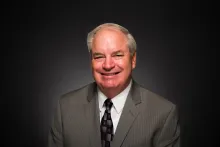
Robin Webber was born in Chicago, Illinois, in 1951, but has lived most of his life in California. He has been a part of the Church of God community since 1963. He attended Ambassador College in Pasadena from 1969-1973. He majored in theology and history.
Mr. Webber's interest remains in the study of history, socio-economics and literature. Over the years, he has offered his services to museums as a docent to share his enthusiasm and passions regarding these areas of expertise.
When time permits, he loves to go mountain biking on nearby ranch land and meet his wife as she hikes toward him.
