

Greg Thomas
This transcript was generated by AI and may contain errors. It is provided to assist those who may not be able to listen to the message.
Well, I want you to imagine you're in a room with 55 other people, and you're going to do something unusual. All of you say, we're going to step outside of the box. We're going to do something, and every other time it's been tried, it failed. And we are all going to commit treason, and we are going to try to start something that could cause all of us to be hung, or could cause our property to be seized, and could fail miserably. Would you want to be part of a group of people who thought that way? Well, we are the recipients of a group of people who had the courage to think that way, because this coming Tuesday is the 241st anniversary of the American Declaration of Independence by the Second Continental Congress meeting at the State House in Philadelphia on July 4, 1776. They established a different philosophy in a new form of governance that would change human civilization forever. Now, how successful were they? Well, a little bit over 200 years later, almost half the nations on earth, for billion people, benefit from the philosophy that they espoused by that document. So why even talk about what the Founding Fathers did? Well, to understand prophecy regarding Israel, you need to appreciate what they did and how what they did changed people and changed the way that people are governed on every continent on earth. And in spite of its imperfections, and there are many, hence you can go back to the sermon I gave a few months ago when the Supreme Court approved a gay marriage, you may recall the sermon that I gave, which was very critical of our government. In spite of its imperfections, which are many, the idea of a republic or a democratic political philosophy has brought the greatest human freedoms ever achieved by mankind. It also happened to produce a financial system that's brought more wealth, more improved material comforts, better healthcare, and greater personal liberties than any other human philosophy that's ever been devised. This political philosophy has benefited peoples of every race, of every religion, of every language who have been fortunate enough to live under it wherever they are on earth. I don't know your full background, but I can tell you this. The day that you were born in the United States or Canada, you won the lottery. And we can have a lot of complaints, but I'll bet that everyone in this room has a lifestyle in which your great-grandparents would have been envious of. You have a lifestyle in which your great-grandparents couldn't have dreamed you would have the blessings and the comfort and the securities that exist because of the type of government that we live in. Here's the greatest compliment I can give to a democracy, the idea of a republic or democratic political institutions. Here's the greatest compliment I can give it. Do you know what the Democratic People's Republic of Korea is?
How many of you think you know what the Democratic People's Republic of Korea is? That's the name for North Korea. The influence and prestige of democracy and its benefits and how it has changed this world is so powerful that even tyrants, dictators, want to imitate it and put it in the name of their countries. It has benefited so many people of the earth that they want to emulate its concept in the very name of their nation. Have you ever heard of the Republic of Cuba? Of course, we know there's not much of a real republic in Cuba. How about the German Democratic Republic? Ooh, that's got both of them in there. The German Democratic Republic. That's the former East Germany. That was controlled by a dictator. Syria today is known as the Syrian Arab Republic. Ask the people who are being gassed by the so-called president who just happened to be the son of the previous dictator how it feels to live in that kind of a republic. How about China? The People's Republic of China. Ask people in Hong Kong if they feel like they're really living in a republic. My point is, of course, is that the greatest compliment you can give anyone is to confiscate, to imitate, to try to pretend that you are what they are. That's how successful this political system that we live under has been. I'd like to spend some time today talking about some of the scriptural or moral lessons we can learn from a few individuals who were present there in 1776, especially George Washington. Before I do, I need to give a few disclaimers. First of all, the Founding Fathers were all carnal and imperfect men. Like all human beings, they had some amazing strengths and they had some weaknesses and personal sins. I am not my intent today to idolize any of the Founding Fathers. It is my intent today to show respect and appreciation for some of the positive qualities they demonstrated that has brought so much stability, personal liberties, and comfort to the peoples of this earth. Remember, the Kingdom of God will not be a republic or a democracy. This happens to be the best form of government humankind has ever developed. Winston Churchill once said that a democracy is the worst form of government ever created except when you compare it to everything else. It is not the Kingdom of God. It's been created by mere men. Men who understood the carnality of human nature. Men who understood that power corrupts and absolute power corrupts absolutely. Who decided because human beings are that way, they would create a form of government that represented the majority of the people and had enough checks and balances to stop crackpots and dictators from taking over the governance of the nation. That's all they were trying to do. They weren't trying to emulate anything in the Bible.
Another disclaimer, many of the founding fathers were believers in God, most in Christ. By the way, Benjamin Franklin did not believe in Jesus Christ. They were all outside of the box in their religious beliefs. Most of them did not like organized religion. The reason we have religious liberty today is because many of them had odd views of God or the validity of the Bible. But we should be thankful they had those views because that's what eventually led to the First Amendment. And here's what it says, Congress shall make no law respecting an establishment of religion. We take that for granted today, but at the time this was written, if you lived in Spain, you were Catholic or else. If you were in England, you were a member of the Church of England or you were scum. Period. Nations had established state religions and you either played the game and played by the rules or you were marginalized or in some cases drawn and quartered. Martyrd. So we read that today and it just seems so natural, but we forget what a concept, what a unique, unbelievable concept is. Congress shall make no law respecting an establishment of religion or prohibiting the free exercise thereof or abridging the freedom of speech or of the press or the right of the people peaceably to assemble and to petition the government for the redress of grievances.
And another disclaimer, the founding fathers did not believe in the following scripture. If you'll turn there with me, Romans chapter 13 and verse 1. They did not believe what Paul said was right. Hope this doesn't shock you.
Romans chapter 13 verses 1 through 5 will read, they did not agree with the Apostle Paul. He said, Let every soul be subject to the governing authorities. Anglican ministers were the first ones to rail against the rebels. The Bible says, God established the king, King George. You are rebelling against God. Paul said that you should be subject to the governing authorities, not rebelling against God's anointed king. The king is there because God appointed the king. To rebel against the king is to rebel against God. That was the theological teaching of the day. Let every soul be subject to the governing authorities, for there is no authority except from God, and the authorities that exist are appointed by God. Therefore, whoever resists the authority resists the ordinance of God, and those who resist will bring judgment on themselves. You guys are toast. Your revolution is going to fail. You're bringing judgment on yourselves for rebelling against God's anointed king.
Verse 3, For rulers are not a terror to good works, but to evil. Do you want to be unafraid of the authority? Do what is good, and you will have praise from the same. For he, speaking of the authority, is God's minister to you for good. But if you do evil, be afraid. For he does not bear the sword in vain, for he is God's minister, an avenger to execute wrath on him who practices evil.
Therefore, you must be subject not only because of wrath, but also because of conscience. Sake. Now, if you would have asked the founding fathers, those who would have bothered to even reply to this scripture, they would have said that in context, this was fine for a congregation, church congregation living in the capital of the most powerful and wicked empire on earth when it was written. But they would have said it doesn't apply, because they would have said that liberty is given from God, not from men.
Your rights don't come from a government. Your basic rights don't come from a king. Your rights and your liberties come from your Creator. And anyone who gets in the way of those rights is not an authority of God. That's how they would have responded to that. One final disclaimer before we talk about the heart of the sermon today.
Many scholars state the founding fathers were deist. And here's a scholarly definition of deism. I thought I would read this to you. This is from Wikipedia. Deism is a philosophical position which posits that a God does not interfere directly in the world. It also rejects revelation as a source of religious knowledge with the conclusion that reason and observation of the natural world are sufficient to determine the existence of a single creator of the universe.
Continuing second paragraph. Deism gained prominence among intellectuals during the Age of Enlightenment, especially in Britain, France, Germany, and the United States. Basically, these had been raised as Christians and believed in one God, but they had become disenchanted with organized religion and orthodox teachings such as the Trinity, Biblical inerrancy, and the supernatural interpretation of events such as miracles. Included in those influenced by its ideas were the leaders of the American and French Revolutions. Oh, that sounds nice. You can just put people in a nice cute little package and call them deist.
You can't do that. You couldn't do that with Protestantism. Some Protestants observe Sunday as their day of worship. Some Protestants, like the Seventh-day Baptist Church, observe Saturday. Some Protestants say there is no day of worship. Some say it's every day of worship. Some speak in tongues. Some don't speak in tongues. Some believe in the Trinity. Some don't believe in the Trinity. I could go on and on. You cannot just label everyone in a cute little packaged bow.
And that certainly exists with the definition that I just read of deism. I'll give you some examples. This is from George Washington himself. It's the writings of Washington pages 242 and 243. This was printed by the U.S. government in 1931 in commemoration of Washington's 200th birthday. Quote, while we are zealously performing the duties of good citizens and soldiers, we certainly ought not to be inattentive to the higher duties of religion.
To the distinguished character of Patriot, it should be our highest glory to add the more distinguished character of Christian. It doesn't quite fit in the nice little neat box of deism, does it? In my office, there's a painting over my credenza. It's called The Prayer at Valley Forge by Arnold Freiberg. It's a painting of Washington kneeling in the forest with his famed horse next to him on his knees with his hands clasped, saying, Oh God, we're in deep trouble here in Valley Forge. People are dropping like flies every day between disease and hunger.
We need your divine providence. We need your intervention. It doesn't quite sound like the deist God who wound up the universe and stepped back and has no influence and doesn't care about what's going on in the world. Here's what Washington wrote during that time. This is also the writings of Washington, page 343. The hand of Providence, capital P, has been so conspicuous in all that he must be worse than an infidel that lacks faith, more than wicked that has not gratitude enough to acknowledge his obligations.
And that's George Washington himself. John Adams wrote this. He wrote this to Thomas Jefferson in June of 1813. Quote, The general principles in which the fathers achieved independence were the general principles of Christianity. I will avow that I then believed and now believe that those general principles of Christianity are as eternal and immutable as the existence and attributes of God. It doesn't quite fit within that box of deism that people would like to put the founding fathers in.
Jefferson, the writings of Thomas Jefferson, page 385, he said, quote, I am a real Christian. That is to say, a disciple of the doctrines of Jesus Christ. End of quote. So again, I just be very careful when you hear people usually in a derogatory way state that the founding fathers were deist as if that's something that's tragic and terrible. What they did all believe was that human reason understands the complexity and splendor of nature. And that human reason can just look at nature and say, yes, there's a God. Nature proves that there's a God and that he exists. That's one thing that they certainly all believed.
And they also believed that God helps those who help themselves. Washington believed the prayer was important as he got down on his knees there at Valley Forge and prayed for divine intervention. But he knew he also had to get off his knees and he had to get on his horse and they had to do the job that they had to do.
And the reason that I kind of give this as a pretext is oftentimes people use statements like this to disparage the founding fathers. Here's one from George Washington, quote, and this is a true statement. He said this, the government of the United States is not in any sense founded on the Christian religion, end of quote. So what did he mean by that?
Well, what he meant is that they knew they were starting his secular government to try to balance the dysfunctions of carnal men who want power, who want to manipulate and control everyone else. They weren't pretending to be creating a government from this book. They weren't trying to create a theocracy or anything that was godlike. They were just trying to create a form of governance that would be a check and balance on individuals so that they could not become dictatorial, tyrannical, autocratic, and control people.
That's all they were trying to do. So with this background and these disclaimers, let's review a few lessons from some of our founding fathers. If you turn to John chapter 3 and verse 26 with me, John chapter 3 and verse 26, we'll see an example of what John the Baptist said here and related to the example of George Washington being willing to give up power not once but twice in his career. John chapter 3 and verse 26.
They came to John and said, He who was with you beyond the Jordan, speaking of Christ, to whom you have testified, behold, he's baptizing, and all are coming to him. You're declining in preeminence. You're not as important as you used to be. Here he came to you. People in droves used to come to you. Baptize me, John. Tell me about this baptism. Baptize me. Teach us of God's ways. They're not doing that anymore. Now, instead of coming to you, they're all going over there. They're seeing that individual. John answered and said, A man can receive nothing unless it has been given to him from heaven. He says it's not about me. That's not what this was ever about. Verse 28, For you yourselves bear me witness that I said, I am not the Christ, but I have been sent before him. Verse 29, He who has the bride is the bridegroom, but the friend of the bridegroom who stands and hears him rejoices greatly because of the bridegroom's voice. John was saying, look, I have great joy because I've been part of this plan. I mentored him. I'm his cousin. We are close. I've had an influence on his ministry, and that brings me great joy. As a mentor, that gives me fulfillment. That excites me, he says. Therefore, this joy of mine is fulfilled. He must increase, but I must decrease. What an example of humility. John isn't saying here that it's all about himself. He had completed his mission, and he recognized that there's a time to step aside for the good of the next generation. He wasn't trying to draw glory to himself. He wasn't trying to hang on forever to some illusion of greatness or something to be grasped. That wasn't in his mind at all. George Washington had a similar persona. He could have been king. There are some letters that were written by parts of the military that told him, become king. Just declare yourself King George, and take over. People will follow you. You're tall, you're good-looking, you're charismatic, you're talented. By the way, the worst picture of him that ever was is the one on the one dollar bill. He's an old man. If you want to know what George Washington really looked like, take a look at a few paintings in his late 30s and early 40s. He was a handsome, charismatic man, well over six foot tall, which was very tall in that age. He was admired by most people. He had a natural charisma and grace. People were impressed. They were attracted to him. He was a brave general, a patient general, who did the best he could with what he had been given during the war. And that wasn't much. We'll talk about that a little bit in the future. Yet, he voluntarily gave up power twice. He could have had it all. He gave it up twice in his career. First, he surrendered military power, as the war concluded. And here's what he said on December 23, 1783. Washington strode to the courthouse at Annapolis, Maryland, and he surrendered his military commission. And here's what he said, quote, Having now finished the work assigned me, I retire from the general theater of action, and bidding an affectionate farewell to this august body, under whose orders I have so long acted, I here offer my commission and take my leave of all employments of public life. End of quote. I'll retranslate that for you in 21st century vernacular. Take this job and shove it.
When King George III of England heard that Washington would resign his commission to a powerless congress, he told a painter who was there with him, Benjamin West, quote, If he does that, he will be the greatest man in the world. Why? Because nobody does that. It's all about me. It's all about how much power I can have, how much control I can have over people. That's what human nature is like. No one could even understand why a man who could have had it all said, my job's done.
Have a great life. It wouldn't quite be that way, but that's what his perspective was. And after independence, when the first form of government that they created failed, they had to create a new form of government. Most people don't realize a new constitution was written in 1789, and it established a federal executive to lead the nation. George Washington was elected the first president of the republic also during that year, and he did something incredibly rare as a human leader. After two terms, he stepped down and he went back to his farm.
He said, they must increase, I must decrease. It's not about power. It's not about control. If I've mentored them the right way, everything will be just fine. I have to let go and let the next generation have their opportunity. Let the next generation take their place in history. How rare is this? Well, even in our 21st century, the egotistical demagogue still refused to step down because it's all about them. When do you think Vladimir Putin will step down in Russia? Probably either when he dies in his bed or he catches a bullet. How about Kim Jong-un of North Korea?
When do you think he's going to step down? Voluntarily. Don't expect him to have a press conference this afternoon and say, he must increase, I must decrease. I don't think you'll see that. How about Robert Mugabe of Zimbabwe? Another dictator who will probably be there for life. Washington said, I'd rather be on my farm than Emperor of the World.
What an amazing individual. Like the ancient Roman aristocrat, Cincinnatus, he remained in command of his army only until the enemy had been defeated, and thereafter he returned as quickly as possible to cultivating his lands instead of seeking or maintaining political power. Let's take a look at another quality. Matthew chapter 20 and verse 25. Matthew chapter 20 and verse 25. Another quality that George Washington had. The same humility that drove him not to seek power, not to be excited about manipulating and controlling other people.
That same humility also drove him to have the attitude of being a servant towards the people that he led. Matthew chapter 20 and verse 25. Jesus said something here that has not yet to this day ever come to pass, to will in the kingdom. Jesus called them to himself and said, you know that the rulers of the Gentiles lord it over them. Boy, that's what it's all about. I'm king, I'm whatever, and I get to control you because of my title or because I control the army.
He says that's what the Gentile mindset is all about. And those who are great among the Gentiles, it means in context, exercise authority over them. It's all about authority. Who's in charge? Who's the boss? Verse 26. Yet it shall not be so among you, but whoever desires to be great among you. This is the perception of Jesus Christ. Let him be your servant. And whoever desires to be first among you, let him be your slave, just as the son of man did not come to be served, but to serve and to give his life as a ransom for many.
In his book, The Five Levels of Leadership, John Maxwell tells a great story about the life of George Washington, and I'll read what he wrote here. One day during the American Revolutionary War, George Washington wrote up on a group of soldiers trying to raise a beam to a high position. The corporal who was overseeing the work kept shouting words of encouragement, but they couldn't manage to do it. After watching their lack of success, Washington asked the corporal why he didn't join in and help. The corporal replied quickly, do you realize that I'm the corporal? Washington very politely replied, I beg your pardon, Mr. Corporal, I did.
Washington dismounted his horse and went to work with the soldiers until the beam was put in place. Wiping the perspiration from his face, he said, if you should need help again, call on Washington, your commander in chief, and I will come.
He says a lot about George Washington, doesn't it? Particularly in contrast to the corporal. We know who George Washington is today. No one knows or cares about who the corporal was.
Washington couldn't get the Continental Congress to provide the funds he needed for the war, so you know what he did? He used his own personal funds, his personal expenses, a faithful copy of General George Washington's handwritten expenses from June of 1775 to June of 1783. He was published by the Treasury Department in 1833. So how much of his own money did he spend over eight years of service? Well, in the currency of that time, he spent a mere $160,074 in $1780. However, you can't look at it that way. Translated, after 220 years of inflation, he gave $4 million for the war. Now, people say, well, he was reimbursed after the war, wasn't he? Well, first of all, odds are they weren't going to win the war. He knew that when he's handing out this money and taking care of his own soldiers because Congress wouldn't, the odds are you're not going to win the war. And the odds are the British could take over your home tomorrow if they wanted to and burn it down to the ground and ruin you. So, it's just not as easy to say, well, he was reimbursed after the war, wasn't he? Well, yes, he was. But he took an enormous risk because he had the attitude of a servant and he cared about people. Another example of this was the Marquis de Lafayette, who served the cause without pay and actually paid an equivalent of more than $200,000 of his own money, never reimbursed, for salaries, uniforms, and other expenses for his staff, his aides, and his junior officers. Starting during the winter of 1777 in Morristown, New Jersey, Washington took a very bold and controversial move to have his soldiers in the Army inoculated against smallpox infection. Now, again, today these diseases barely exist in our culture and we don't think it's a big deal. He wasn't affected by it because he had previously had smallpox. By the way, they believe that the reason that he and Martha never had any children was because the smallpox that he had had years earlier rendered him sterile. That's what they believe today. So he wasn't influenced by the smallpox, but his men were. By some reports, death by smallpox in the ranks dropped from 17% of all deaths more of his men were dying of disease than in battle, from 17% of all deaths to a low of 1% of all reported deaths. A tremendous reduction. Washington wrote, Let your heart feel for the afflictions and distress of everyone and let your hand give in proportion to your purse. He was one who was willing to put his money where his mouth was. The second quality I'd like to talk about regarding George Washington was his personal example of integrity and character, which were even acknowledged and recognized by people who hated him, who despised him. Let's go to Philippians chapter 3 and verse 17, see something Paul said about himself, that George Washington, in a different way, in a secular way, as a politician, mirrored. Philippians chapter 3 and verse 17.
Paul wrote, brethren, join in following my example. Paul knew he was under the microscope. He was an apostle. Everybody was watching what he said, how he said it, how he dressed, what he did. Every comment that came out of his mouth, he was fully aware of that. He said, and note those who so walk as you have us for a pattern.
He says, we're supposed to be examples. We're supposed to be the template so that you can look at us and say, that's how I should act. That's how I should behave. Verse 18, then he says something very sad. He says, He says, for many walk of whom I have told you often and now tell you, even weeping, that they are the enemies of the cross of Christ, whose end is destruction, whose God is their belly, and whose glory is their shame, who set their mind on earthly things.
He says, for many. Not just a few people he had known. He said, for many. Many walk a different path, a different example. Paul knew that he was under a microscope. He knew that to whom much is given, and he had been so blessed by God, to whom much is given, much is required. And in a parallel way, so did George Washington. He knew that everything he did as the first president would become the model for what his successors would do. He was the first one to form a cabinet and have an advisory group of people to help him to make decisions.
He attempted to set the bar high with personal character and integrity because he knew he was setting an example for those who would follow him in the future. How about us, brethren? Are we people of integrity, character in our homes, in front of our children, in front of our spouses? Are we people of character and integrity? Or do we put on one face of church and act differently at home? How about in our workplace?
No matter what people may think about our religious beliefs, aside from that, do they look at us and say, that's a person of honesty. That's a person of character. That's a person of integrity. Is that what people can say about us? Good Washington was a man of character and integrity, even admired by his enemies.
Character is best tested under pressure. And for Washington, the most dramatic testing that he went through as a general was during the Winter at Valley Forge during the Revolutionary War. He was commanding a deeply demoralized army. He had lost all major battles against the British. They had just captured the American capital of Philadelphia. He had retreated 18 miles north of Valley Forge, where he helped his soldiers build log cabins.
And he didn't say there and say, build that log cabin! Now, as we read earlier, he helped his soldiers build log cabins. He was out in the cold, the bitter cold, just like they were, sharing their misery and also their lack of food. The winter of 1777 and 78 was bitterly cold, and Washington was losing about a dozen men every day to either desertion or death.
Most of the death caused by disease that would weaken an individual and then they would die. Here was Congress's answer. Congress advised him to steal food from farmers nearby. That actually exists in writing. See, Congress hasn't changed at all in 200-plus years. The only difference is, is today they just steal your money through taxes instead of just steal food from you. But they advised him to steal food from farmers nearby, and they upset Congress because he refused to do it, believing no nation could survive if it could not earn the respect of its own citizens.
He said, I will not steal food from people who are supporting us in this cause. They had trouble buying food because the value of the money was very little. Later as president, he recognized that America's credit abroad and integrity at home depended on honoring its war debt. The United States racked up quite a war debt during the Revolutionary War. Many patriots wanted the U.S. to re-nig on its war debt. Some like Madison said, I'll only pay back part of it. It's not really that important. But George Washington insisted that Congress pay all of the war debt back.
It was a matter of honor. We borrowed it. We made a promise that we would pay it back. We will pay it back. Again, just another reflection of the kind of honesty and integrity that he had. How much was he respected when he died? He died just a couple of years after he left office. Well, First Council Napoleon Bonaparte, who himself would become a dictator in the future, ordered ten days of mourning throughout the country of France.
This next thing just blows me away. It says, the ships of the British Royal Navy's Channel Fleet lowered their flags to half-mast to honor his passing. His enemy, the people he defeated, were so respectful of his integrity and being a man of honor that even they showed honor at his death. Well, today I'd like to discuss the final quality of George Washington and most of the Founding Fathers, something that they all had. And that was that Washington and the Founding Fathers, the Band of Brothers, were humble enough to realize that when they did something and it didn't work, whether it was a battle or a form of government, that it needed to change.
And they were responsible for changing it and making it better. Washington was pragmatic. He was sincere. He was open-minded. Humility includes the ability to recognize when you've done something wrong and to make an effort to correct it. Humility means if you break it, you fix it. You don't kick the ball down the road to burden another generation. Sounds like a lesson Congress should learn today, doesn't it? If you break it, you fix it. That's what humility tells one. Let's read some scriptures here. Let's go to Proverbs. Read a few Proverbs together. Proverbs 3 and verse 34.
Proverbs 3 and verse 34. It says, Surely he scorns the scornful, but gives grace to the humble. The wise shall inherit glory, but shame shall be the legacy of fools. So God gives grace to the humble. When you're humble, God gives you a break. He says things come out right, even if you've made a mistake. If you repent and you realize you've made a mistake and you make an effort to correct what you've done and correct who you are, God shows you favor. He shows you pardon. He sheds his grace on you. Let's go to chapter 11, verse 2. When pride comes, then comes shame. If you're too proud to admit you're wrong, if you're too proud to admit that you've really messed up, if you're too vain to say, You know what? I broke it. I need to fix it. Well, let someone else worry about it. It's not my problem. I'm old. I don't care anymore. When pride comes, then comes shame. But with the humble is wisdom. The integrity of the upright will guide them, but the perversity of the unfaithful will destroy them. Let's take a look at Proverbs, chapter 12, beginning in verse 15. The way of a fool is right in his own eyes. They have a thousand excuses to justify why they broke it and why they don't need to fix it. The way of the fool is right in his own eyes, but he who he counsel is wise. We won't turn there, but James also says in chapter 4, verse 10, Humble yourselves in the sight of the Lord, and he will lift you up. So let me tell you this story as we conclude in the final part of the sermon today. After independence in 1783, the colonies had a form of government under what was called the Articles of Confederation and Perpetual Union. It was the first treaty, first constitution, some say, of the United States, and it was an absolute disaster. The central government's power was quite limited. The states dominated and controlled everything. The Confederation Congress, which is what they were called, they could make decisions, but they didn't have any way to enforce any of the decisions that they came to. And it was even hard to make decisions, because the implementation of most decisions, including modifications to the Articles, required unanimous approval of all of the 13 state legislatures. Could you imagine expecting the Senate today to rule 100-0 to pass any law? You can't even get 90 senators to agree their sun's going to rise tomorrow morning.
But this was the form of government that they were under. Nothing got done. The Republic was failing. It was a laughing stock. So the very same founders had the courage to say, we broke it, we need to fix it. They had the humility and courage to admit that it was time for the very ones who broke it to fix it. They decided to call a constitutional convention in 1787 to draw up a more effective form of government. Washington agreed to be president of that convention. And yes, there was a lot of debate, and there were days when they thought it was all going to blow apart. Ben Franklin commented on a chair that Washington sat in, and it had engraved in it the sun. And later on, Franklin said, some days I didn't know whether the sun was rising on this republic or setting on this republic. That's how much debate and anger was part of the proceedings to draw up this new constitution. Why did they do this? Because they realized it wasn't about them. It was about the future. Future generations were counting on them, the form of government that worked, a government that was effective. The world was watching this experiment called a republic, and they couldn't let it fail. They were willing to do whatever it took, including the humility of having done something that failed and admit it, and to fix what they broke. How about us, brethren? How many of us are stalled in our lives? Because we've broken something. We've broken a marriage. We've broken a relationship with our children. We've broken a covenant with someone or something, and we refuse to admit it. We refuse to accept the fact that if we broke it, we need to fix it. Are we able to accept that? Are we able to have that level of humility? It's not, oh, it's this person's fault, it's my wife's fault, it's my employer's fault, it's the minister's fault, church's fault, the government's fault. Everyone else's fault. It's an important quality that the Founding Fathers had. As God's people, are we willing to understand that? Washington wrote, 99% of failures come from people who make excuses.
What a very powerful statement he made. I'd like to read you just a few quotes that George Washington had that I thought you might find interesting. Here's what he said, We should not look back unless it is to drive useful lessons from past errors and for the purpose of profiting by dearly bought experience. You know, when we mess up really bad, that's dearly bought experience. We paid for that experience. Look back and learn from it and then move forward, get on with life.
Here's another one, A sensible woman can never be happy with a fool.
Oh, I'm sorry, my wife wrote that one. That's not George Washington. A sensible woman can never be happy with a fool. No, that was actually George Washington first and then BJ Thomas wrote that. The harder the conflict, the greater the triumph. Pretty powerful statement. He said it is better to be alone than in bad company. Pretty wise. If freedom of speech is taken away, then dumb and silent, we may be led like sheep to the slaughter. Very profound and a basic principle of our form of government, free speech. He said human happiness and moral duty are inseparably connected. Here's something to think about as the army of God. Discipline is the soul of an army. It makes small numbers formidable. Procures success to the weak and esteem to all.
He said, be not glad at the misfortune of another, though he may be your enemy.
He said, decision-making like coffee needs a cooling process. Think it through. Take the time. Think it through. He said, I hope I shall possess firmness and virtue enough to maintain what I consider the most enviable of all titles, the character of an honest man. Well, in just a few days, we'll be celebrating the Fourth of July. Two centuries ago, most countries were autocratically ruled by kings, dictators, tyrants. Most of the world was part of a colonial empire. Today, half the countries on earth are democracies. In 2017, about 4 billion people live in governments that allow citizens to express their political preferences, that have restraints on the power of the executive, and a guarantee of civil liberties, including the right to worship, according to your beliefs. Who made this all possible? Fifty-six individuals meeting at the Pennsylvania State House in Philadelphia in July 4, 1776. They made it possible for people who observe a seventh-day Sabbath, or reject a trinity, or observe holy days, or keep the Ten Commandments, or preach the Gospel. They made it possible for them to do that without harassment or interference from a government. This may not last much longer, the way our government is heading. So let's appreciate the blessings that we presently have. It's not the kingdom of God. Founding Fathers were flawed men who struggled with their own imperfections and their own trials. But what they did in that remarkable day of July 4th changed the world and put you and I in a political system that allows us to have incredible freedoms and comfort, material blessings, a sense of security. And for that, we should all be very thankful and very appreciative.
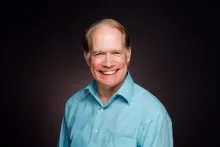
Greg Thomas is the former Pastor of the Cleveland, Ohio congregation. He retired as pastor in January 2025 and still attends there. Ordained in 1981, he has served in the ministry for 44-years. As a certified leadership consultant, Greg is the founder and president of weLEAD, Inc. Chartered in 2001, weLEAD is a 501(3)(c) non-profit organization and a major respected resource for free leadership development information reaching a worldwide audience. Greg also founded Leadership Excellence, Ltd in 2009 offering leadership training and coaching. He has an undergraduate degree from Ambassador College, and a master’s degree in leadership from Bellevue University. Greg has served on various Boards during his career. He is the author of two leadership development books, and is a certified life coach, and business coach.
Greg and his wife, B.J., live in Litchfield, Ohio. They first met in church as teenagers and were married in 1974. They enjoy spending time with family— especially their eight grandchildren.
