

C Mitchell Knapp
This sermon was given at the Wisconsin Dells, Wisconsin 2018 Feast site.
This transcript was generated by AI and may contain errors. It is provided to assist those who may not be able to listen to the message.
One thing I just love about the feast, whether we have a big little or medium-sized choir or band or anything, no matter what, the music is just great. To hear those hymns sung so well by the congregation has just buoyed me up. And the same with the different groups that have done the special music. And I just had never heard that. Did you write that? Mr. Barbusch actually arranges a lot of the music that he plays, that he and the group play. It was just gorgeous, had just wonderful medley, and the way it worked together and harmonized really appreciate that and all the other. It's been great. It's one of the most important things about the feast and one of the most memorable, because the music, but the meaning of it.
And if you think that you're in good company, that's what David remembered. When he recalled going to the temple, he talked about going to the temple, having a sweet fellowship. And of course, he was the one that even invented some of the instruments. So it's just so much a part, and it's just so great to have that. And I appreciate it very much. I know that I'm not alone, and I think we all appreciate each other as a congregation to put out such beautiful music and then the special music that we've had. I hope this feast has just been the best ever for you. At one point, it was cynical.
I grew up, and I thought, best feast ever! Then I got to be a teenager and became somewhat cynical. I said, how can everyone be the best? You know, some are better, some are worse. And physically, then I grew some more. I hung around for some more years, and I realized it can't. They get worse as you get older at a certain point. Physically, the way Solomon thought when he wrote Ecclesiastes and said, nothing's worth it, you know, it's just all his vanity. No, it's not. Your life isn't vanity, nor is mine. It's really important to stay alive. Solomon was just thinking about the physical, and that's what we do naturally. It can be the best ever, and in fact should be, because you're that much farther along and more mature and advanced to have that much more wisdom. And you're adding whatever is given by each festival. You're adding to everything that you already know. And in that sense, it certainly should be, we hope it is, the very best feast ever. I was thinking about this one, of course, and I went over the messages. I prepared a message in July and sent it off to Mr. De La Sandro, and then we met by teleconference discussing, making sure we didn't stomp all over each other on what we were going to say. We had the same sermon twice or something. It looked pretty good, so I kept thinking about it. Then I heard from some of the others what they were speaking about and adjusted mine. I adjusted it some more. I got here and started hearing. I kept adjusting. Just about one time I had to adjust it so much. I said, you know, I give up, guys. We had a meeting the day before the feast. I said, I'm going to plan B because my sermon was wiped out. It was about the fifth day only. But in this case, it was very positive because every single message has touched what I wanted to talk about. So I've been able to say, well, that's taken care of, or add it to. It's just been the best one ever for that. We've had messages on all kinds of topics, a very good variety. The millennium, peace and vision, the family, some really important history, and the meaning of water. We had one on praying during the feast. That was one of my goals. Because it's easy to get tired about the fourth or fifth day and slack off. And that was just what I needed. I knew that. But I needed the extra bump, and I appreciated it. The boost. We heard about a new culture of being ushered in, and our journey toward that.
And I thought about, you know, I said, well, I better summarize everything. No, I shouldn't. You've already heard it, so I won't. But it's just so impressive, all the wide variety of excellent topics about the feast. And I appreciate it very much. The prayers have been excellent. I noticed Mr. Barbus' prayer on the third or fourth day or something. And he thanked God for all the answered prayer. You know, we pray, and sometimes we remember to thank God for the answers of that prayer. But it just sparked the thought that I hadn't thought quite that way. All the answered prayer that God has given to us just to get us here. And then while we were here, there were several prayers that were asked, and a couple of emergency prayers, Mrs. Halseth, for one. There were some others. So, for me, I guess, my selfish point of view, for whatever is worth it, this has been excellent. I thought about the different things. I really appreciated the sermon this morning. Mr. Bradford did what I thought he would do, gave a very well-organized message explaining the meaning, and added some stuff I hadn't heard. So I really appreciated that. Unless everybody's pretty far ahead of me, you probably learned at least a couple of things. It was good. It was just excellent. And then it leaves me nothing to say, except that it's really important what would be the most important thing to say. I'm not sure I can do that, except by God's inspiration, but I do have a subject here. It relates to the whole of the Tabernacles and the Last Great Day, but specifically on one aspect, and that's about getting back here next year. Historically, those who didn't have the enthusiasm to come to the feast have been way more likely than the rest to not return. I'll come back to that as we close. But this has been brought up in two or three contexts, which I appreciated. What is the one thing that will keep us from dropping out or falling away or stumbling? God has said that He would lead us. We can have confidence in the fact that He would be with us and keep us going until the very day of Jesus Christ, His return. We have confidence in the fact that God would be with us. What is the one thing? If you try to think that one over, you'll come with several ways of describing the central core, but I'm going to take the word faith. Jesus warned of those who would be referring to falling away. A lot of the apostles' time was taken up with worrying about people falling away. Paul wrote about it. Peter, James, John, Jude all wrote about that, different aspects.
Christ told us to pray for protection from the devil, from being pulled away by some ploy. We've heard a couple of messages that mention this. Let's start out with Hebrews 11, verse 6. Without faith, you can't please God. It's impossible. If you're going to come to God, you must believe that He is and that He is a rewarder of those who diligently seek Him. If you don't believe that, you've got to wander around and what's the use?
But that's true. He is, and He will reward those who diligently seek Him. It doesn't matter your ability to seek Him or to be diligent or to be smart and insightful and everything you can think of that you aren't, that you wish you were better at.
That's okay, because God can take care of that. But you have to believe that to your tozies. And I think I'll just note, well, of course, Christ asked, you know, when He returns, would He find faith? Would He find faith existent?
And that actually also means the faith. Would He find the faith still existent? Well, there's a resounding answer to that, and that is yes, He will, because He's in charge and not us. He will see us through, like the song says. We'll come back to the definition.
Well, the definition of faith, of course, is in the first verse. And then the definition of Hebrews 11, evidence of things hoped for and the... I better read that. Evidence of things not seen. I should have turned that in the first place, because I always say that since I was a little kid. I got off on the wrong track and said evidence twice.
Faith is the substance of things hoped for and the evidence of things not seen. So there's a definition, and there are other definitions in the Bible, but it's what you have where you know it. You can't see it, but you still know it. Somebody else beside you might not have that faith at all. They don't have that substance. The reason is that God gives you that kind of faith. That evidence and that knowledge and internal proof that you have.
The substance that is proof. If it's not there to be seen, God gives you what's lacking, and He doesn't give it to everybody. He gives it to some people. Come to that in just a minute. And then we have the definition of the work. John 6 29. What is the work of God? The most important aspect of God's work, in a nutshell, is that we believe in Jesus and that He is who He said He is.
John 6 29. That's the work of God. In other words, mainly the work is going on between the ears. The New Covenant has to do with our conscience and our minds, and much less to do with physical action than the old. Certainly actions we take. But we're physical. But the covenant has to do with what goes on between the ears, our mind, and what we know that God has put there. Not just what you improve. What we improve is very important. It's that extra above and beyond element that you have because God put it in there.
And Christ said to Peter, well, you have a special blessing from the Father. You didn't get that from flesh and blood. It was the same thing. It was belief in Christ, understanding who He is and what He said He is, that what He said is true, and so on. Well, I shouldn't say and so on. I don't want to trivialize it at all. But all those things, that was a special blessing from God, from the Father, He said.
And that's the faith that is required for salvation. There are a lot of different levels of faith. We all have our own faith. We have a certain amount of faith that we bring to the table, you know. You trust your dad and mom probably very highly. And you trust your family members, good friends. We trust. We have certain... We have trust in the government. We think that you put a greenback on the table, and it's going to be worth whatever a dollar is worth at that point, you know. But, you know, we trust our institutions, but our faith runs out. When it comes to God, especially spiritual things, we can go so far at a certain point without God's help.
We will compromise, we'll slack off, we'll be scared and fade away, or whatever. We have to have God's help in everything. We just must in order to please God and in order to enter His kingdom. Well, I'd like to comment on faith, a few comments here. With the last great day, and not to...maybe I should summarize. But after following that excellent message, I don't need to explain that. I'm very thankful for it, as I said. But, stepping back, there are two elements, two big elements. One is, last great day shows that everybody is going to be included.
It's one of the main meanings. And that's, as far as I can tell, that is a unique doctrine to the Church of God. That's the one that I don't know of anybody else having, except for the fuzzy general idea, Oh, God's so loving, He'll just have everybody in the end. Well, that is not true.
The doctrine of the last great day tells us what is true. Specifically, what God's excellent plan is. And the second one is included in what? We get some knowledge of that. Now, let's go to John 14, if you would. John 14. And we'll look at chapters 14, 15, and 16 very quickly.
Because Christ made many extraordinary statements and proclamations in His ministry, and quite a few of them were about faith. So in 14, 13, of the Gospel of John, He said, And whatsoever you shall ask in my name, that will I do, that the Father may be glorified in the Son. Whatever you ask, that's an astounding thing. When you think about it, I've read that since I was a kid, and wondered now, just how does this work? Because, you know, you get asked a lot, and surely God's not going to give you everything you asked for.
But there it is. Well, that's both true. We'll come back to that. John 14, verse 14. He just repeats it. The next verse. He doubles down. The next verse. He doubles back on really important things, and says it again. Chapter 15, verse 7.
We have a kind of a slang statement. You got it. Or, consider it done. Your boss says, can you take care of that? It's an emergency. I need it. You say, consider it done. I've done that a few times, and you go and you diligently make sure it does get done, or else your name is mud. And you're possibly employed somewhere else, some other nice place, you know? But this is what Christ said. You got it. Whatever you want. It's there in black and white. So, 15, verse 16 then. A few verses later.
There it is again. Whatever it is, he'll give it to you. And then chapter 16, verse 23. And in that day you shall ask me nothing. Truly, truly I say unto you, he's talking about asking him directly. But then you can go straight to the fourth verse. And then you can go straight to the fourth verse. And then you can go straight to the fourth verse. But then you can go straight to the father. Whatsoever you ask the father in my name, he will give it to you. Here to you you have asked nothing in my name. But ask, and you shall receive that which your joy may be full. Did I read that right? That your joy may be full. That would be glasses. Or else age. We're going with glasses. So we have six direct promises here. A little question for you. Tests. Do you have this kind of faith? Because ultimately this is the kind of faith which is required for salvation. You have to believe that God is, and that He is a rewarder of those who diligently seek Him. So do you have this kind of faith? I'm going to ask for a show of hands. I know this is tricky and scary. How many have this? One. Two, three, four, five, six. I'm going to venture to guess that most of you do have this. Maybe you haven't thought it through that fully. This is the kind of faith which we'll just continue this. See, that God gives to you, and that you have when you need it, despite doubts and fears. You mess up, and you know you sin, and you think that God pulls all the blessings from one mistake, but you go to God and you ask for repentance thinking that. It's not true. It's a mistake. You haven't lost all the character that He has built in you up to then. God is so much more positive about us than we are about ourselves a lot of times. I think the answer is mostly yes. I don't know about you yourself, but you can know about that. It's probably yes. Let's go on here. Luke 17, 4, if you would. We're going to come back to John, analyze a little bit of that. This is another episode he's talking about after they ask again. If this man trespasses, it just hurts you. It does the same dumb thing seven times, and seven times the same day he turns again and says, Oh, I repent. I'm so sorry. I didn't mean to. See, about the second time, most people, after being irritated the first time, aren't in too good a shape. And the third time, that's it. Vesuvius. Why didn't you pay it? What do you mean? You fill in the blanks. We don't last very well on this. Luke 17, verse 5, then. And it's sort of connected. The context is forgiving others. That's important, actually. But it's a kind of truncated conversation. The apostles said unto the Lord, increase our faith. They asked him several different times, of course. We have this one in Luke 17 here. And the Lord said, get ready. Here's the answer. Increase our faith. If you had faith as a grain of mustard seed, you might say unto this sycamite tree, which is a black mulberry, I understand, Be thou plucked up by the root, and be thou planted in the sea. And it should obey you. It wouldn't just splash into the water. It would be planted carefully placed, presumably.
It should obey you. Now, that was a very fine answer.
It has to be as Christ's answer. It's just not to that question. So many times, people would ask him things, and he would answer some other question. He was the boss. He could do that. And he does that in our lives all the time. You pray about something, something else happens, and you know, where's God? And then finally you figure, oh, he was answering after all.
He launched into an example of an employee doing his job. So likewise, when you shall have done all those things which are commandative, you say unto yourselves, we are improbable servants, and we have done that which is our duty to do. We did what we were supposed to, and we got paid, you know, and we were good servants, good employees.
And at this point, they were listening, I'm sure, paying rapt attention and still scratching their heads and saying, but we asked about faith. Okay, so the employee here is a person called to God's church and his work. This calling is a privilege and a duty, both. A wonderful privilege, but a duty, responsibility. So he tells us to have his attitude of zeal and joy as we serve in his work.
But this attitude of enthusiastic zeal in our service to God actually was the answer to their question about increasing faith. Increase our faith. You want more faith? Here's the lesson. Go above and beyond in the work of God. That's how you get more faith. We can go from a couple of different directions.
You want to have more faith and draw closer to God. Perceive what your job in the work is. And you know, a lot of times we tend to go to the physical. The church has got a project going. We're going to pass out magazines at fairs. Great idea! Part of the work! But not the most important part, but part of it. So that's a good idea. How about increasing your prayer time? Or determining that you're going to study the Bible so you know it better.
You'll find somebody that really is knowledgeable and ask, Would you suggest a course of study? What study first? Books I can read. How to go about this? How about determining to improve, say, the basic materials, namely understanding the Word of God, so that you can make decisions based on better knowledge?
How about spiritual things, in other words, in addition to helping with the physical things that we do? Well, the physical things are excellent. The spiritual things are far more excellenter. It's just better. Much more powerful. Not to forget the physical things, certainly. But there are several analogies, pardon me. There are used the analogy of working in God's field, harvesting spiritual fruit, like Ruth and Boaz. That's one of the analogies referred to in the New Testament. Another is that the worker is the fruit, because we're working on our own personal character and growth. And I mentioned already John 6.29. The definition of the work of God, the basic, basic definition.
Christ came to earth, and we start by really believing He is who He said He was, and He has all the power that He said He had. He's the Son of God, and the Captain of our salvation, and our Savior, and our King, and our High Priest, and all those things. Really believe it. That there requires a great deal of study. How much have you ever done a study on the High Priesthood of Christ?
You personally just studied into that. Just one thing. It's all over the place. I've got so many studies I want to make, I'll never get to it before I'm 180 years old. I'm serious. There's just so much. The more you learn in general, the more there is to learn. This is especially true of the living Word of God. So I encourage you to get some counsel and say, Would you help me set up a course of study for this next year?
So I have some guy, I'm not just reading this and reading that, and a sermon comes along, an article. Just suggesting that. Now, the result of serving in God's work, whether you're in the field or whether you are what you're working on, you know, you're the growth product, both in what we do and what we are, the result of serving in God's work is that others are benefited greatly.
And the worker, the called-out one, member of the ecclesia, the firstfruits, a saint, is changed or converted in the process of doing that work. I heard Mr. Armstrong say that so many times over the years, and I didn't disbelieve him, you know. I was a kid, then a teen, and then a young adult, and then, you know, baptized, and I heard him say that. I believed him, but I didn't understand the depth to which that is true, because there are all the physical things that you do.
That's very, very important. Serving each other, serving God by serving others. The service you do to God, internally, in your own character, putting into practice Christ's words, not my will, but thine be done. You have to deny yourself. If you're going to overcome sin, you're going to deny your own will, and that's the process of conversion. But that does convert you. And so much of that is understanding the law, and not just the points of the law, but the principle and spirit, like what's pointed out Ezra said. They explained the law, and they gave the sense of it, and explained the meaning behind it, like we've heard all through the feast. It's not just the one statement. It's the meaning behind it, the background.
That means so much more. It gives you understanding of the sense or the spirit of it. So they were doing that. Ezra did that. A very great prophet. Ezra was. And we do the same today. We have more than just standing up and reading the word in services. We try to give a background, some of the history, some of the meaning, possibly some word meanings, and all that to get to the spirit of the law, the intent, the sense of it. So if you do just what you're required to do, now there have been periods of time, shorter and longer, during these decades where I've slacked off, and I really looked around ever so often and say, Man, I'm coasting. I'm, you know, the 30, the 60, the 100 fold. I might be somewhere around 2 to 10, somewhere in there. And maybe, not even that high. You can float, goof off, slack off. We have a lot of different names for that because there are so many, so many different ways to slack off, I guess, to use that term. But if you just do what you're required to do, you know, you get a mediocre reward. I don't know how God will do that, but you hardly can, you can't really do that. You have to be producing some, anyway, as we read. One minister, one of my training ministers put it this way, and a fritter-er will get a fritter-er's reward. I sat there, and, oh, what does he know about me? I don't know who he knows. Very intimidating fritter-er statement it was. So the result, however, of going above and beyond what Christ talked about is, as a diligent, enthusiastic, devoted servant of God, there's more spiritual growth, more overcoming of sins and shortcomings, a deeper conversion, better relationships, and greater faith. Because that's at the bottom of it, that's your base, you know, the ladder of virtues. To your faith, add virtue, and then add knowledge, and so on. All seven. The first part is about faith.
Okay, now, skipping over the rest of John 15, I originally thought, silly boy that I am, I have time to read that, don't have it. If you go through the first part of John 15 down to verse 13, well, first 12 verses, in other words, it actually lines up several, several statements, several instructions and requirements for us to have this kind of faith, and therefore, receive those kind of answers. So, rather than do that, and look at all the statements, I'll leave that to you, it's in the first 12 verses. This, whatever you ask offered by Christ, seems fanciful, but has it ever happened to you, or just something that sort of surprised you? You asked for it, and there it was. Ever have that experience? Probably more hands. Okay, don't be afraid, I'm not going to make fun of you. I think that there are a lot of people I know, because I know a lot of you. Yes, that's been done many, many times, where God just, you ask for something, bam, there it is, or more likely, not bam, but three or four days later, or months, you realize, oh, He answered it, and I didn't notice it. That's happened, I mean, that happens a lot. Okay, do you have this kind of faith? Well, I believe that you do. It's the kind of faith that's required for salvation, but you need to understand more about it, so that you can know about it. Let's look at the qualifiers in that section, go back to verse 13 of John 14-13.
And whatsoever you shall do, you shall ask in my name, that will I, pardon me, whichever you shall ask my name, that I will do, that the Father may be glorified in the Son. If you're going to ask something and receive the faith that God gives, added to ours so that you know that it's going to happen, relaxed faith, you don't worry about it, then it's going to be something that glorifies the Son, or pardon me, glorifies the Father through the Son. As James says, it has to be according to His will. You can't be praying for your own covetous desire of greedy wanting stuff. It has to be God's will. So that's a qualifier. No, well, should I pray for this? Well, please give me a... or please help me to... Well, is this really going to glorify the Father through Christ? Or is it going to be kind of something that makes me look good? We have to check ourselves because a lot of times we pray that way. And then, chapter 15, verse 7, You shall ask what you will, and it shall be done to you. The first part of the sentence is, if you abide in me and my words abide in you. So there are two qualifiers. They go together, and they're really big. So if you are then close to God, and you're studied up, and there are no barriers, you remove the barriers, then you ask for something that's going to glorify God. That would be His will. If it benefits you, great. If it benefits only somebody else, probably almost never benefit everybody if you do this. Ask for it, and He will give it to you. Verse 16, then, 15-16, You have not chosen me, but I have chosen you and ordained you, that you should go and bring forth fruit, and that your fruit should remain. This is eternal fruit. Service that helps people, that builds character and memories and relationships, that will last forever, something that lasts. That whatsoever you shall ask in the Father, in my name, He may give it to you. That's a huge qualifier. Somebody that's really busy in his or her responsibilities and the work of God, whether it's physical or spiritual things that you're doing, that person is likely to get his prayers answered in this way.
This describes a diligent, focused, converted disciple of the ecclesia, the called-out ones, the church of the firstborn, the church of God. Here's a converted person who is taking it seriously. Maybe you might not be able to tell it from the outside. Maybe they don't have a golden halo that's perceptible on a cloudy day or something. You can't see physical stuff. You can't see spiritual stuff if you're physical. You said that wrong. Exactly. Positively opposite wrong. This is describing somebody that is very close to God, as I say, all prayed up, very busy, very focused on the things of conversion. This kind of faith, which is a gift from God, is linked with—here are some other links I took from other scriptures besides this. The love of God—actually, that's mentioned here. The love of God, so it's the whole attitude of this person, is based on loving God and wanting to share that with others. Receive it from God, give it to others. It's linked, this kind of faith, to obedience, which you already read that here, obedience to God, enthusiasm and glorifying God instead of yourself, the alternative to yourself, and abiding in Christ and Him and you through His words. This means a well-studied and knowledgeable Bible student and being diligently at work in His work, producing spiritual fruit in yourself, but that always benefits others. You're helping them, too. That's the personal internal character training that we're going through, where you just have to say no to yourself, or maybe yes. Get on the ball here. You have to have willpower, and you have to have a good dose of won't power to go with it. Balance. You have to say no and say yes at the right times. To yourself.
Also, forgiveness and having a forgiving attitude towards others is connected with this kind of faith in several places. And here's a big one that is connected with having this kind of faith, although not mentioned specifically in this scripture. And that is serving other people. Diligently serving. This is why we have service at the feast, because it represents our whole life before God. I want to live this feast like I want to live the coming year, and I need your help to do both. So be closer to me. Father, please. And help me to grow and follow you, and all the other things we read. Okay. A person then who was called and close to God, prayed up, all the barriers removed by repentance.
All things being equal, you know, we have moved the barriers, and we're diligently striving, whether you're achieving all that you want, which I'm sure you aren't, our desires to achieve are far ahead of our actions. But this kind of person will be given this kind of faith to ask and know. And when will they be given this kind of... when is needed?
I... a pretender, not so much, you know? God isn't fooled. Here is a saying I heard that I really like. I'll just tell you. God doesn't have to give you faith to give you an answer to prayer. You know, oh, please give me something, or help me do something, and give me the faith to really believe it, so I can get it. We don't usually say that part of it, but... He doesn't have to give you faith so he can do something. He can do something for you any time he wants to, and he does all the time.
For the just and the unjust, they both get rain. People have food all over the world, you know, who know and who don't know the truth of God. But God gives us faith so that we can do something for Him. Think about that. Do some chewing on that one. I have been for about 40 years now. That's a good thing to chew on. What am I asking this prayer for? You know, as you're praying to God, well, I'm asking...
By the way, I should mention this, too. A wise man once told me. Human beings never do something for only one motive. We have concrete minds, you know, all mixed up and all ready to set. We have to fight sin all of our lives. We have mixed motives, and we never have a pure motive.
So I know of people who have said directly, well, I would do it, but I know that I have a selfish motive for wanting to go help, you know, do such and such for another person or a family or something. Or I would like to serve in the church, but I know that I have... There's a selfish streak in my motive, and I'm just not going to do it because I don't want to whatever be hypocrite. I've heard this in several ways. Well, that's real bad thinking. Well, you know, I might sin, and I have a selfish part of my motive, so I just won't do it.
No! Decide if it's right or not. Pray for forgiveness for your bad motives and enhance the good motives, and go serve! That's how to develop the good motives. It's obeying God and following His way of thinking, and then the action that follows, the action follows the vision. Thinking comes first. You've got the vision of it. You carry through. That's the tool that God uses to convert you. It's not that you can go out and convert yourself, but God uses your actions to change your mind for you.
Since, you know, we can't do spiritual things. He can. This has already been stated in the feast, just this feast, just different words. So, you know, maybe that way we'll be good. Christ made several other statements about faith, way beyond the average praying person's expectation. We don't have time to go over them, but just mentioned, you know, at one point, this guy says, well, if you can do anything to help us, please do. His son was in a terrible way, and Christ didn't stop to give him a sermon.
A lot of the things He could have said about that. He just said, if you can believe, all things are possible to him that believes. Well, there's no one to chew on, too. If you can believe, well, you can believe if God gives you that kind of faith. So there's a lot behind that statement.
Another time, Jairus, you know, came, my 12-year-old daughter is sick and about to die, and just as soon as some dumb bunny came up and said, ah, don't bother the master, your daughter is dead. Why did he say that? Some people just want to be the first to break the news. It doesn't matter if it's good or bad. They don't care if they hurt somebody or make them feel horrible. So that's that guy, fortunately.
We don't know his name, so we can't think bad thoughts specifically. But it says, as soon as Jesus heard the word that was spoken, this rotten word, He quickly turned to Jairus and He says, don't be afraid. Just believe. And some people who said, see, just believe, don't obey, no.
You're saying, what'd you like? Don't be discouraged by this guy, this dumb bunny, but he didn't say that. Oaf? You think of several words. Terribly insensitive. At any rate, Christ quickly said, just believe. That's what you're lacking. Keep your faith, don't give it up. Very instructive. And there are so many more. One we couldn't pass up is in Mark 11, verse 22. This, I think, is, well, for me, it's a memory scripture. But I'll start in verse 20.
In the morning, as they passed by, this is when they passed by the fig tree, it was dried up by the roots. The previous night, Christ had cursed the fig tree and said, because you didn't have any fruit, you're going to wither. It was a miracle. It was a picture of what was about to happen of the Jewish nation. They knew it, too, by the way, says in another place. They knew he was talking about them.
And Peter was surprised. Man, do you see that? That thing withered up all the way to the roots overnight. And I would probably say that. Perhaps you would, you know. It was amazing. It was a miracle. So, verse 22, And Jesus answered and said unto them, Here is one of the great statements in the Bible. There are several specific, profound statements that Christ said in the Bible. One of them is, I will return.
I will come back. This one is, Have faith in God. Four little words. Very powerful. Have you ever had some, well, I guess I kind of asked this before, but had an answer to prayer that happened very quickly, surprised you, and you were surprised, and then you felt silly for being doubtful and being surprised that God did it so quick? We had one just the other night, and that was Mrs. Halseth. She tripped on the step and cracked her head. She just cranked right in the middle of her forehead. Dr. Kuku, and she just dropped. Her husband said it was a face plant on concrete.
And because of the angle of her head, he hit her on the top of the head and not on her nose. It would have crushed her nose. Well, that night, we were going over there to, they had invited several people, and so we went over there, and no, that wasn't at their house. I get my knives mixed up. I went over there, wherever there is, somebody's house, walked in. There were a bunch of Sioux Falls people sitting around talking, and there was Rosetta talking like normal. I expressed surprise. And they expressed surprise. It's not necessarily a lack of faith. It doesn't happen that often that God does something so dramatic.
But, you know, it is surprising sometimes. God just reacts immediately. Sometimes He does that, I think, to surprise us. But, verse 23, for this time, He used the sycamind tree. This time, it's the mountain. If you have faith, you throw this mountain into the sea. Now, He says, I'll just read the whole thing, that whosoever shall say into this mountain, be thou removed, and be thou cast into the sea. I have this picture from when I was a kid, reading this scripture, having it described, because there's this hill or mountain over there, and I say it, because remember, it's a daydream, so, no revision.
And this whole mountain is pulled up and flies through the air several miles, I never thought of how long, and splashes into the sea. I lived in L.A., so it was the Pacific, probably. And I thought about that and didn't think about the rest of it so much. But it says, what things whosoever you desire, whatever you desire. Verse 24, When you pray, believe that you receive them, and you shall have them.
So you have to filter in there. This isn't something for some selfish thing. I may or may not benefit. That doesn't matter. It's going to be good for God's work. It's going to be good for so-and-so who is needy, might or might not be in the church. It will help. It will be good. And you go through everything. And you're used to this because you're thinking about that, about your own thoughts all the time, trying to bring every thought into captivity. And that one bowls me over. Call this comment, you know, every single thought.
It seemed impossible. And now it seems just kind of impossible, I guess. That's a big requirement. But that's what we're required to do, to focus so much on God's things that it crowds out. You can't just not think on something, because you're thinking about it. You've got to think about other things.
So much be so devoted and dedicated to God, and His work obeying Him, serving your family and others, and all the opportunities we have, that it crowds out those other things, and they will go away. God will help you to forget and overcome the selfishness and the vanity, jealousy, lust, greed, selfishness of all stripes, and so on. All that we have, the downward pulls we have. So this is connected with the forgiving attitude here. Even with Martha, she was mentioned earlier. She says, it's too late. You know, it can't be healed now. It's been four days. He's stinking. He stinks. She was a realist, Martha. And Christ said to her, Didn't I tell you that if you had faith, you would see the glory of God?
Interesting. He had told them. He's told us. If we have faith, we will see the glory of God. She saw a little bit of it in that resurrection, and we'll see the glory of God in the resurrection. So how can we believe this? How can you get God to give you faith? You know, the way of getting, the way of giving, kind of interconnect there a little bit. First of all, you must know Him. We've already gone over this. I don't have to explain it that much. Talk with Him all the time, like friends and family do.
There will be different attitudes, different situations, but you're always talking to God about them, like David did. Sometimes David started a psalm, and he's in a rotten attitude clearly, and says it. Well, I was all upset because of these evil guys, and they're getting the good stuff, and I'm trying to obey, and I'm struggling along here, and he's in a rotten attitude, just self-centered and so on. But you go, there are actually four steps in that psalm 73, and by the fourth step, God has helped him to even out and have a righteous, good attitude.
So that's family, as I say, talk to each other all the time. Now, sometimes you can get a physical thing, and we're usually, in some ways anyway, we're usually surprised about the physical things. One time, I needed free transportation to California and back from Illinois, because I had just been financially impoverished by a divorce, in this case, and I needed to take my grandkids to see their grandparents, and I needed to see my parents, too. And I prayed about that, had no idea how I get transportation, so I found a drive-through. It just popped out of nowhere, it wasn't available, and then it was, and it was offered to me.
So I had free transportation out there. So then I commenced for two weeks to pray that God would provide a way to get back home, you know, translate me back to Illinois or something. And lo and behold, a station wagon drive-through came at the right day, I was down to the last day. Strangely about this, I didn't worry. I knew it was coming along, because I was great! Spiritual powerhouse! And I had all that faith, no, badly wrong. That was one of the low times in my life I was struggling. It's because God gave me that faith.
It was a good thing to do. It was part of his work. I was helping my children to kind of recuperate from their tragedy. And everything else. It was important that I go, part of serving God. And it's not that I sat there, I prayed, I sat there, I gritted my teeth, and I worked up faith. It was just there. You know, if you have faith, you don't have to explain it, or tell it, or shout about it, or convince yourself.
It's just that's the way it is. I'd ask. It was important. I knew it was. And God gave that to me. So I use that as an example. It's a physical example. Sometimes it's easier to understand the physical. But that's happened to me.
I'm sure it's happened to you. So don't undercut yourself. Don't underrate yourself. You do have that faith. When you're close to God, when you need it, the only thing is, you know, if you wander away, it's like cutting your lifeline. Don't do that! Don't wander away. Whatever you ask for, it's needed. It's a part of God's work. It's good. You got it. That's what he's talking about. You don't give your 11-year-old a submachine gun because he just really likes him and wants one. You know, if he wants a hunting rifle, you wait until the right age. You might say, sure, you can have one when he's six.
It's like the guy that had a dream and he found himself talking to God, surprisingly. And he said, well, you know, is it true, Father, that, you know, a thousand years is like a day to you and days like a thousand years? Yes, my son. That's true. He said, well, you know, is a million dollars like one dollar and a dollar like, you know, to you? He said, yes, my son. That's also true. He said, well, Father, can I have a million dollars? And the Father says, yes, my son, of course. As a matter of fact, make it a hundred million because I've got a lot more than that for you. He said, really?
Yes, you can have it. Here, just a second. I know, old, corny. But, you know, sometimes it helps. Okay, one more thing here. There's a principle called stepping out on faith. A lot of people wait for the faith to come along before they take action. Let's just give one example. I hope it explains things. A person has a challenge with their job. They're going to be fired if they take off for the feast.
And it would be a desperate situation if you lost the job just now. It's a real life example. I know several. You probably do, too. But this one man had a job. He loved it. He was coming up on the job, just starting to get in the higher pay range, and some leadership responsibilities. He had to go to the feast, and he told, in this case, it was the fire chief.
He was a fireman. And the chief said, you can't do that. A week and a half in the middle again right now? No. But I have to. I believe this, and I must go. Back and forth three or four times, they said, okay, you go. You don't have a job. You decide. See you later. So he went. Got his family together. He went to the feast. He came back.
Didn't know if he had a job or not. He'd been praying about it, of course, and several of the brethren had. So he walks in on the day that he returned to his job, and looks around the chief, and his office goes around the corner, and stands in front of the desk. Hey, Lynn. How are you doing? He says, well, do I have a job?
She says, well, what are you talking about? Yeah, you have a job. And he had said the opposite vehemently before. God just changed his mind. That can happen. But I know of several cases where they didn't have a job. My dad was one of them. He lost several jobs for the Sabbath. It was the kind of thing where it was easy to find a job with another contractor and so on. Not quite so dramatic, but quite dramatic if you're just struggling along. That was the early years. I know one man who came back, and it was his only job, and the answer was no. And he thought, oh, we're hurting, you know. And he went around, and he hunted, and the week went by, two weeks went by, and no job. And just when he was saying, God help, I can't feed my family, we didn't have a welfare, the kind of welfare we have now, we didn't have that. He was given another job. It was hard to make the transition, but when he got set up, he was making way more money, but that wasn't the main thing. The main thing was a way better job. God wanted to give him a better job, and he gave him a test on the way to the better job. Who do you put first? You put God first. It didn't look like it at first, it didn't look like it was working, but then it did. So the idea is that when we have the knowledge of what we're supposed to do, and then we have to decide what we're supposed to do, and the principle has been called stepping out on faith.
You come up to that point, tremulous point, where you're worried, what's going to happen? Bad choice, good choice, but it's scary. Stepping out on faith is when you do the right thing, because you believe God, and you're going to do the right thing regardless. Like the three children of Israel, the fire furnace story, those basic stories are really important. They continue to work. Okay, one more thing as far as this overcoming and growing and all of this. The great rewards we have, the enormity of our rewards, which have been mentioned several times, sound really good to the carnal mind. We're going to have power and light and glory. You never get sleepy and have perfect memory, and power and money and light and glory and other stuff, and money and power. Human nature comes, you know, and status. Everybody will know you. They will know the first fruits. This is very appealing to the carnal mind, and so it's tempting to, and I've actually heard sermons like this, to emphasize those things and kind of neglect the spiritual. For example, and by the way, the man that used this wasn't emphasizing the physical or spiritual, you might remember, but he said, to be in God's kingdom in the first fruits is like to be in a golf ball on top of the great pyramid.
How many million golf balls could you use? There's a huge, huge pile of rocks over there. And he said, that's the opportunity. We're going to be over the elite of the world. That's what's promised. So there was a temptation by some to say, man, I want to get all that stuff, because I like power and status and wealth. That's for me. And we do have to fight those things. Interesting. It's ironic. You have to work on your human nature, that is greed and lust and covetousness for stuff, and the desire, vanity of power and status, etc. All those things. We have to work on that through serving others, to putting others' interests ahead of our own, considering others more worthy than ourselves. If you get to know yourself well enough, you probably will anyway. God will help you to see where you're lacking. And when you finally reach the point where you don't care about all that stuff, like Paul says, I don't care about my physical, even my life. I can be content with a lot and content with a little. I don't care. He's through Acts 20-17 and Philippians 3, you know.
This doesn't matter to me. I just want to be like Christ and have fellowship in His suffering and fellowship in His death. This is 3, about, verse 10 of Philippians 3. And die like Christ died, or die with Christ, not on the cross, but faithful to the last second, the last heartbeat.
If by any means I may attain to the resurrection, when all the physical stuff doesn't matter anymore, the feasts may have a lot of physical stuff, more than usual, when that doesn't matter, it is so far secondary to the spiritual, then God says, okay, you're ready. You can have wealth and power and status and glory and light, and everybody in the world will know you, and they'll point you out.
See, that one was in the first fruits. They were in the church and the church age, or however they'll describe it. They will know you, and they will know that they'll understand, you weren't so great, but you are great, because God has made it so. I wanted to spend a certain amount of time on the enormity of the promises that we have, and I don't have time to do that, because I don't have time. We've already heard about some of those things. When you think about all the astounding things that we have promised to us, and because of time, I just won't do that, but just refer to it.
Those who are busy with full effort, purifying their souls, 1 John 3-3, and Peter mentioned the same thing. We're busy purifying ourselves. That means busy doing the work of God or the conversion of our own minds. Those people will have all those fantastic things, and we'll be talked about by the whole world who will know who we are, with our new names and all those fabulous things that we've heard of. So I just refer to those things. I was thinking of what scripture I've heard several read for the blessing. At times I've read the Aaronic blessing, wonderful blessing, teeny tiny little old covenant blessing. It doesn't even include anything about eternal life. The blessings that are given at the end of Romans and Ephesians 1 and 3, the prayers Paul gave for the congregation in Ephesus. And at the end of several of the books, there are the doxology and the collagions. Here's one that I like best, or at least I like right now.
To end the feast with. So we have the reward promise to the first fruits who embrace God in His way, to the exclusion of everything else. Everything else is put secondary. And this gives us motivation to work harder this next year on our conversion. That's what the feast is for. To re-energize us spiritually and raise our spiritual life up to a higher level. The feast is an intense spiritual school, a celebration service, and so on. It's a lot of work for a tabern each year. It's designed to give us a spiritual boost. We might emerge physically tired, but changed. That's the important thing. Our attitude is boosted, full of determination to make spiritual progress. Every year I have this, and every year I don't reach what I want. But it's like the man said, aim high and miss is better than aiming low and hitting. Progress as much as you can. We've had a taste of the millennium. We've seen the view of the future. I like these two statements. Get the big picture of God's plan and your part in it. And then keep that vision burning brightly. That'll cause action. So we have end of the feast blessings. This I like the best today. This is Hebrews, chapter 13. Paul is ending the last...not the last thing he read, ending this major book in the Bible with really a desire for his brethren, his same nation, a desire for the best for them, and those called into the church, in that church, the Hebrews, the Jews. Verse 20, Hebrews 13, Now the God of peace that brought again from the dead our Lord Jesus, that great shepherd of the sheep, through the blood of the everlasting covenant, make you perfect in every good work to do his will, working in you that which is well pleasing in his sight, through Jesus Christ, to whom be glory forever and ever. Amen. Sounds like a pretty good way to end the feast. I've never found the perfect way. This has been a fabulous time. It has been a spiritual boost and a blessing. We've had excellent messages, and the fellowship has been wonderful on the music of all the music, congregational and special. It's truly been blessed. I will say like David, you know, oh, we had wonderful fellowship in the temple when we went to the feast and get a little choked up sometimes when I think about it. Thank you, brother. Thank God for answering all those prayers, all of our prayers, and thanks to God for such a wonderful institution as the Feast of Tabernacle, all the holy days ending in the last great day. Thanks for all the knowledge we've grown in. Just thanks for everything to our Father in Heaven. Thank you, too, brethren. I appreciate this so much, personally. I know you do. And God's richest blessing on you this coming year. Amen!
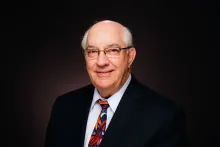
Mitchell Knapp is a graduate of Ambassador College with a BA in Theology. He has served congregations in California and several Midwestern states over the last 50 years and currently serves as the pastor of churches in Omaha, Nebraska, and Des Moines, Iowa. He and his wife, Linda, reside in Omaha, Nebraska.
