
John Elliott
This transcript was generated by AI and may contain errors. It is provided to assist those who may not be able to listen to the message.
A professor came up to the entrance of the Grand Hotel with a huge convention center, and he stepped out of the cab and walked directly into the hotel lobby, the grand entrance, and up to the desk, and he said, I'm Professor so-and-so, and I'm here to register and sign in for the convention and for my hotel room. And the person said, may I see some I.D.?
Well, as a matter of fact, my briefcase got left in the cab and it drove off, and I don't have my I.D. But my wife should be here, and she was going to check in in advance, so she's probably here. And the person said, well, yes, your wife is here, and she's already checked in. And he said, well, just give me a room key then, and we're good to go.
The man behind the desk said, well, the problem is, sir, the professor that you're pretending to be also checked in with her, and they are in the room together. He was flabbergasted. He was shocked. He pointed at a big poster of the convention and the keynote speaker with his name and said, that is who I am.
I have the keynote speech written down and memorized. I have my I.D. I have my passport in this foreign country. It's just in the taxi cab. Let me in the hotel. The man behind the desk said, sir, would you like me to call the police? And he said, absolutely, get the police here and let's get this settled out. You know, you know who you are, and I know who I am. There should be no question about who we are, right? The question today is, are you who you think you are?
And am I who I think I am? You know, you might think, well, this is a funny little question. Maybe this is a tangent. But actually, this is sort of the heart and core of many of Jesus' teachings. Many of the warnings and the parables that he gave address the concept of you and I actually being who we think we are. Who we portend to be, if not pretend to be. You know, the Jews in Babylon, if you go back to that period of time, about 600 B.C., they were Jews.
They were the Jews of God. They were the people who had lived in Israel, who had the Temple. They worship God. These are God's people. You step back a little bit before that, you found the whole house of Israel, the northern kingdom, and the Jewish people. These under David and Solomon. This was God's people. They had an identity associated with God. But you know, sometimes people aren't exactly who they think they are. And God let the ten northern tribes be sold off into slavery, into permanent separation from that land, into the hands of the Assyrian kingdom.
But the Jews, they were the ones that were faithful. They were the ones remaining until God took Ezekiel in a vision to the Temple and said, look at what's going on here. The women are baking cakes to the Queen Mother of Heaven. And look, the men have their backs to the Temple, and they're watching the sun rise, and they're worshipping the sun. And he had them carted off to Babylon. Now, we pick up the story years later. They had learned their lesson. And the Jews then said, all right, we are the people of God, and we are not going to break the law anymore.
So there in Babylon, and I'll just sort of loosely paraphrase history, they developed a system. A system of worship that became synagogues and rabbis. A system of belief that surrounded and enshrouded God's law with layers of protection. If God said, don't do that, we'll back up about five steps, maybe ten steps, and we won't even do the five or ten steps that we put in front of that. And so we will not break the law of God. So these were really, really God's people. They devised reminders and put things on their forehead for the man, and clothing, and various things to remind them not to break God's law.
You came down at the time of Jesus Christ, and you saw the Pharisees with all their elaborate trappings and reminders, and they really felt that they were the people of God. They had these oral rules and interpretations that were referred to as the Mishnah, and later written down into the Torah. Let's go to Haggai, the third to last book of the Old Testament. Haggai 1 and 2.
And notice something about this people of God. A remnant of them had been sent from Cyrus back to rebuild the temple. And as we understand it, Cyrus and Darius the Mede believed there were many gods, big gods, little gods, regional gods, local gods, and they wanted all the gods in their kingdom to be happy. There were only curses going on in the kingdom. So wherever the gods were, people were supposed to worship them. Well, they learned that there was this previous conquering under Nebuchadnezzar that trashed the temple of a god, and left it without anybody worshipping that god and serving at the temple.
So the theory is then that this remnant went back to get that temple rebuilt and get some worshipping going. So there was no disruption throughout the kingdom. But we picked this up in Haggai chapter 1 and verse 2. Thus speaks the Lord of hosts saying, this people says, this people says, these ones who thought they were God's people are not referred to by God as his people. What a surprise! What a shock it must have been to those who had developed this intricate system, those who were the faithful, those who had actually returned to Jerusalem to be called of this people by God.
The reality was, they were not who they thought they were. Not at all who they thought they were. He says, this people says, God, the Lord of hosts. The question for you and me is, how can I, and I'm sharing this message with you today because this is what I want to share, this is what I want to learn myself, this is what I pray about, this is what I scan the horizon for mentally and see if I am who I think I am, am I who God sees me am. Like David prayed in Psalm 51 to, you know, God, open me up, let me see who I really am.
Well, when we do that, we can learn our true identity if we are brave enough to do that and see how God sees us. We might also ask the question, how could you and I be convinced of a false identity? As we just saw, the Jews in Babylon, who had returned from Babylon, were convinced of something that wasn't really even accurate. Let's examine some passages of Scripture today to find out exactly who I am.
The title of the sermon is, Your Identity, Real or Fictitious? Over time with the Jews, tradition trumped law. Those circles around the law became the thing that was the most important. And instead of doing what God wanted and the will of God, they were doing their man-made traditions.
Remember, God said many times, Be careful to observe all things that I have commanded you. They became careful to do all things that they had set up. We come all the way down to today. There are various forms of Judaism today, including Reform Judaism. We have friends and acquaintances who are Reform Jews.
You come down and they feel as well that there is a certain physical lineage identity with being Jew and an identity with God. There are scrolls of the holy Scriptures that are read, each Sabbath. And yet, as part of that, they work on the Sabbath, if not most of them.
They will meet often on Friday night so that they have Saturdays free to carry on normal business. And they'll go about business in the way that society goes about business, in ways that the very law that they're reading warns not to. Now, I'm not here to pick on the Jews at all, but the Bible gives us that example, and Jesus points that out.
And we can see even in our modern day a certain hypocrisy of those who say they are gods and are convinced in their mind that there is something special there with God. And yet God sees them quite differently. What about the Church of Jesus Christ? We can very easily do something similar. The Church of Jesus Christ, we're called into the Church. We learn the truth. We're baptized. We repent.
We keep what God commands us. And yet down through time, since I've been in the Church since 1951, down through time, most people who have ever been part of God's Church work on the Sabbath, keep Christmas, Easter, Sunday, the things of this world, and feel very close to God and feel like they're God's people.
How is it that you and I can come to a place that is so different in reality than it is in the minds that we have? I want to look at that today.
In chapter 2 of Haggai, verse 3, it says, Who is left among you who saw this temple in its former glory? Just a few days ago, I was at a funeral, and at that funeral where members of the Church that I grew up in, members of the Church who had aspired to leading positions, lofty positions, who today many of those individuals are observing Halloween, and eating whatever crawls and creeps on the earth, and not necessarily even religious in the sense of keeping any day holy, and mixing in with this world, and yet feeling very religious and talking about Jesus, and feeling they have a very special relationship with that.
It's kind of like the temple. They came into this temple, and it was all burnt down and ruined and destroyed, and the question here is asked. Essentially, God wants to know, who is left among you who saw this temple in its former glory? Our Church once had 150,000 members, an annual income of $250 million in that day. Somewhere around half a billion or more is actually almost two-thirds of a billion dollars in our today's income was floating around the Church then.
We had a big presence in the media. At one time there were three main television networks, and even radio networks in this country, and we were found on them. Nighttime on the radio, daytime on television, we were really making an impact. Today we have about 12,000 members in the United Church of God, in other words, 8%. Very small. With a very, very, about a 4% if you compare the dollar income of the Church that day versus what we have today to work with, it's about 4%. That's a challenge, isn't it? We could look at our Church and say, well, this is kind of small.
He asked the question, which of you remember the temple in its former glory, and how do you see it now? In comparison with it, is it not in your eyes as nothing? Sometimes we might, from the human perspective, say, wow, you know, we're just nothing. Not realizing from God's perspective things are very different, and that we need to be pursuing something with zeal, with truth, and with the expectations that he has.
Let's turn back to 1 Corinthians 3 and verse 16. 1 Corinthians 3, verses 16 and 17. Do you not know that you are the temple of God, and that the Spirit of God dwells in you? You might think, well, that temple of Solomon, oh, that was just radiant and wonderful and huge. Well, there was still a temple there. You and I, as individuals, are told we are the temple of God, and we collectively form the body of Christ, a building that is being built without hands, a building, an edifice that is built up, as Ephesians 4, 16 talks about, by the part which everyone does its share in agape love, the mindset of God.
This is what God is doing, and it's very important to him. It's not about numbers. It's about the temple. If anyone defiles the temple of God, God will destroy him, for the temple of God is holy, which temple you are. So the question is, am I the temple, or a part of the temple, or one of the temples, depending on how you look at this analogy, or am I not? Am I something God is going to destroy? It's not the size. It's the preciousness of what God is doing.
And just as they were supposed to build up the temple, you and I are supposed to be building up that temple and not letting it be destroyed, or God will have to destroy it, if we are focused on something else. In Mark 7, verses 6-9, Jesus tells us something very important. He gives us an example here about reality from his perspective. Mark 7, verse 6, He answered and said to these Jews, Well, did Isaiah prophesy of you hypocrites, as it is written, This people honors me with their lips, but their heart is far from me. How many in the United Church of God can this be said about? We honor God with their lips, but their heart is far from me.
And yet we feel like we're in God's church. We're among the brethren. We're doing the work. We feel like we're on board. We tell ourselves, this is my identity, this is who I am, I'm in the body. In vain do they worship me, teaching as doctrines the commandments of men. For laying aside the commandments of God, you hold the traditions of men.
We can come up with our own little ways of worshiping God. Well, I'll take the Sabbath off and I won't go to work. And so I won't love God, I won't love my fellow man, I won't really do anything on the Sabbath to keep it holy. But just because I'm not at work means I'm good to go. Or I won't eat pork, or I understand this, or I think I have that prophecy, or I can do this better, therefore I'm God and I are so close. We're not like these other people. How many times do you and I come up with that type of an idea?
Or I've been asked to serve or do something, therefore that's almost a guarantee. I've got some kind of a badge, I can just look at that. Well, I was asked to do this, or I've given this position, therefore I know my identity is true. See? That proves it. Does it? Did those who went to rebuild the temple, did that prove they were the people of God?
Did these individuals in Jesus' time, did that prove they were the people of God? What about the Christians? What about the bride of Christ? What about the ten virgins? Just because they were all devoted and looking forward to the bridegroom coming, were they all genuinely virgins or virginists or whatever you want to say? There was something there, wasn't there, that wasn't reality, but they didn't see it. You and I have the opportunity and the time to come to see reality, whatever that is, and to do something about it. You know, none of us are sinless.
It says in 1 John, I think, verses 7 and 8, that if you say you have no sin, you know, you've got a real problem. But if you confess your sin, he is faithful to cleanse you of all sin and unrighteousness and remove that. So that's where we want to be.
We want to be moving forward and growing up into Christ and becoming Christ-like. Let's go back for a moment to Haggai. We'll go to chapter 2 and verse 5. Haggai 2 and verse 5. He says, and so he says, let's read it again.
He is the one driving this.
And those faithful individuals need to be you and me. And the only way we can be there is for us to be the genuine article now. And now we have the time. Now we have the time to call upon God, to ask Him to show us who we really are. This is all about millennial fulfillment. Look in verse 9.
This place I will give peace as the Lord of hosts. Yes, it's going to be peace for a thousand years on earth as Christ and the firstfruits work together. So the focus here is future, in-time prophecy, just ahead. We have to be ready for this. We have to participate in this. But it's going to be easy for some to be caught. Caught, not just unawares, but unawares of who they really are. We need to be focused on the temple, focused on the body, focused on the work that God has given us to do. Not just focused on having a nice life and focused on ourself. You know, we tend as humans to be focused on our physical ambitions. God made us physical, He placed us in a physical world. It's good to have work, it's good to have kids, it's good to have various endeavors, it's good to see the creation. But we're not here for that. We're here partially to do that, and that helps us be able to do what we're here for. We're here to build holy, righteous character. We're here to develop the mindset of the family that we are linked to. God went to all this complex effort to put a miracle between our two ears that lets us think. The Spirit in man. And without it, we'd just be crawling around out there in the grass like Nebuchadnezzar. So that's a miracle. We've got to give God all the credit for the fact we can even think, let alone be able to do physical things. But then He gave us His Holy Spirit, and that makes us His sons and daughters. That's what the Bible tells us. That makes us family, and the family has work to do, and that work is to prepare to be part of the divine family at the return of Jesus Christ. So Hegia chapter 1 and verse 6 tells us to consider our ways. Verse 5. You have sown much and bring in little. If you look over on the physical side, how much do we really accomplish? I was driving with the family, following the shoemakers here today, and through the beautiful valleys meandering along the river, along the railroad tracks, through the forests and the woods.
The route was sort of studded with homes along the way. Most of the homes had been built some time ago. Some time ago, when there were young, energetic people who came into those valleys, and they cleared the timber, and they forged a house, and they built that house.
Those houses today are looking old. Some of them have been abandoned. Many of them just have a lot of what they call in Alaska, yard cars parked out there, permanently. A lot of those dwellings are deteriorating, and some people are just sitting out there on chairs.
It's amazing how many people just were sitting outside, staring at cars going by in the road. You think about what we do that says here, consider your ways. You have so much, and yet bring in little. In the end, didn't see much along the way that had a big profit, let's say, for all the labor expended. Of course, you can't see what happened there in the families that came, but just looking at the physical dwellings, there's a lot of effort that's gone in to something today that doesn't have much to show for it. You eat, but do not have enough. You drink, but you're not filled with drink. You clothe yourselves, but no one is warm. And he who earns wages earns wages to put into a bag with holes. That's part of being a human. In Africa, they tend to build over there with natural products, like they'll build a house with wooden poles and mud and sticks between, and then the mud and the manure makes it really hard, and then the poles that form the ceiling, and then some type of a roof that is made out of grass or some type of thatch. And over time, this decays and goes back into the earth, and there's no sign of it whatsoever. Nothing.
And it's interesting, because that's what our human experience is here. You build things really out of dust, and you are dust, and there's nothing long-lasting. So we should be careful by putting a lot of effort into bags with holes in them. You know how the U.S. dollar, for instance, has over time lost 95% of its value. We're down to the last 5% of the value of the dollar. We're still putting dollars into bags, and inflation is just running out. People go and put things into 401ks only to find, well, the bag's getting more and more empty. And they maybe go to the store and find, wow, the money I had doesn't go as far.
These things become the challenge of the physical realm, and we need to understand we're not here for that reason. We have to be in the world and do those things, but that's not our focus. If we're not careful, though, as he says here, we can put those things first, but not fulfill the purpose for which you and I have been called. We can be doing our purpose, but not even really getting around to God's purpose. Rather, earning things to put in a bag of holes. We compare that to what Jesus said in Luke 12.33. He says, Provide yourselves money bags which do not grow old, a treasure in the heavens that does not fail, where no thief approaches, nor moth destroys.
So in other words, if we're doing those things that God put us here, and that's our priority, we're seeking first the kingdom of God and His righteousness, and those other things are added and go away as they will, then we're actually the genuine individuals that are sacrificing our lives. We're letting God be the one with the prestige. We are glorifying God and giving Him credit for everything in our life, and we are trying as well to love and serve Him and our fellow man. And that can be eternal. That just goes on and on. We will serve God and our fellow man as spirit beings for all eternity. That's what we need to be focused on. It's odd, though, isn't it? We dive into society's economics.
We dive into the routine of our day. We feel useless bags of physical things. And one day, it says in Ezekiel 7 verse 19, people will throw their gold and silver in the streets.
So if we're pursuing those things which are one day going to be thrown into the streets through a society that will abandon them, there's no future in that. But if we pursue God and His righteousness, it says in Haggai 2 verse 8, the silver is mine and the gold is mine, says the Lord of Hosts. If we're pursuing God and godliness, guess what? He's got the silver and the gold. And if He wants you to have some of it now in the physical life, He's the one who has it. And that can happen. He can bless you physically if you're not preoccupied with the physical. He can actually give you physical blessings, which are very temporary.
We don't want to be filling the wrong bags with the wrong stuff. I want to read to you from the Phillips translation, Galatians chapter 6 verses 7 through 8.
Galatians chapter 6 verses 7 through 8.
This is a paraphrase, but just listen to how it reads.
Don't be under any illusion. You cannot make a fool of God. A man's harvest in life will depend entirely on what he sows. If he sows for his own lower nature, his harvest will be the decay and death of his own nature. But if he sows for the spirit, he will reap the harvest of everlasting life through that spirit.
So what is your identity? Who are you really? Who am I really? Am I really a minister of Jesus Christ? Am I really loving the brethren? Am I really putting God first? Am I really developing into a child of God? Or am I warming a seat? Am I interested in how well I'm living now and what I'm doing now? I don't really have time for too much time for God or for the brethren. I've got other things to do. I've got to put those first and get those done, so then I'll have some time for God.
Are we, in other words, Sabbath Christians, or are we also weekday Christians? Some of us, we put on our clothes and we come to church and we get all religious. We feel religious. We talk religious. We read religious. We study religious. We're inspired by the sermons. We sing religious. Tomorrow, well, a whole new walk takes place. We're out there just like the world. We're cutting deals. We don't have time to study.
We don't have to. No more religion. I've got six days to catch up. We can fool ourselves. We can be Saturday Christians and not much more to it. Well, that's not why we're here. We are here to be developing that temple. Back in 1 Kings 6, Solomon paneled the inside of the temple. He paneled it with cedar wood on the ceiling and the walls, and acacia wood across the floors.
Beautiful paneling. Now, that was working on God's temple. What about your temple? Are you paneling the temple of the Holy Spirit? Are you working on building that temple? And as we are together as family, are we working on building the body, that structure? Is that what we're really doing? If so, then great. We are who we say we are. Let's look here in Haggai chapter 1 and verse 4. Well, he says, is it time for you yourselves to dwell in your paneled houses and this temple to lie in ruins?
See, what actually happened was those Jews, God's people in their eyes, who were sent back to rebuild the temple, weren't actually rebuilding the temple. They were paneling their own houses. They were getting ready to build the temple. They were getting the houses fixed up. They were, you know, they were weekday Jews, not Sabbath Jews. They were about the business of this life. And God has to ask them that question. We are called to be developing the fruits of God's Holy Spirit, not to treasure God's Spirit, not to talk about God and His way of life, and, oh, that's the greatest, let's preach it to everybody.
Let's cry aloud and tell not and, sorry, cry aloud, spare not and tell everybody else their sins. That'll be good for them. And he says, cry aloud, spare not and tell my people their sins. How many people say, oh, that would be us. No, we want to go run out and tell the lost twelve tribes that. That's actually what God told somebody else to do back in the day. We want to apply that now. Who's God's people now? Well, maybe them to a degree, but I consider myself one of God's people.
Maybe we ought to cry aloud, spare not and tell God's people their sins and be putting that sin out. Be focused on that. There's notice here. In 2 Corinthians 13 and verse 5, here's a big shock. Big shock to the church of Corinth, a big shock to the church today. 1 Corinthians, I'm sorry, 2 Corinthians 13 and verse 5. Examine yourselves as to whether you are in the faith.
What? What's he saying? This isn't the passage about examine yourself before the Passover. This is a different passage. This is examine yourself to see if you're in the church. Examine yourself to see if you're even in the church. What? Paul, what are you saying to me?
I don't want to hear that. You're offending me. Well, wait a minute. Should we take a closer look? Examine yourself to see whether you are in the faith. Test yourselves. Don't just do it once over. Don't just assume that who you think you are is reality, but test yourselves.
Do you not know that Jesus Christ is in you unless indeed you are disqualified? How many parables did Jesus give where people are disqualified who thought they were in the faith? Over and over. There are goats that thought they were sheep. There are tares that thought they were wheat.
There are wise versions, foolish versions, who thought they were wise. Et cetera, et cetera. According to Him, that will happen. To us, will I be one of those? I'm sharing that today. That's a big question. Are you in the faith? And if so, how would we know? It says in Jeremiah 17 and verse 9. I'll just turn over there real quickly. Jeremiah 17 and verse 9. The heart is deceitful above all things and desperately wicked. Who can know it? Are you a good judge? And am I a good judge of the reality of our heart, of our mind, of who we are?
Who is a good judge? It seems like our heart deceives us very easily. It's very wicked, and yet we don't know it. We don't have a clue. It reminds me of this film where the professor is running around the city, and he's asking the question, you know, what is going on here? He's meeting with the police, and he's telling the university he works for, and the people, and the phone numbers, and his family, and his wife, and his speech, and everything.
And he wants his wife back, and he sees her eating in a restaurant with this other imposter, and he's very concerned, and nobody will believe him because he can't find his passport.
But he's helping the police, and he's trying to help them. It's a little difficult when the police shows him photographs of his wife recently marrying this other professor.
The dating, the wedding, the honeymoon that took place very recently, he's got photographs of it, and the professor is just shocked.
And then they begin to understand that also there's some sort of clandestine thing going on planned for that convention, that not only is there an imposter, but there's going to be some terrorism there because diplomats are attending.
And so as they work together and try to solve this, there's just disbelief at how all this can happen. Sometimes we disbelieve reality.
Again, you know, the Haggai's builders of the temple weren't actually temple builders, were they? They hadn't done anything. God complained that they had not built the temple at all.
In fact, he says there in Haggai 1, you say, it's not time to build the temple of the Lord. It's what? You're a temple builder, and you say, this isn't the time to build the temple. But we're temple builders.
It reminds me of Revelation 2.9, some spiritual Jews or physical Jews, we don't know, that are actually the opposite. It says in Revelation 2.9, I know the blasphemy of those who say they are Jews and are not, but are a synagogue of Satan. Now, that's not just not a Jew spiritually or physically.
That's the opposite of being God's people, actually working for the devil. But they think they're working for God.
Could you and I be one of those who considers ourselves to be working for God in the church, but we're actually a tear, sowing tears and disrupting and trying to prevent the growth of future first fruits in the body of Christ?
I know it sounds absurd. Just remember the parable of the foolish and wise virgins, where Christ has to close the door on five of them, and they're pounding on the outside saying, Lord, Lord, let us in!
And he said, I don't know you. You're not of me. Never been of me. Well, the point of this is we have opportunity now, don't we, to be known of Him. We have opportunity to change the identity, to get the old man that we think is a good man in the watery grave, baptized, dead, repented of again, kill him off, die daily, repent daily, and become the new man, the real deal. That's the beauty of it. It's the opportunity.
Malachi 3, verses 2-4.
Malachi 3, verses 2-4. Notice again here God speaking to us.
Who can endure the day of His coming? We look for the Kingdom of God. We pray for the Kingdom of God. We want Jesus Christ to return. Why? Because we think we are who we think we are. We are Christ. We are His sons and daughters and future first fruits with Him. We see ourselves right here, ready to go.
The question is, who can endure the day of His coming? And who can stand when He appears? For He is like a refiner's fire in a launderer's soap. He is going to take the dirt out, in other words. He is going to separate the sheep from the goats.
He will purify the sons of Levi and purge them as gold and silver. You purge those, you melt them, and you let the impurities float up, and you scrape them off.
He takes the wheat, separates from the chaff, and burns the chaff. We don't want to be in that other category.
Now, let's revisit the core of our calling as God's people.
Let's consider why we are here. What are the real people in the body of Christ? What are they doing? What are they like? What would they look like, as it were?
Deuteronomy 10, verses 12-13. Deuteronomy 10, beginning in verse 12.
Keep the commandments of the Lord and His statutes, which I command you today, for your good.
That's what we are here for. We are here to love God with our heart, soul, and might, and do everything He said for our good. And it's all for the good. It's all good stuff. It's good now, it's good for our life now, it's good for our character, it's good for our reputation.
It's good for our relationship with God, with one another, and really good for our future. Let's see this shown in the New Testament as well, in John chapter 15, verses 10-17.
The same individual now as Christ on earth, says in John 15, verse 10.
You will abide in my agape love, just as I have kept my Father's commandments and abide in His agape love.
These things I have spoken to you that my joy may remain in you and that your joy may be full.
It's all good. It's joy. It's for the good. It's for our good now. It's for our good with each other. It's for our good with God. It's for our good forever. And that's to be full. And this is the commandment that you love one another as I have loved you. Not that you love one another, that's not the commandment. That you love one another as I have loved you. That we grow to that level of Christ-like agape, that mindset of God, where we put aside, we put second, our own ambitions, our own desires, our own personal plans, and we sacrifice that for the God family.
God in heaven, our brothers and sisters on earth, and that we focus on developing the family of God, just as Jesus set the example.
Greater love has no one than this than to lay down one's life for his friends. When we come to understand that, we say, oh, I see, all the stuff about me, that needs to be laid down.
I need to do what I do for the family, for the plan, not for me.
You are my friends if you do whatever I command you.
Verse 16, you did not choose me, but I chose you and appointed you that you should go and bear fruit. That's what we're here for, to bear the fruits of God's Holy Spirit, to be transformed into children of the divine family, and use this time on earth to become God's children, and that your fruit should remain.
Verse 17, these things I command you that you love, you agape with the mindset of God one another.
As we conclude, I will say, as a human individual, that I'm very pleased with the growth that's taking place in you and in me. But that's from my perspective. I'm not God. I don't see the reality in me. I don't see the reality in you.
But I believe that there are fruits and signs of good progress towards God's body, Christ's body, becoming the begotten children and becoming the ultimate first fruits, the divine first fruits to inherit the kingdom of God. And yet, it's Jesus who said, half of the potential bride is not genuine. It's not the real deal. That the wheat has tears that look like wheat as it's growing, but the fruit isn't there in the end. You know, sheep and goats look very similar. They run together over in Africa. There's different types. And some of them, they're just together. And sometimes I'll call out as we go by some and say, okay, can you find the sheep from among the goats? And people look at it and it's like, no. The only difference is a sheep tail goes down and the goat tail goes up. In some species, that's about as much as you can tell. They look so similar.
And so, what may seem like a flock of goats or a crop of wheat can be very different, and you and I need to know that.
I'm always concerned for us, and I always want to encourage my brothers and sisters to be serious about our calling and not to miss out. I want to encourage my brothers and sisters to break my heart and your heart if any of us are not raised with Christ when He returns. And yet He keeps saying that's going to happen. So we've got to be there for one another. We have to encourage one another. We have to be there to encourage one another to pray and examine ourselves and see whether we're in the faith and be tested and ask God for that. Lest a deceitful heart undermines our efforts.
You know, Jeremiah 17.9, the heart is deceitful and desperately wicked. Who can know it? It's like that professor.
You know, the professor, he found his briefcase, and in it was his passport. Not one, but about ten passports from all kinds of countries, along with blueprints and plans for the convention center, along with the speech, along with false identification that he was a professor, and that bump on his head that he had gotten, somehow, started to wear off, and he began to have flashbacks and memories come back that, in fact, he was the terrorist, and that that wife of his was a plant that he and she had conspired together to get her in there really close to the bomb that they had previously planted in the hotel.
And he was nothing more than a terrorist marauding around under the pretense of being a wonderful man who was a professor that everybody respected.
And he hated the idea, and the point of the film was, he wanted to change. And he could change. And there was time to change, and there was time to do something about it.
God can tell me that I am not who I think I am, and he can show me that daily. And there is time, and there's opportunity, and he's very willing to change us from the old self to the new man. We can grow up into Jesus Christ. It's interesting, the next verse in Ecclesiastes, I'm sorry, Jeremiah 17, verse 10, right after it says, the heart is deceitful, it says, I the Lord know the heart. I search the mind. There's reality. It's not going to come from you or me. It's going to come from God. And he's very willing to create in us a new heart, a clean heart. He's very willing to show us our sins, and he's delighted to forgive us of our sins.
And we can change and grow. We can change the reality of who we are at any time. We just need to want to do that. We need to listen to the reproof. We need to open our ears to the seven lessons that Christ gave the church in Revelation 2 and 3. We need to grow up fully and become that new man, ready for good works, ready to be raised with Christ, and ready to serve within the family of God, of which we are truly growing into by the Holy Spirit.
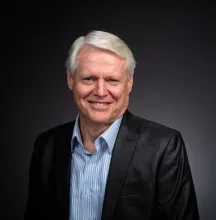
John Elliott serves in the role of President of the United Church of God, an International Association.
