
John Elliott
This sermon was given at the Canmore, Alberta 2013 Feast site.
This transcript was generated by AI and may contain errors. It is provided to assist those who may not be able to listen to the message.
The professor entered the hotel complex in Berlin. It was a beautiful, huge facility with a grand lobby. It was an international convention that was taking place the next day. And as he walked in the door, he thought very positively about what was about to take place and his role in it. He was a distinguished individual within the biotech community. He had come with a discovery to present that would help humanity. He had a wife, family. He was a model citizen. He was an individual that not only was a good man with a good family and was doing good things for humanity, but he also had a further representative of family, and that was the discovery was made by his father. And he was there to present a paper that his father actually had written. As kind of an accolade or reaffirmation of his character, he was the featured speaker. And the poster right there in the lobby by the check-in desk had his name on it as the featured speaker of the weekend. And to further give relevance and some confirmation to the individual, the integrity that he had, royalty was going to be attending that convention the next day. When you walk through these doors into services, you and I, in a way, were kind of like that professor and thought a lot like him. We come here attached to God with a certain nobility, with certain expectations, and we are good people. We keep the commandments of God and the laws of God. And we are part of a message that has integrity and hope, and it's good for humanity. And we, as we follow God, have integrity, and we have family and personal families. And we are individuals that are good individuals, good members, really, of the societies in which we live. These are often the way we see ourselves, and if we're not careful, we can carry this view without a lot of depth to it. You and I look forward to what this festival represents, the coming of Jesus Christ, reigning and ruling with Him, and helping out humanity for a thousand years. Of serving, being firstfruits in the Kingdom of God, and all of that is wonderful. We're welcoming Jesus Christ in our prayers. Come, come, and we look forward to Him as the future ruler of all humanity, as He is ours now. There was another group of God's people, the church and the wilderness, most of whom had gone into captivity. All, in fact, had at one time. Over in the book of Haggai, Chapter 1, there were some Jews who had been commissioned to return from Babylon to rebuild the temple. Haggai is about the third to the last book in the Old Testament. If you'll turn with me there, we'll spend a little time today in Haggai. In Chapter 1, in verse 8, these individuals also were noble, and they had a noble calling, a commission. They were the people of God. They were the small remnant that were sent back to Jerusalem to rebuild the temple under Cyrus, the great Darius the Medan.
So we see here in Haggai, Chapter 1, verse 8, Go up to the mountains and bring wood and build the temple that may take pleasure in it and be glorified, said God. People of integrity associated with God, let me ask you a question. Are you really a brick in the spiritual temple that we've heard about at this feast? Am I really a brick that is being built in among the apostles and the prophets, Jesus Christ, the chief cornerstone? We see ourselves that way. We see ourselves when we walk in the door. We see ourselves as we sit and listen.
Or are you a tare? Am I a wolf? Are we a goat thinking that we're sheep? You might be offended by those questions, but these are questions I ask myself every day. And I'm just sharing with you the daily message that runs through my mind and the care and the concern that a pastor, a shepherd with a small ass, has for the sheep.
You and I have a window of opportunity in which to be considered worthy to go to a place of safety, to be counted worthy to join Christ as first fruits. We know that that's not a guarantee for everyone because of the many parables and warnings that Jesus gave. What is your true identity? And I'm going to say a lot of you and yours because I want to make it personal, but I'm talking about me. It's about us as individuals, not as a group, because as the Bible teaches, it's each individual's righteousness or sinfulness that will have to be counted and judged by God.
What is your true identity in God's eyes and mind? Can you know what it is? Can you see it as God sees it? And can you do anything about it? Or are you stuck as what you or what I am?
These Jews were temple builders. You and I are temple builders. That's what we're called for. Let's go to Ephesians 4, verse 12. And while we're here celebrating a time in the future, and we're looking forward to participating in that, we know good and well that Jesus warns that many who think they stand will fall. And we can be deluding ourselves if we're not careful.
These Jews had an identification. And their identity to themselves is we are the temple builders. We are about the 8% of all the Jews who were carried off to Babylon, those who survived, we're about 8%. The special few, the first fruits, as it were, to come back and rebuild the temple. We're temple builders. And as God had said in verse 8, that's what we do. We're commissioned by Him. They were comfortable with that identification. Let's go to Ephesians 4, verse 12.
It says, for the ministries, for the equipping of the saints, for the work of serving, for the edifying, for the building up of the body of Christ. We, as lively stones or bricks, are to be part of that building. And we see ourselves as part of the church, the body of Christ. Don't we? We identify with that. We know who we are. We have the truth. We have the commandments. We do that. There's nothing that would take that from us.
That is who we are. It's what we do. In verse 15, speaking the truth in agape, in the mindset of God, agape in action, we grow up in all things unto Him who is the head of Christ, the head of this body, the head of this temple, as it were, from whom the whole body joined and knit together by what every joint supplies, according to the effective working by which every part does its share, causes growth of the body for the edifying, the edifice, the building of itself in agape.
This group is about the mindset of God, the agape mindset of God. And I'll bet if I asked for a show of hands of how many have that mindset, how many are in this body, how many are building that temple today, all of our hands would go up, and mine certainly would. But is that reality? Is it reality?
The professor, as he walked up to the check-in desk, was warmly greeted, and it kind of felt good, some validation, glancing sideways and seeing the poster with his name on it, and that presentation at the biotech conference. He was very comfortable with that idea. He was comfortable with what he was going to present.
He knew who he was, he knew what he was there for. He was very comfortable. In Jeremiah 17, verse 9, you know the Scripture. The heart is deceitful and desperately wicked. Who can know it? Ouch! Now, is that a true statement or a false statement? We all just mentally raised our hands and said, Oh yeah, I'm in the body. We know who we are. The professor said, I'm temple builders.
The professor says, I'm the guy. We know who we are. We're confident in that. But we read that the heart is deceitful. Now, the definition of deceived is one who doesn't know he's deceived. So if you are deceived, you can't know it. If you're not deceived, you won't know you're deceived either.
Now, there's a paradox. So it's a pretty good statement there. The heart is deceitful. And it's also desperately wicked. Who can know it? Wow. Christ said, sometimes we, and I'll put myself in the same category because I'm as human as anybody in his day, we are like white-washed sepulchers. I don't know about you, but when I go to the new funerals, you go among some of the big old sepulchers, the grand ones, you know, with the big names on it, giant things, and think, well, when I die, will I get something like that?
And we head on over to where everybody's going down. You get this little piece of small granite laying on the ground that the lawnmowers can run over and nobody has to be inconvenienced. You realize, yeah, well, that's probably going to be me. But isn't this one grand?
Isn't that one beautiful? With the marble and it goes up and up and has artwork and all this stuff on it. And we tend to see ourselves like that. And yet, you wouldn't want to look inside, would you? Especially not when it's fresh. Christ talks about corruption and Paul talks about this corruptible and, you know, the inside. The inside is something where the reality is.
And it's not so impressive. What is your inside in Christ's eyes? That's what I ask myself. What is my inside? And help me to see that a little more clearly because I can't. I tend to see myself like the professor walking through the door, like the Jews who were the temple builders, like the people who come among the people and they sit. And we're all in the church and we're all in the faith. And yet, this time has gone on and this is my 63rd feast.
And I'll tell you, from the first one back in Oregon to this one this year, I've seen a lot of people come and go in the church. A lot of people. What are you like? What's your real identity in Christ's eyes? It's vital that he recognize you as part of his bride, his body, his family, with that agape mindset growing, developing as a child that God fully recognizes that that child that he's going to make divine is very important.
You've got to realize also that Jesus Christ is not only coming to save the church, he's coming to kill permanently a part of the church. And you think, oh, what are you saying? Where'd you get that? From Christ's teachings. It's all through there. He is coming, he is going to save, and he's going to kill. I'll read from John 5, verses 28 and 29.
Let's go to Matthew chapter 13, verse 49. You know, if you start reading much of what Christ writes, you begin to realize that he is an individual with great responsibilities on his shoulders. God has commissioned him to decide who lives and who dies, to resurrect and give life to some and give eternal death to others. And when you put yourself in his shoes, that's a terrible place to be. For a one who is so loving and so thoughtful and so sacrificing to have to come and decide to kill people is tough.
So he's begging us all through the Gospels, make this easy on me. Matthew 13, verse 49.
We each have a responsibility. We can mask that responsibility. We can ignore that responsibility. We can polish the outside all we want. We can say, oh, I'm not deceived. We can say, I'm good to go. You know, it's up to us. I recall an individual when I was pastoring in Abbotsford, pastoring the Abbotsford congregation in the mid to late 70s. My wife and I had been serving over in Victoria. Mr. Dean Wilson ordained me to the ministry, and then I was assigned pastor of Abbotsford. Abbotsford, back then, stretched on the west from Langley to over on the east, halfway to Penticton. They took in Bellingham, Washington, and went halfway to Kamloops, Prince George. So it was a lot of territory. And visiting the brethren, and there's one individual I went to visit, an older man. It would be good to go see this man. And he lived in Chilliwack, and I found his place. It was down an alley, kind of a seedy old alley. There was one window and an old door, kind of a rotting wooden door. And I knocked on the door, and he opened. He was a big man. Come in. So I came in. It was just one room. It was kind of a shanty. It wasn't really nice, but I appreciated that he had a place to live. He had his bed, and a table, and a little kitchen, and a chair. Invited me to sit in the chair. So I sat in the chair, and he stood up. And he began to teach, and he began to explain all the things that God had revealed to him. And he spoke about this revelation and that, and this knowledge. And then he said, You know, Mr. Herbert Armstrong needs to come up here and learn from me. God has taught me so much that if he would just come, and he went over, and there was a big wooden chest with a dome lid. Big thing. And he went and opened the chest, and inside were papers that he had written. All handwritten. Stacks of them. And he began to rustle through them and show me. I've written this, and this, and this prophecy, and Mr. Armstrong doesn't know what's going to happen as much as I. He needs to come here, and you need to get him to come here. What do you say about that? I thought, well, you know, as a pastor, as a young pastor at the time, I was age 26, and I had to look to him as an older man and be humble and respectful. But I thought, you know, at the same time, God put it in my mind, at the same time, I need to leave him with a little something, not just accolades, but just a little something. So I said, you know, God is using Mr. Armstrong, and God teaches through the ministry, and I was just wondering if you think it might be helpful to pray for humility and repentance. And this big man began to get red, and he began to shake, and he looked down at me and he said, I repented once, and I'm not going to repent again. And he slammed the lid, and he pulled back this big fist, and he said, you get out of my house. And he aimed it right at my head.
And I went over and opened that old door and stepped out in the alley, and he came out after, and he said, and don't come back! You know, you and I can come to the place where we see ourselves a certain way, and many individuals have, even in the ministry. They start thinking that they are something, and we have this thing that we want to hang on to.
And somebody tells us about repentance and change. I've been in the church too long! I'm this, I'm that, I know too much. And what do we set ourselves up for? Do we set ourselves up for an individual who is like Jesus Christ, humble, and came to serve and sacrifice, and reveal the Father and speak the Father's words? Or does it become a James 3, all about me and self-promotion and the wisdom from below?
These are the things that you and I have to look at. You know, Matthew 13, you know, when he says, do you understand? Do you understand? I have to ask myself, am I paying attention? What about those temple builders in Jerusalem? Let's go back to Haggai. Haggai chapter 1 and verse 2.
Haggai chapter 1 and verse 2 has an interesting statement. Thus speaks the Lord of hosts. This people, this people, doesn't call them, wait a minute, we're God's special people, remember? We're the temple builders. We're the called ones. We're the Jews. We're special. What is he called? My people. He says, this people says the time has not come, the time that the Lord's house should be built. Oh, the temple builders weren't doing what they were called to do.
They were doing something else. We'll find out a little bit more about that in a minute. What about you and me? I know what you're thinking. How dare you insinuate that I'm not true. I'm saying the same thing, believe me.
I'm the real deal! I can prove it! I'm up here preaching. That's got to be some validation. Let's go over to 1 Corinthians 3, verses 16 and 17. 1 Corinthians 3, verses 16 and 17. I hear Paul speaking to a congregation of believers. Verse 16 of 1 Corinthians 3, Do you not know that you are the temple of God, and that the Spirit of God dwells in you?
If anyone defiles the temple of God, God will destroy him. Oh, it's not just about being in the church. Being in the right church, having the right understanding, having the right days for giving the feast, having the right form of governance, knowing the right leader, whatever it is. You defile the temple, God will destroy you. For the temple of God is holy, which temple you are. Let no one deceive himself. If anyone of you seems wise in this age, let him become a fool, that he may become wise.
We are nothing. We are like stones in a temple. Stones don't really accomplish a lot without being lively stones, with God's Spirit coming in, and it gives him all the credit, all the glory. We are called as nothing the weak of the world, so that he can receive all the glory. And if we begin to make it about us, and about our lives, then we cease to be building the temple, and we can begin to defile the temple, and God will kill us.
It's like the professor. At check-in, he says, I'd like my suite now. I'd like to go up to the suite. And the person across the desk said, can I see some ID? What? What? I'm the guest speaker! I'm the keynote speaker! Everybody knows me! All the people coming know me! The royalty are coming to hear me! You want my ID? You doubt who I am? You don't see me as I see myself?
No. He says, well, I left my briefcase in the taxi, and it has my passport in it. The fact it has my notes in it. But I left it in the taxi, and I can go back and find it. But he says, I'm the real deal. I'll need to see some ID.
That's me on the poster! He gets very upset with the individual for doubting who he is. Let's go back to Haggai 2, verse 3. Haggai 2. Beginning in verse 3, Who is left among you who saw this temple in its former glory? You know, back when I was pastoring Abbotsford congregation, that congregation had as many people as we have in this feast site.
There were 12,000 people in Canada attending church services every Sabbath. How many of you remember this temple in its former glory? And as he goes on, he says, and how do you see it now? You think I'm bringing up something that's maybe irrelevant, or a reach, or a stretch, but I just proved a point. There are 700 people attending the church in Canada today.
12,000 used to attend here. You think this can happen to you or to me? You think we can't take a misstep or somehow get something in our head and exit? Or get ourselves in a position where, yes, we're staying no matter what, but somehow when Christ returns, we're a goat, not a sheep, a tear, not wheat, a foolish bride, not a wise one. What are all those things in the Scripture? What are all these warnings about? Jesus said, I am the door. I am the way. I am the door, and no one can enter.
He says in Revelation 3, I have the key of David. David had the key to Jerusalem, and thousands of individuals were assigned to decide who could come and who could not enter that city. Jesus Christ has the key of New Jerusalem, and He opens the door for those He will, and He closes the door for those He won't. And for those He decides to open it for, nobody can shut it.
Satan's accusations can't shut it. Other people's complaints cannot shut it. But for those He closes it, no one can open it. No matter of knocking and banging and pleading and excuses will open that door. That's a big responsibility He has. What will that door, what state will that door be in when you and I are resurrected? It's a very unpleasant job for Him to close the door and to kill people that He has given His life for, that He's made this creation for, that He's given everything possible to.
And yet He warns us over and over, parable after parable, statement after statement, seven lessons in Revelation that most of us closed our eyes to decades ago, and our ears are shut because we've relegated them to some sort of history account. And therefore we don't listen, we don't apply them to ourselves.
But in every one He's saying, look, you're maybe not going to make it, you're barely going to make it, I may have to take you out of the church here or there. We've got to pay attention to Him and use this time that we have. In Matthew chapter 25, here's an entire chapter speaking to you and me. He begins with the ten virgin parable. Ten virgins? Well, guess what? We think of ourselves as virgins, but every one of those virgins was in the church. Every one of them, you notice, had a lamp.
The lamp had oil, it had a wick, and it was burning. Nothing was missing except the amount of oil. Some had run a little shallow. They had gotten preoccupied with other things. We come down to verse 10. While these who were shallow went to buy, the bridegroom came, and those who were ready went in with Him to the wedding, and the door was shut.
And afterward, the other virgins came, saying, Lord, Lord, open to us! You who shut and no one can open, open to us! But he answered and said, assuredly, I say to you, I do not know you. What do you think they thought their identity was? How did they see themselves? Saying, Lord, Lord, with the Holy Spirit, with the fire, the flame, the whole thing!
Jesus says, therefore, watch, look to your state. Look to the state of your spiritual affairs. Be alert! For you know neither the day nor the hour in which the Son of Man is coming. We have an opportunity. We need to be genuine, not some sort of fake ID. But notice, you can change. That's what He says in verse 13. Therefore, change! Pay attention! Be alert! And He rolls right into the parable of the talents.
We see down at the end, in verse 30, cast the unprofitable servant into outer darkness. There will be weeping and gnashing. Why write the parable if we're stuck in the condition we are? Why make the warnings unless we can change? He goes into verse 31.
He talks about separating the sheep from the goats. Verse 46, and these will go away into everlasting punishment with the righteous into eternal. Why would He write that? Why does He come up with these parables? Why does He warn us in Revelation 2 and 3 if we can't change, if we can't redeem the time or make good use of the time in which we have?
Well, certainly we can. You know, sheep and goats are very similar. Now, you probably think of sheep and goats in North America, and you think, you know, I know the sheep. You know what a sheep looks like. And I know goats, and there's nothing like them. But you come over to the other part of the world, the Near East, where the New Testament took place, come to Africa and other places, and sheep and goats look the same.
And I know you probably don't believe me, but I always have fun with internationals that come over, because they herd the sheep and the goats together over there. You know, sheep kind of just mainly range around, and they eat stuff, and they get all... But you throw in some goats. Goats know where they're going, they know what they're doing, they have ambitions. So the sheep follow the goats, and you don't have to mess with the whole herd. The whole thing just kind of meanders off and takes care of itself. As you drive up to a group, a whole flock of these animals, I like to say, So what are those?
Sheep goats or what? They look, ah, those are... not sure. Well, it's sheep and goats. Can you tell which are which? Ah... Ah... And they start guessing. There's one thing that will identify them. They look the same. The one thing that differentiates them is a goat tail goes up, and a sheep tail goes down.
And in that context, that's how you tell. And so when the Son of Man comes and separates the sheep from the goats, it's like us. We all look the same. We all look pretty professor-like, walking up to the desk, saying, I'm ready. Check me in. Temple builders of the Jerusalem Temple and temple builders of the Spiritual Temple can be seen here in Haggai chapter 1, verse 5 through 7. Haggai. Back to chapter 1, verses 5 through 7. Now therefore, thus says the Lord of Hosts, consider your ways. You're supposed to be temple builders.
Consider your ways. You have sown much and bring in little. You eat but do not have enough. All the stuff that we're involved in outside of church is not really accomplishing that much for the goal that God has given us. You drink but you're not filled with drink. You clothe yourself but no one is warm. He who earns wages earns wages to put them in a bag with holes. Thus says the Lord of Hosts, consider your ways. You and I are to be busy or to be developing holy righteous character, the agape mindset of God.
We're to be emulating and imitating Jesus Christ as He lives in us. We're not here just to be having nice lives and self-promotion or looking forward to some special retirement. It says here in verse 6 that, earns wages to put into a bag of holes. If we're not careful, we can devote our Western civilized life into our own selves, our own physical well-being, only to put wages into holes that, you know, that stuff just doesn't last.
The whole thing, including the body and the economy and everything that we tend to do, it ages, it expires, it runs out. Jesus said in Luke 12.33, provide yourselves money bags which do not grow old, a treasure in heavens that does not fail, where thief does not approach and moth does not destroy. We need to be busy being like Christ, sacrificing our physical opportunities of self-promotion and feathering our own beds and serving others like He did, and pointing people to God, and sacrificing what we have, and giving all that we can.
And God will restore those things that we serve and love as one who gives seed to the sower. He loves it when we are like Him. He'll refill and support and help. In Haggai chapter 2, verse 8, it says, the silver is mine, oddly enough. We spend our lives pursuing something, and all the time the silver is God's, and the gold is God's. It says, the Lord of hosts. He's got everything. I remember one time, just to show you how God is everything, and God has everything, and we know nothing.
I received a call from a church member somewhere in another part of Canada I'd never met, and this lady said, My mother is not a member, but she's in your area. She lives up in Hell's Canyon somewhere in Fraser Canyon, and she has cancer, and she's going to have an operation tomorrow, and she needs you to urgently go up and anoint her. I said, well, does she know anything about the church? No. Subscriber? No. Ever heard of me? Nope. But she needs to be anointed because she has cancer.
Did she ask? I said, no, but I told her that she needed to be anointed, and she was okay with it. So hurry. I hung up the phone. I thought, wow, now here's a fine mess. I'm going to drive off out in the middle of the wilderness, meet somebody, but I'm not even sure she knows I'm coming or wants me to come. But I've got a church member pushing me to go, and I'm obligated to go anoint somebody who doesn't even know anything about the church. Or anointing. So I remember the long drive through Chilliwack and up through Hope and into the canyon, and thinking, you know, this is just odd. And I found her house, and I walked up on the porch, and thought, you know, I wish I had somebody with me who don't like to visit alone, but... One of these situations, I knocked on the door, and this older woman opened the door, and she said, yes. And I said, uh, would you like to be anointed? And she said, well, well, well, come in. So I went in, and we sat, and she said, well, I really don't know much about it, but my daughter said I should be anointed. So I opened the Bible, and I explained anointing to her, and at the end I said, well, do you want to be anointed? And she said, well, yes, I do. She said, I've had x-rays, and my body is filled with cancer, and I'm going in tomorrow, and they're going to cut me open and remove the cancer. And put me back together, and I'll start chemo and stuff. And that's terrible. In order to be anointed, there's a couple of things here in James. Number one, you have to have faith. Do you believe that God will heal you? She said, well, yeah, I do. I believe God will heal me. I said, well, the other thing is, it's a call for the elders of the church. Do you feel that I'm a minister of Jesus Christ in God's true church?
She said, yes, I do. So, we knelt, I anointed her, and I left. I'll show you how great God is. She went to Vancouver the next day, and they put her on the operating table, and they got out the x-rays, and they made the marks where the incisions were. But the doctor wanted to do one more x-ray, just to make sure that incision was going to be right in the right spot.
Of course, you probably can guess, there was nothing in the x-ray, and he sent her home. She had no cancer. She was totally healed of cancer. She died six months later of a heart attack, and would be really primed to come up in the resurrection, which we'll celebrate on the eighth day. But to show that God, we sometimes put, we try to do these things for ourselves, and yet God has the gold. God has the silver. God can work out everything according to His purpose and will. And all things can work together, just as they did with this lady. Galatians 6, verse 7 and 8, from the Phillips translation, said, Don't be under any illusion. You cannot make a fool of God. A man's harvest in life will depend entirely on what he sows. If he sows for his own lower nature, his harvest will be the death and decay of his own nature. But if he sows for the spirit, he will reap the harvest of everlasting life by that spirit. So what am I sowing to? We have to each ask ourselves that. What am I sowing to? In the first temple, Solomon panelled the temple. He panelled the walls with cedar, the ceiling with cedar. He panelled the floor with acacia wood, a harder wood. Here in Haggai, chapter 1, verse 4, God asks the temple builders this question, Is it time for you yourselves to dwell in your panelled houses, in this temple to lie in ruins? That cuts me. I don't know about you. Is it time for you and me to live in panelled houses, in God's temple? That which we are called, our purpose is now to lie in ruins and to go undone? What we call ourselves temple builders? These are hard questions. What did I do this week to panal my house? And what did I do this week to panal God's temple? To help build the temple? Look down in verse 7 of Haggai. Again, consider your ways. Go up to the mountains and bring wood and build the temple that I may take pleasure in it and be glorified. We are here to glorify God in our lives, not ourselves. Not to feel like, oh, I belong to the right group and I'm in the right slot to receive good blessings and ultimately paradise, etc., etc. This is about God. This is about His children being serious about that for which we were called. It's a wonderful opportunity. The professor told the individual, you know, I don't have my ID, but my wife should be here. So, you know, maybe she's already checked in. That's interesting. Yes?
Your wife is in the suite, sir. So is the professor with her. His head spun around. What are you talking about? They, sir, have checked in. He is known to others here. Who are you? Would you like me to call the police? Would you like me to have the Berlin Police Department come and assist you out of the hotel? You know, the head can really spin sometimes, especially when somebody is either accusing you of not who you know you are or maybe an impostor taking your identity. But what's he doing with my wife? It turned out Haggai's builders of the temple were a little confused about their identity.
They weren't temple builders at all. They didn't even start building the temple. Jesus said in Revelation 2, verse 9, there are some spiritual Jews who, He says, I know the blasphemy of those who say they are Jews. That's their identity.
And I take this as spiritual Jews, but they are not, but are a synagogue, a church of Satan. Whoa! There is a flip of an identity for you. Spin your head around. You think those people would accept that? Think, oh yes, well, actually I am. I'm not really in the church. I'm actually a tear. I'm sowed here by Satan. I'm being worked on like a goat trying to lead this flock off.
Any of us say that's what we're here for? No, certainly not. Turns out in the parable, five of the ten virgins weren't very virginous, were they? But they thought they were. Reminds me of David. The priest tells him, David, there's this horrible individual he did. That man deserves to die! Well, that man is you, David. Whoa! Now spin your head around.
Whoa! Let's go to Malachi chapter 3, a few pages over, verses 2 and 3. Malachi chapter 3 and verse 2, who can endure the day of his coming? We're here to celebrate the coming of Christ and his reign on earth. Tough question for the church here. Who can endure the day of his coming? Who can stand when he appears? This gives me pause, because I know who I am. And I'm pretty confident that bring it on, Lord. But uh-oh, he's like a refiner's fire and a launderer's soap. He's going to come and take sin out, one way or the other.
It's either going to be forgiven by his blood, or it's going to be burned out, but it's going. It's not going to be part of his kingdom. He will sit as a refiner and purifier of silver. He will purge the sons of Levi, and purge them as gold and silver, that they may offer to the Lord an offering of righteousness.
Every day I ask God, your kingdom come, and your will be done now on earth today in my life and in all of our lives, just as it will be then. Help me to submit to your kingdom, to my Lord and Master now, like they will then. And then I get to the point where, forgive us our trespasses as we forgive those who trespass.
What trespasses? I don't really see any of those. You could skim over that. You could pray about everything we want and not get to the point of, forgive me of my sins, Father, as I forgive those who sin against me. Oh, that means I've got to look. That means I've got to examine.
And this is a daily prayer. Forgive me of, you know, give me my daily bread and forgive me my daily sins. We have to be focused on that. Otherwise there's a lot of corruption growing inside that beautiful sarcophagus. In Ezekiel chapter 33, verse 11 and 12, and I tell you, it is hard for me to find sins every day. You know, it's easy to gloss over it. Guess why? The heart is deceitful and desperately wicked. I don't see the desperately wicked part, and I know I'm not deceived, so I've got to be good.
Right? Proof that I am deceived if I can't see sin. Because as 1 John shows very clearly in 1 John 1, verses 7 and 8, he who says he has no sin, you just don't get it. You know? You just don't get it. But if we are repentant and we confess our sins, God is faithful to forgive us and cleanse us of our sins. And so let's look here at Ezekiel chapter 33, verse 11. Say to them, as I live, says the Lord God, I have no pleasure in the death of the wicked.
It's not what he wants to do. It's a responsibility that he has, but he has no pleasure in that. But my pleasure is in that the wicked turn from his way and live daily. Not like the man said, I repented once and I'm not going to repent again. Or I'm a baptized member, or I took Passover's, I don't have to worry about these details, I might say. You might say. God wants us to turn from our way and live. Turn, turn from your evil ways! For why should you die, O house of Israel, physical and spiritual? This is the lesson of Jesus Christ's ministry on earth.
This is what he taught over and over. This is what he came back 30 years later, 60 years later. 60 years later. You know, if you want to see the latest thing he wrote in the Scripture, it's in the book of Revelation. Repeatedly, all the way to chapter 22. We need to have ears that hear and listen.
Let's revisit the core of our calling real quickly. Deuteronomy chapter 10, verses 12 through 13. If we go back to the Old Testament, we see some of the things that Jesus would later say. And here he's saying them, same individual saying them. To the church in the wilderness. Deuteronomy chapter 10 and verse 12. And now, O Israel, what does the Lord your God require of you? What are we supposed to be doing?
But you fear the Lord your God, deep reverence and respect, and some fear. Because he's either coming to kill you or to save you and me. Walk in all his ways. Let's not stand still and be a believer and hang on to the truth. Get up and walk. Just like the Feast of Unleavened Bread teaches us. Come out of society. Come out of carnality. Walk. Love him. Serve the Lord with all your heart, with all your soul. And keep the commandments of the Lord, which are, Love him with your heart, soul, and might. Love your neighbor as yourself.
You know, this is what we're to be doing. John 15, verse 10. Same individual later restates it this way. John 15, verse 10. If you keep my commandments, you will abide in my agape love. We will live in the family's mindset. If we keep not just his ten commandments, we keep all that he commands us. Just as I have kept my father's commandments, and I live in his agape. That's the mindset of the family, God. These things I have spoken to you that my joy may be, my joy may remain in you, and that your joy may be full. God wants our joy to be full, full in the sense of being in his family, living forever. There is great joy in the presence and at the right hand of God. That's the destination he wants us to have.
This is my commandment, that you love one another as I have loved you. Sometimes we don't finish that. We're to seek the kingdom of God, we think. We're to keep the Sabbath. We don't finish the things he tells us. We're to keep the Sabbath holy. We're to seek the kingdom of God and his righteousness. Here, we are to love one another as he loved us, laying down our lives for each other, sacrificing for each other, giving, doing everything possible. That's his commandment.
Greater love has no one than this than to lay down one's life for his friends. And then we are told if he's laid down our lives for us, so we ought to lay down our lives for one another. John brings that out. You are my friends if you do whatever I command you. You did not choose me, but I chose you and appointed you that you should go and bear fruit. And should that fruit go away? Like most of those that we have known through the years, disappear, fracture off, fragment, follow some individual who gets a big head and thinks he's something special or not something special?
No. That your fruit should remain, that whatever you ask the Father in my name, he will give you. And these things I command you that you love one another. Agape, that's the mindset of the family. We're to be developing into real spirit children, easily identified by God. That he says, I know you. Yeah, the door is open. You come on in. You know, in conclusion, my goal is not to put anybody down except myself, because I need to be put down. My goal is that everyone who is still in the church will be successful as first fruits.
And I see them trickling away more and more. The numbers go down and down. We used to have 150,000 in the church worldwide. Now we scarcely have 12,000. Not even a tenth attending in United. And it just keeps eroding. Every time somebody gets some idea, gets people to follow them, and then eventually that fragments and falls apart.
If we're not careful, this rock is going to crack and break down and just be sand. That's what Satan wants to happen. He wants our fruit to remain. He wants us to develop that mindset of God. I'm encouraged by the spiritual growth that I see, but you and I really only see that on the outside in some cases. Each of us has the responsibility to be watching the inside, and we can only watch ourselves. We can't watch anyone else.
So how do you know your true identity, and what can you do to change it? Let's go to Jeremiah 17, verse 9 and 10. God tells us, yes, it is a mystery. It really is. You and I have a deceitful mind and heart. And we do have wickedness, that even though some of the more glaring sins were cleaned up, we still are self-preoccupied, self-advancing, self-concerned.
For our self and our empirical self, the empire that we have that extends through family, and maybe groups and cliques, and stretches out to your ball teams or your countries. That's the empirical self. And we can feel very godly because we love those in our personal little empire. But that's not what Christ wants us to do.
Jeremiah 17, verse 9, The heart is deceitful above all things, and desperately wicked. Who can know it? Well, verse 10, I, the Lord, search the heart, and I test the mind, even to give every man according to his ways, according to the fruit of his doings. Whoo! Well, looks like we'd better talk to God then, since he's going to reward us based on what we do. And he alone knows that we really need to seek him. You know, in this film, the professor notes this bump that he has on his head, and he finally finds his briefcase, and inside the briefcase, there's some plans for a terrorist attack on the convention center.
It's intended to take out the royalty and kill them. And as memory begins to come back a little clearer, and as he looks at the fake passports and IDs he has, he realizes and begins to remember he's the terrorist. He and the wife of the professor are actually coterrorists. She married under false pretenses. She's the backup to detonate the bomb that they hit in the hotel months ago. Suddenly, he sees himself as a who he is, and he hates himself.
And he wants to undo what he's done. He wants to repent and change. And the whole idea of the film is that there's a little bit of time, and yet he's created a situation where the police don't trust him, the wife won't even look at him, he's not allowed into the hotel anymore, everybody in the convention thinks he's a nut, and he's the only one that can go in and prevent the other operative from killing and maiming in this event. It's like you and me when our lights come on, if God will reveal to us that, look, I am falling short, there's time.
And God wants us to change. Verse 7 says, Blessed is the man who trusts in the Lord, whose hope is in the Lord. We've got to trust him. We've got to let him open us up and cleanse us and put his mind.
And if we trust in God and we really have that faith living in us, then verse 8, here's what happened. For he shall be like a tree planted by the waters, which spreads out its roots by the river. He will not fear when heat comes, but its leaf will be green. It will not be anxious in the year of drought, nor will he cease from yielding fruit. We will have the fruit, that fruit will remain, and God will elevate us as part of the bride of Christ that is wise. So, brethren, let's be very careful. Let's seek God every day for instruction, for correction, for reproof, for forgiveness.
Repent when he shows you your sins. When you do, you are of the renewed new man and woman, the new son and daughter of God, good works of agape, the mindset of the family, growing and producing fruit, ready to be first fruits with Christ, ready to serve with Jesus Christ as his bride. That's the beauty. That's the opportunity we have. But we have it now. We won't have it later. And when your identity is true, and that identity is a representative of the agape mindset family of God, then the door to New Jerusalem will stand open for you, and no one will shut it.
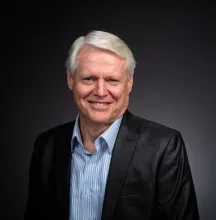
John Elliott serves in the role of President of the United Church of God, an International Association.
