Learn how secular humanism has not only permeated society, but strongly influenced today’s Christianity.
Why Are Fewer People Believing in God?
Image
Accepting the calling of God is a challenge. It requires stepping out of parts of our culture, and unlearning traditions, assumptions and attitudes that get in the way of how God wants us to live. Learn what it means to accept our citizenship in His Kingdom today.
[Ben Light] Have you ever had the opportunity to travel to a foreign country? One of the primary benefits of travel is that each country that you visit has a unique culture. That culture has been built over thousands of years of development with different languages, musical styles, foods, cultural experiences to take in. All of these things, food, music, language, cultural expression, they're all considered by anthropologists to be surface culture. They're the tip of the iceberg that you see when you look at a foreign nation.
However, if you scratch beyond the surface, you can learn the unconscious and foundational values that are at the core of that culture and gain a deeper appreciation for what makes that nation and its people who and what they are. This deep culture, the part of the iceberg below the surface, so to speak, represents things that are foundational. A sense of fairness, how interactions with others are governed, how trust is placed, and how the members of that culture approach and solve challenges.
Have you ever stopped to think about the culture of your own nation?
There's the obvious and the surface elements of that culture. Your favorite food, song, dance. But have you ever stopped to consider the core values that define how decisions are made? What governs fair treatment? How you approach and solve challenges?
Each of us are born and raised in our respective cultures. And whether we realize it or not, that culture has an effect on the way that we view the world and how we live our lives.
For example, some cultures tend to be more focused on the collective, where the needs of the community are prioritized, while others tend to value more individual expression and independence. Some cultures view time as more rigid and linear, while other cultures view time as more of a relational concept. Some cultures have a narrow focus on social norms, holding to a strict emphasis of what's right or wrong based on those norms, while other cultures have a higher degree of deviation from those things.
A little over a decade ago, I traveled to Nigeria for the first time. I'd never been to Africa before, and Legos was an eye-opening experience for me. The sights, the sounds, the smells, the food, the language, the sheer volume of people. In many ways, it was overwhelming. But I fell in love with the people and with the brethren in that area. And for those who were trying to honor the one true God, it could be difficult to come out of the holdovers from the religion and the beliefs of the tribe. Some of those things were very obvious because they were so contrary to the culture of God, idolatry, false worship practices, having multiple wives, and more. But what I came to understand through that experience is that there are values and habits and assumptions that are part of my own deep culture as an American that can also be offensive to God.
The people of the United States value individuality and personal freedom. But at times that freedom can come at the expense of others. We value self-reliance which can lead us to conclude that we don't need God or cause us to conclude that those around us who are in need should just pull themselves up by their bootstraps that we don't have a responsibility to them.
Even though my culture is built upon a Judeo-Christian ethic, there are still things inherent to my culture that God is asking me to walk away from as I commit myself to Him and to His way. Sometimes components of our culture come into direct conflict with God and His way of life outlined in scripture. And when we see those conflicts, how do we respond? Do we hold to our own personal culture? Do we try to blend it somehow with God's way? Or do we fully accept God's way of life and forsake whatever in our own culture conflicts with Him?
The early Christians of Asia Minor came out of individual cultures that were very different from the way of life that God had called them to. They were coming out of a world of idolatry, deep-seated pagan worship practices, and God was asking them to come out of those ungodly practices, and to accept His way. Even people who already knew God's law still had things to unlearn. They knew the Sabbath. They knew the holy days. They knew the scriptures, but they still had traditions, assumptions, and attitudes that could get in the way. Accepting the calling of God was a challenge.
Our culture, our culture is deep and formative.
The Apostle Paul saw these challenges in his service to God. As he traveled from nation to nation, he experienced different cultures, ways of looking at the world and recognized the importance of helping the new believers to see that they belonged to another nation complete with its own culture.
In his letter to the brethren in Philippi, Paul uses the analogy of citizenship. That's a common concept that would have been understood well throughout the Roman Empire. He writes, "For our citizenship is in heaven, from which we also eagerly wait for the Savior, the Lord Jesus Christ, who will transform our lowly body that it may be conformed to His glorious body, according to the working by which he is able even to subdue all things to Himself." (Philippians 3:20)
These new believers were learning to live as citizens of the coming Kingdom of God with values and practices that were often foreign to the societies around them. There were certain religious practices, certain values, certain core and foundational concepts that were to change the way they lived.
The book of Galatians tells a story of these new believers as they became caught between two existing and competing cultures. On one hand, family and friends who were trying to pull them back into the Greco Roman culture with its pagan observances and sacrifices and superstitions. On the other hand, some Jewish believers were trying to convince the new Gentile converts that they had to accept circumcision and to become Jewish in order to become Christian. Throughout the book, Paul makes the point that the early Christians in Galatia needed to come out of their idolatrous culture of origin. But he also explains that the Jewish believers had to reject the traditions of men that they considered more important than the commandments and the grace of God.
It's easy to see the cultural hang-ups when a culture is completely contrary to God and His way, but it's much harder to see when there's aspects of that culture that correspond to godly ideals.
We're all being asked to leave behind any values, religious practices, and habits from our culture of origin that conflict with God's law and way of life. We are called to put on His way, His law, His nature and character, to accept our citizenship in His kingdom.
So what does that mean for us? Take some time to consider what are the deep values of the culture of your nation of origin. Are there any specific cultural values that are preventing you from deepening your relationship with your creator? How can I meaningfully focus on putting one aspect of God's way of life in my life this week?
We can't allow the culture of our nation to prevent us from fully adopting the values of the Kingdom of God.
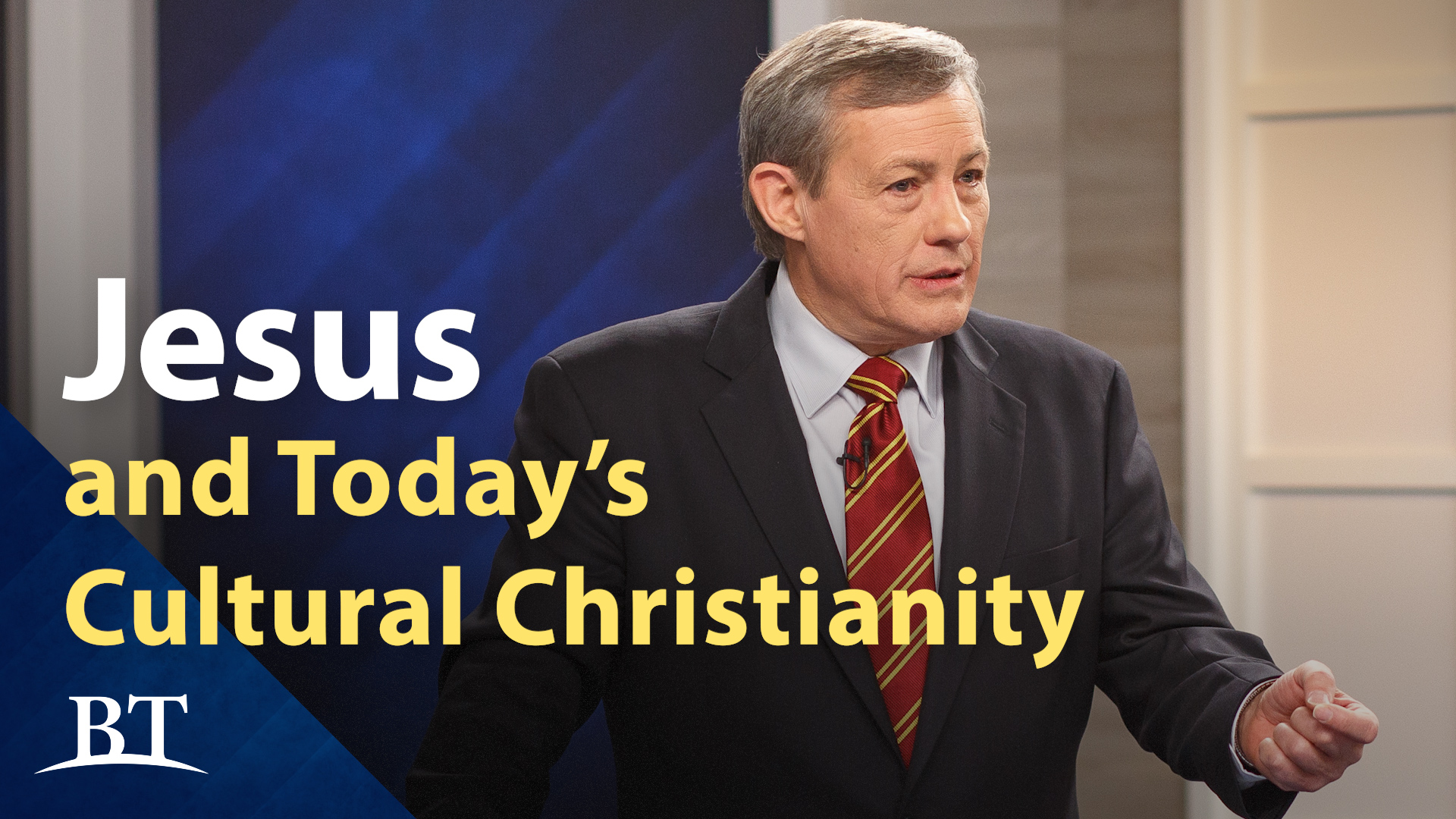
For more information, check out our Beyond Today video, Jesus and Today's Cultural Christianity. And be sure to follow and subscribe to Beyond Today for more scripturally based content.
Learn how secular humanism has not only permeated society, but strongly influenced today’s Christianity.

Ben is an elder serving as Pastor for the Salem, Eugene, Roseburg, Oregon congregations of the United Church of God. He is an avid outdoorsman, and loves hunting, fishing and being in God's creation.

