World News and Trends: Will a reversal in American diplomacy work in our hostile world?
Current President Barack Obama's own style brings out the sharp contrast of his administration's fundamental approach to international diplomacy.
More than five months before the terrorist attacks of Sept. 11, 2001, Time magazine published a major article about the Republican style of U.S. diplomacy (April 2, 2001). Its author, Johanna McGeary, defined international diplomacy in the introductory paragraph: "Diplomacy is an art form, a subtle construct of gestures and words, body language and rhetoric carefully arranged for a single purpose: to persuade another country to behave the way you want ... How do you convey your views so they're firm and forceful without putting the other side's back up?" ("Dubya Talks the Talk," emphasis added throughout).
The Time feature article was basically about former President George W. Bush's tough diplomatic style. Current President Barack Obama's own style brings out the sharp contrast of his administration's fundamental approach to international diplomacy. Scrapping the Bush administration's planned placement of an American missile defense system in Poland and the Czech Republic to help protect Europe and Israel from the Iranian missile threat represents a major turning point in Washington's way of dealing with crucial world problems.
President Obama appears to want to rely on sanctions to change Iranian behavior. But do sanctions work? Frankly, no! There is a steady flow of illegal exports to rogue regimes already under sanctions. There was a tenfold increase in such exports to Tehran even during the Bush years.
The reaction from the right to the missile pullout was both sharp and predictable. Many in both Warsaw and Prague felt that America had betrayed them. A headline in The Daily Telegraph read: "US Missile Shield: Appeasement Is Alive And Well in Barack Obama's White House. President Barack Obama's Decision to Abandon the Missile Shield Will Weaken the US and Embolden Its Enemies" (Sept. 18, 2009). A day later the paper's official editorial stated that "Obama is gambling with Europe's security."
London Financial Times columnist Philip Stephens expressed clear-sighted points about America's role in the Middle East—points that apply to the U.S. global position as well. He stated: "But the shifting balance of power is about more than Iran's nuclear ambitions and its president's Holocaust denial. American power in the region has been hobbled by the war in Iraq, the insurgency in Afghanistan and by a consequent perception among Arab states that Washington cannot deliver" ("Four Things You Must Know About the Global Puzzle," Sept. 25, 2009).
Even America's closest ally in the Middle East rejected President Obama's call to halt settlement expansion. "The Israeli prime minister's rebuff signalled that he, too, sees the US as a waning power" (ibid.).
The following questions must be asked: Will Washington's recent approach to international diplomacy really work in the long run? Will America be able to maintain its dominant position in the world through this style of diplomacy? Will this approach persuade rogue regimes like Iran and North Korea to respond positively and mend their ways?
To understand both the historic and prophetic background to these current international dilemmas and where they are taking America, request or download our free booklet The United States and Britain in Bible Prophecy. (Sources: The Daily Telegraph, Financial Times [both London], Time.)

An Article from:
Good News Magazine: November - December 2009
Course Content
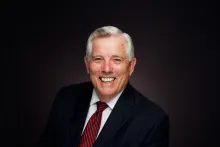
Jerold Aust
Jerold Aust has served in the ministry for 52 years, as a public speaker for 58 years, a published writer for 38 years, and is employed by UCG’s Media and Communications Services. He is a Senior Writer, interviewer, and editor for Beyond Today Magazine and has taught Speech Communication for UCG’s ministerial online program and the Book of Revelation for ABC.
Jerold holds a BA in theology from Ambassador College, Pasadena (1968), an MA in Communication from California State University, Fullerton (1995), a distance-learning Ph.D (2006), and a Famous Writers School diploma in non-fiction writing (1973). Additionally, he studied post-grad communication at University of Southern California (1995), radio, TV, voice-overs, and Public Relations at Fullerton College (1995-1996), and graduate communication at Wichita State University (1978). Jerold has taught communication at the University of South Alabama (7 years) and ABC (17 years). His published works include, Ronald Reagan’s Rhetoric: Metaphor as Persuasion and EZSpeakers: Public Speaking Made Easy in 7 Steps. Jerold's overarching goal is to share with humankind its incredible destiny!

John Ross Schroeder
John died on March 8, 2014, in Oxford, England, four days after suffering cardiac arrest while returning home from a press event in London. John was 77 and still going strong.
Some of John's work for The Good News appeared under his byline, but much didn't. He wrote more than a thousand articles over the years, but also wrote the Questions and Answers section of the magazine, compiled our Letters From Our Readers, and wrote many of the items in the Current Events and Trends section. He also contributed greatly to a number of our study guides and Bible Study Course lessons. His writing has touched the lives of literally millions of people over the years.
John traveled widely over the years as an accredited journalist, especially in Europe. His knowledge of European and Middle East history added a great deal to his articles on history and Bible prophecy.
In his later years he also pastored congregations in Northern Ireland and East Sussex, and that experience added another dimension to his writing. He and his wife Jan were an effective team in our British Isles office near their home.
John was a humble servant who dedicated his life to sharing the gospel—the good news—of Jesus Christ and the Kingdom of God to all the world, and his work was known to readers in nearly every country of the world.

