Follow Me: Growing in Hope Beyond the Moment

Amid the noise of our circumstances and anxieties, where can we find lasting hope? Scripture shows that when faith and love take root in the heart, hope grows strong. By learning to be still and listen for God’s voice, we gain the confidence to follow Christ beyond life’s uncertain moments.
Allow me to share a story that may reflect on our personal journey at given times even as 21st-century disciples of Jesus Christ. Many years ago, a little boy was given a priceless possession—his deceased grandfather’s golden pocket watch. Oh, how he treasured it! However, one day while playing at his grandfather’s ice plant factory, he lost the watch amid all the ice and sawdust. He searched and scratched, becoming frantic, but no watch! Suddenly, all hope seemed to evaporate!
It was only then that he realized what to do. He stopped scurrying around and became very still. It was when his heart stopped pounding that in the silence the watch could be heard ticking.
What might we learn here? Our Heavenly Father has given each of us a priceless, hope-filled gift from Above and planted it in our hearts. Yet how easy it is to fumble this gift from Above in the rush and crush of here below. We send out signals that all is lost!
Yet this gift from Above is always there to find—if we will but pause, not merely listening for the “ticking of a clock,” but the voice of God in Spirit and His Word. Words that reverberate and should echo in our hearts beyond the rumbling noise of our human nature. Simple yet profound words, like “Be still and know that I am God” (Psalm 46:10). Words of substance mirrored in what the little boy did (being “still” as taking action!) and granting us hope beyond the moment, as we respond to the echoing of the spiritual voice of Christ that bids us, “Follow Me” (Matthew 4:19) over the roar of self.
What does hope look like?
Let’s begin to develop a working definition of hope by listening with our heart to the words of God. And yes—spoiler alert!—it will take patience as we embrace and internalize the words of the psalmist: “I wait for the Lord, my whole being waits, and in his word I put my hope” (Psalm 130:5, New International Version). With that thought in mind, let’s consider the words of the apostle Paul in 1 Corinthians 13:13: “And now abide faith, hope, love, these three: but the greatest of these is love.”
Paul here lists three key components of a Christian’s developing character—“the Big 3,” we might call them—that will make a difference between human despair and godly outcomes. Ultimately, they are all intertwined. Faith and love are direct fruits of God’s Holy Spirit (Galatians 5:22), initially seeded in the soil of our heart, that together produce the hybrid of hope, which is an essential nutrient to grow in grace and knowledge.
The connection between faith and hope is given in Hebrews 11:1: “Now faith is the assurance of things hoped for, the conviction of things not seen” (English Standard Version). Paul further presents the connectivity of faith and hope in Romans 8:24-25: “For we were saved in this hope, but hope that is seen is not hope; for why does one still hope for what he sees? But if we hope for what we do not see, we eagerly wait for it with perseverance.”
The projected spiritual grip of hope
Hope in God is a projected spiritual grip beyond our immediate moments of life in knowing that what He has promised us will come about based on His love—a love given definition and personified in 1 John 4:9-10: “In this way the love of God was revealed to us, that God sent His only begotten Son into the world, that we might live through Him. In this is love: not that we loved God, but that He loved us and sent His Son to be the atoning sacrifice for our sins” (Modern English Version).
Having faith in the reality of God’s personal initiative of His love towards us and in turn responding to that love leads to what is spelled out in Matthew 13:16: “But blessed are your eyes for they see, and your ears for they hear.”
In sharing this with you, I remember the story surrounding the construction of Disney World in Florida. Walt Disney had initially constructed Disneyland in Southern California back in the 1950s. Nevertheless, he was constrained in what he could develop due to space limitation—so he dreamed of expansion elsewhere in Florida. But he died before it was built. It’s said that in the final stages of construction, one executive said to another, “It’s a shame Walt isn’t here to see this”—to which his fellow executive responded, “No, it’s here because he did see it!”
This small story of one man with a big vision reverberates with our spiritual travelogue of hope enumerated in Hebrews 11:13: “These all died in faith, not having received the promises, but having seen them afar off were assured of them, embraced them and confessed that they were strangers and pilgrims on the earth.”
Hope is faith on the march!
But, with this said, let us be aware in striving to embrace hope in times of challenge that hope is not alone in the living room of our mind! Despair in our human psyche lies just around the corner and readily embraces those same ills and times of panic to create far different outcomes from the hope that combats, overcomes and replaces our doubts and fears.
Hope is not a pool left to stagnate, but rather a river that flows on the currents of faith and love. It is not an immediate fixture. It is “faith on the march,” which will need exercising that it might expand and crowd out fear as we embrace the spiritual reality of recognizing that God is the potter and we are the clay (Isaiah 64:8). He is doing a work in us (Ephesians 2:10; Philippians 2:13). And, yes, always remember the words of the One who bids us, “Follow Me,” that like Him we must bear a cross before we bear a crown (see Luke 14:27).
Notice how and where the apostle Paul brings the “Big 3” together in Romans 5:1-5, and how they blend into the hybrid of hope that ultimately blossoms—yet with some challenging heart-work in between:
“Therefore, having been justified by faith, we have peace with God through our Lord Jesus Christ, through whom also we have access by faith into this grace in which we stand, and rejoice in hope of the glory of God. And not only that, but we also glory in tribulations, knowing that tribulation produces perseverance; and perseverance, character; and character, hope. Now hope does not disappoint, because the love of God has been poured out in our hearts by the Holy Spirit.”
“So heart be still”
Returning to where I began with the pounding heart of the little boy in the opening story, you know what? My heart pounds too at times, just as I’m sure yours does.
I want to share a piece of writing kept under the glass top of my office desk—so it’s never too far from me for a needed tune-up! The words, from a 1908 poem by Minnie Louise Haskins titled “God Knows” and often called “The Gate of the Year,” were read by King George VI of Great Britain in 1939 as the darkness of World War II was spreading:
“And I said to the man who stood at the gate of the year: ‘Give me a light that I may tread safely into the unknown.’ And he replied: ‘Go out into the darkness and put your hand into the Hand of God. That shall be to you better than light and safer than a known way.’ So I went forth, and finding the Hand of God, trod gladly into the night. And He led me towards the hills and the breaking of day in the lone East. So heart be still . . . God knows. His will is best. The stretch of years which wind ahead, so dim to our imperfect vision, are clear to God. Our fears are premature; in Him, all time hath full provision.”
It’s time, yes it’s time, to be still and take the hand of God, which awaits each of us—a hand that opens wide to hope!
Dive Deeper
Strengthen the faith that leads to lasting hope. Request your copy of our free study guide You Can Have Living Faith and discover how to deepen your trust in God and walk confidently in His promises.

An Article from:
Beyond Today Magazine: May–June 2026
Course Content
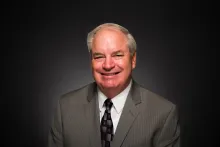
Robin S Webber
Robin Webber was born in Chicago, Illinois, in 1951, but has lived most of his life in California. He has been a part of the Church of God community since 1963. He attended Ambassador College in Pasadena from 1969-1973. He majored in theology and history.
Mr. Webber's interest remains in the study of history, socio-economics and literature. Over the years, he has offered his services to museums as a docent to share his enthusiasm and passions regarding these areas of expertise.
When time permits, he loves to go mountain biking on nearby ranch land and meet his wife as she hikes toward him.
Stay up to date
Get new articles every week in your inbox and quarterly print issues in the mail.
Subscribe for freeor log in