
Robin S Webber
This transcript was generated by AI and may contain errors. It is provided to assist those who may not be able to listen to the message.
I am a teacher that has always wanted to make sure that you get what we got. In fact, that's going to help because we're going to skip over a lot of 1 John 3. I want to go right into 1 John 4 because I think it was very healthy that we had that interactive discussion. I think I can speak on behalf of any of our elders here. You know you have on your notes, and you always think, Boy, I can't wait to get to this point, get to this point, get to this point, and I'm going to get over to this point and get to that point.
Then you have the blessing, you know, God, please direct the speaker today. Boing! You know, and you see somebody's eyes, and you go, Boing! You see somebody out there going, Boing! So pretty soon you're off your notes, and it's helpless, especially for me. I just keep on going. So anyway, let's just bow our heads here for a second. We'll ask God's blessing. Heavenly Father, we again come into your holy presence. Thank you, Father, for your love, your mercy, your grace. All of the kindness, Father, that you visit upon us.
We ask now that you open our hearts as we open our Bibles. Allow us to understand some of the principles that come from this Patriarch of Old that really, frankly, comes right from you through Him, Father. So we thank you. We ask this all in Jesus' name. Amen. Gentlemen, if you'd like to take off your coats, please do so.
We're not in a worship service, just a class. Sandy, you can take off your coat any time you want to. Skip. Go ahead. And ladies, to be comfortable, you can take off your earrings. So loosen up your ties. This is just class. Thanks for staying there. Look, now, Bob, you are into the practice. Love it! Paul Smith is saying, there's a guy after my own heart, well, after my own tie.
Mr. Bariga brought up an interesting comment. Mr. Bariga, could you share with me and everybody else what you mentioned when you came up here? Skip this answer to your question earlier. Well, Mr. Smith, can I describe what we're using for a more practice? And the term practice is very good. And again, the easiest way, it always sticks with me, and I know I've used this ad nauseam with all of you, is just the story of the woman that was asked by her child, Mommy, if you were baptized and you're still sinning, why did you get baptized?
Because before baptism, I was running towards sin. But then I made a decision at baptism to run away from sin. And so there's still action and there's still motion and there's still sin involved. But you're not wanting to practice. It's not your desire. Your heart is being mapped differently by God. He's putting his imprint there. But I'd like to just share with you for a moment, because I've got to just do a little bit here.
I was going to get off on this whole thing, and it's just well because I want to bring a series of sermons on this. I didn't say series, probably. Notice verse 23. And this is His commandment, chapter 3.23. And this is His commandment. The His there, I think, should be identified as God the Father. And this is God the Father's commandment, that we should believe on the name of His Son, Jesus Christ, and love one another as He gave us commandment.
He there giving us commandment is Jesus. Now, He who keeps His commandments abides in Him and He in Him. And by this we know that He abides in us by the Spirit whom He has given us. Now, you might just want to do something interesting, kind of figure out who all those He's are. A part of it is of the Father, and a part of it is of the Son.
And we also have responsibility in that. Again, let's remember the key to understanding 1 John. Powerful word that comes up again and again is the term abide. Abide is kind of, we think of kind of a pleasant poetic abide. What's that song? Abide with me? Which happens to be one of my favorite songs. It's not in our new hymn, no. But anyway, abide with me.
We think, oh, that's kind of pleasant, kind of comforting. Abide is a very strong term in the Greek. Abide means you have to have the strength to stay in place or allow the strength to have God live His life in you. Abide is anything but a passive term.
And this abiding is so important in recognizing this khanoneah, this communion, this fellowship, that the whole key to John is simply this. We have fellowship with the Father. But to have fellowship with the Father, you must accept the Son having come in the flesh. You must not only accept the Son of the flesh, but recognize the Father sent Him or you don't have full communion.
And then also at the same time, you can understand the role of the Father. You can understand that the Father said the Son. You can understand that the Son was sacrificed for your stead. But if you do not love your neighbor as yourself, you are not in the fellowship of khanoneah. You do not have that communion that God is desiring. There is a breakdown.
You are not one with God if you are not at one with your brother. You can say, oh yeah, yeah, yeah, yeah, yeah, yeah. Have we all done that before? Oh yeah, yeah, yeah, yeah, yeah, yeah, yeah. That's how it works. That's our reality. So you think about as you go out today, I want to be with the Father and I want to be with the Son. Who am I not at one with? Now that doesn't mean that's going to come overnight.
That doesn't mean that it's just going to be hunky-dory, but it is your desire. The desire of a Christian, allow me to share something with you, is always towards reconciliation.
It is always towards reconciliation. And reconciliation is even at the final stage. Ultimately, it is restoration. But perchance, that restoration is not always going to happen in this lifetime. Sometimes, some things will be left to the Kingdom. But we should at least be in the spirit of reconciliation. With that, let's go to chapter 4, as I promised. Some exciting things. We just left out two hours. Aren't you glad?
That's where you're supposed to be nodding. Yeah, that's good. Okay, let's look at chapter 4, because I wanted to... This is very practical. So far, let's understand. For those of you that weren't here before, glad you're here today. John has really taken it to the Gnostics. This group of Gnostics had come in and basically brought in all this false information about Jesus Christ, never having really been in the flesh. Allow me to explain this to you that are on the front row here. Basically, the Gnostic is that Jesus came to earth, but he never inhabited a body. And therefore, if he walked, he didn't leave footprints.
You think that went through a second? Okay, that's how far Gnosticism goes. In other words, Jesus was kind of like a holy Casper the ghost. Gnostic philosophy is basically that a good God could not be encapsulated in earthly human flesh. And so, good and evil go this way, and it's infiltrated Catholicism and Protestantism ever since. And we need to be careful that it doesn't infiltrate our culture. So, John, really, in the first three chapters, when he was writing this, he didn't write, well, I like chapter 1, chapter 2. Chapters came later, of course. But now we have the breakdown. Because John is now going to do something very revolutionary, and I want us all to listen up. That's an O'Barrinkour term. Listen up. Because now he's going to speak to the brethren. The Gnostics had a responsibility to repent and to do things differently. Chapter 4 puts responsibility on the brethren. Let's notice what it says. Beloved. Oh, there's that endearing term again.
Senior member of the spiritual family is saying, and a little children, beloved, dear ones, do not believe every spirit, but test the spirits, whether they are of God, because many false prophets have gone, noticed, out into the world. Now, this is very interesting. We're going to have this conversation for a moment. It's kind of like a father sitting down with his children and saying, you know, watch out for the snake oil salesman that's going to come down in your life. Don't believe everything that you hear.
Not all that glitters is gold. And so John, being a senior citizen in this way of life, is talking to these people in Asia, probably in Ephesus, saying, look it, do not believe every spirit, but test the spirits, whether they are of God, because many false prophets have gone out in the world. Now, John first heard this 60 years before when he was sitting on the Mount of Olives, and Jesus said, you know, this will be the sign of my coming, and these things will occur before, and there shall be many false Christs.
So John is going back and alluding to those things that were. Notice what he says here. But test the spirits, whether they are of God. The word there, test, can be translated, or the Greek renderings, you might want to jot this down, as to try. Try the spirits. Prove the spirits. And or the test means with the expectation of approving what you're hearing. And that is a responsibility that an apostle of the first century puts upon the church for the remainder of the ages. That we are to prove, to test, that which is spoken to us. Now, if I can make a comment here, sidebar, I really appreciate in our congregations how you do this.
That's really good stuff. That's really important. I realize sometimes I'll be just like our conversation here, the last one, where we're going to get kind of in a conversation. You know, if the head's just nodding like this, sometimes you wonder if there's anything in it other than beans, you know? You know, rattling. Is that, no, hey, what do you mean by that? Challenge.
This is good. And to recognize that they were being set up for something here. Because, you know, it's interesting that if we sometimes what has happened in cultures, we become passive. We don't realize that church is a spot where we come to study the Word of God. And while we certainly pray for God's blessing on the overall service, there can be things at times that may not be correct.
Now, there's a way of doing that. We've seen that in our own congregation, if you remember, about a year, year and a half ago, where somebody had a concern and they raised it. That was not the way to raise it at the time.
And you remember how I said, well, you're concerned about here. Why not about this concern over here, that if you have a better way, this was not directed towards me for those that are here, but towards somebody else, is that follow the Bible again and take that person aside, not the congregation, but take them aside and show them a better way, just like Aquila and Priscilla did.
That's important. How important is this? Join me, if you would, in Revelation 2. Again, another of the writings that came through the writings of John. Ephesus was going to face us. Notice in this description of Ephesus, where Jesus is saying, because it's in red print, I know your works, your labor, your patience, that you cannot bear those who are evil.
Notice you have tested those who say they are apostles and are not, and have found them to be, ouch, liars. And that you have persevered and had patience, and have labored for my name's sake, and have not become weary. Here, in one sense, in John's writings, you see this encouragement or this admonition to test, but here in Revelation, you see that it was actually practiced in the early church in Ephesus, because people were coming that were saying that they were of God, or holding some rank, or holding some function, and saying, you know, I've got the latest Cass meow, and here it is.
And the brethren out there had to put the feet to the fire as to whether or not that was of God, or whether it wasn't. What does this mean? Here's a phrase you might want to jot down. What John is encouraging us to do as saints of God is to be responsible spiritual consumers.
Isn't that what you want to be? Isn't that why you're here? You want to be a responsible spiritual consumer. It is interesting that Christians are to be faithful, but they are not to be gullible. We are to be soft-hearted, but we're not to be soft-headed. I was saying earlier, and I always think of my wife, I have to bring my wife into this for a second.
She's really good at this, because she hears me all the time. But, and I'll get into something, and I'll get my personality going, or I'll get my emotion going, or I'll get my passion going on something.
But then I'll watch Susan's eyes, and I'll watch some of your eyes, too. And she's looking at all the scriptures around it. I've already moved on. I'm kind of satisfied, but I see her mind working, and I've seen some of you.
And may I say something? As long as you don't do it for more than a half an hour in the sermon, because you might miss the rest of the sermon. I love it when people start reading the scripture.
Because let's remember, what did the Irish poet Yeats say? That education is not the filling of a pail, but the igniting of a fire. And so, if I can hit a scripture, and then you're starting to read all around it to prove what I'm saying, or to see if I'm saying is correct, I've lit a fire. This is a good thing, right? This is what church is for. This is to get us thinking, and then to go activate our spiritual life in the course of the week.
Susan and I had this conversation recently. I know that sometimes what people do is they'll use this phrase of, you know, we're just not getting meat in church. We're just not getting meat in church. And so, there's a biblical phrase about that, but I think they're making a mistake about what church is about. Church is not the end of your spiritual life. It is the beginning of the next week. And it can't just all revolve. If your spiritual existence revolves just simply about what you're getting in these 90 minutes, or 120 minutes, if we ever go that long, or this or that, then you're missing the boat as far as what your responsibility is.
Church is where believers come together, and they talk the Word of God. They get their focus on something. We're looking at something. But sometimes I think what people do is they don't realize the responsibility that they have all during the week. That every day they are a holy vessel before God, and they need to be studying the Word.
They need to be living in the Word. They need to be thinking about the Word, talking about the Word. And that if we only reserve it for here, that's why people get disappointed, because they're only eating once a week.
They're starving themselves all during the week, thinking that the minister is going to have it all, and he's going to serve the grand taco on Sabbath afternoon with all of the karnaya sada in it that's going to stuff them for the rest of the week.
That's not spiritual. I even got Paul to smile at that one. I saw that. That is not... and we're having fun, but we're doing our Father above and ourselves a disservice if we think that way. Now, please, that does not take responsibility off of me, hopefully, or the other elders and speakers that we have to be true to the Word, to open the Word, to open our minds, to hopefully create a message that is not only informative but transformative, that is not only interesting but hopefully drives your passion towards God, but just a thought.
Sidebar back in. Let's understand something here. How can we be responsible spiritual consumers? There's many ways to test. Let me just share a few of them with you. Bye, Iniko. Bye, David. Good seeing you. Oh, okay. I'll take it back. Okay. How can we test every week? Or when you're hearing something on the radio or the television, or you're watching a video at home, or you have something in front of you. Number one, match a teacher's words with the Bible. Match a teacher's words with the Bible. Matthew 4, verse 24, says that we are to live by every word of God.
In fact, we just had this conversation that sometimes, you know, and I know I've been this way, maybe Jim, Paul, Bob, others, Vic, those that speak here, at times we think, man, this is really going to be a good message. I've got this point. I've got this nugget of truth. Until you match it up against all the rest of the Bible, then all of a sudden I have a problem.
There is no scripture that is isolated from the rest of the Bible. So if all of a sudden somebody sounds really good, we've got to put that into the contact. You know, when I was first coming to the church and I heard this word, context, for the first time, I thought it was like a paper napkin, something that you got in a pharmacy, context. I didn't understand what it was. But it was really good because the preacher said that context, just don't look at the verse, but look at the verse in front of you.
I thought, boy, that's really novel. We didn't do that in the church I came from or the denominations I came from. Half the time we didn't get to the Bible. So I thought, that's pretty good context. So I thought context, for about ten years, I thought context was, I'll go a step further, I'll read the verse afterwards. I thought that was context. And then later, as I grew and matured, as I went from being a worm, no, I was a worm. David said he was a worm, but let's say the caterpillar began to fly a little bit more.
I recognized that context was the whole chapter. But then I remember the chapters were man-made and then I had to read the whole book. And then you have to sometimes read the whole section of the Bible, be it the Torah or the writings or the prophets or the gospels.
And then you have to kind of recognize that context starts in Genesis 1, 1, and goes to Revelation. Context is everything. Are you with me? Just when you think you've arrived, God wants us to expand it. And then big things happen. Number two. A way to test what is being heard. Test there. That is the teacher's commitment to the body. Test the teacher's commitment to the body. 1 John 2.19. Let's notice what it says here. 1 John 2 and verse 19.
They went out from us, but they were not of us. For if they had been of us, they would have continued with us. But they went out that they might be made manifest or visible. Remember the shining and the Greek. That they might glow for what they really are rather than what they pretend to be. That none of them were of us. The us is the spiritual organism of the body of Christ. It is the assembly of saints wherever that is. And to recognize that a person is committed to the body of Christ.
This teacher has not just got some pet doctrine or pet theory on a leash that he walks all around with him like somebody walks their dog all over the neighborhood. You ever run into people like that? They are one doctor nanny. You know when they are coming up, they are going to want to tell you about their favorite doctrine and something that nobody else understands, but they do.
And that's just all they are thinking about. It's what they think has been revealed to them or what they feel is important rather than their commitment to the overall Bible. They just have one thing on the mind.
Number two. A teacher should be committed to the entire body. Number three. What about their lifestyle? That's important.
When we are testing and proving that which is coming our way, it is important to understand the lifestyle of that individual that is before you. Let's look at chapter 3, verse 20. Chapter 3, verse 23. Allow 1 John to explain verse 23.
Chapter 23, verse 23. And this is his commandment that we should believe on the name of his son Jesus Christ and love one another as he gave us commandment. Now he who keeps his commandments abides in him and he in him. And by this we know that he abides in us by the Spirit whom he has given us.
In other words, again, a very emphatic part of being a responsible Christian communicator is to practice what you preach. If perchance, and please understand, like I've always said whenever I first come into a congregation, don't take me personally. Take me humanly. Because if you take any preacher or any pastor or any elder personally, that will eat you up. But if you can understand that we're human beings as well. But beyond that, to recognize that we are striving, our desire to go back to Skip's thoughts and our desire is to practice. Our desire is to be perfected. And you can see that despite the foibles. Look at the individual that is practicing what they preach. If I have somebody get up and if some preacher gets up and gives you this most fantastic sermon on love and or this most fantastic sermon on forgiving. And then you see in his lifestyle that he is not loving, that he's not forgiving. Or he says to come out of the world. Just come out of the world. Don't be partakers of our ways. And you know, as you're walking out and say, by the way, a good flick tonight. It's X-rated. You want to come along with me?
We have a problem here, don't we? That person is not abiding in Christ. And you have a responsibility not to be passive, but to be active as a spiritual consumer. Point number four. What about in the way of trying people? What about the fruits of one's ministry or or eldership? Chapter four, verse 16. Let's take a look at this. By this we know love. You know love when you see it. Because he laid down his life for us. And we also ought to lay down our lives for the brethren.
The fruits of an elder's ministry or a Christian communicator's ministry is so often the Bible Jesus says, you know, I am the good shepherd. I'm not a hireling. A hireling is in it just simply for the page. It's simply in it to occupy time and space. Do you see somebody that is transformed by their calling, their abiding in Christ, the love of God is in them, and that is a pastor and or as your elders, and or as Christians one to another, that in this spiritual family in San Diego, we are willing to go above and beyond and sacrifice and to lay our lives down for one another. You know, it's one thing to say it. It's another thing to do it. It's another thing to do it. And so we notice again this aspect by the fruits of their ministry.
You know, fruits don't always happen in a week or even a year. Fruits come in a season. I know at times when I've entered congregations and maybe there's been challenges or this or that. I know even as I'm growing and I'm needing to develop fruit, I realize that there's any fruit for people to bite off of me and that. So don't try me out and unclean me. But you know, I'm saying if it takes a while, people come in, I'll come to a congregation and say we want to do this or that or we have this problem. Or is there any way of doing this or that? Say give it time. Usually about a year and a half to two years. It takes time. It takes time to develop fruit. It takes time to allow people to prove, to test, to try, to bite in and to have ownership of what they're a part of. Let's look at point number five. Very important, I think, to any Christian communicator. It should be important to you as a Christian consumer. Do they teach that Jesus was fully God and fully man? That is essential. That's what I John is all about. That the divine mystery was that God would bring all in heaven and in earth, all the dominions, the realms, the kingdoms above, and that which is below and that which is underneath the sea, all through this Son of God, Son of Man. That's the mystery of God. And therefore do we preach it? That's important because so much of the issue was that this good God basically, in the Gnostic's mind, gave half a sacrifice. He sent down spirit, but He didn't send spirit to be in the flesh. And that is incomplete Christianity. Let's remember something about Christianity that I feel personally, I say personally as a minister, that we must always extol and worship the Father. But we must also always constantly be reminded of Jesus' divinity and His humanness, Son of Man, Son of God, and make sure that we have that front and center, both relationship of the Father and the Son, but also to focus on what Jesus was about and in His name. It's very interesting over here. I want to share something with you. Verse 23, chapter 3, and this is His commandment that we should believe on the name of the Son Jesus Christ. That's a fascinating study in itself. Now, when you and I are in our Anglo-Saxon-geared mind, no matter what our ethnicity is, because we live in this country with its culture, we think of a signature we think of John Hancock, right? Everybody knows what John Hancock's signature looks like? Are they still teaching that in school? Is that a yes or no? You know, John, okay, I know you're good in history. I'm just joking. So we think of a name as a signature, just something that's here. Do you know that there's over a hundred names for Jesus in the Bible?
And so when it says, and this is His commandment, that's the Father's commandment that we should believe on the name of the Son, that means everything the Father says that this is His commandment that we believe in everything that Jesus Christ is. But how do we know what it is? If we don't explain it, teach it, study and talk about it.
And that God the Father gave us Jesus Christ to be encouraged so that we can recognize that God sent His Son so that as humanity we could be touched by God and at the same time backwards that we could literally touch God, that there could be that bridge between heaven and earth. So these are all very, very important things. Let's repeat them again. Five ways of being a spiritual consumer.
Match a teacher's words with the Bible. Number two, match their commitment to the body. Number three, view their lifestyle. Now please understand, I'm not saying to put a microscope on Mr. Paul Smith. We don't want to do that or Mr. Jim Colwell. We want to live in a world of windows and not microscopes.
I think you understand the balance of what I'm talking about. If you look at me, you'll see me make mistakes all the time. Period. We're not talking about that. We're talking about a bigger picture. Point number four, notice the fruits of their ministry. Do they just love God? Do they love the brethren? Are they just full of the love of the Word of God and want to study it and just expound it to the people because it's the most precious thing?
On this earth below. At number five, do they teach that Jesus was fully God and fully man? John places hearers on par with the speakers.
John places the hearers, you, the spiritual consumers, with responsibility on par with the speakers.
One of the first things that I ever heard coming to the Church of God culture was something that you heard when you first came to the Church of God culture. Join me if you heard in 1 Thessalonians 5. 1 Thessalonians 5.
Notice what it says. Who's going to read that for me? 1 Thessalonians 5 verse 21. Tina, do you have it there in front of you? Nice and loud, please.
Test all things and hold fast for the good. Test all things and hold fast for that which is good.
Prove, try, proving towards investigation and expectations.
Anybody heard that verse before? It does not go away. It is there. I'll be very honest, at times over the years, though, I've been a Church of God member. I've been in this assembly for 45 years. There are times when people have heard something and people just remain still. I think those days are over. I hope they are.
I hope they are in San Diego.
I say that with respect, though. Do anybody attack me? You know, it's that old line. How church? Go, fine. Everybody walk out on you? No? Did they walk towards you? Well, we don't want that either. What I'm saying is there should be a means that we should be responsibly and positively challenged. That's what church is about, to prove all things. We know, you know, and I know that the Church of God culture in the last 20 years has undergone a tremendous attack on doctors.
We are at a time and we are at a culture, and for too long, frankly, we took too much. Too passive with our spirituality. And I pray to God that those days will not happen in the future, but if they do, I will tell you one thing. I will challenge much more. I will use 1 John 4.1 as my guide. We are not to be in the place of heresy, where the Bible is not being spoken in its fullness. That is a Christian responsibility. Do you understand what I'm saying? I hope I'm talking to the right crowd. I say this on the authority of the Bible. I take that on the authority of 1 John 4, that as spiritual consumers, we have responsibility. Sometimes I know, can we talk a moment? People will say, well, but that man rises before God, and he is responsible. If and when God is going to take him out, it will take him out. Sounds like a gangster movie, doesn't it? Take him out. Well, maybe that is God's responsibility, but you have a responsibility as a spiritual consumer to take that person aside afterwards and say, you know, what you just said, I don't understand, and I don't see it in my Bible. That's your responsibility. The responsibility is not to do it in church. The responsibility is to, as it says, using the example in the book of Acts, Aquila and Priscilla, to take that person aside, as they did with Apollos, who was still just preaching the baptism of John, to show him a better way.
But one of the person rejects that and is saying something unbiblical, that what is your responsibility? And those are responsibilities that work up the line. Now, hopefully we don't have that in San Diego. But I will tell you this, and I'll just put it out as a challenge. Any time you don't think I'm saying something biblical, you come, you take me aside, and you show me a better way. Just don't be passive.
Church should be teaching. It should be something that keeps the mind active. You have a responsibility.
Paul speaks about this parateche, this very precious deposit that is to be passed on in tact of the Bible. And so we are to take that, which we have been taught and we heard, and pass it on to others. But we have to prove that our mentors are preaching that, which is biblical. Then as we pass it on, we have that responsibility to be true and to be pure to God's word. That's very, very important. And in this study, and that's why I just wanted you to stay, because I'm just kind of sharing my philosophy as a pastor. I've always said this over the years, is that what I want you to do when you come to church next week, and the week after, and the week after that, never check your brain in at the door.
And don't check your heart in at the door either. Be ready to have a study, to hear the Word of God, to understand it, and to receive it if it is correct, and if not, to put into practice, 1 John 4, verse 1. For many false prophets have gone out into the world, and by this you know the Spirit of God. Every Spirit that confesses that Jesus Christ has come in the flesh is of God. So there again is that centrality of the message of Jesus. And every Spirit that does not confess and or acknowledge, admit, declare, or speak of this same thing as the Greek brings out, that Jesus Christ has come in the flesh is not of God. See, there's that contrast that John uses. John's very good at contrast.
And this is the Spirit of the Antichrist, which you have heard was coming and is now already in the world. So a couple things. It speaks of the Spirit of Antichrist. Antichrist is, again, not just simply that figure that's somewhere in the future, the second beast or the false prophet.
He is the culmination. He is the crescendoing element, the personality of a succession of that which is Antichrist. Antichrist is anything that is in confrontation to the words of the Bible, and in particular, the person of Christ.
Now, what is very interesting here, and this is why it's very important, it says that this Spirit is now already in the world. One thing, whether it's what we're talking about again about our identity with the Father and family in Christ, as we did last time, or the challenges that confront us, God always deals with the present. He deals with our identity in Him, through Him, with Him in the present, that we are now the children of God. He also deals with the adversary and the threat of taking us away from Him in the now, that there is that Spirit of Antichrist. You are of God, little children. See that encouragement? You are of God, little children, and I've overcome them because He who is in you is greater than He who is in the world. A thought that I'd like to just leave you with today is simply this. I get so encouraged reading the words of this Patriarch of God, and I would hope that as saints of God that you would consider that when you run into your brother or sister in Christ, whether it's in this congregation or somewhere else, you run into a person of faith that is down on their luck to use that phraseology. Would you do me a favor? Let's just conclude by... I'm going to open up my Bible here in print. Why don't you just remind them of what we have learned today in 1 John? And when they are just looking at themselves in the mirror and not looking at the window of God's Word, remind them what 1 John 3 in verse 1 says, "...Behold, what manner of love the Father has bestowed on us that we should be called the children of God." How can you argue with that? Your job, my job, not just Mr. Smith's job or Mr. Colwell's job or Mr. Gardenheier's job, they're so wise and aged in the truth, and that's their job. It's each and every one of our jobs, no matter how old we are, man or woman, to respond to crisis with the promises of God and to encourage and love our brethren. And remind them, what about the love of God? And then to take them over to verse 4, which is a reaffirmation of that. You are of God. God is doing something with you, little children, and have overcome them, because He who is in you is greater than He who is in the world. It's pretty simple. It's pretty great stuff. Now you've got to practice it when you run into somebody to do what the Apostle John did and to offer that encouraging reality. No, I said I was going to go 45 minutes. I'm going to stop early. I'm going to go 41 and a half minutes, just to show you that I can do it. Because I think after that, what else is there to say on this Sabbath day? It's been good being with you. I hope you really take to heart what we talked about 1 John 4 in verse 1. Good seeing all of you. Look forward to talking to you afterwards.
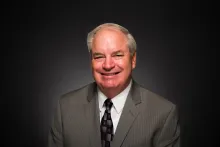
Robin Webber was born in Chicago, Illinois, in 1951, but has lived most of his life in California. He has been a part of the Church of God community since 1963. He attended Ambassador College in Pasadena from 1969-1973. He majored in theology and history.
Mr. Webber's interest remains in the study of history, socio-economics and literature. Over the years, he has offered his services to museums as a docent to share his enthusiasm and passions regarding these areas of expertise.
When time permits, he loves to go mountain biking on nearby ranch land and meet his wife as she hikes toward him.
