
Robin S Webber
This transcript was generated by AI and may contain errors. It is provided to assist those who may not be able to listen to the message.
We're covering, for those of you that have not been here and experienced the first two classes, you've missed something. No. Anyway, that having experienced the first two classes, we're going through 1 John. 1 John is one of the last books written that had been put into the canon of the Gospel. Most likely, 1 John was written somewhere between 85 to 100 AD. I would suggest, I would throw out the 100 AD. That's what some of the commentaries say. I feel more comfortable with, let's just say, 90 AD to round it out.
This man was there at the end. You know, Jesus, when he was calling his disciples, remember how he prayed and meditated on that time before he chose the ones that he would call? They were all called for a purpose. Here was a man that, along with his brother James, known as the Sons of Thunder, were men that were dynamic, that were compelling.
Now, we recognize in one sense, as time went on, that John kind of threw off that nickname as far as being a son of thunder. He became known as the Apostle of Love. But that doesn't mean that he still didn't have that inner fire for what God had revealed to him. The inner fire of remembering what it was like having been there from the beginning. And that's why it's so important when we're reading 1 John, that's a theme that comes out again and again from the beginning. And you find that interwoven both in the Gospel of John and the Epistle of John, this thought of beginnings, foundations. And John's the only one that's around now, most likely.
All the other apostles have been basically, according to tradition at least, been martyred. Most of the people that had been there from the beginning, even those that maybe had been resurrected on that day that Jesus died. You know the resurrection that occurred at the crucifixion and all the people?
Everybody was dead! All those people that had been there in the 30s and 40s AD were basically dead. All the witnesses to the ministry. John is still there. The difficulty is that a lot of people were saying, well, Jesus isn't everything that you thought He was.
People had gotten it wrong that Jesus was never really human, that Jesus was divine. We might almost say like a holy spook. In other words, even if Jesus walked on this earth, He didn't leave footprints because a good God could not be encapsulated within earthly human flesh. That's a large part of the first section of John where John is just knocking down what we call Gnostic thought.
Gnosticism is basically the thought of being in the know, having esoteric knowledge. Basically, that good is going one way, evil is going the other way, and the twain shall never meet. But of course, then we have the situation where the good God, the Word, was encapsulated in human flesh. As the Apostle Peter said, literally, tinted with us. He scannued. That's the Greek, scannued. He tinted and or tabernacle. Now we're moving into a different vein of John.
We're moving from the instruction of who Jesus was to how to be like Christ and to follow his instruction. With that comes a certain amount of what we might call certainty. That's one thing that John hits up again and again and again, and that is the aspect of certainty. You can be certain of these things. You can be certain that Jesus came and no less from the flesh and ascended as the Son of God. Also, we can be certain of the teaching that he gave.
We saw that as we concluded last time as we see this inner weaving of the commandments. Verse 7, Brethren, I write no new commandment to you, but an old commandment which you have had from the beginning. Then we see in verse 8, again, a new commandment I write to you. I can't say the new and old and new. Basically, this is a re-examination of Jesus' teaching, recognizing that the commandment given under the law was basically, you shall love your neighbor as yourself, which was at that time very far-reaching in the world of antiquity. Because if he didn't like your neighbor, he usually lopped off his head.
But what they said was, you shall love your neighbor as yourself. In other words, that love was based upon self-respect. As you respect yourself, respect others. Jesus came along, now John repeating that, again, a new commandment I write to you, which thing is true. That commandment is the same one that Jesus gave on that night that he was taken. That is basically the aspect is that this new commandment I give you, that you shall love as I have loved you. Of course, that love then is defined in John 15, 13 as a love that is predicated on self-sacrifice. Not self-respect, but self-sacrifice because Christ sacrificed himself. So we're kind of going through this, and then let's move into verse 10. He who loves his brother abides in the light, and there is no cause for stumbling in him. Now, if you weren't here last time, we need to understand that again in 1 John, there's a couple of themes that are running through this, and one is fellowship with the father and with the son and with one another. A lot of religions of antiquity had fellowship with fellow believers. In other words, a fellowship with an assembly. What made Christianity so radical and revolutionary is this concept that you might not only have fellowship with those that come to worship, but that you may have fellowship and camaraderie with the divine being. This was totally revolutionary in the world of antiquity. The gods back then demanded sacrifice. They demanded worship. They demanded offerings. They demanded it, and they demanded it, and they demanded it, and they didn't give anything. So this concept of Christianity of a familial relationship was revolutionary. Sometimes we don't recognize how revolutionary it was, and the way that that fellowship and that communion was established. Let's remember, communion is not a term that we often use in our Church of God community, but it's a term that's very biblical. Canonia means communion. It means fellowship, the cup of communion, because back then what they would do is they would pass a cup, and everybody would drink. That's a very up-close personal bonding experience when you're drinking out of the same Dixie cup. And so there was a communion and a fellowship, this bondedness. And this fellowship is revealed to this audience that is at Ephesus, or at least Asia, by three veins. It's a fellowship that's understood by light. It's a fellowship that's understood by love, and it's a fellowship that will be understood by the eternal life that all of us can embrace. So there's light, there's light, there's love, and there's, excuse me, there's light, there's love, and there's life, eternal life.
Now it says, he who loves his brother enters his fellowship, abides in the light this framework of fellowship that we're being called to, and there is no cause for stumbling in him. So if you love your brother, it's fine. Well, I can, you might say, well, I can do that. It's kind of like in our talk before, you know, different things that were going over the cliff. I might go over the cliff for this or that. But then notice what it says here in verse 11. But he who hates his brother is in darkness and walks in darkness and does not know where he is going because the darkness has blinded his eyes.
Again, we must remember what darkness was like in the ancient world. Dark was dark.
Mr. Edison was not yet born. When the lights went out, it was dark. And yet, in the darkness, if somebody just let one little...have any of you been to one of these museums where, you know, we know when we carry a lantern, we think of maybe carrying something that we've got in a camping store and it's real big. But those little lanterns that they used to have, kind of like made out of mud or clay, they're about this big. And you know, a little oil and, you know, you kind of held them. They're, you know, books make them look gigantic. And you go, you go to a museum. Where are they? Oh, there they are. You look at it and, you know, just a little, little, little light. And you'd light that. And just that little light in the dark could sometimes be seen for miles. It's amazing the impact of light and how it just moves through darkness and brings to life things. Well, John is saying this. He who hates his brother is in darkness, is dark and walks in the darkness and doesn't know where he's going because the darkness has blinded his eyes. Now, this is something for us to really consider, especially as we're coming up to the Lord's table on the evening of Passover and recognize that we are partaking of the symbols of his sacrifice of the bread and of the wine. And it's a cause to consider to recognize that the one who symbols that represents that when life was at its darkest and he was hanged from a tree with nails through his hand, looking down at the audience that had put him up there said, Father, forgive them for they know not what they do. And forgiveness is an act of love.
Forgiveness is the first step towards reconciliation. Reconciliation is the next step towards restoration. Now, that's a hard call to do. That's tough to forgive your enemies, to pray for those who wrongfully use you. Now, it's kind of interesting as we go into verse 12, what is mentioned here because John is probably 80, 85, I'm not sure, years old. He's a ripened senior citizen. And he says, you know, we're all going to need some help in this. So, we're going to need to kind of look at the different chapters that are on the spiritual journey and the different age groups that are in the church. And notice what he does now. And here he is an apostle. That means that he has some weight in the church community, but he speaks in what we call a familial sense in the term of family, which is very interesting that the Bible and something for us to think of, we thought our, shall we say, even as ordained leaders in the church, that we always look at our membership and our brethren, not as numbers, but as family members to treat them in terms of a family. The very term elder was the term that comes out of the Jewish community of old. It's the term in the Greek, it's called presbyteros, that's used in the New Testament. And that was elder. That kind of comes out of the world of Middle Eastern antiquity, where there'd be the patriarch or there'd be the elder, kind of the one that looked down upon all the different generations of the family in a loving sense, treating one another as family members. That's why it's interesting, verse 12, I write to you, John speaking, I write to you now as little children. So in this writing, in this familial sense, he's saying to you that are new in the church, you that have just come into this way of life, I write to you, I'm concerned about you, I love you.
And I want you to realize that your sins are forgiven you for his name's sake.
So John is kind of mentioning, there's this group out here and I realize that you're there and, you know, right now for you, life is exciting. There's nothing more exciting than to be forgiven and to be brought into family. And that's what happens down through all of the ages in the church.
People are forgiven. And in a sense, as we go into the baptismal pool, we're alone. Nobody else is going down with us. Have you ever noticed that? We go down by ourselves and we're brought up. But as we walk out of those steps, we are placed into the spiritual body of Christ, replaced into a family. And there's nothing more joyful and exciting than that first love of, I have been forgiven. Everything that I have done is forgiven, forgotten. The judgment has been pulled away from it. And I'm just like that beautiful, beautiful white sheet out there on a clothesline on a summer day, just basking in the wind and taking in the rays. And it's white and it's clean. I know in our society, we don't do that a lot anymore, but my wife used to just love to hang out sheets and just let the sun do its job and the wind and then bring them in and just everything's so pure and white and clean, except where the mosquito landed. No, just here. But it's clean, it's bright, it's pure. And John validates that. And all of this notices why little children, for his name's sake. Now, that's very important to consider for a moment. Let's go to Acts 4 in verse 12.
Acts 4 in verse 12.
John was there when these things were first being written, remembers and recalls the importance of some of the teachings of the early church. Notice what it says in Acts 4 in verse 12. Nor is there salvation in any other. For there is no other name under heaven, given among men, by which we must be saved. The name of Jesus Christ is paramount amongst all names under heaven. You notice that sometimes what happens even in today's society in this land that is supposedly free to express your religion, sometimes you'll get panels. You'll have somebody from one religion and then another religion and then another religion. And you're talking about the moral lay of the land, or this is happening, or that's happening. And they might have somebody that is from the Jewish community. And then you might have somebody that's imam from the Muslim community, especially over the last 10 or 15 years. And then you might have the Catholic priest. And then you have what I normally call the Protestant guy. It's normally the Protestant guy, though, that'll bring up something that gets everybody stirred up like an anthill. And that is, he'll bring up the name of Jesus. And then all of a sudden the whole party, the whole panel goes down south. There's that name! Now that's dividing us. You know, you can worship your God, and I can worship my God, and I'm okay, and you're okay, and there's many pathways to heaven. Now why did you bring up that name and start the whole rumble? Let's understand something is that the name of Jesus Christ is always going to create a rumble. It was prophesied too.
Simeon, the old gentleman, remember that Jesus was brought too? Who said that he would see the salvation of Israel before he died? And he gave a blessing over the Christ child, and he said, in this child will be the rising and the falling of many. Everybody has an opinion about Jesus Christ and is either a rising and or a falling. That's why we need to recognize as Christians, in this world that is more and more becoming, I'm okay, and you're okay, and my nirvana is like your paradise, and my paradise is like your heaven, or my heaven is like what we would translate in our terminology, the kingdom, or this or that. And everybody's got all these roads going to the ultimate. The reality of Christianity. Christianity 101. And this is the certainty. Remember, 1 John is written to people that were now in the third generation. Most of the early church had died off. Now you've got that third generation. They haven't been grounded. And John is trying to give them some certain grounding that there is no other name. And what makes things possible is that it is in his name. Let's think about this for a moment. There is no other religious leader who could die for sin. There is no other religious leader who came to earth from heaven as God's son. And there is no other religious leader who has died that has risen. Christianity cannot be measured by moral relativism. Christianity is unique. It is the revelation of God. Notice in what it says here in verse 13, I write to you fathers. Now that's interesting. There's a time to be young in the church. There's a time to have that first love. There's that time to know that you are forgiven. There's that time to feel the joy of fellowship of like minds and like hearts. But then notice what it says. John, I want to address this other part of the congregation because you're all going to need one another. There's different seasons of life that are coming together here. I write to you fathers because you have known him who is from the beginning.
John here is speaking of a ripening and a deep communion with this way of life.
That comes from years of experience.
Experience is probably not the best teacher, but it's the most memorable.
I remember many, many years ago, Mr. Armstrong once commented on that. He said that obedience is the best teacher. So often we've said experience is the best teacher. So I took from that and I put them together. I cobbled them together. I said, no, experience is the most memorable teacher.
But it does take time, doesn't it, to experience this way of life and know how to handle the revelation that has been given us. John makes this comment. It notices it says, you've known him from the beginning. The commentaries bring out something very interesting here. When it talks about knowing him, the hymn that is being spoken about here is not so much what we're normally familiar with in John's writings about the Logos, the Word being Jesus Christ.
The energy of the Word, the weight of the Word, tends to be more dealing with the eternity and or the agelessness of God. Join me, if you would, in Psalms 90 here for a moment. In Psalms 90, it's the seasoning of time. It's the passing of the ages, much like the wisdom of the wilderness that was given by Moses over in Psalm 90. Let's take a look there for a second.
Psalm 90 and verse 1, let's take a look. Lord, you have been our dwelling place in all of our generations before the mountains were brought forth. Or ever you had formed the earth and the world, even from everlasting to everlasting, you are God. There's an anchor here. There's a steadiness of having handled the revelation of God for many, many years. You know what happens sometimes? It's like we're talking about in the message today. After baptism, things are going along all right for a while, and all of a sudden, you know what? You sin.
And you get all shook up. This wasn't supposed to happen. What's going to go on? Am I really a Christian? What? And you get all of this, and then you have one of the fathers or one of the mothers, let's put it that way in the church, that are seasoned, that have been around, that are anchored in the Word, anchored in the story of Christ, anchored in their own experiences that can come along to the young children and say, this is how it is. There's an anchor. This too will pass. Then notice what it goes on to say here, I have written to you, I have also written to you, young men, because you have overcome the wicked one. Now, that's interesting. That's mentioned in the present tense. And that reminds us that once, yes, we're little children in the church for a while in this way, we develop, we become young men, but just because we've been forgiven doesn't mean that we don't continue to combat and to deal with the adversary, to deal with sin, because you have overcome the wicked one. And here Paul brings in the thought of, you know what? There is an adversary. This is not just about all of these Gnostics that are running around, all of these philosophers that are running around, but we also have a spiritual adversary. Again, I write to you, little children, because you have known the Father. And again, verse 14, I have written to you, fathers, because you have known Him who is from the beginning. That's why, like we did today in the message, it's always so important to go back to the beginning. Whether it's in the beginning of the book, going to Genesis, the foundation, and we're going back to our spiritual beginning, our baptism, our call to repentance, God's miracle in us and what it performed.
I have written to you, young men, because you are strong. So there's a certainty and there's a conviction. And why is that? And the word of God abides in you, and you have overcome the wicked one. Now, this is kind of fascinating information here. The strength that is mentioned here is interesting, and it is in conjunction with the word of God and the word of God literally being inside of us. It kind of goes back to the thought of Psalm 119, verse 9. Join me there for a moment. I'll take a break here in a minute. Psalm 119.
And notice what it says in verse 9. How can a young man cleanse his way? I believe other translations say, how can a young man be pure? Then, you know, so often when the Bible asks a question, the answer will come along by taking heed according to your word. And with my whole heart, I have sought you. Oh, let me not wander from your commandments. Notice this, verse 11. Your word I have hidden in my heart that I might not sin against you. That's kind of key.
In other words, the thought is this. If I may, if you'd like to look up here for a moment, this is a living PowerPoint. Don't want to miss this. In other words, it does not do enough.
It is to no avail that we simply look at the Word of God from a distance.
The power of the Scripture basically says that we ingest, we imbibe, and we tuck away this Word of God as being spiritual ammunition for the day in which we need it. It doesn't do any good out here. It will only help us if we have hidden it. You know, we've all seen the, you know, we always think of the famous squirrels. You know how a squirrel, a little heather, right now, I'm glad my wife's not here today, she always gets nervous when I start doing this, and start taking faces. But, you know, you know, we've all seen a squirrel like this, just stores, and stores, and stores, and it gets bigger like that. And then, you know, the busy, ch-ch-ch-ch-ch-ch-ch-ch-ch-ch-ch-ch-ch-ch-ch-ch-ch, they come back out, and thin cheeks go back, get more, store. That's the implication of the Bibles, that we need to store God's Word, hide it, tuck it away in our hearts and our minds for the day when we need it.
And we're going to see that as an example here in a moment, to see how that works. Because, here we are in verse 19. In verse 19, we move to an aspect, again, of contrast. It's very interesting that, for some of you that weren't here last time, did you realize that the Apostle John does not mention in 1 John? So there is no, shall we say, direct proof or signature in this that John wrote it. We deal with it by the literary evidence and the way that it is written, that it seems very well matched with John. And one of the things that John does in his writing so effectively is he offers contrast. We have the contrast of light and dark. We picked that up in the beginning of the first chapter. We mentioned at the beginning here, in chapter 2 of this Old Commandment, New Commandment, we have contrast. We're now going to enter what we call the third area. Are you with me? The third area of contrast. We find it in verse 15. Do not love the world or the things that are in the world. If anyone loves the world, the love of the Father is not in him. So we have this contrast teaching. There's the love of the world and there's the love of the Father. But I have a question for you. John 3 in verse 16 says, for God so loved the world that he gave his only begotten son. So is this a contradiction? Who can help me? Sounds like a contradiction to me. John, is he speaking to two different audiences? Does he have two different thoughts? Nobody's going home until somebody answers this question. I'm sorry. So you better raise your hand.
Skipper.
Okay.
You're saying that verse 16 clarifies verse 15, putting meat and bones on what is what we call worldliness. But if you didn't have verse 16, and that's good to read in context, but if you just had verse 15, how can we work off of verse 15? And that's very good, Skipper. Thank you. But how can we work off of what can we learn from verse 15? Let's hint hint. Let's remember that the Bible is basically written in two major languages, and we'll throw in a third being Aramaic. But basically, it was written in the Hebrew tongue and then later on the Greek. And so we've got to recognize that this is not the original language, and we'll hand it over to Mr. Koel.
Okay, okay, fine. What we're dealing with, it kind of comes back to the aspect, too, and we often mention this in Christian parlance. We are to love the sinner, but despise and or hate the sin. The term world that is being used here in verse 15, let's jot this down, please, starts with the K. It's cosmos. That's where the term cosmos, C-O-S, we use. K. The term cosmos there in the Greek language is not dealing with people, but it's dealing with a system, an order, a structure. Commentaries might bring out these two terms, the ornamentation, the ornamentation, and or another word that they use is the adorning. So John is saying, look at what, and he had a lot to show out there as far as evidence, especially with the Greco-Roman world. Look at this adorning that's out here. All that glitters is not necessarily gold, and don't be attracted by that. There's a reason why. Do not love the world or the things of the world, and if anyone loves that world, the love of the Father is not in him. You can't have it both ways. There's one thing about the Bible that's very important. If I can make a comment. They're supposed to be nodding. I can make a comment. The Bible does not deal with triangulation. Triangulation is a political form that came up during the 1990s, of which you try to move everything into the middle, try to compromise, kind of get into what we call the muddled middle. God does not offer compromise in his word. What he does offer is surrender to his way. You know, when you think about it, and I often speak about this when I go out on the the prophecy seminars, is that in the Bible there's only two cities that are really important. Everything else is in the almanac. There's Babylon and there's Jerusalem. And sometimes what people wonder is, can I have a third choice? No, there's no third choice. The whole flux and flow and crescendo under the book of Revelation is as is now, as is in the future. There will only be two choices. You only get to be a citizen of one, and you must make a choice. You must either be a citizen of the heavenly Jerusalem now, and or you must be or have desired to be a citizen of Babylon. There's no third choice.
Where is it when I need it? God doesn't operate that way. The contrast, the certainty is there, because you know and I know that as Christians, whether it was, you know, this was most likely written to the Ephesian church, let's say minimally to the the province of Asia, of which Ephesus was the capital. Ephesus was one of the five great cities of the empire. Ephesus is where the east met the west, so there was already this triangulation of the Oriental and the Occidental.
Oriental and the Occidental. Got my directions right. Cultures coming together, had one of the seven wonders the ancient world was given over to the worship of Diana and or Artemis and the Greek. And so there's a lot going on that was pressuring these people. And John says, wait a minute!
You've been called to be a citizen of the kingdom. Don't love the structure and the order of this world. And if you don't know what it is, here it is. For all that is in the world, the lust of the flesh, the lust of the eyes, and the pride of life is not of the father, but is of the world.
You can't have it both ways. No, it's kind of interesting that some commentaries vary on this. Some say the what I'm about to add may or may not be taken into this, but other commentaries do. It's very interesting that if you want to do your own Bible study, and I'll put it this way right now for sake of time, or look at the notes that I'll send out to you tonight on the computer or the notes I'll pass out to you that don't have computers here today, you can do a whole Bible study of how in the Garden of Eden, Adam and Eve were confronted with each of these regarding the fruit. That Adam and Eve were confronted with the lust of the eyes. It was good to the eyes, to the lust of the flesh, to the pride of life. All of these things were there. And not only that, but also when you look at the temptation of Jesus on the Mount, the same things were right there. The lust of the flesh, the lust of the eyes, and the pride of life. The difference between the first Adam and the second Adam is that the second Adam, that's a biblical term for Jesus, coming as the second Adam. Normally in the Bible there's always a lesser and greater, first and second, is that Jesus applied Psalms. He hid God's Word in his heart so that when all of those big challenges came, and you can't, we can't always know when the challenges of life come when it comes to worldliness. You can't say, you know, about 545 this afternoon, I'm going to be ready for the big one.
Come on, say, give me your best. I'll be ready for you at 545 this afternoon, you know. You can't time when you're confronted by Satan. You can't time when the adversary comes. What we can time is loving God's Word, putting it in our heart, and having it there. Well, sometimes I know in dealing with some people to say, but you know, Mr. Weber, I just don't have a good memory. I just can't memorize the entire Bible. It's just, some say it's all Greek to me, and they're half right. Let's remember something as Christians and people of the book and people of the heart.
It's not how much you know. It's what you know. And what you know is that God made a promise that He will never leave us nor forsake us, and that His Holy Spirit will bring to mind the things that we need when we need them. When we're under trial, probably the genealogy of Adam is not going to need to come to mind. It's not one you're going to need to know. Did I say the genealogy of Adam?
The genealogy of David going back. Genealogy of Adam could be interesting. That sounds Gnostic. I'd better not go down that path. But I've always found that when I need an answer, God doesn't give me five answers, and He doesn't give me 10 scriptures, but He will place in my heart the verse that I need for the moment. I know so often what Susie does. You know she'll pray about something. She'll get off her knees. She'll go to her library. She'll open a book. And I'm not talking about the the witching or the divine rotting stuff, but she'll open a book, and it is exactly what she has been praying about. It's exactly where her heart has been inquiring, and the answer is there. Now you could say, you're skeptical.
Well, that's just coincidence. But I don't believe in a coincidental God. I believe that God directs our footsteps, and He opens up things to those that are seeking Him. And we can have that. You know, when Jesus on that mountain was confronted with issues of pride of life, you know, Satan took him up there and said, hey, look! You're the Son of God! And, you know, it says He'll give His angels charge over you. Just take one leap for the gipper. Just go ahead and do it. And, you know, Jesus kind of said, you know, kind of got... and probably it might have been during a festival season, so there were all sorts of people up there in the Temple compound area. Jesus could have said, well, now that you mention it, you got it right. I am the Son of God. And I think I will... I'll show you what I can do. But Jesus came right back and quoted out of Deuteronomy. And I've got that in the study guide that I'm going to show you. Every time Satan offered a temptation, because Jesus had hid the Word of God in his heart, he had an anchored principle. So I'll let that be your Bible study as we move forward. I don't have to cover that all day. See, church should just be the beginning of the study, right? You'll finish it at home. Let's keep on moving here.
Because why settle for this world? Notice what it says, and the world is passing away, and the lust of it, but he who does the will of God abides forever. Did you notice the contrast again? This world is passing away, and it says, but he who does the will of God abides forever. Passing away? Forever. Contrast. Let's look down at that Scripture for students of the Bible. Let's take a close look at this. We all know that the world's going to pass away, but notice also what's going to pass. Have you ever noticed that before? Read the Scripture for a moment. I'll take a 15-second break. I don't know if you've ever noticed it before. I didn't really focus on it until I got into the study of 1 John. There's also something going the way of the dinosaurs. There are only five lines. You'll find it in there. It's five lines. Diane, were your classes like this? Yeah. Okay. What is it? Yeah. Okay. The lust is going to pass. I think that's kind of important. It says that not only the world is going to pass away, but there's going to come a time when the lust, the desire, is going to pass away. What commandment out of the Decalogue deals with lust? What commandment out of the ten deals with lust? This is true. There's always one in the class. I know. Thank you. I'm going to give you an A. Did you ever do that in school where you gave the right answer, but it wasn't the answer the teacher wanted? So, yeah. Okay. Yeah. Okay. That's part number 10. Why is America today having the difficulties that it's having?
I'd say the 10th commandment has a big role in this. Our eyes are bigger than our means.
And now we have a national financial meltdown. Now, I realize you can bring in many straws into the drink and blame this person or blame that person. But if we really want to be honest, we recognize that America, with all the blessings that we've had, is also a nation that is wounded by coveting. You know, when you look at the situation of the housing market, when you look at the situation with credit, people want everything. You know, the Bible says, don't lust after this. Don't lust after that, which is not yours. Romans 13 and verse 8. There's one of those scriptures that you can hide in your heart when you're about to use your credit card. Romans 13, 8. Oh, no, man! Anything! Yeah, we can just keep on going, keep on going, and well, we can think we're different.
As Christians, we need to be very, very careful. Mr. John Garnett is going to be coming down here in a couple weeks. He's going to be talking about Christian financial stewardship. We're in for a long haul, folks, and we're going to have to be very circumspect about how we apply the lust of the eyes, the lust of the flesh. Today, a lot of young people don't realize what it takes to have something. They say, well, my dad has one. I'm going to have one. So they go out and they buy a screen bigger than their house so they can watch Mickey for their kids. Or a car. We used to have cars. Now they're buses. And it's all right, but it all costs, and it usually costs more than you can afford. And we recognize that ultimately the bills come due. I had a young couple next to me. These couple have been up to our house. Had a nice single-story house. Nice young couple. Really nice people. Really liked them. Well, I'm watering their yard now because they don't live there anymore. They bit off more than they could chew. They were swung by the sirens song that you won't be caught. So they probably started out with a house payment of maybe $1,200. Something that the gentleman could afford being in construction.
That same house today he would have to pay $3,500 a month for as a young 26-year-old construction guy. Had to walk away. I'm watering the lawn now because I don't like to look at brown.
It's all around us.
And we can read the headlines, but let's make sure that right now that we are not a part of this world, a part of this system, that we are living within our means. This is one way that we can learn not to practice worldliness and to practice godliness. I'll tell you what, I'm going to hold it right there unless there's any questions. You've been patient. We started a little bit late. We've gone about 46 minutes. You've been a good class, so I'm going to let you out early. I want to hit this other area on the Antichrist next time in a different vein. So if there's any personal questions, thanks for coming. If there's any personal questions, just bring them up to me. And if we haven't talked today, come on up and I'll have to talk. I'll see you in a couple of weeks otherwise, okay? Thanks for coming.
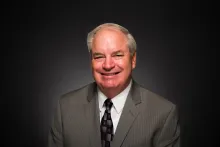
Robin Webber was born in Chicago, Illinois, in 1951, but has lived most of his life in California. He has been a part of the Church of God community since 1963. He attended Ambassador College in Pasadena from 1969-1973. He majored in theology and history.
Mr. Webber's interest remains in the study of history, socio-economics and literature. Over the years, he has offered his services to museums as a docent to share his enthusiasm and passions regarding these areas of expertise.
When time permits, he loves to go mountain biking on nearby ranch land and meet his wife as she hikes toward him.
