

Don Ward
This transcript was generated by AI and may contain errors. It is provided to assist those who may not be able to listen to the message.
In our studies, we are covering General Epistles. We are now in 1 Peter 4, verse 1. So if you would turn to 1 Peter 4, verse 1. Remember that the Apostle Peter, some call him, and I would call him, the Apostle of Hope. The Apostle Peter was told by Jesus Christ that he was going to be crucified. That was the only way that he was going to get out of this life. That he would die, an ignominious death, being crucified. And according to legend, he was crucified upside down.
So here is this Apostle. He is writing this from Babylon, which we'll see in the last few verses of chapter 5. I was once engaged in sort of a debate with one of the prominent evangelists in worldwide. If I called his name, you would know him immediately.
In which he wanted to contend that Babylon was a code word that really he was in Rome. Of course, the church has really never taught that. Peter was never in Rome, as far as we know, with regard to the historical record. So Babylon is Babylon, which is now modern Iraq. That's sort of beside the point as far as the message is concerned.
So in 1 Peter chapter 4 verse 1, For as much then as Christ hath suffered for us in the flesh, and of course he suffered mightily, as he was put to death through crucifixion, being scourged severely before he was finally allowed to go up the hill. There was another person who had to carry the mistake for him as he trudged up to Golgotha. As he has suffered in the flesh, arm yourselves. Equip yourselves.
And of course, the armor that we're to put on is spiritual. We're to be armed with spiritual weapons. You would look at 2 Corinthians chapter 10. With regard to the armor, we're familiar with Ephesians chapter 6, beginning in verses 10, 11, 12, to the end of the chapter of the put on the whole armor of God. But this specifically tells you what kind of weapons. In 2 Corinthians chapter 10, 2 Corinthians chapter 10, verse 3, For though we walk in the flesh, we do not war after the flesh.
For the weapons of our warfare are not carnal, they're not fleshly. The Greek word is sark, which in other places translated flesh or fleshly, carnal, but mighty through God to the pulling down of strongholds. And that strongholds that come upon our minds, that grip our minds, is one of the most difficult things that we have to deal with in this life. It's not the strongholds of that which can be discerned through the 5 senses, necessarily. It's the strongholds of self and what we might imagine and what we might think.
Really, there are three S's you might say that we have to overcome in this life. Number one itself, number two is Satan, and number three is society. Or you could say this world, but it's easy to have a sort of a mnemonic device of the three S's, self, Satan, and society.
So though we walk in the flesh, we do not war after the flesh. The weapons of our warfare are not carnal, but mighty through God to the pulling down of strongholds. What are the strongholds? Vein imaginations. Verse 5, casting down imaginations. Those things that you may conjure up in your mind with regard to, am I going to be able to make it? Can I get through this? Or what is so-and-so saying about me now? Or anything that is of that nature that's in your mind?
So, casting down imaginations and every high thing that exalts itself against the knowledge of God. What does the knowledge of God say? The knowledge of God says, I will never leave you, I will never forsake you, lo, I will be with you, even to the end of the age. If God be for you, who can be against you? All of those promises that God has made. And bringing into captivity every thought to the obedience of Christ. And of course, the thought process, thought precedes action, and action precedes forming a habit. Habit generally is defined, your habits eventually reap character. And Philippians 4-8 tells you what's everything or pure, what's everything or lovely, what's everything or good or poor.
If there be any virtue, if there be any praise, I think on these things. And having in a readiness to revenge all disobedience when your obedience is fulfilled. So anything that's there that conflicts with the truth of God, cast it down, cast it out through spiritual weapons. So we continue now in 1 Peter chapter 4, Arm yourselves likewise with the same mind, for he that has suffered in the flesh has ceased from sin.
Now think sometimes when we suffer, maybe we don't make the connection between. And it's not the case in every case, but there can be a connection between suffering and sin. It says clearly in Hebrews chapter 12, that God chastens every son that he loves, and if he be without chastisement, then are you illegitimate and not sons? God would rather see you dead than miss out on his kingdom. And so suffering can be. It's not in every case. It's not every case in which suffering takes place, that it is because of sin.
Ecclesiastes talks about time and chance happens to every person, and God doesn't put a bubble around us, a shield per se, that we live in a glass cage where nothing can penetrate or get through. And so suffering might be the result of somebody else's miscue or mistake or offense or whatever it might be.
It might be because the sins of the fathers have passed on to the third and fourth generation. And so there are many causes, but here is one cause and effect, causality. He that has suffered in the flesh is ceased from sin. And I guess some people, well, I'm suffering, and maybe not even see that there might be a connexion here between the way you're living your life, the state of your mind, the state of your being, and what's happening to you.
So surely this sets up a causal relationship, that he no longer should live the rest of his time in the flesh to the lust of men. It's wrong desire for the lust, this word lust and epitomeia, forbidden desire, that which is forbidden desire, but to the will of God. And the will of God is revealed to us through the Scriptures.
For the time passed of our life, may suffice us to have wrought, to have done, another translation would be, performed to have done the will of the Gentiles, the nations, those who are not within a congregation of God. When we walked in lasciviousness, this word lasciviousness is similar to the word licentiousness, which means to license to sin, to go do whatever you want to. Filthiness, wantonness, lasciviousness, lust, excessive wine, banqueting, revelings, and abominable idolatries.
Wherein they think it's strange that you run not with to the same excess of rioting, speaking evil of you. Well, I remember, oh, Job, way back when we were in high school, we really enjoyed being together. We had lots of fun back then, but now he's become whatever he's become. Reminds you of this old country song where this guy says, you ain't much fun since I stopped drinking. But the... I've had this happen to me before, though I was a teetotaler until I came to Ambassador College, and in Ambassador Club, they passed around the beer. I mean, when I first came to Ambassador, I guess this is negative, probably shouldn't say it, but I've started it.
When I first came to Ambassador, they passed around the beer, and we had a...
Of course, there was the basketball games initially. This changed rather quickly, in which some of the faculty were sitting in the stands drinking mixed drinks.
Now, in the first semester of the freshman year, the freshman Bible class, which was the Gospels, Matthew, Martin, Luke, and John, we were to write a term paper.
And that first semester, I wrote the term paper, The Use of Wine in the Bible, and I laid it on pretty thick. And I think I was viewed a bit differently after that.
But that's where I had my first alcohol, and it was Budweiser. But anyhow...
Of course, if you change your life and begin to go God's way, there does come a separation, as it were, between the way that you're living and the way that maybe you formerly lived.
It's hard to imagine in some ways the shock, the difference between what the Gentiles were doing, those who did not know God at all, who were steeped in paganism and all kinds of vices, for then one of them to become converted and become a Christian.
It was quite the turn. Now, in today's world, and one of the things I want to speak on sometime in the near future in more detail has to do with this ever-encroaching acceptance of evil, and it can't help unless you're really on guard, because it's ever-encroaching evil and how it may influence us in the church, and especially our children.
Proverbs 8, 13 says that the beginning of wisdom is to fear God and to hate evil. Beginning of wisdom is to fear God and to hate evil. It also says in the Psalms that God is angry with the wicked every day. Does God get mad? That says He's angry with the wicked.
And the more I see it, it is so sickening to see the way that things are going. And you know, you have the Ezekiel 9 that talks about those who sigh and cry for the abominations that are going on. Set a mark upon them, and they are the ones who are going to be protected when the writer goes through and slaying those that do not have the mark.
Verse 5, who shall give account to himself that is ready to judge the quick, that's the living, and the dead. Verse 6 could be a problem for some.
For this cause was the gospel preached also to them that are dead. It doesn't mean that there's currently being preached to the dead. It was preached to them before they died, because God is coming to judge the quick and the dead. And the dead had the gospel preached to them before they died. With regard to this thing about going to heaven, you just, or going to hell when you die, you just think about 1 Thessalonians chapter 4, where it says that the archangel shall sound the voice of the trump of the archangel, and the dead in Christ shall rise first, and those that are alive and remain shall be caught up in the air to meet him in the air, and so shall we ever be with the Lord. Showing we weren't with him before that time in the sense, because those who are in the grave have no consciousness. So this is talking about those who had the gospel preached to them before they died, that they might be judged according to men in the flesh, and people might judge you according to the flesh, but live according to God in the Spirit.
And of course, the Spirit is, and the will of the Spirit is revealed through the Word of God, but the end, and this word end appears quite often in the New Testament, in the Greek, it's telios, T-E-L-I-O-S, and it means outcome or result. It can mean the end, but generally speaking, it means the result or the outcome. The result or outcome of all things is at hand, be therefore sober, not drunken, not given to excess, and watch unto prayer. And above all things, have fervent charity among yourselves, for charities shall cover the multitude of sins.
Now, I've spent some time on this already, and it seems that when people get a certain notion in their head, it's there. It cannot be like excised. You can't do it a...
What shall we call it? A brainectomy?
How fervent charity, agape, spiritual love among yourselves, for agape shall cover the multitude of sins. Does that mean that a person has sinned, and if you love them, their sins will be forgiven? What is the only way that sins can be forgiven in the spiritual sense? I'm talking about sin that is sinned before God. Now, the word here is harmatia, which is translated sin 276 times. Harmatia, it can mean offense, and it can mean missing the mark. It is probably the most common Greek word that is translated sin. So, if you steal, and I say, I love you, and I pray for you, will that cover your sin? Well, you know the answer to that.
But in life, there are many offenses that take place that are not necessarily transgression of the law of God. He continually leaves his clothes on the bedroom floor, and I've told him, I would wish you would put up your clothes.
Or he, every time, he puts his dirty cup in a place where I've told him not to put it.
Or you could reverse it and say, I've told her whatever it is. Some of those things like that are offensive, not necessarily violating the law of God, per se. And oftentimes, some great blowup occurs over just sort of a misspoken word. You didn't really mean anything by it, but it's taken in the wrong way. Or you make a mountain out of a modal hill, and it just goes on and on. And obviously, there's a lot of give and take. And the number one reason that I have found for people that I have seen, when all is said and done, it may be different things. Now, I'm not saying this is true in every case, but to a large degree, it is because people are not willing to give up self, to give up self, to overlook a lot of things that are not the things that are transgressions of God's law. Have fervent charity among yourselves, for charity shall cover the multitude of sins. Now, you could look at it this way. For God so loved the world that He gave His only begotten Son, that whosoever believes in Him should not perish, but have everlasting life.
Because of charity, because of love, God sent Jesus Christ. Or you could look at it 1 John 5, 3. For this is the love of God, that we should keep His commandments, and His commandments are not grievous. Or we could look at it from 1 John 2, 4, which says that if any man says he knows me and keeps not my commandments, he's a liar, and the truth is not any.
There are so many different dimensions, but when all is said and done, how is sin in the sense of breaking the spiritual law of God forgiven? It is through the blood of Jesus Christ.
But in our everyday living with the many offenses that can take place, well, I wonder what He meant by that. And a lot of people begin to dwell on, and this could tie in with the vain imaginations, begin to dwell on, well, He sat down, and I wonder what that really means.
If you see your brother sin a sin, then you have the obligation to be your brother's keeper and talk to him about it, and not just say, oh, I love him. Say, I guess I don't know what the Corinthians were doing. In 1 Corinthians 5, they had the incestuous fornicator among them, and they did nothing. It was like, well, that's his business. Finally, Paul intervened and said, put him away, that the Spirit might be saved in the evil day. And in 2 Corinthians, he's exhorting them to take him back because a person has repented.
I think you understand the point. I hope so. In 1 Peter 4, 9, use hospitality.
Of course, in the ancient world, the travelers and different people that visited, they didn't have a motel on every corner and all the kind of fast food chains and all of that jazz we have today.
I was reading the other day that over 50% of the meals now by Americans are taken outside of the home. That's why you can have Taco Bell and Burger King and on and on and on. It goes virtually on every corner, except in Big Sandy, they can't even have a Dairy Queen.
But use hospitality one to another.
A literal meaning, fond of guests, given to hospitality.
Using a word to define a word is not the best way to go, but some words are hard to explain or define just in so many words. Use hospitality one to another without grudging.
That means murmuring or complaining or grumbling. Oh, well, I guess he could stay here tonight. I really don't want him, but as every man hath received the gift, the charisma, even so minister the same one to another as good stewards of the manifold grace of God. Now, what that's saying is that if you have a gift, use it. If you have a gift, use it. The word gift is in the great charisma, C-H-A-R-I-S-M-A. I don't know if you can see it from there.
And it literally means a gift. And some definitions are miraculous faculty, which is given above and beyond natural talent. But it could be just natural talent. You have innate ability. It seems that musical ability seems to be inherited in certain families, that all of them can play a musical instrument or whatever.
As every man hath received the charisma, the gift, even so minister, and this word minister is the word that sometimes translated for deaconess or deacon, de-A-K-A-N-A-O, de-A-K-A-N-A-O, the same one to another as good stewards. In other words, this this gift has been placed in your care. Like somebody may give you a hundred dollars, you're supposed to be a good steward of the hundred dollars. Well, God says, I place in your care whatever gift it is, and you're to be a good steward of a manifold. And that means, the word manifold here means various. There are different gifts as explained in 1 Corinthians chapter 12 of the various grace. Grace is a derived from charisma gift, which means divine favor of the various favors of God. So God says, be a good steward of it. Make the best use of it. For example, if any man speak, let him speak as the oracles of God. Oracles has to do with the Word of God. Let him speak as the utterance of God. And what is 2 Timothy chapter 4 verse 4 say, Preach the Word, be instant in season, out of season. Rebuke, exhort with all long suffering and sound teaching. If any man speak, let him speak as the oracles of God. If any man minister, de achoo no, again, let him do it as of the ability which God gives.
Here we have a little bit different meaning here, ischus, meaning force or might or power. Let him do it of the force or might of power which God gives.
And then what is the purpose?
That God and all things may be glorified through Jesus Christ. To him be praise and dominion forever and ever. We had a good discussion in the Leadership Club about special music.
When all is said and done, special music is there not for entertainment, not necessarily to inspire, but it is a way whereby we can offer praise, thanksgiving to God and can be a form of worship. Beloved, think it not strange, concerning the fiery trial, which is to try you as though some strange thing happened unto you. Everyone who lives godly in Christ Jesus shall suffer persecution. That's what Paul writes in another place.
But rejoice in as much, and time after time in the Bible, we have this thing of rejoice in trials.
Because in trial it is a testing, it can be a chastisement. It is a way whereby God can see, it is a way to measure, to test what you are on the inside. And the Scripture definition is to rejoice. James, for example, James 1-2, my brother encountered all joy when you fall into different trials. That is going on to perfection, going on to a maturity that is above and beyond what we normally think of. But rejoice in as much as you are partakers of Christ's sufferings, that when His glory shall be revealed, you may be glad also with exceeding joy. Hebrews 12, let's turn there and look at that, talks about the joy that is set before Him. We've mentioned this in the past with regard to the big picture of you realize what is there, what's set before. Chapter 11 catalogues several men and women of faith and what they did, what they went through. Chapter 12 continues, wherefore seeing we also are accomplished about with so great a cloud of witness, let us lay aside every weight and the sin which us so easily beset us and let us run with patience the race that is set before us. Looking unto Jesus, the author and finisher of our faith, who for the joy that was set before Him endured the stake, despising the shame, and is set down at the right hand of the throne of God.
See, even in the face of this great trial, who for the joy that was set before Him, that understanding that when whatever the time is, the time frame, that eventually sons and daughters of God, the resurrection, living as spirit beings, God's family, that only through His sacrifice could we be redeemed and bought back, and what that means in the total scheme of human existence. Verse 14, if you be reproached for the name of Christ, happy are you for the Spirit of glory, and God rest upon you on their part He is evil spoken of, but on your part He is glorified. So once again, the realizing of what is happening when trials do come and what you're doing if you go through it as God has given direction. But let none of you suffer as a murderer. Of course, there are different kinds of suffering. As we mentioned, suffering might be as a result of sin. Suffering might be sins of the fathers. It might be time and chance.
It might be an accident. It can be several different things. But let none of you suffer as a murderer or as a thief or as an evildoer or as a busybody in other men's matters. Yet if any suffer as a Christian, let him not be ashamed, but let him glorify God on this behalf. So it comes back to this. God is seeing how we're going to respond to the events of life.
For the time has come that judgment, Krima, K-R-I-M-A, must begin at the house of God, the church of God. And if it first began at us, what shall the end of the result outcome end, Talos again, of them that obey not the gospel of God?
Let's read that again. For the time shall come, for the time is come, the judgment must begin at the house of God. And if it first began at us, what shall be the end of them that obey not the gospel of God?
But take it that those who obey not are having the opportunity to obey, and if the righteous scarcely be saved, doing the very best they can, and keeping the commandments, and living the life of faith, where shall the ungodly and the sinner appear?
I mean, if the righteous scarcely make it, and that word scarcely can mean difficult, and therefore let them that suffer according to the will of God, commit the keeping of their souls to him in well-doing as unto a faithful Creator. God is faithful, and He will deliver you. He knows what He is doing. He is the potter. We are the clay. And so when we submit to Him, we should expect, and it will happen, a great, a good, a positive outcome. Now or later, whichever one, the just shall live by faith. The just shall live by faith. The time is coming which every man shall receive is just reward. You know where that's located, don't you? Let's look at that in 1 Corinthians chapter 4.
In 1 Corinthians chapter 4, 1 Corinthians chapter 4. Of course, the Corinthians were, they gave Paul a hard time.
They judged him on many different counts that they should not have judged him on, from his appearance to the way his voice sounded, to whether or not he would visit.
And it's like, well, they don't, he doesn't care for us. He hasn't been here. He's been everywhere else, but he hasn't come here, that kind of thing. But anyhow, in 1 Corinthians 4, 3, But with me it is a very small thing, that I should be judged of you, or man's judgment.
Yes, I judge not my own self, for I know nothing by myself, yet am I not hereby justified, but he that judges me is the Lord. Therefore judge nothing before the time until the Lord come, who both will bring to light the hidden things of darkness, and will manifest the counsels of the Now to chapter 5. The elders which are among you, this word elders, is presbyteros. It can mean elderly in the sense of age, but it also refers to a presbyter, one who is an overseer, could be a pastor, could be an elder who's not necessarily on the payroll, but he's an elder. He is a spiritually mature one in the Church of God. The elders which are among you I exhort who am also an elder. So he, of course, as far as some might say his office, his rank was a apostle. But Peter says, I'm an elder like you are. I'm an elder who am also an elder and a witness of the sufferings of Christ. Peter was on the scene, even though he denied him three times that night when he was brought before the judges at first. But later on, of course, he was there witnessing the passion of the Christ, the sufferings, and also a partaker of the glory that shall be revealed. Now what is that referring to? Well, that's referring to the transfiguration. Look at Matthew chapter 15. Peter, James, and John was taken up into a mountain, and they got a glimpse of what it shall be like in the glorified form in Matthew 17. After six days, this is Matthew 17. After six days, Jesus took Peter, James, and John, his brother, brought them up into a high mountain, was transfigured. It's the same word that is translated, transformed, in Romans 12, too, where it says, Be you not conform of this world, but be you transformed by the renewing of your mind. Was transfigured before them, and his face did shine as the sun. So here is, they get a glimpse of the glory of Jesus Christ in spirit form, in his glory, in resurrection. Transfigured before him, and his face did shine as the sun. His raiment was white as the light. And of course, there's a description similar to this in Revelation chapter 1 of the one walking among the seven golden candlesticks. And behold, there appeared unto them Moses and Elijah talking with him. Then answered Peter and said unto Jesus, Lord, it is good for us to be here, if you will. Let us make here three tabernacles. And it seems that the apostles understood that there was a connection between the millennium and the Feast of Tabernacles and the Second Coming and the resurrection, and all of the things that precede the millennium. Let us make here three tabernacles, one for you, one for Moses, and one for Elijah.
While he yet spoke, behold, a bright cloud overshadowed them, and behold, a voice out of the cloud which said, same thing as when he was baptized, came up out of the water after John baptized him, This is my beloved Son, in whom I am well pleased. Hear you him.
And when the disciples heard it, they fell on their face and were very afraid. And Jesus came and touched them and said, arise and be not afraid. And when they had lifted up their eyes, they saw no man save Jesus only. And as they came down from the mountain, Jesus charged them, saying, tell the vision to no man.
It was a vision of what was to come, until the Son of Man be risen again from the dead.
So that's what Peter is referring to when he says, partaker of the glory that shall be revealed. He was on hand in the Transfiguration.
Then, verse 2, 1 Peter 5, 2, feed the flock. And this word, feed, here, poi mei o no, poi mei e no, is oftentimes be translated as shepherd to tend as a shepherd and can be used figuratively for a supervisor or one who feeds the sheep.
Feed or shepherd? I believe the more correct would be to shepherd the flock. It's not just to feed. It has to do with every aspect. I read quite a long time this morning about the shepherds and what they did in ancient times. And it still goes on to a certain degree. The way it was in ancient times in the Middle East, we had the opportunity to ride from Ammon, Jordan, to Petra.
It's a trip that takes probably four or five hours. You go through all the countryside of Jordan, and you see the Bedouins out there tending their flocks. Very similar, I'm sure, to what it was, the way it was during the days of David and way back in ancient times.
Of course, the shepherd had tremendous responsibility. The duty of the shepherd fell on which member of the family? The youngest son. The youngest son, when he was, quote, old enough, I don't know exactly how old old enough was. Remember when Samuel came to anoint David, looked at all the big strapping older sons, not this one, not this one. Do you have any others? Well, we have this young one out there. He's tending the sheep. David may be 17 or 18 years old, maybe his age at that time. So the oldest one would start, the firstborn, and when the nextborn was old enough, he was the shepherd, and finally down to the youngest one, he had a great responsibility in tending the sheep. We'll talk maybe a little bit more about that in just a moment.
Feed the flock of God, or shepherd the flock of God, which is among you, which is taking the oversight thereof, not by constraint, not because you have to, but because you want to. And we often talk about the ministry being a calling. It also says in 1 Timothy 3, verse 1, Any man desires the office of a bishop, he desires a good work.
And then it goes on to give the qualifications of a bishop or an elder. So it's not wrong to desire it. But you don't take the honor to yourself, as it says in Hebrews chapter 5. You remember the story. It's not just a story.
It's better the account that is given in John chapter 21, the last chapter of John, where Jesus Christ appeared to the disciples. They'd been fishing all night, hadn't caught anything. He came along and told them to cast the net on the other side. They did. The drought of fishes was so great, they couldn't pull them up. Then the next scene is they're on the shore. They have cooked the fish.
They're eating the fish. And Jesus proceeds to ask Peter three times, Do you love me? And each time the response was, if you do, then feed my sheep. And of course, a little different wording for sheep in the technical sense there, which I'm not going to get into at the present time. But the overall message is, feed the flock. Feed the flock, or shepherd the flock of God, which is among you, taking the oversight.
The oversight, you're responsible for supervising, to diligently take the oversight. But then there is a caveat here, not by constraint, the first one, but willingly, not for money, two, but of a ready mind, three, neither being overlords over God's heritage, not trying to control them, not to be a thought police, or even to a certain degree, a behaviour police. Neither being as overlords of God's heritage, but being examples to the flock. So the shepherd gives room for the flock to graze out on its own, but when one goes astray, then they are to bring them back, if at all possible, and protect them from ravenous wolves and those who would creep in, unawares having the wrong motive.
Neither is being overlords of God's heritage, but being examples to the flock. Know you preach and teach the Word of God, and if one goes astray that you know that that behaviour continues, and if one is going to lead to the pit, you need to take action. Often times, the quote, shepherd or pastor, is the last one to know. I think it might have to do with our experience from the past. One of the most memorable visits I went on when I started visiting as a, I was also a faculty member and a student and ambassador for the first three years that I was here.
When I started on the visiting program, visiting with this fellow, we went to this widow's home out from Tyler somewhere, and after talking a few minutes, he walked over the kitchen and began to open some cabinet doors to see what was in the cabinet. You know, do you have white sugar, I guess, or do you have old wheat flour and that kind of stuff? Well, if I come to visit, I won't be doing that. Of course, come to find out that this man was a smoker, this man was unfaithful to his wife, and we could go on from there, but we won't with regard to that.
And oftentimes, those kind of people are the people who push this kind of thing more than anybody else. And, you know, it was in this line between how much you get involved and how much you don't get involved. I believe in teaching and preaching the Word of God and not interfering as much as you can in the situations. But if... and one of the things, of course, that seems that people just can't understand that even if the shepherd, the pastor, whatever the title might be, does get involved, it is not because you want to administer some kind of punishment.
That's the last thing you want to do. I know it's the last thing I would want to do. Believe me, I have faced some awful situations in which authorities above me, and I guess what trial was that Vietnam thing where this colonel said, well, I killed those people because my superiors told me to. Of course, even in that, you've got to be careful that you don't violate the Word of God regardless of what a superior might say.
But look at Job 34, I believe it is. Job 34 is quite an amazing... I think that's the chapter I'll recognize it to me, that I know it to you. Well, my eye doesn't fall on what I want it to fall on. Job 33, verse 1, God said, see Job had said earlier, oh, I just wish that God would speak to me. I have these three friends speaking to me, but they're not really helping me, which they weren't.
And if God would just speak to me. So Elihu, the youngest one of them, comes on the scene and says, verse 6, behold, I am according to your wish and God's dead. I also am formed of the clay. Behold, my terror shall not make you afraid, neither shall my hand be heavy upon you.
Surely you have spoken in mine hearing, and I've heard the voice of your word saying, I am clean without transgression. I am innocent, neither is there iniquity found in me. Behold, he finds occasions against me, he counts me for his enemy. So Job was accusing God of being unfair. That's the great sin of Job. He puts my feet in the stocks, he marks all my paths.
Behold, in this you are not just, I will answer you that God is greater than man. Why do you strive against him? For he gives not account to any of his matters. Now, this last part is really the part in which I'm talking about shepherding the flock, confronting evil, that kind of thing, and what the real motive is.
It is out of love and concern, and God has given a certain responsibility to the shepherd, not as one who tries to control everybody, but for the sake of the whole, there are times in which you have to make correction, and there are times in which, for the good of the person, you have to.
Verse 14, for God speaks once, yet twice, yet man perceives it not. In a dream and a vision of the night, when deep sleep falls upon men and slumberings upon the bed, then he opens the ears of men and seals their instruction, that he may withdraw man from his purpose and hide pride from man.
He keeps back his soul, his life essence, from the pit, and his life from perishing by the sword.
See, God, when he starts working with us, God and his angels, they are watching over us, even when we are asleep, and they do things for us that oftentimes we're unaware of.
He is chasing also with pain upon his bed, and the multitude of his bones with strong pain, so that his life abhors bread and his soul dainty meat.
His flesh is consumed away, that it cannot be seen, and his bones that were not seen stick out.
Yes, his soul draws near unto the grave in his life to the destroyers, if there be a messenger.
If there be a messenger who is a messenger, well, God has ordained that there should be various offices in the church, shepherds, pastors, whatever you want to call them, elders.
If there be a messenger with him, an interpreter, one among a thousand, to show unto man his uprightness, then he is gracious unto him, and says, deliver him from going down to the pit.
I have found a ransom. Of course, Christ is the ultimate ransom.
His flesh shall be fresher than a child's. He shall return to the days of his youth. He shall pray unto God, and he will be favorable unto him, and he shall see his face with joy, for he will render unto man his righteousness.
He looks upon men, and if any say, I have sinned, and perverted that which was right, and it profits me not, he will deliver his soul from going into the pit, and his life shall see the light. Lo, all these things work God oftentimes with man to bring back his soul from the pit, to be enlightened with the light of the living.
Mark well, O Job, hearken unto me, hold your peace, and I will speak. If you have anything to say, answer me, speak, for I desire to justify you.
And so the goal and object of any overseer, elder, minister, whatever the title office may be, if he is truly motivated in the right way by God, that's the goal, that you be justified before God.
Sometimes is there punishment, as some might view punishment or discipline? Sometimes there might be, as in the case of Paul in 1 Corinthians 5, to put away this incestuous fornicator for the time being. He repented, he was back.
If not, listen unto me, hold your peace, and I will teach you wisdom.
And Job eventually, God speaks to him, and Job then says, I abhor myself, I repent in sackcloth and ashes, I have heard of you by the hearing of my ear, now my eye sees you.
And Job, by that, it meant that he justified God and no longer accused God of treating him unfair.
1 Peter 5, 4, And when the chief shepherd shall appear, the chief shepherd, there's the good shepherd, what does the good shepherd do?
Recently I gave a sermon within the past year of the good, the great, the chief shepherd.
The good shepherd does what? Gives his life for the sheep.
That is depicted in Psalm 22, the various sufferings and things that Christ went through, as the good shepherd in giving his life for the sheep.
You notice John 10, verse 10.
John 10, 10, The thief comes not but to steal and to kill. Now this analogy is with the shepherd thing.
I have come that they might have life, they might have it more abundantly. I am the good shepherd. The good shepherd gives his life for the sheep.
But he that is a hireling.
They say that in my readings on the shepherd, that a shepherd can generally take care of about, some that are very good may be able to take care of up to 100 sheep. But generally the max is somewhere around 50, but for sure not over 100.
And sometimes they would mix the flock. And the shepherd would care for a neighbor's flock and another neighbor's flock.
But if these flocks were small enough, and these sheep would have names, and they would know the voice of their shepherd.
But in the case of where one shepherd was trying to take care of a large flock, that exceeded his normal ability, they would hire someone to help. Of course, someone that was hired to help, he didn't have the same vested interest as did the shepherd himself, who's very being, depended on taking care of the flock. So this is the origin of this hireling thing. But he that is a hireling, and not the shepherd who's owned the sheep or not, sees the wolf coming and leaves the sheep. He's not willing to lay down his life, not my sheep, and flees, and the wolf catches them and scatters the sheep. The hireling flees because he's a hireling and cares not for the sheep. I am the good shepherd, and know my sheep, and am known of mine.
They say that with these mixed flocks that the shepherd, whose shepherd the sheep, the shepherd of the sheep really is, that he can call the sheep, the sheep know his voice, and they respond to that shepherd. As the father knows me, even so I know the father, and lay down my life for the sheep. In other sheep I have, which is not of this fold, them also must bring, and they shall hear my voice, and there shall be one fold, and one shepherd.
Of course, the Gentiles came in as well.
The chief shepherd, the good shepherd, gives his life for the sheep. The good shepherd, he nourishes and nurtures the sheep in this life.
As for example, Psalm 23, The Lord is my shepherd, I shall not want. And so on it goes. He makes me to lie down in green pastures, leadeth me beside the steel waters, sheep have an aversion to swift running water. Sheep like calm water. And there were those, when they had to cross a stream, they tried to go to the quietest place. The sheep that were most closely attached to the shepherd, he would begin to cross the stream, and the one most closely attached to the shepherd would jump in, and the others would follow him or them into the stream. And then the lambs, they were like bleeding in fear, and finally some of them would jump in, and if they began to be carried away by the current or whatever, then the shepherd would jump in and save the lamb. So all of those analogies are inherent within this account here. And the great shepherd is giving his life for the sheep. Look at Hebrews 13.
In Hebrews 13, and verse 17. Hebrews 13. Verse 17. Obe them that have the rule over you and submit yourselves, for they watch for your souls as they must give account, that they may do it with joy and not with grief, for that would be unprofitable for you. Now verse 20. Now the God of peace that brought again from the dead, our Lord Jesus Christ, Lord Jesus Christ, that great shepherd of the sheep, the Psalm 23 shepherd, through the blood of the everlasting covenant, make you perfect in every good work to do his will, working in you that which is well pleasing in his sight, through Jesus Christ, to whom be glory forever. Of course, the father and the son worked in the role, in the sense of the great shepherd, caring for you, taking care of you, ever watchful, wakeful during this life. Of course, you were able to enter into the new life through the good shepherd laying down his life for the sheep. Now continuing in 1 Peter 5.4, when the chief shepherd, that is God the Father, is the one who resurrects us from the dead. Just as he resurrected Jesus Christ from the dead, he will quicken or make alive our mortal bodies. Every member of the body of Christ should have this scripture memorized. It shows this, and that's Romans 8.11. Go to Romans 8.11. Romans 8.11 But if the Spirit of him that raised up Jesus from the dead dwell in you, God the Father, he that raised up Christ from the dead, by the Father, shall also make alive your mortal bodies by his Spirit that dwells in you. So the chief shepherd, God the Father, raises us from the dead and gives us eternal life. Shall receive a crown of glory that fades not away. Verse 5, Likewise you younger submit yourselves unto the elder, yes, all of you be subject to one another, and be clothed with humility. To be means a state of being. Humility is a state of being. It's not just talking about it and saying, I am humble, or you ought to be humble, or that kind of thing. Humility is very similar to submission. It is a state of being. It's what you are. You can talk about humility. You can talk about submission. But to be clothed with humility has to do with a state of being. We are to become love as our Father in Heaven is love. Now, Matthew 5, 48 says, Become ye therefore perfect, as your Father in Heaven is perfect. And then 1 John 4, 8, 1 John 4, 16 says that God is love. So then you come to 1 Corinthians 13, verses 1-3, Though I speak with the tongues of men and of angels, and have not charity, agape, or if I am not becoming as God is, it profits me nothing. So God is love. He wants us as a state of being to be love. He wants us as a state of being to be humble. But it is a state of being. Some people put on a false show of humility. But God knows what we are. And He wants us to be a state of being, be clothed with humility. For God resists the proud and gives grace, divine favor, to the humble. Humble yourselves therefore under the mighty hand of God, that He may exalt you in due time. And we know that the ultimate promotion will come from God. Casting all your care upon Him, for He cares for you. And I suspect that many of us try to carry too much on our own. And that's one of the ways that joy can be taken from us. God always has our best interest in heart. And He wants us to cast our care on Him. Come and learn of me because I am meek and lowly in heart. My burden is light and my yoke is easy. But if you try to do it yourself, your burden will be heavy and the yoke will be very difficult.
Be sober, not drunken, be vigilant, meaning watchful, because your adversary, your opponent, the one who wants to see you dead, the devil, as a roaring lion, walks about seeking whom he may devour. Now, I was reading about the shepherd part, and it says that the last bear was killed in Palestine area about 50 years ago. And they say there are still panthers in Palestine, but basically no lions and no bears. But in the days, Biblical days, there were bears, there were lions. You know the story of David and his account of killing such. Whom resists steadfast in the faith, knowing that the same afflictions are accomplished in your brethren there in the world. Notice that whom resists steadfast in the faith. What is the thing that is mentioned in the armor of God above all things? And above all things take the blank, blank, well, blank, blank, blank. Somebody has shouted out to me. The shield of faith, which is Ephesians 6, 16. Or maybe it's 15. Let's turn there. Ephesians 6. Ephesians 6, 16. Above all things, taking the shield of faith, wherewith ye shall be able to quench all the fiery darts of the wicked. So it says here, whom resists steadfast in the faith. Because if you have the kind of faith God wants us to have, you have that assurance. You know, and you know that you know, that whatever it is, God is going to deliver you if you remain faithful. Whom resist steadfast in the faith, knowing that the same afflictions are accomplished in your brethren that are in the world. But the God of all grace, the God of all divine favor, Charis, who hath called us unto his eternal glory by Christ Jesus, after that you have suffered a while, make you perfect, mature, establish, strengthen, settle you. See, that suffering, that going through the trials, as I say, the hard knocks of life, the experience.
To him, the glory and dominion forever and ever, amen, by Silvanus, who was the scribe, a faithful brother unto you, as I suppose I have written briefly, exhorting and testifying that this is the true grace, the true divine favor of God wherein you stand.
All of the things that are contained in this epistle.
The church that is at Babylon, modern day Iraq, geographically speaking, the church that is at Babylon, elected together with you, salutes you, and does Marcus, my son, greet you one another with a kiss, a charity? Peace be with you all that are in Christ Jesus, amen.
Quite the epistle. And then there is 2 Peter, which is very akin to Jude. I guess you would say that Jude is very akin to 2 Peter.
So there we have Peter, the Apostle of Hope, and the true grace that he shares with us, God's divine favor.
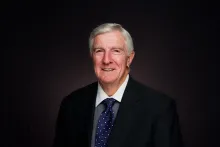
Before his retirement in 2021, Dr. Donald Ward pastored churches in Texas and Louisiana, and taught at Ambassador Bible College in Cincinnati, Ohio. He has also served as chairman of the Council of Elders of the United Church of God. He holds a BS degree; a BA in theology; a MS degree; a doctor’s degree in education from East Texas State University; and has completed 18 hours of graduate theology from SMU.
