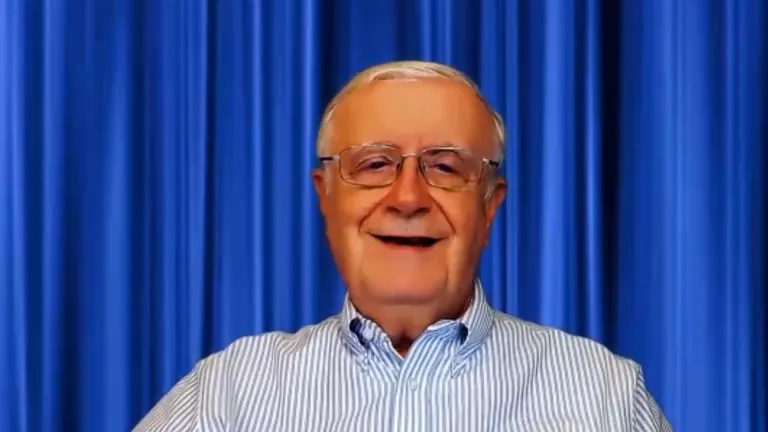
Gary Antion
Paul encorages the Ephesian church to pray for all men. God desires - wants - it is His will - for all men to be saved. It is possible for all men to be saved because there is only one God, and there is no one that can prevent Him. He also has given us one and only one Mediator: Jesus Christ! He gave His life as a ransom for us all. This is why Paul was called to this job - to herald this Truth.
This transcript was generated by AI and may contain errors. It is provided to assist those who may not be able to listen to the message.
Paul initiated these letters to Timothy by giving him, let's call it, a command or orders or a charge to act against any other doctrine deviating from the truth different than what had been delivered to the saints. Paul did this with the intent to preserve unity and to edify the church. He did a thing in Godly love from a pure heart, from a pure conscience and from sincere faith, as we see in the first chapter of 1 Timothy verses 3 to 5. It is interesting to note that those members or leaders that were desiring to be teachers of the law and they were causing problems there.
I have to admit that I've come across people with similar profiles in different areas and it really, when you come across this, it really is very sad. They don't seem to know what they are saying or affirming, as Paul puts it in verse 6 and 7. And Paul then in his great humility, he admits his own weaknesses and recognizes that he doesn't deserve to be in the position that he is in.
This is purely because of God's mercy and indeed, it's an example for all of us of God's mercy towards us. He addresses that in verses 12 through to 17. And then at the end of that chapter, chapter 1, Paul then encourages Timothy to fight a good fight, to defend the faith, to defend the truth in other words.
Faith and truth are very interrelated and need to do so skillfully with a good conscience. We can see that in verses 18 through to 20. Through my experience, I found that when someone comes up with a different version of the truth, that person claims that we must listen to his version of the truth. He has his own website. He has his own little links. And he says, buddy, you must listen to this.
And I don't agree with this. I don't agree with that. I had a recent case where somebody has even said, I warned Mr. Armstrong in this and that and that. And I'm kind of telling you to be careful. And so it seems to be that these people seem to accuse and threaten us with different types of danger.
But what we really need to do is to follow their version or their interpretation. And so Paul was saying these people left away. And he mentions there at the end of the first chapter that he had to do this fellowship to people. And they turn in an incorrect direction. And as Paul puts it, they become shipwrecked. It really is frightening. It's a frightening thing to see this happening to people. Quite often they've known the truth and have gone astray.
Then they try to tell us that we are wrong and they are right. I've had even cases that and in more than one case, in many cases, the people who say they had visions, their dreams, their dreams from God. I remember one specific one giving such descriptive dreams to me of how he had seen God.
It's just quite shocking. And I've also seen quite often people connecting different numbers. Well, this so many years or so many months and I said this and after I said this, this happened. Or Mr. Armstrong died exactly so many weeks after and that shows that it's so sad when we see that. It really is regrettably very, very sad. And so after Paul, in chapter 1, having charged Timothy and in a sense the ministry to act with authority but also in love. Now, from chapter 2 onwards, Paul moves on to the main purpose of his letter, which is positive instructions to the church.
Understand that in the context of the situation of the Ephesian church, there were false teachers and these false teachers had created, let's call it, a stressful environment in church. You know, an atmosphere in church that was not peaceful, that was quite stressful and the sheep were not at peace. The proper respect for the ministry had waned and these doctrinal controversies that these people were bringing there to the Ephesians church were creating a judgmental and a critical spirit, which was not ideal.
So the purpose of the Christian way of life that you and I need to understand as we live God's way, that purpose of being an example, of being a godly person, demonstrating the grace of Christ and of God, that had been lost. These two leaders had been excommunicated, all this fellowshiped. And so Paul required to re-emphasize the ethical qualification for leaders. And again, Paul was warning against this approach of legalism and asceticism. Legalism is very Jewish-like, legalistic things and asceticism being that everything physical is wrong. So you get to a very, quote unquote, righteous approach from a physical point of view. And so Paul was saying that there was a need to remain focused on good, sound doctrine.
And we see that throughout this letter. And so Paul did that throughout this letter, starting from chapter 2 onwards. And also towards the latter part of this letter, then he also addresses the proper treatment of church members. The ministry and the leadership in the church is not about controlling or dominating, but it's about helping to increase the brethren's joy, as Paul described in 1 Corinthians 1, 24. We are the helpers of your joy. And therefore, the ministry and the leadership in the church is to stand firm in the faith, in the truth, in front of trials and difficulties.
So Paul, as he starts this second chapter, he basically focuses on the proper respect in church for the church leadership. So in this chapter, he mainly addresses ministerial responsibility and godly conduct of the leadership of the position that he holds and that godly conduct between men and women in the church. Now, some people think that Paul is focusing on public worship. This is kind of a thinking of saying, well, he's trying to focus a lot in so-called public outreach of the gospel and of that nature. He's not really talking about that.
He's talking more about how we behave, how we conduct ourselves, how we treat one another, how we pray and things like that. And he is really talking about that. We found that through past experience and experiencing the church, when Christ wants the gospel to be preached with great power, he opens doors that quite often we just see that God is opening doors. Now, does that mean that we must not try and explore all possible doors? Yes, we must. But what Paul is talking about is about the leadership and how we treat one another and how to be proper, proper godly leadership.
And so, in verse 1 of 1 Timothy 2, he says, Therefore I exhort, first of all, that supplications, prayers, intercessions, and giving of thanks be made for all men. And so Paul is here emphasizing very in very first place the need of pray, of praying. Sure, we need to pray for the sick. We need to pray for those that can't come to services. We need to pray for the messages. But he says he is here made for all men. Do we think about praying for all peoples?
Not just Americans or Australians or Canadians, but for all people around the world. Africans, people in Europe, people in different areas, people that are not even in the church, are we praying for all of them? Pray for all people. And he specifically emphasizes four things. One is supplications. Supplications that is petitions or a request or a desire or a need. It was pray for a specific need. Request is a specific need. Could be physical, could be health, whatever it may be.
Yes, it's pray for that for all people. Then he says prayers, which is more general, could be praise, could be a discussion with God about concerns we have. Discussion about praying, about the church and God's work. And then he says intercessions. Intercession is like, in a sense, like an interview. You're talking things over with God and on behalf of others. And so it's like we go for an interview and we pray and ask for others, on behalf of others.
And last, the fourth one, is that we pray for gratefulness. We are more thankful for everything God has done for all man. And clearly it means that there's no hatred, even if people are not doing what we would like them to do.
In Revelation 5 verse 8, it talks about incense as a symbol of prayer. Revelation 5 verse 8, it says, And now when he had taken the scroll and the four living creatures and the twenty-four elders fell down before the Lamb, each having a harp and golden bowls full of incense, which are the prayers of the saints. It is as if God collects the prayers and has them in bowls to remember, to remember them. And we also see in Leviticus 16, that's the section about the Day of Atonement, as you may recall.
Leviticus 16 verse 12 and 13, it talks about that the high priest, he shall take a censer full of burning coals of fire from the altar before the Lord, with his hands full of sweet incense, beaten fine. And so, as we see, the incense is a symbol of prayers. And so, this incense being beaten fine, it basically means that the prayers are in detail, in small detail, specific, and God appreciates that.
That is something that we need to maybe do better. And it says, and bringing it inside the veil, and he shall put the incense on the fire before the Lord, that the cloud of incense may cover the mercy seat. So, this cloud of all these symbolical prayers may cover the God's mercy seat. So, it is so important that we make these prayers, these supplications, these requests, these praises, this discussion of concerns, of praying on behalf of others, and with gratefulness before God. And continue now in 1 Timothy chapter 2, now reading verse 2, he says, For all men, for kings, and all who are in authority, that we may lead a quiet and peaceful life in all godliness and reverence.
And so, we ought to pray for the leaders in our nations. Why? For us to live a peaceful life. You know, at that time Nero was the emperor, and from what we can read, he wasn't a very nice man. But he says, pray for all, pray for kings, implying, praying for Nero, in that case, the emperor. And we need to pray, not only for ourselves, but for the benefit of the work, so that there be peace, so we may preach the gospel. And then he says, in all godliness and reverence, godliness is a sincere respect towards God and his ways, in words, piety, a really respect towards God.
And reverence, the King James Version puts it, honesty. It's more along the lines of gravity or decorum or proprietary of conduct towards man. And so, godness is more towards God and reverence is more respect and decorum towards man. And so, we pray that there may be peace, so that we may do God's work and that we all may live in peace and lead a quiet and peaceful life. In all respect towards God and all reverence, respect towards man as well. And now in verse 3 and 4, I'm going to read these two verses together. For this is good and acceptable in the sight of God, our Savior, who desires all man to be saved and to come of the knowledge of the truth.
This is what God wants. Think about it. God, our Savior, desires all man to be saved. Desires. In other words, this is God's will as it's described in the King James Version.
And it says, yeah, that come to the knowledge of the truth. In other words, that may understand the truth.
John 17, 17, thy way is truth, thy word is truth. And this basically ties in with those false ministers that were straying from the faith.
The faith and truth are very interrelated, very interrelated. And so, yeah, we have a key verse, or two verses very key, that God wants every person, all man, to be saved and to come to the knowledge of the truth.
Now, let us ask a simple question.
Has every human being who ever lived come to the knowledge of the truth?
Well, of course not. Knowledge, Yah, is a Greek word, epinosis. That means full knowledge, full discernment.
Has every human being come to that point? No. But that is God's desire. That is God's will. He says, yeah, God desires, God our Savior, who desires all men to be saved.
So, yeah, we have two points to consider. Maybe it's two important points that the religious world today does not understand.
This tysene with 2 Peter chapter 3 verse 9, let's just look at 2 Peter chapter 3 verse 9.
Second Peter chapter 3 verse 9 says, For God, for the Lord, is not slack concerning His promise, as some count slackness, but is long suffering toward us, not willing that any should perish, but that all should come to repentance.
And so for all to come to repentance so that no one would perish, they gotta come to the knowledge of the truth.
They gotta fully understand the truth. They gotta understand enough to make a clear-cut decision.
And so the point is, not everyone has come to the knowledge of the truth.
Not everyone has had that chance yet.
That's why today is not the only day of salvation. Yesterday is a day of salvation, as it says in 2 Corinthians chapter 6 verse 2.
It is a day of salvation for us, but God is not trying to convert the whole world today.
Only a few are called now, the rest will be called in the second resurrection.
As we know in John 6, 44, no man can come to me unless the Father draws in.
It's up to the Father to do the calling, to draw, and obviously those people then need to respond to that calling.
As we read, for instance, in Matthew 22, if I remember correctly, the parable of the invitation to the wedding, where people are invited and they give excuses, now I can't come for this reason, I can't come for that reason, I can't come for the other reason.
And then at the end of that parable says, many are called, but few are chosen.
Why? Because they don't respond.
And today in this world, many people have received some degree of understanding, but they haven't responded. They haven't responded.
And so we get to the point that only those that are called and chosen, in other words, are selected, that respond to this calling, are the ones that are actually potentially could be at the Second Resurrection, as using that parable of Matthew 22 at the marriage supper.
And so that ties in very nicely with 1 Corinthians 15 verse 22. 1 Corinthians 15 verse 22, which says that everything must be done in order.
1 Corinthians 15 verse 22, which says, For as in Adam all die, even so in Christ all shall be made alive.
Have you noticed that says all will be resurrected? Everyone will be resurrected.
But each one in his own order. Christ the first fruits, Christ was first, Christ is resurrected.
Afterward those who are Christ's that is coming, which is symbolized by the day of trumpets.
And then comes the end when others will be resurrected and a whole lot of other events follow, which in the section does not describe all that in detail.
So, as I mentioned a little earlier, in this section in 1 Timothy chapter 2 verse 3 and 4, which says that God wants everyone, all men, to be saved. One point here is that, yes, God wills that no one will perish, that all will come to repentance, but each one his own time. Each one his own time. And the world does not understand that.
But I mentioned there were two points. The second point is that this understanding goes against the concept of predestination.
You see, the concept of predestination is that, well, some people have predestined to be saved and some have been predestined to be destroyed.
Well, that's not what it says here in 2 Timothy because it says God, in chapter 2 verse 3, says, God our Savior will desire all men to be saved. So God's will, God's desire, God's predestination, desire, intent is for all men to be saved.
The point is we have a choice. We have free moral agency. You see, so that is important for us to understand that.
So those are two points here that I wanted to draw out of these two verses. Let's now move on to verse 5.
For there is one God and one mediator between God and man, that the man Christ Jesus. For there is one God. God is one.
You see, it is possible. And think about this verses in the context of what we just read.
And what did we just read? That God our Savior wants everyone to be saved. For because there is one God.
You see, it is possible for men to be saved because there is one God, not many gods pushing in different directions.
You see, God's desire is to save mankind. And there is no power, no human or other capability to prohibit him from doing that.
God is all-powerful. That is God's desire.
And so, in that context, that's why there is one God, there is one purpose. And God the Father and Jesus Christ are working together as that one God family for that purpose.
Obviously, the Father is the God. Let's discuss that a little bit more. One God.
We know there are two separate beings in the God Kingdom today. They are not interconnected.
In other words, if one dies, they both die. They're not kind of one being in two beings. That is binarism. That is wrong. That's not what we believe.
They are two separate and independent beings. Two beings.
And that's why we read in John 1, verse 1. Let's go there. Just very briefly. John 1, verse 1.
In the beginning was the Word. In the beginning existed the Word. We read from verse 14 that the Word became flesh, so the Word is Christ.
So, in the beginning was the Word which became Christ. Which became flesh, became Christ.
And it says, and the Word was with the God. In Greek, the definite article, the Isthe.
And the Word, Christ, was with the God, the Supreme Being, the God.
And it says, and the Word, Christ, who became flesh, who became Christ, was God.
And so there were two beings in that God-kingdom. They were both in the form of God, but one of them is higher or above the other. One is the God.
The other one is in the form of God, but is not the God. In Philippians, chapter 2.
Philippians, chapter 2, verse 6 and 7. Philippians, chapter 2, verse 6 and 7.
He says, talking about Jesus Christ, who being in the form of God. Christ was of the God-kind, of the same type of being as the Father, of the form of God.
Do not consider robbery to be equal with God. In other words, he did not consider that he had to cling to that equality with God.
He was willing to open up his hand and become a human being. But made himself, of himself, freely, he made himself of no reputation, taking the form of a bond servant and coming in the likeness of man.
So he became a human being. And so what we have is now a God family. There's the Father, the God and the Son, which now became a man.
But when he died, he was resurrected, he got back to that form of God being, but now as the Son of God.
In John 17, that's Christ's prayer after the possible symbols were explained. In John 17 verse 21 through 23, John 17 verse 21 through 23, it reads, and he accrised his praying and he says, he prays that they may be one. In other words, we as Christians, we may be one as you, Father, are in me, and I in you that they may be one in us, that the world may believe that you sent me.
So you and I as Christians are to be one with God. We are to be at one with God, but it doesn't mean that we're just one person, but we are to be sons of God in a family of God, of the God-kind, but the God is the Father, the one God, but it's one God family.
So he says, I in them, you in me, that they may be perfect in one, and that all may know that you sent me and have loved them as you loved me. Father, I desire that they may be also with me where I am.
So God says we've got to be one. We've got to be perfect in unity. We've got to be united. We've got to have the same mindset. We've got to imitate Christ. We've got to put on the stature of Jesus Christ. And we read in scriptures like Exodus 20, there's no other gods in the law like Eloim, and then it says in verse 5, the Lord, Yahweh, or Ypsun HWH, that means your God, Eloim, is a jealous God.
So yeah, we have the Eloim that's the father and the son, that God is a jealous God, that God family. That power belongs to the God family. And so there is one God, and then it talks about there is one mediator. Now there's an interesting scripture in Job. Job did not fully understand all this at one time in early in Job chapter 9. Let's look at that in Job chapter 9 verse 32 through 35. Job chapter 9 verse 32 through 35. And it says, talking about God, for he is not a man as I am. Then I may answer him, and it was that I may talk to him, and that we should go to court together, nor is there any mediator between us, between me and God. He didn't understand that. And it says, who may lay his hand on us both. And so he was saying, you know, that he wishes he had a mediator. Well, we do have. We do have a mediator. And that's where we really are in Timothy, 1 Timothy chapter 2 verse 5 says, For there is one God and one mediator. One mediator. That mediator is not Virgin Mary, or not the saints that people pray to. No, it's just Christ. It's the one that intervenes between us and the Father. One that understands both sides, both parties, God and man. One that knows what it's like to be God and what it's like to be man. And so, therefore, it can mediate between the Father, the God, the one God and us. In other words, he's the perfect intermediator between the Father and us. We read, for instance, in Hebrews chapter 1. We can go there very briefly. Hebrews chapter 1. Very interesting, Hebrews. And in Hebrews chapter 1, right at the beginning, it says, God with various times and in various ways spoke in times past to the fathers by the prophets, has in these last days spoken to us by his Son. You see, God speaks to us now by his Son, Jesus Christ. And then he says, whom he has appointed here, of all things, through whom also he made the walls.
The Father made, created everything through Christ. It was the Father gave the command, gave the instructions, gave the plans, and Christ executed. Christ did it using obviously the power of God. And so, Christ is, as it says here, is the brightness in verse 3 of the glory of God, of the Father. And the express image of his person, of the Father's person, is the express image. And it says, and upholds all things by the word of his power. Christ upholds everything, the whole universe, by his authority, by the word of his power, by his authority.
And then, a little bit later, in verse 8, says, the Father says to the Son, you're thrown on God. So, you see, the Father himself calls Jesus Christ God. But the God, the supreme authority, is the Father. Look at it in John chapter 20 verse 17. And it says, and Jesus said to her, this is to Mary, do not cling to me, for I have not yet ascended to my Father, but go to my brethren and say to them, I'm ascending to my Father and your Father, to my God and your God.
And so, we can see very clearly that the God is the Father, but Christ is in the God family, and he was a God being, is of that God kingdom. So, he's part of that God unity, and of which you and I are to be one, as we described in John 17. In Hebrews chapter 8, a little bit further, in Hebrews chapter 8, Paul describes here, now this is the main point of the things we are saying.
We have such a high priest. In other words, Christ is now a high priest, is our intermediator, who says, who is seated at the right hand of the throne of the Majesty in Heavens. So, he's right there with God, the Father in his throne. And look at verse 6. But now he has also obtained a more excellent ministry inasmuch as he is also the mediator of a better covenant, which was established on better promises. See, so it's a better covenant with better promises. Why? A promise of eternal life, as we see in Hebrews 9 verse 15. In Hebrews 9 verse 15 says, and for this is the reason, he is the mediator of the new covenant by means of death for the redemption of the transgressions under the first covenant, that those who are called may receive the promise of eternal inheritance.
And so, Christ is the mediator. The Father, we have one God and one mediator. So we came back to 1st Timothy chapter 2, and then he says, the man Jesus. The man Jesus means that he was the human being Jesus. Right, and then in verse 6 he says, who gave himself a ransom for all to be testified in due time?
He gave himself a ransom for all Jews and Gentiles, all humanity. Think about, for instance, the example of somebody being kidnapped. And then they say, well, to release this person, you've got to pay a certain amount of money as a ransom for the person to be liberated or freed.
That's exactly what Christ did for us, so that our sins could be forgiven. He gave his life for us as a ransom for us to be forgiven. And he says, yeah, for all. That means for Jews, for Gentiles, for Muslims, for Hindus, for all. In John 14 verse 6 he says, I am the way, I'm the life, and only through me we can have eternal life.
Only through me you can get to the Father. And then continuing, yeah, for all to be testified in due time. In other words, Christ's coming and sacrifice, this would be testified, would be witnessed at a proper time, in due time. According to God's time or timing, or according to his plan at the right time. For instance, Jesus Christ was not to come, for instance, immediately after Abraham's time. He was to come only after Israel and Judah had failed, after Israel and Judah had been taken to captivity, after Judah had returned from captivity, after the temple had been rebuilt, after the Jews had added to Moses' law its oral traditions.
So all that was part of God giving a time for all these things to happen. And it would be a time when there would be a road, and it would be some degree of world peace, so-called Pax Romana. So that the message of this event, of what Christ did, could be preached and spread to that so-called modern world of that time. And this is part of prophecy.
We can read that in Daniel 9, verse 24 through 29, where it's the 70 weeks prophecy. And Jesus Christ was to come 69 weeks after the command to restore and build Jerusalem. So God had a very specific timetable, very clear dating, because 69 weeks, the week is seven days, 69 times 7 is 483, and a day for a year prophecy, that was 483 years. And the command to restore and build Jerusalem, that was not the command to rebuild the temple, that was after the temple had been rebuilt. But it was the command to restore and build Jerusalem. That command was on 457 BC.
So 483 years later, plus one, because there's no year zero, brings us to AD 27. That was the year towards the end of that year, towards the fall, that Christ started preaching.
So at the right time, at the right time, was prophesied to me at a specific time. And then in verse 7, he says, for which I was appointed a preacher and an apostle.
So Paul was appointed a preacher. Now, what is a preacher? A preacher in the war of the eyes, Kerus, which is somebody which is a herald, an announcer, a bearer of news, a emissary, a trumpet bearer.
I beg your pardon. So he was, let's put it this way, the meaning of that word meant was an official messenger with authority on behalf of the king to proclaim or announce or herald a message from the king.
That's exactly what Paul was. He was making a public proclamation on behalf of the king of kings and of God the father. So he was a messenger. Then he also says an apostle or an apostle, Greek apostolus, was a delegate, an ambassador, one sent by, one selected by Christ as his representative.
Some, there was at that time some people in the Ephesus, Ephesian church, they were claiming that they were apostles.
But Paul is saying, hey, I am an apostle. And he said, I am speaking the truth in Christ.
Why did he say he's speaking the truth in Christ? Because as I said, they were false apostles claiming they were the ones that people should follow.
And he says, Noah, I am speaking the truth in Christ and I'm not lying. And then he says, and a teacher of the Gentiles.
And it was an instructor. He was an instructor in Acts 9, 15, when he was appointed by Christ and when he was struck, Christ, all in.
I'm sending you to preach to the Gentiles and to kings and also to Israelites finally. But first he says, sending you to Gentiles, an instructor. And so we have a special title. Let's call it just, for instance, a special job description for Paul, a preacher, an apostle and a teacher of Gentiles.
So, yeah, we have a very specific calling for him and he's a teacher in faith and truth.
And as I mentioned earlier, faith and truth are very interrelated. Christian fundamentals, very interrelated.
You know, our faith is not blind faith. Our faith is faith based on knowledge of the truth.
And so that's what Paul was saying in this first section of these first few verses of the second chapter.
He was basically telling everybody to pray for everyone. God is our Savior and I have a responsibility by God to teach you.
And now he moves on to the actual teaching starting from verse 8, which we will then start that next week.

Jorge and his wife Kathy serve the Dallas (TX) and Lawton (OK) congregations. Jorge was born in Portuguese East Africa, now Mozambique, and also lived and served the Church in South Africa. He is also responsible for God’s Work in the Portuguese language, and has been visiting Portugal, Brazil and Angola at least once a year. Kathy was born in Pennsylvania and also served for a number of years in South Africa. They are the proud parents of five children, with 12 grandchildren and live in Allen, north of Dallas (TX).