

Greg Thomas
This sermon was given at the Panama City Beach, Florida 2015 Feast site.
This transcript was generated by AI and may contain errors. It is provided to assist those who may not be able to listen to the message.
Well, thank you, Festival Corral. That was inspiring. Very beautiful. We can all look forward to hearing more from the Festival Corral this year. Well, welcome to the 2015 Feast of Tabernacles. It is so wonderful to have all of you with us this evening to see all of your smiling faces and a sea of faces in this room. It is truly inspiring to be with God's people on His feet. All true science is simply a discovery of biblical principles and laws that God set in motion from the beginning of time. In my career, I'm a mentor and I'm a coach to organizations and individuals to help them reach a greater potential.
As a professional coach, I am trained to use important principles that behavioral science has supposedly discovered. These are proven methods that can help us or help anyone to produce positive change in those who diligently apply them. As we begin the Feast this evening, I would like to review just a few of these methods this evening and ponder where they originally came from. Understanding them can help all of us to have a wonderful and more rewarding Feast of Tabernacles this year. Here's the first principle. The first principle is this. The most effective way to learn something new is by spaced repetition of knowledge.
I'm going to read something from one of the workbooks that I used. I'm a certified facilitator, so it's okay for me to read this paragraph to you. It is from the Leadership Management Institute in a workbook they have called Effective Personal Productivity. I don't want you to think about this as we begin the Feast of Tabernacles. Quote, Your attitudes or your habits of thought are the result of your conditioning.
Conditioning is just another word for habit. We have all been conditioned to think and act in certain ways by family, friends, teachers, preachers, and others who have influenced us throughout our lives. Continuing, our conditioning is caused by the repetition of certain ideas and actions over extended periods of time. We call it spaced repetition because it occurs over and over with intervals of time in between. Now, here's the exciting part. If this is the process that brought us where we are today, it means that we can use the same process to determine how we will live in the future.
In other words, if we use spaced repetition of powerful ideas and actions, we can change our conditioning process so that our habits of thought and our attitudes change too. One final sentence. The change in attitude will bring about changes in behavior and the results we achieve will improve and grow in significance with improved results. The quality and quantity of the success we enjoy will also increase. Let's see where this idea originated from. Let's turn back to Leviticus chapter 23. If you'll turn with me now, Leviticus chapter 23, and we will begin in verse 1.
Remember, the most effective way to learn something new is by spaced repetition of knowledge. Leviticus chapter 23, verse 1. The Lord said to Moses, speak to the children of Israel and say to them, the Feast of the Lord. They're not my feast, they're not the feast of the United Church of God, even though we will celebrate them because our Father, our God, has invited us to keep His feast.
The Feast of the Lord, which you shall proclaim to be holy convocations. That's another word for a convention. This is a holy convention of God's people that is assembled here for the next eight days. These are my feasts. Six days shall work be done, but the seventh day is a Sabbath of solemn rest, a holy convention, convocation. You shall do no work on it. It is the Sabbath of the Lord in all your dwellings. These are the Feast of the Lord holy convocations, which you shall proclaim at their appointed times.
Three times our loving, eternal God says these are His feasts. The very first one he mentions is a weekly example of spaced repetition of knowledge. We call it the Sabbath day. So God has a weekly reminder of the Kingdom of God, a day in which we rest, a day in which we ponder God's influence in our lives, a day in which we think about the Kingdom of God on earth, a time when there will be peace and plenty, and the whole group of mankind will be at rest and will it be at peace.
That is a weekly observance. Throughout the rest of the 23rd chapter, annual reminders of His plans, the spaced repetition of knowledge is provided for us. Dropping down now to verse 36. 34. Actually speak to the children of Israel.
The sacred assembly, and you shall do no customary work on it. Of course, the offering that we are offering before the Lord is our presence. It's our respect for His holy days. Other parts of God's plan have an annual reminder. But only the Kingdom of God has both a weekly and an annual reminder. That's the reminder of God's soon-coming Kingdom of God. And it's over a period of time that these holy days and their rich meanings become part of our lives. And for those of us who have kept the holy days for many years, we acknowledge that they have changed how we think. They change what we value. They change how we worship. They even change our very family traditions. Very powerful. So powerful that even the Apostle Paul established and understood the importance of the space repetition of knowledge. Turn with me, if you would, quickly to Acts 20.
Now, the holy day that's going to be mentioned here in the book of Acts is not the Feast of Tabernacles. It's another holy day. But there's a point that I want all of us to understand because, of course, we keep the holy days because they are part of the New Covenant. Because they were observed by the disciples after the death and resurrection of Jesus Christ. So here's an event that occurred, Acts 20, verse 14. This occurred about 56 AD, 25 years after the resurrection and death of Jesus Christ, and about 7 years after the ministerial conference in 49 AD. And I want you to notice what the historian Luke wrote. He said, again, this is beginning in verse 14, And when he met us at Essos, we took him on board and came to Myelene. We sailed from there, and the next day came opposite Chios. The following day we arrived at Samos and stayed at Trigilium. The next day we came to Miletus. For Paul had decided to sail past Ephesus so that he would not have to spend time in Asia, for he was hurrying to me at Jerusalem, if possible, on the day of Pentecost. I want you to notice that Paul is in a hurry. He declines a possible church visit to Ephesus so he can attend the feast, one of God's holy days in Jerusalem. He understood the importance of God's holy days. He had kept them his entire life. He understood the principle of the spaced repetition of knowledge and how it changes who and what we are.
Paul understood the annual importance of the holy days. They were part of his life, and here he was even cutting short a missionary journey to travel to observe the feast in Jerusalem. This feast this year will last eight days, including the eighth day, or we have called the last great day. We will have many opportunities for spaced repetition to imprint the richness of God's kingdom into our hearts and minds. Every day we'll have the opportunity to come here and practice spaced repetition to learn more of God's way of life, to reinforce the importance of the kingdom of God and the role that God has for us. So that was the first principle. The second principle I would like to mention is this. Maximum personal achievement requires the use of smart goals. Maximum personal achievement requires the use of smart goals. Smart means specific, measurable, attainable, realistic, and tangible. Once again, I'll read just a brief paragraph from the Leadership Management Institute in their workbook, Effective Personal Productivity, before we look at the biblical perspective of this. Here's what they say, quote, Goal settings supported by careful planning provide suspenseous direction to keep you focused on important activities. Goals serve as a filter to eliminate extraneous demands. Goals bring to life order meaning and purpose to sustain interest and motivation over a long period of time. Goals evoke your noblest qualities. They express your desire to achieve, to improve your life, to be more effective, more productive, and more successful tomorrow than you are today. Let's turn to Matthew 6, verse 24. If you would, please. Matthew 6 and verse 24.
Jesus said, No one can serve two masters, for either he will hate the one and love the other, or else he will be loyal to one and despise the other. You cannot serve God and mammon.
The word mammon here is an Aramaic word, meaning what is stored up. It's about material, materialistic possessions. And Jesus knew that materialistic possessions, our desire to acquire more and more and more, literally takes over the human life. And he was saying, you've got to get to the point in your life where you choose a priority. Is it God, or is it something else? I personally know of many people who, within the last few years, had to make that choice.
And unfortunately, they chose mammon, rather than choosing God. Let's drop down now to verse 30. Now, if God so closed as the grass of the field, which is today and tomorrow is thrown into the oven, will he not much more clothe you, O you of little faith?
Therefore, do not worry, saying, what shall we eat? What shall we drink? What shall we wear? For after these things the Gentiles seek. For your heavenly Father knows that you need all these things, but seek first the kingdom of God and His righteousness, and all these things will be added to you. So Jesus was saying, if you want to be a disciple, and if you want to seek the kingdom, seek first the kingdom of God. And as a byproduct of having our priorities right, we too will receive many wonderful material possessions.
They will be added to us as a byproduct, as a blessing of doing the right things. The kingdom of God that Jesus speaks about here is what we have come to celebrate in Panama City Beach this year, and that is the establishment of the kingdom of God on earth. From this first core belief, all of our personal goals should radiate and be in harmony. We should all have unique goals and things that we want to desire in our own lives, but all of our goals should be in concert to that number one goal, seeking the kingdom of God first.
So again, principle number two was maximum potential achievement requires the use of smart goals. And in the conclusion of my message tonight, I'm going to ask all of us to set just a few smart goals for the feast this year. Here's the third principle. The change one's thinking requires the use of positive affirmations to recondition how we think to get to a higher level.
Repeating positive affirmations helps us to grow away from selfish negative thinking to constructive attitudes. Again, just a few sentences from one of the workbooks that I use in my practice. Quote, an attitude of positive expectancy allows you to implement your dreams with excitement, with fervent belief to approach problem solving with confidence.
Positive expectancy enables you to multiply your efforts and to magnify your results. First, positive expectancy gives you the power of concentration. By focusing all of your thoughts, plans, and actions on the object of your belief, you clarify your priorities, you block out obstacles, you maintain your enthusiasm, and take responsibility for the actions necessary to reach your goal. A couple of more sentences here. Affirmation, the first of the skills reinforcing an attitude of positive expectancy, is the act of expressing your faith in a truth of a particular statement. An affirmation is a positive declaration of what you believe to be true, a truth that you believe and desire to live by.
End of quote. Brethren, the Scriptures are full of positive affirmations. I could spend the next five hours, six hours, turning from Scripture to Scripture and pointing out within the word of God positive affirmations. Let's take a look at a typical one, Philippians 4, verse 12, and we'll see one spoken of by the Apostle Paul. Did the Apostle Paul face obstacles? You bet he did. He had a health problem that wouldn't go away. He prayed about it for three times, and God left that affliction on him to humble him and keep him centered.
Sometimes he would go into a city and he would be rejected. He was stoned, shipwrecked, persecuted. He certainly faced a lot of obstacles in his life. But notice something he maintained. Philippians 4, verse 12, he said, I know how to be a based. He knew how to suffer abuse. He knew what that felt like. I know how to abound. He knew what it was like to have a lot of material blessings. Everywhere and in all things I have learned both to be full and to be hungry. So again, this was an individual who faced troubles and trials and difficulties in his life and in his ministry.
Verse 13, I can do all things through Christ who strengthens me. You know what that is, brethren? That is a positive affirmation. As I said, the Scriptures are filled with positive affirmations. He's not vain. He's just demonstrating the faith that he had knowing that God was with him and all that he did. He knows that Jesus Christ is with him and he's guiding his life.
And brethren, the same thing is true of you. Paul's positive expectancy allowed him to serve God and others in a great way. He didn't focus on obstacles. He focused on opportunities.
And brethren, we can too. Another example we won't turn there, but you may remember the story in Matthew chapter 19. Jesus said it would be easier for a camel to go through the eye of a needle than for a rich man to enter the kingdom of heaven. And his disciples said, well, who could be saved then? And Jesus said, with men, this is impossible, but with God, all things are possible. The conversion of a human mind is seemingly an impossible thing. A mind filled with greed, a materialistic mind that wants to acquire, but that mind can be converted, and that mind can change. It can become spiritually minded. God makes that possible. As I said, there are many examples of positive affirmations. We know in Hebrews chapter 11 and verse 1, it says, now faith is the substance of things hoped for and the evidence of things not seen. In a secular world, they call it positive affirmations. You know what we call it, biblically speaking? We call it having faith. Having a positive faith. You have demonstrated faith by coming to the feast this year. Most of you paid money in advance to secure a room. Many of you left your jobs. Some of you faced conflict for leaving your jobs, or maybe conflict from family members to come here. You may be suspended in things you were doing to come and celebrate God's Feast of Tabernacles. You anticipated the feast with excitement and joy, and you have demonstrated faith by being here this year. Let's take a look at another positive affirmation. Philippians chapter 4 and verse 4. This one again from the Apostle Paul writing to the congregation in Philippi. And as we go through the Feast of Tabernacles this year, this provides an excellent list of what we should be allowing to enter our minds. And the kind of thoughts that we should be allowing to enter and embed inside of our hearts. He says, Rejoice in the Lord always. Again, I say rejoice! Let your gentleness be known to all men. The Lord is at hand. Be anxious for nothing, but in everything by prayer and publication with thanksgiving, let your request be made known to God. And the peace of God which surpasses all understanding will guard your hearts and minds through Christ Jesus. So let's not be anxious for anything that we left behind. Odds are, if we have a worry or a problem that we left behind, odds are it'll still be there waiting for us when we get back. So let's not be anxious about it. It's probably not going anywhere. Don't allow it to dampen our feast of Tabernacles. Don't allow it to put down the joy that we should be radiating in our hearts and in our minds because we're celebrating God's feast. And notice what he says here in verse 8. Finally, brethren, whatever things are true, whatever things are noble, whatever other things are just, whatever things are pure, whatever things are lovely, whatever things are of good report, if there's any virtue, if there's anything praiseworthy, meditate on these things. What is Paul saying? He's staying focused on positive affirmations.
Again, I encourage you to leave your troubles at home and celebrate the Feast of Tabernacles with joy and enthusiasm. Now, the fourth principle and final principle we'll be discussing this evening is this one. The most powerful way to put into practice knowledge, positive affirmations, and goal achievement is through visualization of what we desire. I'll read that again. The most powerful way to put into practice positive affirmations and goal achievement is through visualization of what we desire. Again, I'm going to go back to the workbook that I use, one called Effective Personal Productivity, lesson number two, and I would just like to read a few sentences of what it says about the importance of visualization. It says, visualization affects every part of the goal-setting process. Number one, visualization focuses your attention on your goals. You achieve a goal only when you know exactly what it is that you want. Visualization is a tool that brings a goal and a sharp focus so that you take only actions that move you in the right direction. Number two, visualization increases desire. When, through visualization, you experience how it feels to be in possession of your goals, desire grows by leaps and bounds. Without desire, there is no life or excitement in your goals program. Enthusiastic desire sustains motivation throughout the entire process of setting and achieving goals. A couple more sentences here. Number three, visualization intensifies belief and commitment. The saying, seeing is believing, is more than just a grain of truth. When you visualize yourself in possession of a goal, you believe in your ability to achieve it. You know what it looks like, how it feels, and what you must gain in the way of knowledge and skill to possess it. Well, that's the specular translation of visualization. Sounds like a pretty big word. Of course, we know it as prophecy, don't we? And we need to meditate as we learn God's prophecies to make them real in our hearts and minds. Of course, we need to meditate on the beautiful things, the visions that God gives us in His Word. Let's see how we meant this in Deuteronomy chapter 14 and verse 22. If you'll turn there with me, Deuteronomy chapter 14 and verse 22. God's instruction to ancient Israel about what to do during the feast. Chapter 14 and verse 22.
That's visualization. God says, I want you to pick up the heart desires. That's visualization. God says, I want you to picture going to my feast and having good food and having your favorite beverage and buying a gift for a loved one and feasting and radiating joy and enthusiasm and celebrating these days that God has appointed for us. Again, He says, and you shall spend that money for whatever your heart desires for auction or sheep or wine or similar drink and for whatever your heart desires you shall eat there before the Lord your God and you shall rejoice you and your household. So this is just a sample of the fact that God wants us to visualize the kingdom of God for the next eight days. He wants us to be joyful in worship. He wants us to celebrate with friends and loved ones. He wants us to enjoy physical blessings, the blessings of good food, of delightful beverages, of fellowship, of giving personal gifts to our loved ones, of caring and serving others, all the kinds of activities that will be reflected in His very kingdom. And during this feast, we can portray the fulfillment and abundance that everyone someday will be able to experience in the kingdom of God when it's on this earth. When there will be no more violence, there will be no more hunger, disease, depression, or human dysfunction, it will be a kingdom that's based on God's value system known as God's law.
In Scripture, visualization is usually inspired through prophecy, and it's given to us so that we can think about those prophecies, so we can think about how God desires to use our lives to be part of His plan to serve humankind for all eternity as His children, because that's what our physical life is all about. Through prophecy, God provides for us stirring and inspiring snapshots of how this world will be when His government is ruling over all the earth. So during the next eight days, we will visualize, we will portray the kingdom of God, a world at peace where everyone on earth will have abundance.
Everyone on earth will desire to have a personal relationship with God.
In my few remaining moments here, I would like to just take a look at one of those snapshots with you this evening, Isaiah chapter 60. If you will turn there with me, Isaiah chapter 60, we will begin in verse 1.
If you were to open your Bible, there may be a little note that was put in there to the Bible translation, and some of them will say, a prophecy of Jerusalem or a prophecy of Zion. And that's certainly very true.
But I think it is very fair to say, as we know, that we as God's people are spiritual Zion. I think there is a metaphor to be taken from this prophecy about the literal first resurrection and what you will experience and feel, and what I will experience and feel at that moment in time.
Isaiah chapter 60 verse 1, arise, shine, for your light has come.
Imagine what it will be like for your feet to leave this earth, and for you to be changed from mortal to immortal, from corruptible to incorruptible, as the glory and the reflection of God literally radiates back from us onto this entire world.
The glory of the Lord has risen upon you, for behold, the darkness shall cover the earth, and deep darkness to people, but the Lord will arise over you, and his glory will be seen upon you.
Brother, this is a metaphor of the first resurrection that will occur at the return of Jesus Christ.
Those who were converted, the converted children of God, shall be changed from mortal to immortal, from corruptible to incorruptible.
Verse 3, the Gentiles shall come to your light, and kings to the brightness of your rising.
Lift up your eyes all around and see, they all gather together, they come to you.
Teach us about this God. Teach us about his laws. Teach us about his kingdom.
Your son shall come from afar, and your daughter shall be nursed at your side.
If we have physical loved ones, even when we become part of God's family and we are spiritual, we will still be able to intimately love them and nurse them.
And care for them.
Verse 5, then you shall see and become radiant, and your heart shall swell with joy, because the abundance of the sea shall be turned to you.
The wealth of the Gentiles shall come to you.
And the whole world order that we have today of the haves and the have-nots will all be turned around, and everyone will have an opportunity to live a life of abundance.
There will be plenty of food for everyone to eat, an opportunity, a chance for people to reach their full potential.
People to the earth will be attracted to us and desire to learn about God's way of life.
Our physical loved ones will be able to be nurtured by us and have an intimate relationship with us.
Take a look at verse 8.
Who are these who fly like a cloud and like doves to their roofs?
Isaiah could only imagine, as he saw these beings flying in the air, as if they were clouds back and forth.
This will be you as the spiritual child of God traveling over the earth, serving humanity as a child of God.
And of course, we know God will give us cities on his behalf to serve as compassionate and loving kings and priests.
Drop down and take a look at verse 18. What will those cities be like?
Violence will no longer be heard in your land, neither wasting nor destruction within your borders, but you shall call your walls salvation.
Because we, as God's children, will teach others about God's way of life.
We will encourage others to repent, others to accept Jesus Christ as their Savior.
And your gates praise the sun shall no longer be your light by day, nor the brightness shall be the moon shall give light to you.
But the Lord will be to you an everlasting light and your God your glory.
Your sun shall no longer go down, nor shall your moon withdraw itself, for the Lord will be your everlasting light, and the days of your morning shall be ended.
Also your people shall all be righteous.
What a wonderful world! What a wonderful kingdom!
And they shall inherit the land forever, the branch of my planting, the work of my hands, that I may be glorified. A little one shall become a thousand.
No more disease, no more childhood, cutemias, no more diseases that cut life short.
A little one shall become a thousand, and a small one, a strong nation. I, the Lord, will hasten it in its time.
Brethren, God has many inspiring and wonderful things planned for all of us in His kingdom.
During the Feast this year, we will hear many visual prophecies regarding the kingdom of God.
Let's remember some basic biblical principles as we go through the Feast this year, and set the stage for an inspiring and fulfilling Feast of Tabernacles.
I would like to encourage you to think about four goals that have at the Feast this year.
And here they are.
Number one is learn about God's plan by practicing based repetition.
I encourage you to come to every service to worship and to fellowship with your brothers and sisters in Christ.
And there will be other opportunities to enjoy God's people.
Make as many of those as you possibly can.
And the Bible studies.
And so many things have provided for us. And again, we reinforce God's kingdom in our hearts and minds by practicing based repetition.
I encourage you to focus on getting in some effective prayer every day.
In the kingdom, we're going to be communicating with the Father each and every day. Have a direct, personal relationship with Him.
Let's do that during the Feast this year.
From my own personal experience in past history, I know that we will all be filled with God's Word daily at services.
If we are practicing the spaced repetition and coming to services every day during the Feast, we'll have our Bibles open.
We will be reading lots of scriptures, and that's a wonderful thing.
But we want to make sure that we don't allow the slide is prayer time. That's key.
So whether it's a walk on the beach or some private time in your balcony or wherever you can, I encourage you to make sure that you connect with your loving Father each and every day during the Feast.
The second goal I encourage you to think about is to do something that serves another person.
Become someone's miracle at this Feast.
We have brethren here who have various needs.
Some came here with very short finances and would appreciate a meal.
Some would just appreciate your time because they don't have many people to fellowship with back home in their local area.
Some just need some encouragement.
And by fellowshifting with them, you can see that they need someone with a tender heart and someone to encourage them and to inspire them and motivate them to continue on their journey of discipleship.
Perhaps you can volunteer for a duty.
If you're out and you see a single mom who's kind of overwhelmed with her two or three small children, and she's trying to enjoy the Feast, but the children are difficult for her.
You might be able to help out.
You might be able to suggest spending some time with the children, taking the family out for a meal, doing something special.
Again, become someone's miracle.
The third goal I would like to encourage you to think about is practice every day and in every way of attitude of positive expectancy.
Appreciate that everything that you have experienced in your life, the good and the bad, are tools to prepare you for glory and service in the kingdom of God.
Jesus said in Luke 12, fear not little flock for it is the Father's good pleasure to give you the kingdom.
So don't allow little things to upset you with the feast. Don't allow things to make you anxious. Don't allow things to discourage you.
Work hard and through the fruits of God's Holy Spirit, in every way, develop and maintain an attitude of positive expectancy.
The fourth goal is use this beautiful environment of Panama City Beach to meditate and reflect on the coming kingdom of God.
Once again, read the scripture we looked at earlier, Philippians 4, verse 18.
He said, finally, brethren, whatsoever things are true, whatsoever things are noble, whatsoever things are just, whatsoever things are pure, whatsoever things are lovely, whatsoever things are of good report.
If there is any virtue, if there is anything praiseworthy, meditate on these things.
So, brethren, as we conclude this service tonight, we encourage you to put all of these things together and think about God's purpose and plan for your life.
You were not an accident. You were not a mistake. Everything that you have ever experienced was part of God developing you and molding you and shaping you into unique creatures who can serve Him in a very special and unique way for all eternity.
He's called you out of this world. He's opened your heart and mind to understand His festivals and His plan is revealed in all of His holy days.
And this is a very special holy day because it pictures the Kingdom of God, a time when you will be called, will be changed, and will be able to serve humanity for all eternity.
As a child of God, as a King, and as a Priest, immortal. What a privilege it is to be part of God's plan.
So, we wish you an exciting start to the Feast of Tabernacles this year. Have an enjoyable festive evening. And we look forward to seeing all of you tomorrow. And remember, step one in spaced repetition is that services tomorrow are at 2 p.m. Have a wonderful evening.
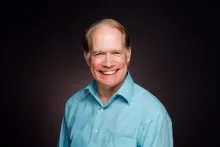
Greg Thomas is the former Pastor of the Cleveland, Ohio congregation. He retired as pastor in January 2025 and still attends there. Ordained in 1981, he has served in the ministry for 44-years. As a certified leadership consultant, Greg is the founder and president of weLEAD, Inc. Chartered in 2001, weLEAD is a 501(3)(c) non-profit organization and a major respected resource for free leadership development information reaching a worldwide audience. Greg also founded Leadership Excellence, Ltd in 2009 offering leadership training and coaching. He has an undergraduate degree from Ambassador College, and a master’s degree in leadership from Bellevue University. Greg has served on various Boards during his career. He is the author of two leadership development books, and is a certified life coach, and business coach.
Greg and his wife, B.J., live in Litchfield, Ohio. They first met in church as teenagers and were married in 1974. They enjoy spending time with family— especially their eight grandchildren.
