
Paul Moody
This transcript was generated by AI and may contain errors. It is provided to assist those who may not be able to listen to the message.
Proverbs 25, verse 25 states that as cold water to a weary soul, so is good news from a far country. The youth corps and I returned on Monday from what I would call an incredibly successful trip to youth camp in Nigeria. And I can only say good things about it. Frankly, it went even better than I was expecting. So today I'd like to share with you some of our highlights and good news from that far place. If you've been on Facebook at all this week, you probably noticed the flood of pictures that have hit Facebook from various directions. Myself and the youth corps as well as a number of the campers and staff at the camp. Most everybody has smartphones with cameras these days, and almost everyone is connected on Facebook. So honestly, hundreds of pictures have been floating around back and forth, and hopefully you've been able to see some of those at least. It's been a number of years since there was actually extensive coverage of youth corps into West Africa. Again, as things changed over the last several years, it just became more difficult to implement that. This year was basically a pilot program just to try and see how it would work to bring a group over and see how it would integrate into their culture, from our culture, and work through that process. And I'll just say it went very, very well. God blessed our efforts from the very beginning. I was very pleased at the individuals who applied for the program. I'll say the volunteers that we took over with us to serve over there were of a very high caliber, and they were able to bring not only their enthusiasm for it, but actually a specific skill set that was very useful and helped to, in fact, raise the bar in some ways to some of the activities and things that were taking place over at the camp. Dari was pleased. The campers and the staff over there were pleased, and I was pleased as well. Four volunteers accompanying me on this trip were Caleb Janisic from Oregon, as well as Ben Light, whom you all know, as well as Jennifer Imes from here in Spokane. Jenny's now over starting her classes at ABC. And then Jessica Killingley as well. She's a high school biology teacher from Washington, D.C. Again, I was impressed with the level of commitment and the contribution that each individual was able to bring to the program, because this trip wasn't just a go-and-have-fun opportunity. Again, we were looking to have a good time, and it would be a good time, but we were looking for a substantial contribution to the function and the focus of camp. Last year, because of various obstacles that came up, Daria actually had a little difficulty in staffing the camp, because a number of the young adults that generally staff it have jobs and schooling and other things, and it's not always easy just to break away and then come back. So he was considering canceling camp for this year, and when I informed him that there'd be five of us coming over, including the youth corps, he was very excited and decided, you know, let's go for it. And as it worked out, we ended up having 19 staff and 31 campers this year at camp, so it was a full onset of campers and staff. All the programs were supported, and it all worked out very, very well. Over the course of nearly two weeks of working together, all of us became very good friends. The youth corps group worked well together, and they blended well with the staff over there, and everyone became good friends. And the relationships that were made between the campers and the staff was very close and very intimate in that way, and I'll share a little bit more of that with you as we go along. All of us, except for Jessica, departed from various locations around the United States, but we met up in Atlanta so we could make that last leg flight over and come into Lagos together.
Jessica had already gone and started some summer travel. She'd been through Bolivia and South Africa and Nambia, so she came in earlier that same day of arrival, but from a different direction. And I have to say that this trip contained a lot of firsts for me. Again, this was my first trip over without Mr. Mickelson, and so as we're coming in on the airplane landing in Lagos, I start running through in my mind kind of what my strategy would be as we run the gauntlet through the airport, because they like to see Americans come in, and they like to see you come in with a lot of luggage, because maybe there's something they can shake loose along the way. But I told everyone, your papers are in order, you owe them nothing, so we were all determined we were just going to charge through and come out the other end intact. So we de-planed, and we went through Immigrations and Customs and picked up our bags at the baggage claim and just walked right out the front door. And I thought, wow, what just happened? I was thinking, you know, Mr. Mickelson was praying for adventure, and I was fully expecting that. I knew my wife had been praying for just the opposite, so maybe a little fervent prayer was in place. But, yeah, I truly realized as we went through this program that God was truly with us. God blessed our travels. And frankly, when you come into the airport with a number of people that have never been through that process before, it's not the most convenient time to have a contest. So I was grateful for what God provided and brought us through in that way. We arrived four days ahead of the start of camp. Camp broke on Sunday, and we all flew back out on Sunday night because people had to get back for jobs in ABC and various obligations. But you don't want to travel all the way to West Africa and take the money and the time and the effort to get there and not see anything beyond the campsite and hotel and the airport. So we planned a few days in advance of camp so that we could just kind of get out and move around and see some of the sights and get everybody tasting the taste and smelling the smells and seeing the sights of the culture over there in West Africa. And so it was quite the adventure that we had. Before camp, we zipped through the streets on the little yellow three-wheeled taxi carts that you see in all those international areas. Actually, I had to break up into a couple separate taxis, and so it was almost like a race through the streets of Lagos from our starting point to our destination. And they would pass us and be sitting there taking video of us as they went by, and then we would pass them and vice versa.
We crammed into the yellow transport Volkswagen vans that are running all over the streets there. If you drive down the street, what you see is that a van intended for maybe 10 people have about 20 Nigerians, and they're all sitting like this. And, you know, this person's face is pushed up against the window, and then there's doors open, there's people hanging out the sides.
We thought that looked like fun, and tried to give that a little bit of a shot. So we boarded transport and spent some time moving around Nigeria in that way, or Lagos. And part of the humor was, as we would be on that bus, the door would open for another stop, and people would get on, and they would glance into the van, and they'd literally just about stop as they're climbing in the door. Because when Westerners come over and visit, they don't just move around in public transport.
They have a driver, they have transport that takes them from place to place. And so it was literally kind of shocking to see the five of us crammed in there and enjoying the ride along with everybody else. We found ourselves to be on the receiving end of a number of selfies. You wander through the market in various places, and you see somebody over here with their camera out, and they're trying to catch a picture of you over their shoulder.
And in one of the vans we were in, I was in the second row, and there was this woman sitting in the front seat, and she kept just discreetly lifting up her camera. Lifting up her camera. And finally I said, do you want a picture? She said yes, and I kind of leaned over into the front seat, and so I suppose I'm on somebody's profile picture somewhere in West Africa. But again, it was quite an adventure that we had, wandering off the main streets, down into the heart of the market, seeing the sights that there were to see.
And although we were having fun, that simply wasn't the full purpose for our adventure out and around. We wanted to try to see and understand the culture and the people of Nigeria. And there's a specific reason for that, because if you're going to build relationships, if you're going to connect with people, such as we would be doing at camp, if you're going to teach them, if you're going to help guide and bring them along the way, then you have to have an understanding of who they are and where they come from.
What is their culture? How did they grow up? What part of society? How did that have an impact on their life and the people that they are today? And so really there's no real way to learn that other than time and experience and, frankly, getting lost in Legos. And that's what we spent a few days doing before camp. I want you to notice the importance that cultural understanding played in the ministry of the Apostle Paul. Let's go to 1 Corinthians 9. I want to look at an example here.
1 Corinthians 9. Apostle Paul traveled all over the known world at that time preaching the gospel of Jesus Christ. It's a lot of different people, a lot of different places, a lot of different cultures. In 1 Corinthians 9 and verse 19, Paul says, For though I am free from all men, I have made myself a servant to all, that I might win the more.
He says, To the Jews I became as a Jew, that I might win the Jews. To those who are under the law, as under the law, that I might win those who are under the law. To those who are without law, as without law, not being without law towards God, but under law toward Christ. I didn't go outside the parameters of God's calling and the standard which he gives to us in order to identify, but he says that I might win the more of those who are without law.
Verse 22. To the weak I became as weak, that I might win the weak. I have become all things to all men, that I might by all means save some. Now this I do for the gospel's sake, that I may be partaker of it with you. It was pretty amazing when you read through the writings of the Apostle Paul. He had this incredible ability to evaluate people, size them up where they were, and know how to make the connection, how to bridge that gap and then bring them to an introduction of God and Christ.
It's an incredible skill set that he had. That's what it means to be all things to all men. You know, it doesn't mean you become like the world in order to convert people in the world. That's not the point because God has called us out of this world.
He's called us to be separate. But what it does mean is that through the understanding you have, you learn to identify the bridge by which you can then connect and you can then bring them to what it is you're trying to teach. Again, that's what the Apostle Paul did very, very well. And, brethren, I believe it's something that would serve us well if we can learn to implement such a thing in our life. Notice Acts 17. Again, verse 15. This is following along on one of Paul's missionary journeys. Acts 17 and verse 15.
It says, those who conducted Paul brought him to Athens, and receiving a command for Silas and Timothy to come to him with all speed, they departed. It says, now Paul waited for them at Athens, and his spirit was provoked within him when he saw that the city was given over to idols. Well, how do you think Paul saw that? It wasn't just from looking out the hotel window. He was in the market. He was on the streets. He was rubbing elbows with people. He was seeing what was taking place here in Athens. Verse 17, it says, therefore he reasoned in the synagogue with the Jews and with the Gentile worshippers, and in the marketplace daily with those who happened to be there. Again, obviously, he's out. He's about. He's mingling with the people. He's coming to understand, indeed, what it is that's transpiring in their life. Down to verse 22, it says, then Paul stood in the midst of the Areopagus, and he said, men of Athens, I perceive that in all things you are very religious. Again, it's that perception. It came from watching, from evaluating what was first and foremost and primary in their culture. What kind of people were these? What atmosphere was God working to call a church congregation out? He was evaluating these things, and he says, you know, I perceive that in all things you are very religious. Verse 23, for as I was passing through and considering the objects of your worship, I even found an altar with this inscription to the unknown God. Therefore the one whom you worship without knowing him I proclaim to you. And that's the connection. That was the bridge. Paul said, the unknown God, let me tell you about him.
Let me tell you about his son. Let me tell you what it means to have a relationship in the ends to which that leads. Verse 24, carrying on, he says, God, who made the world and everything in it, since he is Lord of heavens and earth, does not dwell in temples made with hands, nor is he worshiped with man's hands as though he needed anything, since he gives to all life, breath, and all things.
And he has made from one blood every nation of men to dwell on the face of the earth, and has determined their pre-appointed times and boundaries, that of their dwellings, so that they should seek the Lord in the hope that they might grope for him and find him, though he is not far from each one of us. Paul says, verse 28, for in him we live and move and have our being. As also some of your own poets have said, for we are also his offspring.
President Paul knew the culture, he knew the literature, he could look around and identify the means by which he could reach across that divide and connect with those people, build that bridge to then bring them to the teaching of the gospel.
You know, when I take a sermon to Nigeria, I can't always speak to them in the same way that I speak to you. My message is generally the same. The biblical content is the same, but the means by which then I connect sometimes has to vary, because we have our culture and our understanding and our sensitivities, and they have theirs as well. And so you need to try to find a way to reach across and connect in a way, then, that you bring them along to what is the biblical point of the message. Ben and I shared split sermons in Legos on the Sabbath, and the night before, we were sitting in the hotel room, and Ben said, you know, I brought a few messages with me, and after roaming around Legos this week, he says, you know, I think this one is actually the one that makes sense, the one they could identify with.
And he kind of told me what he brought with him. And I said, you know, I think you're right. And I appreciated the fact that he could look around and assess what was going on and the conditions and the culture and say, you know, I think they would relate well and connect with this. And it was so.
It was a good message. And they learned, I think, a lot of principles from what Ben shared. I gave the sermon on zeal for our Father's house, and I gave that here probably going about eight months or so ago. And I began the message talking about the corruption that was in the temple system at the time of Jesus Christ, how the high priest and the priest did all together, and those that worked in the temple, it was a system to merchandise the people of God for dishonest gain.
You know, those who were in authority that should have been looking out for the well-being of the people or taking advantage of them for their own gain. And I mentioned some of that here, but I focused on it more directly in the introduction to my message there, because, believe me, in Nigeria, the people understand. You know, the authorities, those in government, the police, people even in your own family in authority in certain ways, it is a very corrupt system. And those that have the power to do so take advantage of the people in so many ways for their own profit. And so they could identify with the fact that Jesus Christ was consumed with zeal for his father's house, and he cleansed the temple and he pushed that system out the door, and they could understand his frustration and why he took action.
And that was sort of the bridge that then related to them the fact that now you and I are the temple of God, and we need to cleanse our own house, let nothing that defile enter in. So you seek to understand where others are at, and then you use that knowledge to build the bridge, build the connection, in order then to be able to convey what it is that you need to convey. Again, that's what Paul did. Carrying on, again, verse 28 in Acts 17, Paul said, For in him we live and move and have our being, as also some of your own poets have said, for we are also his offspring.
Therefore, since we are the offspring of God, we ought not to think that the divine nature is like gold or silver or stone or something shaped by art and man's devising. He's saying, you know, the unknown God, let me tell you about him, let me relate through your literature, let me reach across to the fact that you are idle worshippers. Let me show you the need to come out and be separate in a different way. Verse 30 says, Truly these times of ignorance God overlooked, but now he commands all men everywhere to repent, because he has appointed a day in which he will judge the world in righteousness by the man whom he has ordained.
And he's given assurance of this to all by raising him from the dead. When they heard of the resurrection of the dead, some mocked him while others said, We will hear you again on this matter. So Paul departed from among them. And he simply goes on to say that some joined with him and some believe. So, brethren, a cultural understanding plays an important role in your ability to connect with people. And so I say, gaining that understanding was a large factor in our desire to travel around Lagos, to see the sights, to rub shoulders with the people there locally, and just at least try to experience a little bit of what it is that they experience on a day-in, day-out basis.
I want to read you a portion of a blog entry that Ben Light wrote. This was Ben's first trip. And I could tell you about our experience and what we saw, but I want to bring it to you from the perspective of somebody who saw it for the first time, and I think it's fresh and unique. This was Ben's first visit, and hopefully not his last. I anticipated it to be the first of many, but I at least want to read to you what his perception was of the culture that we stepped into. Ben titled this blog entry, The Heart of Lagos.
And he says, The past two days in country have been spent working to experience as much as Lagos as we possibly can before camp starts. He says, We've tried to avoid just bailing out of the hotel and wandering through the streets aimlessly. It's a huge city, and the public transportation system is tricky to pick up if you're not a native.
So we were pretty reliant on Dari, his family, and his friends to help us find our way around. Thankfully, they've been gracious to help us see much more of the city than we've been able to see on our own. Our hotel's near the airport and doesn't provide a whole lot of food and entertainment or sightseeing, but that doesn't stop the wanderlust from kicking in. On multiple occasions, we've had to practically tie up Caleb to keep him in the hotel. Caleb had quite the adventuresome spirit.
We'd be out wandering around, and if we stayed a little too long in one spot, we'd turn around and say, Where's Caleb? He was gone and around the corner. As he did point out to us, I do always come back. He did always come back.
We'd just maybe better tie his shoelaces together and try to slow him down just a bit. Dropping down to day two, he says, The next morning we headed out on a walk about from our hotel. Caleb looked for a route we could follow that would take us through some quieter areas off the main road. He downloaded a Google Maps app onto his phone and we could pull up all the streets in the neighborhood.
We followed a smaller road that paralleled the main road through some smaller homes and markets. Everywhere we turned, we were greeted by smiling greetings of a weebo, a weebo, meaning white man. Most individuals looked genuinely surprised to see us in this neighborhood. As we walked, we waved at kids, talked to individuals, and purchased some puff puff pastries, basically donut holes, which we ate while we walked and took it all in.
The dichotomy, he says, between the haves and has-not is stunning. I'm sure it's just as stark in the United States, but perhaps I needed to be jolted out of my complacency a bit to see it. At one point, we were walking up a street that paralleled a bridge overpass, and on our right is what would be in the United States a multi-million dollar home. I don't know what it cost in Nigeria, but it was exorbitant. Directly across the street from that palace was a woman bound to a wheelchair, her husband and the most beautiful little girl all of 16 months living under the bridge overpass.
The girl was chewing on a black plastic bag. She says, I couldn't help but wonder, what does her future look like? What are her options? What will she be in 5, 10, or 15 years? Money doesn't fix the situation, ultimately, though that didn't stop us from trying. Realistically, the return of Jesus Christ is the only real permanent fix. But the realization and the understanding didn't make it any easier to stomach when you see that sweet little girl gnawing on a black plastic garbage bag.
We had found the heart of Legos, the pulse of the people. And now that we found it, we didn't want to let it go. He says, Mary and Dari's other sister Fumi and Ralph from Benin City took us down to Aiketun Market. We had wanted to see the open markets of Legos, and while we had seen similar versions, smaller versions of this kind of thing all over, I'd never seen anything quite like this in my life. It was quite possibly the most people I've ever seen in any one place. They were people selling anything and everything, and it was readily apparent as we got off the beaten path of the Aiketun Market that this was not a place that many white folks tread.
The cries of a weebo, a weebo, were more frequent and louder. He says, I met a couple of children who had actually never seen a white person before.
Ben says, I made her cry. I was hoping for wide-eyed wonder and less shrieks of terror. He says, I do tend to have that effect on young children, even in the United States. But it was fun meeting people, talking with folks as we went. It was a bit overwhelming in some ways, and it's possibly the closest I will ever get to a celebrity, which, to be honest, I think I'm perfectly okay with.
It's pretty credible walking through, and everybody sees you, and everybody is shocked to see you there, and people want to cut you and take your picture and have you recognize and say hello in some way. He says, one woman was very excited to see me. I went over to shake her hand and say hello, and she came bolting out of her chair and wrapped me in a big bear hug. It's interesting, as we go through the market, Caleb might be out in the front or I'd be in the front, and people would be, a wee-bo, a wee-bo, and then they would see Ben.
Ben's about a head taller than me, and greater stature, big bushy beard, and it was like, now there's an oe-bo. People just seem to gravitate to Ben. So you had this lady that was sitting there, and she ran out, and I think the first time she shook her hand and ran back to her booth, and she had a few other ladies with her, and everybody's getting excited and jumping around, and they're pushing her out.
Go see them again, so see them again. We had our cameras out, and by this time, literally, there's probably a hundred people around us just staring, and they're pushing her out, and she runs out, and she just throws her arms around Ben, and literally, the cheer went up from this crowd of a hundred people. And if you look on Facebook, I took a picture of that moment when she grabbed hold of them, and you just see all these smiling faces in the background.
Ben says, we got some pictures together, and then said goodbye in order to continue looking around. We continued deeper into the depths of the market, down side alleys up the stairs, looking for some authentic items as souvenirs. Without a guide, it would have been incredibly disorienting of an experience, and we'd have been easily turned around to where you couldn't find your way out. We took public transportation everywhere that day, which turned into a fun game of how many people can you fit into a mid-80s Volkswagen van.
He says the answer is 16. It was fun to think, okay, it's full, and then three or four more got on. Okay, now you couldn't possibly fit anymore. Just kidding. Here comes two more. He says, I was impressed at the stacking skills, let alone the insanity of the coming and going, the bartering, the negotiating of price. I would have ended up in Cameroon or something if I had tried to do it myself. I was very thankful for Mary and Fumi and Ralph's guidance. All in all, we had found the heart of Lagos. He says it was a wonderful day, and the trip will remain a highlight of my time in Nigeria.
Brethren, being all things to all men, again, means gaining an understanding of the culture and the society in which they live, and understanding what it means then to bridge the gap and make a connection. Again, it's not necessarily taking that culture unto yourself. That's not the point, but it's understanding it to the point that you can reach across and build a bridge. So I'd like to think that we gained at least a little bit of that ability as we traveled through Lagos those three days before camp. Saba services in Lagos was a buzz of activity.
A number of the campers, or most all of them, had arrived from O'Wary in Benin City. They were busting on Friday afternoon and stayed the night over in the church hall. And so we were literally just busting out at the seams. People were... they get excited when one person shows up, but there were five of us, and they were deliriously excited. It was wonderful. The buzz of activity was hard to get settled down for services, and the song service just raised the roof with that many people crammed in there. And Ben talked to me later, and he said, you know, trying to pull myself together from the song service and walk up there and speak was actually kind of difficult.
He heard them break out in song, as we've described here. And he said he choked him up, and he was fighting back tears. It was a blessing to be together. And so many people come up and say, Thank you, thank you for coming, thank you for bringing them, thank you for organizing this, almost to the point that it was sobering. They're thirsty for company, and they crave that interaction very much. On Sunday, we began camp. Again, a total of 31 campers and 19 staff participated.
The campsite was a half-hour boat ride outside of Lagos. We loaded all our gear onto a larger wooden barge, basically, that took it out there. And then the rest of the campers and the staff split up on three other boats and made our way out of the camp. Two or three times along the way, the motor would die, and they'd have to kind of wrap the cork back around the starter and give it a start again. But we did eventually make it out there and pulled into the backside of camp.
The area where they have camp is a pretty incredible spot, really. It's a long, narrow strip of land, probably about 200 yards deep and a number of miles wide. But you boat up to the backside of that on calm water and enter the back of the complex for camp. The front side of camp then borders the ocean. You have the beach and the waves that are crashing in on the front.
A number of the individuals set their tents up in various spots around camp, but we Americans said we want to be right on the ocean. So we pitched our three tents right on the leading edge of camp there, with the ocean crashing literally 25 yards away. I go to bed at night. I lay there.
I unzip my tents and just kind of stare out the door as I'm going to sleep. There's this palm tree, coconut palm, that sort of curved its way overhead. And so I'd look past the palm of the stars, and the ocean breeze is blowing in, and the waves are crashing, and it was just very, very peaceful. It's kind of lonely off to sleep.
There were a couple nights where I had difficulty actually sleeping. I'd get to sleep, but wake up about 2 in the morning, wide awake, and it's probably the time difference, but I'd just get outside my tents and just sit out there looking out over the ocean, and I'd count on any given night 22 to 26 ships lined up on the horizon, oil tankers and cargo ships, kind of lined up to go in and out of Port Hardcourt, little ways yet, down the coast. Again, it was very peaceful. A couple times I actually got out and just walked the beach in front of camp 2-3 in the morning, and everybody's in bed, and it's just quiet, and this opportunity to think and pray and meditate and focus on the upcoming day.
One option that was a little bit tricky, I laid there wondering if these coconuts are going to come down, you know, because we had windstorms coming in. And as we broke camp, I actually packed up my tent and put it in the bag and walked away from where I was set up, and literally 10 seconds behind me, a large palm frond broke off the tree and came down right where I'd been set up. So, you know, God was merciful.
Again, we saw His blessing and everything we did and the activities just went incredibly well. Other than some minor scrapes, some minor sunburns from people with white skin, camp went very well. There were no real injuries that I'm aware of this year. We did have some leaky tents. It's the rainy season, actually getting on the tail end of that. And so the weather was cooler. We had probably low 80s each day with the ocean breeze blowing.
It was very pleasant and comfortable. We did have a few downpours that came through, and in the night you would just kind of work your way around in the tent so the drip didn't hit you in the forehead. But on the last night, we had a sustained downpour for hours, and a number of us ended up abandoning our tents and going and sleeping in the clubhouse.
So a lot of gear has been hauled over over the years of camp. It's well stocked, but eventually things do wear out. And the big tents are doing really well, but some of these one- and two-three-man pop-up tents, they were using them when I went over for Challenger. So, you know, eventually you just have to start hauling a little gear here and there as replacement.
I'll start bringing some of those on my next trip. And communicating with Dari, we were out looking at the waterway behind camp, and there's no real water activities out there. I said, you know, that's perfect for some six-man inflatable rafts. We can bring maybe two or three of those over in some paddles and start a little bit of a water program on the backside of camp, and he thought that was a good idea as well. The theme for camp this year was Guided by God's Word.
And it's the same theme that was implemented in all the camps here in the United States. Ben and Caleb and I shared with Dari in the morning compass checks and the evening Christian living classes. And also we would take those themes as we walked through the week because each day had a sub-theme to the overall theme, and we would look for ways to implement those sub-themes into the activities that we conducted throughout the week. One example of an activity was the team challenge where they did the boardwalk, as we called it.
And the boardwalk is essentially two narrow strips of wood that you break them into teams of five. They have five people stand on these two strips of wood with one foot on each strip, and they would have to go through the obstacle course that we'd set up for them and compete between one another.
It was a timed event. And what they would have to learn to do was to move in unison if they were going to go anywhere. So you would have the lead person on that team call out left foot and right foot and left foot, and they would move together and then be able to move through the obstacle course. Well, part of the lesson that we portrayed was those boards represent the foundation on which we all stand. It's our common calling. It's the Word of God. It's the principles that guide our life. But the only way that we're going to go forward together is in unity.
It's in working together. It's in communication, and it's in oneness of mind. Amos 3, verse 3 asks the question, can two walk together unless they are agreed? And we found out, no, they can't. In fact, it's a rather disastrous thing if you even try. So they worked together and figured out how to move along to the obstacle course. And it's just a small example of the way we tried to build the lessons of the day into all the activities that we conducted. Again, the overall theme of camp was guided by God's Word.
Psalm 119, verse 105 states that God's Word is a lamp to our feet and a light to our path. And so in that way, when we study God's Word, it illuminates the way before us.
It shows us how to place our feet as we walk through this life. So that is the basis that we constantly brought them back to. Have your life, have your decisions grounded on the standard of God's Word. Mr.
Hurst was here earlier. I want to go back. Proverbs, chapter 29, verse 18. It's Proverbs 29, 18. This is a scripture that teens and young adults here have heard me go to frequently. Proverbs, chapter 29, verse 18. And if God's Word is our guide, and speaking first his kingdom is our focus, then we need to keep those two things working in concert together. Proverbs, chapter 29, and verse 18, says, Where there is no revelation, the people cast off restraint, but happy is he who keeps the law.
As Mr. Hurst read from the original King James, it says, Where there is no vision, the people perish. Where there is no prophetic vision, where there is no understanding of what lies ahead and what God has purpose for us, then there is no restraint in your life to live accordingly. But God has called us to be different and to a different standard. He has given us the vision of the kingdom of God.
He has given us His Word that guides and directs how we place our feet in order to restrain our lives towards achieving that vision. You and I, brethren, live in a very unrestrained world. Again, as Mr. Hurst is saying, they don't have that vision before them.
But God has called us to keep that first and foremost. And so that's what we encourage the campers to do this year. We said, make God's Word the guide to the decisions that you make on a daily basis. Keep that vision in front of you and then ask, Is this decision today in support of where I'm heading? If it is, wonderful. If it is not, maybe it's time to then go back and reassess those things. Monday's sub-theme was God's Word is our foundation. And the action statement for that day is, I will live by God's Word. Therefore, whoever hears these things in mind and does them, I will liken him to a wise man who built his house on the rock.
Matthew 7 and verse 24. So if you build the framework of your life, if you build your house upon the foundation of the Word of God and the example of Jesus Christ, no matter what storms come about, no matter what trials you face, your house will stand, as long as it is built on the rock. Tuesday's sub-theme was, choose God's blessings. Choose God's blessings. Again, the action statement was, choose life.
I call heaven and earth as witness today against you that I have set before you life and death, blessing and cursing. Therefore, choose life that both you and your descendants may live. Deuteronomy 30, verse 19. And one of the most precious gifts that God has given us is the ability to choose. He gives us a choice.
He says, I set before you life and death, but God is not indifferent. He says, please choose life. It's my people. I want you to live. I want to be able to pour my blessing out on you. Please choose life. But God gives us the option. He gives us the choice. Wednesday's sub-theme was, resisting wrong.
Resisting wrong. It ties very closely into choosing God's blessings. And the action statement was, make right decisions. I will set nothing wicked before my eyes. I hate the work of those who fall away. It shall not cling to me. Psalm 101, verse 3. Again, the choices we make, the decisions on a daily basis, need to be grounded in God's Word and in the perspective of the vision. Thursday's sub-theme, building godly relationships. The action statement, I will choose God's principles to build godly relationships.
Christ said in Matthew 17, 12, Therefore, whatever you want men to do to you, do also to them, for this is the law in the prophets. So much of camp was focused on building relationships, not only with God, but with one another. Because God calls us out, not only to be in a direct relationship with Him, He calls us into a family. And so the basis on which we form those relationships and hold one another accountable and lift one another up in a positive way, again, is most important in thus obtaining the vision of the kingdom of God.
Friday's sub-theme was God's Word leads to eternal life. If God's Word is your foundation, if it's what you implement, if it's the focus of the blessings that you choose and the decisions that you make and the relationships that you establish, and that is how you live your life, God's Word then leads to eternal life. In the action statement, I will be guided by God's Word.
Again, it brings us back full circle to the overall theme, guided by God's Word. Blessed are those who do His commandments, that they may have right to the tree of life and may enter through the gates and to the city. Revelation 22 and verse 14. And so, brethren, these themes and these scriptural references built the basis on all the presentations that we gave, all the underlying themes of the activities that we did, and so much of what we gave in terms of Christian living, compass checks, were interactive.
And so we would teach the young people, but they would respond as well. And they would present questions, and they would give their point of view. And frankly, I think we learned as much from them as they did from us. And it was a rather valuable exchange back and forth. The staff, during the week of camp, stayed quite busy. The Youth Corps conducted a number of the activities, oversaw those.
Jessica Caleb and I worked to organize the Team Challenge and the Obstacle Course that took place every day. With Team Challenge, you try to build an activity that they have to work together in order to accomplish and overcome the obstacle before them. Jessica worked also with volleyball, and then floated back and forth between Team Challenge and teaching speed away out on the beach. If you've been to Northwest Camp, speed away is a big deal. They play soccer, and I think as they would call it football, but they play soccer in Nigeria.
Speed away is a variation because you can pick up the ball and run with it and throw it and do various uses of the ball other than soccer. But they picked it up very quickly, and other than the passing cow herd wandering through the beach, they were able to do quite well and do that uninterrupted.
We actually had cows and goats and everything else that would come wandering across the archery range. It was pretty exciting. I kind of thought maybe the goat pepper soup came from the archery range each night, but who knows? I hope they took a head count. Jennifer, I would say, probably worked the hardest of us all. Everybody had a skill set they brought over. Jennifer is a lifeguard, and she was assisting in teaching of swimming, and she actually taught advanced swimmers a number of techniques as well.
She worked with swimming each and every day, because I would say of all the activities, swimming is probably one of the most life-saving skills that is taught there at camp. She worked every day as every camp dorm came through, taught swimming. She spent about four hours a day in the pool, but then she would go from there and teach music class as well through all the dorms that came through. She also brought a craft over, which was making paracord bracelets. The campers liked that so much, and the staff from Nigeria thought those were so nifty that they wanted her to teach them as well, so she held another session for the staff.
So basically, the rest of us had a little downtime here and there between activities, and we'd go over and take pictures of Jennifer out there in the pool or of teaching the music course, but I appreciated her contribution very much. One thing that was particularly pleasant is the way that the dorms would sing and clap and do their various cheers as they moved throughout camp. We'd just wrap up an activity and send the dorm off and work to reorganize for the next group, and you'd hear them coming from afar off.
They'd be singing and clapping and singing some rhyme, and they'd come right up to us and then sing a song of greeting right there through the instructors and those running the camp program. It was very encouraging and uplifting. Camp gave us an opportunity, and me specifically, an opportunity to get to know the young people in a way that I'd not known them before. I'd been through the region a number of times and met most of them, but the fact is, it's sort of a hello and goodbye type of relationship up at this point because we've been on the move.
So camp was wonderful in order to then spend time with them, spend the week in interaction and getting to know one another. At the beginning of camp, the campers were relatively shy in terms of how they interacted with the youth corps staff and myself because they really didn't know us. They weren't sure what to expect. Again, that cultural gap sort of runs both ways, but what we found is that the quickest way to connect is just to play with them.
So we engaged in the activities, we sat together at meals, again, interaction in the compass checks and the various presentations, and by the second, third day of camp, they were really starting to open up to us. And I was pleased to see actually the level of connection that they made with the youth corps. You know, these are spiritually focused individuals that went over there, and they related very well with the young people. And towards the last half of camp, I'd noticed a number of times maybe one of the young adults or older campers would pull one of the youth corps members aside and just say, can we talk?
And they would go sit off on their own and just discuss and have a conversation and get good advice as well from those that were there with me. Again, I think it was an important relationship that was able to exist as a result of our time there. One of the highlights towards the end of the camp, an extremely positive highlight in my mind, and again, good news, I'd like to share with you is we had three baptisms towards the conclusion of camp.
And it's such a delight to see the young people grow up in the church and to dedicate their focus to this way of life. And so two of the young adults, Ralph, a young man in Toyosi, a young lady, we baptized in the swimming pool right there at camp with a number of their fellow campers around and observing, and it was a joyful moment. The third baptism, Nambi, he came up, he was a little bit shy, and he said, can you baptize me in the ocean? And I said, you want to be baptized in the ocean? He said, I'd really like to be baptized in the ocean.
That's a big deal because he can't swim. But it's funny, as the youth corps would go out, we'd swim in the ocean about every other day, and we'd have one or two adventurers, some Nigerians who could swim, kind of join us. But most of it would just line the beach and watch us, and I suppose wonder if we were going to all make it back in. But Nambi, he wanted to be baptized in the ocean, so he said, we can do that. So we're heading down the beach.
I told Ben, I said, Ben, you take the lead on this one. And we walked out into the surf, and the waves are kind of rolling in and out on us. And Ben starts to ask him, have you repented of your sins and accepted Jesus Christ as your personal Savior? He says, yes. And right about that time, we look off in the distance, and we see this massive wave that's starting to build and head our way. And so Ben starts to speed up his speech a little bit.
He says, I now baptize you not into any sector nomination of this world. And just as this wave comes over the top of us, we put him down. And it just comes crashing over, and it was almost complete immersion for Ben and I as well. We didn't want to lose Nambi to the surf. We both had an arm under each one of his arms, and we just kind of leaned into it because the drag going out was intense.
And part of the symbolism of baptism is the resurrection as well. You don't just stay under. So we didn't want to lose him right off the bat. But, you know, it was incredibly—it was a first for me again, a number of firsts on this trip. It was just an incredibly encouraging moment to share that with them.
We came back to the shore, and there were hugs and tears all around. And then that evening was the bonfire activity, and there was singing and dancing and goat pepper soup. And just an encouraging and a wonderfully uplifting night.
On the Sabbath, most of the Lagos congregation boated out to join us at the campsite. So again, it was a nice opportunity to get together and visit with them. Ben and I shared in the split sermons again on that day, and Ben spoke about the difference between knowledge and wisdom. That the world is full of knowledge, and it's increasing, but true godly wisdom is hard to find. You have to dig for it like buried treasure. Encourage them truly to seek the wisdom contained in God's Word.
I talked about what it means to count the costs onto baptism and the covenant relationship that we make, and then the fact that once we've committed, there's no going back. Remember Lot's wife. Don't turn. No one putting their hand to the plow and looking back is fit for the kingdom of God. And so it's the most important commitment that an adult can make in their life. So again, those were the two messages we gave on the Sabbath.
And after services is an opportunity for all of us to gather together, go out on the beach, and have a little fun together. And if you've seen a number of the pictures on Facebook, a lot of those were taken on Saturday afternoon. The campers had gotten their phones back, and so they were whipping them out, and wanted a picture of everybody and everything. And literally in a half an hour period of time, hundreds of pictures were taken. And again, you've seen some of those that were shared back and forth.
I have to say, brethren, that I'm encouraged for the future of the church in Nigeria. Having been to camp to me was encouraging in terms of recognizing the level of spiritual understanding of the young people. They know their Bibles very well. And a lot of the conversations we had in Christian living and the feedback to me was very encouraging. If you look at the demographics in Nigeria, probably about 60% of the congregations are young people. And so, you know, the future is very much there with them. And if they can encourage one another, hold one another up. The final message I gave to them as we were breaking up, I said, you know, you are your brother's keeper.
And again, God has called us out of this world, but as well, into a relationship with each other. So the bonds that are formed at camp, I say, keep those strong, hold one another to account, live God's way, and lift each other up for good. And if you do that, the future of the church will be vibrant and unified and faithful. And again, I was very encouraged in that way, and I look forward to what God has in store for the future of the church in Nigeria.
I'm grateful as well to the Youth Corps for their willingness to serve and travel.
Nigeria is a far away place, and many of them feel isolated in many ways, and frankly, they are. It takes those with the heart of service and a willingness to step out of their comfort zone to be able to walk over there into that environment and impact it in a positive way. And so I was very grateful for the Youth Corps that we have along. I'm grateful also to all of you, because without your support, both here on the home front and in other ways, it wouldn't be possible for the Mickelson's as they've traveled over the years, and now myself to even be able to make the trip over there, it takes stability on the home front to be able to go then and serve abroad. So I thank you all and those within the sound of my voice for your unity and your support and your help and the ability to serve God's people in that way.
On one of the final Christian living classes, Dari made the comment, he said, Blood is thicker than water, but Spirit is thicker than blood. And it's true. And the Church of God in Nigeria is our family, just as you are family to one another as well. So the brethren in West Africa do appreciate your love, do appreciate your dedication and the willingness to support them in the manner that you do.
One final scripture to go back to 1 Corinthians 10. I'd like to focus back in here in conclusion with the example of the Apostle Paul.
1 Corinthians 10 and verse 31.
Paul says, Or whatever you eat or drink or whatever you do, do all to the glory of God. He says, Give no offense, either to the Jews or to the Greeks or to the Church of God. Well, if you're going to not give offense, you need to know what causes offense, whether in this culture or that culture, wherever it may be. Give no offense. Verse 33. Just as I also please all men in all things, not seeking my own profit, but the profit of many, that they may be saved.
He goes on to say, Brother the Apostle Paul understood the importance of serving for the benefit of others. He understood how to reach across, again, the cultural boundaries and the divide that exists and to make that connection. He says, But again, it's within the parameters of living according to God's Word.
He did so, as it says, for their profit, for their edification, and that not of his own.
Brother the Apostle Paul, as the culture and the society around us moves further and further away from a godly basis, let us not withdraw within ourselves. We had the focus scripture today about being the light of the world. I appreciate that very much.
It focuses in very much on what I think we should be focused on in terms of how we are to be all things to all men.
As darkness pervades around us, let's not withdraw within ourselves. Let's let our light so shine in the darkness, so that men may see and glorify God. Again, being all things to all men doesn't mean you become like the world in order to win the world. But what it does mean is that through understanding, you learn to identify that bridge of connection. What is it then that allows you to shine forth as a light that they will see? And your friends and your family before your co-workers. You know, you and I are called to be ambassadors for Jesus Christ and citizens of the kingdom of heaven. That makes our culture in the church different than even society right here at home around us.
How is it that we're going to impact the people around us? How is it that we're going to reach across? Again, God is not following this whole world at this time, but He's given us the opportunity to set the example. Find the bridge of connection with those that you have interaction with. Some way that they can then see the light and the hope that's within you. I think indeed in that way, we can learn to be all things to all men.
I'm pleased, again, as I come back from camp with the relationships that were developed, the connections that were made. I'm grateful for the opportunity to go and travel, but I'm always grateful as well for the opportunity to return home. And so, brethren, thank you for your support. Thank you for your encouragement along the way. And again, I'm grateful to be able to bring to you today good news from the far country.
As I close today, I've put together a short video, amateur videos that I shot here over at camp. I put together a five and a half minute video presentation so that you can hopefully at least get a glimpse into what Youth Camp is like in West Africa. And hopefully it will make that connection in your mind and lend a little understanding to you what it is that we go and do.
I've, due to cybercast reasons, put a little bit of music to this and I used how good and how pleasant from our church hymnals so that we could broadcast the video to the rest of the congregations. And after that, Mr. Imes will lead us in the closing hymn.
You have heard the real music to be a big help. I've heard little music of them singing you. I've heard precious voices, I've heard more things new.
And depending on the mountain, your eye on must be poured. But your mountain, your breath in your sight, forevermore. I'll do it, I'll do it, for the rest of you. Will it take me together to be part of the team?
Go home, go home, go home!
You can do it!
You can do it! Go, go! Go, go! Get your ass...
Go! Go! Go!
Go! Go! Go!
Go! Go!
Do you need anything more? No, no, no. You good? Okay.
Go! Go! Go! Go!
Head back! Tongue down! Tongue down! The rest of the government will be out!
We will be out! Let's go! Whoo!
How good and how pleasant! For present you dwell! Together in unity!
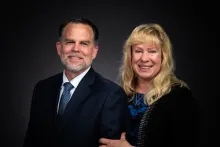
Paul serves as Pastor for the United Church of God congregations in Spokane, Kennewick and Kettle Falls, Washington, and Lewiston, Idaho.
Paul grew up in the Church of God from a young age. He attended Ambassador College in Big Sandy, Texas from 1991-93. He and his wife, Darla, were married in 1994 and have two children, all residing in Spokane.
After college, Paul started a landscape maintenance business, which he and Darla ran for 22 years. He served as the Assistant Pastor of his current congregations for six years before becoming the Pastor in January of 2018.
Paul’s hobbies include backpacking, camping and social events with his family and friends. He assists Darla in her business of raising and training Icelandic horses at their ranch. Mowing the field on his tractor is a favorite pastime.
Paul also serves as Senior Pastor for the English-speaking congregations in West Africa, making 3-4 trips a year to visit brethren in Nigeria and Ghana.

