
Paul Moody
This transcript was generated by AI and may contain errors. It is provided to assist those who may not be able to listen to the message.
I did just return from youth camp in Ghana. I spent nearly two weeks over in Ghana and had the Youth Corps presence that joined us as well, and I'll talk about that a bit today. Basically, whenever you go somewhere and you take the Youth Corps, then there's a requirement that they like you to write a blog. And so, Mr. Light wrote a blog.
Other people are writing blogs. This is my blog. Maybe I'll just send them the link and they can connect it to their Facebook page if they like. It's always nice to go and come back and share some of the experiences of where I've been and who I've seen and the activities, because you're very much invested in that as well.
And I do appreciate that effort that we all share. I probably have to push a button to start this. Forgot to turn the projector on. Ah, the projector's coming on. All right. Well, I can talk until it comes on. All right. But no, this year, youth camp, we were able to have four volunteers of Youth Corps who came, and I'll show you some pictures related to that. Mr. Light and I set out with the intention to arrive in Ghana a few days before camp started, because that's really a primary time that we spend with Youth Corps getting to know them, helping to bring them up to speed on what it is that we'll be doing as we come onto the camp scene.
And we were delayed pretty much right out of the gate. Ben's flight out of Portland was delayed a number of hours, and mine was delayed when I hit Salt Lake due to bad weather in New York. So Ben beat me there and arrived at the departing gate for Nagana in time to see the plane push back, and off it went and without him. And I caught up with him about an hour and a half later, and just to find that there were really no hotel rooms anywhere in New York, practically. And because of so many delayed flights, we ended up taking an Uber out to New Jersey, and the next day getting rescued by Louis and Lena Van Ostel, and we spent the better part of a day with them.
And Louis took us on a, not a three hour tour, it's a five hour tour of New York, and got to get my fill of New York in five hours and enjoy seeing some of the highlights. We rode the subway. All I really knew about New York was what I see on television. So, you know, I get to ride the subway. I got to, we got to walk across the Brooklyn Bridge, see the Statue of Liberty from a distance, walked around and toured Ground Zero, which is a special place.
Took time, went over, walked through about a third of Central Park. I had to jog in Central Park because, you know, that's what happens to people that get mugged on TV. They're jogging in Central Park. So I took about 50 yards in Central Park. I could say I jogged in Central Park, and I ate a hot dog from a hot dog vendor on the street in New York. And it looks better on TV, but we enjoyed it.
And, you know, nice to have, spend time with Louis and Lena and basically take a day delay in New York and then be on our way. Let's see if this works. Hey, looky there. United Youth Camp this year in Ghana, the theme was Living God's Way Today. And the spiritual instruction that's tied to that is when we have understanding of God's way of life, it's not like, well, I'll decide to live it tomorrow and next week or next year.
You know, let me get that job first or, you know, finish up my education. Our calling from God is to live according to his way today. And all those other things will fall in line as well. So Living God's Way Today was the theme of actually all the United Youth Camps here in the United States and around the world. And we took that with us to Ghana and reinforced that as well.
And we'll look at some of the lessons that we walked through related to that in Scripture shortly. This is a shot of our group at camp. We had 30 campers and 20 staff members come into Accra, Ghana, which is the capital city of Ghana. We had some new campers this year who came down from our two newest congregations up in the north central area, Kumasi and Yeji. And some of them had a basically a 12-hour bus ride over potholes and, you know, what does Paul say, and threats of perils and threats of robbers and threats.
You know, it's not quite that bad. It's actually things have improved over the last year or so on the road from Yeji. But it's a little bit of an investment and effort for them to make it down. On the opening day of camp, I gave the compass check on the first day, and it just was sort of looking forward to try to set a tone for camp. And I encouraged all the young people on the importance of the relationships that we have opportunity to build with one another in the Church of God, and specifically as young people there. Because we'll have friends in this life and in this world, and, you know, we'll have a number of good friends in the world around us.
But, you know, the potential for friendships will never be, frankly, as deep as they could be, as they can be between friends who come together in relationship in this common calling.
You know, when God is the central focus and believers are bound together in a common calling, the potential for the depth of the relationships and the stirring up of one another to love and good works, and the encouraging of one another and living this life, frankly, as the potential to be so much deeper than really you can find outside the Church.
And so I really encourage them to use this week well to build their relationships with one another, to be positive, you know, reinforcement for good in the lives of each other.
I'll also point out we had a fundraiser here locally for Youth Camp shirts, Nigerian Ghana. So you'll see we had two selections there. They each got two shirts, and they each got a green shirt and a gray shirt printed up, and they're very appreciative. And you can see in the front row there are a couple of shirts from years past, so they hang on to those and they treasure those very much.
These are our Youth Corps who came in and participated with us this year. Next to me is Kelvin from, young adult from Nairobi, Kenya. Next to him is Tabo from Zambia, and next to her is Sharon from Kenya. Kelvin and Sharon are brothers and sisters. And next to Sharon is Andrew. And of course, you know, Mr. Light, Ben Light. And for us, this was actually a first. I believe it's the first time we've ever had a complete Youth Corps group comprised of individuals outside of the United States. Usually we take young adults from the U.S. and we travel abroad, and we engage in various activities. And this was the first time actually made completely up from those outside of the United States and those in Africa. And it was sort of a experiment in one sense. We'll see how this goes, and I'll say it went wonderfully. It went seamlessly. And these really are quality young adults from their areas that serve at home. Youth Corps is meant to take young adults who have an aptitude to serving and desire to serve, to bring them together in another environment, give them opportunity to serve, and to work in a leadership mentoring program with them. So part of our intention was to be there early, a few days early, to spend time with them, give them insight into what the camp program would be, but also just in conversation and engagement together, we basically have a leadership mentoring program. That was delayed slightly by our delay in New York, but things turned out rather nicely as well. This is Friday night. Ben and I were to arrive earlier on Thursday. We ended up arriving Friday afternoon. And rather than going to a hotel, we just took off. We hit the road and went to Cape Coast, which is about three hours away from Accra, because we have a congregation out there that we plan to visit on the Sabbath. So this is our first evening together, just sitting around the table, making introductions, getting to know one another, getting to know backgrounds and history. And really, it's important to build a bond between the team before we go in and serve in the fullest capacity.
So Sabbath services were in Agona. On the Sabbath, I've brought you pictures from Agona before. This is where we have our cassava operation out there. And Agona is our biggest congregation in Ghana, roughly 110 attend there. We just started another location of a portion of this congregation out in Omina about 40 minutes away, because they were coming in by transport, which to a degree is difficult in that area, and we have an accumulation of them in Almina. So we'll have a congregation beginning to meet out there, basically from this Sabbath forward of roughly 30 to 40 members, plus others from that region that really haven't been able to come into Agona long term.
So the regular attendance now for Agona going forward will be 50 to 60, and here we were on the Sabbath.
You'll notice that there are a number of people dressed in matching outfits, and it's a cultural thing there. That's all one family. And sometimes you might get five or six families that make up a congregation of 100. But you have mother, father, niece, nephew, cousins. But oftentimes when you see them in matching outfits such as this, in most cases there's been a death in the family, there's been a funeral, maybe one of the parents, and so what is custom over there with their funerals is the family, an extended family where matching outfits as a show of unity, solidarity in the family as they go and lay to rest their loved one. And then basically that outfit becomes part of their regular wardrobe going forward. But we were here in Agona, and I'll give you just kind of a glimpse into our song service.
It was pointed out to me it'd be good to start filming. I wasn't filming with the intention of PowerPoint, but otherwise I'd give you a widescreen shot. But you get what you get and you don't throw a fit.
Turn it up.
In within our own success, teach me thy way.
Special music on the Sabbath. Sharon and Tabo performed special music for us. And actually, what was a nice surprise for them, again, Sharon from Kenya, Tabo from Zambia. They had met each other once upon a time at a feast of tabernacles in Kenya and actually roomed together. But they did not realize that the other had applied to be on Youth Corps in this outing. And so actually one of our pre-camp meetings online, and they saw one another's email address in there. So it was quite exciting for them to pick up and build on their relationship where they left off. And they were roommates through the entire time of our stay in Ghana. It was exciting for the congregation in Nguna to have visitors. And people say, can you bring more videos? So I've incorporated a few in here. We have a young singing group of about nine of our pre-teens there. And they performed a hymn for us out of the hymnal as well. We have a young singing group of about nine of our pre-teens.
We appreciate that very much. You noticed when we had the song service, they were singing out of our regular hymnals singing in English. I'll mention that outside of Accra are a number of congregations. Six, I believe, now outside of Accra. Fanti is their tribal local language. And some speak English, some don't. Their Bibles are in Fanti. But they sing out of our English hymnals. So they've memorized the words. And there's probably in this congregation maybe about half that speak English well. And it kind of varies from there. But their services locally are in Fanti. And so whenever I'm there, Mr. Light's there, whenever we speak, it goes through translation. So Benjamin Light here speaking, and our pastor of Agona, Benjamin Agupong, is doing translation. And I'll just kind of give you an idea how that goes.
So, on that water, maybe a little bit like a maybe goat. A little shaky. But as he maybe took a step, he felt more confident. But then what happens? The wind picked up. The waves started to crash. And maybe in Peter's head, his brain started saying, wait a minute, you shouldn't be able to walk on water. So it's an interesting process to learn how to work in that system.
And actually, it's something that we've been learning in, and they've been learning as well. We've actually picked up the pace pretty nicely so we can cover a bit of material. Ben and I gave split sermons, so he took a sermon, cut it down to a split sermon, and then cut it down to a translated split sermon.
And I did the same. And honestly, it really tightens it up quite a bit. You're hitting bullet points as opposed to long, drawn-out illustrations when you do that. But, as I said, this is probably about the fastest we've been able to transition through a translation in a sermon. And if Benjamin doesn't quite get what you say, he'll just say, come again. And then suddenly your mind is scrambling. You go, alright, he didn't quite get that terminology. And you try to figure out how to maybe put it in little different words.
But it's educational and actually kind of a fun experience. Saturday afternoon we just continued with the youth corps, spent some time together. I went back out to Cape Coast, near where our hotel was for a couple of days there, and spending time with them, again, getting to know them, just valuable time together up front.
Cape Coast is one of my favorite places in Ghana, just a very beautiful region. Benjamin joined us for dinner, Benjamin Agia Pong, and then... Is there a pointer on this? Big button in the middle? One that looks like the power button? Okay. I'll leave it alone. Over on the right, Henry Aikens. He's our office manager. He's the one I travel with when I'm out there traveling around the countryside. Behind him is Isaac, one of our young adults from Accra. We need two vehicles as we're traveling around. Isaac came out and drove his vehicle and took us around on the tour as well. This is a perfectly and a personally selfish picture. I found my retirement spot.
Twenty by twenty, three palm trees and two hammocks. Darla and I figure we'll be comfortable. Two, three decades when they put me out to pasture. But I took five minutes there and it's satisfactory. On Sunday, before we headed back into Accra, to begin a youth camp, we made a detour and went over and toured the Cape Coast Slave Castle. This is actually one of those photo-op places. We've been there before, but when somebody comes to Ghana and tours around, they a lot of times will go to the Cape Coast Castle.
Barack Obama made a tour a few years back. Then Mrs. Trump, when I was back there during the FISA Tabernacles time. Just a few days before we were there, Nancy Pelosi as well had been in and out. It's kind of a photo-op when foreigners come in and travel through Ghana. But it's a historic castle fort as well. It was operated, frankly, as a major part of the slave trade out of West Africa, from the mid-1600s through the mid-1800s. Thousands of slaves passed through there. Many, many died as well.
They spent two to three months in the dungeons, in the darkness. You would get a dungeon, probably half the size of this room, and you would have 300 slaves in it for a few months at a time. Literally, many did not make it out. But it's a historical tour. It's a sobering lesson. Part of what we do when we bring youth corps and outsiders in is we try to immerse them in the culture and give them a little insight into the country that they're visiting. This is right outside the castle walls here, part of Cape Coast still.
It's a fishing region. In many ways, it's just like stepping back in time to watch the boats out working in the nets. A number of the children even work in that, which, if you watch the Ghana media, that's one of the things that the government is trying to tighten up on, is having 10-, 11-, 12-year-old boys out working in the fishing industry, rather than being in school.
Frankly, it's a dangerous industry with a number of fatalities during the year as well. But, as I say, this is life there. Literally, in many ways, like stepping back in time. The gals out on the castle wall there. This morning in Lewiston, I discovered I need to move a little quicker through some of these, so I'll try to save us some time. But we do plan to feed you after services, so I appreciate your bearing with me.
Looking up Cape Coast as well, the other direction, it looks like a vacation destination, and a really beautiful spot if it was something that was within our region. But, again, it's very much a working environment. So we made our way back on Sunday into Accra, to the site for the youth camp. The young adults there from Accra had already set up the tents and the campers were arriving. You may recognize tents from REI here that have been hauled over in years past.
But I'll just point out the fact that the location we meet in, which is the Valley View University, it's a Seventh Day Adventist University, has been really a hospitable place, a good environment for us to hold camp. When I was there this last spring, during the spring holy days, I went with Henry and David to look at another camp option.
They actually did not hold camp here last year, either, due to budget. Honestly, looking around, the other options were, here we are at a place with a 50 by 50 yard cement courtyard, with a volleyball net and a basketball court. This is where you're going to bring the kids and have camp and kind of fit in the budget. I said, well, what's wrong with the Valley View? They just really worked well. They said, well, the prices increased some. We're bringing down the new campers from up north, paying transportation, and it's out of budget. It's one of those few times that I said, forget the budget.
I said, we need a nice environment to have camp. It's a highlight of the year for our young people. We need more than concrete to move around on. I point this out to you because this is part of when donations come into Spokane, for West Africa, for youth camp, and other things.
This is a portion of how those things get used. We kind of make up some of the surplus beyond budget and certain things in order to try to provide what is needed and in a better way.
The university here has just been nice grounds. We have run of the grounds, a lot of area to move around. This is just sort of opposite of where the tents were set up and little apartments with air conditioning here. This is where Ben and I and the Youth Corps stayed for the week in the inner courtyard. I was actually in this little apartment in the corner. To the back, there's bathhouses, there's laundry facilities, and so the campers are going back and forth every day and showering and doing various things.
To me, the thing that would be pleasant would be to be in my room in the evening, and I hear them going by, and I always have some chant or some song and singing, and it's just enjoyable to hear.
Kind of off to the side, this would be the field house, then, where we had Sabbath services, where we had our Christian living and compass checks every day, and where we had our meals. Just, again, an uplifting place for camp. If you wonder what 5.30 a.m. in Ghana looks like, this is it. Calisthenics exercises, our day started early. I didn't invent it, but I'm along for the ride, and that's what we do. Everybody, the alarm's off at 5.15. Everybody's up at 5.30, and we're on the move and running through the campus and out to the soccer field, where we have our half-hour workout in the morning.
Eventually, we make it back in, and breakfast happens here in the fieldhouse, as well as compass check following breakfast. Before, or between, I'll say, the workout time and breakfast time is Starbucks hour for us Americans. That's when Ben and I would get together and have our coffee and kind of chat and plan our strategy for the day. Compass check followed breakfast every morning, and again, it's basically, let's point north, let's get our direction set for the day. It was the spiritual lesson that we want to learn and work on. The youth corps, the men, were involved in the teaching of the compass checks as well. Here we have Kelvin leading us in one of the discussions, one of those mornings there of the compass check.
As I pointed out, I'll stop on this slide for a little bit. The camp theme this year was Living God's Way Today. Not tomorrow, not next week, as in I'll get around to it. It is our calling to put into action that which God has given us through His Word today. Each day of camp we had a sub-theme that went on the board, and each sub-theme pointed back to the overall theme, and each sub-theme built on the previous sub-themes as well towards the overall theme.
I want to walk through for a few minutes here and take you through the sub-themes and some of the principles that they learned not only at camp here in Ghana, but was the core of the teaching of our United Youth Camps here in the U.S. as well. The first sub-theme in the form of a question is, was it always this way? It refers to the world. We look at the world around us, we see the challenges, we see the dysfunction, frankly, that takes place in various elements of the world, and we ask the question, was it always this way?
Is this what God intended from the beginning? Was this the intention by which He designed the world and gave mankind life? Second Timothy chapter 3, you can follow me to that passage, Second Timothy chapter 3 and verse 1 through 4 gives us insight into some of the elements of, frankly, the environment around us in this world as it exists today. And we see the environment, but we'll also see the answer. Second Timothy 3 verse 1 says, But know this in the last days, that perilous times will come.
And, brethren, I do believe we are living in the last days. Indeed, the time from Jesus Christ forward can be categorized scripturally as the last days, but it literally builds to a climax. Last days, perilous times will come, men will be lovers of themselves. Lovers of money, boasters, proud blasphemers, disobedient to parents, unthankful, unholy, unloving, unforgiving, slanderers, without self-control, brutal despisers of good, traitors, headstrong, haughty, lovers of pleasure, rather than lovers of God.
And I think if we're honest with it, we can look at various elements of this and say, we see this in the world around us today. God has called us to something different. But the question is, was it always this way? Was it intended to always be this way? The answer from Scripture, of course, no. You know, in the beginning, when God created all things, He saw that it was good. But then corruption entered in through sin. And because of sin, we come down the path in mankind's existence to where we are today.
Satan the devil has greatly influenced mankind as well, down this path of sin. And so the world we see around us is the consequence of that path, but it's not what God intended by design. The Bible tells us Jesus Christ was slain from the foundation of the world, as in, it was known from the beginning that there would be a need for a sacrifice. So God could understand what the nature of mankind would likely turn out to be and what the choices that they would make. But this is not what God planned or intended or designed to be the, let me say, the paradise of existence, as was mentioned in the first message.
There is a way out. Ephesians chapter 2, verse 1 through 7. Ephesians chapter 2, beginning in verse 1, it says, And you he made alive, who were dead in trespasses and sins, in which you once walked according to the course of this world. So there is a path. There is a course and a way of momentum of this world, but God has called us out of that. According to the course of this world, according to the prince of the power of the air, the spirit who now works in the sons of disobedience, among whom also we all once conducted ourselves, in the lust of our flesh, fulfilling the desires of the flesh and of the mind, and were by nature children of wrath, just as the others.
God says, I'm calling you out to a different nature, to a different way of thinking. Verse 4, But God, who is rich in mercy, because of his great love with which he loved us, even when we were dead in trespasses, made us alive together with Christ, by grace you have been saved. And he has raised us up together, and made us sit together in the heavenly places in Christ Jesus, that in the ages that come, he might show the exceeding riches of his grace and his kindness towards us in Christ Jesus.
And so, in spite of the world around us, in spite of the way that mankind goes in the momentum of the ways of this world, God, according to his intent from the beginning, has given us opportunity to respond to his calling, to live according to a very certain and specific way of life. So, was it always this way? Well, the focus, memory scripture for that day, Galatians chapter 1, verse 3 and 4.
Galatians 1, verse 3 and 4. So, God's intent for mankind was not simply, here you go, here's a way of life that you can suffocate on. Man has made their choice in various ways, but God provides, through his Son and through knowledge of him, the opportunity to escape these things and be delivered from this present age and live a life according to what God has intended from the beginning. The second day of camp, the sub-theme, was learn to discern. Learn to discern. Because there's a vast difference between the ways of God and the ways of this world, then we have to learn to discern the difference between the two.
If we're going to live according to God, we've got to know how it differs from the ways of this world. So, I kind of struggled, in my mind, with how would I explain discernment to these teens, knowing that there's a bit of a language barrier somewhat, to somewhat I would be saying. Discern generally means to make a judgment, to be able to see the difference between things and ultimately make a determination on which path to follow. So, in thinking, as I was coming up to this Christian living class about 10 minutes before, I'm thinking, how can I maybe illustrate the concept of discernment?
And then it came to me. I took a $100 bill, and you know, about anywhere in the world, and they can recognize a $100 bill. So, I called for a volunteer during this presentation and came up, and I gave him this $100 bill and had him hold it up. And I quickly made a counterfeit. And I drew my own, looked like Monopoly money, and I called up another volunteer who came and held that up.
And I just said, alright, if I gave you the option of choosing one of these two options that you could keep, which would you choose? And of course, they all pointed to the authentic thing, right? The real US $100 bill. If we could have it, we could have that. And I said, why? Well, that's real. That has value that, you know, you can spend that, and there's substance there. And I said, why don't you want that? I said, well, it's worthless. And I said, well, that's the principle of discerning.
You see, God's way is real, and it's authentic and true, but Satan has developed a counterfeit system to God's way. And, you know, he's maybe... you have syncretism, you link up some good, maybe Christian-sounding principles to it, and you can package it and perhaps sell it, but you have to discern what is real that God has given us, and what is the counterfeit. And the point of the lesson is to discern. If you want to know how to tell and recognize a counterfeit when you see it, you know, when they educate people on that, you don't necessarily go out to try to identify every possible counterfeit that there could be, because there's just so many, and they can vary in different ways. But, you know, something they do for... in the banks and even in the FBI, if you want to learn how to identify a counterfeit, you need to come to know the original very, very well. And so you study the true, you internalize the true, you acknowledge the true, so that when the counterfeit comes along, you identify it. And so we need to make judgments and discernments on what is truly the way of God and what is the way of the adversary or the way of this world. And for you and I, we need to come to know God's Word very well. You come to know the truth that leads to life. You'll recognize the counterfeit when you see it. Romans 16, verse 19.
Romans 16, verse 19, it says, For your obedience has become known to all. Paul says, It's an interesting Scripture. Paul says, I want you to be wise in what is good, as in, know all about the good, study the good and embrace the good, and live the good. Be wise in it.
But he said, be simple concerning the evil, as in, you really don't need to know too much about that. You don't need to say, well, I kind of need to understand the other side, so I'm going to go out and I'm going to study the occult, or I'm going to study Wicca, or I'm going to get into these various things. That's not really the point. We need to be wise in what is good, simple concerning evil, know the true, and you'll identify the counterfeit when you see it. You must learn to discern, and to make sound judgments, and to recognize what is the way of God, because he sets before us a choice. He says, choose life. So the memory Scripture for this day was Ezekiel 44 and verse 23. Ezekiel 44 verse 23, this is written to specifically the priesthood, but it's written to those that would guide and direct God's people, and it has accountability for the teachers, as well as the people who would learn these things. Ezekiel 44 verse 23 says, and they shall teach my people the difference between the holy and the unholy, and cause them to discern between the unclean and the clean. So there's responsibility put upon the teachers of God's people to teach the difference between right and truth, and holy, and clean, and unclean, but there's also now as well the accountability put on you to make a discernment from what you've learned, from what you've understood and seen in God's Word. You know, you don't come to one of the elders and one of the pastors and say, you know, what should I do on every single decision of life? You learn to make judgments, and you make those judgments by learning to discern. What is the truth of God? What is the way that leads to life? What is not?
A third sub-theme here of camp was God's way works. Very simple, very straightforward, and very true. God's way works. It works every time it's tried. So the main theme of that lesson is walking through various ways that living God's way leads to good in our lives.
God's way works in your marriage if you apply it to your marriage. God's way works in your family. God's way works in your career, in your finances. Every aspect of life we can find the principles for making life work in the Word of God. But you have to live it. It can't just be head knowledge, as we heard in the focus scripture. You know, you have to actively live these things today.
And God's way works. Deuteronomy chapter 10, verse 12 through 13.
Deuteronomy 10, verse 12 through 13, it says, And now, Israel, what does the Lord your God require of you? But to fear the Lord your God, to walk in His ways, to love Him, to serve the Lord your God with all your heart, with all your soul. Verse 13, and to keep the commandments of the Lord, His statutes, which I command you today, and notice why, He says, For your good. For your benefit. As in, when you live according to God's way, your life is benefited. Your relationships with one another are benefited. Your relationship with God is benefited as well, and you're saved from so much of the heartache and the pain that comes according to living this world's way.
So God's way works, and it's a blessing. John 10, 10 was a memory scripture for that day. John chapter 10, verse 10, the words of Jesus Christ. We see a contrast here. He says, The thief does not come except to steal, to kill, and to destroy. So there's an option, there's a choice.
You know, are you going to come under the sway of the thief? He comes to steal, kill, and destroy. But Christ says, I have come that they may have life, and that they may have it more abundantly. More abundant life, brethren, is what God offers us by living according to His ways. By coming under the sacrifice of Jesus Christ and be reconciled to our Father in Heaven. A more abundant life. God's way works. It works every time it's tried.
Thursday, the fourth day sub-theme, was transform. Don't conform. Transform, don't conform. So once you've recognized that the ways of this world are not what God has intended for us to live under from the beginning, you learn to discern, right? What is of God? What is of not God?
And once you've come to discern those things, you live them. You come to see that God's way really does work as a result, and that it produces different results than the world. So as you walk through these stages, you see these things. And what we come down to then is, if we live God's way and we allow God's Spirit to work in our lives, we then walk through a process by which we are transformed from whom we were to what it is that God is doing and developing in us by His Spirit.
Focus Scripture, memory Scripture, for that day, Romans 12 and verse 2. Romans 12 and verse 2. Paul says, And do not be conformed to this world, but be transformed by the renewing of your mind, that you may prove what is at good and acceptable and perfect will of God. If you want to know the mind of God, you have to be transformed from the carnal mind of man into His image and His way of thinking.
The Phillips Bible translation puts it this way. It says, Don't let the world squeeze you into its mold. It will squeeze you, and it will if you allow it. If you don't walk differently than the ways of this world, you'll be conformed and squeezed into the mold of the world. We have to be transformed by the renewing of our minds, which brings about a different way of thinking, a different way of acting and behaving. And that only happens by yielding to God's Spirit and God's Word.
I was thinking, what can I use for an illustration on transformation? What came to mind was the example of the caterpillar and the butterfly. You have this caterpillar, which is the way that it hatched out and it is now existing. But that is not the full potential of that life for which it was created. You have the caterpillar, which then goes into the cocoon, and spends that time there in which a transformation takes place.
And when it emerges, it is of a different form and sort of life, of an animal than what it was before. So what you have is an animal, a creature now that has fulfilled the potential, the purpose for which it was created. But it was a process of transformation to bring it to that point. And for us, God has created us in the flesh as human beings, and yet this is not the end result of all that we have been created to be. Our incredible human potential is to be members in the family of God, in the Spirit family of God, for eternity.
But there is a transformation, and if we're going to fulfill the potential to the fullest extent for which we've been created, we cannot conform. We must transform. And in our life, that's a process. I was thinking about it earlier. Don't quote me on it, so I'll just say we can all go do our homework on it and see if it's the case. But if memory serves the word, here, verse 2 of chapter 12, be transformed.
And the Greek was metamorpho, something very similar to that, metamorpho. And if you consider that in the English, what is the word that comes from that? It's a metamorphosis. That transformation, that change that must take place as we go from the carnal nature, now by God's Spirit, into God's nature and God's likeness being created in us. So it's a process. We are being transformed, but the fullest extent of that transformation will not be complete until the return of Jesus Christ and our change comes. But God has called us not to conform in light of the understanding of His way and the discernment and the recognizing that it works.
Don't conform, transform, through the renewing of your mind by the act of involvement of God. And finally, the final sub-point for the week was be alight. Be alight. Go and live this way of life as an example to the world. Ephesians chapter 5, verse 8 through 11 illustrates the point.
Ephesians 5 and verse 8, Paul says, For you were once darkness, but now you are light in the Lord. Walk as children of light. For the fruit of the Spirit is in all goodness, righteousness, and truth, finding out what is acceptable to the Lord, and have no fellowship with the unfruitful works of darkness, but rather expose them.
Darkness and light don't mix. Like oil and water, darkness cannot continue to exist in the presence of the light. You walk into a dark room and you flip on the light switch. What happens? It's not that the light is overcome by the darkness. The darkness is overcome by the light. And we're told to go be children. Walk as children of light.
Shine in the darkness. Express, display, live this way of life as an example to the world around you. Be points of light that shine out in the darkness for the way of God. In this world, we're not called to hide our light, or cower in a corner.
We don't go door to door to door to door, right? But people ought to know what's the principles by which we live this life. They ought to know that we serve God, and we've come under the sacrifice of Jesus Christ by our example. By the way that we live, we should be lights of this way to the world. Matthew 5, 14 through 16.
Hear the words of Jesus Christ, and He says, You are the light of the world. The city that is set on a hill cannot be hidden, nor do they light a lamp and put it under a basket, but on a lampstand, and it gives light to all who are in the house. You don't light a light just to hide it.
The light is to illuminate, to shine forth, to overcome the darkness. Verse 16, Let your light so shine before men that they may see your good works, and glorify your Father in heaven. So the glory goes to God in what He is doing, and what He is doing in us and through us.
And it is to be a light to the world, so that one day all that exists, frankly, will be light. According to the plan and purpose of God in His timing, and the glory of what God is doing will be evident. So this was our spiritual focus through camp, again, as it built on point by point with the theme, Live God's Way Today. It's an active process.
It's not just theoretical or intellectual. It's actually what is done in application. And it is evident and true. Just a quick overview of a few of our activities that we had at camp. Here, beadcraft was one of the favorites, and Youth Corps assisted with that. I came away with a couple key chains from the campers. This one is a P, I guess. My name is Paul, so that was given to me on the closing night of camp. This one I think the Youth Corps worked on.
It says, it's a Kenya flag. Kind of in beads, and on the back it says Kenya. But the young people made different beadcrafts with their beads and exchanged those and gave those to the staff and one another. But through this whole process, through all our activities at camp, we were interacting with the staff there from across, and also staffing a number of the activities ourselves and working across multiple activities.
Mr. Light and I worked swimming as our specific assignment. Three hours a day we were in the pool and teaching swimming. There were two dorms. You have two boy dorms, two girl dorms, but they were combined into a boy girl dorm and another boy girl dorm. So we had two sessions with each a dorm, an hour and a half each, in which we taught swimming.
And I don't know what to say other than we Americans, we float, and fat floats. That's all I could tell them. I think their bone density is much higher than ours and their muscle content. And they sink like a rock. But you just get on your back and float, and they're looking at you like, how in the world are you doing that? We had holding your breath contests, and I'm getting under there. The big competition was, can you beat Mr. Paul at holding your breath? And nobody could. But I would sit there and have to hold the side of the pool to keep myself under, because my backside and other fat parts of me start to float to the surface.
And you would just sit on the bottom of the pool. Just sit on the bottom of the pool. So, swimming is a little bit of a challenge. This is the first day. The pool looked great on the first day.
I won't show you the green color of the fifth day. But we were at a hotel about ten minutes down the road, and we actually did not have the pool we were hoping for on another part of the premises, because it was long and shallow. This one actually goes off over your head about where Ben Light is there. So we pulled in some extra help to watch the deep end while our back was turned. But an interesting part of it was, this was still a pool open to the public, and as we're trying to teach swimming to our campers, now you have all these other Ghanaians that start showing up and say, hey, teach us to swim as well.
And you can't exactly say it's our pool, it's not yours. So we're working together, and we're actually, Ben's teaching a few adults to swim here right alongside our youth as well. But it was a good activity and something that they introduced once we started showing up to camp here a few years ago. And we actually have a few teens that they started out, because of a few years of swimming lessons, right on the verge of swimming.
And they are, we can call it swimming, what they can do now, and it's encouraging. This is the first year as well that we were able to offer any type of computer class. Most of our campers come in from the village. They don't have computers in the classroom in the village like they do in Accra. And so an advantage of the university was being able to use their computer lab, and we could actually hire one of their instructors, it's like $40 for the week, to hire him to come in every day and just kind of give basic computer lessons. And again, as I said, this is the first year we've offered that.
And one of the blessings was last spring I was sitting there, I met with the administrator of the university with Henry, and we had arranged this, and then later that day I got the email from Lena with all the Youth Corps applicants. And we're sitting there at lunch, and I'm going through the Youth Corps applicants, and what do you think their specialties were? IT computers. And I thought, wow, this is great. We know just where to put them. This is introductory, you know, for these students, but again, it was great to have their participation in a very, very specific way.
On Friday, here is cycling class, on Friday, all the activities of the week ended in competitions between the dorms. You have camper dorm versus camper dorm, or sometime you have the best of the campers versus the staff. And as I said, they sing everywhere they go. They have chants, and some of those chants you encourage, and some of those chants almost get a little competitive, and you try to maybe throttle them back just a little bit.
But this was one of the timed events on the cycling course between the two teams, and the green team had gotten a really good time, and they were kind of, I guess, throwing the chant down. They're saying, oh, challenger!
So you get the hint. Some we encourage, some we maybe rein in just a little bit, but they were having a good time. The volleyball court was dirt last time I was there, and I was excited when we drove by a new surface. It's painted concrete, so we don't dive as much as we used to for the ball. But the competition on this day was campers versus staff. And I'll say for the first time in the history of United Youth Camp Ghana, the staff lost.
So I won't play you the song they sang as they defeated the staff, but they did well, actually. We tied the first match, the second match. I'm sorry, we won the first match. The second match they won, so you come down to the third match, and it was a tie right up to the last point. So, you know, there was a great celebration when the campers beat the staff, and they were a very good team. A SABAA services here towards the end of camp. The field house, a portion of the Kraw congregation, came and joined us for a SABAA.
We're going to sing a song that's a little more rhythm-y, but it's nice, it's pleasant. You know, it's our song leaders over there bounce, and it's a little more rhythm, but it's nice, it's pleasant. SABAA services was, as I said, part of the Kraw congregation, came over to the camp and joined us for services. So we have a group shot here. And afterwards, you know, campers get their phones back, and you know, everybody wants a picture with everybody. You get campers and staff and youth corps, and everybody mixed together, and dozens and dozens of pictures taken. But it's just a nice time to make some fellowship and, you know, a bit of the, at least for the staff, a bit of the stress of the week of camp and instruction is pretty much over. And it's a nice time just to relax a little bit and hang out and enjoy the Sabbath together. Sabbath afternoon, there was a Bible Bowl competition as well between the different dorms to see if they, basically based on the sub-themes of camp and the biblical instructions. Saturday night, we have the awards banquet. Everybody receives a certificate. Some get certain awards for maybe best attitudes and most improved in various elements. And the Saturday evening banquet is served by the staff who serve the campers. And this year, we usually have a dance that follows after. This year was more of a, a lot of the campers came together and put together skits and performances, and the staff did as well. And it was just a, kind of a very enjoyable evening for wrapping up camp.
Sunday, this last Sunday, all good things, at least in the temporary good things category, must come to an end. And time for everybody to pack up and say their farewells. This is one of the girls' dorms. And, you know, it's hard to say goodbye to your friends.
A Northwest camp here in the U.S., you know, when I go and pick up a carload, it's kind of like herding cats. And you got to, you get two or three rounded up and you turn around and you get someone else, and now they're gone saying goodbye to their friends. And, but it's a really important time. It's a special time. And, frankly, in Ghana and then over in Nigeria where I serve as well, it's a rare opportunity.
I don't get to just travel and have regional events and activities like we do to get together. They get together at camp in the Feast of Tabernacles and, you know, they don't see each other really other times of the year if you're coming from, you know, the north or farther across the east. So, you know, growing in friendships, making new friends, it's hard to sometimes let go and say goodbye. But this is the bus heading back out to Kamasi and Yeji, a 12-mile or 12-hour trip back north over multiple stops and police roadblocks and various things. But, again, it's where they live. It's what they know. And for them, it's such a wonderful blessing just to be able to come together.
This is the staff, basically the Accra-based staff that served at camp. And as I've done before in the past when I've shown you a staff picture, I'll just ask if you would keep these young adults in your prayers. You know, this is the core of our future leadership in many ways in Ghana. But we're trying to build for the future. And just as it is in the church in the United States, where we're in a time of transition, where many of the older ministry are retiring, younger ones are coming along, it is the same overseas as well. So we're working with our young adults. We're working to build the future leadership. And the two young men on the left there closest to me, Billy and Franklin, I sent over to the leadership workshop that just took place over in the Ivory Coast, where they got together with the English and French speaking leaders. And again, I would just ask you to keep our young adults in the church over there in your prayers. From camp here, they're kind of going their different directions. Some are going back up north to Kamasi. Billy is where he has work. Others are going back to university, one in the far north. Another one is just finished up her university and is being sent to Kamasi for her year in national affairs.
After you graduate their university, you serve in national service for a year. And they pick where you go and they place you in a job of national service within your education realm. So they're heading out. They're kind of departing after camp, going back to school, going back to work. But these are the young people that support one another and serve.
And I just ask for your prayers, for your thoughts, for them as they seek to do so. I thank you all for your help and your support as well. I could not leave and travel over there without the leadership we have in place here and all of those, the many hands that contribute here, so that I can go over there.
And I'll just say I could move there and be just as busy as I am here. And there's needs there just as there are needs here. And I thank you for allowing me the opportunity to go serve. I'm grateful to Mr. Light as well for coming along and his willingness to contribute.
We go back to roughly the time of 2010. There were two senior pastors that traveled to Nigeria alone, Mr. Kellers and Mr. Mickelson. And there were two pastors that traveled to Ghana alone. And in recent years, as I came along and assisted Mr. Mickelson and then at his retirement, I took over. I've covered the two countries and it is an immense relief to me to have Mr. Light come along as well and offer his services.
So we have a number of things that we're looking to do in order to help build the future, help to reinforce the ministry there, help with the transitions. And I'll just say it's a team effort. None of this is a solo operation and I can't do it alone. So I appreciate what you all contribute. I appreciate what others contribute as well. It's a blessing as God's people as we work together and we encourage one another to live God's way today.
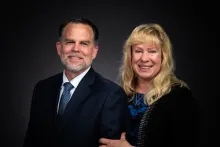
Paul serves as Pastor for the United Church of God congregations in Spokane, Kennewick and Kettle Falls, Washington, and Lewiston, Idaho.
Paul grew up in the Church of God from a young age. He attended Ambassador College in Big Sandy, Texas from 1991-93. He and his wife, Darla, were married in 1994 and have two children, all residing in Spokane.
After college, Paul started a landscape maintenance business, which he and Darla ran for 22 years. He served as the Assistant Pastor of his current congregations for six years before becoming the Pastor in January of 2018.
Paul’s hobbies include backpacking, camping and social events with his family and friends. He assists Darla in her business of raising and training Icelandic horses at their ranch. Mowing the field on his tractor is a favorite pastime.
Paul also serves as Senior Pastor for the English-speaking congregations in West Africa, making 3-4 trips a year to visit brethren in Nigeria and Ghana.

