

Robin S Webber
This transcript was generated by AI and may contain errors. It is provided to assist those who may not be able to listen to the message.
To begin with, let's plunge right into God's holy Word. Join me, if you would, right in the middle of the Bible, in the book of Psalms. And let's turn to Psalm 8, in verse 3. And notice the meditation of David.
And we notice in Psalm 8, in verse 3, David pondering. And he was able to do that when you think of being a shepherd boy early on in his life, to be out in the meadow, to be out in the pasture, maybe leaning against a tree at nighttime and looking up at the stars without any smog, and to sing the whole canopy of the the Milky Way. Just brilliant and beautiful and bright, and the light piercing down on him as he saw that flow of stars. And he says, When I consider your heavens, interesting pronoun, your, that they belong to God, and the work of your fingers, the moon, the stars, which you have ordained. So David's looking out there, and he is looking at the creation, recognizing that it didn't just come about, but that there was a creator behind this creation. And there was a first cause. There is somebody that took that which was nothing and made it something into an ornament to his praise, into his glory, that mankind might forever, if they would open their eyes and open up the eyes of their hearts, recognize that these celestial envoys that they looked at were actually evidence of a creator and a God that not only had his eye on the universe, but as we're going to find out, an eye on man. And then notice what happens here in verse 4. He says, with all that stated, with stars and moons and solar systems and universe, David says, what is man, that you're mindful of him and the son of man, that you visit him? With all of this, and the more you look up into the heavens, your eyes get attuned, and I'm sure we've all been there before, that you look. It's like looking down a well. The more you look, the more you see, and it goes on and on and on, and you are stymied at the immensity of God's creation. And so then David says, with all of that, then why are you mindful of man?
Why are you mindful of me? And it's interesting that in these two small verses, there's a connection between all of the universe and man, and they're coupled together as God's creation, and that they're all there for a purpose. David basically comes down to a question that perhaps we've asked many, many years ago, maybe just a few years ago, and maybe we just asked today, what is God creating in me?
Why me? And why now? If He created all of that, then what is my purpose? What is the purpose that is being worked out here below? The one thing that we often look at as we think of Genesis 1 is the creation story. But if we only leave creation in Genesis, we're missing the point. And God has an ongoing creation that He's developing. Yes, He rolled out the stars. Yes, He took and created light out of dark.
He took the dry land out of the sea, and He's done this and He's done that. But the bottom line, when we understand the call of the Christian to, as Bob said, to bear God's name, to be an image bearer, to be an envoy of the one that is the Lord of our life, is to recognize that He is still creating something in us. Join me, if you would, over in 1 Peter 2. Let's take a look at this, because this is also something that God is creating. God loves to take something that is nothing and to make it something.
And the words of Peter actually come out of Exodus 19, when God initially was talking about ancient Israel and how they would be a treasure to Him and how they would be a special people unto Him. But you and I realized, as time went on, God, yes, Israel will always be on His mind, but He expanded that story to what Paul calls the Israel of God, a new creation.
And that's what happens when we surrender ourselves to Jesus Christ, allow Him to be the Lord of our life, we become baptized, we then receive the Holy Spirit, and we are a child of the Father. Doesn't get any better, does it? But that's where the real homework and the rub begins to happen, because with God's gifts to us, we also recognize that He has granted and put something on our shoulders and our hearts to be.
Do you want to know what that is? Good. But you are a chosen generation. You're a chosen generation. It's wonderful to be chosen, isn't it? I remember when I was in the line in like in sixth grade, and depending upon the sport, you know how we'd all line up as guys? Guys, you'll kind of remember this, you kind of line up, there'd be two team captains, and you'd be selected.
There were some sports that I selected, I was the first one to be selected. There were some sports that, does anybody want me? In that sense, you're remaining on that line all by yourself, and one minute seems like a lifetime. Maybe that's just a guy thing. But anyway, it looks like everybody here was just chosen first with everything that you did. Nobody's feeling my pain in all of that.
But anyway, that we're chosen. We were selected, not because of whom we are, but by God's grace and by God's favor, and because he wanted to take something that is nothing and make it something to his glory. You're a chosen generation, a royal priesthood, a holy nation, his own special people, that you may proclaim the praises of him who called you out of darkness. Just like the creation story, the earth had no form, and it was dark, and God said, let there be light. We see that miracle now, not just on terra firma, but in our own lives, that he called us out of darkness into his marvelous light, who once were not a people, but now are a people of God, a people of God who had not obtained mercy, but now have obtained mercy.
Verse 11, beloved, I beg you as sojourners and pilgrims, those that are headed towards a destination that we have not yet fully arrived to, to abstain from fleshly lusts which war against the soul. What's going on here? Let's understand that God is in the business of new. Join me if you would in 2 Corinthians 5 and verse 17 for a moment. 2 Corinthians 5 and verse 17.
Therefore, if anyone is in Christ, he is a new creation.
Old things have passed away, and behold, all things have become new.
The creation continues. When David said, what is man that you might be mindful of him? Our story is not over. It is still being made. And we have been called to God just as Bob brought out in the opening message to be something special in his hands. What I'd like to do for a moment and to cut to the quick here is simply this. Notice again now 1 Peter 2 and verse 9. Now, I'd like to ask you to go to another chapter, another book to come back for a moment, because this is what we're going to center on today. It says that we have been called, we have been chosen, we are holy, his own special people. Notice what it says here that you might be able to proclaim. Notice the praises of him. What does it mean to proclaim the praises of God? What does that actually mean? Have you ever really sunk deep into that for a moment? And how do we praise God? Now, I realize that we just had a rousing song service with a wonderful song leader, and we're singing, and we're sincere, and we're lifting up our voice, and today it was just great. It was almost like we were pushing the roof a little bit. But is that what it ultimately means to praise God when we're just in a collective like we are right now? Is it just words? Is it just emotion? Is it just information that we are taking off of a screen that we can all look at? Words. And just repeat words. Is just repeating words and saying words, talking with a melody. Is that praise alone? Just asking.
You know, there's an old expression. I'm sure your parents or grandparents taught you that, or some favorite uncle. Talk is cheap. Talk is cheap. We can all say words. We can all be informed by reading, but is God just simply calling us to be informed? Is God just simply calling us to be inspired by a song service? All of these are important. Don't mistake me. Information, truth is important. Being inspired, coming together in an assembly where God has placed His name, we're asked to do so for a purpose. It's good to be in numbers. But also, Christianity is not just about being surrounded with numbers, but it's our individual calling. We, in this new creation, move beyond simply information, move beyond simply inspiration, up and down, up and down. Sometimes you're inspired. Sometimes you're inspired more, but it kind of goes up and down like a bad signal. What God is talking about here is transformation. Transformation. And that's what I'd like to speak to today. I know that during the announcements, we offered a prayer for somebody and to recognize that whoever we are, that we're on this earth and we only have so much time. You know, it's interesting that we talked about a pilgrimage here. It says that your pilgrims. And to recognize that in a pilgrimage, we're headed towards a destination. And in all of this, it's interesting, I like you to go to Psalms 119. Well, it's on my mind. Psalms 119.
Notice what it said here.
In verse 54, David speaking, your statutes have been my songs in the house of my pilgrimage.
One thing that I've keenly been aware of is simply this, that God not only can number the hairs on our head and it's making it easier. I'm making it easier for him every day to do that. But he alone knows the number of our days, and that we might be able to offer him praise.
To offer him praise. I'd like you to go to Psalms 90. Psalms 90.
Picking up this, let's notice what it says. Psalms 90 in verse 10. The days of our lives are 70 years and if by reason of strength they are 80 years, yet their boast is only labor and sorrow, for it is soon cut off and we will fly away. Who knows the power of your anger, for the fear of you is so is your wrath. Notice verse 12. So teach us to number our days. So teach us to number our days, but what is the purpose I ask you behind that? If we follow God's instruction to teach us to number our days, that we may gain a heart of wisdom. Teach us to number our days. All of us recognize that flesh is here, it grows, it withers like the grass. That's what the good book tells us. So as human beings in this fleshly tabernacle, we only have so much time. But also to recognize that in the new creation that God has put in us here with me, that to recognize that we only have so much time to exercise God's Spirit in us, in this fleshly tabernacle. There's a time limit to that. There's not only a time limit to our humanity, but there is a certain time limit that is for now to exercise God's Spirit, to praise Him, to honor Him, to be the image-bearer that Mr. Gartenhauer was talking about. That if God is our Father, therefore we're bearing His name, then how do we praise that name and how do we honor that name? So that's what I want to talk about today. How do we glorify God? How do we glorify Him only in praising His name? What is the purpose that is being worked out here below? I'm going to give you just simply three keys. Maybe you've thought about this during the week and maybe I'm just going to be putting an exclamation point, but you're going to be three simple points. Are you with me? We're ready to go? Taking a deep breath, got your seat belts on, we're ready to roll. Number one, David was wondering about what is the purpose of man, why all of this? Number one, we find purpose as members of the body of Christ in obedience to God. We find purpose in obedience to God. Join me, if you would, in Numbers 9, in the book of Numbers. Numbers 9. And let's pick up the thought if we could in verse 23. Numbers 9, in verse 23. At the command of the Lord they remained encamped, and at the command of the Lord they journeyed. They kept the charge of the Lord, and at the command of the Lord by the hand of Moses. Maybe you've never been necessarily fascinated with Numbers 9, verse 23, but we're going to fasten our eyes and our hearts on this for a moment and make it relative to all of us. At the command of the Lord they, notice, remained encamped, and at the command of the Lord they journeyed. They kept the charge of the Lord. Bottom line is simply this. The Israelites traveled, encamped, as God guided them. That's what we do when we're on a pilgrimage. That's what we do when we're sojourners. When you follow God's guidance, remember God is the potter, and we are the clay, as it says in the book of Isaiah. He's not merely a first cause, but he's a sustaining power in our life. You know you are where God wants you. You know where you are where God wants you, whether you are moving or whether you are staying in one place.
In our pilgrimage and in our lives, and in the chapters of life that I spoke about during the announcement period, there are times when God says, Settle. He says, Stay camped. I've got my purpose that's working out in you here, here and now, in this place. Maybe you didn't choose it, but this is where you stay until I'm ready by the prompting of my spirit to have you continue the journey.
Each of us right now, in our own personal lives, may physically, mentally, emotionally, spiritually be somewhere right now, moving through a specific chapter that God has you camped in.
And we say, Enough already. I'm ready to move on. Been there, done that. God, no, no, no, no. I'm going to pull up the stake. He hasn't asked you to pull up the stake. He's asked you to learn about where we are, where he's posted us to camp. Here's what I just want to share with you. And it's very interesting how Bob was talking about in his message, the aspect of all the areas that we can be involved in as an image-bearer, as one that is responding to God's name being upon us. And that can vary from place to place. It can be in our own personal lives. It can be in our marriage. It can be at the workplace. It can be at the church place. It can be at the school place. It can be in the neighborhood place. And sometimes we just say, God, I'm kind of done with this, but maybe we haven't learned a lesson that we need to learn. Maybe there's something that God is telling us that has not yet sunk in of why he has not asked us to move on. Or even humanly blessed us saying, you can move on in that sense. There's something down there deep that we need to understand about ourselves. And we're ready to move on. I remember a situation many, many years ago. My wife is listening right now that I was in a situation and I was camped in front of somebody. And we had a, shall we say, a big conversation. And the individual cross from me had received wrong information. It was quite a conversation. It was quite a time. You think Bob was hot up here today. I was really hot in that conversation. Both ways I was just hot because of who I was talking to. And I was, do I dare say, a little worked up myself? Because I knew that the information that got to that individual was false. After that conversation, and we were able to shake hands afterwards and continued a good relationship, I went home to my wife. You know, sometimes men go home to their wives and kind of want to be patted on the back and you're still my man and you're all right. And how could anybody ever think that of you? And dear wife, Susie, said, well, what did you learn? I'm going, don't you know what I was going through?
I'll just say, you might know the individual I was talking to.
I said, where's the love?
See, I was camped in the spot at that moment and I wanted to move on. And I wanted to move on in my rightness.
Because there's something about human nature that, oh, we are just so right and they're wrong!
But dear Susan, I'll never forget it. It's been about 40 years ago. I said, what did you learn out of all of this? And maybe where you are in your life right now, where God's got you camped or who he's got you camped in front of, you're ready to go out the door. But God says, you've got some more waiting time in there. I've got some more things to have you learn. When God has allowed something to come your way, learn the lessons from it and give him praise and give him honor and to recognize ultimately there's a purpose being worked out here below. You're being fashioned. You're being molded. Not just for the moment, but for eternity. Psalms 111 and verse 10. Psalms 111 and verse 10.
The fear of the Lord is the beginning of wisdom and a good understanding have all of those who do his commandments. His praise endures forever. The understanding will come even when you don't understand the moment. That is a promise from God as long as we are open and receptive to his guidance and to his lead. You say, I don't understand. We're not always going to understand things, but when you obey God, he promises the understanding will come.
Claim that promise where you are right now. Whatever chapter you're in, whatever situation you're going through, understand the understanding will come if you will allow to be clay-like and allow God to mold you. Obedience. The O-word.
When we obey God, when we do what he says to do, even when we may not understand the end being in sight, that is giving praise to God. Hebrews 2 and verse 10 tells us that Jesus, the Son of Man, as well as the Son of God, learned obedience by the things that he suffered. Obedience does not necessarily come in a moment. It comes through time. It comes through long suffering. Number two, we find purpose and we find the ability to praise God by trusting in him and trusting in God. Proverbs 3 and verses 4 through 6. Now, just read that for a moment, because I'm going to read out of the Living Bible paraphrase. So, you may just want to hear what I'm going to say. Proverbs 3 verses 4 through 6. If you want favor with both God and man and a reputation for good judgment and common sense, then trust the Lord completely. Don't ever trust yourself. In everything you do, put God first. And it says, he will direct you and he will crown your efforts with success. Trust God completely. Isn't that what we said at baptism when we surrendered our lives to God and we went underneath that water and were raised up in a type of resurrection? When the minister asked you that about, have you repented of your past life and have you accepted Jesus Christ as your personal Savior? And we went down into that water as a sense of a grave, giving ourselves a way to God and saying, no longer me, but putting our total trust in God. To receive God's guidance, Solomon is saying, we must acknowledge God in all of our ways. And this means in every area of life that we handed over to him. That's what it's about. When we are baptized, that is not the end. It's kind of like when you were in college or high school in college and we call it commencement exercises. We call it... Now, commencement means beginning. It's not an end. We think we've come to the end of the line. I remember coming to the end of the line. I remember coming to the end of the line in sixth grade. Then I remember coming to the line when junior high was eighth grade, then coming to the end of the line of high school, then coming to the line of college. It's not the end of the line. It's just closing that chapter and opening up a whole new chapter. And to recognize that baptism was not the end of the line. We were not over the finish line. We were at the beginning line. That's okay. That's how God starts. What this is telling us today, and I appeal to your thinking about what I'm saying here is simply this. We are to trust God with everything. Human nature wants us to give God so much. We'll give them this. We'll give them that. But the question I just simply ask you as one Christian to another is, have we given everything over to God? Is there something that we're holding in our own private reserve, thinking somehow, some way it will disappear on its own?
During World War II, when the Marines were in the Pacific and they were going up the island chain towards Japan, the Navy would be out to sea and they would shell an island and it was called, they would be softening it up for then the Marines to land. And there's always a joke between the Marines and the Navy. Nice job trying to soften it up because once they got on the beach, it wasn't too soft, just like the guys over in Normandy, over in Europe as well. Just a joke between the different service branches. The Marines would come on to shore and ultimately they would plant a flag and they would establish what is called a beachhead. But just simply because they established a beachhead and put the flag down in the sand did not mean that they'd conquered the island. It was just beginning. They couldn't radio back and say, victory is at hand. No, it had just started because then there were going to be jungles to go through, there were going to be valleys to go through, there were going to be swamps to go through, there were going to be caves to go through on those coral islands. They would have to go through each of those. There was no getting around it. If they were going to conquer the island, they were going to have to deal with each and every element towards total victory. My question in all of this and our purpose in trusting in God is simply this. What valley in our heart, what jungle in our life, what swamp is existing in us that we have not yet given over to God? Nobody else might know in this room, but is ticking in our hearts. But God does know, and He's waiting for us to trust Him, as difficult as it might be, that we give that to Him and trust Him and understand He wants to work with us. I want to share a thought with you in Proverbs 16.3. Join me if you would in Proverbs 16.3.
This is one of my favorite verses in the Scriptures. It's simple and it's direct. It says, commit your works to the Lord and your thoughts will be established.
But, oh, notice how it's, notice how it is laid out here. Your thoughts don't get established first. You have to commit yourself to God first. It says, commit your works to the Lord and your thoughts will be established. The Lord has made all for Himself even the wicked for the day of doom. But it says, commit your works to God. And that's our job to do that. It's in the commitment. The commitment even when you don't see the end.
And thinking that you're not going to have it on your own to be able to fully trust God with certain things in your life. Whether it's a job, whether it's a marriage, whether it's something that's going on in your heart and in your mind that you alone know about. Whether it's a relationship within your extended family. Whether it's something that's going on here that has been going on maybe in this room itself for years and years where there's friction and you don't see a way out. You commit your works to God. And there is an exact promise here. He says, and your thoughts will be established. And it may not come in your way. It may not come in your time, but it will come. A story of the two men. There were two men that it had not rained for a long time. Does that sound familiar here in Southern California? And there were two men and they lived side by side and they were they were praying and asking that God please let it rain. Please let it rain. You know we need rain. Well, one man got up off his knees and he went to the front door and he looked out. And there was a cloud in the sky. Boy, that really did a lot of good. Put his umbrella down and walked out the door. Now the same guy next door was praying that same prayer. And he said, God, please let it rain. He got off his knees. He looked out the door. It was the same sky. It was the same sky. And there wasn't a cloud in the sky. And you know what he did? He took his umbrella with him. He had committed his works to God. And he claimed that promise that once he's committed something to God, God will work it out in his way in his time. And he carried his umbrella with him. Just as much as David did when he went to face Goliath, he said, you have challenged the God of Israel. You Philistine. And this day God is going to bring you down. He hadn't brought him down yet, but David had committed himself. He didn't take an umbrella, but he picked up five stones from the brook. And in faith, he ran, as it says in Scripture, towards the giant. And the rest is history. David, who is a man after God's own heart, committed his work to God. And it was established. Now, the guy with the umbrella, that might not be a fully true story, but it made its point. But David and Goliath, it did. Psalms 32.8. Psalms 32 verse 8. Notice what God says that when we put our trust and when we put our confidence in him, I will instruct you and teach you in the way that you should go. These are not just words. This is God who cannot lie, giving us a promise in the covenant relationship that we have with him that he will do what he can do, and we are to do what we are to do. We are to trust in him, and he says, I will instruct you and teach you in the way that you should go. I will guide you with my eye. Then he says this, don't be like the horse or like the mule, which have no understanding, which must be harnessed with a bit and a bridle, else they will not come near you. Many sorrows shall be to the wicked, but notice he who trusts in the Lord, mercy shall surround him. Be glad in the Lord and rejoice, you righteous. Shout for joy, all you that are upright in the heart.
When we see and trust in God, even when we do not see the end, that is when we're praising God. That's what the chosen people do. That is what the chosen person does. That's what those that are being trained to be priests in the kingdom of God do. Trust.
It's interesting, just out of it, this is not my notes.
Got a coin here.
Oh, you know what it says on the coin?
What's it say? On the count of three, all together in cadence. One, this is fun for you watching. One, two, three. In God we trust. We're carrying more than coins in a pocket. We are carrying the very Spirit of God the Father in Jesus Christ, indwelling in us. And that Spirit enlightens us and opens up our heart to recognize that we worship and we have given our life to a God who cannot lie. And the ultimate example of trusting God is none other than our Savior Jesus Christ. That in that moment when he was nailed to a piece of wood like an animal, he said, into your hands, into your hands, I commit my Spirit.
What am I holding back on this Sabbath day? What are you holding back that we've not yet trusted God with? God will never forsake us. God will never leave us. Jesus Christ understands our humanity. God the Father in Jesus Christ understand those things that are inside of us. That's why he sent his Son.
Perhaps it's just time to hand some things over and begin to trust God. And as we do, we're praising God. Point number three. We find purpose in becoming like Jesus Christ. We find purpose in becoming like Jesus Christ. Striving to be like Christ daily is praising God.
1 Thessalonians 1. Join me if you would there, please. 1 Thessalonians 1.
And let's pick up the thought in verse 11. 2 Thessalonians 1. Verse 11.
Therefore we pray always for you that our God would count you worthy of this calling and fulfill all the good pleasure of his goodness in the work of faith with power, and that the name of our Lord Jesus Christ might be glorified in you, and you in him, according to the grace of our God and the Lord Jesus Christ. What does that mean being worthy of this calling? What does that mean? What is our current calling? Our calling from God as Christians is to become like Christ. I'm just going to couple verses here. Romans 8. Join me if you would for a moment.
In Romans 8, let's pick up the thought in verse 29.
Romans 8-29. For whom he foreknew, he also predestined, notice to be conformed to the image of his Son, that he might be first born among many brethren.
To be the image of his Son. John even Colossians 1, another one of Paul's epistles, just to put these two verses together. In Colossians 1. And notice verse 15. Why? Why in the image of Jesus Christ, he is the image of the invisible God, speaking of Jesus, the first born over all creation. Here's where I want to link our two messages together today, Bob, if you allow me. You have to trust me with that. I'm about to say, see, here's trust, but I'm going to build upon your message. When the Third Commandment says, you shall not take the name of the Lord your God in vain. This is directly related later on to what Jesus was saying. Jesus was saying, oh, you people of faith, or you call yourselves people of faith, you call me Lord, Lord, but do not the things which I say. As Bob was bringing out in his message, we are to be called in the likeness and to grow in the likeness of Jesus Christ.
We're never going to get there, to be very frank. Don't want to disappoint you until beam me up and there's the resurrection. But God wants to see us, our Father wants to see us becoming more and more like him in every way and in every day. It's a gradual process. It's not going to happen overnight. To be worthy of this calling means to want to do what is right and good as Christ would do it. That's what it's about. To look at this again and becoming like Christ. Christ who was obedient, Christ who was trusting, Christ who was literally in the image of God. He goes before us. Image-bearing is very, very important.
In days of yore, armies would go into battle and they would go with the images of their gods, small g, to move before them. They would literally bring the image of their god and the army would follow.
We are at war. We are in Babylon. We are in a world that is confused and if you haven't noticed over some time now, I found myself more and more saying, have thy kingdom come with a sense of urgency?
And every day we need to think of literally that image of Jesus. Not a painting. Not an image as we might think, but all that he was, he created an image of love, of peace.
He created an image of not my will, but your will be done. He created an image that I can do nothing, but the Father doesn't first give me to do. He gave an image that there are some things that only the Father knows.
What image do we follow? When we strive with all of our being to allow Jesus Christ to rise in us, and to be that new creation, we are praising God. I'm going to conclude. Number one, how do we praise God? Singing? Absolutely. Christians sing. They sing, and the people of God have sung in times of joy and in times of trial, whether by the Red Sea, with Miriam, or whether Paul and Silas in prison. Praising God and singing the Psalms is wonderful, but praise is more than words. Praise is more than collective synergy, which is important.
Praise is what we are doing individually, every day of our life, every moment of our life, every action that comes our way that demands our counter-action as to whether or not we stay camped and learn the lesson that ought to be learned at that moment, or whether when we just kind of get settled and cozy and think it's all over, God says, get up, get out, get going. We've got more territory in this pilgrimage that you and I are on. A question that I leave you with.
How is the house of your pilgrimage moving forward?
How are you following the instruction of Jesus Christ in the book to teach us, to teach me, to teach you to number our days and give them to God that he might have the glory?
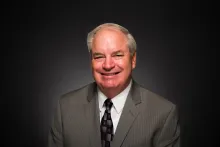
Robin Webber was born in Chicago, Illinois, in 1951, but has lived most of his life in California. He has been a part of the Church of God community since 1963. He attended Ambassador College in Pasadena from 1969-1973. He majored in theology and history.
Mr. Webber's interest remains in the study of history, socio-economics and literature. Over the years, he has offered his services to museums as a docent to share his enthusiasm and passions regarding these areas of expertise.
When time permits, he loves to go mountain biking on nearby ranch land and meet his wife as she hikes toward him.
