

Robin S Webber
This transcript was generated by AI and may contain errors. It is provided to assist those who may not be able to listen to the message.
Well, another year of thanksgiving has come, and it's gone. It's a unique holiday that touches upon and embraces a portion of our country's founding, which is about the bravery of a collection of men and women we now call the pilgrims, who crossed the ocean, who braved a winter to live another day, and gathered around a table at harvest time, a festival, giving thanks to God.
As a people, we touch upon some of those echoes, even to this day, nearly 400 years ago, for a moment, for a moment, for a day, kinda, sorta, depending upon the family in America, and then, most move on. But, as the children of God and as disciples of Jesus Christ, we cannot just simply move on when it comes to the subject of being a pilgrim.
For the thought of being a pilgrim is not a nostalgic event, with people with funny-looking hats in today's society, or big broad belt buckles, or funny-looking muskets, or a table out in the open with indigenous people and European settlers and everybody having a time of it.
No, it's not just a nostalgic event. It's an ongoing daily existence, and that's what we're going to be getting into for the next several minutes as we move on. And it's not merely a destination. It's not merely a destination because when you reach the destination, you're no longer a pilgrim. You've arrived. You've arrived. But it's the way of traveling. And we're going to talk a lot about that today, and we're actually going to talk a lot about that today, both through the Old Testament and through the New Testament.
So allow me to give you the title of my message, the specific purpose of my message today is to help us define and understand the spiritual pilgrims' walk. A few questions, if I may. What does that look like? What does that walk look like? What does it entail? What does it demand? Scripture gives us much to consider to answer these questions from those humans who walked this walk before us, and ultimately by the ultimate spiritual pilgrim.
And this would decide you're in the right church if you want to be a pilgrim, because we believe that the ultimate spiritual pilgrim is the head of the body of Christ, and he's also the Lord of your personal life. So we bring that all together, because we want to remember—and we'll go through that verse—and simply this, Jesus himself is the ultimate spiritual pilgrim, and we'll discuss the mechanics of exactly how that happened. So for the remainder of this message, let's follow the footsteps that have gone on before us.
We're even going to move beyond 1620. We're going to go way back. We're going to go back to people that were offered a pilgrimhood, those that rejected it, those that accepted it, and learned from their lives. To recognize, then, that the footsteps that we're taking is to the ultimate, ultimate New World. When we think of our Americana pilgrims, we think of them crossing that gulf and coming upon the shores of Massachusetts to what was then called the New World. But the difference between them, who I highly admire, is people. But what our calling is to go across a greater gulf, a greater gulf, and only be in that ultimate New World with the ultimate pilgrim, Jesus Christ.
And because he did what he did as that ultimate pilgrim, we're also going to get to meet his Father, our Heavenly Father, in that New World and in that new time. So let's go right to it, then. Let's understand it, what we're being beckoned to, what we're being beckoned to, and what we're being summoned to. Join me, if you would, in 1 Peter 2. In 1 Peter 2, it's going to offer us some definition as to what a pilgrim is.
In 1 Peter 2, in picking up the thought, if we could, around verse 9. As we turn to these scriptures, we're going to come to understand that we have been given a calling. It wasn't our choice. We didn't say, let's join Club Med. Let's join Viking Cruise Line Club.
We've been invited. The invitation has come our way. It's not something that you join. It's a calling. It's a summons. It's in a sense to appear before our Heavenly Father and Jesus Christ every day. So here we go in 1 Peter 2, picking up the thought in verse 9. But you are a chosen generation, a royal priesthood. You're a holy nation, his own special people.
Sometimes you'll know when you order things online and it says, add to the cart now. There's a lot being added up here, isn't there? Just give that. Let's just go through that again. This is our Heavenly Father saying, you're a chosen generation and you're a royal priesthood, a holy nation, his own special people that you may proclaim the praises of him who called you out of darkness and into his marvelous light.
You might want to circle the word if you're daring enough, the word praises, because we're going to come back to that. That can be kind of tough sometimes as a pilgrim, especially when things don't seem to be going really well down here below. And yet it says to be partakers of praising him who once were not a people but are now the people of God, but had not obtained mercy but now have obtained mercy. Now, verse 11, some definitions. Beloved, I beg you, I implore you then, as sojourners and pilgrims, abstain from fleshly lust which war against the soul, having your conduct honorable among the Gentiles, that when they speak against you as evildoers, they may by your good works, which they observe glorify God in the day of visitation.
But the visitation is upon the pilgrims. Now, for those that are watching, it's another time, as Mr. Miller alluded to in his first message. But for now, the time of visitation, of God knocking on our hearts, the walls of our heart, and saying, I want you. Come, be a part of the adventure. Be a part of the pilgrimage.
Well, let's break down what those words actually mean for a moment. The Out of Webster's Dictionary, it's always good to have a Webster's dictionary if you don't have one, probably online anymore. Of course, just Google it. What does it mean? But anyway, the Out of Webster's means a wanderer, a wanderer, a sojourner. It's a synonym. A person who travels to a shrine or a holy place, or you might say, a holy realm. Roger's Thesaurus unpacks it further. Oh, just all sorts of goodies here. Wayfarer, traveler, migrant, settler, pioneer, newcomer, one who is a devotee, a devoted one.
Now, let's go to the other word. That's just pilgrim. Now, sojourner. We're going to put some more in the mix here. A sojourner is to live somewhere else temporarily on a visit, to actually live somewhere, not just moving forward, but actually living somewhere, shall we say, on foreign soil. When you go a little bit deeper, which I don't have the time, sojourners were not always well treated other than, hopefully, in Israel, because God would always tell Israel, a member in Deuteronomy, when you were a slave.
And therefore, treat the stranger. Treat the other kindly and well. So, just to sum all this up, then, friends, a pilgrim doesn't put down roots in locations of their own choosing. They have no permanent residential address. Simply put this way, pilgrims are on the move to a promise, and they don't put down deep roots, because they're looking for someone else. Now, ultimately, then, if, when, why, and how, if they do so, if they do that, if they put down roots, bottom line, you're no longer a pilgrim.
If you're moving forward to a destination that is appointed, you're a pilgrim. You put down roots too deep, you're no longer a pilgrim. How does that work? It does not work well with human nature alone, to be very blunt. Understand such a walk, a spiritual walk as a pilgrim, is contrary to the natural man, to the natural woman, to the natural person. Consider going way back, and we'll just allude and paraphrase for a moment, from the beginning, when we boil down the story of Adam and Eve, our parents, they were called to be pilgrims.
They were called to be pilgrims. They were put, in a sense, in the Promised Land. They'd already, by creation, parachuted in. They didn't even have to walk there. They were in, in like back in the sixties, in like Flint. They were in. They were welcomed by our father, by his son, then known as the word, created. But there's something about Adam and Eve that was not pilgrim-like. Adam and Eve wanted to establish self-made permanent. They wanted to make permanent roots, and of their own making, and of their own design.
They wanted to put down roots and make themselves their own gods. We'll make, you know, Mr. Miller was talking about people learning the ways of God, the commandments of God, the need for God. They made a decision. They cut off those roots. The roots that they went for, when you think of trees, the roots that they went for was not the root of the tree of life to ground them. They went for the roots of the tree of good and evil.
I'll figure this out. I'll live a life of experimentation, and I'll make myself God. And humanity's basically been doing that for the last 6,000 years. It's called Little God. And it's easy to spell. It just has four letters. S-E-L-F. Self. They rejected God. They rejected God's purpose. And what's he doing? He's establishing a new creation. They didn't understand that. See, when you go back for a moment and God made them out of clay, and that was the physical creation. But that was only the beginning. God has another creation. It's called a spiritual creation. A creation that moves beyond clay, moves beyond the mud of Eden.
He's in the process of the second creation that we're talking about in services here today. A spiritual creation. A new man. A new woman. A new way of being a human being. And with that, a new way of developing community. Not only here in services, but one day in our neighborhoods and throughout our families and throughout this world. That's God's purpose, but not made out of clay, but out of the Spirit that enables one to rise to the role of walking in the Spirit.
Now, join me if you would in the Gospel here. John 1.14, as we build upon this. The first Adam failed. He was not hired for the job. He put down a permanent taproot that went deep. So deep that it disconnected him from the Creator. Now, let's look at the story of John 1. To simplify this. In the beginning of John, we have, In the beginning was the Word, verse 1, The Word, and the Word was with God, and the Word was God, He was in the beginning with God, and all things were made through Him, and without Him nothing was made that was made.
And in Him was life, and the life was the light of men, and the light shines in the darkness, and the darkness did not comprehend it. You can go through many Middle Eastern religions, and they will discuss a deity, an all-knowing deity, an all-powerful deity. But what makes Christianity, or if I can use that term, what makes Christianity, or what defines and refines it, is not found in John 1, 1 through 5, which is very, very important.
Please understand. But as we go down here, then, in verse 14, And the Word became flesh, and dwelt amongst us, and we beheld as glory, the glory is the only begotten of the Father, full of grace and truth. What's going on here? What's happening? In a sense, in the story, the one that was the Word, pre-incarnate Jesus, left his world, in a sense gave up what he knew, and went across a greater gulf than the pilgrims could even imagine, because they were dealing in the physical world. The gulf that the Word traveled across and through, and exited out of, was the uncreated world, a world that was uncreated, a world in a sphere that we can't even begin to imagine.
When you read Revelation 4, Revelation 5, you read about the throne of God, the glory, the power, the omnipotence, the omniscience. And he turned his back on that, as it were, for a purpose and for a reason. And it says that he came down and, notice what it says here, and the Word became flesh, and dwelt amongst us. The term there, dwelt, is Greek. That is skenu. And that means to tabernacle. It can also mean to tent. When you go camping, what do you do? Are you laying down a permanent home? I don't think so.
You're camping. It's temporary. This tells us everything that we need to know about Jesus, that he left his world, that old world, behind, but not for himself, but for you and for me. When Mr. Miller mentioned, what are you thankful for? The first thing I thought about, I can have wrong answers too. I have a history of that. I thought, I was thinking, what are you thankful for? And I said, it wasn't just God. I could say, I'm thankful for God. I thought myself, the love of God. The love of God. Because there's a lot of God's quote-unquote out there. They're not lovable. But the love of God, the grace of God, the favor of God, the interruption of God, the mercy of God that we see through what he offered his own son.
When he said, they said in that conversation before, before, let us make man in our own image and after our own likeness.
The days of creation are not only yonder in the past. The six days plus one. The new creation. Under the new Adam, the faithful Adam, who shows us that to make things happen, we have to be willing to sacrifice ourselves as spiritual pilgrims.
But what's that look like in real time? I'd like to, for a moment, go a different direction and look at a man that was known to be a man after God's own heart. David. Like maybe you've never noticed this before. It's in the Psalms, Psalms 119. It's actually the first miss mention of pilgrimage in Psalms 119 and verse 54. Would you join me there, please? Psalms 119 and verse 54. Let's notice what it says here. Your statutes have been my songs.
Your statutes. It's mentioned in the first message. God's love and commandments. His rules for we, his creation for our lives. Your statutes have been my songs, notice, in the house of my pilgrimage. Have you ever noticed that before? In the house of my pilgrimage.
You can kind of see David walking on two legs, but there was a structure that was being developed for him to become a part of the household of God. And he looked upon himself as a pilgrim.
We might ask ourselves, how's today? The day after Thanksgiving, or the day after the day after Thanksgiving. Pardon me. How strong is the house of your pilgrimage?
Well, let's ask what does that look like? What does that what does pilgrimage look like? What does it taste like? What did it feel like to to David so that we can understand? I like to go to 1st Chronicles. In 1st Chronicles, join me there, please. If you can't find 1st Chronicles, it's right in front of 2nd Chronicles. Okay, in 1st Chronicles. And we're going to pick up the thought if we could in verse 10. Let me give you some backdrop. David is beginning to give a hand off. He's aged now. The kingdom is about to turn over to Solomon. David was told, no, you cannot build the temple, but you can prepare it because Solomon's going to build it. So before all of this, he's talking about how he has stored up things to be in the temple. But now he says the most important thing. Notice verse 10. Therefore, David, these are some of the last words that he gave to the people of God, the covenant people of God, that came out of a pilgrimage line.
Blessed are you, Lord God of Israel, our Father, for ever and ever.
Yours, O Lord, is the greatness, the power, the glory, the victory, and the majesty, for all that is in heaven and in earth is yours. Yours is the kingdom, O Lord, and you are exalted as head overall. My, my, doesn't that sound like another prayer from one that came out of the seed of David?
Our Father, which art in heaven, hallowed be your name, your kingdom come, your will be done on earth as it is in heaven. One thing a pilgrim always does, even when it's against our human nature, is push praise forward.
Allow that to be the downbeat of your conversation with God. Allow that to be the downbeat.
Not the whinies, not the, oh, me, oh, my, and you may be feeling, oh, me, oh, my, please understand, that's not the point. But a Christian always following the model prayer of Jesus himself, but also what we see David do. And remember that as Jesus is a youth, a young Jew, being taught by people, they would learn the entire scripture at that time. Jesus, looked at this. Is it any wonder he said, our Father, which art in heaven, God, and addressing him that way, both riches and honor come from you and you reign over all. In your hand is power and might, and in your hand is to make great and to give strength to all.
Now, therefore, our God, we thank you and praise your glorious name.
But who am I? And who are my people that we should be able to offer so willingly as this, talk about all that the people brought forward for the temple. For all things come from you, and of your own we have given you. Now notice, verse 15, for we, for we are aliens. We're strangers.
We're migrants. We're not from around here. And we're pilgrims. We're headed in the direction before you, as were all our fathers. Our days on earth are as a shadow, and without hope.
Hope. Never forgot. See, David was a king, and you know you can be a king, and you can have a pilgrim's heart.
You can be very qualified and be doing this or doing that in society and in business or live in a nice house that God's blessed you. But you can have a pilgrim's heart.
You may not have a lot going for you right now, but you can have a pilgrim's heart.
Men and women, young and old, can have a pilgrim's heart and recognize that God is calling all of us towards the kingdom of God.
I'd like to unpack that question in—no, I'd like to—we'll dwell on David for a moment. Psalms 27.
In Psalms 27, verse 1, I'm going to go through Psalms 27, 1-8. Hear the song of the pilgrim. The Lord is my light and my salvation, and whom shall I fear? The Lord is the strength of my life.
Of whom shall I be afraid? When the wicked came against me to eat up my flesh, my enemies and foes they stumbled and fell, and though an army may encamp against me, my heart shall not fear. Though war may rise against me, in this I will be confident.
When the pilgrims came over across the stormy Atlantic in October of all times—don't want to do that— and the beams underneath the shift might begin to sag and to give, or the barrels would be coming down the bottom part of the ship, and you'd have to dodge it. And people didn't know if the Mayflower, which was only about 110 feet long, might go into the drink. The pilgrims would rise up, saying, Lord, yet thou canst save. They had the same confidence of David, who had a pilgrim's heart. One thing I have desired, the Lord, that will I speak, that I may dwell in the house of the Lord, all the days of my life, to behold the beauty of the Lord, and to inquire in his temple. For in the time of trouble he shall hide me in his pavilion, in the secret place of his tabernacle, and he shall hide me. He shall set me upon a rock, and now my head shall be lifted up above my enemies.
All around me, therefore, I will offer sacrifices of joy in his tabernacle, and I will sing, and yes, I will sing praise to the Lord. Hear, O Lord, when I cry with my voice, have mercy upon me and answer me. When you said, seek my face.
That is the call of God to a pilgrim.
What does it say in John's writings? That one day we shall see him, what? Face to face.
That's the destination. But we've got to be able to travel with the heart of a David.
To recognize that in this sense, stay with me, friends, you read these and you see how Jesus himself, not Jesus, but let's go back to David. David, this was not just a thought, this was the undergirding of his thoughts. You know, when you go back up here, one thing I have desired of the Lord, that will I seek, that I may dwell in the house of the Lord all the days of my life. What does that sound like? What's that sound like? It's the 23rd Psalm.
And I know, I know, that I will dwell in the house of the Lord forever.
Here's a thought I want you to understand as a pilgrim. You might want to jot it down.
It comes from Stephen Covey. Simply this, begin with the end in mind. Begin with the end in mind.
Christians have got to have a twofold vision. They've got to look at the end in mind, but we have to also be alert to our daily walk, unless we stumble along the way. But even if we stumble with our human nature, the graceful God that Mr. Miller was talking about can forgive us.
Again, it's like the little boy that one time asked his mom. He said, Mom, why are you going to get baptized? Especially if you're going to sin after you get baptized.
And the mom thought about it for a moment. It was about to say, Go find your mother, but she was the mother, so she had to deal with it. And she said, Honey, before baptism, I was running away from God, and I stumbled. At baptism, I'm still going to be running towards God, but I'm still going to stumble. And when you think about stumbling beyond ourselves, just think of dear old Peter, the disciple. How many times did he stumble? But it's only because he wanted to be as close to Christ as possible. And even with all of that said, he said of that pilgrim. That's the call of God through Christ to every pilgrim. No matter what we've done, he will always again say, follow me. It's the first thing that the word comes to us, follow me. And it'll be the last thing that God ever says to follow me. So let's take a look at that and understand that. The faith that's being expressed here by David looks beyond this world, that even when wandering in the wilderness or even in a palace like he did, his inner being, his heart, he was at home with God no matter where he was. I want you to think about that for a moment. That's not human thinking. That no matter what the condition, no matter what was coming his way or what was not coming his way that he'd asked for, that he was at home with God.
I want you to think through that for a second. And again, echoing the aspect of the apostle Paul, when he says, I have learned both to abound and I have learned to be abased.
And even in the abasement, he says that when I am weak, he is strong and that God himself will lift me up, not by my might or by my power, but by his strength. That's a promise. It's a promise that you can take to the bank. Let's go to Hebrews 11 for a moment. In Hebrews 11. Hebrews 11 tells us one thing here.
In verse 6, speaking to pilgrims, But without faith it is impossible to please him. For he who comes to God, he who is on the journey must believe that he is, that he is a rewarder of those who diligently seek him. So let's talk about this for a moment. We're just going to drop down for sake of time.
And we're going to look at verse 13. These are people that had surrendered their life as best as they could humanly, walked with God, walked in pilgrimage. We go through the story of Noah.
He was a pilgrim on water. We go through the story of Abram. He was a pilgrim on sand. But now we come down to verse 13. These all died, whether it was a Noah, whether it was an Abram, whether it was Isaac, whether it was Jacob. These all died in faith. Not having received the promises, but having seen them afar off, were assured of them and embraced them, and confessed that they were strangers and pilgrims on the earth. For those who say such things declare plainly that they seek a homeland. And truly, if they had called the mind, that country from which they had come out of, they would have had opportunity to return. But now they desire a better, that is, a heavenly country. Therefore, God is not ashamed to be called their God, for He has prepared a city for them.
For you. For me.
A couple things about being a pilgrim.
I have about three more pages of note, but I don't want to test your conversion, so we're going to bring it down to very simple thoughts.
It says here, as we unpack this verse, verse 13, having seen them afar off, having seen them afar off, again, that simple principle, we must begin with the end in mind.
Well, I'll just be very frank, dear friends, and we will not make it.
We will be those that look back, just like Lot's wife, that we're warned about, who looked back.
Don't look back. When God gave the call to Abram, I'll just put it this way, it became an adventure.
It was an adventure.
Abram was searching and seeking. Talk to an individual here with us today that's been searching and seeking. Abram was searching and seeking circa 1800 BC. He was seeking after God. He was dissatisfied with what the world was giving him. He was dissatisfied with the religions of the Mesopotamian basin that were basically stone or ivory or gold that had mouths but they did not deliver, that had ears but they did not hear, that were offered prayers that you could never appease them. They wanted your all and gave little in return. Abram was searching. He was seeking after God. So when God's call came to him, he was ready to go into the unknown.
He was a seeker, ready to search wherever it led. Remember that verse in Matthew 6? Remember that one?
What's the pilgrim do? Seek you first, the kingdom of God.
Get your directional set.
You have been tapped by the universal being on your shoulder.
So you set your mark. You set for the kingdom but you just can't do that because Matthew 6.33 says, seek you first, the kingdom of God. But now, second point, and his righteousness. Not your good looks. That leaves me out completely. Not your brain, which is going to go to the grave. But we are to what is again, seek you first, the kingdom and his righteousness.
Seek the righteousness that is demonstrated by that ultimate pilgrim of how he lived on earth, who went to the end and finished the course. And he said, not about me, I am about my father's business. And so we take a look at that and we understand that. Bottom line, you want to jot down a quick note, a pilgrim seeks, seeks and never ceases seeking. Never seeks exploring and whitening his viewpoint of the destination that is ahead. And as Mr. Miller mentioned, and to live those values today, if we are to be in that realm of priests that is spoken about in Revelation, in assisting the great high priest. And I would just make a suggestion for anybody that's ever speaking here. When we're talking about that, we are going to be a kingdom of priests. Always please add Jesus Christ as the high priest. We're not out there as lone rangers.
We are, we will always be underneath the perfect one. He is the ultimate high priest. Yes, a pilgrim ultimately when he reaches destination by God's grace. Not merely following the rules, even his, because we can't do that perfectly. So it's only by God's grace as he sees us leaning against the door of the kingdom that he says, you know what? They really want to be a part of my family. So he opens up the door from the other side and says, well done, thou good and faithful servant, because you have been faithful over little as a pilgrim. I'll make you faithful over much.
Come and enter my joy. So we take a look at this. You know, being adventurous with God's word, don't allow it to become dull in your heart and in your mind, but use it. It is a tool. It is the sword of God. It is the instrument of God. Most of us, we live a cautious life on the principle of safety first. You know, I remember as a kid, and I still do that sometimes when I get by a pool, I put my toe in. I'm such a sissy sometimes. When I was a kid, I'd just dive in, but now, I, you know, we're kind of cautious, you know? Okay, you know, so far, so good, you know, kind of so far. Okay, we're cautious and we're cautious with our lives.
But to be that way, we must have that adventure in us to move forward. If faith could, if faith can see every step of the way, it's not really faith. It is sometimes necessary for the Christian to take the way to which the voice of God is calling, without the knowledge of the consequences. Faith. We're going to talk about that in a moment as we go forward. Let's take another look at another one of these, and that is, notice what it says here in verse 13.
These all died in faith, not having received the promises, but having seen them afar off, were assured of them. They were assured, they were persuaded, but it was afar off.
Abram's faith was a faith which had patience.
God answers, but he answers in his time.
There's an old Dutch proverb that says, God doesn't pay weekly, but he pays all at the end.
Abram's faith was the faith which had patience. When he did reach the physical promised land, of which he did it, ultimately, he was never allowed to possess it. Did you know that? He was never allowed to possess it. He was a pilgrim. There's two things. You've heard me say this before. If you want to jot this down, this is simple. There's two things that defined Abram. Later, Abraham. He was the man of the tent and the man of an altar. It's that simple.
He tabernacled. He was on the move. He did not plant deep roots in the way of the sea.
He lived in the tent, and he worshipped on an altar that was only used for the worship of God. He never worshipped on a pagan altar. That's what makes the father of the faithful the father of the faithful. He didn't do that, and he weighed it. It's kind of interesting when you think about not everything being delivered at once. Yeah, he weighed it. Sometimes, waiting on the Lord is harder than the sparkle of the adventure. Adventure is always fun. You want to sign up? Do you want to be a part of this? Do you want to join the calling? Come and follow me.
Wow! Fireworks! The adventure begins. Of course, then there's that exaltation when it's like climbing a mountain peak. When you're at the top, you have that exhilaration at the end of the of the journey, the end of the hike, going all the way uphill. But it's that in-between time that separates the boys from the girls and the pilgrims from the non-pilgrims. It's the waiting.
It's being in the gray. It's being in the quiet. But it is those that stay the course that come to the end. Interesting. Interesting. Even when it's dark. And even when not all the answers don't come.
Beginning with the end in mind. Let's go back to that for a second about being a pilgrim.
Think of our forefathers. I'll say that nationally.
The pilgrims. They knew there was no going back. As we say today, they were all in.
They actually felt in a sense that they were going to a promised land, that they were, in a sense, going to be a part of that new Israel of God. They were going to be that city on a shining hill.
But we know what happened to them that first year. And years afterwards, it was never easy.
We're not always as pilgrims going to receive everything at once. It's going to be in God's timing.
God's ways are not our ways. Even Jesus, the ultimate pilgrim, who gave up everything to be the first fruit of this new world environment. He had a vision. Just jot down Hebrews 12, 1-2.
What's it say? In the middle of utter human agony, it says, for the joy that was set before him, he endured the cross. For the joy that was set before him, he endured the cross. He saw you.
He saw me. He saw all of those that Mr. Miller talked about in that first message surrounding his father like we surround our dad at a family picnic, and everybody wants a picture with dad. That's what Jesus saw. For the joy. Not for the happiness. Joy is not happy. Joy is dependent upon external events being really nice coming your way. Joy is when it's gray, when it's dark, and the answers haven't come. But you know that in God's time, in God's way, he will never be late.
And Jesus knew that. He knew that he was going to have to go down deep in the dirt, or at least in the hillside, dead. But he had utter confidence that his father loved him.
He himself had heard, this is my beloved son, in whom I am well pleased.
Let's conclude by just simply looking at the end of this for a moment.
Again, for those who say such things declare plainly that they seek a homeland.
And truly, if they had called to mind that country from which they had come out, they would have had opportunity to turn. But now they desire a better, that is a heavenly country.
Therefore, God is not ashamed to be called to their God, for he has prepared a city for them.
Here's what I want to share with you. There's a lot of handles on different words or different concepts in the Bible. I just sincerely, and I'm just speaking as one disciple to another here, I love this verse. It speaks to me because it tells me that we don't just simply worship a deity, we worship a father. We worship an older brother.
The kingdom is not just merely about rules. The rules are of no, there are no use unless they point to a relationship.
You match this with Psalms 154 verse 19, talking about the house of my pilgrimage.
Feels like David was almost carrying something on his back, kind of like a camper.
It's the camper. But God's building more than a house. He's building a home.
A house has four walls. A house has a floor. A house has a sink. A house probably has furniture in it. A house probably has rats in the ceilings, but it's just a house. What makes it a home? A home is relationships. God is not just calling us to a house, he's calling us to a home. A heavenly father, an elder brother, and family we have not even met yet that have been on the pilgrimage just like you are today in 2022.
And he's prepared a city for them. Jesus himself said, I go to prepare.
And in my father's house are many, some translations say, mansions. The bottom line is simply this. There's a lot of room. There's only one. Not a mansion per se. Just he's saying, don't worry about the space problem. There are going to be no space problem.
As we come up to this year's pilgrims, hold fast. Hold dear. Look up. Hang in. Hold on. Don't look back. Recognize whatever's coming your way, God will give you the spiritual gifts, the spiritual tools to be able to meet the challenge that comes your way. To gain much, yes, we have to surrender much. But again, that's exactly what Romans 12.1 says. Therefore, be a living sacrifice, holy and acceptable, for after all, this is reasonable to God. Spiritual pilgrims, let's move forward. Let's look up. And when things come your way that you do not understand, things that you come your way that you do not think you can bear because we can't bear it by ourselves. Remember something that I said at the very beginning, noticing the example of David, a pilgrim. Praise God. Praise God. Allow that to be the fireworks to get the engine of your pilgrimage moving forward again. Look forward to seeing after services.
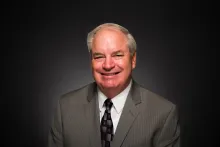
Robin Webber was born in Chicago, Illinois, in 1951, but has lived most of his life in California. He has been a part of the Church of God community since 1963. He attended Ambassador College in Pasadena from 1969-1973. He majored in theology and history.
Mr. Webber's interest remains in the study of history, socio-economics and literature. Over the years, he has offered his services to museums as a docent to share his enthusiasm and passions regarding these areas of expertise.
When time permits, he loves to go mountain biking on nearby ranch land and meet his wife as she hikes toward him.
