

Don Ward
This transcript was generated by AI and may contain errors. It is provided to assist those who may not be able to listen to the message.
How would you like to live your life and know that no matter how you lived it, your death would be through crucifixions? Even though you were zealous for God and quick to defend Jesus Christ, even though you were the instrument used by God to explain how to receive the gift of the Holy Spirit on the day of Pentecost when the Holy Spirit was sent, even though you were the instrument that God used to show that the Gentiles also should receive the Holy Spirit, even though through you great miracles were done, even though a deceitful man and woman would fall dead at your feet as a witness to the church to show in whom God had placed His authority, even though you were the apostle to the circumcision, the leading apostle and spokesman, even though you had done all these things and more, God would permit you to live your life knowing that at the end your life would end through crucifixion. The apostle Peter lived his life of faith and hope with this knowledge. Let's notice this prophecy in the Gospel of John, John 21, beginning in verse 15. John 21 and verse 15.
In the first part of the chapter, of course, the disciples had been out fishing and had caught nothing, and Jesus came on the shore and told them to cast on the other side, and you know the story. Then they came to shore, they had a meal together, and then Jesus turned to Peter and began to question him and to ask him, did he love him?
If you do, Peter, feed my sheep. Three times he said this to Peter. Peter became exasperated by this.
Then Jesus tells him, and it's one of these cases where I have amnesia, but anyhow, we're beginning in verse 15. So when they had dined, Jesus said to Simon Peter, Simon son of Jonah, do you love me more than these? He said unto him, Yes, Lord, you know that I love you. And he said, feed my lands. Then in verse 18, Verily, verily, I said to you, when you were young, you girded yourself and walked where you wanted to. But when you shall be old, you shall stretch forth your hands, and another shall gird you and carry you where you don't want to go. This folk he's signifying by what death he should glorify God. And when he had spoken this, he said unto him, follow me. So Peter lived his life knowing that this would be the result, that he would die in crucifixion. The life of the apostle Peter dramatically proves that God has called us to eternal life and not to physical salvation.
Peter is the apostle of hope, yet he knew that no matter how he lived his life, the only way that he was going to get out of this life was through crucifixion. Now, you read the general epistles, and the general epistles in order are James. James, he writes so much about faith. Faith without works is dead. And then Peter writes about hope, and John writes about love.
You remember what it says in 1 Corinthians 13. Now, by these three, the faith, the hope, and love, faith, hope, and charity. Let's go now to 1 Peter chapter 1. The hope that permeated Peter's life in 1 Peter chapter 1 and verse 3.
It's interesting that the general epistles follow that faith, hope, and love format.
I don't think that was by design. It was just, I would say, it happened that way, but not necessarily by design. But in 1 Peter chapter 1, we see about Peter as the apostle of hope.
1 Peter chapter 1 and verse 3. Blessed be the God and Father of our Lord Jesus Christ, which according to His abundant mercy has begotten us again unto a living hope by the resurrection of Jesus Christ from the dead to an inheritance, incorruptible, undefiled that fades not away, reserved in heaven for you, who are kept by the power of God through faith unto salvation, ready to be revealed in the last time. Notice verse 6. Worry in, you greatly rejoice, though now for a season it need be your inheaveness through manifold trials temptations, that the trying of your faith, being much more precious than the goal that perishes, though it be tried with fire, might be found unto praise and honor and glory at the appearing of Jesus Christ. So Peter, knowing how he was going to die, was able to write these words.
He went on talking about doing the things you need to do in order to make your calling an election sure. Notice verse 13. Wherefore, gird up the loins of your mind, be sober and hope to the end, for the grace that is to be brought unto you at the revelation of Jesus Christ, His appearing when He comes again, the resurrection. You'll be hard-pressed to find anything about physical salvation, saving yourselves from the writings of the apostles. The focus is on the hope of the resurrection, the hope that is there, the big picture of what lies before us.
Peter's life dramatically shows that he did not set his hope on the things of this world.
He internalized what Paul wrote in 1 Corinthians 15 and verse 19.
If we have hope only in this life, we are of all men most miserable. So Peter's hope, Paul's hope, John's hope, you name the apostle, was not in the things of this life. You contrast Peter's attitude with some today who place more valiant emphasis on physical salvation, things like place of safety, protection from the great tribulation than on the hope of the resurrection. So here's a man that was so powerfully used by God to present the keys to the kingdom on the day of Pentecost at Cornelius's house when the keys of the kingdom were presented to the Gentiles, a man whose focus was on the hope of the future. His focus continually was on that hope.
So we asked the question today, where is the focus of our hope and what is our hope?
Notice in Psalm 146 and verse 5. Psalm 146 and verse 5, a summary verse here of where our hope should be in Psalm 146 and verse 5.
Happy is he that has the God of Jacob for his help, whose hope is in the Lord his God.
So who should we hope in? We should hope in God, in Christ, in the Word of God, in the precious promises that are contained in his Word. The apostle Paul lived and died for this hope. Let's note as briefly about Paul and this hope in Acts 25 and verse 6.
Acts 25 and verse 6. Acts 25 verse 6.
You remember the apostle Paul was put on trial.
And what was one of the main reasons why he was put on trial?
In Acts 25 and 6, and when he had waited or tarried among them more than 10 days, he went down unto Caesarea. And the next day, sitting on the judgment seat, commanded Paul to be brought. And when he was come, the Jews, which came down from Jerusalem, stood around about and laid many and grievous complaints against Paul, which they could not prove. While he answered for himself, neither gave against the law of the Jews, neither against the temple, nor yet against Caesar, have I offended anything at all. The Festus, willing to do the Jews of pleasure, answered Paul and said, Will you go up to Jerusalem and there be judged of the things before me?
Then said Paul, I stand at Caesar's judgment seat, where I ought to be judged. To the Jews have I done no wrong, as you very well know. For if I be an offender or have committed anything worthy of death, I refuse not to die. But if there be none of these things, whereof these accuse me, no man may deliver me unto them, I appeal unto Caesar. Then Festus, when he had confessed with the council, or conferred with the council, answered, Have you appealed unto Caesar? You have appealed unto Caesar, and unto Caesar you shall go. Now, the purpose of this trial, of course, to a large degree, as I've already said, we'll turn back to chapter 23 and verse 6.
Got ahead of the story there. But to go back and pick it up in Acts 23 and verse 6, what the root cause of the reason he was being had to appeal to Caesar is contained here in Acts 23 and verse 6.
So, his statement of being in hope of the resurrection was one of the main reasons why he appeared before the Roman authorities, and eventually he wound up as a house prisoner in Rome. Notice in Acts 28 verse 20. Acts 28 and verse 20.
For this cause therefore have I called for you to see you and speak with you, because that for the hope of Israel, what was the hope of Israel? Well, it was that the Messiah would come, that he would free them from bondage, and the only way they could be freed from bondage was through Jesus Christ. It is a spiritual freedom, not a political freedom. They were looking for a political freedom, but Jesus Christ came and offered spiritual freedom. Even Paul, when he writes this, says, because that for the hope of Israel, I am bound with this chain. And so, Paul was able there to witness to Rome because of this accusation that he had for the hope of the resurrection.
Verse 21. And they said unto him, We need to receive letters out of Judea concerning you, neither any of the brethren that came, showed, or spoke any harm of you.
But we desire to hear of you what you think, for as concerning this sect, we know that everywhere it is spoken against. And when they had appointed him a day, there came many to him into his lodging, to whom he expounded and testified the kingdom of God, persuading them concerning Jesus, both out of the law of Moses, out of the prophets, from morning till evening. And some believed the things which were spoken, and some believed not.
And when they agreed not among themselves, they departed. After that, Paul had spoken one word, well spoke the Holy Spirit by Isaiah the prophet unto our fathers, that some would hear, and some wouldn't, and some would get it, and some would not. So Paul was able to witness even there in Rome. Notice verse 30. Paul dwelt two whole years in his own hired house, and received all that came unto him, preaching the kingdom of God, and teaching those things which concerned the Lord Jesus Christ with all confidence, no man forbidding him. So we see that the Apostle Paul lived and died for this hope, this hope of the resurrection. He was eventually put to death.
Yet we have those who try to make merchandise out of God's people by dangling them over not the fires of hell necessary, but the Great Tribulation. If you want to escape the Great Tribulation, then you need to be a part of our organization. Notice what the Apostle Peter writes about this in 2 Peter chapter 2 verse 1.
Those who try to make merchandise out of God's people, those who place more emphasis on the hope of escaping the Great Tribulation than on eternal life. In 2 Peter chapter 2 verse 1, But there were false prophets also among the people, even as there should be false teachers among you, who privately shall bring in damnable heresies, even denying the Lord that bought them, and bring upon themselves swift destruction. And many shall follow their pernicious ways, by reason of whom the way of truth shall be evil spoken of.
And through covetousness shall they with feign words make merchandise of you, whose judgment now the long time lingers not, and their damnation slumbers not.
You know, it's as if with some of the splatter groups that the Church of God is a great big old pie.
And we want to get our slice of the pie. And we want to get them under our care.
And various reasons are given. But one of the main reasons, once again, has to do well if you are with us, then you are in the, quote, right Church. You're in the right organization.
You'll be protected from the Tribulation.
Verse 9, The Lord knows how to deliver the godly out of trials, and to reserve the unjust of the day of judgment to be punished.
But chiefly them that walk after the flesh, and the lust of uncleanness, despise government, persepcious are they, self-will, they are not afraid to speak evil of dignities.
Whereas angels, which are greater in power and might, bring not railing accusation against them before the Lord.
And one of the ways that people have tried to divide up the pie, as it were, is to speak evil of one another.
Oh, they say that, and this group says that, and these say that.
And try to get people aroused emotionally. And as I said last week, I have not yet seen one line in the Bible. In fact, even one jot or tittle changed by what any person ever said or did.
That goes from Adam to the last one you can read about in the Bible.
It's absolutely amazing how people are attracted to mystical relief from the future. Let's go to 2 Timothy chapter 4. 2 Timothy chapter 4 in the preceding verses in 2 Timothy chapter 3. Timothy talks about how the Word of God is profitable for correction and exhortation and for teaching.
In 2 Timothy chapter 4, in view of what the Word of God is profitable for, as you read in 2 Timothy 3.16, I charge you therefore before God and the Lord Jesus Christ, who shall judge the living and the dead at his appearing in his kingdom. Maybe you should focus on what it says there sometime. 2 Timothy chapter 4, in view of what the Lord Jesus Christ says, I charge you therefore before God and the Lord Jesus Christ, who shall judge the living and the dead at his appearing in his kingdom. For the time will come when they will not endure sound doctrine, but after their own lust shall they heap to themselves teachers having itching ears. And of course, one of the reasons why they heap to themselves teachers having itching ears, it's sort of an intellectual vanity of attracted to some kind of mystical relief or insight or knowledge of the future that I know something you don't know. And so many of what you've read from various ones have never come to pass. What's true is the Word of God. And they shall turn away their ears from the truth and shall be turned undefabled. But watch you in all things and do a reflections. Do the work in evangelists make full proof of your ministry. There are those who claim that they are the Philadelphian church era. They claim to be true Philadelphians. They then link this to the promise to the Philadelphians in Revelation chapter 3. Let's notice verse 10. And then we will go back to verse 7 at the beginning of this letter from Jesus Christ. Actually, it's from God to Christ to the messenger to John who wrote this message, as we mentioned last week. In Revelation 3 verse 10, Because you have kept the word of my patience, I also will keep you from the hour of trial or temptation, which shall come upon all the world to try them to dwell upon the earth. Remember that the message to the churches closes with that he that hath an ear, let him hear what the Spirit says unto the churches, plural. That these messages are for all of us, for all times. You can talk about eras and whether or not one spirit dominates or not. But what I'm more interested in is the message, the line that says, He that hath an ear, let him hear what the Spirit says to the churches, to all of them.
Then we go to the beginning of this message. Each one of these messages begins with a characteristic of Jesus Christ. I gave you a handout some time ago that broke down this book of Revelation, especially these messages to the churches.
This starts with a greeting from Christ, the commendation, what's wrong, the admonition, the punishment, the reward, and all of that.
In Revelation 3 and verse 7, And to the angel of the church in Philadelphia write these things, says, He that is holy, He that is true, He that hath the key of David, He that opens, and no man shuts, and shuts, and no man opens.
So what is the key of David?
David was a king, and the key of David centers on how one might enter the Kingdom of God and become a king and a priest. Let me say that again. The key of David centers on, focuses on, how one might become a king and priest in the Kingdom of God.
Jesus Christ, as we shall see, is the one who opens that door, and He's the one that can close that door, and no man can open or shut that door.
That is the key to the Kingdom, except Jesus Christ. Now, does the Bible bear that out? So, let's now examine the key of David and the keys to the Kingdom for a moment in Isaiah 22, in verse 15. Isaiah 22, in verse 15.
Back in the days when there was a certain treasurer in the church, a lot of people would say that this person is the type of this person in Isaiah 22, verse 15.
Thus says the Lord God of hosts, get you unto this treasurer, even unto Shebna, which is over the house, and say, What have you here? and whom have you here? that you have hewed you out a sepulcher here, as he that hues out a sepulcher on high, and that engraves inhabitation for himself in a rock.
So, Shebna had made himself into something that was not intended. He had highly exalted himself in his office. Of course, treasurers always have the ear of the CEO, and the CEO is the ear of the treasurer. And they are quite important in many different ways in various organizations, corporations, whatever you want to name. But Shebna had overstepped his bounds. Verse 17, Behold, the Lord will carry you away with a mighty captivity, and will surely cover you.
He will surely violently turn and torch you, like a ball into a large country. There shall you die, and there the chariots of your glory shall be the shame of the Lord's house. And I will drive you from your station, and from the state shall he pull you down.
The treasurer had living quarters in and near the temple. Shebna is symbolic of those who try to work things out from themselves apart from God. In a sense, symbolic of all earthly rulers under the sway of the devil. Shebna thought he had the keys to the kingdom, and the treasure usually had something that hung around his neck and had the key, and he could unlock the treasury, as it were.
But there's a comparison and contrast here that is made between Shebna and the one who is to come, who will have the true keys to the kingdom. Verse 20, And it shall come to pass in that day that I will call my servant Eliakim, the son of Hilkiah.
So Eliakim becomes a type of Christ the Messiah. And I will clothe him with your robe, in other words, the high office that you had, strengthen him with your girdle. I will commit your government into his hand, and he shall be a father to the inhabitants of Jerusalem and to the house of Judah. And the key of the house of David will I lay upon his shoulder, so he shall open, and none shall shut. He shall shut, and none shall open.
Now, let's compare these verses. If you want to hold your place, there will be coming back here.
Go to Isaiah 9 and verse 6, and you'll see very similar language is spoken of of Jesus Christ.
In Isaiah 9 and verse 6, For unto us a child is born, unto us a son is given, and the government shall be upon his shoulder, and his name shall be called wonderful, counselor, the mighty God, the everlasting Father, the Prince of Peace. Of the increase of his government and of peace there shall be no end upon the throne of David. Notice where it is, upon the throne of David, and upon his kingdom to order it, to establish it with judgment and with justice from henceforth, even for ever, the zeal of the Lord of hosts will perform it. Now, quickly turn back there. I hope you've held your place, and we'll read those verses again. Verse 21, I will clothe him with your robe, strengthen him with your girdle. I will commit your government. Notice that we just read the government shall be upon his shoulders. He shall be a father. Notice we read that he is the everlasting Father to the inhabitants of Jerusalem and the house of Judah. And the key of the house of David will lay upon his shoulder. And we just read that upon the Messiah that the government will be upon his shoulder and that he will establish the kingdom and sit on the throne of David.
Notice further here, as we compare and contrast in this one verse here, we will now go to Luke, chapter 1. We'll be coming back to Isaiah 22 if you want to mark it. In Luke chapter 1, verse 33, this is one of the most exciting studies in the Bible. Most people have never really dug into this to really see what it really says in Luke 1, verse 30. Here's the angel bringing the message to Mary concerning the birth of Jesus. Luke's account, Luke 1.30. And the angel said in the hair, Fear not, Mary, for you have found favor with God. And, behold, you shall conceive in your womb and bring forth the Son, shall call his name Jesus. He shall be great, shall be called the Son of the highest. And the Lord himself shall give unto him the throne of his father David.
He shall give unto him the throne of his father David. And he shall reign over the house of Jacob for ever. And of his kingdom there shall be no end. Then we go to Acts chapter 2.
These scriptures, as I chain them here, basically explain themselves. In Acts chapter 2, in verse 29, Peter speaking on the day of Pentecost when the Holy Spirit was sent.
Peter the Apostle, who had been told that the only way he would get out of this life was to die in crucifixion. Peter the Apostle, who had done so many marvelous things. You know, at one time, Peter, James, and John especially worked together. And the very shadow of Peter passing over people, and they were healed because there were so many flocking in that they couldn't get to them. So the very shadow of Peter passing over them, and they were healed. In Acts 2, verse 29, Men and brethren, let me freely speak unto you of the patriarch David, that he is both dead and buried, and his sepulchre is with us unto this day. I think it was on Christmas Day or the day after my brother called me. Remember, he came here and visited one time, and he had his boys there, two boys who were doctors and family gathered around. And somehow they got into the discussion and said, well, got a question for you. What are the two men that didn't die before they went to heaven?
I said, well, they didn't really go to heaven, but they were taken up. They were translated. They were transferred somewhere else. And they, he said, hold on, let me give you, give the phone to Ross. That's the oldest boy. Donald Ross, or Dr. Donald Ross, wore my nephew.
And he said, yeah, he said, well, I know one, I know Elijah was taken up.
But who was the other? I said it was Enoch. Enoch was walked with God for 300 years, and he was found no more. But I said, they didn't go to heaven because the Scripture says in Acts 2 that no man has ascended into heaven. Also, the Gospel of John says, no man is ascended into heaven except the Son of Man who came down from heaven.
He said, oh, yeah, well, I knew there were two that the Bible talked about.
And we got on to some other subject. But anyhow, it was interesting.
What we see clearly here that David has not ascended into heaven. Verse 30, Acts 2.30, Therefore, being a prophet and knowing that God had sworn with an oath to him that of the fruit of his loins according to the flesh, of course, according to the flesh, he was descended from David, but his true ancestry and identity, if you want to speak in human terms, his true DNA is spiritual. But according to the flesh, he was from the seed of David. He would raise up Christ to sit on his throne.
He, seeing this before, spoke of the resurrection of Christ, that his life essence was not left in Hades, neither his flesh did see corruption.
Therefore, being by the right hand of God, exalted and having received of the Father, the promise of the Holy Spirit, he has shed forth this, which you now see and hear.
For David has not ascended into the heavens, but he said himself, The Lord said unto my Lord, Sit you on my right hand, until I make your foes your footstool.
Therefore, let all the house of Israel know assuredly that God had made that same Jesus whom you have crucified both Lord and Christ.
Now, we go to Isaiah 55. Remember what we're going to nail down ultimately with this is the key of David and who holds the key of David. And do the scriptures bear that out? In Isaiah 55 and verse 1, Thus saith the Lord, Wrong chapter, Isaiah 55 verse 1, Ho, every one that thirst, Come you to the waters, and he that hath no money, come you buy and eat, you come by wine, milk without money, without price.
Wherefore do you spend money for that which is not bread, and your labor for that which satisfies not?
See, that's the physical side of things. Harken diligently unto me, and eat you that which is good, and let your soul delight itself in fatness. Incline your ear, and come unto me, hear your soul shall live, and I will make an everlasting covenant with you, even the sure mercies of David. Behold, I have given him for a witness to the people, a leader and commander to the people. Behold, you shall call a nation that you know not.
And in 1 Peter 2, 9, the church is called a holy nation.
And nations that knew not you shall run unto you because of the Lord your God, and for the holy one of Israel, for he hath glorified you. Seek you the Lord while he may be found, and call upon him while he is near. Now to Acts 13 and verse 26. The Apostle Paul in Acts 13 is giving a sermon, and it's one of the great summary sermons of the Bible.
There are three great summary sermons in the book of Acts. Acts chapter 2, Acts and that's Peter. Acts chapter 7, that's Stephen. Acts 13, that's Paul. In Acts 13, Paul giving this sermon, we pick it up in verse 26.
Acts 13 verse 26. Men and brethren, children of the stock of Abraham, and whosoever among you fears God, to you is the word of this salvation sent. For they that dwell at Jerusalem and their rulers, because they knew him not, nor yet the voices of the prophets, which are read every Sabbath day, they have fulfilled them in condemning him. And though they found no cause of death in him, yet desired they pilot that he should be slain. And when they had fulfilled all that was written of him, they took him down from the tree, laid him in a sepulchre. But God raised him from the dead, and he was seen many days of them which came up with him from Galilee to Jerusalem, who are his witnesses unto the people. And we declare unto you glad tidings how that the promise which was made unto the fathers, God has fulfilled the same unto us their children in that he has raised up Jesus again, as is also written in the second psalm, you are my son, this day have I can now owe you, in this case born you, because resurrection is equated with birth here in Revelation 1.5.
And as concerning that, he raised him from the dead, now no more to return to corruption.
He said on this wise, I will give you the sure mercies of David, just as we read from Isaiah 55 verses 4 and 5. Wherefore, he said also in another psalm, you shall not suffer your holy one to see corruption. For David, after he had served his own generation by the will of God, fell on sleep, he died, was laid with his fathers, and saw corruption, but whom God raised again saw no corruption. Be it known unto you therefore men and brethren, that through this man Jesus Christ has preached unto you the forgiveness of sins. And by him all that believe are justified from all things from which you could not be justified by the law of Moses. Beware therefore lest that come upon you which is spoken in the prophets. Behold you despisers and wonder and perish, for I work a work in your days, a work which you shall in no wise believe, though a man declare it unto you.
And so Jesus Christ was the one who came to open that door. Now we go back to Isaiah 22.
Isaiah 22 and verse 22. We've already read it once, but we'll read 22 again.
And the key of the house of David will I lay upon his shoulder, he shall open and no man shall shut, he shall shut and none shall open.
And we read from Revelation 3 and verse 7 that Jesus Christ hath the key of David and he opens and no man shuts and he shuts and no man opens.
And so upon this one, it's prophesied that he would have the same thing, the key of David.
Now we're hold your place there. We're going to come back there at least one more time.
Let's look at Luke 16 and verse 13.
I don't know what happened here. I'm sorry. It's Matthew 16. Matthew 16 and verse 13.
Sometimes my wife asks, well, why don't you make these mistakes? Don't you check everything?
I say, yeah, I try to. But usually you just pick it up when you look and say, no, that's not the right verse.
In Matthew 16 verse 13, when Jesus came into the coast of Caesarea of Philippi, he asked his disciples, saying, whom do men say that the Son of Man is? They say, some say you are John the Baptist, some Elijah, others Jeremiah are one of the prophets. But he said unto them, who do you say that I am? And Simon Peter answered and said, You are the Christ, the Son of the living God.
And Jesus answered and said unto him, Blessed are you, Simon Barjona, for flesh and blood is not revealed unto you, but my Father who is in heaven. And I say unto you, you are Peter, Petros, Little Rock, but upon this rock, Peter, a big rock, I will build my church and the gates of hell, the gates of the grave shall not prevail against it. And I will give unto you the keys of the kingdom of heaven. Only Jesus Christ, he is the one who has the right to give the keys.
Jesus Christ has given those keys. He gave it to the apostles and has been given to the church.
And you have been a recipient of the keys to the kingdom. I will give unto you the keys of the kingdom of heaven, and whatsoever you shall bind on earth shall be bound in heaven, and whatsoever you shall loose on earth shall be loosed in heaven. And we've already read from Revelation 3 verse 7 how that Jesus Christ has the keys of the kingdom. Now back to Isaiah 22, one more time. Isaiah 22 verse 23. And I will fasten him as a nail, and here in the metaphoric sense Jesus Christ is likened unto a nail. The Messiah will fasten him as a nail in a sure place, and he shall be for a glorious throne to his father's house. And I've already read two or three scriptures that says that he will sit upon the throne of his father David. He shall be for a glorious throne to his father's house, and they shall hang upon him all the glory of his father's house, the offspring and the issue, all vessels of small quantity from the vessels of cups even to the vessels of flaggots. So, nail a sure place. There were large nails or pegs stood in ancient houses on which were suspended the ornaments of the family.
The sense is all that is valuable to the nation shall rest surely on him, a whole ball of wax, as it were. His throne is resting place. He will give to him the throne of his father David, as we have already read. And as we have noted, the increase of his government there shall be no end. Isaiah 9.6. Now, Isaiah 22.5, it returns to Shevna. In that day, says the Lord of Hosts, shall that nail that is fastened be removed, and the sure place shall be removed be cut down and fall, and the burden that is upon it shall be cut off, for the Lord has spoken it. And so, Shevna was a type of the one who tried to work things out for himself and compared and contrasted with Jesus Christ. The key of David is clearly a reference to how a person may enter in the kingdom of God. Jesus Christ holds the keys to the kingdom. Now turn to John 10.7.
Let's see if this is in keeping with what we have just said.
In John 10.7, John 10.7, John 10.7, John 10.7, John 10.7, Verse 1 Jesus Christ opens the door. It is amazing that people are willing to go along with various kinds of deception, various kinds of abuse, lying, twisting of scriptures. We'll put up with that, deceived into believing that a man, by following a man, they can be spared the great tribulation. And being spared the great tribulation becomes more important than a hope in the kingdom of God.
One of the so-called proofs, oftentimes, for being a Philadelphian is, well, we are more faithful to what Mr. Ermschon taught than anybody else. Yet they go off on wild, illogical, exegetical treatises. One example is that this one group teaches. And a lot of people say, well, why don't we all get together?
We all teach the same thing. Well, in a lot of cases, that's just not true. Go to Revelation 7 in this case, please. One example is a contention that the 144,000 are the Laodiceans who are sealed by death. Are they sealed by death or are they sealed by God's Spirit? I don't have time to go into sealing by God's Spirit, but you can look at that sealing, God's Spirit. In Revelation 7, just before the wrath of God and the Lamb, when that sixth seal is open, and the day of the Lord begins, in chapter 7, verse 1, before these plagues were poured out, And after these things I saw four angels standing on the four corners of the earth, holding the four winds of the earth, that wind should not blow on the earth, nor on the sea, or on any tree.
I saw another angel ascending from the east, having the seal of the living God. And he cried with a loud voice to the four angels, to which it was given to hurt the earth and the sea, saying, Hurt not the earth, neither the sea nor the trees, till we have sealed the servants of our God in their foreheads.
Was that a sealing to death? Were they killed? Was there sealing death? I can show you clearly the scripture that proves that it's not. A little more here. And I heard the number of men which were sealed, and there were sealed 144,000 of the tribes of the children of Israel. And then all the tribes are named there, except for Ephraim and Dan, and Joseph stands in for Ephraim. And verse 10, And cried with a loud voice, saying, Salvation to our God, who sits upon the throne and unto the Lamb. And all the angels stood round about the throne, about the elders and the four beasts, and fell before the throne on their faces, and worshiped God.
Saying, Amen, blessing and glory and wisdom and thanksgiving and honor and power might be to our God, forever and ever, Amen. And one of the elders answered, saying unto me, But what are these arrayed in white robes, and where did they come from? Well, we've had the sealing of these 144,000, but what about these? And I said unto him, Sir, don't you know? And he said unto me, These are they which came out of great tribulation, have washed their robes and made them white in the blood of the Lamb.
They died in martyrdom. Therefore are they before the throne of God serve him day and night in his temple. And he that sits on the throne shall dwell among them. They shall hunger no more, neither thirst any more, neither shall the sun light upon them, nor any heat. For the Lamb which is in the midst of the throne shall feed them, and shall lead them unto living fountains of water. And God shall wipe away all tears from their eyes. Similar to the language in Revelation 21 and 22. Now we go to Revelation chapter 8. And when he had opened the seventh seal, there was silence in heaven about the space of half an hour.
I saw the seven angels which stood before God, and them that were given seven trumpets. And another angel came and stood at the altar, having a golden censer. There was given unto him much incense that he should offer it with the prayers of all saints and the golden altar which was before the throne. And the smoke of the incense which came with the prayers of the saints ascended up before God out of the angel's hand. The angel took the censer and filled it with fire of the altar and cast it into the earth.
And there were voices, thunderings, lightnings, and an earthquake. And the seven angels which had the seven trumpets prepared to sound. See, these prayers come up before, waft up before, God. And God hears those prayers, and it seems that when that happens, those prayers come up. Then God takes direct action, and the seven angels begin to pour out the seven trumpet plagues, the first four of which are described in Revelation 8, which is basically directed toward the environment.
Then, in Revelation 9, you have the description of the first two woes. And you notice Revelation 9, verse 4. And it was commanded that they should not hurt the grass of the earth, neither any green thing, neither any tree, but only those men which have not the seal of God in their foreheads.
So those who have the seal of God in their foreheads were not to be hurt. And to them was given that they should not kill them, not talking about those that were sealed, but they should be tormented, that is, everyone that didn't have the seal, five months. And their torment was as a torment of a scorpion, which he strikes a man, and in those days shall men seek death and shall not find it.
Death or dying will flee from them. You know, people make so much over claims that because they're in a certain organization, they're this, that, or the other. I'm here to say that an organization does not a Philadelphian make. You can go cast your lot with somebody else today, and just because you step over to that group, doesn't make you anything other than what you are before God and Christ. The church, as we've said so often, is a spiritual organism.
There are many points that we need deeper and clearer understanding in, and hopefully we will be able to get to those. The naive, immature spiritual person is tossed to and fro by every wind of doctrine, and is easily captured by the cunning craftiness whereby some lie in wait to deceive. Notice in Ephesians chapter 4. Ephesians chapter 4. One of the great purposes of the ministry is given here. In Ephesians 4.11, He gave some apostles, some prophets, some evangelists, some pastors and teachers, for the perfecting of the saints, for the work of the ministry, for the edifying, the building up of the body of Christ.
Till we all come into the unity of the faith, of the knowledge of the Son of God, into a perfect man, and in the measure of the stature of the fullness of Christ, that we henceforth be no more children tossed to and fro and carried about by every wind of doctrine. And it seems that the easiest way to get people to be carried to and fro about every wind of doctrine has to do with something that is in the prophetic realm.
It doesn't really center on and focus on the trunk of the tree of how we can become like Jesus Christ and be converted.
No, that's not very exciting to some.
The most exciting thing there is, is to have the knowledge of the keys of the Kingdom and be able to enter into that Kingdom right now, to be translated into the Kingdom of His Dear Son, as it says in Colossians chapter 1.
We henceforth be no more children tossed to and fro and carried about by every wind of doctrine by the slight of men and cunning craftiness, whereby they lie and wait to deceive. But speaking in the truth and love may grow up unto Him in all things, which is the head, even Christ. You know, to boast of one's spirituality, because we are more spiritual than you are because of certain outward things, then I am this, that, or the other. Boasting of one's spirituality is a sure sign of Laodiceism. Go to Revelation chapter 3, and now the message to Laodicea, verse 1. Revelation 3, verse 14, To the angel of the church of Laodicea write these things, says he who is faithful, the Amen, the faithful and true witness, the beginning of the creation of God, I know your works, that you are neither cold or hot, or a wood that you were cold or hot.
So then, because you are alukewarm, and neither cold or hot, I will spew you out of my mouth. Because you say, I am rich and increased with goods. And I believe that the writer here is using physical symbols to symbolize the spiritual. Because I am rich and increased with goods, I have need of nothing. I know it all. And know not that you are wretched and miserable and poor and blind and naked. Naked is one of the things that is used to symbolize the sin that you don't have on a spiritual garment. And notice, verse 18 confirms that this is speaking spiritually. That is verse 17, and not physical. Verse 18. I counsel you to buy of me gold tried in the fire. What Peter writes in Peter 1, verse 6, that the trying of your faith more precious than gold. That you may be rich, that is spiritually, and white raiment. See, white raiment is the righteousness of the saints. That you may be clothed spiritually. And that the shame of your nakedness do not appear. Your sins are covered in the blood of Christ. And anoint your eyes with eyesab, not so you can see physically, but so you can see spiritually, that you may see. As many as I love, I rebuke and chasten, be zealous therefore and repent. You know, why are so many people today more easily convinced by the physical than by the spiritual?
Why are so many people more apt to protect their bodies than their minds and hearts? Best obeyed commandment is, be fruitful, multiply, and replenish the earth. The second best obeyed commandment is, thou shall not eat pork. But at the same time, they would have no problem with a generous portion of watching trashy movies, filled with licentious behavior, demonism, and a generous portion of profanity. You see, the apostles, Peter and Paul especially, have placed more emphasis on the hope of eternal life and the resurrection than on any physical thing. Hope is a vital part of the armor of God. Ephesians 6, 17 tells us that we are to put on hope. 1 Thessalonians 5, 8 says that, put on hope the helmet of salvation, which that really means, keep the big picture burning brightly in your mind. What is a big picture? The coming kingdom of God, the resurrection.
God's protection will depend upon our personal relationship with Him and becoming as He is.
So as we sit here today, are we filled with hope as the Apostle Peter was filled with hope?
Does the big picture burn brightly in our minds and hearts?
Faith and hope are the handmaidens of victory and overcoming.
Faith comes by hearing and the hearing by the Word of God.
And after conviction by the Word and Spirit, the next step is obedience.
If faith is weak, hope will be weak. If hope is weak, faith will be weak.
Faith and hope are reciprocal handmaidens.
To the extent that you are convicted and committed, you'll act courageously. To the extent that you are focused on the big picture and living by faith, you will have hope.
Your eyes will be firmly set on the goal, the kingdom of God.
Hope requires single-mindedness. Hope requires wholeheartedness.
Hope is kindled by tribulation. It is nourished by patience.
It is confirmed through experience of living this life.
One final scripture, Romans 15, verse 4. Romans 15, verse 4.
Brethren, we have the opportunity now to really focus on faith, hope, and charity.
I hope you will take the things that you've heard today in the sermonette and the sermon that you will really, quote, focus on them, and you will come to understand that we've been called to eternal life, to life everlasting. That Jesus Christ holds the keys to the kingdom.
He is the one that opens and no man shuts, and He's the one that can shut and no man opens.
Don't play around with God and the open door, because who knows how long that door will be open for any one of us. In Romans 15, verse 4.
Whatsoever things were written before time were written for our learning that we, through patience and comfort of the scripture, might have hope. Now the God of patience and consolation, grant you to be like-minded one toward another according to Christ Jesus.
You know, I said, hope is kindled by tribulation, nourished through patience, confirmed through experience, essentially what it says here, that you may, that you may with one mind and one mouth. Remember, I said you have to be, you can't be double-minded, you have to be focused and single-minded with your whole heart, that you may with one mind and one mouth glorify God, even the Father of our Lord Jesus Christ.
So, brethren, hopefully we now know who is our hope and what is our hope.
God is our hope through Christ. What is our hope? Resurrection, the family of God, the kingdom of God.
So, let's all fan the fires of hope. We'll be much happier if we do.
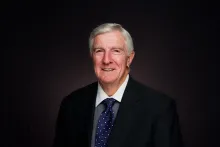
Before his retirement in 2021, Dr. Donald Ward pastored churches in Texas and Louisiana, and taught at Ambassador Bible College in Cincinnati, Ohio. He has also served as chairman of the Council of Elders of the United Church of God. He holds a BS degree; a BA in theology; a MS degree; a doctor’s degree in education from East Texas State University; and has completed 18 hours of graduate theology from SMU.
