

Don Ward
This transcript was generated by AI and may contain errors. It is provided to assist those who may not be able to listen to the message.
How would you feel if you had to live your life knowing that no matter how you lived it, your death would be through crucifixion? Even though you were very zealous for God and quick to defend Jesus Christ, even though you were the instrument used by God to explain how to receive the gift of the Holy Spirit on the day of Pentecost, even though you were the instrument used to show that the Gentiles should also receive the Holy Spirit, even though through you great miracles were done, even though a deceitful man and his wife would fall dead at your feet as a witness to the church to show through whom God had placed his authority, even though the very shadow of you passing over people, they were healed, even though you were the apostle to the circumcision, one of the leading apostles and spokesmen and spokesmen on the day of Pentecost, and even though you had done all of these things, God would permit you to live your life knowing that the end would come through crucifixion. Let's go to John chapter 21. We'll read this prophecy to Peter. Peter, the apostle of hope. Peter, the apostle of hope. Peter, the apostle of hope and the keys to the kingdom. Of course, Peter was used by God to present the keys to the kingdom on the day of Pentecost. He was also used going down to the house of Cornelius to show that the Holy Spirit would be made available, the keys to the kingdom, not only to Israel, but to all nations, to the Gentiles. In John chapter 21, this, of course, is after the resurrection of Jesus Christ in which he appeared to the disciples at least three times. They pretty much had given up and saying, well, you know, it looked like he was the one, but we haven't heard from him lately, so let's go a-fishing. Verse 1 of chapter 21. After these things, Jesus showed himself again to the disciples at the Sea of Tiberias, and on this wise showed he himself that there were together Simon Peter, other disciples. Verse 3, Simon said unto him, I go a-fishing, they said unto him, we also go with you, and they went forth and entered into his ship immediately, and that night they caught nothing. So the story goes on. Jesus Christ eventually shows up, tells him to cast the net on the other side. The drought of fish is so great that they could not pull them in. Eventually they come to shore. They cleaned the fish, they cooked the fish, they have a meal, and then after the meal, Jesus Christ asked Peter three times if you love me, and Peter responded each time, you know, you know, Lord, that I love you. And Jesus said, well, feed my sheep. Then we look at verse 18. Verily, verily, I say unto you, when you were young, you girded yourself and walked where you wanted to, but when you shall be old, you shall stretch forth your hands, and another shall gird you and carry you where you don't want to go.
This spoke he signifying by what death he should glorify God, and when he had spoken this, he said unto him, follow me. So Peter was told, you're going to be crucified. That's how you're going to end your life. And according to legend, he was crucified upside down. The Apostle Peter lived his life of faith and hope with this knowledge. Hope is a word that is a little bit difficult to find in some ways, but here's what various sources say. Hope is a state which promotes the desire of positive outcomes related to events and circumstances in one's life or in the world at large.
Positive outcomes related to events. Despair is often regarded as the opposite of hope. Hope is the feeling that what is wanted can be had, or that events will turn out for the best, or the act of looking forward to something with desire and reasonable confidence or feeling that it will happen. Now hope is spoken of quite often in the Bible. The life of the Apostle Peter dramatically proves that God has called us to eternal life and not to physical salvation. In the spiritual sense, I have hope in eternal life because I have faith in the promise of God who cannot lie.
So we go to Titus, Paul's epistle to Titus, if you'll turn there, chapter 1, Titus chapter 1 and verse 1. I have hope because I have faith in God and Jesus Christ.
Remember that faith is the springboard to all things spiritual. The Hebrews 11.6, he who would come to God must believe that he is, and that he is a rewarder of them that diligently seek him.
Of course, in that verse is contained also, Hebrews 11.6, without faith it is impossible to please God. In Titus chapter 1, verse 1, Paul, a servant of God and an apostle of Jesus Christ, according to the faith of God's elect and the acknowledgment of the truth, which is after godliness, in the hope of eternal life, which God that cannot lie promised before the world began. So I have hope in eternal life because God has promised that hope and notice it in hope of eternal life, which God that cannot lie promised before the world began. The plan of salvation is of old. It is a long-standing plan that God and the word worked out even before humankind was created. Now note in 1 Corinthians chapter 13 and verse 13.
1 Corinthians 13 and verse 13. 1 Corinthians 13 is an inset chapter in the midst of spiritual gifts, and it describes a more excellent way. We have turned there many times in recent sermons, and especially in verse 3, in which we talk about all of those things that are listed in verses 1, 2, and 3. If we're not becoming as God is, it profits me nothing, even though you have all of those gifts. And now abides. This is 1 Corinthians 13 verse 13. And now abides faith, hope, charity.
These three, but the greatest of these is charity. Notice they are in sequence, and it sort of works in sequence like that. First is faith in the existence of God and that he is reward of those who diligently seek him. And then it goes on from there because of God's promises, and you have faith in him, you can have hope. And then the eventual outcome is faith, hope, and charity. The eventual outcome is charity, to become as God is, to become love as God is love.
It's interesting to note in the general epistles, this is sort of a sidebar, that in the general epistles, the way that they're written, James focuses on faith, faith without works is dead. John, the apostle of love, focuses on love, for this is the love of God, that we should keep his commandments, his commandments are not grievous. A lot of talk about love in the epistles of John. And then Peter focuses on hope, and then Jude focuses on the faith once delivered, to strive for the faith once delivered. The hope that permeated Peter's life comes through loud and clear in 1 Peter. So let's turn there, please, to 1 Peter chapter 1, 1 Peter chapter 1 and verse 3. 1 Peter chapter 1 and verse 3. 1 Peter chapter 1 and verse 3.
Blessed be the God and Father of our Lord Jesus Christ, which according to his abundant mercy hath begotten us again unto a living hope by the resurrection of Jesus Christ from the dead.
That hope is alive. That hope is sure. It has a firm foundation, because Jesus Christ has been resurrected from the dead. Paul writes in Romans 5 and verse 10 that having been justified by the death of his Son, we shall be saved by his life. Jesus Christ, resurrected, now sitting at the right hand of the Father, continuing here to an inheritance incorruptible, undefiled, that fades not away, reserved in heaven for you, who are kept by the power of God through faith unto salvation, ready to be revealed in the last time. In verse 9, receiving the outcome of your faith, even the salvation of your sukai, your life essence, translated souls, the life potential of which salvation the prophets have inquired and searched diligently, who prophesied of the grace that should come unto you, searching what or what manner of time the Spirit of Christ which was in them did signify when it testified beforehand the sufferings of Christ and the glory that should follow, unto whom it was revealed that not unto themselves but unto us they'd administer the things which are now reported unto you by them that have preached the gospel unto you with the Holy Spirit sent down from heaven, which things the angels desire to look into. Wherefore, so in view of this, gird up the loins of your mind, be sober, and hope, hope to the end, for the grace that is to be brought unto you at the revelation of Jesus Christ. In other words, when Jesus Christ appears again and comes in power and in glory. In verse 18, For as much as we know that we were not reformed or redeemed, sorry it's redeemed, not reformed, redeemed with corruptible things as silver and gold from your vain conduct received by tradition from your fathers, but with the precious blood of Christ as of a Lamb, without blemish, without spot, who verily was foreordained. Proganosko is the Greek word. It means to know beforehand. For-dained. For-dained. To know beforehand before the foundation of the world. You see, we read that from Titus 1-2. It says, which he promised before the world began. Before the foundation of the world, but was manifest in these last times for you, who by him do believe in God, that raised him from the dead and gave him glory, that your faith and hope might be in God.
God who has promised, God who cannot lie, seeing you have purified your souls and obeying the truth through the Spirit unto unfeigned love of the brethren, and that you love one another with a pure heart fervently. So this kind of hope is the kind of hope that the Apostle Peter had. Now look at 1 Peter 3 and verse 15. We're getting a flavor here of the Apostle Peter, the Apostle of Hope. Having been given the prophecy out of the words of Jesus Christ himself, that the way that he would die would be crucifixion. And no matter how faithful he was throughout his life, that that is the way that he would give up his breath, the breath of life. Verse 15, "...but sanctify the Lord God in your hearts, and be ready always to give an answer to every man that asks you a reason for the hope that is in you with meekness and fear." Peter is the Apostle of Hope, yet we know that no matter how faithful he was, the only way that he was going to get out of this life was through crucifixion. This dramatically shows that his hope was not set on this world. His hope is not on this world and this life. Peter internalized what Paul writes in 1 Corinthians 15 and verse 19, which is, if we have hope only in this life, we are of all men most miserable. Peter had this hope of eternal life, the big picture burning brightly in his mind, of eternal life in the kingdom of God. Now we contrast what we're going to do here today. We're going to contrast Peter's attitude with some today who place more value and emphasis on physical salvation, like the place of safety, protection from the great tribulation, than on the hope of the resurrection. Oh, I want to be protected during that time. I want to save my physical life. That's fine. And there are scriptures in the Bible that say, watch and pray always, that you may be counted worthy to escape the things that come upon the earth to try, the sons of men. And there are various promises along those lines. But is that the reason why we're here? Is that the total of the plan of salvation? Here's a man, the apostle Peter, that was used powerfully by God to present the keys to the kingdom on the day of Pentecost, later to the house of Cornelius, making it clear that the plan of salvation was for all peoples, all nations, all kindreds, races and tongues. A man who was used to show that the same door was open to the nations. A man who was used in performing mighty miracles so that the very shadow of him passing over the people, they would be healed. Where was his focus and what was his hope? As we read from 1 Peter 1 and verse 9, 1 Peter 1 and verse 9, salvation, deliverance into the kingdom of God. So who is your hope and what is your hope? We've read, turn back there, we'll read it again.
Peter said that your faith and hope might be where? Who is your hope?
Verse 21, who by him to believe in God that raised him up from the dead and gave him glory that your faith and hope might be in God. So our hope has a firm foundation in fact. It's not just a hope or a wish kind of thing. I wish that Daddy would bring me some candy tonight or whatever you might say or wish or hope for in that physical sense. It has a firm foundation. It's as sure as the Word of God. So where was his hope? It was in God. Hope and God. Paul lived and died for this hope. In fact, the reason that Paul was turned over to the Roman authorities, eventually he appealed to Caesar. Look back there in Acts chapter 23 and verse 6, that because of Paul insisted on the hope of the resurrection, the Jews were going to kill him and eventually he appealed to Caesar. That's how he wound up in Rome. Of course, in Rome he had two years to preach the gospel of the kingdom of God while he was a house prisoner. In Acts chapter 23 verse 6, but when Paul perceived that the one part were Sadducees, Sadducees didn't believe in the resurrection. The other Pharisees who did believe in the resurrection, he cried out in the council, Men and brethren, I am a Pharisee, the son of a Pharisee, of the hope and resurrection of the dead.
I am called in question for that hope, the hope of the resurrection from the dead. And Paul testified of that later in various appearances before Roman authorities. I stand before you here today because in hope of the resurrection. Yes, we have those who try to make merchandise out of God's people by dangling them over the threat of the tribulation. Well, if you're not with us, you're going to have to go through the tribulation. If you're not with us, you're a Laodiceans.
Those who place more emphasis on the hope of escaping the great tribulation than on eternal life. We must not place more hope on physical salvation, physical deliverance, than on deliverance into the kingdom of God. Notice in 2 Peter chapter 2 that some make merchandise out of God's people. And if you're not grounded and founded in the truth, like you heard in the sermonette, there are all kinds of doctrines and winds of doctrine that are floating around out there, and people, some have itching ears to hear some new thing. They get caught up in that, and they bounce around from one place to the other, like, you know, isn't it wonderful to have this freedom to go everywhere? Well, if it weren't for people who are committed and dedicated to the Church of God and the United Church of God in this congregation, we wouldn't have a congregation. You have to have some kind of conviction and commitment and put down your roots somewhere and make your stand.
This is what I believe. This is what I'm convicted of.
In 2 Peter chapter 2, But there were false prophets also among the people, even as there shall be false teachers among you, who privately shall bring in damnable heresies, even denying the Lord that brought them and bring upon themselves swift destruction. And many shall follow their pernicious ways, pernicious ways, lasciviousness, license to do whatever, by reason of whom the way of truth shall be even spoken of. Oh, look what they're doing! And through covetousness shall they with feign words make merchandise of you.
That's why we emphasize so much. Know that you know.
Be as a Berean. Search the Scriptures daily whether these things be true.
You have to have a love affair with the truth yourself. No person can have this love of the truth for you. You have to have it yourself. You have to get in there and dig in the Word of God. You cannot just expect to show up at the Sabbath. The Sabbath should provide you with some direction and some keys and some depth of understanding to motivate you, help you. But you have to get in there and dig yourself. Through covetousness shall they with feign words make merchandise of you, whose judgment now of a long time lingers not, and their damnation slumbers not. For if God spared not the angels that sinned, but cast them down to Tartaroo, to a condition of restraint, and delivered them in a change of darkness to be reserved unto judgment. You see, if God dealt with even the angels, He's surely going to deal with these people. That's the message that is being sent right there. God is going to deal with them. It's absolutely amazing how people are attracted to mystical relief from the future. Oh, if I just knew what the future is, then I could do this, that, and the other. Well, once again, you've got the 1 Corinthians 1. I mean 1 Corinthians 13, 2, and 3. Though I have all knowledge, understand all mysteries, and have the gift of prophecy, and all of that faith that I could remove mountains, if I have not charity, it profits me nothing.
If I'm not becoming as God is.
You look at 2 Timothy 4.
Some of these things are things that will be extant in the church among God's people at the end of this age. The Bible is written first and foremost, especially the New Testament, to the church. In 2 Timothy 4, I want 1 Timothy in this case. No, I don't.
In 2 Timothy 4, verse 1, I charge you therefore before God and the Lord Jesus Christ, who shall judge the living and the dead at his appearing in his kingdom, preach the word, be instant in season, out of season, reprove, rebuke, exhort with all long suffering, and doctrine, teaching. Sometimes I wonder, as I told an elder recently, I wonder if the world could be saved by preaching, it should have been saved a long time ago.
And you stand up and you preach, and you wonder, is this in vain? Does anyone change as a result of preaching? Of course, it must do some good, because Paul writes in 1 Corinthians 1 that it please God through foolishness of preaching to save some.
And of course, so often in the Bible you have this admonition, he who hath an ear to hear, let him hear. See, people are so given to emotion that they hear something emotional, and it does give a gift, a lift, and it can be valuable for the time.
But we need expository preaching in the Word of God so that we come to understand the very depth of this whole plan from before the foundation of the world. Throughout history, to the present time and beyond, it's such a wonderful plan. There's no human being that could just sit down and think this up. Verse 3, for the time will come when they will not endure, sound doctrine, but after their own lust shall they heap to themselves teachers having itching ears, and they shall turn away their ears from the truth, and shall be turned unto fables.
And none of us want that to happen to us. We do not want to be turned to fables.
There are some who claim that they are the Philadelphia Church era, that they are the Philadelphia Church. That their organization is the Philadelphia Church. We have two or three groups that claim such a thing as that. A Philadelphia, I'm here to say, is an organization does not a Philadelphia make. They then link this promise to the Philadelphians in Revelation 3 and 7. They claim to be true Philadelphians because they're in a certain organization. If you're not in that organization, you're going through the tribulation. You're late to see it. Oh, we are on fire. We are the ones.
Let's see what the Bible says. Let's go to Revelation 3, verse 7.
In Revelation chapter 3, verse 7, of course, you know Revelation 2 and 3 presents the seven messages to the seven churches at the close of each message. At the close of each message, it says, "...he who hath an ear, let him hear what the Spirit says to the churches." This message is for all times and for us.
Of course, it had application in that time as well. There were seven churches on a male route, and to some degree it describes the various conditions of the church through the ages. But he who hath an ear, let him hear what the Spirit says to the churches.
In Revelation 3, verse 7, "...and to the angel of the church in Philadelphia write, These things as he that is holy, he that is true, he that hath the key to David, he that opens, and no man shuts, and shuts, and no man opens." What is the key of David?
David was a king, and the key of David centers on how one might enter the kingdom of God and become a king and priest.
I shall say that again.
The key of David centers on how one might enter the kingdom of God and become a king and a priest.
So let's examine the key of David and the keys to the kingdom.
Remember, the apostle of hope, Peter, was given the responsibility and opportunity to give the key to the kingdom on the day of Pentecost, 31 A.D., when the Holy Spirit was sent to the New Covenant Church. Later, in Acts chapter 10, he was also the one who went and gave the Gentiles the key to the kingdom and showed that the Holy Spirit was now being made available to all peoples, all kindreds, races, and tongues. You might want to hold your place there. We'll turn back there. I don't know how many times, but some. We want to go to Isaiah 22. Isaiah 22 is where, first of all, this key of David is mentioned.
And Isaiah 22 will begin in verse 15. Isaiah 22 and verse 15.
Thus says the Lord God of hosts, Go ye unto this treasurer, even unto Shebna, which is over the house, and say, The treasurers throughout history, in the history of Israel and the church.
Of course, Judas was the treasurer during the days of Christ's ministry here on the earth.
We have had some very fine treasurers in the church, and we have had some not so good.
The main thing that God is interested in is the character of the person.
So get you into this treasure, even unto Shebna, which is over the house, and say, What have you here? And whom have you here?
That you have hewed you out a sepulchre here, as he that hues him out a sepulchre on high, and that graven and habitation for himself in a rock.
It's like, well, you've set up shop here in the temple, and you have hewn out your place here, a place to stay, and here you're going to stay. The treasurer had the living quarters in the temple area.
Shebna is symbolic of all those who try to work things out for themselves apart from God, in a sense symbolic of all earthly rulers under the sway of the devil.
We continue here, so he had hewn out his place here. Verse 17, Behold, the Lord will carry you away with a mighty captivity and will surely cover you.
He will surely violently turn and toss you like a ball in a large country.
There shall you die, and there the chariots of your glory shall be the shame of your Lord's house.
Shebna thought he had the keys to the kingdom, especially since he was treasurer.
The kingdom of God is a spiritual kingdom. Paul writes clearly in 1 Corinthians 15 that flesh and blood cannot inherit the kingdom of God. You can argue with the scripture. Clearly it says, flesh and blood cannot inherit the kingdom of God. All the silver and gold of the world are in the eyes of God as nothing. God owns the world and the fullness thereof.
Now you look at verse 20.
Well, we're looking at 19.
And I will drive you from your station, and from your state shall he pull you down.
And it shall come to pass in that day that I will call upon my servant Eliakim, the son of Hilkiah.
And I will clothe him with your robe and strengthen him with your girdle, and I will commit your government into his hand, and he shall be a father to the inhabitants of Jerusalem and to the house of Judah.
And the key of the house of David will I lay upon his shoulder, so he shall open, and none shall shut, and he shall shut, and none shall open.
This is referring to Jesus Christ.
He is the one who holds the key of David, as we have just read in Revelation 3.7.
As we shall also read there, he is the one that opens, and he is the one that shuts.
David was a king, and the key of David centers on how one might enter the kingdom of God and become a king and a priest.
The keys to the kingdom can be equated with the mercies of David.
You have to follow this closely. We're going to read Revelation 3, verses 7 and 8 now.
Then we will come back to 2 Chronicles and trace this. Revelation 3, verses 7 and 8 again.
As you're turning there to Revelation 3, verse 7, I'm going to read Isaiah 22-22.
The key of the house of David will lay upon his shoulder, so he shall open, and none shall shut, and he shall shut, and none shall open.
Now we look at Revelation 3.7 again.
The angel of the church in Philadelphia writes these things. He that is holy, he that is true, he that hath the key of David. Who is that? It's Jesus Christ.
He opens, and no man shuts, and shuts, and no man opens.
Jesus Christ has the keys to the kingdom.
Now we want to now trace this a bit through history, not in total depth, but some, in 2 Chronicles 5 and verse 1.
2 Chronicles 5, verse 1.
Turn there, please. 2 Chronicles 5, verse 1.
Here's the account of the dedication of what is called Solomon's Temple.
David wanted to build a temple for God, but God said, no, you've been a man of war, you're man of blood. So I'm going to let you gather the material to a large degree, but your son Solomon, he's going to build the temple.
So it comes that time in which the temple is completed, and it is to be dedicated. Now, you have to keep in mind one thing that I've said as well.
Revelation chapter 3 and verse 7 makes it clear that Jesus Christ has the key of David.
We just read it.
Then we said the key of David can be equated with the mercies of David.
2 Chronicles chapter 5, verse 1. Then all the work that Solomon made for the house of the Lord was finished.
Solomon brought in all the things that David his father had dedicated, and the silver and the gold and the instruments put he among the treasures of the house of God.
Then Solomon assembled the elders to bring up the Ark of the Covenant out of the city of David, which is Zion. Remember, this is critical, and a large part of the understanding, and people just seem to have lost right over it.
David built a tabernacle for God. Where? On Mount Zion.
Mount Zion is a type of the church, Hebrews 1222.
So they bring the Ark of the Covenant out of the city of David, which is Zion, and put it in Solomon's temple, which was pitched on Mount Moriah, the Temple Mount today, where the two Arab mosques, the Islamic mosques, stand, the Dome of the Rock and the Al-Aqsa Mosque.
Now, hold your place there in 2 Chronicles. We'll go to Psalm 78.
Psalm 78 is a summary psalm recounting the history of Israel, and here's something that is very important in this psalm. Psalm 78.
Verse 67, Moreover, he refused the tabernacle of Joseph and chose not the tribe of Ephraim. And what is that about? That when Israel came into the Promised Land, the tabernacle in the Ark of the Covenant was placed where? At Shiloh in Ephraim. But then God allowed Shiloh to be destroyed and the Ark of the Covenant to be taken. David finally was able to get it back and placed it in the tabernacle that he built on Mount Zion.
But, verse 68, But chose the tribe of Judah, of course Jesus Christ sprang from the tribe of Judah, the Mount Zion which he loved.
Hebrews 12, 22 says that you have come to the city of the living God to the general assembly of the church of the firstborn to Mount Zion and so on. But he chose the tribe of Judah, the Mount Zion which he loved, and he built his sanctuary, the high palaces like the earth which he had established forever. And he chose David also his servant and took him from the sheepfolds. Of course, David was given the promise that he would never want for a man to sit upon his throne. And we'll see how that ties in. So we go back to 2 Chronicles chapter 5. They brought it up out of the city of David.
And now verse 3, Wherefore all the men of Israel assembled themselves unto the king in the feast, which was in the seventh month. And of course, that's the time of the feast in the seventh month, trumpets, atonement, feast of tabernacles, eighth day.
And all the elders of Israel came, and the Levites took up the ark, and they brought the ark, and the tabernacle of the congregation and all the holy vessels that were in the tabernacle, these that the priest and the Levites bring up. Now in verse 13, It came to pass as the trumpeteers and singers were as one, to make one sound, to be heard, and praising and thanking the Lord. And when they lifted up their voices with the trumpets, and cymbals, and instruments of music, and praised the eternal saying, for he is good for his mercy and doers forever, that then the house was filled with a cloud, even the house of the Lord. And so that cloud is the presence of God, so that the priest could not stand, to minister by reason of the cloud, for the glory, the presence of the eternal, had filled the house. Then said Solomon, and Solomon had built a big platform, and he stood in the middle of the congregation. You'd read later in this chapter, and he made a speech to the people regarding this, and he also asked a prayer. So we'll read a few verses here of this, of what Solomon did at this time. Verse 1, then Solomon said, the eternal has said that he would dwell in the thick darkness, but I have built him in a house and a habitation for him, and a place for him to dwell forever. Of course, we know today he dwells in the Church of God. We are the temple of God. And the king turned his face and blessed the whole congregation of Israel, and all the congregation of Israel stood by. Now verse 13, for Solomon had made a brazen scaffold of five cubics long, so he'd made a raised platform to speak off of. Verse 14, and said, O Lord God of Israel, there's none like you, you in the heaven or in the earth, who keep covenant and show mercy unto your servants that walk before you with all their hearts. You which have kept with your servant David my father, that which you promised him and spoke with your mouth, and have fulfilled it with your hand as it is this day. So he goes on with this, and now we come down in this too. Verse 40, he's asking this prayer of blessing for the people. We come to verse 40.
Now, by God, now my God, let I beseech you, your eyes be open, let your ears be a tent under the prayer that is made in this place. Now therefore, rise, O eternal God, unto your resting place, you in the ark of your strength, God placed his presence above the ark of the covenant in the holy of holies. Let your priests, O Lord God, be clothed with salvation, and let your saints rejoice in goodness. O Lord God, turn not away the face of your anointed. Remember the mercies of David, your servant. That phrase, the mercies of David, who is it that fulfills the mercies of David?
Who is it that sits on the throne of David?
Isaiah prophesies that Jesus Christ would be given the mercies of David.
Let's note this, and Isaiah is and Peter's going to refer to this on the day of Pentecost. Look at Isaiah 55. Isaiah 55 verse 1, O everyone that thirsts, come ye to the waters. What waters is he talking about?
Jesus Christ stood up on the last day of the feast, and he cried out, Out of my belly shall flow living waters. He was speaking of the Holy Spirit.
And he that hath no money, come ye buy and eat. Yes, come, buy wine, milk, without money, without price. Wherefore do ye spend money for that which is not bread, and your labor for that which satisfies not? Harken diligently unto me, and eat you that which is good, and let your soul delight itself in fatness. He's speaking of eating of spiritual things. Incline your ear, come unto me here, and your soul shall live, and I will make an everlasting covenant with you, even the sure mercies of David. I will make an everlasting covenant with you.
Behold, I have given him for a witness to the people, a leader and a commander to the people.
Behold, you shall call a nation that you know not.
Verse Peter 2.9, you are a holy nation, a chosen people, the Church of God.
And nations that knew not you shall run unto you because of the eternally your God, and for the holy one of Israel, Jesus Christ, for he hath glorified you, seek you the Lord, while he may be found, call upon him while he is near. Let the wicked forsake his way in the unrighteous man his thoughts, and let him return in the Lord, and he will have mercy upon him, and to our God, for he will abundantly pardon. Now go to Acts 13, the fulfillment of that prophecy. What we read from 2 Chronicles 6.42, what we have read here from Isaiah 55 verses 1 through 7, we go to another great summary chapter in the history of Israel, and it's the apostle Paul speaking at this time. We have great summary chapters in Acts, Acts chapter 2, Acts chapter 7.
Now Acts chapter 13. In Acts 13 and verse 30. Acts 13 and verse 30. But God raised him from the dead, Jesus Christ. He was seen many days of them which came up from Galilee to Jerusalem, who are the witnesses of these people. Verse 33, God hath fulfilled the same unto us and their children, in that he hath raised up Jesus Christ. As is written in the second Psalm, you are my son, this day have I, Gennao, you have begotten you, born.
Revelation 1.5 equates birth with resurrection. Jesus Christ, the prototico, the first born from the dead. You are my son, this day have I, born you, brought you forth. And as concerning that he raised him up from the dead, now no more to return to corruption. He said on this wise, I will give you the sure mercies of David. So how are the sure mercies of David transmitted to us?
Through Jesus Christ, this is the Word of God. This is the Word of God. Jesus Christ sits on the throne of David. He is a fulfillment of a prophecy that there would always be one sitting on the throne of David. Let's go to 2 Kings. I said the fulfillment thereof. I'm not talking about human beings in between. I'm talking about the fulfillment according to the Scripture.
Now, there are several places where you could look at this promise about a man sitting on the throne of David. It's repeated far more than just one time, but we'll read here in 1 Kings 2 and verse 45.
Verse Kings 2 and verse 45.
And King Solomon shall be blessed, and the throne of David shall be established before the eternal forever. Now, look at Isaiah chapter 9. Brethren, have we looked at the Scriptures? Have we studied the Scriptures? Do we know what the Scriptures say? Do we believe what the Bible says? How wonderful it is, this plan of salvation, that Jesus Christ holds the key of David. The sure mercies of David are fulfilled in Jesus Christ. That's according to the Word of God. We just read it.
In Isaiah chapter 9, verse 6, For unto us a child is born, unto us a son is given, and the government shall be upon his shoulder.
His name shall be called Wonderful Counselor, the mighty God, the Everlasting Father, the Prince of Peace, of the increase of his government, and of peace there shall be known in upon the throne of David, and upon his kingdom to order it and to establish it with judgment and with justice from henceforth, even forever, the zeal of the Eternal of Hosts will perform yet.
Now look at Psalm 132, verse 11.
I hope you write these things down. I hope you study them. I hope you come to understand the keys to the kingdom, the key of David. You come to understand the apostle of hope and the role that he plays and what he went through in Psalm 132.
In Psalm 132, verse 11, The Lord has sworn in truth unto David, he will not turn from it of the fruit of his body, of the fruit of his body will I set upon your throne.
So someone that is descended from David, of the fruit of his body, I will set upon your throne. Now we go to Luke 1, verse 32.
To Luke 1, verse 32, where the angel appears to Mary and tells her great things about what is going to happen to her and what she is about to do.
And Luke 1, verse 31.
I'm going to read 30. Now we go to Acts chapter 2.
God had promised that of the fruit of the body of David, one would always sit on the throne of David.
This is why Jesus was so often referred to as the son of David. Let's read a few of those before we go to Acts 2. Look at Matthew 1. Several places in Matthew, Jesus Christ is called the son of David. In Matthew chapter 1, verse 1, the book of the generation of Jesus Christ, the son of David, the son of Abraham.
So it cuts through the many generations, naming the principles here, because it had been prophesied so many times that the Messiah would be from the house of David.
So several places in Matthew. You look at verse 20, Matthew 1.20.
While he thought on these things, behold, the angel of the Lord appeared unto him in a dream, saying, Joseph, you son of David! Fear not! See, Joseph is in the genealogy, though he did not physically beget Jesus Christ. Jesus Christ was, but in the legal sense, he was of David, because Jesus Christ was begotten by the Father through the Holy Spirit. Fear not to take unto you, Mary your wife, for that which is Gennao, conceived in her, is of the Holy Spirit. Look at Matthew 9.27.
Matthew 9.27. Even the demons recognized that Jesus Christ was the son of David.
And when Jesus departed there, two blind men followed him, crying, saying, you son of David, have mercy on us, in another place where it talks about the demons referring to him.
And several places in Matthew talks about that. Now we go to Acts 2. Acts 2. In Acts 2, the absolute confirmation, we now go to Peter's inspired sermon on the day of Pentecost, and we begin in Acts 2 and verse 23. Acts 2 and verse 23.
And we begin in Acts 3 and verse 24. Him being delivered by the determinate counsel, him being Jesus Christ, and foreknowledge of God, we have taken by wicked hands and have crucified, whom God has raised up, having loosed the pains of death, because it was not possible that he should be holding of it. Now listen to this.
He was there three days and three nights. He did not begin to rot.
He was in thedr gut of the popped open Christmas butter Field hour day. From 18 Was not left in the grave, neither his flesh did see corruption. This Jesus that God raised up whereof, we are all witnesses. Christ came preaching the kingdom of God. Let's go to Mark 1 and Mark 1.
Mark 1, verse 14. Now, after the John was put in prison, Jesus came in a Galilee preaching the gospel of the kingdom of God. What did that gospel contain? That gospel contained the key of David. How you enter into the kingdom of God. It contained the sure mercies of David. That, through Jesus Christ, your sins could be remitted. You could be reconciled to God and receive the Holy Spirit. And saying the time is fulfilled, the kingdom of God is at hand, repent you and believe the gospel.
Jesus Christ, we turn now to Matthew 16, passed the keys of the kingdom on to the apostles, and the apostles passed it on to the church. The great commission go you therefore into all the world, disciple all nations, teach them to observe all things. Lo, I am with you even to the end. In Matthew 16, and verse 19, Jesus Christ told the disciples that he would build the church upon himself, upon this rock.
And I will give unto you the keys of the kingdom of heaven, and whatsoever you shall bind on earth shall be bound in heaven, and whatsoever you shall lose on earth shall be loosed in heaven. So the keys of the kingdom were passed on to the apostles, and then to the church. And Peter summarizes the keys to the kingdom on the day of Pentecost. So now we go to Acts 2 again. Acts 2. We left off reading there in Acts 2.
In Acts 2, verse 32 again, This Jesus, if God raised up wherefore you are all witnesses, therefore being by the right hand of God exalted, having received of the Father the promise of the Holy Spirit, he has shed forth this which you now see and hear. The Holy Spirit proceeds from the Father. It is sent to us in the name of Jesus Christ, and Jesus Christ plays a role in it.
For David is not ascended unto the heavens, but he said himself, The Lord sent unto my Lord, Sit you on my right hand, until I make your enemies your footstool. Therefore let all the house of Israel know assuredly that God has made that same Jesus, whom you have crucified, both Lord and Christ, the anointed one, who sits on the throne of David.
That's what Christ means, anointed one. Now when they heard this, they were pricked in their heart and said unto Peter, And to the rest of the apostles, Men and brethren, what shall we do? And Peter said unto them, Here is a summary of the keys to the kingdom. It is a shortened version.
It doesn't contain every last thing. Repent and be baptized every one of you in the name of Jesus Christ for their mission of sins, and you shall receive the gift of the Holy Spirit. So what do you have to do in order to receive the Holy Spirit? You have to repent. Repentance and obedience are inextricably linked together. You have to exercise faith in the sacrifice of Christ for the remission of sins that are passed. Then you are baptized. You enter into a covenant of sacrifice to keep the old man down.
Then you are raised to newness of life. Then you receive the laying on of hands. Philip went up after the persecution fell on the church after the Jews had killed Stephen and laid the clothing down at the feet of one named Saul, who became Paul. And a lot of people repented, but they hadn't received the Holy Spirit.
Then the apostles came up from Jerusalem, laid hands on them, and they received the Holy Spirit. So this is the shortened version of the keys to the kingdom that Peter gives right here. Now we go back to Isaiah 22. We left off reading in verse 22, so we'll start in 23. The summary so far regarding this, the key of David is clearly a reference to how a person may enter into the kingdom of God.
Jesus Christ holds the keys to the kingdom. He is the door. It talks about in John 10, I am the door. No man can enter in unless he comes through me. He is the door. He has opened the door. No man can shut it. If he shuts the door, no man can open it. Isaiah 22, verse 23, And I will fasten him as a nail and a sure place, And he shall be for a glorious throne to his father's house.
Jesus Christ has now sat down on the throne of his father, as it says in Revelation 3, And they shall hang upon him all the glory of his father's house, the offspring in the issue, all vessels of small quantity, from the vessels of cups even to the vessels of flaggots. Jesus Christ has been given authority over all things. John 13. In that day says the eternal host shall the nail that is fastened in the sure place be removed, that is, Shebna, and be cut down and fall, and the burden that was upon it shall be cut off, for the eternal has spoken it.
Jesus Christ now is the one who is in a sure place. Look at Revelation 3. Revelation chapter 3 again. In this case, we'll be looking at the message to the church at Laodicea. But here we're going to look at where Jesus Christ is right now. Verse 20, Behold, I stand at the door and knock. If any man hear my voice and open the door, I will come into him and will set with him, and he with me. And even though Jesus Christ has the keys to the kingdom, giving it to the church, and even though the gospel goes out, you still have to respond.
You have to open that door when the knock comes. To him that overcomes will I grant to sit with me in my throne, even as I am overcome, and am sat down with my Father in his throne. He that hath an ear let him hear what the Spirit says to the churches.
Shevna, who was supposed to be firmly fixed in his post, all of his valuables and rank will fail, as when a peg is suddenly cut down, the ornaments on it fall with it. In ancient houses, there were large nails or pegs in those houses, which were suspended, and the family ornaments were hung on that peg. The sense says that all that is valuable to the nation shall rest securely on the sure nail now that is fastened, and that nail is Jesus Christ. He has a glorious throne. It is amazing the kind of abuse, lying and twisting of scriptures that people will put up with when they're deceived into believing that a man has a line to God that they do not have. Some people are willing to go along with this kind of deception because it somehow appeals to their intellectual vanity. They come to believe that they have an insight into the future that others do not have. The words of God are plain if you get in there, and you will dig and dig them out. Even some who have left the church in a plunge back in the world or have embraced some form of Protestantism still hold on to varying degrees the events that are going to unfold at the end of this age. I was talking with one recently about events in the world scene and said, oh, well, you know, Dr. Warder, what's going to happen here at the end of the age? Well, where is he now? For some, the so-called proof of being Philadelphia is the claim that they hold to the doctrines that were taught by Mr. Armstrong. Yet they go off on wild, illogical, exegetical treatises. One example is a contention that the 144,000 are the Laodiceans who are sealed by their death. Well, what does the Bible say about the sealing of 144,000 if you're at Revelation 3? Look at Revelation 7. Revelation 7. Verse 4, And I heard the number of them which were sealed, and there were sealed 144,000 of all the tribes of the children of Israel.
Then it lists the various tribes that were sealed. Now you look at Revelation 9. Were these people killed when they were sealed? Look at Revelation 9, verse 4. Revelation 9 begins the first woe and the fifth trumpet plague. Revelation 9, verse 4. And it was commanded that they should not hurt the grass of the earth, neither any green thing, neither any tree, but only those men which have not the seal of God in their foreheads. Therefore these people are alive. They were not killed. So I don't know how some of these people at the same time are claiming that they are holding fast to the past, and yet at the same time teaching things that are clearly wrong when it comes to the Scripture. The naive, spiritually immature person may be tossed to and fro by every wind of doctrine and easily captured by these fables. But I hope that will not be the case of any of us. That we will love the truth, we will develop our own love affair with the truth, and we will know and know that we know. Hope is a vital part of the armor of God. In simplest terms, spiritual hope centers on keeping the big picture of turning brightly in our minds in the kingdom of God. The Apostle Peter, the Apostle of Hope, who did all of these things we listed at the beginning, who went through all of these things, who was used to present the initial understanding of the keys of the kingdom on the day of Pentecost and later to the Gentiles in Acts 10, lived his life knowing that he would be crucified when all is said and done. Brethren, I hope that our focus is on the big picture. Part of the armor of God is hope. You look now at 1 Thessalonians 5, 1 Thessalonians 5 and verse 8. See, put on the helmet of salvation. In 1 Thessalonians 5, we see this helmet of salvation. Paul listed it as a part of the armor of God in Ephesians 6. But let us, who are of the day, be sober, putting on the breastplate of faith and love, and for inhalement the hope of salvation. See, the helmet permeates your whole head, it protects your head, and in one place Paul writes, we are saved by hope. We have that big picture. No matter what the trial or the difficulty is, it comes our way. We know and we know that we know the God who has promised, who cannot lie, who has given us the promise and hope of eternal life. And we cling to that hope. And we shall forever cling to that hope until we die in the faith or we are caught up in the air to meet Jesus Christ.
Now, one final passage of Scripture, and we'll be done. Romans 15. Romans 15. Start in verse 4. Romans 15 and verse 4. What a fitting conclusion this is that Paul also gave to the Romans at that time. In Romans 15 and verse 4. For whatsoever things were written, a four-time were written for our learning, that we through patience and comfort of the Scripture might have hope.
Now the God of patience and consolation grant you to be like-minded one toward another according to Christ Jesus.
That you may with one mind and one mouth glorify God, even the Father, our Lord Jesus Christ. Verse 13. Now the God of hope fill you with all joy and peace in believing, that you may abound in hope through the power of the Holy Spirit.
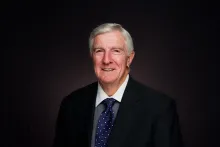
Before his retirement in 2021, Dr. Donald Ward pastored churches in Texas and Louisiana, and taught at Ambassador Bible College in Cincinnati, Ohio. He has also served as chairman of the Council of Elders of the United Church of God. He holds a BS degree; a BA in theology; a MS degree; a doctor’s degree in education from East Texas State University; and has completed 18 hours of graduate theology from SMU.
