
Don Ward
This transcript was generated by AI and may contain errors. It is provided to assist those who may not be able to listen to the message.
How would you feel if you had to live your life and know that no matter how you lived it, your death would be by crucifixion? Even though you were very zealous for God and quick to defend Jesus Christ, even though you were given the keys to the kingdom, and even though you were the instrument used by God to explain how one would receive the gift of the Holy Spirit on the day of Pentecost in 31 A.D., even though you were the instrument used to show that the Gentiles should also receive the Holy Spirit, and even through you great miracles were done, even through you a deceitful man and woman would fall dead at your feet as a witness to the church to show through whom God had placed his authority. And even though you were the apostle to the circumcision, the leading apostle and spokesman, and even though you had done all these things, God would permit you to live your life knowing your death would come through crucifixion. The apostle Peter lived his life of faith and hope with this knowledge.
So we title today's sermon, The Apostle of Hope and the Keys to the Kingdom. Let's note the prophecy in John 21 where Peter was told what manner of death he would experience. Jesus had appeared to them as they were fishing. Of course, Peter had led the fishing expedition. Let us go fishing. Think I'll go fishing. We'll go along with you. And Jesus appeared to them, and you know the story quite well. They were eating on the seashore of the fish that they had caught. Jesus began to challenge Peter, and so we entered the account here in verse 15.
So when they had died, Jesus said to Simon Peter, Simon, son of Jonas, love you more than these. And he said unto him, Yes, Lord, you know that I love you. And Jesus said, Feed my lamb. So this was repeated three times.
And we come down to verse 18, Verily, verily, I say unto you, when you were young, you girded yourself and walked where you wanted to. But when you are old, you shall stretch forth your hands, and another shall gird you and carry you where you would not. This spoke key. Jesus spoke this. Jesus spoke this prophecy of how Peter would die. This spoke key signifying by what death he should glorify God. And when he had spoken this, he said unto him, Follow me. And Peter did follow Jesus Christ, and he taught hundreds, yea, even thousands, and his words still ring loud and clear, and his example still rings loud and clear in our eyes and in our hearts today. The life of the apostle Peter proves that God has called us to eternal life and not to physical salvation. God has called us to eternal life and not to physical salvation. Peter is the apostle of hope. Yet he knew that no matter how he lived his life, the only way that he was going to get out of this world, out of this life, was through crucifixion.
The apostle of hope. Let's define hope. The Greek word translated as hope in the New Testament is elpis, or elpis, it is spelled, E-L-P-I-S, but it's pronounced elpis. It means earnest expectation. It means earnest expectation. It means that you are earnestly expecting something to happen, and that it stems from faith. The hope that the Bible talks about stems from faith. Please look now at 1 Corinthians 13, 13. 1 Corinthians 13, 13.
This was our class motto as a senior in high school. 1 Corinthians 13, 13. And now abides faith, hope, charity. These three. One stems from the other. Why do I have hope? Because I have faith, and we shall explore that. Now abides these three. Faith, hope, charity. All spiritual things spring from faith. Faith comes by hearing, and hearing by the Word of God. That's Romans 10, 17. Faith comes by hearing, hearing by the Word of God. Now abides these three things. Faith, hope, and charity. And the greatest of these is charity, agape, that is spiritual love. So faith stems from the Word of God. Faith comes by hearing, and hearing by the Word of God. So faith is based on the faithful promises of God. Hope is not wishing that such and such will happen. It is based on the promises of God. Look at Titus chapter 1. Titus chapter 1 and verse 1. Titus 1.1. And so we'll read 1 and 2 out of Titus. Titus chapter 1 verse 1. Paul, a servant of God and an apostle of Jesus Christ, according to the faith of God's elect and the acknowledging of the truth, which is, after godliness, in hope of eternal life.
And once again, what did we say? That the life of the apostle Peter dramatically proves that God has called us to eternal life and not to physical salvation. Does that mean that he does not wish for us to have a healthy and peaceful life and to prosper? No, it doesn't. But when all is said and done, it's about eternal life in hope of eternal life, which God that cannot lie promised before the world began. The plan of salvation is ancient in that sense. It goes way back. Jesus Christ lain from the foundation of the world. Peter's life dramatically shows that this hope was not set on this world. Peter internalized what Paul wrote in 1 Corinthians 15 and verse 9.
Perhaps you can already quote it. 1 Corinthians 15, 19, I said 9. It's 1 Corinthians 15 verse 19. If in this life only we have hope, we are of all men most miserable. If this is all there is to it, if this is all there is to it, to live in the flesh from 70 to 100 years, the average lifespan now, I think, for men is like 77 and women probably about 83. But if this is all there is to it, to live and experience the pains of the flesh, then there's not much to it, is there? So today we're going to contrast Peter's attitude with what some believe today, who place more value and emphasis on physical salvation, place of safety, protection from the great tribulation, and then on the hope of eternal life in the kingdom of God. Once again, we note that the apostle Peter was used powerfully by God to present the keys of the kingdom when the Holy Spirit was sent on the day of Pentecost, a man who was used to show that the same door was open to the Gentiles, a man who was used in performing mighty miracles, a man through whom people were healed with just his shadow passing over them. That's in Acts 5, I think it's verse 15, 19, somewhere along in there. So where was the apostle Peter's focus and what was his hope? Let's look now at 1 Peter. Peter writes two epistles, 1 and 2 Peter, and we want to look at 1 Peter chapter 1, and 1 Peter chapter 1, in verse 6. And of course, this applies to all of us today. There's not a person in here that has not faced or is facing some kind of great trial in their life, and in some cases it's a trial that has gone on for years. Didn't just start yesterday or last week, and if we just look at it humanly, physically, it won't be over tomorrow either. But we know that from recent happenings here in the local area, prayer is a powerful thing.
So in 1 Peter 1, 6, wherein we greatly rejoice though now for a season, if need be you are in heaven is through manifold trials, that the trying of your faith being much more precious than a goal that perishes, though it be tried with fire might be found unto praise and honor and glory at the appearing of Jesus Christ, whom having not seen you love, in whom though now you see him not yet believing you rejoice with joy unspeakable and full of glory, and hope as aware you can see in your mind's eye Jesus Christ, what he did, how he came, how he gave himself for us.
And it's very difficult to even comprehend and fully appreciate what he did. Receiving the telos, the result, the outcome of your faith, even the salvation of your souls, to have eternal life. We pick it up again in verse 17. So verse 17 through 25 we see more about who is our hope and what we should hope in. Verse 17, and if you call on the Father who with out respect to persons judges according to every man's work, pass the time of your sojourning here in fear, or as much as you know that you were not redeemed with corruptible things of silver and gold from your vain conduct conversation received by tradition from your fathers.
Of course, Peter was in Babylon when he wrote this, and writing to the Gentiles, even though he was the apostle to the circumcision, there were a large contingent of Jews in Babylon. Some had saved after the Babylonian captivity. There were Jews scattered all over the Mediterranean world. So we were not redeemed by tradition from our fathers, but with the precious blood of Christ as of a lamb, without blemish, without spot, who verily was foreordained.
That word foreordained is progenosco. Progenosco means to know beforehand, who verily was known beforehand before the foundation of the world, but was manifest in these last times for you, who by him it is through Christ do believe in God, that raised him up from the dead and gave him glory that your faith and hope might be in God.
Seeing you have purified your souls and obeying the truth through the Spirit unto unfeigned love of the brethren, that you love one another with a pure heart, fervently, as you heard in the sermonette, being begotten again, not of incorruptible seed, but of incorruptible seed by the word of God, which lives and abides forever. You look back at that last sentence there in verse 21, that your faith and hope might be in God. God and Christ are the ones who will bring us through, as we sang in the hymn, God will see us through.
The Apostle Paul lived and died for this hope. Do you know that much of the trial Paul experienced as he appeared before the Roman authorities centered on his hope of the resurrection, to be born into the family of God? Let's look at some of this in Acts 26. I'm sorry, first of all, in Acts 23. In Acts 23, in verse 6, I see a few of the highlights of Paul appearing before various Roman authorities on the way to being a prisoner in Rome and eventually death.
In Romans 23, in verse 6, but when Paul perceived that the one part were Sadducees, the Sadducees did not believe in the resurrection. Now how can you claim to believe in God, and all the things that are written in Scripture, not believe in the resurrection? And the other, the Pharisees, of course Pharisees believed in an afterlife, but had a view of it was not correct.
The other Pharisees, he cried out in the council, men and brethren, I am a Pharisee, the son of a Pharisee of the hope and resurrection of the dead. I am called in question. So the big question and the big argument and debate centered on Paul said, I am called into question over the resurrection from the dead. Look at chapter 24 in verse 14. 24, 14. And 24, 14, but this I confess unto you, that after the way which they call heresies, so worshiped I the God of my fathers, believing all things which are written in the law and in the prophets, and have hope toward God, which they themselves also allow, that there shall be a resurrection of the dead, both of the just and the unjust.
And herein do I exercise myself to have always a conscious void of offense toward God and toward man. So once again, this hope of the resurrection from the dead. You look at chapter 26 in verse 5. Acts 26 and verse 5.
Which knew me from the beginning, if they would testify, that after the most straightest sect of our religion, I lived a Pharisee. And now I stand and am judged for the hope of the promise made of God unto our fathers, unto which promise our twelve tribes, instantly serving God day and night, hope to come. For with hope's sake, King Agrippa, I am accused of the Jews. Why should it be thought of saying incredible with you that God should raise the dead?
To me, it is incredible that he had to defend and to the point of being threatened with death and imprisonment because he believed and had this hope of the resurrection from the dead.
Verse 9, I barely thought with myself, and I ought to do many things contrary to the name of Jesus of Nazareth.
Paul did many things contrary to the name of Jesus of Nazareth. Even, as you shall read in the next verse, testifying, turning testimony and witness so that some people who believed in Jesus were put to death.
Which thing I also did in Jerusalem in many of the saints, and I shut up in prison, having received authority from the chief priests, and whom they were put to death, I gave my voice against them.
But Paul had been struck down on the road to Damascus. Paul had learned his lesson.
Paul stood in hope of the resurrection from the dead. Look at chapter 28, verse 20. You might say that we have two apostles of hope, the apostle Peter and the apostle Paul. The two apostles who basically wrote a New Testament with regard to the letters in Christian living and what we should do. In Acts 28, verse 20, For this cause therefore have I called to you to see you and to speak with you, because that for this hope of Israel I am bound with chains. And they said unto him, We need to receive letters out of Judea concerning you, neither any of the brethren that came, showed, or spoke any harm of you, but we desire to hear of you what you think. For as concerning this sect, we know that every word is spoken against. And when they had appointed him a day, there came any of him unto his lodging, to whom he expounded and testified the kingdom of God, persuading them concerning Jesus both out of the law of Moses, out of the prophets, for morning till evening. And of course, the Messiah had been promised in the law and in the prophets, also in the writings. The book of Psalms had many references, and some believed the things which were spoken, and some believed not. And so for this hope, the hope of eternal life, the apostle Paul stood before the Roman authorities and gave witness after he was converted. Yet we have those who try to make merchandise out of God's people by dangling them over the threat of the tribulation, as if salvation was escape from the tribulation, or that salvation was to be healed every time that you're sick in the flesh, or to have every trial removed from you right now.
Look at 1 Peter. I don't know why I'm... 2 Peter chapter 2. In 2 Peter chapter 2, Peter writes of this, those who would make merchandise of you, brethren, we must keep our hope, our eyes, on that which Peter and Paul kept their eyes on, and that is eternal life in the kingdom, in the family, of God. In 2 Peter chapter 2 verse 1, But there a false prophet also among the people, even there shall be false teachers among you, who privately shall bring in damnable heresies, denying the Lord that bought them, and heap upon themselves swift destruction. And many shall follow their pernicious ways, by reason of whom the way of truth shall be evil spoken of. And through covetousness shall they with vain words make merchandise of you, whose judgment now is of a long time lingering and their damnation slumbers not. For if God spared not the angels that sin, but cast them down to Tartarou, and delivered them into chains of darkness, to be reserved unto the judgment, and spared not the old world, but saved Noah, the eighth person he preached of righteousness, bringing in the flood upon the world of the mighty, of the ungodly, and turning the cities of Sodom and Gomorrah into ashes, condemned them with their overthrow, making them an example unto those that after should live ungodly. So if God spared not that world, and if he spared not the angels that sinned, of course he will not spare those who make merchandise of God's people.
So what is your hope? Do you place more emphasis on the hope of escaping the Great Tribulation, or being healed in the flesh now, or on eternal life? It's absolutely amazing how people are attracted to mystical relief from the future. As one person said, don't worry about the future, it will always be there. You can rest assured it will be there, and it will be coming. But is your hope, is my hope, focused on the wonderful world tomorrow, beyond today, beyond this day, beyond this day of toil and tears, there is another world.
Now look at 2 Timothy chapter 4. There is a warning here in 2 Timothy chapter 4. There is an admonition and a warning. An admonition to the ministry, especially, and an exhortation, admonition, and warning to all of us.
In 2 Timothy 4.1, I charge you therefore before God and the Lord Jesus Christ, who shall judge the living and the dead at his appearing in his kingdom. Preach the word. Preach the word. Your word is truth. John 1717. Preach the word. Be instant in season, out of season. Reprove. And that word, reprove, is a lyncho. It means convict. Rebuke, exhort, with all long-suffering and doctrine, for the time will come when they will not endure sound doctrine, but after their own lust shall they heap to themselves teachers having itching ears, wanting to hear some new thing they think might be a new thing. And they shall turn away their ears from the truth, and shall be turned unto fables.
Why are people so caught up with wanting to know? So many of the people who surf the internet, and many of those who come to our sites, are in search of some kind of insight with regard to the future.
If we are in God and Christ, the future is secure.
In the messages to the seven churches of Revelation, the church at Philadelphia was promised protection from the Great Tribulation. Let's read that. In Revelation chapter 7.
In Revelation chapters, Revelation chapter, I think I said seven. I don't know why I'm having such time reversing things, but it's Revelation chapter 3 verse 7. Revelation 3 and verse 7. In Revelation 3 and verse 7, I and unto the angel of the church in Philadelphia write, write these things as... One of the things to know and to point out in these messages to the seven churches is that before each message in what you might call a salutation, there is given characteristics of Christ. Write these things as He that is holy, He that is true, He that hath the key of David, He that opens and no man shuts and shuts and no man opens.
Once again, look at these characteristics of Jesus.
He that is holy, He that is true, He that hath the key of David, He that opens and no man shuts and shuts and no man opens. I know your works. Behold, I've set before you an open door and no man can shut it. For you have a little strength. That word strength is dunamis in the Greek. It means supernatural power. You have a little supernatural power and have kept my word and have not denied my name. Behold, I will make them of the synagogue of Satan which say they are Jews and are not, but do lie. Behold, I will make them to come and worship before your feet and to know that I have loved you, because you have kept the word of my patience. I will also keep you from the hour of temptation or trial, which will come upon all the world to try them that dwell upon the earth. And Matthew 24 speaks of the great tribulation, a time of trouble such as never was before and never will be thereafter. Behold, I come quickly. Hold fast that which you have that no man take your crown. And he that overcomes will I make a pillar in the temple of my God, and he shall go no more out. And I will write upon him the name of my God and the name of the city of my God, which is New Jerusalem, which comes down out of heaven from my God. And I will write upon him my new name. He that hath an ear let him hear what the Spirit says under the churches. So in the salvation, in the salutation to the churches, characteristics of Christ are given. As we note in verse 7, one characteristic of Jesus is that he possesses the key of David. So what is the key of David? David was a king, and the key of David centers on how we might enter the kingdom of God and become a king and a priest.
Let's say it again. The key of David centers on how one might enter the kingdom of God and become a king and a priest. So let's now examine the key of David and the keys to the kingdom. Remember, Peter was given by Christ, and we'll read the verse later, the keys to the kingdom. So we go to Isaiah 22. Isaiah 22 has this expression, the key of David. We will see here that a lycheum was a type of the Messiah, and this evil Shebna, the treasurer, was to be put away.
In Isaiah 22, in verse 15, Thus said the Lord God of hosts, Go you unto this treasurer, even unto Shebna, which is over the house, and say, What have you here? And whom have you here? That you have hewed out a sepulcher here, as he that hews out a sepulcher on high, and that graves inhabitation for himself in a rock. So the treasurer, living quarters, was generally in the temple area, and Shebna had made himself quite a luxurious dwelling.
Shebna is symbolic of those who try to work things out for themselves, and for themselves, apart from God, in a sense symbolic of all earthly rulers under the sway of Satan the devil.
Read a little more here about Shebna. So he was making himself cozy. Verse 17, Behold, the eternal will carry you away with a mighty captivity, and will surely cover you. You're reminded of what Paul writes in Galatians. Be not deceived, God is not mocked, for whatsoever man sows, that shall also reap.
You know, one might live in luxury and splendor for 50 years, 70 years, however many years, maybe all of his life. But there is an accounting coming.
He will surely violently turn and toss, and it shall come to pass in that day that God is going to raise up a lyacim.
Shebna thought he had the keys to the kingdom. He was the treasurer, and sadly in the history of God's people, it seems that the treasurer oftentimes thought he had more power than he should have had, or more power than he thought he had. Of course, no one is ever over God. It's like Judas, who betrayed Jesus. He was looking at things from a physical point of view. Shebna was looking at things from a physical point of view. When they were anointing Jesus's feet, Judas complained, oh, you could have sold this precious ointment here for so much money and given it to the poor.
Of course, that was just a ruse.
In one sense, the treasurer does have a lot of power, and Shebna evidently did. But as we shall see, the plan of God gives us the keys to entering into the kingdom of God through Christ. So in verses 15, 16, 17, 18, 19, Shebna is put away, and in his place, in verse 20, it shall come to pass in that day that I will call my servant, Eliakim, the son of Hilkiah. And I will close him with your robe and strengthen him with your girdle. So God's true servant, Eliakim, a type of the Messiah here, and I will commit your government into his hand, and he shall be a father to the inhabitants of Jerusalem and to the house of Judah. And the key of the house of David, the key of the house of David, he who holds the key of David. We read it from Revelation 3.7. And the key to the house of David will I lay upon his shoulder, so he shall open and none shall shut, and he shall shut, and none shall open.
So let's look at some verses here that confirm what we've just read in prophecy. We go back now to Isaiah 9 verse 6. Hopefully you can keep ringing in your mind what we just read here along with Revelation 3.7. And we go to Isaiah 9 verse 6.
Isaiah 9.6, For unto us a child is born, unto us a son is given, and the government shall be upon his shoulder, and his name shall be called wonderful, counselor, the mighty God, the everlasting Father, the Prince of Peace, so the increase of his government and peace, there shall be no nian upon the throne of David, and upon his kingdom, to order it and to establish it with judgment and with justice from henceforth, even forever, the zeal of the Lord of hosts will perform it. So the government shall be upon his shoulder and upon him that he will, as we see here, he is the Prince of Peace. And we want to read that verse 6 again. For unto us a child is born, unto us a son is given, the government shall be upon his shoulder, and his name shall be called wonderful, counselor, the mighty God, the everlasting Father, the Prince of Peace. Now we go to Luke. We go to Luke chapter 1, and in Luke chapter 1, we see the account of the angel Gabriel appearing to Mary and apprising her of the fact that she is going to be the mother of the Messiah. The Promise One. There are many messianic promises. I read one of the most prominent one in Isaiah 9 verses 6 and 7. In Luke chapter 1 and verse 30, And the angel said unto her, For you are not Mary, for you have found favor with God, and behold, you shall conceive in your womb, and bring forth his Son, and shall call his name Jesus.
He shall be great, and shall be called the Son of the Highest, and the eternal God shall give unto him the throne of his father David.
And he shall reign over the house of Jacob forever, and of his kingdom there shall be no end. Of course, Mary is very disturbed about all of this because she's a virgin. Then Mary said unto the angel, How shall this be? I know not a man. And the angel said unto her, The Holy Spirit shall come upon you, and the power of the highest shall overshadow you. Therefore also that holy thing which shall be born of you shall be called the Son of God. Now we go to Acts chapter 2.
In Acts chapter 2, we see something similar here. In Acts chapter 2, of course, is the account, probably written by Luke, the account of the sending of the Holy Spirit, the day of Pentecost 31 A.D., and Peter's inspired sermon.
And a part of that inspired sermon deals with what we read from Isaiah 9, 6, and 7, what we read from Luke 1.30-35. And so we pick it up here in verse 29. Acts 2, 29.
Men and brethren, let me freely speak unto you of the patriarch David, that he is both dead and buried, and his sepulcher is with us out of this day. No, you don't go to heaven when you die.
Therefore, being a prophet and knowing that God had sworn with an oath to him that out of the fruit of his loins, according to the flesh, according to the flesh, Jesus Christ was descended from David, according to the flesh. He would raise up Christ to sit on his throne.
He, seeing this beforehand, spoke of the resurrection of Christ, that his seed was not left in Hades and the grave, neither his flesh did see corruption. This Jesus, both this Jesus, had God raised up, whereof you are all witnesses. Therefore, being by the right hand of God, exalted, and having received of the Father the promise of the Holy Spirit, he has shed forth this which you now see and hear. For David is not ascended into the heavens. And he said himself, of course David was also a prophet, The Lord said unto my Lord, Sit you unto my right hand, until I make your enemies your foots sool. Therefore, let all the house of Israel know assuredly that God hath made that same Jesus whom you crucified, both Lord and Christ.
Now we go to Acts 13. These are very sobering facts about what we are in hope of. We are in hope of eternal life. Jesus Christ made it possible for us to be reconciled to the Father, to receive the earnest of the Spirit, to have the down payment on eternal life, to eventually be resurrected as Christ was, as a glorious radiant Spirit being, to rule and reign with God and Christ in the kingdom of God forever and ever. In Acts 13, verse 26, Men and brethren, children of the stock of Abraham, and whosoever among you that fears God, to you is the word of this salvation sent. For they that dwell in Jerusalem and their rulers, because they knew him not, nor yet the voices of the prophets, which were read every Sabbath day. So once again, the prophets, the prophecies are there, the messianic prophecies of this one who would come on the scene. They have fulfilled them in condemning him. And though they found no cause of death in him, yet desired they pilot that he should be killed. And when they had fulfilled all that was written of him, they took him down from the tree and laid him in a sepulcher. But God raised him from the dead. And he was seen many days of them which came up with them from Galilee to Jerusalem, who are his witnesses unto the people. And we declare unto you glad tidings now how that the promise which was made unto the fathers, God has fulfilled the same unto us their children, and that he has raised up Jesus again as it is written in the second psalm. You are my son, this day have I, Gennao you, brought you to birth. Now in the second psalm, this day have I begotten you. The Hebrew word for begotten is yalad, y-a-l-a-d, and it's the same meaning as Gennao in the Greek. This day have I begotten you. I have brought you to birth. Gennao can refer to bringing to birth or to begetting, to engender or to beget, or to bring to birth. Revelation 1.5 says that Jesus Christ is the firstborn among many brethren, and it's concerning that he raised him up from the dead, no more to return to corruption. He said on this day, I will give you the sure mercies of David, wherefore he said also in another psalm, you shall not suffer your holy one to see corruption. For David, after he had served his own generation by the will of God, fell asleep and was laid unto his fathers and saw corruption. But he whom God has raised again saw no corruption. He goes on talking about the comparison between David and Christ. Jesus Christ fulfilled every prophecy to the absolute ultimate. Now we go back to Isaiah 22 and once again verse 22. Isaiah 22 verse 22. It is absolutely astounding, amazing, and to me one of the greatest proofs of the Bible and the existence of God and Christ and the whole plan of salvation is how that these prophecies are fulfilled so intricately to the letter just as written. So in Isaiah 22, 22, and the key of the house of David will I lay upon his shoulder. See, I read Isaiah 9, 6, and 7, and the government shall be upon his shoulder.
So he shall open and none shall shut. I read from Revelation, he shall open and none shall shut. Now we go to Matthew 16 verse 13. The apostle of hope and the keys to the kingdom. The keys to the kingdom were given to Peter by Jesus Christ and Peter gave the keys to the kingdom to the church. And we are following in those steps hundreds of years later. In Matthew 16 and verse 13, when Jesus came onto the coast of Caesarea Philippi, he said to his disciples, saying, whom do men say that the Son of Man am? And they said, some say that you are John the Baptist, some Elijah and others Jeremiah are one of the prophets. He said unto them, but who do you say that I am? And Simon Peter answered and said, you are the Christ, the Son of the living God. And Jesus answered and said unto him, blessed are you, Simon Bar-Jonah, for flesh and blood have not revealed it unto you, but my Father who is in heaven.
And I say unto you, you are Peter, little rock Petros, upon this rock Petra, big rock, will I build my church. And the gates of the grave, Hades, shall not prevail against it. Now the verse 19, verse 20, Now I will give unto you the keys of the kingdom of heaven, and whatsoever you shall buy on earth shall be bound in heaven, and whatsoever you shall loose on earth shall be loosed in heaven, and in charge see his disciples that they should tell no man that he was Jesus the Christ. From that time forth began Jesus to show unto his disciples how that he must go into Jerusalem and suffer many things of the soldiers, chief priests, and scribes, and be killed and be raised again the third day. So Peter, given the keys to the kingdom, which was given to the church of God, which is given to us today. And we turn once again to Revelation 3 and verse 7. Revelation 3 verse 7, once again, the keys to the kingdom, one of the characteristics of Christ, he held the keys to the kingdom. Revelation 3 verse 7, and to the angel of the church and to the angel of the church in Philadelphia write, these things says, He that is holy, that is true, He that hath the key of David, He that opens, and no man shuts, and no man opens. Now go quickly to John, the Gospel of John chapter 10.
As we turn there, we see that Jesus gave the keys to the kingdom in Peter and the apostles, and those who have followed in the steps of Jesus, the apostles and prophets have preached the keys to the kingdom through the ages. The key of David is a reference to how a person enters into the kingdom of God. Jesus Christ holds the keys to the kingdom. He is the door. He has opened the door, and no man can shut it.
And if he shuts the door, no man can open it. In John chapter 10 and verse 7, John 10 verse 7, Then said Jesus unto them again, Verily I say unto you, I am the door of the sheep. All that ever came before me are thieves and robbers, but the sheep did not hear them. I am the door. By me, if any man enters in, he shall be saved, and shall go in and out and find pasture. The thief comes not but for to steal and to kill and to destroy. I am come that they might have life, and that they might have it more abundantly. I am the good shepherd. The good shepherd gives his life for the sheep. As we have already noted, he was given the throne of his father David, and the increase of his government there shall be no end. The future of humankind and the future with regard to us rest upon the sacrifice of Jesus Christ of what he has done. Let's go now to 1 John 5 and verse 9. 1 John 5 and verse 9.
We have laid a background here with regard to hope and to the keys to the kingdom. We now begin to go into more of a direct application for each one of us.
In 1 John 5 and verse 9, if we receive the witness of men, the witness of God is greater. For this is a witness of God which is testified of his son.
He that believes on the Son of God hath this witness in himself. He that believes not God has made him a liar because he believes not the record that God gave of his son. And this is a record that God has given to us eternal life. And this life is in his son. He that hath the son hath life. He that hath not the Son of God hath not life. These things have a written unto you that believe on the name of the Son of God that you may know that you know that you have eternal life and that you may believe on the name of the Son of God.
You know, it's amazing the kind of abuse and twisting of Scripture that some people will go to when they're deceived into believing that some men have a line to God that they do not have. And some people are willing to go along with deception because it appeals to their intellectual vanity. They come to believe that some people have an insight into the future that they don't have. So once again, we're reminded of 2 Timothy 4, verse 4, for the time will come in which some will be turned to fables. The Church of God is a spiritual organism. It is the body of Christ. It is the temple of God and Christ. Now look at the Gospel of John, chapter 14, verse 23.
The Holy Spirit is oftentimes personified in the name of Christ.
But God and Christ, they are of the same essence. Both are holy. Both are spirit. It's the Spirit of God are in them.
So let's read here John 14. See from John 13, 14, 15, 16, 17.
We read during Passover the various things that Jesus was telling his apostles before he was betrayed and taken. So in John 14, verse 19, yet a little while and the world sees me no more.
But you see me because I live, you shall live also.
At that day you shall know that I am in the Father, and he is in me, and I in you. See, they are both in us. How? Through the Holy Spirit. He that hath my commandments and keeps them, he it is that loves me, and he that loves me shall be loved of my Father, and I will love him and will manifest myself to him.
And Judah said unto him, not as chariot, Lord, how is it that you will manifest yourself unto us and not unto the world?
Jesus answered and said unto them, If a man loved me, he will keep my words, and my Father will love him, and we will come unto him and make our abode with him. Now you look at 1 Corinthians 3 and verse 16, and we see that we are the temple of God, and that God and Christ do dwell in us. 1 Corinthians 3, 16, No, you not that you are the temple of God, and that the Spirit of God dwells in you. If any man defiles the temple of God, him shall God destroy, for the temple of God is holy, which temple you are. We are all joined together by that one Spirit, and therefore, members one of another, because we share that same essence that is in God, as in Christ, as in each one of us.
Why are so many people today more easily convinced by the physical than by the spiritual? Why are people much more apt to obey to protect their bodies than their minds and hearts?
It is the easy way out. It is a type of guess of, what, self-deception? You know, people who leave the church, many of them, they'll not eat pork. The two best-obeyed commandments. Be fruitful, multiply, replenish the earth. Everybody's good at that, generally. And secondly, thou shall not eat pork.
But they have no problem with trampling on God's holy Sabbath, plunging back into the world and wallowing in the mire. Why is that?
So let's examine what Peter and Paul emphasize in their testimony. The apostles Peter and Paul place far more emphasis on the hope of eternal life and the resurrection than on anything spiritual. We are admonished to be spiritually minded. Look at Romans chapter 8. Romans chapter 8. In Romans chapter 8 and verse 6, let's read 5. For they that are after the flesh, this is Romans 8.5, they that are after the flesh do mine the things of the flesh, but they that are after the spirit, the things of the spirit. For he, for to be carnally minded, his death, to be carnally minded his death, but to be spiritually minded, is life and peace, because a carnal mind is enmity against God, for it is not subject to the law of God, neither indeed can be.
Peter and Paul place virtually all their emphasis upon the spiritual. Why? Because the carnal mind is enmity toward the law of God, just as we've just read.
And we have already read Titus 1, verse 2, in hope of eternal life, whom God, God has promised, God who cannot lie has promised. Hope is a vital part of the armor of God.
Look at Ephesians chapter 6. The armor of God is described in Ephesians chapter 6. I would imagine you've read it many times. Do we get it? Do we understand it? We're focusing on the verse 17, a part of the armor of God, and take the helmet of salvation. Now, 1 Thessalonians 5, 8 defines the helmet of salvation. 1 Thessalonians 5, 8 says, hope, which is the helmet of salvation. Take the helmet of salvation. See, the helmet covers the whole head. What is it that permeates your thoughts and your being? Is it the hope of eternal life and the resurrection from the dead? That which Paul stood before the Roman authorities and gave witness and testimony. Why do I stand before you here today in hope of the resurrection from the dead? And take the helmet of salvation and the sword of the Spirit, which is the Word of God.
Peter knew what hope was all about and who our hope should be in. Peter and Paul hoped for the resurrection of the just and being born into the kingdom of God. We should not focus on claims of physical signs. We rejoice when one is healed, as we have today. We rejoice when God intervenes.
But that is not eternal life in and of itself. It may be a great witness and a testimony to some. And so many people, a great sign or miracle happens in their lives, or a great trauma occurs, and they turn to God for a season, and then they plunge back into the world.
We should focus on becoming as God is an eternal life. God's protection will depend upon our personal relationship with Him.
Now let's turn to the scripture in Zephaniah. You don't turn there every day. Zephaniah chapter 2.
Zephaniah, probably just before Haggai.
And Haggai is just before probably Zechariah, something like that. Okay, in Zephaniah chapter 2.
This is one of the few places in the Bible that directly says, here's what you've got to do.
You, by implication, you can read Revelation 12, which we read last week, I believe, that those who keep the commandments of God, Satan goes after them, the earth opens up and swallows the flood that was pursuing them. In Zephaniah chapter 2, verse 1, Gather together yourselves, O nation not desired. See, the nation of Israel, the physical nation, will be under great persecution. As we said last week, Satan will try to wipe out Israel physically and will try to wipe out the Israel of God, the church. Before the decree comes forth, before the day passes, the chap, before the fierce anger of the Lord come upon you, before the day of the Lord's anger come upon you. See, this is preparation. This can apply to the ten virgins. Ten had oil, I mean five had oil, five didn't. Seek you, the Lord, all you meek of the earth, which have wrought his judgment. Seek righteousness, seek meekness. It may be, it may be, you shall be hid in the day of the Lord's anger. So here, that's one of the great admonitions that you'll find in the Bible. So as we sit here this afternoon, are you filled with hope? Does the big picture of the kingdom of God, that expectation of what it's going to be like, of all the toil and tears of this life, are left behind? Faith and hope are handmaidens of victory and overcoming. This is a victory that overcomes the world, even our faith. That's 1 John 5 verses 4 and 5. Faith comes by hearing and hearing by the Word of God, Romans 10, 17. After conviction by the Word and spirit, the next step is obedience. If faith is weak, hope will be weak. If faith is weak, hope will be weak. Faith comes by hearing, hearing by the Word of God, in hope of eternal life, which God has promised, God who cannot lie. Faith and hope are reciprocal handmaidens. They go hand in glove. Justice, conviction, and commitment are handmaidens of courage. Hope and faith are inextricably linked together.
To the extent that you are convicted and committed, you will act courageously. To the extent that you are focused on the big picture and living by faith, you will have hope.
When you get your eyes off the goal, as Peter did, when for a while he walked on the water, then you begin to sink. So we can safely conclude that hope centers on believing God and keeping our eyes on the goal. Remember the Hebrews 11.6, which says, He who would come to God must first of all believe that He is, and He is a rewarder of those who diligently seek Him. You have to keep that focus, that promise. Hope requires singleness of mind. You cannot be filled with hope and be double-minded. James writes in chapter 1, a double-minded person, don't let him think not that he shall receive anything from God. Hope requires wholeheartedness. You have to put your whole heart in it. Here's what one author writes, Hope is kindled by tribulation, nourish through patience, and confirm through experience.
Let's look at that in Romans chapter 5. We'll see this very clearly in these few verses here. Romans chapter 5.
Let me read this again. Hope is kindled by tribulation, nourish through patience, and confirm through experience.
So look at Romans 5.3. And not only so, but we glory in tribulation, knowing that tribulation works patience, and patience experience, and this word experience is dokimae, it means proof testing, and this proof testing works hope. And hope makes us not ashamed because the love of God is shed abroad in our hearts by the Holy Spirit which has given us. Now to Romans 15.4. Romans 15.4.
Once again, you see how the Bible is woven together in a beautiful tapestry of line upon line and precept upon precept. In Romans 15 verse 4. For whatsoever things were written a foretime were written for our learning that you through patience and comfort of the Scripture might have hope. Now the God of patience, consolation, grant you to be like-minded one toward another according to Christ Jesus, that you may with one mind and one mouth glorify God, even the Father of our Lord Jesus Christ. Wherefore receive you one another as Christ all received us to the glory of God. Now verse 13. Now the God of hope, now be God of hope, fill you with all joy and peace and believing that you may abound in hope through the power of the Holy Spirit. So now we know that God and Christ are our hope, and our hope should be set on the everlasting kingdom of God and Christ. So let us all fan the fires of hope. We'll all be much happier if we do.
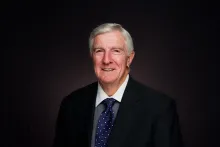
Before his retirement in 2021, Dr. Donald Ward pastored churches in Texas and Louisiana, and taught at Ambassador Bible College in Cincinnati, Ohio. He has also served as chairman of the Council of Elders of the United Church of God. He holds a BS degree; a BA in theology; a MS degree; a doctor’s degree in education from East Texas State University; and has completed 18 hours of graduate theology from SMU.
