

Daniel Apartian
This transcript was generated by AI and may contain errors. It is provided to assist those who may not be able to listen to the message.
Well, again, welcome to our new home. This is a church hall that has been given to us as a blessing from God himself. I'd like to begin this sermon today by all of us turning to a scripture. 1 Samuel chapter 12 and verse 22, if you will turn there with me. 1 Samuel chapter 12 verse 22, part of Samuel's address. And I think it is so very appropriate for God's people today, for you and I.
And as I look over the history of the Cleveland church for the last 47 years, I think this has ultimately applied. For Samuel chapter 12 verse 22, it says, For the Lord will not forsake his people for his great name's sake, because it has pleased the Lord to make you his people. Moreover, as for me, said Samuel, far be it from me that I should sin against the Lord in ceasing to pray for you, but I will teach you the good and the right way, only fear the Lord and serve him in truth with all your heart. For consider what great things he has done for you. Brethren, he has done not only great things in your life, but he has done great things for us as a congregation here in Cleveland. And to give you an idea of how far we've come through God's providence, I'd like to give you a brief history of the Cleveland congregation. It starts back at a time when the Radio Church of God was founded in January of 1934. A man named Herbert Armstrong began a radio program, and the radio program was called the Radio Church of God. He considered the weekly broadcast to be his weekly church service for believers, and he started out in Southern California. A month later, he published the Plain Truth magazine, and it was published sporadically as time and finances permitted. There sometimes were months and months and months that passed before another issue would come out, because it was depending on finances and time. And of course, he was the only one writing the articles, so his time was limited as well. Well, eventually, Herbert Armstrong moved to Pasadena, California, and he opened Ambassador College in October of 1947. His can-do attitude made it possible, because the truth is that he moved to California, and he didn't have 50 cents in his pocket. Through his sheer faith and will and determination, he opened a college. And before it was about to be opened, the fire marshal came in and condemned it. It needed so many repairs and upgrades, so then he went and wrote another fundraising letter, and eventually it was able to open in October of 1947. But his can-do attitude, because he thought big.
He didn't think with fear and doubt. He thought big. And that's what made it possible. He came to see the need for an educated ministry to shepherd the churches that were springing up as the result of this program, this radio program that was now going out beyond California to other states in the United States. Well, it continued to grow, and by 1957, there were 18 total congregations in the United States. Ministers were being sent out on baptism tours, as people would hear the program, but there were no local churches to attend, and they would write in and say, I would like to be baptized, and that's exactly what happened. So these ministers shepherded these new congregations and went out on baptism tours. In 1958, a pastor named C. Wayne Cole established a radio church of God congregation in Pittsburgh, PA. Now we're getting closer to home. And that first service there were about 40 people, just a handful fewer than we have meeting with us today. Church attendance in 1958 was about 4,000 people, virtually all in the United States. By the end of 1959, the radio church of God had 29 congregations and about 5,500 members, so it was beginning to pick up momentum. On July 4th of that year, that's 1959, the first service of the Akron congregation was celebrated. There were about 55 in attendance. Until that time, people in Ohio had been traveling to either Chicago or Pittsburgh for Sabbath services and Holy Days. How would you have liked to have lived at that time? Well, honey, I'm going off to Sabbath services in Chicago. See you on Tuesday! I'll bet that went over real well. But that's what you had to do if you wanted to attend a live church service. By 1967, about eight years later, the radio church of God now had 146 congregations. That's from 29 years earlier to 146, and it had about 40,000 members attending worldwide, about 35,000 in the United States, and about 5,000 as part of an international work.
Well, the number of believers in greater Cleveland was growing as well, and the Cleveland congregation, a very congregation, began on March 25th, 1967, and it was part of a three-church circuit. It was part of Akron Youngstown in Cleveland. The first pastor was a gentleman whose name was David Antion. He's the older brother of Gary Antion, and he was the first pastor of the Cleveland congregation. In January of 1968, the radio church of God was renamed the Worldwide Church of God. And as I said, the first pastor of the Cleveland congregation was David Antion. He was also the pastor of Akron. He was part of that three-church circuit. He was transferred during the summer of 1969, and the second pastor, his name was Bob Steep. And Bob Steep was the pastor when I began attending in November of 1971 at the age of 17 years old. So from then on, I remember the history, and I'm thankful to be part of that history. And by 1995, greater Cleveland had two congregations with a total of over 850 people attending them as part of the two congregations. As the Worldwide Church of God imploded, the United Church of God congregation in Cleveland was started in May of 1995 with 113 people in attendance. So for 47 years, the Cleveland congregation has mostly rented buildings. We leased a building for over three years in Berea. And now, at last, because of this blessing from God, we have our own church home. Only a very small percentage of UCG congregations have their own church building to worship in. So we are incredibly blessed. We are just one of a handful. This building is owned by the United Church of God and International Association. And we are the stewards who are entrusted to care for it. The blessing is ours to be here and to care for it. Well, that's the history of the Cleveland congregation. How about the history of this physical building? I thought you might find some of the history of this building a little bit interesting. This facility was built for the Midview Assembly of God congregation in 1959. The original church building was entirely in what is known now as the Worship Hall. This room that we're in, everything was here. The bathrooms were in the back. There was seating for social for potlucks in the back of this room. And everybody did everything in this one room right here. But they were growing. In time, in 1961, just two years later, they doubled the size of the building, adding on the West Wing, which includes what we call the Social Hall, the kitchen, classrooms, and the nursery. Eventually, the Midview Assembly of God Church decided to sell this building. And in June of 1972, a local Baptist congregation that was meeting down the street almost in downtown Grafton decided they needed a bigger facility. And a gentleman named Pastor Waddles applied for a loan, an incredible loan, of $38,500 to buy this building. And he was given the loan. And he was purchased by the Southern Baptist and became known as the Grafton Baptist Church. Later, the picnic pavilion was added on the side, which is very lovely. The facility has 5,700 square feet, and it sits on 1.8 acres of land. So we have plenty of room and plenty of land. In time, the congregation of the Grafton Baptist Church dwindled and closed over a year ago. It has been closed since that time and was almost sold to another religious organization last March, but their financing fell through. Their loss has become our blessing today. So how should we view this blessing? What does this church building mean for us? Let's go to Philemon, chapter 1, verse 1. If you'll turn there with me, Philemon, chapter 1, verse 1.
Philemon, chapter 1, verse 1.
Paul begins this letter. He says, Paul, the prisoner of Christ Jesus, and Timothy, our brother, to Philemon, our beloved friend and fellow laborer, to the beloved Athea. Now, that is a female name, and many scholars believe that she was Philemon's wife.
And our kippus, they believe that this may have been the son of Philemon, our fellow soldier, and to the church in your house. The church that Paul speaks of here in Greek is Ecclesia. It doesn't mean a building. It doesn't mean their house. It doesn't mean this facility that we're meeting in. It means the called-out ones. It means the living church, the saints of God, the called-out ones. And at this time, they were small enough to assemble in the home of Philemon. Now, their homes were not 2,000 square foot dwellings like we have so common here in the United States, so this tells us there may have been a congregation of 10 to 12 people, but they met in a home. And the reality is, is on a good day, we have 60 plus people. There are too many of us to meet in any one of our homes. I've made the offer to Mr. Graham, but he told me no. But there are just too many of us, all kidding aside, to meet in anyone's actual home. Well, our gracious Father has given us a new home to meet in, this building. And again, it can comfortably hold about 150 people. If we pack them in, it can hold 160, a little bit tight in the pews. But this building is not the church. Yet it is a church building because it's a building where the ecclesia, the called-out ones, assemble to worship him on the Sabbath. So we want to understand that we're very appreciative of this building, but this building is not a temple. This building is not a sanctuary. In a loose phrase, we could say it's a sanctuary in that it is where the ecclesia dwell to worship God and ask for his presence and his spirit during services. But we don't want to make more out of the building than it actually is. It's a wonderful church building for us to use and enjoy as a gift from God. But we should never put the building above the people because the people are what the church of God actually is. Let's go to Luke 12 and verse 42. So I want to ask the question again, so how should we view this blessing? Luke 12 and verse 42.
Jesus draws an analogy here, talking about, through this parable, about a time when he will return how good of managers his saints will have been. Will they have been good managers? Will they have been doing what Jesus Christ wants them to do? Or, as Mr. Dillingham mentioned, will they have lost focus? Will they have become secular? Will they have forgotten what they were supposed to focus on? It says here in Luke 12 and verse 42, and the Lord said, Who then is that faithful and wise steward whom the master will make ruler over his household to give them their portion of food in due season? That's a question. Who is? What qualities will that wise and faithful servant have? Verse 43, blessed is that servant whom the master will find so doing when he comes. Meaning when Jesus Christ comes back. I'm going to read verses 42 and 43 from the translation God's Word. The Lord asked, Who then is the faithful skilled manager that the master will put in charge of giving the other servants their share of food at the right time? You see, the analogy of this parable is, who are those whom God will entrust to be leaders, to serve alongside Jesus Christ in the world tomorrow, and to teach the physical people and to rule and manage the kingdoms and the villages and the cities of this earth so that people can learn about God? Who are those kind of people? What qualities do they have? Verse 43 from the translation God's Word. That servant will be blessed if his master finds him doing his job when he comes. You see, brethren, we've been given a job to do. We have been called to preach the gospel. We have been called to be lights to each other, to encourage each other, to love one another. We have been called to be lights to our community. We have not been called to coast through life. We have not been called to hunker down and wait for Jesus Christ to return. We have not been called to hide ourselves or to bury the truth of God as if it's some great Gnostic secret. And you have to know the magic word in order to come to church or in order to learn the things of God. We have been called to a great commission, and that commission is to preach the gospel to the entire world. And the last time I checked, though I'm a product of the Cleveland school system, the world also includes greater Cleveland. Does it not?
Verse 44. Truly I say to you that he will make him ruler over all that he has. Someone who, when Jesus Christ comes back, that when the master finds him so doing his job when Jesus Christ comes back, it says he will make him ruler of all that he has. God wants to share eternity with us. Everything that God the Father has and that Jesus Christ has, they want to share with their family. They want to share with the saints. Verse 45. But if that servant says in his heart, my master is delaying his coming and begins to beat the male and female servants, becomes arrogant, becomes demanding, becomes controlling, and to eat and to be drunk just starts coasting, starts becoming like everyone else in the world, eats too much, drinks too much, becomes secular. Verse 46. The master of that servant will come on a day when he is not looking for him, and at an hour when he is not aware, and he will cut him in two and appoint him his portion with the unbelievers. Now that's not very pretty, is it? But it basically says that if you have this precious gift of God's Spirit given to you and you don't use it, you are no better than an unbeliever. Your reward will be the same. Verse 47. And that servant who knew his master's will and did not prepare himself or do according to his will, shall be beaten with many stripes. So you see, we're accountable for what we know.
Verse 48. But he who did not know, yet committed things deserving of stripes, shall be beaten with few. For every one to whom much is given from him, much will be required. Brethren, we've been given much. We've been phenomenally blessed over the past three and a half, four years. We have been blessed with this church hall that now we get to use for a long, long time, hopefully until our Lord Jesus Christ literally returns to earth. So again, it says, for everyone whom much is given from him, much will be required, and to whom much has been committed of him, they will ask the more.
So as your pastor today, I'm asking you for the more. I am asking you now that we have been given this blessing to turn it up a notch. I am asking that this congregation breaks through an invisible cultural barrier that we have and becomes the kind of light and example that we can be to the world, and the light and example that we can be for caring for each other as God's people. We are accountable for what we know and for what God has given to us. Brethren, the incredible blessing of this building was obviously the master's will. It came out of nowhere. We weren't even looking for a church to buy. We were looking for someplace to lease, and we looked and looked and looked, and we found a place that we thought would be perfect for us in Parma, and we made two offers on it, and the owner said no. We had basically run out of options, and then we drove down Grafton Road one day and saw a phone number on that sign out front and began to think big. Instead of thinking small, instead of our self-imposed little mindset of what's right and what's wrong and what you can do and what you can't do, we finally broke through and started thinking big.
Just like Herbert Armstrong did, when he had nothing financially and moved to California and decided to build, of all things, a college campus from a man who never graduated from high school himself. That's pretty lofty goals, isn't it? And he did it because he thought big.
Virtually everything about this purchase fell into place. There were no major obstacles, just simple, important tasks that needed to be done step by step. So what will we do with this gift that God has handed to us on a platter? We have been given much, and God expects much from his congregation. We need to prepare the bride of Christ, that's each other, for the wedding supper. We read about that in Revelation chapter 19. We need to preach the gospel like never before and not be ashamed of it. Jesus Christ expects nothing less from us, brethren. Jesus said, to whom much is given, much is required. So are we ready for the task that's ahead of us as God's people? Are we ready to step it up a notch? Or will we say, oh wow, we've got our own church building now. Why, we can even lock the doors. Why, we can just sit back because we are so spiritually blessed. We can just sit back and coast because life is good.
We've been blessed so much. We have people that have been baptized for the last few years. We have people that are counseling for baptism. We have our own building. The congregation is growing. It's strong. Let's just coast for a while. Let's just take it easy. Is that what we should do, brethren? Let's go to Luke chapter 12 and verse 16. Let's go back a few verses in Luke chapter 12 and verse 16, another parable. And we don't want this a parable to apply to us as God's congregation. And then he spoke a parable to them, saying, the ground of a certain rich man yielded plentifully. And he thought to himself, saying, what shall I do since I have no room to store my crops? I've done it all. So he said, I'll do this. I will pull down my barns and I'll build bigger. And there I will store all my crops and goods. And I will say to my soul, soul, you have many goods laid up for many years. You are really rich. You can take it easy for a while. You can coast. Take your ease, eat, drink, and be merry. But God said to him, fool, this night your soul will be required of you. Then whose will those things be which you have provided? In other words, your kids will have your inheritance spent before your body is cooled off. All that work you did, all that hard work, planning and preparing and thinking you were building some type of wealth network of some sense of security. He says, it all goes away when your heart stops beating.
Then what happens to it? Verse 21, so is he who lays up treasure for himself and is not rich toward God. And, brethren, as God's people in the Cleveland congregation of all things, yes, we have been spiritually blessed. Yes, we are spiritually rich and we've come a long way the last few years, but we must never forget that our goal, our purpose, our mission is to be rich towards God. The rich man was given many blessings and he became self-satisfied.
He said, I'm going to take it easy. I'm going to coast through life and forget about the one who made all of these blessings possible. I've seen that happen in nations. I've seen that happen in families. I've seen that happen in church organizations. And the end result is a downward spiral and a blowing apart. We should never forget who makes our blessings possible.
We've not been given this blessing to coast or become self-satisfied. We are spiritually rich with God's truth, but we can't rest on our laurels. We cannot rest on where we are today. As blessed as we are, we have to look forward. We have to be forward thinking. We must think big and not paralyze ourselves with fears or anxieties or doubts.
We have not been given this building to hide our light under a basket. Let's go to 2 Corinthians chapter 5 and verse 17. 2 Corinthians chapter 5 and verse 17.
2 Corinthians chapter 5 and verse 17, Therefore, if anyone is in Christ, he is a new creation. Old things have passed away. Behold, all things have become new. You know, this applies to our congregation. I wouldn't normally do this, but I'm going to ask all of you who have been baptized during the past three and a half years to stand up for a minute. If you've been baptized since the time we were at Pelret Parkway, I would like to ask you to stand up.
Our congregation is growing. In the past three years, we've had 11 baptisms. That's almost 25% of the adults who attend our congregation. Some were long-time attendees who made a commitment to Jesus Christ, including Nancy and Dan and Joe and Maria. And thank you for making that commitment. The rest of you can sit down. Thank you. However, out of that 11 total, includes seven individuals who have been baptized with little or no previous Church of God experience. They are Frank and Autumn, and Sherry and Cliff and Fred, Jonathan and Larry. And on top of that, both Lula and Sherry are counseling for baptism. Brethren, my point is that this is the living Church of God in greater Cleveland. I am your pastor. I do not believe I've been called to be a spiritual undertaker, presiding over a dying Church congregation. I would resign immediately if I felt that's what my role was to be. I have no intention of being a mere caretaker. I want to see growth because the Father wants to see growth, and the Father is still calling children. Some people say that God's end time work has ended. Some people say that the Father is no longer calling children. Some people say that there's no longer a reason to powerfully preach the Gospel. I say to those people, let them come to Cleveland because they're wrong.
God has great things planned for us as His people. Verse 18, Now all things are of God, who has reconciled us to Himself through Jesus Christ, and has given us the ministry of reconciliation. That's not just my calling, that's your calling, a ministry of reconciliation. That is that God in Christ, reconciling the world to Himself, not imputing their trespasses to them, and has committed to us the word of reconciliation. We are God's mouthpiece. We are the living examples of what repentance can do to a person's life, how repentance can change someone's life, and how they can receive God's Spirit, and they can become living and dynamic and purposeful people. It's through our lives and our calling that God is pleading through us to the world. And that includes to our families and our community. Verse 20, Now then we are ambassadors for Christ as though God were pleading through us. He is pleading through us to the world. We implore you in Christ's behalf, be reconciled to God, for He made Him who knew no sin to be sin for us, speaking of Christ, that we might become the righteousness of God in Him.
So again, brethren, we are God's church. We are the mouthpiece the Father is using to tell the world to repent and to become reconciled to their God. Our lives, our examples, our calling is to allow the Father to plead to the world to repent through us as His instruments. We cannot coast. We cannot crawl into a bunker. We cannot be ashamed of what we believe.
We have to be living examples, dynamic ambassadors who represent powerfully and convincingly the kingdom of God. Let's take a look at another scripture here.
Let's go to Luke chapter 5 and verse 30.
See another episode in which Jesus talked about the need for change. Luke chapter 5 and verse 30.
Luke chapter 5 and verse 30, and their scribes and Pharisees complained against His disciples. Usually they took pot shots at Jesus Christ Himself. Now they're taking shots at His disciples, saying, why do you eat and drink with tax collectors and sinners?
What planet did they live on? What artificial world did they dwell in? Every human being I've ever met is a sinner, including yours truly. What kind of self-righteous artificial world did they dwell in? Did their minds grasp and form around?
The scribes and the Pharisees, they lived in the past. Their oral law proclaimed that you were to have nothing to do with unbelievers. They were exclusivist. They figured and believed that everyone else was the great unwashed. They were inferior to them. They were self-righteous. Again, their thinking was selfish. It was exclusive. They were out of touch with reality. Verse 31, Jesus answered and said to them, those who are well have no need of a physician, but those who are sick. Brother, humanity is sick. The human race is sick because it is forgotten. It's God.
Because it is not reconciled to its creator. And each man does according to what he wants to do. And that's why we have all the chaos and confusion that we have in our world today. Verse 32, he said, I have not come to call the righteous, but sinners to repentance. Then they said to him, why do the disciples of John fast often and make prayers? And likewise, those of the Pharisees, but yours eat and drink. Again, they lived in the past and they judged righteousness.
Their definition of righteousness was by how much you show others that you fast and make sure that you look emaciated and all tired. Make sure you miss your hair up a little bit. Maybe put an ash on your forehead. Look like you're playing the role of the martyr. Oh, I've been fasting all day. Wow! Was he righteous? That's what they wanted. That's what they were looking for because they lived in a parallel universe. The land of goofiness is what they lived in. Why do the disciples of John fast often and make prayers? And likewise, those of the Pharisees, but yours eat and drink. Again, their thinking was selfish, it was superficial, and it was judgmental.
Verse 34, he said to them, can you make the friends of the bridegroom fast while the bridegroom is with them? But the days will come when the bridegroom will be taken away from them and then they will fast in those days. And of course, they would be taught by Jesus not to play the role of the martyr when they fasted and not to make a big show of the fact that they were fasting.
Verse 36, then he spoke a parable to them. Jesus said it's time to help them to realize that they're living in an artificial world of their own construction. No one, he said, puts a piece of new garment on an old one. Otherwise, the new makes a tear, and also the piece that was taken out of the new does not match the old.
If you know much about garments, you know that if you have a garment, you've washed it a number of times, it's not going to shrink anymore. It has shrunk as far as it's going to go. And if you put a new piece of material on that, you stitch it in and you wash it, the new material shrinks and it pulls the stitching right out of it. Plus, old garments, they tend to be more faded than even if you found the exact original color and material of that garment and you patch it in, it's probably going to be noticeable.
That's what Jesus Christ is saying here. He says, and no one puts new wine into old wine skins or else the new wine will burst the wine skins and both will be filled and the wine skins will be ruined. Old wine skins are not flexible. They're rigid, like some people that I've known in my lifetime. They no longer can breathe. They're rigid, they're inflexible, they're bitter. And new wine has still got a little bit of fermentation.
It's got a little bit of jazz inside of it. And you pour that expanding fermentation in that old wine skin and it just bursts right open. What you have to do is you have to have a new wine skin that is still flexible, that will stretch so that when the bubbles of the new wine expand and ferment that that new wine skin can move along with it and can stretch it out. Verse 38, but new wine must be put into new wine skins and both are preserved.
Brethren, we have to begin to think big. We must not be a church that lives in a bunker. For 47 years, we were a transient congregation. Every week we moved into buildings. We set up, we took down, we left. During the week, in the eyes of most people, we vanished. We were gone.
We had no presence or impact into the community. It became part of our culture and it defined us in the eyes of visitors as not being for real or not being very stable. I think it defined us in thinking that we were underdogs. It defined us sometimes almost in being embarrassed for keeping the Sabbath. It almost gave us a persecution complex. When there was little or no persecution at all, we invented it and we took small situations and blew them out of proportion because we had old thinking. Old wine in old wineskins. And my brothers and sisters in Christ, it's time for new wine. It's time to put that new wine in a new wineskin.
Are we ready to move forward, brethren? Are we ready to change the future and get rid of old thinking? Are we ready to stop making excuses for the kind of growth we can have by misquoting what Jesus said about his little flock? It's one of the burs that's under my saddle for many years. Jesus said in Luke 12, verse 32, fear not little flock. Oh, and the reason we're not growing is Jesus said fear not little flock. That is an excuse. In a world of 7.1 billion people, 10 million in this world, believers, would be a very little flock in a world of 7 billion. In greater Cleveland, 2.8 million people live in eight surrounding communities and counties. A congregation of only a thousand people out of 2.8 million would be a very, very little flock.
We must stop living in doubt because it becomes a self-fulfilled prophecy. If you lack faith, if you think small, your results will be small. If you step out on faith and you think big, like Herbert Armstrong did when he moved to Pasadena, California, and like we saw the kind of growth in congregations that occurred in the 50s, if you're positive and you have faith and you think big, that also becomes a self-fulfilling prophecy. So for the rest of the sermon, I would like to talk about some first steps we can do to put new wine into new wineskins. New wine into new wineskins. Let's go to Galatians, chapter 6 and verse 7. Galatians chapter 6 and verse 7.
Paul wrote, Do not be deceived, God is not mocked, For whatever a man sows, that he will also reap. He who sows to his flesh will of the flesh reap corruption. If what we sow is a bunker mentality, is fearful, is trying to take that pearl of truth and bury it, trying to take our talent and bury it into the ground, then the result will be little or no growth. It says, But he who sows to the spirit, will of the spirit reap everlasting life, and let us not grow weary in while doing good, for in due season we shall reap if we do not lose heart. Therefore, as we have opportunity, let us do good to all, especially to those who are of the household of faith.
Doing good. Being a light in an example is doing good. Preaching the encouraging good news of the coming kingdom of God and being part of that is doing good.
Or are we weary of well-doing? Are we going to say, Yeah, in the 70s we had the Plain Truth magazine and Doctors, or we had it everywhere, and I did that once in a while. I don't want to do that anymore. I've already done that once. Are we weary of well-doing? Or are we willing to think big? Verse 10 from the New Century Version, it says, When we have the opportunity to help anyone we should do it, but we should give special attention to those who are in the family of believers. Notice there's a two-fold exhortation from the Apostle Paul. Let's take a look at the first one, which is to do good for the household of faith. Our ability, our priority, should be to encourage and support and help one another as believers. And in my heart, I believe we are doing a really good job with this as a congregation because I hear the feedback of people. Someone loses their job. Someone helps them. People give them a little cash to help them out. People bring food to them. Someone's lonely to get a phone call. Someone's discouraged. Someone calls them to pick them up. Run people on errands. To do the little things that mean so much. As a congregation, we've been doing a good job in that. Thank you. Your examples are inspiring, but we want to step this up to even another level. And that's why we're going to have a committee that focuses on the needs of people who are going through a personal crisis in their lives called the Serving Brethren Committee. Ephesians chapter 2 and verse 4. He'll turn there with me. Ephesians chapter 2 and verse 4.
Scripture we're familiar with because once again it encourages us to do good works because that is why we were created. That's God's workmanship. It says, but God who is rich in mercy because of his great love with which he loved us, even when we were dead in trespasses, made us alive together with Christ. For by grace you have been saved and raised up together and made us sit together in the heavenly places in Christ Jesus, that in the ages to come he might show the exceeding riches of his grace in his kindness towards us in Christ Jesus. Our reward is in heaven with Jesus Christ. He will bring that with him when he returns. Verse 8. For by grace you have been saved through faith and that not of yourselves. It is a gift of God, not of works, lest anyone should boast. For we are his workmanship created in Christ Jesus for good works. That's for serving each other, caring for each other, which God prepared beforehand that we should walk in them. I'm going to read verse 10 from the New Century Version. God has made us what we are. In Christ Jesus, God made us to do good works, which God planned in advance for us to live our lives doing. Again, that's from the translation of the New Century Version. You see, we too are one of God's great works. God not only has a great work, an international work of preaching the Gospel, but you too are part of God's work. God is building you. He's building you up. He's building character in you. And we show those good works when we serve one another, when we love one another. And we also do that when we serve our community in ways in which we have an opportunity. And yes, brethren, we all experience regular trials and problems. We all have our own cross to bear. Some of us are facing financial problems, marriage problems, career problems, child-rearing problems, health problems, other challenges. But what sets us apart and allows us to grow through these experiences, while other people become bitter, who go through the same experiences, is that Spirit of God within us that helps us to have those spiritual fruits. And that includes joy and peace and long suffering, no matter what we're going through in our lives.
The other thing that Paul mentioned in Galatians 6.10 that we read is he said, therefore, as we have opportunity, let us do good to all. Isn't it amazing? In the story of the Good Samaritan, which we read in a sermon a few months ago, that the priest ignored the person laying on the side of the road. The Levite ignored the person laying on the side of the road. And it was a Samaritan, one of the most despised people in the nation, who had the compassion to go and help that perfect stranger, serving in the way that he could as opportunity provided.
Paul said that we should do good to all. And we've done a pretty good job over that. The last three years, we do give a small monthly donation to three different community food banks. And we have done that for years. Month after month, we rotate between three community food banks. And it's done on behalf of the United Church of God, Cleveland. And that's a way that we can serve. And we've been doing that for a long time. Like I say, over years. We've had fundraisers for cancer in the last few years, other worthy causes. But, brethren, we can do more. And we can be proud of who and what we are in the calling that we've been given. You know what I want that sign to say out front? I want that sign to say Saturday Sabbath Services, 1230 p.m. Cleveland.ucg.org.
People will drive by that, as I've told a few of you. There are probably a million lapsed Seventh-day Adventists who grew up in the Seventh-day Adventist church, and they strayed. But they understand the Sabbath. They know they should keep the Sabbath. They're out doing their own thing. Just this week, that road opened out front, both ways, and I was stunned at the amount of traffic continually, all day, both directions, down Route 57 here. And we want that sign to proudly introduce people to the Seventh-day Sabbath, so they know who and what we are about. We want to boldly tell this community who we are and how they can learn more about the truth that we have. We want to do some fundraisers for the community, as opportunity provides. We want people in the community to say those Sabbath keepers are enthusiastic, committed, caring, faithful people. I think I'm going to stop by Saturday and get some of their literature. Maybe I'll go Saturday and I'll see what one of their services is like. We should never underestimate the Father's desire to call others by our example. We need to get our booklets in the Good News magazine in this community, because this is now where we live. Perhaps in Sparklemark, there are a number of doctors in Grafton, the Village Library. We need to prepare for another Kingdom of God seminar, not just for this community, but for all of Greater Cleveland. We certainly have the room and the parking now to handle anyone who shows up. This is the reason we have a public proclamation committee, because, brethren, we need to think big and we need to turn it up a notch.
Matthew chapter 5 and verse 12. Matthew chapter 5 and verse 12.
Rejoice and be exceedingly glad, for great is your reward in heaven.
For so they persecuted the prophets who were before you. So no matter what happens to us, if somebody walks in Sabbath services in a month and disrupts Sabbath services, for us that should be like water off a duck's back. Those kind of things are just going to happen if you were boldly proclaiming the Gospel of the Kingdom of God. As your pastor, if people want to come to church and they're peaceful, I am not going to require a blood test mother's maiden name, jump through three fiery hoops and read 20 booklets that come to church. That is just not going to happen. He says, you are the salt of the earth. Salt is a preservative. We have been called to preserve the truth of God. We have the authentic teachings of the first century church of God. We hold and cling on to that knowledge and that truth, and it is our calling as salt to preserve it. Another quality of salt is that it seasons, enriches the taste of something. It's our responsibility to put the good news of the Kingdom of God in the way that we discuss with people in a format that they can understand in an exciting way that inspires them and motivates them. That is what seasoning does. It takes something that might normally be flat, and it gives it some zest. It gives it a little bit of excitement. He says, but if salt loses its flavor, how shall it be seasoned? If you once were salty and you lose your ability to preserve the truth, you lose your ability to season the words in a way that can reach people and have a powerful impact on them. He says, how can it be restored again to its saltiness? It can't. It is then good for nothing to be thrown out and trampled underfoot by men. You are the light of the world. A city that is set on a hill cannot be hidden. This little building is a city that is on a hill. To this community, we are called to be a light, proudly, boldly, because we're going to think big.
Verse 15, nor do they light a lamp and put it under a basket. How would that help anyone? A picture that you light a lamp, brighten up a huge dark room, and then you take a bushel basket and you put the basket over the lamp. Why would you do that? But, he says, you don't do that. You put it on a lampstand. You put it high so that the light radiates a long way in that darkness.
On a lampstand, and it gives light to all who are in the house. Now, who did he include as part of his house? Let's allow the next verse to show us. Let your light so shine before men. It doesn't say, let your light so shine before other believers, other congregations. It says, before men. That's humanity. That's everyone. That they may see your good works and glorify your Father in heaven. We cannot do that if we are the world's biggest secret.
More than any time in our congregation's history, we need to be a bright light to a dying world. The warm glow of God's truth will attract those whom the Father is calling, and they will come because the Father is still calling children today. Will they find a loving family here to nurture them and to teach them to care for them? I believe that they will.
There's one final example I'd like to give of new wine in a new winescan. If you'll turn to 2 Chronicles 34, verse 8. God has given us this home. We're not going to make it a temple. We're not going to make it a palace. We're not putting gold leaf on the ceilings or onyx on the walls or anything of that nature. We're not going to spend extravagant amounts of money, but we will make it a place of dignity that reflects God and his people.
And we will keep it clean. The family of God worships here every Sabbath, and the community out there is observing how well we update and maintain and improve this building. We need to be responsible citizens and stewards of the gift that has been given to us. You know, all physical buildings fall into need for repair. Anything physical eventually begins to fall apart. I'm reminded of that every morning when I look into the mirror. And that's also true for buildings, including God's temple. And when it's a place that God's people gather, there's an obligation to keep it updated and maintained because it's a reflection on God and a reflection on his people.
2 Chronicles 34, verse 8, says, in the 18th year of his reign, this is Josiah, the reformer, when he had purged the land in the temple and he sent Safran the son of Azaliah and Messiah the governor of the city and Joah the son of Jehoaz the recorder to repair the house of the Lord his God.
Verse 9, when they came to Hilkiah the high priest, they delivered the money that was brought into the house of God which the Levites who kept the doors had gathered from the hands of Manasseh and Ephraim from all the remnant of Israel, from all Judah and Benjamin, and which they brought back to Jerusalem.
So they had an offering, and the offering was to take this temple that had been neglected and abused for so many years and make it beautiful again to give it dignity. And continuing now, then they put it in the hand of the foreman who had the oversight to the house of the Lord and they gave it to the workman who worked in the house of the Lord to repair and restore the house.
They gave it to the craftsmen and builders to buy hewn stone and timber for beams and to floor the houses which the kings of Judah had destroyed. And the men did the work faithfully. We'll stop right there. And that's what we need to do. Again, we're not going to spend extravagant amounts of money. This is not a headquarters building.
This is not a temple. It's not a palace. It is a simple church home for God's humble congregation in greater Cleveland. And we are very appreciative to have this gift. Slowly but surely we will maintain and improve this building. And we won't do it by diverting funds for the church, for the work, but by our monthly allowed subsidy to our local congregation, which all local congregations have and are allowed. And also at the same time, if people want to give offerings to help us do that, that's okay too.
The total cost of the mortgage, interest, insurance, and taxes on this property is less than most congregations pay out in rent. It was a phenomenal deal. And we need to care for this gift that God has given us, and that's the reason for the Building Maintenance Committee. There's one final scripture that sums up our message today, and it describes where we are in the Cleveland congregation in this year 2014.
If you'll turn to Philippians chapter 3 and verse 13 with me, Philippians chapter 3 and verse 13. Paul referring to himself, but by extension, I would like to draw a parallel with our congregation today. Philippians chapter 3 and verse 13. He says, I do not count myself to have apprehended. That means I'm not there yet. I haven't attained the goal. And as the congregation, we've done some wonderful things. We've had some great growth. We have a wonderful blessing given to us, but we're not there yet. We can't think big.
We can make a self-fulfilling prophecy built on faith and belief and actions to make good things happen, to do our part, and then allow God to do his part. He says, but one thing I do, forgetting those things which are behind. He says, I stopped living in the past. I have stopped dwelling on the old wine and old wineskins. I have learned to let it go. I have learned to open my horizons. Forgetting those things which are behind and reaching forward to those new wineskins, to those things which are ahead.
Brethren, God has great things planned for this congregation. He has growth planned for this very hall for all of you to have more brothers and sisters in Jesus Christ to love and fellowship with. I believe with all of my heart that the best is yet to come, that God is not done. And that can only happen if we do our part and we reach forward to those things that lie ahead. And we don't allow our self-limited beliefs and attitudes and fears all symbolized by that old wine and old wineskin. We don't let that hold us back and keep us down. Verse 14, I press towards the goal for the prize of the upward call of God in Christ Jesus. Therefore, as many as our mature have this mind, give up the past and start being forward-thinking, start looking forward. As many of our mature have this mind, and if any of you think otherwise, if you want to just relive past episodes of happy days over and over again, he says God will reveal even this to you. So we've got to let go of those things that hold us back as a people and as a congregation. This is a red-letter day for the Cleveland congregation. For over 40 years, I've heard brethren say off and on, it would really be nice to have our own church building.
Well, it's not only would be nice. The day has finally arrived, and even the afternoon has brought us the bright sunshine cascading through these windows. We have received a good gift from above.
As the Apostle James said, every good and perfect gift is from above, coming down from the Father of the heavenly lights who does not change like shifting shadows. I would like to conclude this sermon today with a congregational prayer, if all of you would please bow your heads. Our loving and gracious and merciful Father, we praise You. We give You all honor and glory. And as Your people of this congregation, we thank You with all of our heart for the gift You have given us of this building in which Your church, Your people, Your ecclesia can come each and every Sabbath day to worship You and to give You honor and all glory. We thank You for it, Father, because we know that You are the Father of lights and it is a good gift and for our congregation a perfect gift. We ask for Your very special blessing upon this congregation. We ask for Your blessing upon this building. May it always be viewed by each of us as a place that we can come to leave this world, to leave the cares and anxieties and frustrations of this world outside the doors. And that when we walk into this building and come among Your children, that we embrace them and that we spiritually are fed and nurtured. May teaching, may inspiration, may encouragement always be heard throughout the halls of this facility. May Your Spirit dwell among Your people. May You always look down upon us as the jewel in Your crown. Thank You again, Father. We pray for safety for each of us. We pray that You will help this building to be protected from thievery, protected from things of this world which may seek to harm it. We will have faith that You will give us protection, Father, that You will bless us, and we will do our part in making sure that it is secure. But we pray that You will always guide us as Your children, as Your congregation in Cleveland, and that You will help us to take this gift and use it as an opportunity to think big and to prepare those whom You will continue to call, to prepare them for Your family, to prepare them to become the bride of Jesus Christ. So again, thank You for this gift, and thank You for those whom You have called in this Cleveland congregation and given Your Spirit and opened up their hearts and minds to accept You and Your way of life. And we ask this in the name and by the authority of our Savior, our soon-coming King, our Lord, in the name of Jesus Christ, we pray. Amen.
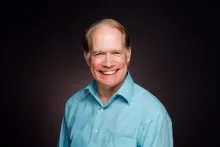
Greg Thomas is the former Pastor of the Cleveland, Ohio congregation. He retired as pastor in January 2025 and still attends there. Ordained in 1981, he has served in the ministry for 44-years. As a certified leadership consultant, Greg is the founder and president of weLEAD, Inc. Chartered in 2001, weLEAD is a 501(3)(c) non-profit organization and a major respected resource for free leadership development information reaching a worldwide audience. Greg also founded Leadership Excellence, Ltd in 2009 offering leadership training and coaching. He has an undergraduate degree from Ambassador College, and a master’s degree in leadership from Bellevue University. Greg has served on various Boards during his career. He is the author of two leadership development books, and is a certified life coach, and business coach.
Greg and his wife, B.J., live in Litchfield, Ohio. They first met in church as teenagers and were married in 1974. They enjoy spending time with family— especially their eight grandchildren.
