

Don Ward
It seems that in today’s world no one is held accountable. However, God has called us into His marvelous light and entrusted His precious truth with each one of us. We are responsible and accountable for preserving these precious truths. This sermon identifies many of these truths and urges believers to remain faithful to our calling and discern the times in which we are living.
This transcript was generated by AI and may contain errors. It is provided to assist those who may not be able to listen to the message.
The title of the sermon today is, Are You Accountable? Are You Accountable?
Let's turn to Matthew 12 and verse 36. Matthew chapter 12 verse 36.
In Matthew 12 verse 36, we will see something about accountability in the Word of God.
In Matthew 12 verse 36, I say unto you that every idle word that men shall speak, they shall give account. In other words, they shall be accountable thereof in the day of judgment. For by your words, you shall be justified, and by your words you shall be condemned or judged. So we have to be careful what comes out of our mouth.
President Trump and the governor of Tennessee have recently pardoned a list of people who have committed crimes. In short, they have said you are acquitted. Among those is a famous concert singer named Jelly Roll. Jelly Roll has lost part of his jelly. He's now slimmed down a bit. They are no longer accountable for their crimes. They no longer have to pay a price. In a like sense, God has pardoned our sins, but he says you are accountable for future sins. In other words, you must repent and stop sinning. Being accountable covers every aspect of our lives. So let's take a closer look at accountability. Responsibility and accountability are closely connected. You are responsible for certain duties, and if you don't fulfill them, you may be accountable for your lack of responsibility and have to pay a price. So responsibility is the task, and if you don't fulfill the task, then you are accountable for not fulfilling the task. And depending on who your master is, you may have to pay a price for not fulfilling the task. In today's world, it seems like almost no one is accountable. ICE, which stands for Immigration Customs Enforcement, arrests a lot of people with a long backlog of arrests and crimes that they have committed, and certain people among us begin to cry out about ICE, and they want ICE removed. They want Immigration Customs and Enforcement to be removed from society.
So once again, I ask, are you accountable? How much do you know about the purpose, plan, and providence of God? If you're sitting here this afternoon, then you are accountable for knowing about it, because your presence here is bearing testimony to the fact that you say you do know about it. Do we realize the importance and greatness of God's creation? Let's start with the creation, especially humankind. Why is the creation of humankind so important to God? In Christ, it is because of God's desire to have a spiritual family, to have his very own children. And that plan is so mind-boggling that it is beyond description, almost with regard to human beings. We can't really fully describe it, and oftentimes we don't really appreciate it, but we really need to know about God's plan, his purpose, and the providence of God. The plan of God is to bring every person that has ever lived into his creation. That is the principle. I said that backwards. The purpose of God is to bring every person that's ever lived into his family. And the plan is, how do you get there? And a lot of that has to do with accountability. He created the earth for man because he knew that he wanted to have a spiritual family. Here's what the Expositor's commentary writes, The other great truth with which Moses teaches is that man was the chief work of God, for whose sake all else was brought into being. The work of creation was not finished till he appeared. All else was preparatory to this final product. It culminates with you being born into the family of God. So the purpose of humankind is to be born into the family of God. It is a spiritual birth. It is the second birth. It is being born again. We also can ask ourselves, how much do you and how much do you understand about the plan, purpose, and providence of God, and how much do your children know about the plan and purpose and providence of God? You are responsible. That is your task. You are responsible for teaching them. We look at Deuteronomy chapter 6 and verse 1. Deuteronomy chapter 6. Remember, in essence, Moses restated the law in Deuteronomy. Deuteronomy has a lot of instructions for us, and one of the things here has to do with teaching.
Deuteronomy 6 and verse 1. Now these are the commandments, the statues, and the judgments, which the Lord your God commanded to teach you that you might do them in the land where you go to possess it. That you might fear the Lord God to keep the statues and commandments which are commanding you and your son and your son-son all the days of your life, that they may be prolonged. Then we see further in this chapter verse 6, And these words which I command you this day shall be in your heart. Now the words were not written in our hearts until Jesus Christ came and the Holy Spirit came upon us, as it says in Hebrews, both in chapters 8 and chapters 10, that the law of God is written on our inward parts today in our hearts. God, from the get-go, wanted the law of God written on our inward parts, and he gave instructions about that. Now verse 7. And you shall teach them diligently unto your children, and shall talk at them when you sit in your house and when you walk by the way, and when you lie down and when you rise up. So all the time, really 24 hours a day, we're to be teaching living the law of God. I really wonder how well our children understand about their reason for being, and how much do we understand, and how thankful are we for our reason for being. Our reason for being is to become a son and daughter of God. And when I learned that, and I learned it somewhere in the late 50s, early 60s, that our reason for being is to become a son of God, it made all the difference in the world. And I wonder how well we communicate that understanding to our children, and how important it is, and how much do we really understand it and appreciate it. In the past, we placed a great deal of emphasis on memory work with our youngsters, and they could recite the books in the Bible. They could list all the books in order. Old and New Testament, they could recite the Ten Commandments, the Holy Days, and to a large degree, tell you what they symbolized. One time I had, well, in several classes, I was way back dating to the time I was teaching in high school and junior high in high school before I taught in college, both in the world and both at Ambassador. I write an essay on is learning remembering or is remembering learning? Of course, you can be a quite intelligent person and not have a very good memory, but it sure helps to have a good memory and to learn certain things that you can call out at demand. You don't have to look it up on Google or anything else. Learning is categorized by psychologists into three domains, three domains for learning. The cognitive domain or what we call brain learning head knowledge. Head knowledge is what you know. Cognitive domain, the affective domain, A-F-F-A-C-T-I-V-E, the affective domain, application of knowledge and behavior. How well do you put to practice what you know? And then the psychomotor domain, that is the ability to perform physical skills. In the church, as a general rule, we have been very high on cognitive knowledge and low on the affective domain, that is putting our knowledge to practice in our lives. And all of us have had difficulty. I know I have difficulty in translating what I know into constructive, positive action. Almost everyone knows more than what they actually practice. And so, in some ways, our greatest challenge is to close the gap between what we know and what we do. All of this is summarized by the great questions of life. Can you answer?
Are you responsible for? Yes, you're responsible for. And if you meet God and Christ in the judgment, can you recite? What is the purpose? I doubt they ask you to recite it, but what is the plan, purpose, and providence of God? And how do you summarize it with these seven great questions? And the first one is, does God exist? And that's a take-off in Hebrews 11.6. He who would come to God—this is quoting Hebrews 11.6—he who would come to God must, first of all, believe that he is and that he is a rewarder of those who diligently seek him.
So, from that, we can extract these questions. God's existence. You're sitting here today because you believe that God exists. And furthermore, who is God? God is our Father. He is the Creator. What is God? God is Spirit. And he is provided a way whereby we can become spirit beings, and that is his purpose. And the corollary to that is who is man, what is man, and what is his purpose? Well, man is made from the dust to the ground. He has the ability to think, to reason. He can even think about life after death. And what is man made from the dust to the ground? His purpose is to become a son, a spirit-born son or daughter of God. That is his purpose. And all of this, as I've said, is verified by Hebrews 11.6. We seem to be a people who really get excited about new knowledge and new plans and new programs, but we seem to have great difficulty in implementing those plans. Following through and persevering was something we seem oftentimes, and oftentimes we seem to fall short.
Now, knowledge is a wonderful thing, but you know it says in 1 Corinthians 8 and verse 1. 1 Corinthians 8 verse 1. This should be a memory scripture for everybody. Knowledge puffs up, knowledge puffs up, but charity edifies. Knowledge puffs up. Oh, I know this and I know that.
Charity, that is becoming love as God is love, as it talks about in 1 Corinthians 13 verses 1 through 3, is a different thing. So to become love is what really our actual purpose is to become love as God is love. It says in Matthew, what, I think it's 3.48, Matthew 3.48, Come you therefore perfect as your Father in heaven is perfect. I'm not sure about the chapter, I'm pretty sure about the verse. Come you therefore perfect as your Father in heaven is perfect and God is perfect. It says that twice in 1 John chapter 4 verses 8 and 16.
So we seem to be a people that really get excited about some new thing. Do we live to hear some new thing? Well, Paul encountered a group of people in Athens who lived to see and lived to hear some new things. So if you turn to Acts 17, it's Paul's visit to Mars Hill. After he had been kicked out of one place, he winds up at Mars Hill where the great thinkers and philosophers of the day would gather.
Now we are in Acts 17, I'll start in verse 16. Now while Paul waited for them at Athens, his spirit was stirred in him when he saw the city wholly given to a dollar tree. Therefore, disputed, he end the synagogue with the Jews and the devout persons and in the market daily and with them that met with him. Then certain philosophers of the Epicureans and the Stoics encountered him. The Epicureans eat, drink, and be merry. Tomorrow we may die, live it up right now. The Stoics, on the other hand, were aesthetic people who believed that you should suffer the body to purify it and if you got pure, if you became pure enough, you could get back to God.
And some said, what will this babbler say? Others, he seems to be a center forth of strange gods because he preaches unto them Jesus and the resurrection. Of course, the resurrection became a sticking point for a lot of people. The Pharisees didn't really believe in the resurrection, but the Sadducees did. And they took him and brought him in unto Auropicus, saying, may we know what this new doctrine whereof you speak of, or you bring certain strange things to our ears, we would know therefore what these things mean for all the Athenians and strangers which were spent their time in nothing else but either to tell or to hear something new.
Now, that is not our purpose. Knowledge puffs up, charity edifies. It's good to have the knowledge, but it's more important to put that knowledge to work when they work hand in glove. You can't have one without the other. So we seem to be people that's excited about hearing new things. And Paul warned about this. We go to 2 Timothy 4 and verse 3. 2 Timothy 4 and verse 3. And we'll see what Paul says here to the young evangelist Timothy in 2 Timothy chapter 4 and verse 3.
Well, we ought to read verse 2. Preach the Word. That's the admonition to the ministry. Preach the Word. How many preachers do we have in today's world that really don't preach the Word? And if they preach the Word, they twist the Word and it really make the gospel into a sham. Be instant, end-season, out-of-season, reprove, or rebuke.
Exhort with all long-suffering and doctrine. Reprove and rebuke. Reprove means that your message is so powerful and so insightful that it convicts the person of what they're hearing. For the time will come when they will not endure sound doctrine, but of their own lust shall they heed to themselves teachers having itching ears. And they shall turn away their ears from the truth and shall be turned unto fables. But watch you in all things endure afflictions, do the work of an evangelist, and make foolproof of your ministry. Are we making foolproof of our ministry? Our responsibility is to teach. And earlier in the epistle here to Timothy 2 Timothy chapter 1 chapter 2 verse 1.
You therefore my son be strong in the grace that is in Christ Jesus and the things that you have heard of me among many witnesses. The same commit you. In other words, teach it to the same commit you to faithful men who shall be able to teach others also. Now we have grown up in an organization in which basically we have said, well, the great teachers come from headquarters and Mr. Armstrong has said that God teaches me and I will teach you.
And we sort of waited back to see, well, what is he going to say? It even came to the point and I have the copies from the worldwide news about this where he claimed that he was sitting in the seat of Peter and embraced the Petrine Doctrine. That was toward the end of his life. But no man is infallible and we must rely on the Word of God. And God is teaching all of us if we allow it. But you have to pursue, you have to seek, you have to search the scriptures whether these things be true.
So really that word commit there to other men, that word commit really means to place in sacred trust, to place in sacred trust. He is committed to you, the truth, the truth of God. And you know so many things.
Now we have had people who know many things and become self-righteous in their ways because they know things and other things that other people don't seem to know.
It is just mind-boggling. I know that I invited my brother to come to his wife, my brother and wife, to come to our family Thanksgiving as much family as we could gather. And he said, well we just can't make it. It's too late and I'm scheduled to teach Sunday school this coming Sunday, Sunday after Thanksgiving. With all his heart, mind, soul, and soul means being, life potential. He will teach that class thinking that he is teaching the truth. But he will believe in immortal soul. When you die, you go to heaven, you go to hell, one or the other, and so on it goes. But we have been a people. We know certain things that other people don't know and we are responsible for. And then we become accountable for what are we going to say to Christ and to God the Father at Judgment Day. In some ways, you really don't understand the Judgment Day. And I don't really completely understand it either. You have that Judgment where Christ separates the sheep from the goats and says, in that you have done it unto the least. He's my brethren. You have done it unto me. But it seems that if you are resurrected, you are in the family of God. And God is then going to judge you. If you're in the family of God in the resurrection, this is my understanding, will judge you on your works and what you have accomplished with what he has given you to do. So he's given you the responsibility. Are you accountable for fulfilling the responsibility that he has given you? Commit these things to other men who will be able to teach others also. We must not ever forget what God says in Matthew 22 and verse 16. Matthew 22 and verse 16 says, many are called, but few are chosen. Revelation 17 and verse 14, this is a picture of Christ coming again. When he comes again, those that are with him are called, chosen, and faithful. Call, chosen, and faithful. They have been accountable for what they have been given. In addition, at times maybe we have given an air of superiority with regard to some knowledge of prophecy and world affairs. And it seems like now we've basically fallen into the other ditch where we hear very little about prophecy and world affairs, and we're talking about what we need to do with nuts and bolts. What we need to do is cry aloud, spare not, and preach the word of God as it says in Scripture. 17.
What I am saying here is this. We know that these things can be good, that is, knowledge and knowledge. But if you think knowledge is in and of itself the essence of salvation, then you're sadly mistaken because you're accountable for what you know.
We're commanded by Jesus to watch and pray. Some people just say, well, I'm going to bury my head in the sand. I'm not going to pay any attention to what's going on in the world. I've got enough troubles of my own. But Luke 21 verse 36 says, watch ye therefore and pray always that ye may be accounted worthy to escape all these things that are going to come upon and try the Son of Man. So we need to be watching and need to be praying.
So have you communicated a self-righteous attitude or air to your children, somehow believing that as long as we hang around the church, we will inherit eternal life. Well, nothing could be farther from the truth. It's not just hanging around the church. Are you an active doer? Because we are... Now, the Old Covenant was a national covenant, and the high priests went into the Holy of Holies on the Day of Atonement once a year to make sacrifice for Himself, the people, the tabernacle, and so on. But here, since Jesus Christ came, He is our Passover, and we can come boldly before the throne of God anytime day or night. So the New Covenant is individual and specific. It is individual and specific. At the same time, we're supposed to fit into the body as a whole, as a beautiful tapestry of woven together in unity. But let's notice in Ezekiel 14 and verse 13, Ezekiel 14 verse 13, where we see that salvation is a matter of individuality. Salvation is a matter of individuality. This is Ezekiel 14 verse 13. Son of man, when the land sins against me by trespassing grievously, then will I stretch out my hand upon it, and will break the staff of bread thereof, and will send famine upon it, and will cut off men and bees from it. Though these three men, Noah, Daniel, and Job, were in it, they shall deliver but their own life-essence by their righteousness, saith the Lord God. Seeth the Lord God. Soul is the word soul. Nay fish is used often in the Old End, Sukei, in the New Testament. It's used for animal life and human life. It's an air-breathing creature. You do not have an immortal soul. But you do have a life-essence within you, and those who have never heard the gospel will be resurrected, and they'll have an opportunity to understand whether they're going to accept God and Christ and the Word of God, to be convicted, repent of their sins, exercise faith in the sacrifice, be baptized, and receive the laying on of hands, yeah, in the millennium. But it's individual and specific, the New Covenant, to enter into a fold just because Mom did attend church. No, that's not going to get you there. You have to go all the way yourself. Proverbs 29 and verse 1. Proverbs 29 and verse 1. We see if those three righteous men are in it.
It's interesting that these three people are pointed out as being righteous. And Proverbs 29 and verse 1, He that being often reproved hardens his neck shall suddenly be destroyed and that without remedy. Some people go around and say, as long as I'm not baptized, I'm not accountable. Yes, you are accountable if you have heard, if you've sat and listened to the truth. Now, if God is the one who calls and the one who convicts, and how does he convict, how shall they hear without a preacher, how they should believe in him and whom they've not heard? So they have to hear the gospel, hear it preached, but that gospel must convict them of sin, and then they have the duty of acting upon it whether or not they're going to act on it. So they are accountable to God for what they know. Let's read this scripture again. He that being often reproved hardens his neck shall suddenly be destroyed and that without remedy. And it's like that some people are convicted that this is the truth and this is the way I should go. But as long as I'm not baptized, I'm not accountable. Yes, you are accountable for what you know. And if you know the plan, purpose, and providence of God, you better be careful what you do. There was a time when we believed that our knowledge of dietary laws would keep us from getting various diseases. But I don't believe most of us would believe that now. Of course, our diet is so polluted with so many different things that it's unbelievable.
And we're losing the battle, even though the president has appointed someone to try to make America healthy again. That movement is the MAH, the Ma movement, make America healthy again. However, a good diet will surely help and we should eat the best foods we possibly can. But the problem arises when we try to make food into righteousness. Because you eat the right diet, that is a form and it should be done, but that will in and of itself will not get you into the kingdom. We seem to have forgotten the lesson, or don't forget the lesson, that righteousness comes from God and requires more than ritualistic obedience. You could eat a perfect diet and still be breaking the commandments. God is the one who opens minds and hearts. Now, this is quite amazing, and I often think about this in conjunction with young people and the calling into the truth and all of that. If you would turn to Luke 21 and verse 36, Luke 24 and verse 44. Luke 24 and verse 44.
And he said unto them, These are the words which are spoken to you, while I was yet with you, that all these things must be fulfilled which were written in the law of Moses and in the prophets and in the psalms or the writings. So God is the one who placed the Old Testament into a threefold division, law of prophets, psalms, or writings, then opened their understanding. They had been with him for three and a half years, and he opened unto them their understanding.
They didn't really understand. You remember Peter said, Oh, that'll never happen to you. You'll never be crucified. That can't possibly happen to you. And Christ said, Get behind me, Satan.
You don't know what you're talking about. Then opened he their understanding that they might understand the Scriptures. And of course, we're all familiar with Matthew 644. No man can come to me except the Father, draw him. So God opens the minds and hearts. Reaching the goal of eternal life requires surrender, submission, service, for which we are accountable. There's no getting around it. Now, in today's world, if you're found guilty of a crime, you may go to jail. But in the world to come, those who do not accept, and even in this world today, those who know and do not accept, do not hold themselves accountable, will fall into difficult times and experience the second death, for which there is no resurrection.
Reaching the goal of eternal life, as I've already said, requires surrender, submission, and service in mind and heart. Now, look at once again in the book of Timothy. Paul had a lot to write about this time. First Timothy chapter 1 and verse 5. First Timothy chapter 1 and verse 5, where Paul is instructing Timothy, now the end of the commandment. And that word end is Talos, and it should be translated, the outcome or the result. The outcome or result of the commandment is love. In other words, how do we know how to love God? Because the commandment says, you shall love the Lord your God with all your heart, mind, soul. The second is like unto it, you shall love your neighbor as yourself. And we know that charity, we know 1 John 3-4, which says that sin is the transgression of the law. Keep the commandments, because it's through keeping the commandments that you learn how to love God. Love God with all your heart, mind, and soul. Love the commandments and the outcome, the result of keeping the commandments. For this is the love of God, as it says in 1 John, that we should keep His commandments, and His commandments are not grievous. That is the way to love. Let's continue here again. First Timothy, I'll start from the beginning, verse 5. Now the result or outcome of the commandment is charity, out of a pure heart and of a good conscience, and of faith unfeigned. Unfain means you don't expect anything in return.
It's unfeigned. I don't expect anything to be returned to me.
From which some have swerved, having turned aside, and to vain jangling, desiring to be teachers of the law, not understanding neither what they say nor what they affirm. But we know the law is good if a man use it lawfully. You're not to use the law to try to beat anybody over the head. Now we have had people who sue one another for divorce.
We clearly understand, do we clearly understand, the importance of the family unit, and do we understand that the marriage covenant is sacred and a lifetime commitment? It says, until death do we part.
Matthew 19 6 makes that very clear. Let's turn there and read that in Matthew 19 verse 6. In Matthew 19 verse 6, verse 6, Wherefore they are no more twain but one flesh.
You come together as one flesh consummate the marriage, what therefore God has joined together, let no man put asunder. They say unto him, Why did Moses then command to give a writing of divorcement to put her away? He said unto them, Moses, because of the hardness of your heart, suffered you to put away your wives. From the beginning it was not so. It says very clearly in Matthew chapter 4 that you are to have one wife.
Do we know in practice the God-ordained structure in marriage? We are accountable for it.
Remember that responsibility sets the task. Accountability is whether or not you fulfill the task, what is going to happen.
If the task is not fulfilled sufficiently, there's going to be trouble. In the family, the parents are to set the discipline, and the children are to follow the discipline. But the children must understand that if they don't follow the discipline, there is accountability, there are consequences, and you may get whatever the parent decides. Anything from corporal punishment and spanking, which is basically gone by the boards in today's world, and you could be tried for assault, but you have to be careful. How you spank, where you spank, when you spank, what part of the body you spank, and on and on it goes. Do we understand as thoroughly as we should the roles of father and mother? Do we understand and practice the guard-ordained principles for child rearing? In short, we are accountable for all of these things before God. Are we deeply convicted and committed to following God's way in all aspects of our lives? And as I said in recent years, some have sued for divorce. Now we go to 1 Corinthians 11, where God gives the hierarchical structure of the family structure. The family structure is hierarchical. A lot of people don't like the word hierarchical. It means from the highest to the lowest, but it's in the scripture.
In 1 Corinthians 11 and verse 1, Be who follows of me, even as I also am of Christ. Now praise you, brethren, that you remember me in all things, and keep the ordinances as I delivered them to you. But I would have you know that the head of every man is Christ. And he gives it in reverse order. The head of the woman is the man, and the head of Christ is God. So it is in hierarchical order. God is the head of Christ. Christ is the head of man. Man is the head of woman. Parents are the head of children, and they should rear them, teach them.
We are accountable for what we do. So we go to Ephesians chapter 6.
Ephesians chapter 6, and we see further the structure of the family.
Children, obey your parents and the Lord, for this is right.
Honor your father and mother, which is the first commandment with promise.
I remember as a child, I never wanted to do anything that would cause my parents shame or harm.
And so if I did do something wrong, I surely tried to keep it secret, not to say that I was perfect, because surely all have sinned and come short of the glory of God.
But that is a goal that you have to keep the commandments, to keep the commandments. Honor your father and mother, which is the first commandment with promise, that it may be well with you and you may live long on the earth.
And you fathers, provoke not your children to wrath, but bring them up in the nurture and admonition of the Lord. So parents are advised to bring children up in the fear and admonition of the Lord, and you are accountable.
You are accountable. Now, parents can grow up in the same family and go their—I mean, children can grow up in the same family and go their separate ways. And that has happened a lot of times. And a lot of us have children that have gone their separate ways. They have left the church. The church, they have left the truth that they really once knew and were baptized and all of that.
But we still are accountable to teach them the right way. It says it very clearly.
To bring them up in the nurture and admonition of the Lord. And so we are accountable.
When I was coaching in the world—and I did this when I coached some at Ambassador—coaching in the world, I had one of the star players on the football team. He also played baseball and perhaps could have gotten a scholarship for baseball. But he had chosen football. Alabama offered him a scholarship. And he started as a running back and was the running back for Alabama for three years in 1668, 1669, and 17. Ed Morgan.
One day, as I was turning off the main street to go down to the high school—it was baseball season— it was a senior year. Of course, football was over. I would have been in a pickle if football season was going on and he was doing this. But it just happened that we were stopped at this red light and looked over there at the car that was waiting. I was going this way and he was coming in at this angle. And I saw him puffing a big cigarette. So I called him in the next Monday morning and said, Ed, well, I saw you smoking.
And so you know what the rules are.
So you won't be with us on baseball season this year. And of course, that was—there were other things. It's three strikes and you're out. There were other things, so that was the third strike. But he was a very important person with regard to athletics in our program. And as I said, starting running back at Alabama for three years, 68, 69, and 70.
So we have had people, as I mentioned earlier, that confused a lot of things with righteousness.
So we have seen here from Scripture that we are accountable for the family unit and for our children.
James cries out in James chapter one, and, be doers of the word and not hearers only. We are good hearers, good hearers. And the Bible talks about being hearers and being good hearers.
But accountability oftentimes, we don't think much about here being about being accountable much of the time.
Being doers of the word. Ezekiel 33, if you would turn there, Ezekiel 33.
Here, of course, the book of Ezekiel is a warning to the whole house of Israel. And for that matter, to the nations that they had better return to God.
In Ezekiel 33, verse 31.
Let's start in 30. Ezekiel 33 and verse 31.
Ezekiel 33, I said 31, I mean 30. Ezekiel 33 and verse 30.
And you, Son of Man, the children of your people still are talking. Now, this word against is a mistranslation or a bad translation. Still are talking concerning you by the walls and in the doors of the houses. And speak one to another every one of his brothers saying. So they wasn't speaking against them, as you'll see here. Come, I pray you, and hear what is the word that comes forth from the Lord.
And they come unto you as the people comes. And they sit before you as my people. And they hear your words, but they will not do them. For with their mouth they show much love, but with their heart they are given or they go after their covetousness.
And lo, you are unto them as a very lovely song of one that has a pleasant voice and can play well on the instrument. For they hear your words, but they will not do them. And, brethren, none of us must fall into that category, myself included, and every one of us included.
Now, in the church, we have been duty-bound and we have taught diligently the structure and the form of righteousness. Now is the time, and it's always been the time, to be accountable.
And we must learn more than just the form. What is the form? The form, we go to church on Saturday, and keeping the Sabbath is very important. We keep the holy days and remember that the holy days are very important. We should eat the proper foods. We don't eat unclean foods. And I've jokingly said the best commandments are, and someone took offense to this, is, thou shall not eat pork and be fruitful, multiply, and replenish the earth. We don't have—it used to be we didn't have trouble with those two commandments. Second one we have trouble with today. They say that a lot of the countries are going to go out of business if their population doesn't increase. Russia has kidnapped thousands of Ukrainian children, wanting them. And of course, when the conquerors in the world in Old Testament times would conquer another people, they would take especially the intelligentsia of the children to their homeland because they did not want to bring the brain tank to run dry. So we should eat the proper foods, that we should get proper risks, that we should get proper exercise, that we should keep the commandments they're not done away with. We show God we love Him by keeping the commandments, as we have said, that we should tithe. But none of these will justify us before God.
The number one thing that we need to teach and have our children understand that they are personally and individually responsible before God for what they know. Of course, you need to teach the, I would call it the curriculum using an educator's term, the curriculum. You need to teach the Word of God in the right way. But to teach them personally, as we read from Ezekiel, that they are personally responsible before God. Though Noah, Daniel, and Job were in it, they would only save their only be, their souls, their only life essences.
So here we are at the threshold of an age that we have never known, that of artificial intelligence, and so much more. And we are going to have to be accountable for so many things in the near future.
And so we must be prepared. We must teach ourselves, and we must teach our children. We must make it, and we must avail ourselves to every opportunity to more completely understand the Word of God. The more times you get it into your cranium, the more times you're apt to be able to recall it, remember it, keep it, do it. You know Psalm 119 verse 10 or 11 says, Your word of a hidden in my heart that I might not sin against God. We'll use one more example in closing. The rich young ruler came to Jesus Christ, and he said, What do I have to do to inherit eternal life?
And Jesus Christ said unto him, If you would be, hold, and keep the commandments. The rich young ruler said, These things have I done from my youth. What else do I lack?
And Jesus Christ said to him, Go and sell all that you have, and give to the poor.
And the rich young ruler went away sorrowfully because he had great riches. And so we have been given great riches. We have been given the truth and word of God, and we are accountable for the truth and the word of God. Of course, I've scratched the surface here this afternoon, but there's so much more that you can learn and know from Scripture. And so it is up to us to examine ourselves and set our priorities. The priority is set. Seek ye first. The kingdom of God and all these things will be added to you. We're here because God has called us through the Spirit and Word into our minds and hearts, and our minds and hearts have been open. So we can walk in God's marvelous light.
God doesn't do that for everybody. Even though they have heard it, the apostles had been with Jesus Christ for three years, and he had to open their eyes of understanding. God has given us knowledge. We have the cognitive knowledge. Let's go forth and translate that knowledge into action.
The apostle Paul writes, And that knowing the time that now is high time, to wake out of sleep.
The closer time comes, the more zealous we should be. For now is our salvation nearer than when we believed. The night is far spent. The day is at hand. Let us therefore cast aside the works of darkness. Let us put on the light. Let us walk honestly in the day, not in riot and in darkness, not in chambering and wantonness, not in strife and envying, but put you on the Lord Jesus Christ and make no provision for the flesh to fulfill the lust thereof. Brethren, we are accountable. All of us. Me first. You. Be not many teachers. You will receive the greater judgment. I will receive the greater judgment. You will receive judgment because you have heard.
We have heard, and it's up to us to do the word.
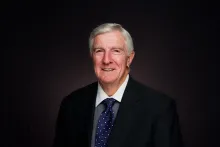
Before his retirement in 2021, Dr. Donald Ward pastored churches in Texas and Louisiana, and taught at Ambassador Bible College in Cincinnati, Ohio. He has also served as chairman of the Council of Elders of the United Church of God. He holds a BS degree; a BA in theology; a MS degree; a doctor’s degree in education from East Texas State University; and has completed 18 hours of graduate theology from SMU.
