

Don Ward
This transcript was generated by AI and may contain errors. It is provided to assist those who may not be able to listen to the message.
Our title today is Children. What do they know? And we could subtitle it or title it Parents. What have you taught? In July of 1969, Wanda and I, along with our two daughters, ages 11 and 6, walked into our first service of the Church of God in the Field House. So 31 and 14, 45 years ago. We were quite surprised to see quilts spread out and children on the floor with toys and coloring books. Because of all the literature we had read and all of the things that we had heard about regarding the Church of God and the great educational programs and went on and on to see that. And immediately I thought, what a waste of time! These children are being conditioned to believe that church services are not for them. The Church of God is for everybody. We talk about we are family, and church services are for everyone. Now, obviously, a person that cannot read is so young that cannot read may not get as much out of church services as one can read. But I have witnessed here, in recent times and for many years in the Church, youngsters who can read, who do not bring a Bible, they do not follow in the Bible the Scriptures. They are busy doing something else themselves. Now, this sermon today, probably everybody in this room at one time or the other is going to curl their toes, because I am not going to tell it the way it is. In hopes of, what is our motive? What are we trying to do? You see, I am a minister of Jesus Christ. I am an educator, a teacher. I have been in a formal teaching situation for 56 years. How many students, how many people of all ages and all backgrounds from all nations practically on the face of the earth have I seen come and go? I have seen a lot. So, church is for everybody. And what is our motive? What is our purpose? To help people come to understand what life is all about. We are not just here for 70 years or 80 years, or you might live to be 100, who knows? But probably not. And what then?
You see, in our world today, we have a society and a culture that is alien to the culture of God. And Satan is doing everything that he can, and he has a lot of willing helpers, to try to continue to blind us and turn us away, so that we don't really consider that which is important in life. And yes, you can begin to develop a relationship with God and consider those things that are important and begin to dream about what you're going to become. Not only dream, but to set goals. We're all familiar with that admonition in the last verse or two of Ecclesiastes 11 that says, Remember now, your Creator, in the days of your youth. Now is the time. I don't care what age you are, whether you are very young or whether you are 90 or whatever your age might be. So as I saw those children on the floor, and the toys and the coloring books and the various things, conditioning to believe that church services are not for them yet. At a certain age, it was like the light was to come on, and they were to be just ready to be baptized practically because they had attended church all of their lives. You know, in human nature, in the way it is, it's easy for people to think, to begin to reason, you know, I don't want any part of this now. I don't want to pay the price what's necessary. I just want to float along with the crowd. So I thought about my days in Sunday school and how much I learned about God and the Bible. Oh, no, they didn't have the truth. They thought Sunday was the Sabbath. They thought that you have an immortal soul, that you go to heaven or hell. But at the same time, I learned a lot about the Bible and about God and Christ and about what is right and what is wrong. I remember beginning to pray to God at a very young age. I had seen when I was five or six years old those coming back from World War II, but they were not coming back alive. They were in caskets. And I remember going out to the graveyard and the 21-gun salute fired as they laid them to rest. I learned to hate war at a very early age. When I was four or five, next door, just down the road, about 100 yards away, my great-grandmother was writhing in pain and I could hear her screams. Her last days dying of breast cancer. At that time, basically nothing you could do. And about a year later, my great-grandfather on another side of the family died of prostate cancer. Then, a few years later, my mother came home and announced that she had cancer and the Korean War was being waged. And so, I spent a lot of hours just praying that God would spare my mother, that we wouldn't have war, and on and on it would go. In about 1971, after coming to Ambassador in 1969, I began to talk with Kermit Nelson and a few others about Sabbath School. In 1973, there was a change in the deputy chancellor's office here in Big Sandy. I talked with a new deputy chancellor and we began to slowly move toward a structured Sabbath school program. Something entirely new in the Church of God. Many had been against it, and many were against it.
Some had even said, like some said, well, Dr. Hayes says that Sabbath School is pagan.
I had the first meeting with parents. Finally, we got approval to move forward. So, I had the first meeting with parents in one of the classrooms over Imperial School, as we called it then, in November of 1975. And on, I think it was January 16th, that exact date might not be right. In 1976, we began Sabbath School, ages 18 months through high school, every Sabbath.
Of course, we had faculty from the college and we had the upperclassmen from the college as well. And we had all the classrooms, we just had the ideal infrastructure. And it went very well. I believe that, well, I know I taught with Jim Stewart. Jim Stewart was about 10 years old at that time. So, if you can add, you know how old he is. And Paul Carmichael might have been in one of those classes as well. I think he was.
He's shaking his head. So that was 38 years ago. And here we are today in 2014. The program was well received. The program eventually spread around the country. Of course, with anything, not everybody was on board. I mean, everybody was not on board with Christ. And, of course, there have been many ups and downs since that time. At one time, even the youth program was political football that a certain person wanted to control it and eventually gain control.
It lasted a year or two. And somebody else came along and on and on it goes. But how much do your children know about our Heavenly Father's plan of salvation and what he is working out here on earth and with each one of us? Each one of us made in the image of God with the potential of becoming the very Son of God, a spirit being, in his family, in his kingdom.
Through the years, brethren have asked how our youth programs could be improved. The question of parental involvement is often a topic of discussion. Some say that teaching children is the responsibility of parents. And so it is. Who would or who could argue with that? I remember in some of those early meetings we had about launching Sabbath School that, in fact, this person was an instructor at Imperial School.
Well, what about nap time? In the afternoon, our children are used to taking to a nap. It's like, are you going to deprive them of taking their nap during that time? Yeah. We could ask each child here today, how much would you know about God and Christ apart from what you have learned from church attendance?
By church attendance, I mean everything that goes with it. From Sabbath services to Sabbath school to teen Bible studies to camp to just everything that the church does, trying to bring the youth along. The thing that was ever most on Christ's mind before his ascension centered on feeding the sheep. Now, let's turn to John 21. John 21. Christ had appeared to the apostles at least two times before this.
This is the famous account in which Peter said, let's go fishing, so they went, they didn't catch anything. And then they looked on the shore and they saw one standing there. They finally realized it was Christ, and he told them to cast the net on the other side. They sort of protested, said, we fished all night, we haven't caught anything, what's the use? But they did what he said, and the draw to fishes is so great, they could scarcely drag them in. Then they came on shore and they had a meal with Christ, and after the meal, here's what happened.
This is John 21. We'll pick it up in verse 15. So when they had dined, Jesus said to Simon Peter, Simon, son of Jonah, love you more than these, and he said unto him, yes, Lord, you know that I love you. He said unto him, feed my lambs. Now this is the diminutive form of sheep, the little ones, the little sheep. It's interesting that Christ, first of all, says, feed my lambs.
Now in the succeeding verses, he says, feed my sheep. And of course, in this context, Peter was told that he would be crucified upside down, and that's how his life would end. But Peter, the apostle of hope, lived the rest of his life knowing that and was faithful apparently to the very end.
Let's look at 1 Peter. We'll notice here how Peter got the message that Christ was giving him that day in 1 Peter 5. In verse 1, the elders which are among you I exhort, who am also an elder and a witness of the sufferings of Christ. He was there. He saw what happened. He denied Christ three times, you know. And he went to the tomb, and it was empty on that Sunday morning.
Also a partaker of the glory that shall be revealed. Peter, James, and John went with Christ up in the mountain. This is referring to what is called the transfiguration, where they witness the vision of Christ coming in glory.
A partaker of the glory that shall be revealed. Feed the flock of God. This is exhortation to the elders. Feed the flock of God, which is among you, taking over that thereof, not by constraint, but willingly. Not for filthy lucre, not for money, but of a ready mind, neither being lords over God's heritage, but being examples to the flock. And when the chief shepherd shall appear, you shall receive a crown of glory that fades not away.
Now, in the Bible, the shepherd is referred to the good shepherd, the great shepherd, and the chief shepherd. Of course, it is the Father who resurrects us from the dead. The Father who gives us the kingdom. It says in Luke, what is it, 1836 probably, that it is your Father's good pleasure to give you the kingdom.
So Peter got the message. And one of the, as I said, things uppermost in the mind of Christ was, First of all, feed my lambs, feed my sheep, feed my sheep. Peter then writes, The elders that are among you, I exhort, feed the flock of God.
The word of God is not to be viewed as something that is memorized and then ignored. The storing of God's word in a person's mind and heart should not be disconnected from behavior and attitude. That's one of the things we really want to emphasize and focus on here this afternoon, to try to make that connection between putting knowledge into practice, into use.
Memorizing or writing out Scripture is a step toward having it written on your heart and mind as a part of your conscience, the knowing within yourself of what is right and what is wrong. Roy Holiday recently had a fine article on conscience in E-News two weeks ago, I believe it was, which as soon as I get those, I tried to send them out to the whole mailing list.
So memorizing and writing out Scripture is a step toward having it written on your mind and heart, mind and heart as a part of your conscience, your knowing within yourself what is right and what is wrong. In Psalm 119, let's turn there, Psalm 119, we're going to talk about this memorizing and storing for just a moment here, because there are a lot of people that have, you know, some people have practically memorized the Bible. It hasn't changed their lives, as we'll mention in just a moment. How many young people have attended the Church of God could list every book in the Bible, recite the Ten Commandments, recite the Holy Days, give a basic meaning thereof, and where they today.
In Psalm 119, verse 9, But on the other hand, not the Randy Travis song, but on the other hand, Wherewith shall a young man cleanse his way, by taking heed thereto according to your word? You want to clean up your life? You want to be what you ought to be? You want to be what you need to be? With my whole heart have I sought you, let me not wander from your commandments. Your word have I hid in mine heart that I might not sin against you.
In Psalm 119, it's like the writer here is pleading with God to just grab him by the nape of the neck, stick his nose in the Bible, don't let it go, and keep your nose to the grindstone. Look at verse 33, Teach me, O Lord, give me understanding, make me to go in the path of your command. Lord, you can't make me do that. Of course, when all is undone, you have to choose.
No person can really make you. Incline my heart into your testimony. Turn mine eyes from beholding vanity. Establish your word. Turn away my reproach. And so many of these pleading with God almost say, Look, make me do the right thing. Your word have hidden in my heart that I might not sin against you.
I used to have students write an essay on this question, Is learning memorizing or is memorizing learning? Well, you could tie your mind into a knot trying to answer that one, but some interesting answers. The kings of Israel had to copy out the law of God. Let's turn to Deuteronomy 17.
Deuteronomy 17. I've taught about every subject in the curriculum except higher math and science. I know one time I taught oral geography, and one of the things that have students do is to trace a map. Just trace a map. By tracing the map and labeling the countries, you get it into your senses so many different ways than you would just to look at the map. Then maybe you want to close your book and draw the map without tracing. Deuteronomy 17 and verse 18.
17, 18. And it shall be when he the king sits upon the throne of his kingdom, that he shall write him a copy of this law in a book out of that which is before the priest the Levites. The Levites were given the responsibility of preserving the scripture, so copy this beautifully yourself. That's why it is so important. There are as many ways you can get the word of God into your senses. The more apt you are to have it written on your inward parts. I know the Holy Spirit obviously eventually plays a role in writing it on your inward parts. And it shall be with him, and he shall read therein all the days of his life, that he may learn to fear the Lord his God, to keep all the words of this law and these statues to do them. That his heart be not lifted up above the brethren, that he turn not aside from the commandment to the right hand or to the left, to the end that he may prolong his days in his kingdom, he and his children in the midst of Israel. I wonder how many kings actually did that. But that's what Moses wrote what they were instructed to do. And see, this was long before a king came on the throne in Israel. Moses did not even go into the Promised Land, so this was written circa 1420 B.C.
Learning is characterized by psychologists into three areas. They're called domains. Cognitive domain is the intellectual domain. What you know in your mind, in your intellect, as they say, and some people have a tremendous store of data, facts within their cognitive domain. And then there's what's called the affective domain, A-F-F-E-C-T-I-V-E, affective domain. And that is the main of behavior and attitude and what you do with the knowledge. And then there's the psycho-motor, what you do with motor skills. Now, all of us have difficulty in some areas. All of us have difficulty in translating our knowledge into positive action at times. Let's notice 1 John chapter 3 and verse 18. In 1 John chapter 3, of course, a lot about 1 John has to do with, don't be like Cain who slew his brother to love one another as Christ gave commandment, in paraphrasing it. 1 John 3 and verse 18.
So we see here in action this affective domain. You know that the Bible says, Love your neighbor as yourself. So you know that, you can recite it, so what are you going to do with it? 1 John 3 and verse 18. My little children, let us not love in word, neither in tongue, but indeed and in truth. And hereby we know that we are of the truth, and shall assure our hearts before him.
So what it is saying, you don't just do it in word or in tongue, you do it in deed and in truth. You actually take action and do something with it. We turn to Matthew chapter 25. Matthew 25, which is a continuation of the Olivet prophecy, in which these parables are given that demonstrate how you can have your lamps filled with oil when the bridegroom knocks on the door.
In Matthew chapter 25, verse 34, Matthew 25, verse 34, Then shall the king say unto them on his right hand, Come, you blessed of my father, inherit the kingdom prepared for you from the foundation of the world. For I was in hunger, and you gave me meat. See, this is love in action and in deed. You know what it says. You have the knowledge, but is it translated into action? So once again, it's the affective domain. I was hungry, you gave me meat. I was thirsty, you gave me drink.
I was a stranger, you took me in naked, you clothed me. I was sick, and you visited me. I was in prison, you came unto me. Then shall the righteous answer him, saying, Lord, when saw we you a hungry, or you thirsty, and gave you drink? And the answer, when you did it to the least one of these, my fellow, my brethren, whatever word you want to use there, you did it unto me. I've often stated, and I still state, it's true with me, the greatest challenge we have is to close the gap between what we know and what we do. What we know and what we do, from the cognitive, the intellect, to the action, not just in word, but also in deed.
I really wonder how well our children understand the plan of salvation, the purpose of the church, God's purpose. What do their parents really believe? They understand that this is not just their parents' church. It's for them. It's for all of us. And once again, we continually say, we are a family.
Now, God has, from the beginning, sought to have a relationship with humankind. That's why he created human beings in the first place. He wanted a relationship with them. He wanted them to understand who he is, what he is, and also what they are and what they can be.
So let's go back to Genesis 2. Genesis 2. Please don't let this go over your head. Please don't let it say, Oh, well, I've heard all of that before.
Perhaps you have. Hope you have. I know in some cases you've heard it all and more. But I shall not be negligent to put you in remembrance of some of these things. And these foundational things, if we can get this across from just knowledge to action and understanding with regard to why you are here, especially with youth, we shall have accomplished a great deal. Because how many people are there out there that do not understand? In Genesis 2, verse 15, The Lord God took the man and put him into the garden of Eden to dress it and to keep it.
And the Lord God commanded the man, saying, Of every tree of the garden you may freely eat, but of the tree of the knowledge of good and evil, You shall not eat of it, for in the day that you eat thereof you shall surely die. As the margin says, you'll begin to die. They didn't die at the very moment they ate it. But the wages of sin is death from the garden of Eden to the present time. But what God really wanted was for us to live eternally in his family.
Verse 18, the Lord God says, It is not good that a man should be alone, I will make and help meet for him. And so we have the beginning. God is the author of male and female. He is the author of marriage. He is the great instructor. And we could go on and on with what God is. God wanted a relationship with us. He sat in the middle of the garden, as you see in chapter 3. And we sat in the garden, the tree of the knowledge of good and evil, and the tree of life. God wants us to live forever. He wants us in his family. Can we understand that? Young people, old people, everybody.
In chapter 3, in verse 22, after Adam and Eve had sinned, remember the wages of sin, his death, that God cut off humankind from the tree of life until Messiah should come and restore that path to the tree of life. Genesis 3, 22, and the Lord said, Behold, a man has become as one of us to know good and evil. And what that means is that he took to himself the prerogative of saying what is good and what is evil.
And now lest he put forth his hand and take also the tree of life, eat and live forever. Of course, this shows that he did not have inherent eternal life, immortality abiding within him. Because he had to take the tree of life to gain it. Therefore, the Lord God sent him forth from the garden to till the ground from which he was taken. Now, further about this relationship thing. In Leviticus 26, see, here's the Garden of Eden. So much later, several hundred years down the line, we've had the flood. The earth destroyed by the flood, eight persons saved. Noah, his wife, his three sons, and their wives. And God begins to work through a man named Abraham, and he calls out Israel.
And he gives promises to Abraham, Isaac, and Jacob. And what does he want? Look at Leviticus 26.
Leviticus 26, verse 3. If you walk in my statues and keep my commandments and do them, then he enumerates several. Then we come down to verse 11, and I will set my tabernacle among you. I'll set my tabernacle. I'll set the place where I dwell among you. Now, eventually, Israel did build a tabernacle, a sanctuary, and God did fill that tabernacle with his presence. You read about that in the last chapter of Exodus. God did set his tabernacle among them. I will set my tabernacle among you, and my soul, my essence, my being, shall not abhor you. And I will walk among you, and will be your God, and you shall be my people. Relationship. Be my God and be your people.
Now, you look at other verses. Look at Revelation 22. What was promised in Genesis in the Garden of Eden is restored in Revelation. In the companion Bible, if you have the companion Bible, in the appendices, there are, I think it's like 30-something, here's what was promised in Genesis, and here it is fulfilled in the book of Revelation.
In Revelation 22, he showed me a pure river of water of life, clears a crystal, proceeding out of the throne of God and out of the Lamb, in the midst of the street of Eden, on either side of the river was there the tree of life. There was a tree of life. Same thing that was in the Garden of Eden. There was a tree of life, which bare twelve manner of fruits, yielded her fruit every month, and the leaves of the tree were for the healing of the nations. There shall be no more curse, but the throne of God and out of the Lamb shall be in it. And his servant shall serve him, and they shall see his face, and his name will be in their foreheads. See, this is how close the relationship is of the God-kind. You're on the God-plain. You have the name of God in your forehead. You can look on the face of God.
And there shall be no night there, and they need no candle, neither light of the sun, for the Lord God gives light, and they shall reign forever and ever. And he said unto me, These sayings were faithful and true, and the Lord God of the holy prophets sent his angelos, his messenger, to show unto his servants the things which must shortly be done. Behold, I come quickly, blessed is he that keeps the sayings of this prophecy. As a people, we really get excited about new knowledge, new plans, new programs, but we seem to have great difficulty at times in implementing, following through, and persevering with something, sort of like people who start a new diet. Oh, I'm so excited! I'm going on my diet next week. Obviously, there's always next week. Or Monday, if it's Friday, because I'm going to have one last fling this weekend. And then next week comes, and well, something came up or whatever, and so I have to put it off a little bit longer. And so you can get really excited about, quote, something new. And even there, oftentimes, people don't follow through and don't follow up. They don't stay with it. They don't persevere. How are the people that are able to do some of the things that they do? How can Bethfield compose music and words like we heard Heather sing today? I mean, it didn't just come easy, per se. And I've not talked to her about it at all. I just know from experience what it takes. What it takes.
And we have an educational system today that is trying to level everybody to the same level, to dumb down, dumb them down, and make them more and more dependent upon the state, so that they will be like sheep all that are easily controlled. Paul read this 1 Corinthians 8-1 in his sermonette. Knowledge puffs up, but charity edifies. To say we have difficulty in an understatement, oftentimes we don't even try. It's as if we lived here some new thing, yet we have not mastered the basics. We must master the basics. Let's go to 1 Corinthians 13. As God gives me breath and opportunity, I hope I shall continue to basically bring this forth to the attention of all of us, including myself, of what we are about and what we are to become. In 1 Corinthians 13, in verse 11, When I was a child, I spoke as a child. I understood as a child, I thought as a child, but when I became a man, I put away childish things. For now we see through a glass darkly, but then, face to face, we read about seeing Him face to face in Revelation 22, verse 4. Now I know in part, but then shall I know even also as I am known. And now abides faith, hope, charity, these three, but the greatest is charity, to become as God is. In 1 Corinthians 13, verse 1, Though I speak with the tongues of men and of angels, and have not charity, not becoming as God is, I am become a sounding brass or a tinkling cymbal. See, this is where it is. You can have all of the gifts of prophecy, understand the mysteries, all knowledge, remove mountains, bestow everything you have to the poor, and yet, if you don't, for not becoming as God is, it profits nothing.
We have had people who are so self-righteous in many ways, they thought they were better than other people just because God had called them into His marvelous light. Israel fell into that trap. God made it clear. God made it clear that the reason He was doing with them, what He was doing with them, was for His name's sake. But yet, at the same time, He wants us not willing that any should perish. Deuteronomy chapter 9, and Deuteronomy chapter 9, verse 4. Look at what Moses is inspired to write here about Israel and what God was doing with them, why He brought them out of Egypt on the way to the Promised Land.
This was on the heels of Israel crossing over Jordan. You look at verse 1. Here, O Israel, you are to pass over Jordan this day, to go in to possess nations greater and mightier than yourself, cities great and fenced up to heaven, of people great and tall, the children of the Anakim's, whom you know and of whom you have heard. The spies came back and told them about the giants, who can stand before the children of Anakim. Understand, therefore, this day that the Lord your God is He which goes over before you. As a consuming fire, He shall destroy them, He shall bring them down before your face, so shall you drive them out and destroy them quickly, as the Lord has said unto you. Speak not in your heart after that, the Lord your God hath cast them out from before you, saying, For my righteousness, the Eternal that brought me to possess this land, is because I am who I am. Because I am an Israelite, I am who I am. Council of Elders received a letter this week from a member in Midwest, in which this member was talking about how that some of the members of his congregation, this is just this past week, so boasting about their heritage that they are of Israel in the flesh. Well, that's not what the Bible is all about. That's not what God is all about. No respecter of persons, not willing than any should perish.
Speak not in your heart after the Eternal your God hath cast them out before you, saying, For my righteousness, the Eternal has brought me in to possess this land, but for the wickedness of these nations the Lord does drive them out from before you. They are so wicked, and I am trying to work out a plan here so everybody can be blessed. And eventually these people, even though they may meet their death physically during this time, they shall rise again and be given opportunity to become a part of the Israel of God. Not for your righteousness or for the righteousness or uprightness of your heart do you go to possess their land, but for the wickedness of these nations the Lord your God does drive them out from before you, and that he may perform the word which the Eternal swore unto your fathers Abraham, Isaac, and Jacob. Understand, therefore, that the Lord your God gives you not this good land to possess it for your righteousness, for you are a stiff-necked people. How many times had they murmured ten times by the time of late summer after leaving Egypt during Unleavened Bread? Remember and forget not how you provoked the Lord your God to wrath in the wilderness from the day that you departed out of the land of Egypt until you came into the place you have been, rebellious against the Lord. So despite them, God in essence is dragging them into the Promised Land, and so he did.
And of course, God wants us to willingly go. Now look at Romans 3.23. In the Book of Romans, we had some two sermons, I think it was, maybe a Bible study or two, about mastering the Book of Romans back a couple of years ago, maybe a little more. In chapter 1 of Romans, Paul takes the Gentiles to task. In chapter 2, he takes the Jews to task. In chapter 3, he begins to summarize. And here's one of the great summary statements of the Bible. In Romans 3, verse 23, For all have sinned and come short of the glory of God. Everybody! No exceptions. And Paul writes that there are all of our righteousness. Look at verse 10. As it is written, there is none righteous, no, not one. There is none that understands, there is none that seeks after God. They're all gone their own way. Paul writes this epistle, and I wonder, even to this day, we've just taught it, started back in Passover time to the ministerial training class, Romans. Justification comes about through repentance and faith in the sacrifice of Christ.
You know, our self-righteousness can be manifested in many ways. Even in the knowledge area, we have the truth about the Sabbath, the holy days, foods, clean and unclean foods. We could list several things.
In addition, some give an air of superiority with regard to prophecy, world affairs. Oh, we know what's going to happen. Well, we generally know, and we're commanded to watch, and we try to keep people apprise. What I'm saying here is this. To know these things are necessary and good. God expects us. But if we think that we're better than the rest of mankind, if we think that knowledge alone is the essence of salvation, then we're sadly mistaken. There has to be a transition from knowledge into the action. And I think one of the lessons we have not taught our children accountability. They can play on the floor, they can color, they can do whatever they want to do. Not follow along in the Bible, act as if they're in a different universe, and then expect something great out of them a little later on in life. It has to be from cradle to grave. And I think there are people, and we'll get more into this as we go along, who think that as long as they're sort of near, that somehow osmotically, they're going to squeak into the kingdom of God. Let's look at Ezekiel 14.
Ezekiel 14.
Accountability. Do we teach accountability? Of course, I don't believe in infant baptism. I don't believe in baptizing preteens, and on and on we could go with that. I remember I fought that battle in a personal sense in the Protestant church that I grew up in. When I became around nine or ten years old, I began to have... It wasn't so much my parents. In fact, it wasn't my parents. Oh, son, you need to get baptized. We know this, and we know that, and we know we just want you to get baptized. But I never could get... I guess you would call it the feeling, but I believed in God, and I prayed to God in all of that. And finally, when I was 15 years old, about to go into the tenth grade, I went up one Sunday night and gave my hand to the preacher and, quote, joined the church. But I never felt as if just the questions were not answered. I knew there had to be something else. In Ezekiel 14, 14, though these three men, Noah, Daniel, and Job, were in it, they should deliver but their own souls by their righteousness, says the Lord God. Verse 16, those these three men were in it as I live, says the Lord God, they should deliver neither sons nor daughters. They shall be delivered, for the land shall be desolate. They only shall be delivered, for the land shall be desolate. If I pass through the land with a sword, verse 18, though these three men be in it, says the Lord, they shall deliver neither sons nor daughters, but they shall only deliver themselves. Or if I send the pestilence, verse 20, though Noah, Daniel, and Job were in it, as I live, says the Lord God, they shall deliver neither sons nor daughters. They shall but deliver their own souls by their righteousness. Personal accountability. I can't be accountable for you, and you can't be accountable for me. You're accountable to some degree for your children, because they are under your care and your watch. So what are you teaching them? So many parents and young people try to rationalize the truth. We hear people say, well, maybe they were never converted. So they will have another chance. Or maybe they were never called. Maybe they were never called. The truth is this. If a person has been convicted of the truth, they are accountable. And once again, we've not taught accountability as we should. Thankfully, some do return after going their own way. Why do they return? Because somewhere deep down in their being, they were convicted and said, I will arise and go to my father, just the same as the prodigal son did.
Some will say society is too tough. We cannot obey. And as noted, we say that God has to call us so we excuse ourselves and our children. If you're here today in the sound of the voice, you're being called. One of the first papers written by the United Church of God was, God is calling children. We sing this song, God is calling children. What else can you do?
The children sit here each week. I believe they're being called. The children of physical Israel, were they being called? It was basically the children that went into the Promised Land. The older ones died, say Joshua and Caleb.
David or Daniel in history, friends, Daniel in history, friends, Shadrach, Meshach, and Abednego. They went to graduate school in Babylon, and they remained faithful. Under the threat of death, Shadrach, Meshach, and Abednego would not bow down and worship the image because they had this understanding of what life is about. Daniel in the lion's den, still prayed to the God of heaven, to the God, the only God. You know, I know from my experience in coaching and teaching in the public schools that it can be done. Oh, I know it's worse than it was then.
Two young men that I had carried, they were on the football team. They received scholarships to major universities. They carried a New Testament in their coat pocket. And they didn't have on a coat in their shirt pocket.
Ironically, one of them is an orthopedic surgeon. They just built a state-of-the-art, one of the best in the nation, Orthopedic Clinic Hospital in Hattiesburg, Mississippi. And my nephew, who is named after me, his name is Donald Ross Ward, is now a partner in that facility with this young man, Doug Rouse. So I know from experience what can be done. Are you a young person? Are you living your life vicariously? Following the fad of the moment? Or are you planning to be an active participant in life and be a hero yourself? I know when I became head coach of the baseball team at Delta State University, there was so much talk among the guys about what the various people in the major leagues were doing. Well, I read this, I read that, and so on and so on. And you have to come to the point of, well, what are your goals? I said, what our goals are, we're going to be national champions. National champions. And we did play for the national championship. We didn't win, we came in second. But you come to understand what it takes and what you can be and what you can do through dedication, through hard work. There was a time when we believed that our knowledge of dietary laws would keep us from getting cancer. I don't know if we believed that or not, but that doesn't mean that we should not follow God's dietary laws, because to a large degree you are what you eat. But at the same time, the sins of the fathers are passed down to the third and fourth generation. Cancer does run in families. I know personally in the families that I grew up in.
So what can we do to move from the area of just knowing to the area of doing? What can we do to help our children really understand what life is all about? I believe there are many things that we can do. We can create this vision. Vision can be created just as I mentioned in the physical sense. You can become this or that or the other.
Where there is no vision, the people perish. Every person's work is going to be made manifest and is being made manifest now. More and more, I'm coming to see and believe the fulfillment of Romans 14, 10, and 12. Judgment is now on us. We are daily standing before the judgment seat of Christ. Judgment is not just a time for passing sentence, but it is a time in which we are being judged. We are appearing daily before the judgment seat of Christ. Let's turn there and read there. Romans 14, verses 10 and 12. Romans 14.
Verse 10, But why do you judge your brother? Why do you set at nothing your brother? For we shall all stand before the judgment seat of Christ. We shall all stand before the judgment seat of Christ. For it is written, As I live, says the Lord, every knee shall bow to me, and every tongue shall confess, so that every one of us shall give account to himself to God. It's the old saying they do in the advertisements, pay me now or pay me later. It's going to come. It's going to happen. I don't know how we can communicate this to people. Even those who fellowship among us are youth at times. How do you get that across? That's one of our great challenges.
As we all know, the family unit is a microcosm of the family of God and the kingdom of God. God is vitally concerned about our role, our attitude, our action in the family. The family, as we have noted earlier, is ordained of God. He is the author of male and female. He is the author of marriage. He is the author of the ability to reproduce potential sons of God. Now I want to focus on the question of why some children are not really able to understand what the plan of salvation in the Church of God is all about. I've already mentioned that we have generally taught them the form of the Church of God. What do I mean by form? We go to church on Saturday. We keep the commandments. At least we teach people, too. We keep the Holy Days. That's very important. We should eat the proper foods. We should get proper rest. We should get proper exercise. We should tithe. And so it goes. All of these are right and good. They're important. But there must be substance in action in order for these to be of benefit. None of these in and of themselves will justify us before God. Not a one. But that doesn't mean that all shouldn't be done. Now in Matthew 23, verse 23. Matthew 23, verse 23. Woe in you scribes, Pharisees, hypocrites, you pay tithe and mend anise in coming, and have omitted the weightier matters of the law, judgment, mercy, and faith. These ought you to have done, and not to leave the other undone. I remember in some of those early meetings back in the 70s, planning Sabbath school, that some of the parents voiced, well, our children went to Imperial School. They memorized every book in the Bible. They could recite the Ten Commandments from memory, the Holy Days, and other things. And where did they wind up? They're not in the Church. So once again, what I'm trying to show is you have to have more than just the form. You have to have more than just the knowledge. There has to be an understanding somewhere that gets into the very mind and heart of a person. Of here is what it's all about.
And a lot of it comes back to motive. Why do we do what we do? It should be because we understand the answers to the great questions of life. We understand why we exist. Not only do we understand them in the intellectual sense, but we are committed to sustaining a relationship with our Father in Heaven. It is because we understand that He is our Father, that He loves us, He wants to have a relationship with us. On the other hand, people could view it in the form of, if you're a young person, well, it really hinders me from achieving my goals. I want to be free to do whatever I want to do. You see, the only true freedom is that freedom which comes from God and Christ. Look at John 8, verse 32.
You see, the human mind is dynamic. It's always in motion. The human mind is dynamic. It's always in motion.
Why do we do what we do? Because we understand what God is about, what life is about. The power of God works in us through His Spirit and His Word. What are we teaching our children each Sabbath? To not to teach is to teach. To not to teach is to teach.
So much learning takes place in the absence of no structure of teaching. The human mind is dynamic. It's probing. It's in motion, searching, wondering. It likes activity. It likes challenge. So if they haven't been taught any discipline or whatever, they may wind up with a sketch pad of cartoon characters or whatever it might be as someone is standing before them pouring out their guts, trying to get them to understand. You see, structured teaching presents people with the opportunity to focus. The old saying, idle mind is the devil's workshop. But if you have a focus, if you have something structured, chances are people will not be led away by vain imaginations. If you're following along in the Bible, if you're thinking with, and in some cases ahead of the speaker, where will he go next? What scripture will he turn to next? How does this fit? How can I apply? There's so many things. I have taught, I have coached from junior high, high school, college-age people, and I know what it takes. It takes hard work, sacrifice, discipline, citizenship, scholarship, perseverance, endurance. And a person's not willing to pay the price, he has to be disciplined. What are the hardest discipline things I ever faced in coaching? We had this young man, very gifted, running back. He received a full scholarship. University of Alabama started running back as a sophomore. And football season was over, and he was on the baseball team, and we had a code of conduct, and the code of conduct actually had three chances. Three strikes, you're out. Three violations of the rules, you're off the team. So I just happened to be driving down the main street one day, and it turned down to the high school, and as I stood there, waited there at the light, here he came, puffing a cigarette, he already had the two strikes, took his right, and went down. And so here's the guy that I thought the world of, and very gifted and all that. But he took it, he went on and played, started three years at the University of Alabama.
I still wonder what the missing dimension is with regard to having parents and children seeing the overall picture. I try from various angles to get us to see it. I think maybe we do. I think we also are all challenged with regard to how to do this. What is the best way? And of course, in the context of all this, parents will say, I will say, obviously we don't want to alienate our children, but at the same time, if you have no structure, if you have no discipline, you're defeated before you start. Sometimes ministers feel that they should apologize for going over some of the basics and talking about discipline and what it takes to really be a success in life. I hope I never apologize for that. I hope none of you ever apologize for that. We have children all over this nation who hold their parents hostage.
They say, we're going to kill ourselves, we're going to do this or that. And at the same time, our children are being held hostage by the peer group, and they so desperately want to fit in. To the point that, in some cases, if they don't, being bullied or whatever, they commit suicide. Just this week, it was yesterday or the day before, this girl, I think she was 12 years old, desperately wanted to fit in, and she wrote Taylor Swift. Taylor Swift was bullied when she was in school, and they were talking about how Taylor Swift answered her back, trying to give her encouragement to keep on keeping on. So, as we begin this new year of instruction, youth instruction, I hope that all of us are committed to it. Not just the youth, not just their parents, but every person here. All of the brethren, all of the elders, all of the wives. Everybody is on board. We understand what it's all about. We understand what a precious opportunity this is to hold within our hands, to some degree, the lives of people, and especially young people. And Jesus Christ saying, if you love me, feed my lambs. Feed my lambs. Feed my little ones. So, all of the things that we've mentioned need to be connected with God's desire to have a relationship with us and bring us to eternal sonship in the family of God. So, the challenge before us is great, and I'm persuaded, as was the Apostle Paul, that we are more than conquerors through Jesus Christ, our Lord, who loved us and gave Himself for us. So, let's meet the challenges that are before us. Let's continue to fight the good fight of faith, and we will gain the victory.
Thank you.
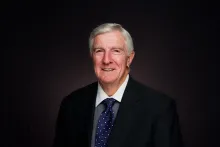
Before his retirement in 2021, Dr. Donald Ward pastored churches in Texas and Louisiana, and taught at Ambassador Bible College in Cincinnati, Ohio. He has also served as chairman of the Council of Elders of the United Church of God. He holds a BS degree; a BA in theology; a MS degree; a doctor’s degree in education from East Texas State University; and has completed 18 hours of graduate theology from SMU.
