
Robin S Webber
This transcript was generated by AI and may contain errors. It is provided to assist those who may not be able to listen to the message.
Well, we certainly want to welcome all of those that are in attendance today and would also like to say hello to all of those that may be listening in the weeks, the months, and yes, sometimes the years that will come our way down the line. But whether you listen to this message today or tomorrow or in another month, another season or another year, the message remains the same. And I think it's a vital message to all of those that are faithful followers of God's Word, and these words truly do impact us. Allow me to create a setting for us to draw us into this message. Fifty miles south of Baghdad, Iraq, is a city that's buried under the sands of time. And all that remains of this once great city is basically just three vast mounds of dirt and sand that lie on the east side of the Euphrates River. This city, which once dominated society and dominated the world, doesn't make headlines today. In fact, most students of Western Civ will, at one time or another, do a little studying on this city and this civilization, learn a few key characters, a few key dates, maybe learn a few of the monuments of this city of old, and that's about it. Basically, to most people, the relevance of this city and this culture has basically gone the way of the dinosaur. But not so to God. And I don't think so to serious students of the Bible that do discern the ongoing influence of this city down to our age right now and into the future. Understanding the significance of the term and the culture of this city is a vital key to understanding Bible prophecy and, quite frankly, a very personal responsibility that a Christian has in this day and this age. And not only now, but in the future. It's a city, it's a system, and it's a culture that has had an impact on the saints of God from the very time of Jesus Christ. The city that I talk about, the culture that I talk about, the ongoing system that I talk about is that of Babylon.
And that's what we're going to discuss in this two-part series, is Babylon and the Bible and understanding the importance of Babylon. Let's anchor today's message by focusing on a set of specific verses to grant us means to understand and appreciate what God would have us to learn about Babylon. Join me if you would, and let's turn to Revelation 17. Revelation 17, and let's begin in verse 3. So he carried me away in the spirit in the wilderness, and I saw a woman sitting on a scarlet beast, which was full of names of blasphemy, having seven heads and ten horns.
As we move into the book of Revelation, we recognize that it is written in apocryphal style, that of imagery that needs to be understood. We'll talk about that later. But a woman often represents, in the Bible, a church. And the woman was arrayed in purple and scarlet, and adorned with gold and precious stones and pearls, having in her hand a golden cup full of abominations, and the filthiness of her fornication. And now, and on her head, a name was written right on the forehead, mystery, Babylon the Great, the mother of harlots, and of the abominations of the earth.
Very interesting as we look at this, that we see a specific spiritual system stamped with the God given branding of Babylon. It's God that calls the system Babylon, not man. Because this is God's revelation. It's always important, as students of the Bible, to recognize who is doing the talking and or doing the defining. And God defines this system as Babylon the Great. And it's also here in this verse that God offers a clue in the phrase, if you'll look at it, where it says, mystery, Babylon the Great. Now, it's important to understand what the term mystery means in the Bible. For you and I that basically speak English, normally when we think of a mystery, we think of a novel or a story that, in a sense, until the very end of the book, we're clueless.
We just don't know, to use the phrase, who done it. And so oftentimes that's how we look at it in a mystery, kind of in a cloak and dagger intrigue with basically dead end results until the last page, and you have to stay right with it. But in the Greek culture, and the Bible, at least in the New Testament, is written from the Greek, in the Greek word is musterion. And it's not nearly abstruse as our English conveyance of the word mystery. The term musterion, which is used here as mystery, conveys something quite unintelligible to the uninitiated. To those that are not initiated, it is strictly unintelligible, but it is very, very clear and precise to those that have become initiated. The eyes are open, you're looking at what's coming your way, you discern what it is, and you understand the musterion because you are initiated. The purpose of this two-part series is to unravel the mystery and acquaint you with some of the basic tools of understanding about Babylon, about Babylon. And there are basic tools of understanding.
Babylon is a very loud and large feature that runs throughout the pages of the Bible and history, and in the life of the covenant people of God. And it is essential that we understand what Babylon is. It's essential to understand why God is against Babylon, and why we can't be a part of Babylon today or in any day. And so I hope that in this discussion it can become crystal clear in your spiritual sites what Babylon is about. You know, it's interesting, I talked about a city 50 miles south of Baghdad under three big mounds on the east side of the Euphrates, but Babylon, and the story of Babylon in the Bible, is not about ruins on a river.
Babylon in the Bible is about ruined hearts, ruined hearts that are ruined by choices that people make down through the ages. And that's the last thing, that's the last thing that our God above wants for us that are down here below. So let's begin with the story of Babylon and what it is about. Let's begin by focusing on the birth of this system called Babylon and where it began. Let's begin at the very beginning of the book in Genesis 10. And Genesis literally is a book that means beginnings. We have to go back to the beginning of the story. Let's open up in Genesis 10 and let's notice the establishment of this culture. The beginning of this system of Babylon's birth is shortly after the Neotian flood in which God had to basically eliminate all of mankind other than eight individuals that were on the ark. And thus we come to the time after that when man is once again being reestablished on the earth. And in Genesis 10 and verse 8, let's pick up the thought. Cush, a son of Ham, begot Nimrod, and he began to be a mighty one on the earth, and he was a mighty hunter before the Lord. And therefore it is said, like Nimrod, the mighty hunter before the Lord. And the beginning of his kingdom was Babylon, Arach, and Akkad, and Kanna, in the land of Shinar. Now, you know, it's interesting in reading the Bible. I was basically able to go through those couple of scriptures in just a matter of seconds. But there is so much there for us to, shall I say, excavate and have a deeper understanding about. Let's take a closer look. Number one, it mentions this descendant of Cush begot Nimrod, and he began to be a mighty one on the earth, and he was a mighty hunter before the Lord. And therefore it is said, like Nimrod, the mighty hunter before the Lord. There's a lot more behind the scene here. Number one, let's notice carefully in verse eight, it mentions that Nimrod is a mighty one. And then again in verse nine, interesting, it repeats the thought by saying that he is a mighty hunter. And he's a mighty hunter before, notice, not with, but before the Lord. Now, let's understand some things that the verse is trying to convey to us so that we can understand this mystery of Babylon.
Mighty one, mighty hunter before the Hebrew word there is lymphane. And that word literally means against or in face of. In other words, let's read it again. Here's this Nimrod, who's a mighty hunter who is against, notice, he is against or in face of or in place of God. Comes out with a totally different meaning than you would read if you're not initiated to what is going on here. What we're understanding as we begin in verse eight and nine is that there is a spirit and an atmosphere of confrontation that is occurring here shortly after the flood. In fact, it's very interesting that the word Nimrod actually comes out of the Hebrew term morod that literally means he rebelled. Now, you might say in one verse, that's a mouthful, that normally you wouldn't understand until we, in a sense, didn't just skim, but we actually did an excavation of what God wants us to understand, that there was this mighty man, this mighty hunter, that in a sense put himself out in place of God in front of the people. What is interesting to look at here is it says that he's a mighty one, he's a mighty hunter. You know, there were very few people after the noation flood, just a handful, and as we know, animals tend to multiply quicker than human beings do, at least most human beings that I have run into. And so there was probably a danger out there. There was a safety issue. The lions, the tigers, and the bears, and all the other animals that were out there, and people needed protection. So, in one sense, there would have been a very real need to have somebody to protect people, so as to preserve commerce and travel.
But what this is conveying is that that which was of human necessity was reworked and changed as a means of control, not only simply over the beast, but over their fellow mankind. Not only that, as we just look at these simple terms here of Nimrod and Mighty One and Mighty Hunter, recognizing that this was the individual that found it the kingdom of Babel, it's very interesting to understand the importance. If you look in your Scripture right now, whether you're here today or whether you're at home being a student of the Bible, you'll see this term Mighty One or Mighty Hunter. This is very important. We must recognize if we're learning to become students of the Bible that no Scripture should be read in a vacuum. And we must allow the Bible to explain the Bible, because this is written to describe that a seed of confrontation has now been planted on this side of the flood, one that was brought over from the civilization of the pre-flood. Join me, if you would, to Genesis 6. In Genesis 6, and let's pick up the thought here about what it was like in the world before the flood. It speaks of a time that there were giants on the earth in those days, and also afterward when the sons of God came into the daughters of men. Now, this is not talking about angels having relationships with women before the flood. This is talking about the two lines of Adam coming down to that time right before the flood. And it says, though, that there was this mixture of two lines coming together, and they bore children to them. Now notice, those were the mighty men who were of old, men of renown. And then notice how God describes the world. Then the Lord saw the wickedness of man was great in the earth, and that every intent of the thoughts of his heart was evil only. Up here in verse 4, it's very interesting that it uses the term giants. And again, you see the phrase might or mighty men. We need to understand that, again, Nimrod was bringing forward on this side of the flood an attitude of mighty men or men of renown.
It's very interesting that the Hebrew term from which giants springs from or nephilim, the root term out of the Hebrew, literally means to fall and or to fall upon, implying praying upon or falling on your fellow man. These mighty ones, these giants, were praying upon or falling upon their fellow man in acts of violence. So horrible that God, literally, in his mercy, basically had to put humanity out of its misery that it had engendered. This is what Nimrod brought into the post-flood world. Notice again, then, as we go back to Genesis 10, very interesting, and it is important to note that it is Nimrod, this individual, who establishes the first earthly kingdom recorded in Scripture, a kingdom of man for men by men. Verse 10, "...and the beginning of his kingdom," we might say, and or his system.
Notice where it begins was in Babel, along with the other cities that are mentioned.
The strong and the loud implication of Scripture, as you understand Nimrod, the one that rebelled, that was in the face or in confrontation of God, that was a mighty one like those that were before the flood, that the kingdom of Babel is set apart not by God but from God in confrontation to God. It is an opposite system. It becomes the opponent of the ways of God. The illusion here cannot be mistaken.
"...for God had made well known what his intentions were." Join me in Genesis 9, that after the flood, God had given Noah and family and those that would follow an explicit command. Genesis 9 and verse 1. "...So God blessed Noah and his sons and said to them, Be fruitful and multiply and fill the earth." Filling the earth means literally to, are you with me? To spread out, to cover, to fill, to move away. The same kind of dominion that God had initially offered Adam and Eve over the resources down here below.
But here we find an individual that moves opposite of that and rather than spreading confines his population to a city to counter God. We find that city described, the city that's mentioned here, Babel, in Genesis 11. Let's take a look at that for a moment. In Genesis 11, "...and now the whole earth had one language and one speech, and it came to pass as they journeyed from the east that they found a plain in the land of Shinar, and they dwelt there.
And then they said to one another, Come and let us make bricks and bake them thoroughly." They had brick for stone and they had asphalt for mortar. "...and they said, Come and let us build ourselves a city." To build a city was in confrontation to what God's will was, and that was to spread around the world.
And let's build a tower whose top is in the heavens and let us make a name for ourselves, not to the glory of God, not to exalt the God of the heavens, but to make a name for ourselves lest we be scattered abroad over the face of the whole earth. What we notice here are some astonishing events that are occurring. Let's think about this for a moment. We come to recognize that, and perhaps you and I have seen at times in an art gallery, pictures that come out of the renaissance of a kind of a conical tower that kind of like a wedding, one of those wedding cakes.
It keeps on going up and up, and you see all the little worker bees, not bees, really, but human beings, and they're lifting, and they're going up, and you see this tower rising above the cloud. I would suggest that that is an inaccurate portrait of probably what occurred. Was there a tower? Yes, there was. Was it high? Yes, it was. I don't think it was high as any of the skyscrapers of New York. Really, what is being demonstrated here more than altitude is attitude.
An attitude that they did not take God at His word. God had made a promise, and had made covenant with Noah, one of the great covenants of the Bible, the Noelian covenant, and He said that, I will never again destroy mankind by this way. No, no, no, I will not do that. Done that. Never again this way. But again, it was in people's memory and living memory of parents or grandparents, and people began to say, yeah, God said that.
But. And they began to look at God with fear rather than with respect, and did not take God at His word. Now, we notice what happens here in verse 5, but the Lord came down to see the city and the tower, which the sons of men had built. And the Lord said, indeed, the people are one, and they all have one language, and this is what they begin to do. And if they're doing this, nothing will they not do. And so He said, come and let us go down and confuse their language that they may not understand one another's speech.
And so, because they did not obey God, we notice in verse 8, so God scattered them abroad from over the face of all the earth, and they ceased building the city. It's interesting. It says that God confused the tongue there. It's interesting that when you look at the word, babble, babble literally means confusion, because the tongues were confused. But I want to take you a little bit deeper, students of the Bible, of something that maybe you've never heard before.
How many of you ever heard here that babble means confusion? Am I talking to the right audience? A knowledgeable audience. But allow me to offer perhaps another segment of this for your consideration. It is also of note that Babylon, that culture and system that stems back to this babble, Babylon, the Greek variant of the Akkadian term there is either babelu or bab-alai. And what that term literally means is gateway to the gods. Gateway to the gods.
Now, when you think about that, babble, confusion, and or babylon, gateway to the gods, it's very definition of babylon that stems back to this babble, is opposed to the one true god. Because there's only one gateway to the true god, that's Jesus Christ, and there are not many gods. There's only the one family of god, the godhead, god the father, and Jesus Christ. So right there, there is confusion and there is confrontation.
And thus we can derive a secondary note of confusion based on humanity living apart from the creator. Now, with that all in mind, let's come to appreciate and take note of something here that's very important so that we can kind of understand where we are in history, and how the Bible views this history. Join me, if you would, in Galatians 1. In Galatians 1, in the New Testament, it's interesting the comment that God makes through the Apostle Paul.
Paul, speaking of Jesus Christ, gave himself for our sins, that he might deliver us notice from this present evil age, according to the will of our God and Father, to whom be glory forever and ever. What I'd like us to focus on in this verse is the phraseology, present evil age.
Paul is making a comment that was very familiar to the Jewish community of his day. The Jewish community basically looked at history in three parts. The world that was, being the world that was before Noah, pre-flood. Then there is this present evil age, and then they viewed a third world that which is yet to come. I submit to you that the beginning of this present evil age that is mentioned in Galatians 1 and verse 4 starts at Babel, the birthplace, the seat of origin, of the culture of Babylon. The evil that is being spoken here is personified by that of all which is Babylon, which is, again, directly opposed to God. The thought that I'm trying to share with you that is loud and clear throughout the Bible, that this system of Nimrod, of Babel, that is going to emerge into Babylon, is that which confronts God. Very important. And we need to understand that.
Now, this holy city of Mesopotamia, with its priest-king style of governance and its pervasive, dominating culture of paganism, moved through many, many, many reincarnations after that collapse of Babel as it spread out through the different city-states of Mesopotamia. It would be about another 14 to 1500 years before it reached its height under an individual named Nebuchadnezzar II. It's under this man's reign and rule that Babylon reaches its temporal heights.
At that time, it's straddling the Euphrates River. It's surrounded by a wall that Herodotus tells us was 300 feet high. That's 30 stories. 60 feet wide, so that six chariots could go around it, abreast, side by side, and was actually buried in the sand below it. 30 feet below the sand, so that nobody could penetrate it. This is the time of the Great Ziggurat. It's the time of the Ishtar Gate. It's the time of the Hanging Gardens of Babylon. It is the time of the the excellence of Babylon. It is this king, Nebuchadnezzar II, who personifieds number one, not only confronting God, but now we're going to add something additional. And as students, you need to understand this.
First of all, as we dealt with Nimrod and that system that he engendered as a mighty one and as a giant on the earth, he started a system that confronted God. But now with Nebuchadnezzar, we're going to pick up something else that's going to move into prophecy in our future. And that is not only somebody that confronts God, but number two now confronts the covenant people of God. Now it becomes up close and personal. It's not only about confronting God, but it's going to confront the people that God is dealing with. And Nebuchadnezzar is the first to bring this to mind.
It is this king, Nebuchadnezzar, who sacks the temple. It is this king that deports people away out of their homeland. Now, as we begin to deal with Nebuchadnezzar II in this time period, whether it's then or whether it's back in Babel, there's something that is that comes together here. Whether it be towers, a Babel, or walls of Babylon, the common denominator between Babel and Babylon is pride, is independence, and is self-security. Nobody's going to tell me what to do, not even the God of heaven and of creation. We're going to be independent of the kingdom of God, and we'll set up our own kingdom. It is this Babylon, under Nebuchadnezzar II, that personifies the epitome of human achievement and antiquity. It is this kingdom that even brings into the kingdom of Egypt. Nebuchadnezzar and the Chaldeans went down and they even conquered the most ancient society on earth, the Egyptians, which was a type of the tree of good and evil.
And now within its womb, Babylon takes on the personification of the tree of good and evil.
There were many good things that came out of Egypt. There were many bad things that came out of Egypt. There were many good things that came out of Babylon as far as human achievement, whether it be art, whether it be literature, whether it be mathematics, whether it be astronomy. I didn't say astrology. So there's that part, but then there was the evil part, and so we need to understand that. Now, as we begin to move to wind down this first session, what we want what I'd like to do is I'd like to note some major elements in demystifying this city system, this confrontational system called Babylon. Babylon left to itself could be a little scary. You can only imagine what it did to the people of old as they thought of, oh, here's a city that's got walls 300 feet high, 30 feet deep, 60 feet across. Oh, there is nothing, nothing at all like Babylon.
Well, number one, let's consider this. In dealing with the subject of Babylon, never forget that God is in control. God is in control even of Babylon. In fact, he prophesied about it. And what I like to do, and many of you are very serious students of the Scripture right here, but maybe you've never gone to Isaiah to understand Babylon. Oftentimes we might go to the book of Revelation like we already did, or we'll go to the book of Daniel. But perhaps we haven't looked at the book of Isaiah, and we need to do that for a moment. Isaiah 47.
Interesting thoughts here. Showing that God above our God, our God is in control. It's interesting that these words that are going to be written about this system were actually written 100 to 150 years before the events that are described later on even happened. No, you and I right now in America, we're in the middle of the beginning of a presidential election season, which used to only be like six months or a year. Now it's running two years. None of us know who's going to be there at the end of the day, a year and a half down the line. Forget it. As they say, you know, 30 days in politics is a lifetime. But here is the God of heaven prophesying 100 to 150 years, not only the rise of an empire, but the fall of that same empire. Now you and I might be able to talk about the rise of somebody. Wow, that's something. But to be able to describe the fall of same? Well, I think only God can do that. Isaiah 47 and verse 5. It says here, sit in silence and go into darkness. Oh, daughter of the Chaldeans, for you shall no longer be called the lady of kingdoms. I was angry with my people.
I have profaned my inheritance and given them into your hand. This is speaking specifically of the time when Nebuchadnezzar would rise as the head of the Chaldean Babylonian empire, and that he would take the covenant people that were not acting like a covenant people into captivity through three waves of deportation into Mesopotamia.
They could say, well, look what we did. Look who we conquered. But God right here is 150 years before the fact saying, look, I am the one that brings together and moves together nations and peoples. I'm the one that molds events, not little puny man. They are my people, and they will be protected as I protect them, and I will let them go as I let them go.
And you showed them no mercy. On the elderly, you laid your yoke very heavy.
And as history brings out is that there were three deportations of the Jewish community by the Chaldean Babylonians. And it was horrible. Imagine going through the desert, being dragged out of your homeland, and you said, I shall be a lady forever so that you did not take these things to heart, nor remember the latter end of them. Therefore, hear this now, you who are given the pleasures, who dwell securely, you know, you with your 300 foot walls, you with your walls that are 60 feet wide, you that great megalopis of antiquity that sprawls across the Euphrates River. Yeah, you. I am, and there is no one else beside me. You're saying this about yourself. You're taking claims that only I, the God of heaven, am able to claim.
And you're saying, I shall not sit as a widow, nor shall I know the loss of children. But these two things shall come to you in a moment in one day, the loss of children and widowhood. And they shall come upon you in their fullness because of the multitude of your sorcerers and for the great abundance of your enchantments, for you have trusted in your wickedness. This is an amazing prophecy about Babylon out of the book of Isaiah. It talks about number one, the rise of Babylon. It talks about number two, the fortunes of Babylon, that it would take a large kingdom and deport it into its womb. And number three, it talks about the demise of Babylon, a hundred to 150 years before these events ever would unfold in real time. This begins a pattern toward the future for humanity. That number one, God is in control no matter how big Babylon is, no matter how self-assured this system is down through the ages or as it crescendos at the end of times.
I want to tell you something. No matter what you see on the ground, God is in control. Number two, even as physical Jerusalem would be destroyed and prophesied to be destroyed, being the capital of these covenant people, we recognize that Babylon is defeated as well and prophesied. But what we find in Isaiah is the beginning of an interplay between two cities that we'll build upon now. Remember, in the beginning at Babel, it was the interplay between this Nimrod and God, a confrontation.
But now we're going to begin to see an interplay between two peoples in two cities, Babylon and Jerusalem. The Bible is really best to understand in twos. Let's think about this for a moment. In the very beginning, we understand that there are two different gods. There is the God of creation above and around us, and there's the God of this world or this age or this culture and that's Satan. The ways of those two gods, the God of creation and the God of this world, are brought down before us through the two trees. The two trees represent two different ways, two different ways that have two measurable different outcomes, two outcomes then that are personified by two cities, Babylon and Jerusalem. The Bible is about choices. Choices have consequences.
And every day as Christians, we make a choice as to where we place our citizenship. We are either securely placing our citizenship in Jerusalem above by taking God at his word, or we make the choice of sticking with Babylon down here below. The best that man has to offer. The tree of good and evil. And those are choices that you and I make. We notice in the scripture set here in Isaiah 47, number three, that again, like Babel, we understand that God makes a diagnosis and he can do that. You know why? Because he's God and he sees things that we don't always see on the surface. And basically, he gives a diagnosis here in verse 10, a spiritual diagnosis. He looks at the heart. He says, you have trusted in your wickedness and you have said, no one sees me and your wisdom and your knowledge have warped you. And you have said in your heart, I am and there is no one beside me. He says, Babylon, you're dying of pride.
Pride is the issue regarding Babylon. But not only that, again, as we review verses 10 and verse 11, we recognize that God is placed firmly in control because it says in verse 11, therefore God makes a pronouncement. I don't know if your doctor makes these kind of pronouncements when you go in for a diagnosis, but this is the big doctor. This is the great doctor of the ages. He says, therefore evil shall come upon you and you shall not know where it, right? You're not even going to know what hit you and you will not be able to put it off. And desolation shall come upon you suddenly, which is very important as you look at the words of Isaiah and what we will conclude with at the end of the second message. What is interesting when we deal with Babylon during the time of Nebuchadnezzar II brings us to the fourth point. It is of note during this time with Nebuchadnezzar that a pattern commences of interaction between the divine and the human opponents. God makes no secret of his diagnosis of Babel or Babylon, this culture, and he sends witnesses, he sends prophets, he sends men that have conversations with this system to let them know what he is about and what he is going to do with them. What we begin to sense as we go through the story of Nebuchadnezzar II and the Babylon of 585 BC is a type of what God is going to do in the future as is shown in the book of Revelation with the two witnesses. God never does anything to this system of Babylon without telling Babylon what is going to happen. Whether it's on the shores of the Euphrates or whether it's a geopolitical international giant, God is directly going to inform and educate and witness to Babylon yesterday, today, and always. Join me if you would in Daniel 2. Let's pick up this thought. In Daniel 2, this is the fascinating story of the dream of Nebuchadnezzar. In Daniel 2, verse 36, this is the Nebuchadnezzar who had a dream. He could not make any sense of it, and it really upset him so much that he called all together all of his wise men, all the astrologers and the wise men of Babylon. And he told him this. I'll tell you what, guys, I am upset.
I am so upset that just looking at you makes me upset, and I wanted to get rid of you already, but I'm going to do this. I'm going to tell you what. Number one, you have to tell me what I dreamed. You have to tell me what I dreamed. And then number two, you have to tell me what the dream meant. Now, this is totally... think about this for a moment. How would you like to have that come your way? You think you're having a good day until the king of the world calls you, and he's upset. Remember when Joseph had to interpret the dream of Pharaoh back in Genesis? At least Pharaoh kind of told him what the dream was about. Right? But on this one, you had to guess what the dream was. You had to just kind of... how many of you had a dream last night? Anybody have a dream last night? Oh, you dreamers! You had a dream! Can I tell you what? I'm not going to begin to try to even figure out what the three of you dreamed, because guess what? I'm not going to go there. I'd be wrong to begin with. But wonder if your life depended upon it. Can you imagine? And then this young man, Daniel, comes forward. None of the other men of Babylon can interpret it. And he says, this is the dream. Now we will tell the interpretation of it before the king. So Daniel got it right. Now he's going to the interpretation. You, O king, are a king of kings, for the God of heaven has given you a kingdom and power and strength and glory. Notice how he moves the proposition up and reminds this king that, look, king, it's not about you, it's about God. And he has placed you where you are. And wherever the children of men dwell, or the beasts of the field and the birds of the heaven, he has given them into your hand. It's not about you, Nebuchadnezzar. God has allowed this and has made you ruler over all of them. You are this head of gold. But after you shall arise another kingdom inferior to yours, and then another, and a third kingdom of bronze, which shall rule over all of the earth. And so Daniel is interpreting this dream, allowing Nebuchadnezzar to know that even your kingdom isn't going to remain forever. There's going to be another kingdom, and then there's going to be a third kingdom, and then there's even, as we've seen in verses 42 and 43, a fourth kingdom. But then, friends, join me if you would in verse 44, because this is one of the hallmark verses of prophecy. And in the days of these kings, this last succession of kings, in these kings, the God of heaven will set up a kingdom which shall never be destroyed, and the kingdom shall not be left to other people. And it shall break in pieces, consume all these kingdoms, and notice it shall stand forever. What Daniel is conveying to this man who owns the walls that are 300 feet high, 60 feet thick and 30 feet down, and is the ruler of the world, at least in the West, as we know it today, he's saying, your kingdom is coming to naught.
And then there's going to be other kingdoms that are good or wise, and they're going to come to naught. And there's going to be a succession, one oriental potentate after another, boom and boom and boom and boom. But this is all moving to a point in time when there is going to be an interruption of human history. Allow me to share something with you. If you've never heard this before, Daniel 2 and verse 44 is essential to understand prophecy that there is coming a government to this earth that is not going to be human, that is not going to be succeeded by another government. In other words, it is timeless. Daniel 2 and verse 44 is describing the kingdom of God that is coming to this earth that is totally opposite of this system that is in confrontation to God and his ways of peace and love and mercy and justice and fairness and propping up individuals and not preying upon them or hunting after them. This system is coming, and like all the other systems, let's just think about that for a moment. This is to a little thumbnail rolodex of history. Let's think about this for a moment. We start with Babylon and then we go to Persia and then we go to the Greco-Macedonian Empire, then we go to the Roman Empire, and then we go to the Eastern Roman Empire, and then we go to the Arabian empires, and then we come to the Crusaders, and then later on we come to the Turkish Empire, then we come to the Habsburg Empire, and then we come to the dominance of France under Louis XIV, and then we come to the British Empire with Pax Britannica, and then we come to the American century. All of these ways of history and succession—I think I got most of them. There's a few in between, of course—but just imagine God is saying there's going to come a time when there's no longer going to be a succession. History has changed. God is coming to this earth, and He's setting up a kingdom that is going to last longer than Rome, and it will never end the kingdom of God.
God was giving a witness here—not only that, but join me in Daniel 4, verse 16. Interesting.
Because God not only defines what He's going to do, but He does another spiritual diagnosis here, regarding Nebuchadnezzar. Daniel 4, verse 16. Nebuchadnezzar was given to dreams, and Daniel was willing to interpret them based upon God's wisdom. Nebuchadnezzar had this horrible dream that somehow it seems as he was cut off. And then Daniel interprets that in verse 16 of chapter 4, and it says, God speaking through Daniel, let His heart be changed from that of a man. Speaking of Nebuchadnezzar, who in this dream was kind of out in the wilderness and groveling around, and let him be given the heart of a beast, and let seven times pass over him. This decision is by the decree of the Watchers and the sentence by the word of the Holy Ones, in order that the living may know that the Most High rules in the kingdom of men gives it to whomever he will and sets over it the lowest of men. Daniel 4, 16 through 17, is essential to be linked with the description of Babylon in Daniel 2. In Daniel 2, the kingdom of Babylon is defined as the head of gold and or of excellence. What the Bible is telling us about this system that comes down through the ages, that in a sense is around us today and is only going to be magnified in the future in its final resurrection, it's telling we that are Christians today, friends, that not all that glitters is gold. You have to get underneath it and you have to understand what the source is that is generating it. What is interesting here within the book of Daniel, you have two linkages coming together about this culture called Babylon. It is a head of gold, but it has the heart of a beast. The heart of a beast, like a tiger in the zoo about seven o'clock at night when it hasn't eaten all day. And you're passing by and even though those bars are between you and the tiger, you know what it's going to do? It's going to do what every beast does. It's going to roar and it's going to look like you look at you like you're just one big mac. But those bars are between you and the tiger. But the Bible also describes a time that when the bars are not going to be between the beast and the people of God, this system that not only confronts God but confronts the people of God. Let's just pass over two more points here. We'll conclude this first message. Let's understand and take hope and encouragement today as we hear this. Let's look and read the words of Daniel 4 in verse 29. Daniel 4 and verse 29.
This is to remind us that God's judgments are accurate and sure. This is where Nebuchadnezzar is walking around the walls even after God has told him, Neb, you're going down. You're going to be like that beast and you're going to be out away from mankind for seven years. But Nebuchadnezzar says, oh no, no, no, no, no, I'm up on my wall that's 300 feet high. You can't get me up here, God. What you told me isn't really going to come to pass. And all this came upon King Nebuchadnezzar verse 28. And at the end of 12 months, he was walking about the royal palace of Babylon. The king spoke saying, is not this great Babylon that I have built for a royal dwelling by my mighty power and for the honor of my majesty? And now notice, and while the word was still in the king's mouth, a voice fell from heaven. King Nebuchadnezzar, to you it is spoken, the kingdom has departed from you and they're going to drive you away from men and your dwelling shall be with the beast of the filled and they shall make you eat grass like an oxen and seven times or seven years shall pass over you. Notice verse 33, that very hour the word was fulfilled concerning Nebuchadnezzar. Here's what we're beginning to learn the pattern out of Daniel regarding this system called Babylon. Sometimes, friends, it's going to seem that it's unbearable, intolerable, that it's going to go on and on and on. The kingdoms of man are going to go on and on and on. You will say, well, where's God? Where are you? Well, God has a plan and he has a schedule. And this system, as it says again in the book of Daniel, has been weighed in the balances and it has been found wanting. And when judgment comes, it is going to come so quickly that it's just absolutely going to amaze the world. And that's for a reason, to help us to understand that there is no comparison between the power and the might of a Babylon here on earth and the God of heaven that is above. Isaiah 40 reminds us of this. Join me here for a moment. And that's why Isaiah is often written to bring us into the presence of God and understand that the one that we worship and that we pattern ourselves after, friends, is so much greater than this system that began at Babel. Behold, the nations are as a drop in a bucket and they're counted as the small dust on the scales. Look! He lifts up the aisles as a very little thing and Lebanon is not even sufficient to burn nor its beasts sufficient for a burnt offering.
All nations before him are as nothing and they are counted by him less than nothing and worthless.
Verse 22, speaking of God, it is he who sits above the circle of the earth and its inhabitants are like grasshoppers, who stretches out the heavens like a curtain and spreads them out like a tent to dwell in.
And he, speaking of our God, friends, your God and my God, the God of heaven, he brings the princes to nothing and he makes the judges of the earth useless.
God is seeing things as if they've already happened. And no matter what plagues us today and the extent of this Babylonish society, this culture that is opposite God, God is in control and he's going to do something about it. Join me as we conclude with the last verse in this section, Isaiah 44. God has a plan and he calls things before they ever happen. I always remember, you know, being an American and the folklore of America, the time when it said that Babe Ruth came to the home plate and the babe came up to the plate and he looked out there at the left field and he pointed, basically saying, most of us know this, that ever played baseball, he's basically saying it's going out right there. And being the babe, according to legend, he was able to do it. Well, God's so much greater than Babe Ruth and we're not talking about home runs. We're talking about the survival of civilization and we're talking about the greatest rescue that is ever going to occur that is yet ahead of us, where God is going to save humanity from itself and away from this Babylonish system that began at Babel. Notice what it says in Isaiah 44. This is just a touch of a greater happening in the future. Maybe you've never seen this before, but it's interesting. Remember in Isaiah where it talked about the dismantling of Babylon?
Notice verse 28, who says of Cyrus, he is my shepherd and he shall perform all of my pleasure, saying to Jerusalem, you shall be built into the temple, your foundation shall be laid.
Thus says the Lord in verse 1 of chapter 45 to his anointed to Cyrus, whose right hand I have held to subdue nations before him and loosed the armor of kings and open before him the double doors so that the gates will not be shut. As students of the Bible, have you ever recognized that Cyrus is a type of Jesus Christ? Kind of fascinating when you think about it. Why do I say that? Because here Cyrus was a world ruler and he was actually the head of that second resurgence or that second element of the image. It's in Daniel 2. But here's the points. Number one, Cyrus, like the Christ, was prophesied ahead of time. Number two, his name is mentioned ahead of time. Number three, like Christ in the future, he is going to put down Babylon. Number four, like Christ in the future, that as Cyrus came to the throne, there was in that sense a type of jubilee and freedom. And the Jews were able to go back to Judah and to refound Jerusalem and build the walls. In that sense, there is a type and an aura of jubilee, of jubilee, of release from the bondage of the system of Babel and Babylon and the bestial heart.
We begin to unmask the mustarian or the mystery of Babylon. We're going to take it right there and we're going to take a break before we go into the second session. But before we go into that, we've been dealing with the subject of prophecy. And if you are an awakening student of prophecy, would like to know more, would like to know more what the Bible says about it, I'd like to introduce you to a book which can be free. All you have to do is call in for it. And the book's title is You Can Understand Prophecy. The name of the book is You Can Understand Prophecy. You say, well, prophecy is a mystery, but we've just discovered that it's a mystery that God wants you and me to understand as He begins to work with us. And all you have to do to get that book is call 1-800-55-UNITE. That's 1-800-55-UNITE, which will take you to the switchboard of the United Church of God. You can just order that booklet and it will come out free to you in just a couple of weeks. And or you can go right to the webpage of the United Church of God at www.ucg.org. That's www.ucg.org. You can understand prophecy. And we're going to understand more of it as we go into the second session, just a little bit later on, in which we move from our time forward and look at some of the great prophecies that are yet to occur, of which we've seen the pattern of in the Old Testament.
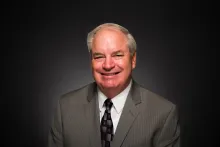
Robin Webber was born in Chicago, Illinois, in 1951, but has lived most of his life in California. He has been a part of the Church of God community since 1963. He attended Ambassador College in Pasadena from 1969-1973. He majored in theology and history.
Mr. Webber's interest remains in the study of history, socio-economics and literature. Over the years, he has offered his services to museums as a docent to share his enthusiasm and passions regarding these areas of expertise.
When time permits, he loves to go mountain biking on nearby ranch land and meet his wife as she hikes toward him.
