
Robin S Webber
This transcript was generated by AI and may contain errors. It is provided to assist those who may not be able to listen to the message.
Thank you very much, Sue, wherever you are. Appreciate that. Los Angeles, I'd like you to open up your Bibles, please, and join me if you would. And come, let's go to 2 Peter 3, and I'd like to begin reading in verse 1. Beloved, I now write to you this second epistle, in both which to stir your pure minds by way of a reminder, that you may be mindful of the words which were spoken before by the holy prophets, and of the commandment of us, the apostles of the Lord and Savior. Knowing this first, that scoffers will come in the last days, walking according to their own lust, and saying, Where is the promise of His coming? For since the fathers fell asleep, all things continue as they were from the beginning of creation.
And for this they willingly forget that by the word of God the heavens were of old, and the earth standing out of the water, and in the water, by which the world that then existed perished, being flooded with water. But the heavens and the earth, which are now preserved by the same word, are reserved for fire until the day of judgment, and the perdition of ungodly men. But, beloved, do not forget this one thing, that with the Lord one day is as a thousand years, and a thousand years as one day. The Lord is not slack concerning His promises, as some count slackness, but is long suffering toward us, not willing that any should perish, but that all should come to repentance. That means real change. But the day of the Lord will come as the thief in the night, in which the heavens will pass away with the great noise, and the elements will melt with fervent heat. Both the earth and works that are in it will be burned up. Therefore, since all of these things will be dissolved, here's the big question. Here's the thought. Everything else is led up to this. What manner of persons ought you to be in, notice, conduct, and godliness? Looking for and hastening the coming of the day of God, because of which the heavens will be dissolved, being on fire, and the elements will melt with fervent heat. Nevertheless, we, according to His promise, look for new heavens and a new earth in which righteousness dwells. I'd like you to also join me over, if you would, for a moment in Ephesians 5 to lay a foundation for the message that I want to share with you this afternoon. Ephesians 5, and let's pick up the thought in verse 14.
Therefore, He says, speaking of God, Awake, you who sleep, arise from the dead, and Christ will give you light. See then that you walk circumspectly, not as fools, but as wise, redeeming the time because the days are evil.
Therefore, do not be unwise, but understand what the will of the Lord is. And don't be drunk with wine, in which is dissipation, but be filled with the Spirit. I wanted to share these scriptures with you to lay a foundation for the subject that I want to bring up. For some of you, it is a subject that is perhaps not new. Perhaps you first began hearing about this subject 30, 40, or 50 years ago, or maybe even 30 months ago, or 3 years ago. For you that are of an older generation, perhaps in a sense, when you first came into this way of life, you teethed on it.
It really grabbed your attention, and you recognized that you needed to heed God's Word. For some of you that are younger, millennials, ex, y's, and z's, and everything in between, perhaps your mind is not focused on it, perhaps your heart has not steadied itself on this subject. Perhaps, in a sense, that generation is, as we often say, into relationships. And that's well, and that is good. But I want to bring you a thought that actually encompasses the entire Bible about a relationship, perhaps better put, as a confrontation between two cities.
And we're only talking about two cities today, because that's what the entire Bible is about. It's basically a confrontation between two cities. Number one, Jerusalem. Number two, Babylon. And that's going to be my discussion today, and my hope to show you the importance of understanding Babylon. It's a word that appears throughout the Scriptures. And it's a scriptural headline that is not going to go away. Sometimes people will say, well, we've been coming to church for years and years and years, and we've heard this subject, and seemingly things aren't changing.
Well, perhaps you're not on the same planet that I am. I think things are changing. I think things are moving ahead. I think things are dynamically coming into a state of confrontation, not with a date, not by putting out a calendar, but recognizing that we are headed for this confrontation that the Bible talks about. And I want to talk about it with you, whether you're 80 years old, eight years old, or in between the X, the Y, the Z, and all the Millennials.
Because Babylon is something that you need to know about, and you need to understand. The DNA runs, well, frankly, past the time of Eden, towards a great archangel that fell. But you find its foundation at Eden, and we're going to build upon that, because Babylon is going to ultimately affect your future. And there is going to be what seemingly is an insanity that is going to come upon the earth.
But beyond that, there is tremendous and wonderful and fantastic news to recognize that ultimately Jerusalem that is above is going to triumph over Babylon that is here below. Let's again open up our Bibles. Join me, if you would, in Revelation 17. In Revelation 17, because it's here that we find the name, the term, Babylon, mentioned. In Revelation 17. And let's pick up the thought in verse 3. So, he carried me away in the spirit into the wilderness, and I saw a woman sitting on a scarlet beast, which was full of names of blasphemy, having seven heads and ten horns.
And the woman was arrayed in purple and scarlet, and adorned with gold and precious stones and pearls, having in her hand a golden cup full of abomination, and the filthiness of fornication. This is speaking fornication of an illicit relationship that ought not be. And on her forehead, a name was written, now notice, and I don't think you're going to have any hard time noticing because it's in all caps in my Bible, mystery, Babylon the Great, the mother of harlots, and of the abominations of the earth.
And I saw the woman drunk with the blood of the saints and with the blood of the martyrs of Jesus. And when I saw her, I marveled with great amazement. Let's notice here in Revelation 17, verse 5, we see a name mentioned there, and it is Babylon.
And this is speaking of a specific spiritual system with the divinely ordained brand, Babylon. Now, we need to understand something. When we study the Bible, and we go back, whether it's a prophet or whether it's a character in the Bible, whether it's even when Jesus came about, Emmanuel, God with us, Jesus, salvation, Yeshua from Joshua, God calls things for what they are.
This is very important because God puts a brand on this system, and we need to be aware of it.
We need to be able to understand the DNA, as it were, of what Babylon is about, because as this system emerges further in the world, we need to understand that the Los Angeles Times or the Pasadena Star News, it's not going to use the term Babylon. This is God speaking, not the editors of the Wall Street Journal or the London Times. This is God speaking.
God sees things and reveals things that man of and by himself simply doesn't understand. And that's why the term here, when it says mystery, Babylon the Great, God offers a clue. It's a mystery. Mystery in the English normally denotes something that's clueless or like a cloak and dagger intrigue with dead end results. You can't quite figure out what is going on. But the Greek word here is mustyrian. And it's not nearly as abstruse. This word in the Greek mystery conveys something quite unintelligible to the uninitiated, but something quite clear to the initiated. Let me go back again. Mystery. There are mysteries that are in the Bible.
Babylon is not the only one. There are times when God reveals a mystery and he begins to work with us. You know, when you say initiated, uninitiated, the initiator to those that God's spirit is working with and developing and guiding. And that there comes a time when God gives us, as we're going to be discussing today, friends, enough to consider. Enough to kind of tuck into our brain or lodge into our heart. As matters develop and as the need arises, just as it says about the Holy Spirit in John 16, he will teach us. Sometimes we're not ready to handle those things, but there comes a time when the Holy Spirit will reveal the things of God that we need and we will be able to comprehend it.
That's probably the most important thing over the years when I've gone on prophecy tours around the nation or Canada to share with people. Because sometimes they say, how will I know?
Maybe I'll be left behind. Famous book. Maybe I'll be left behind. No, no, no, no. When we talk about mysteries, when we discuss God's spirit working with us, I like to share with people that I have the greatest confidence that God is giving us right now what we need to know and not a bit more.
But that knowledge will expand as we need it. And when the time comes, I have the greatest confidence and the greatest faith that God's Spirit will direct us towards the right decisions. Now, there's one thing I've got to share with you before we go any further. How many cities did I happen to mention at the beginning of this message? I'm just seeing if you're awake. How many cities? You're sure. Just two. Babylon and Jerusalem. Now, I really appreciate God doing this because, you know, if there were more, it'd even be harder. And sometimes what people do, they don't understand what the Bible is saying. You only have one choice. You want to be a citizen of one of those cities. You can either be a citizen of Babylon, are you with me? And or you can be a citizen of Jerusalem. You don't gain, you don't receive, you do not get a third option.
It is not A, B, or C. All of the above. Because for every selection, there is a consequence. And that's why I'm bringing you this message. Let's move a little bit further then and unravel the mystery of Babylon and acquaint you with some very basic tools of understanding regarding this subject so that we can be initiated. Let's begin by focusing on the birth of this system.
Join me, if you would, in Genesis 10 verse 8. In Genesis 10 and verse 8. Let's take a look at it here.
In Genesis 10 and verse 8, we have the beginning, the birth of this system.
And it is shortly after the novation flood, man is beginning to expand, beginning to multiply.
And notice what it says here in Genesis 10 and verse 8. In Genesis 10 and verse 8, Cush begat Nimrod, and he began to be a mighty one on the earth.
And he was a mighty hunter before the Lord. And therefore it is said, like Nimrod, the mighty hunter before the Lord. And the beginning of his kingdom was Babel and Arrak and Akkad and Kalna, in the land of Shinar. Shinar being all of that which was Babylonia, as it were, in the land and in the midst of the two rivers. And from that land he went to Assyria and built Nineveh, Rhea both, Ur and Cala. And it goes on and on. Now, at first, the words in passing may not appear alarming, but let's take a closer and deeper look at what is happening here. Again, let's draw our attention here to verse 8. Nimrod, he began to be a mighty one on the earth, and he was a mighty hunter before the Lord. Therefore it is said, like Nimrod, the mighty hunter before the Lord.
Nimrod is identified as a mighty one or a mighty hunter before. Probably the key word in all of this. There's actually two key words. You might want to jot down mighty. We'll come back to that.
The word right now we're going to be focusing on is before, before, before the Lord. What's that mean that he was going before the Lord? Was he a trail guide? Or what's happening here? What does the word before mean? That actually comes from a word in the Bible, limphine. And what that really means is against and or in face of. Against or in face of. So when you look at that and understand the root word, what this is really saying is Nimrod, he began to be a mighty one and he was a mighty hunter against and or before and or it sets up an atmosphere of confrontation.
Before God. Nimrod actually comes from the word and I'll spell it for you. Very simple. Marod.
M-A-R-A-D. Which literally means he rebelled. So here we are. It's after the flood and Mr. and Mrs. Noah got through the flood and their sons are there and the daughter laws are there and mankind begins to multiply. And then we have these issues that begin to develop with this Nimrod.
Now, what was going on here? What does it mean that he's a hunter? Well, let's remember that man was multiplying, but also let's understand that the the animal kingdom as it were tends to multiply faster than we do. And so the lions and the bears and the critters were out there and Nimrod became a champion as it were of the people in that sense protecting them.
Is that of and by itself bad?
I don't think so. But this lays ground for what's going to occur in the future to recognize that at times when things actually start for perhaps a good reason, they begin to develop into what we might call a controlling reason or purpose to where you're not simply taking care of people, but now you're beginning to control people. He took that which was by necessity a need to preserve commerce and travel and reworked it into a means of control that was opposite of what God was doing. And ultimately, he wasn't just simply hunting then beast a prey, but his fellow man. It says that, if you'll notice again in verse 8, it says that he was a mighty one. This mighty one, these are terms giants, they come from the word Nephilim, which means, it's interesting, we're going to build on that for a moment, as a mighty one, he brought forth an attitude that was pre-flood. Join me if you would in Genesis 6 and verse 4, because the same terms are used over there. This famous thought in 6 verse 4, there were giants on the earth in those days, and also afterward when the sons of God came in to the daughters of men, and they bore children to them. They were the mighty men who were of old, men of renown. These mighty ones, these men of renown, were those that had come down from the line of Cain. They were opposed to the line of Abel. They were opposed to the people of God.
They were mighty men. They were men of renown. And it basically comes that the word Nephilim, which is the root term from the Hebrew, is to fall, implying praying or falling on men. Now, what I want to share with you is you see this term used pre-flood. Now you see it post-flood. And what we see then is that DNA, as it were, if I can use that as a modern term, has skipped over the waves of the flood and is alive and is well. And something's happening here. What is happening? Nimrod is establishing the first earthly kingdom, and it's made there in verse 10. The illusion of Scripture is simply this, that it's apart from God.
God had made no one in Genesis 9 and verse 1, which is interesting. Just jot it down. Genesis 9, verse 1, it's actually a startup of creation again. Much of the verbiage there is almost a reenactment of Genesis 2 and Genesis 3 and a blessing upon no one. He says, you are to go out.
You are to spread, spread across the world. Go out, spread. Yet here is Nimrod, a man that is in confrontation to God, and he's building a city. Cities are where people do what? They congeal. They come together. God had said, spread. Now he's building a tower. Why is he building a tower? I know we've oftentimes perhaps seen pictures of a Renaissance artist's conception of what the Tower of Babel looked like, and it's kind of conical, and it's going up, and it's going up, and almost reaches the moon. I don't think that is quite the story of what the Tower of Babel was like. More than altitude, you might want to jot this down. It was about an attitude. An attitude of fear. An attitude of confrontation. Confrontation because they did not take God at his promises. Josephus actually brings out, as it were, that basically there was a fear or a distrust that God was not going to keep his promise. Remember the promise of the rainbow?
And that God said that I will not destroy the earth again by flood. But a tower went up.
Very interesting. In Genesis 11, verse 1, Now the whole earth had one language, one speech, and it came to pass as they journeyed from the east, that they found a plain in the land of Shinar, and there they dwelt. Then they said, Come, let us make bricks and bake them thoroughly. They had brick for stone and had ashwalt for mortar. And they said, Come, let us build ourselves a city. They didn't ask God. They just decided to build a city. They decided amongst themselves, We're going to build a city and a tower whose top is in the heavens. And let us make a name for ourselves, lest we be scattered abroad over the face of the whole earth. God had said, You are to go out. I've given all of this to you, Noah, and your sons. Go out!
But humanity had a different idea. But the Lord came down to see the city and the Lord, which the sons of men had built. The Lord said, Indeed, the people are one and they all have one language, and that is what they begin to do. Now nothing that they propose to do will be withheld from them. Come, let us go down and confuse their language that they may not be understood by one another speech. So the Lord scattered them abroad from there over the face of the earth, and they ceased building the city. Therefore, its name is called Babel, because the Lord confused the language of all the earth, and from there the Lord scattered them abroad over all the face of the earth.
Very interesting when you see what happened here. Is humanity built a tower? Here's what I like you to jot down if you're taking notes. It's a tower whose foundation was based on fear. Based on fear.
Fear of the Almighty, fear of the Creator, fear that God was not going to keep his promises.
God had to intervene. It's interesting the term Babel literally means if you want to jot this down. It's going to be a class to a degree and a sermon in other parts. Babel or Babel literally means confusion as the tongues were confused. It's very interesting that Babylon, which is a Greek variant of the Akkadian term babalu or bab-li, stems from that kingdom of Babel, means gateway to the gods. Babel means gateway to the gods. When looking at all of this, just a few thoughts of etymology because names have meaning. Babel means confusion, gate of God. Babylon, the term that we use in Revelation 17, confusion or gate of Baal. It's interesting that when you talk about the land of Shinar, which really coincides with Babylonia, if you were a Babylonian, you might want to jot this down. Babylonians were just simply sons of Baal. Now, I know this is a lot of words to you, but I want you to begin to understand something. These towns are not just named after Hickory Creek or Eagle Rock. The term god or gods is coming into play. This is very interesting as we begin to develop and where the confusion comes and how Babylon has been able to dominate civilization for so many years and keeps on arising. The demise of Babel cements in our mind the following, and this is what I'd like to share with you. It begins to cement in our mind the continuation of a conflict between two systems. I'd like to make it simple. You might want to take a note on this. This is often how I take a tape measure to the Bible, and it makes it very simple.
It makes it very simple because there's going to come a time when it's going to seem confusing, and that's why we need to talk about these things now while we can. The Bible is not confusing.
The Bible is often used as a source of, as you're going through 1 John right now, light or dark, love or hate. There's a contrast, and God always uses contrast to not only teach, but to instruct His people. Let's begin to understand the DNA that runs all the way back to Eden. Are you with me? Here we go. We need to recognize that this Bible we can page right through it is basically what I call simply a thread of two. A thread of two, not three. Two is hard enough to understand. Number one, there's a God of heaven. Are you with me? There is a God of heaven, and there is the God of this age. The God of heaven and the God of this age, there are then two trees. Two trees that were planted in Eden. Those two trees depict two ways of life. The way of give, based on proper motive of outflowing and outgoing concern, and then the way of get. Two gods, two trees. Two ways. Next, two outcomes. There are two outcomes.
Every selection that you make in life has a consequence. God calls them blessings or cursings. Then we recognize that beyond that, these consequences, we also recognize beyond blessings and cursings that it's also the ultimate consequence is life and or death. There's nothing really in between. It's not like it's like there's nobody that's half pregnant. There's nothing...
Oh, is there? Somebody laughed. No, there's not. You either is or you isn't.
Beyond that, we have to understand then that there are two cities. Those trees represent two cities.
Jerusalem above. Not Jerusalem below, but Jerusalem that is above, which is the mother of us all.
The church is not our mother. You will not find that in the Bible. Jerusalem above, Galatians 4 and verse 26. Galatians 4 verse 26, Jerusalem above, which depicts the throne of God, is defined as Paul, as the mother of us all. In confrontation with that is Babylon that lies below.
Then we also recognize then that there are also two churches, a great world church, a great religious system, and then what is defined in Revelation is that woman who has to flee to the wilderness. One that is representative of what Jesus said long ago in Luke 12 and verse 32, when he said that you are but a little flock. So are you with me so far? There's just two choices. There's not three choices, but at times, because of world situations that are going to come in the darkness will descend, you better have the light beforehand to know what is coming. Now, this system that we've talked about, this system that took root on this side of the flood, God destroyed and put away. They built a tower and Babylon went on for about 1500 years. And it's very interesting that with Babylon, it was identified basically as a system of priests and kings, a priest-king system, kind of religion and temporal power all mixed together. That's how Babylon was ruled.
And then under Nebuchadnezzar II, all of a sudden it blipped up again, became the dominant power that was on earth. And it's very interesting that under Nebuchadnezzar II, Babylon was an incredible city. If you believe half of what Herodotus wrote, and I know Dr. Lewis has probably read Herodotus. I had that opportunity in classical literature. Herodotus, if you just cut it in half, his Greek imagination, it was quite a city. Herodotus says that the walls were 300 feet high, says that the city was 60 miles around, the walls were 30 feet deep, says that six chariots could ride side by side on the on the top of those walls as Eurython's river flowed through. You had that great ziggurat, the great temple, you had the hanging gardens, you had the fantastic-looking Ishtar Gate. Babylon was incredible, but it reminds you of something very important. Not everything that glitters is gold. And there we have this individual named Nebuchadnezzar. And I'd like to focus on this king for a moment. Nebuchadnezzar is very important, and I want to share two reasons why. Number one, number one, he confronted God. Number one, he confronted too. And number two, additionally, he was the nemesis of the people of God. It is this king who sacked the temple of God and deported the people of God as well and stole the treasures from God's temple. Took the gold, took the silver, took the vessels. It's very interesting, too, and it leaves no room for doubt that buildings were very important in this Babylonian system. Under Nimrod, powers were built.
Under Nebuchadnezzar, walls were built. There was a common denominator, and here's what I want to share with you, and something that we need to be careful as the people of God. I'm building to a point here. There was a common denominator that came out of this system called Babylon. One was pride. Pride. Another was independence, and another was self-security. We'll take care of ourselves. And in the ancient world, Babylon epitomized the epidem of human achievement. So much so that Babylon actually took in and conquered Egypt, and that ancient civilization of Egypt was a personification of the tree of good and evil. There was great good, and there was great evil. Just ask one of the Hebrews around 1400 BC. The same people that could build pyramids and take the nylon to cultivate the desert around it, at the same time dehumanized human beings. Interesting when you think about it.
Now, what I want to share with you about this system that seems so intact, that when you recognize Nebuchadnezzar and the greatness that was Babylon, you would have thought that it would have lasted forever. Join me if you would in Isaiah 47. Isaiah 47.
And let's pick up the thought in verse 5. God has something to say about Babylon. In Isaiah 47, in verse 5, notice what it says here, sit in silence and go into darkness, O daughter of the Chaldeans. The Chaldeans were actually the people that took over Babylon under King Nebuchadnezzar.
For you shall no longer be called the lady of the kingdoms.
I was angry with my people. I profaned my inheritance, and I even gave them into your hand. You showed them no mercy. On the elderly, you laid your yoke very heavily.
And you said, I shall be a lady forever.
So that you did not take these things to heart, nor remember the latter end of them.
You know, are you with me? When civilizations emerge, you think they're going to go on forever. Think of the United States of America in 1945.
The one nation that came out on top during World War II.
Europe was loose bricks. Japan had been nuked. Russia had lost how many millions of people? 20 or 30 million people. You get this feeling sometimes that you think your civilization, like Babylon, is going to go on and on and on. Just like, let's reduce it from civilizations just to young people.
When you're a 21-year-old guy, I'm looking at the fourth row or so, you think you are always going to be Superman.
I am Superman. Or when you're 30 or 40, you think this thing is just going to go on. I don't need to pay attention.
No wave is going to knock over my sandcastle. You don't realize how well it's built.
And that's what God is saying and directing towards Babylon. Here's Babylon saying in that sense, nobody's going to topple me. I'm going to be a lady forever. Therefore hear this now, you who are given to pleasures, who dwell securely, who say in your heart, I am, and there is no one else beside me. I shall not sit as a widow. It happens to everybody else, every other empire, every other civilization. Nor shall I know the loss of children, but these two things shall come to you in a moment in one day, the loss of children and widowhood, and they shall come upon you in their fullness, because of the multitude of your sorceries, for the great abundance of your enchantments. For you have trusted in your wickedness, and you have said, no one sees me. Your wisdom and your knowledge have warped you, and you have said in your heart, I am, and there is no one else beside me.
Therefore evil shall come upon you, and you shall not know from where it arises, and trouble shall fall upon you, and you will not be able to put it off, and desolation shall come upon you suddenly, which you shall not know.
Now this sounds a little spooky. I want to talk to the young people for a moment.
This is not about Jerusalem above, where God's throne is.
This is about the systems down here below that God refers to as Babylon, those that are in confrontation to God's loving law and his divine governance, and are apart from the realm of his dear son, Jesus Christ.
And to recognize that there is going to come a time when God is not going to be just simply the great equalizer, but that God is going to be the judge. And no matter how it appears, or that when this system ultimately does appear, and seems like it's going to go on and on and on, to recognize that in a day and in an hour, it's all going to come down.
And you do not have to be a part of that system. And that's why God speaks to his people today. And that's why I'm talking to you today. You know why I'm talking to you today, brethren? Because here we go into the lazy, hazy days of summer. Time to relax. Time to be on vacation.
Kind of lay back and enjoy the beach or enjoy a ballgame. And all of those things are wonderful. That's a part of the human dynamics. But, brethren, we also have to remain focused.
We have a vocation. And we can never spiritually be on vacation.
We have to understand that these things are rising. These things are emerging. Frankly, they have always been. Babylon is a latent host that is right underneath the service. And when the time comes... Oh, he's been there since Eden. Before Eden.
After the noation flood. During the time of Nebuchadnezzar. And God calls things for what they are.
What this basically tells us are two things when we've read Isaiah 47.
Number one, God proclaimed this 200 years before it happened. This is the book of Isaiah.
And Babylon did not fall for 150 to 200 years after that. I wanted to share something with you. God calls things ahead of time. Are you with me? God sees things ahead of time. You thought maybe it was just Babe Ruth, right? Some of you younger folk may not know the story about Babe Ruth. No, the babe... One time he went up to the home plate and he called it. He just, you know, by legend he pointed and he said, it's going... Not too many people could do this.
The babe could. And he said, it's going out. And so the Bambino... I wasn't alive then. I know some of you thought I was alive in the 20s and 30s. I wasn't really. So the Bambino got up there and he knocked it out. That's why they call him the babe.
God sees beyond a ball field. God looks into human history. God sees what he has in store for each and every one of us that surrender to him. And he says there's going to be some bumps along the way. There's going to be some tough sledding through this marsh field called Babylon. But when it's all said and done, as he says, he says that I declare the end from the beginning and the beginning from the end. And that's what makes me God. And that's what's going to happen. So we see that God said this was going to happen hundreds of years before Babylon fell. Number two, even as physical Jerusalem was destroyed under Babylon, Babylon was also defeated. So there's this interplay between Jerusalem and Babylon that is occurring at that time. Again, when you look at it, I want to share something with you. Notice verse 8, Isaiah 47. Like Babel, God gives a diagnosis. It's just like a spiritual doctor. Therefore, verse 8, hear this now, you who are given to pleasures, who dwell securely, who say in your heart, I am, and there is no one else beside me. I shall not be a widow.
Again in verse 10, where it says, no one sees me, and you have said in your heart, I am, and there is no one else beside me. One key element of Babylon, you might want to jot it down, is pride.
Is pride. Look at me, mirror, mirror on the wall. Who's the most beautiful beast?
Of them all. But they're not calling themselves a beast. I'm using that as a parody, but that pride, self-absorption, without God. Look at me. Look, look, look, look at me. And the whole focus, coming down upon humanity, coming down upon our human self, that's opposed to God. That's not godly. And we are increasingly, again, when we see the the ebbs of Babylon in our own culture, we see a self-absorbed society.
Of where it's all about me. Focus on me.
You look at the technology, and you recognize that so much of it comes back to focus on the self.
Everybody's got to see me. Everybody's got to know about who, you, no, me.
Picture, picture, picture, picture, picture, picture, picture, picture.
Of who? Your grandmother? No, me!
Aren't I wonderful?
I'm so beautiful.
Now, please understand, I think it's cool that people get together and do that and take up some shots.
I'm saying, understand where this is going, though.
Understand that what sometimes starts out as a good thing becomes a matter of self-absorption.
God's focus is not on ourselves, but it's towards him.
God's focus is not on ourselves, but it's towards others.
God's focus is not to be a slave to self, but to be a servant to him and to be a servant to others.
Think of what is going around and to recognize that even like the churches in Revelation 2 or 3, whether it be Smyrna, Thyatara, Philadelphia, Ephesus, all of them were, in that sense, impacted to a degree. These were Christians.
These weren't the Jupiter worshipers or the Diana worshipers. These were the Christians that absorbed the culture that was around them.
And that's why we can't go on vacation spiritually speaking. We have to always stay in tune with what is happening here. Join me if you would in Daniel 4 verse 16. Daniel 4 verse 16.
In Daniel 4 verse 16, again, it's very interesting how God sees things versus how sometimes we see things. And that's why our head has got to be in the Word of God and in the values of God to understand how he is seeing things. In Daniel 4 verse 16, speaking of Nebuchadnezzar, where it says, Then you notice in verse 29, same chapter, He was walking about the royal palace of Babylon, and the king spoke saying, Is not this great Babylon that I have built for a royal dwelling by my mighty power, and for the honor of my majesty? And while the word was still in the king's mouth, a voice fell from heaven, King Nebuchadnezzar to you it is spoken, The kingdom has departed from you, and they shall drive you from men, and your dwelling shall be with the beast of the field. And they shall make you eat grass like oxen, and seven times shall pass over you, until you know that the most high rules in the kingdom of men, and gives it to whomever he chooses. Now notice verse 33. Very important because we're going to go to the book of Revelation. You may want to circle that. That very hour, that very hour, the word was fulfilled concerning Nebuchadnezzar. He was driven from men, ate grass like oxen, and his body was wet with the dew of heaven, till his hair had grown like eagles' feathers, and his nails like birdy claws. For the younger people, this guy was one scary dude. Probably the first werewolf before Lon Chaney. The key is this. It happened in one hour. The man that had built those mighty walls of Babylon, built the ziggurat, built the hanging gardens, created this fantastic Ishtar gate that dazzled all the kings of the earth as they entered into Babylon. And God said, you know what? I see things that nobody else sees. He has the heart of a beast. And if he has the heart of a beast, the beast he shall become. You see, this aspect of beast does not happen in the future. This is an aspect of the Babylonian spiritual DNA that takes place from the garden forward. Let's understand when you think of just the very word. You might want to jot this down again. This is like a class.
Babel. B-A-B-E-L. B-A-B-E-L. E-L. E-L means what?
God. Very interesting that this system has God in it. And that's a part of what you and I need to be aware of that in the future as the beast does arise, as mentioned in Revelation 13. And this system of priest-king does merge, of state and religion does merge. Understand it is religion. Understand that God's name will be used in it. Not Buddha.
Not Muhammad the prophet. It'll be about God.
And that's how Satan has always operated. He always confuses the subject by bringing up God.
Who can use a good example of that? It's right in the book of Genesis, right?
Well, when the serpent is talking to Eve, who are they talking about?
Has not God said? God comes into the equation, does he not? See how this works?
God comes into the equation. Well, that's not bad. It must be good. But the world that you and I live in today, the world that you and I live in today, the world of the United States of America, God is also mentioned in the equation. We hear it every day. All I have to do is, if I had one here, I have it for the penny jar later.
You know, got pennies, got a little Kleenex. Okay. What else do I have in there? Maybe there's a 20. How's that? No, is that, you know, we can take our dollar bills. What's it say on our dollar bills? It says, in God we trust. How many Americans do you really think, really believe that, below the veneer of what is written on their dollar bills today? And I'm not saying that there aren't many dedicated and devoted Americans out there with a biblical base of belief that are praying for this country, but I'm saying the culture as a whole. If you turned on television today, if you saw the advertisements that are on the billboards, if you saw what was coming across your television screen, if you heard what professors were teaching our young people today in universities, and parents are paying for this, for the kids to be brainwashed. I do not think that that would acquaint with in God we trust.
Our society is slipping away from any moral rooting.
When we say in God we trust, we carry this in our pockets, we put it in our purses, and we exchange it with monetary value, but it means nothing to so many people that now carry it.
And like it says in the book of Romans, because they did not care to keep God in their mind and in their knowledge. It says that God gave them up over to a reprobate mind. That means a mind void of judgment, not clear thinking, not thinking of the consequences of their actions.
I just recently came to my acquaintance that today, and I remember many, many years ago when the church put out a book called God Speaks Out on the New Morality.
And then ultimately that went the way of the dinosaur, because soon people didn't know what morality was any longer. Just simply an amoral world, because the word when it says that God gave them over to a reprobate mind, that means a mind void of judgment, not able to see the consequences, only thinking about the moment. Just like Eve in the garden looks good to eat, make one wise, pleasant to the eyes, so far so good. Today we have young people that are in college, and now in high school, that they are what we call hooking up. Hooking up is not putting bait on a fish line, on a pier. Hooking up is just where a boy sees girl in the classroom.
It's not a matter of living together. That almost sounds old-fashioned anymore. Just for the moment, momentary convenience of coming together, rage of hormones, relationships. Not even thank you, just see you later. Hooking up.
Can we begin to understand the consequences of what is happening in a world that's apart from God, and how we begin to put it back together? I find it increasingly challenging as a minister of the Scriptures, as a pastor trying to help people, that sometimes because of family situations, that they are so broken, and that there are so many broken laws, that it's actually hard to to help people. Now God's Spirit can make breakthroughs, and it does every day around the world. But, ladies and gentlemen, that's the world that we live in. That's the secular world. That's the humanistic world, much less the world of Babylon. What I'm trying to show you is that there is... you can have this form of godliness. You can have, in God we trust on a bill, but it doesn't mean anything. It's just an exchange piece. And young people that are here, you were not made in this lifetime to be just simply as a young man, or as a young woman, or our young adults here, or any of us, simply to be exchange pieces, like pawns. We are God's children. We are made after God's image and in God's likeness. We are not the byproduct of evolution. We are a special creation, thought so kindly by our Heavenly Father. And He thinks so much of us that He made us in His image and after His likeness. And He created this thing called marriage, this relationship that is parallel to conversion, that is the last for a lifetime, through thick and thin, and sometimes just even sin. But to be committed to that institution, to be committed to the wife or the husband of your youth, and to live out your days, gray hair or no hair, wrinkles and all.
We need to understand this. We need to understand now what is happening in this humanistic and this secular world, because, brethren, Babylon is coming. And if we cannot run, as it says in the book of Jeremiah, if we cannot run with the footmen now, dealing in the humanistic and the secular world, how then are we going to deal with Babylon as it emerges in the future? This religious system, this world-ruling system that's going to come together and look like the bright lights and look like everything is going all right, like it says in Revelation 18. Because, after all, it's the economy's stupid and there's going to be the mark of the beast and everybody's going to be working together. But you need to understand what's happening now and how the culture can impact you. And for you to understand that, in that sense, right now, as you and I are dealing with humanism and secularism, and actually still the most religious country in the western world, is to recognize that we have to do our homework now. We have to be astute now.
Character, you might want to jot this down, character is making a lot of little decisions correctly along the way. Character is making a lot of little decisions correctly along the way, not waiting for the big one, not waiting for the Joan of Arc scene where you're led to the stake and I'll be so brave and I'll do the right thing then. No, no, no, no, no. You don't find your values in a trial. You take your values into the trial with you.
Now, this system is once again going to emerge. We know that what happened here was that, during the time of the early Christians, I'm going to go about five more minutes here, that with the time of the early Christians, this Babylon was mentioned in Revelation 17.
The early Christians understood what was being talked about. It wasn't being talked about anymore about that city that was on the Euphrates, but that was being linked with that sense of the city that was on the Tiber, the city of Rome, because that's the city that was then persecuting the early Christians. And it's very interesting that even this city called Rome, Roma in the Latin, on the Tiber, was a city that itself was in transition. It had become Babylon. It would be very interesting that if you had visited Roma, alla 50 AD, you would have found that basically the culture, the ethnicity, and the religion was all changing. There had been a convergence, there had been a triangulation. Stay with me, please. There had been a triangulation from the Babylon of old to Antioch of the East to Rome on the Tiber. In fact, there was a phrase that went around in the days of Rome saying that the Orantes runs through Rome. The Orantes, being the river that was, maybe you've been there, Frank, and you travel everywhere, and Antioch, the Orantes is the river that runs through Antioch or dead. In other words, it was talking about a transference, and what we saw over about 500 years is the mystery religious system. The cult system of the East went from Babylon on the Euphrates to Antioch, which was the great eastern city, on the Hellenistic front, to where their ethnicity changed, their religion changed, their culture changed, to ultimately, as the Roman armies were decimated, where there's a vacuum, people have to come in to fill that vacuum, and people were brought into Italy. And thus, the people began to see that not only Christianity, but the old gods were changing in Rome, everything was changing, and it was becoming Babylon.
There is, in that sense, what started in Babylon, both as a state and as a religion, that became a great world church is yet going to come on the scene once again. And we need to understand that.
I want to show you a verse in Revelation 17.8 as we begin to conclude.
In Revelation 17 and verse 8, let's notice what it says here. The beast, verse 18, and the woman whom you saw is that great city which reigns over the kings of the earth. Could not have been talking about Babylon on the Euphrates at that time, it had to be speaking about Rome. And to recognize what happened in Rome as the ages went forward, that it became a religious temporal power, and only that power is now a great church. When I talk about the great church of today, that of Rome, I'm not here to dispute that there aren't many many fine people. What I'm saying is that we need to understand that that framework, that framework is there. The framework is there. That great imperial church that has embassies around the world that is the only sovereign ecclesiastical state on earth. Think that one through. Simply has to have life breathed into it once again to take its role that is there in the book of Revelation. We need to understand that. Let me begin to conclude then with this thought.
I want to share Revelation 18.4. Revelation 18.4. As we see this system come up that is going to be in confrontation with Jerusalem above. And I heard another voice from heaven saying, Come out of her, my people, lest you share in her sins, and lest you receive of her plagues.
For her sins have reached to heaven, and God has remembered her iniquities.
The call of God is always, brethren, to get up, to get out, to get going. Come out of her.
Which means that when this is spoken there is always a present tense.
We are in that sense in it right now. We need to understand that. What was the call to Abram? Get out from your country, your kindred, and Father's house to a land I will show you.
Now we're not taking off anywhere right now. What is being spoken about here is a way that God shows us through the Bible. A way that is diametrically opposite to Babylon and the king of that heavenly Jerusalem, Jesus Christ. What a contrast to Nebuchadnezzar. When you recognize that here was a man that was not born in a comfy bed, but was born in a manger, was not born in a room full of incense, but probably nearby was the smell of animals. A man that did not have a comfy pillow to lay his head on and say, aren't I so great? But a man where it says that himself said, the son of man does not have a place by which to put his head upon. A man that did not march in front of armies to conquer others, but a man that marched into hundreds and thousands of people to feed them, to heal them. A man that did not conquer other nations, but conquered that part of humanity in him that he could say, not my will, but thy will be done. You see, there really is a contrast between Babylon and Jerusalem. You have to understand that. You have to know that. You have to see that. You have to understand that at that time that God, as these days emerge, that God will give you his Spirit and you will see things as they are. I don't know if it was in this congregation or another one where I mentioned it's like those goggles that they wore over in Vietnam to where, ever since that time, America owns the night when it comes to battle. When all the other armies cannot see the Marines and the army guys, they can see clearly into the night and that's exactly what God is going to do in the future.
We don't need to be afraid. Babylon does not need to be something that anybody needs to be afraid of. It just simply needs to be understood and understand that God has a solution for it. He has a cure for it. In fact, I want to show it to you here in Revelation 18. Join me there in Revelation 18 and let's notice what it says here. Remember how Nebuchadnezzar came down in one hour?
Well, it's very interesting how this is put in Revelation 18 in verse 10, speaking about Babylon in the future. Standing at a distance for fear of her torment, alas, alas, alas, that great city Babylon, that mighty city, for in one hour your judgment has come. Again, verse 17, for in one hour such great riches came to nothing. Every shipmaster, all who traveled by ship sailor and as many as trade on the sea, stood a distance and cried when they saw the smoke of her burning.
This is given to you and to me as a source of encouragement, brethren, whether it is specifically in our generation or generations to come, that God's word is true, that the heavenly Jerusalem is supreme, the one that we have already surrendered to in our lives when we're baptized, and we've said, God the Father, your kingdom and the king of that kingdom, your son, come into our life, and to recognize that that gives us tremendous blessings, and it's that same king that is going to come. See, a lot of people when they get into this, they don't read the end of the story, and you've got to read the end of the book to recognize that God wins, and if God wins, we win. And what is it about human beings? They write lots of books about the four horsemen of the apocalypse, you know, the scary ones that are always on the booklets, and people can get mesmerized with the four horsemen of the apocalypse, and they forget that there is a fifth horseman of the apocalypse. Did you know that? I'm watching your eyes. Are you sure? How many people think there's a fifth horseman of the apocalypse?
Your pastor thinks there's a fifth horseman of the apocalypse?
Well, thank you. Okay, yes there is. What's apocalypse mean? What's the word mean in the Greek? Go ahead, John. Revelation or the unveiling. See, that's the mistake a lot of people make when they, even when they've come to church for a long time in their life, they just get stuck on the four horsemen of the apocalypse, you know, war and death and pestilence and all the bad stuff.
Revelation 19 talks about the fifth horseman of the apocalypse, the fifth horseman of the book of Revelation, the fifth horse of the unveiling, that when man is at his darkest, that fifth horseman appears, the one that is in the white robes, the one that is on the white horse, the one that is faithful and true in Revelation 19, and he conquers and he puts away the other four horsemen.
Thus, we understand, as we understand Babylon and Jerusalem, that humanity is not headed for despair, but for destiny. God says he's going to do this. God says, I'm going to send my son. See, the very Sabbath day that you and I are abiding in right now, this day of rest, reminds you and me prophetically that a day of rest is coming when Babylon will be no longer and Christ will be on this earth.
He who is the fifth horseman. I've got some homework because I'm going to conclude. For those of you that have a notebook and a pen, do me a favor because not too many hands went up and we come to church to learn, don't we? Right down fifth horseman of the apocalypse.
Because when we understand that, that makes all the difference in the world as to whether or not you will not make a third option, but make the heavenly Jerusalem your first option as this Babylon arises. I think we have some homework. That's good. That's why we come to church, to learn. Sometimes even when we've gone through about Babylon 30 or 40 years, to understand there's a fifth horseman of the apocalypse. Look forward to seeing you after church.
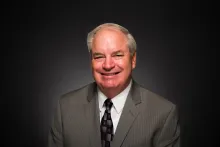
Robin Webber was born in Chicago, Illinois, in 1951, but has lived most of his life in California. He has been a part of the Church of God community since 1963. He attended Ambassador College in Pasadena from 1969-1973. He majored in theology and history.
Mr. Webber's interest remains in the study of history, socio-economics and literature. Over the years, he has offered his services to museums as a docent to share his enthusiasm and passions regarding these areas of expertise.
When time permits, he loves to go mountain biking on nearby ranch land and meet his wife as she hikes toward him.
