
Robin S Webber
This transcript was generated by AI and may contain errors. It is provided to assist those who may not be able to listen to the message.
Join me if you would. Let's open up our Bibles on this God's Holy Sabbath day. And let's turn to...and also thank you, Ayah. Gotta get Ayah in there, too. Thank you very, very much. Let's go to 2 Peter 3, verse 1, to create a foundation of where I hope to take you today. It says, Beloved, I now write to you this second epistle, in both of which I stir up your mind by way of reminder, and that you may be mindful of the words which were spoken before by the holy prophets and the commandment of us, the apostles of the Lord and Savior. Knowing this first, that scoffers will come in the last days, walking according to their own lust, and saying, Where is the promise of His coming? For since the fathers fell asleep, all things continue as they were from the beginning of creation.
And for this they willfully forget that by the word of God the heavens were of old, and the earth standing out of water, and the water, by which the world that then existed perished, being flooded with water. But the heavens and the earth which are now preserved by the same word are reserved for fire until the day of a judgment and perdition of ungodly men. But, beloved, do not forget this one thing, that with the Lord one day is as a thousand years and a thousand years as one day, and the Lord is not slack concerning His promise, as some count slackness, but is long suffering toward us, not willing that any should perish, but that all should come to repentance. But the day of the Lord will come as the thief from the night, in which the heavens will pass away with a great noise, and the elements will melt with fervent heat both the earth and the works that are in it will be burnt up.
With all of this said then, therefore, since all these things will be dissolved, what manner of persons ought you to be in holy conduct and godliness, looking for and hastening the coming of the day of God, because of which the heavens will be dissolved, being on fire, and the elements will melt with fervent heat? Very interesting, verse 11, it says, therefore, since all these things will be dissolved, all of these vast elements of time and events, the question really comes down to what manner of persons ought you to be in holy conduct?
Not just any kind of conduct, but holy conduct and godliness, keeping our focus on God.
Very interesting that, at times, even as Christians, our attention span can become distracted. Our focus can become distorted.
We live in a society where there is continual turnover of fashions, of apparel, continual turnover almost at micro speed of technology.
You go down to a store and one day you get a smartphone or another item, and the next day there's an even smarter phone.
They don't call it a smarter phone, but they call it a smartphone or a tablet, or they call it this or they call it that. It's just amazing all of the things that change over and just grab our focus, grab our attention.
And we get involved in that rather than in, shall we say, the macro world of God's plan and God's purpose, and actually what's going on even outside of our house.
Yes, indeed, sometimes, as the Scripture says, we are to live day by day and to pray for our daily bread.
But we also have to have a worldview. We also have to have a Bible view of things that have been coming at us for ages and are moving through us right now, and are yet going to occur in the future.
And simply because they have not happened and or because our mind's eye is off the ball does not necessarily mean that they're not happening.
Join me if you would in Ephesians for a moment.
Ephesians 5.
And let's pick up the thought, if we could.
In verse 14, Therefore, he says, Awake you who sleep, arise from the dead, and Christ will give you light.
This was most likely, in a sense, a song that was sung in the very early church.
Normally, when you see these parenthetical thoughts, it's actually an ancient tune or ancient lyrics to something that early Christians were singing at that time.
And it's one thing to sing it.
It's another thing to believe it.
And it's another thing, as it says here, to wake up.
See then that you walk circumspectly, not as fools, but as wise, redeeming the time, because the days are evil.
Therefore, do not be unwise, but understanding what the will of the Lord is. It says, Don't be drunk with wine, in which is dispossession, but be filled with the Spirit.
Don't get drunk. Don't get distracted. Don't get inebriated with our own thoughts and or what's happening out there in the world that so often the culture of this world tends to sink right into us. And we become a part of it, just like the leaven can move into the host bread and create a different texture.
And the Church of God has always been affected by that, whether it was back at Philadelphia, or Laodicea, or Ephesus, or the Church of Jerusalem.
We are affected by all of that that is going around us.
That's why I want to go back to a message today and an understanding that the people of God have understood for 2,000 years since these verses were read.
Oh, at times, perhaps, we understand them a little bit differently as time goes on and events are magnified.
But there's a basic understanding that we have to have to root ourselves to recognize just because apparel is changing or because technology is changing.
There are things that are on track that are going to happen potentially in our lifetime, if not yet beyond, that we need to be aware that are going to affect our families and our children and grandchildren.
That's why I want to take you to Revelation 17. Join me, if you would, there for a moment.
Revelation 17. I want to create a focus this afternoon for you that are here in Redlands.
A focus of the really big headlines and stories that are not going to go away and events that are going to happen. I can't necessarily say I understand all of the events that are going to happen, but God does give us enough to consider.
And thus, when these events do arrive on the world scene, I do believe, as Mr. King was bringing out, that God's Spirit does have an ability for us then to comprehend and that we will know and we can be assured. We do not have to be snoockered. We do not have to be distracted. Our worldview, our Bible view, our God view, and our view of what God is striving to do with us does not have to be distorted.
In Revelation 17, you're already there. Allow me to get there. I'm the one talking up here.
In Revelation 17, let's notice what it says here, beginning in verse 1.
Then one of the seven angels who had the seven bowls came and talked with me, saying to me, Come, and I will show you the judgment of the great harlot who sits on many waters, with whom the kings of the earth committed fornication, and the inhabitants of the earth were made drunk with the wine of her fornication.
So he carried me away in the spirit into the wilderness, and I saw a woman sitting on a scarlet beast, which was full of names of blasphemy, having seven heads and ten horns.
And the woman was arrayed in purple and scarlet, and adorned with gold and precious stones and pearls, having in her hands a golden cup full of abominations and filthiness of her fornication.
And on her forehead there's a name, important, and it is written, Mystery Babylon the Great, the Mother of Harlots, and of the abominations of the earth.
We're going to start here, and we're going to build upon this, because the book of Revelation is not only a book of prophecy, but it's also apocalyptic in sense, using figurative language, and it speaks in a way that only the Spirit of God can discern it.
And it comes from that wisdom that is above, but it is there for a reason for us to understand certain things that are occurring.
And that's in particular when you see here where it uses the word Mystery Babylon the Great.
What is a mystery in the Bible? And that offers us a clue where I'm going to take you. The mystery in English denotes clueless, or in a sense like a cloak-and-dagger intrigue with dead end results that we don't know about until we get there, and we're locked into the closet with the villain.
But the Greek word, Mysterion, is not nearly as abstruse. It conveys something quite unintelligible to the uninitiated, but something quite clear to the initiated.
I want to build upon what Mr. King told us, because this is where we need God's Spirit. God's Spirit guides us, and it leads us, and it teaches us, and it opens up our mind to what is truly happening, and we need to appreciate that.
We want to deal with this subject of Babylon, because in one great sense, brethren, Babylon is alive and well, and thriving, has, is, and will yet.
Babylon is like one of those... Have you ever gone out into your garden, and you try to pull up a weed, and you think you have it, but there's something underneath, there's a root system underneath? You almost have to get dynamite to blow out... Don't have much yard left.
But that you almost have to dynamite the root to get it out. Well, there are roots of this system called Babylon that go far back into history, and keep on coming up again and again, just like those roots that you have in your yard.
And we need to understand that it's not going to go away until God's time and God's purpose is served. And that's... We want to understand, then, about this Babylon. It goes way back. And I want to kind of... For some of you that are perhaps just beginning to awake to the Scriptures, and some of you that are younger, that maybe you were younger and you didn't understand the message at the time, go back and just see how pervasive Babylon has been from time immemorial. We can find that as we go to Genesis 10. Join me if you would over in Genesis 10, because this is one of the foundational elements of this system that is called Babylon.
Now, as you're turning to Genesis 10, we're going to make this real simple today for all of us, because God's way of life always offers a way of contrast. And just like, are you with me? There's two trees. We know that story in Genesis 3, Genesis 4.
Well, the Bible just talks about two cities, and everything else is really off the map. There's just two cities that the Bible really continually refers to, and you might want to jot them down. This is not hard. You've already got one down, because I've mentioned it to you, right? The other one is Jerusalem. The entirety of the Bible is really a play between Jerusalem and Babylon, and one comes out on top.
Which one do you think it is? We're going to talk about that as we go in the course of this message. But notice what it says in Revelation 10, and let's pick up the thought in verse 8. And this is not just going to be ancient history. This is going to be made practical for you to develop tools in your life today to deal with Babylon. In Genesis 10 and verse 8, notice what it says.
Cush begat Nimrod, and he began to be a mighty one on the earth. And he was a mighty hunter before the Lord. And therefore it was said, like Nimrod, the mighty hunter before the Lord. Now, when you first read this, you think, oh, this is like an African safari. He's Jungle Jim. He's Daniel Boone. He's out there, a mighty hunter. He's shooting the buffalo or whatever was back there. So when you first read this, it just simply says he's a mighty hunter. So you don't really think it's very alarming, but we need to take a closer look. Let's understand what this is saying. The Nimrod mentioned here was a mighty one and or a mighty hunter. And the key phrase here that you might want to jot down if you're taking notes and do a deeper study on, it says he was a mighty hunter before the Lord. Now, that is key. The word there is limp-fiin. And that word before literally should mean against or in face of. So this guy's just not out shooting bow and arrow. I shoot an arrow into the air and where it lands I know not where. This is showing an attitude. This is showing a confrontation between this one who thinks he's mighty and God Almighty. And not only that, but the word Nimrod. I'd like to share this with you. Nimrod comes from the word marod. M-A-R-D. Nimrod. And literally that means he rebelled. Boy, wouldn't that be a name to run around with? He rebelled. So you really see just in this two-line verse there's a lot happening here right after the flood. Now, what happens there is he took that, you know, it says he was a mighty hunter before the Lord. And when you recognize that after the flood there were only so many people around. Remember, only eight people came through the flood. And then humanity had to begin to expand. But recognizing that humans only expand at such a level, and animals tend to, like rabbits, multiply. After a while there was more of them than us. And there must have been beasts that were taking advantage, as it were, of humanity. And so this mighty one rose up, as it were, this mighty hunter before the Lord. And what he did was there was a necessity to protect humanity. There were problems that were happening down here below. So there was a necessity to preserve commerce and travel and safe travel. But he reworked it, hear me, he reworked it into a means of control, not only over beast, but over humanity. Now we're going to build upon this because you're going to see from this is not only in the beginning of the story, but this is going to take us into the book of Revelation. As a mighty one, he brought forward the attitude that's detected in Genesis 6-4. Notice what it says here in Genesis 6-4, just a couple of chapters up here. There were giants on the earth in those days and afterward, and when the sons of God came into the daughters of men and they bore children to them, those were the mighty men who were of old, men of renown. I say, wow, I grew up with a mighty mouse. That's all right, isn't it?
No, there's a difference here, and there's a different tone once you get underneath the skin of these words. These mighty men, these men of renown, it was really about an attitude. It was an attitude that was carried through the flood. That was, in that sense, prenoation, an attitude of confrontation to God, an attitude of putting self before God.
An attitude of thinking that God is unfair, and thus we're going to take care of ourselves. So it was confrontational. It was opposed to the vine. The word for mighty men there and giants comes from a word, nepholeim. Maybe you've heard that, nepholeim. The root is from the Hebrew, and it means literally to fall.
In other words, the implication is to pray or to fall on men. These were mighty men, giants, that fell on humanity in an adverse way. Now, it's of note, then, that this Nimrod, going back to Genesis 10, join me if you would back there again. In Genesis 10 and verse 11, notice what it says here.
Verse 10, and the beginning of his kingdom was Babel, Arrak, Akkad, and Kaunah, and the land of Shinar.
This one that was opposed to God, it's interesting that he's the one that establishes the first earthly kingdom. That is apart from God. That's the illusion of the Scripture. And what is very interesting, I want you to think about this for a moment. If you go back to Genesis 9 and verse 1, God on the other side of the flood says, it's almost again like the words to Adam. Noah, in a sense, in a type, being a second Adam, go and multiply and spread out over the earth. God's intention was for man to spread. And yet, here is, are you with me, Nimrod, who wants to collect humanity, not have them spread, but have them under his control and have them opposed to God. Genesis 11, verse 1, let's notice what it says here.
See, God wanted humanity, gave humanity a command to spread and to be around the earth. This was opposed to God. He said, what are they going to do? Come, let us go down, confuse their language, and that they may not understand one another's speech. So the Lord scattered them abroad from there over the face of all the earth, and they ceased building that city. Therefore, its name is called Babel, because there the Lord confused the language of all of the earth. It's very interesting here. Babel is described, and we see a rejection of God's will for man to spread. They build a tower. Now, I know that sometimes we've seen Renaissance pictures of where the towers are actually going up into the sky and moving beyond the stratosphere. I don't think that is what was accomplished here. It was not so much the altitude, are you with me? But the attitude. It wasn't the altitude, but it was the attitude of confrontation to God. There is some sense that perhaps they did not truly believe God's promise that He was never going to destroy the earth again by a flood. Nimrod sold them a line. We've got to build a tower. I'll take care of you. God doesn't understand you. I do. So, seemingly, to probably a lot of those people, it seemed to be, you know, that's a pretty good idea. But it was a tower whose foundation was based on fear. The very word Babel is very interesting. It means confusion, because that's where God confused the tongues. But it's also, note that Babylon, which is identified with Babel, comes from an Akkadian term, Babalu or Bab-el-e, that stems from the kingdom of Babel. And it means, like you jot this way down, Babylon means a gateway to the gods.
Now, it's very interesting. I want you to think about this for a moment.
You with me? Babal. What is in that word, Babel, that we need to identify?
To help us in the future, when another system comes along, see, you thought you were going to get off easy today. This is class.
Babel, e-l. I'll give you a hint. L-o-weem.
God. God is mentioned. God is mentioned in this system. Just as God was mentioned at what? The Garden of Eden.
The serpent's discussion with Eve was about who? God.
But it was in a wrong direction, and it was in a wrong way. And there's going to come a time in the future when God's name is going to be mentioned, or God's name is going to sense, laminate the last Babylon. And everybody's going to say, good, it's about God.
And that's why the Spirit of God has got to allow us to have a discerning mind when things are happening in our life today that seem good, and might seem godly, but indeed they really aren't. So we see all of this happening, this confusion. We need to understand that.
Babel was overthrown, but Babylon went on, and it developed as a city, as a culture, that permeated all of the Middle East and much of the world for the next thousand years. It's interesting, let me show you a verse. These are kind of standard verses that I'm sharing with you today to build upon.
So you understand not only Babylon, but how the Bible works, terms that come. Would you join me in Galatians 1, verse 4?
Galatians 1 and verse 4?
Notice what it says here.
Galatians 1, who gave himself for our sins, speaking of Jesus, that he might deliver us from this present evil age according to the will of God our Father.
The Jews had a mindset of three ages.
There was the age that was, the age that is, that present evil age, and the age yet to come.
Nimrod and his establishment, and his bringing, in a sense, over that which was to be left on the other side of the flood, and establishing it on this side, was the one that, in a sense, was the author on this side of this present evil age.
Therefore, we come to understand something very, very basic that we need to really help us, friends.
And that is simply this. We come to understand that there is a contrast from the Garden of Eden forward that you and I need to understand.
And that is simply, we go back to recognize that there is the God of this world versus the God of heaven.
We need to understand that there are two trees. Aren't you glad there's not three? I have enough difficulty just with the two.
There's two trees. Those two trees represent two ways. Those two ways represent two outcomes.
Those two outcomes are personified by two cities. One Jerusalem above and one Babylon below.
One is representing a church that is small. The other represents a church that is great. Both use God's name. Both have different outcomes.
Finally, there's one last outcome. You see how powerful two is in the Bible. And that is simply this. There is either eternal life and or eternal death.
That's why you and I sometimes have to understand the importance of Babylon.
Babylon is more than just simply about hanging gardens. It is about salvation and your salvation by God's grace.
Hanging on your ability to have His Spirit navigate you when you deal with Babylon.
This Babylon continued for these thousand years.
Ultimately, it came to its high thunder, Nebuchadnezzar II. There just wasn't one of them. There were two.
Nebuchadnezzar was the one that was the second-built Babylon on the banks of the Euphrates.
They had the ever-so-high walls. They were so thick that six chariots could ride on the top of those walls side by side, at least per the historian Herodotus.
They actually sank 30 feet down into the soil so that they could not be eroded.
You have the famous Blue Gate. You have the Ishtar Gate. You have the Hanging Gardens. It was all in this Babylon.
Babylon basically represents pride. It represents that which is good and evil, both good and evil.
They were advanced in science, advanced in culture, but they were also advanced in evil.
Here we have the story play of Babylon.
We find Nebuchadnezzar, number one who confronts God, number two who is the nemesis of God's people.
This all plays into the future because Babylon is still intact, emerging, and is yet going to affect this world.
It's this king who sacked the temple of God and deported the people as well.
We need to understand a little bit about this.
Let's demystify Babylon for a moment. I don't mean to make it scarier than need be because there's some good news here.
Join me if you would in Isaiah 47.
In Isaiah 47, let's pick up a thought here beginning in verse 5.
Notice what it says here.
Isaiah 47 and verse 5.
Sit in silence and go into the darkness, O daughter of the Chaldeans. The Chaldeans dominated Babylon at this time.
For you shall no longer be called the Lady of Kingdoms.
I was angry with my people, and I profaned my inheritance, and given them into your hand. You showed them no mercy. On the elderly, you laid your yoke very heavily, and you said, I shall be a lady forever, so that you did not take these things to heart. Nobody's going to touch me!
I'm on top. I'm going to be a lady forever.
Nor remember the latter end of them. Therefore, hear this now, you who are given the pleasures, who dwell secretly, who say in your heart, I am, and there is no one else beside me.
I shall not sit as a widow, nor shall I know the loss of children, but these two things shall come to you in a moment, in one day, the loss of children and widowhood. They shall come upon you in their fullness, because of the multitude of your sorceries, for the great abundance of your enchantments.
What does this verse tell us? Number one. Number one, friends. You give us encouragement. Number one, God is in control.
He would prophesy the rise as well as the fall of Babylon, two hundred years before it occurred in the words of Isaiah. And to recognize that this is only a pipe of that Babylon, which is yet going to fully emerge in our future. God is in control. And this begins this pattern that we need to understand.
Number two, even as physical Jerusalem is destroyed, Babylon's defeat is prophesied. And so you have this interplay of two cities.
Number three, again, like Babel, the diagnosis is based upon the fatal element of pride.
Pride. You notice verse 8, Therefore hear this, you who are given to pastors who dwell securely, who say in your heart, I am, and there is no one else beside me. That's pride.
Look at me, mirror mirror on the wall. Who's the greatest beast?
False prophet. Of them all.
Delusional. And even the God of this age, Satan, is delusional when he is created. Even though spiritual, he is created to think that he can stand before that which is uncreated. Think that one through for a moment. It's not a good war to get into. There's only going to be one victor. And that's the God of your life. That's the Lord of your life. That's the one that you've given your life to. It's also of note here that a pattern commences of interaction between the divine and the human opponents.
Yet to be magnified in the future is this prophecy of what's going to occur through the book of Isaiah. And it gives you a type of what's going to occur in the future with the two witnesses that are going to speak the words of God in the streets of Jerusalem. It's incredible. Join me if you would in Daniel 4 verse 16. Daniel 4 verse 16. God calls things for what they are. God sees us. He not only sees our actions, but he sees our motives. And he looked right into Nebuchadnezzar and called it like it is. In Daniel 4 and verse 16, this witness in the court of Babylon, known as Daniel, speaking to the type of beast of that day, said it like it is.
When he said, Let this man, let his heart, speaking of Nebuchadnezzar, be changed from that of a man, and let him be given the heart of a beast, and let seven times pass over him. This decision is by the decree of the Watchers and the sentence by the Word of the Holy Ones, in order that the living may know that the most high rules in the kingdom of men, and gives to it whomever he will, and sets over it the lowest of men. And as we know, it immediately happened, and Nebuchadnezzar went down into the field.
Here is the same man that walked the walls of Babylon. Why don't you think about it? Now, Herodotus says that they were 300 feet high. I would suggest they were not 300 feet high. That's a 30-str... But let's just put it this way. They were... they were high. We do know that they were thick. We do know that they went down. We do know that Nebuchadnezzar built them. And we do know what Nebuchadnezzar thought about himself.
He had an ego that could not come down. He said, Oh, look, flicky-looky, as he walked one night. Mighty Babylon that I have built. Pride, arrogance, confrontation to the Almighty. Babylon, Babylon, Babel, God, a guise of religion, but in confrontation and apart from God. Let's take it down a little bit further. We understand as we come to the book of Revelation that it's often mentioned this word Babylon in Revelation.
Those early Christians that read the book of Revelation, whether it was Ephesus or Laodicea, understood the apocalyptic sense of the word Babylon. They recognized in that sense that Babylon's glory, historical glory, had basically come and gone. It had, in that sense, been eclipsed by the cities of the West, whether it be Alexandria, whether it be Antioch, whether it be Ephesus, Athens, or even Rome. But they recognized something deeper that this Babylon was something different, and it spoke in their moment of the city of Rome. And that's how they understood it. That this Rome could not necessarily be put out as Rome because there'd even be more persecution, so it was called Babylon.
But we also have to recognize something here that it was not only a city, but it also had an emperor, especially when the book of Revelation was written, that was just as crazy, can I put it that way, as crazy as Nebuchadnezzar. Domitian, the son of Aspachian, the brother of Titus, literally thought he was a god, and began emperor worship like they did in the Orient, where everybody started bowing down and they called him Lord. Well, you know, you can only have two lords. There's the Lord Jesus Christ, and there's this man of the Flavian house, he's calling himself Lord, right? Like the Old West, this town isn't big enough for the two of us.
And so Domitian began to persecute and to torture and to annihilate the Christians. He even tried to grab ahold of the Apostle John. This is the atmosphere that the original audience took, the book of Revelation, that they were in the latter days, these things were happening. Babylon existed, this system that was in confrontation to God. And so you begin to understand something, and not only that, but historically speaking for a moment, to recognize what had happened in Rome by the time of the Apostles.
Rome had basically become a city of the Orient. If you think of Babylon, stay with me a second. Are you with me? Here's Babylon over here in the Euphrates, and they have their mystery Babylon religious system. But then Alexander the Great comes along and with his Greek generals, begins to amalgamate or mingle both the West and the East. Are you with me? And we recognize there was the great city of Antioch. And Antioch began to be known as the Second Babylon, because the men of the East and the religions of the East, and the culture of the East began to go into Antioch. And then ultimately there became a transference, as you see, the culture and the religion, and these wise men of the East, the Babylonian mystery religion system, it came into Rome.
In fact, by the time of the Caesars, it was often mentioned that the Orantes ran through Rome. Well, what does that mean? How many of you have ever heard of the Orantes? There's always one in the crowd. I know it'd be David. No. The Orantes was the river that ran through Antioch. And thus the Orantes now ran through, not just the Tiber, but the Orantes ran through Rome.
And that whole Babylonian mystery religion system literally began to migrate from East to West. And not only the culture, but the ethnicity of Rome, and then the religion of Rome, and it impacted the pagans. It impacted the Christians. And there began to be this commingling of gods and systems and cultures that has come down to this day and affected the church back then. And they took on many of the ways of paganism. And that's the world that we see today. Things that the early church would never have thought of. Things like the Mother of Heaven. Going back to the aspect of Nimrod and Semiramis and that whole relationship.
Now put into the very culture of the church. This was not a Western idea. This came from the East. This came from Egypt. This came from Isis and Horus. This came from Babylon. It came from the aspect of Ishtar. Not Ishtar, but Semiramis. And you see all of this. And it gets implanted. It gets commingled into Christianity. Now let's go back here for a second to Revelation 17. In Revelation 17. And again, let's look at a few things.
In Revelation 17 and verse 5, it defines Babylon as a great whore that fornicates with temporal powers. Now what's being spoken about here is of a spiritual and of a political nature. Now it says that it sits on, in this course of Scripture, it says that it sits on many waters. This could not be Babylon of old. Are you with me? This could not be Babylon of old because Babylon of old just sat on one water and it went up and down.
That was Euphrates River. This says it sits on many waters. This has a global impact. This water refers to it being above all that is. So we begin to see all of this that's happening in this system that's going to happen. And we see the aspect then that you see this aspect. It's called whoring or harlotry. When Israel adopted foreign worship, God defined it as spiritual adultery. Why is that? Because Israel had been married to God at Sinai but walked out. We read that story in Ezekiel 16.
For this specific Babylon to be considered a whore, it must therefore biblically claim a relationship with God. Why don't you think that through for a moment? We use what is spoken in the Old Testament that God accused Israel of adultery and of being the whore. To use that analogy, you must move it for Israel had a knowledge of God commingled godliness with paganism. Bob here, visiting with us today, mentioned Jeroboam today.
Jeroboam tried to worship God the way that he thought God would want to be worshipped, but it's not the way that God said to be worshipped. There's a difference between saying, I'm going to worship God and pleasing God. God not only tells us to worship Him, but He tells us how to worship Him.
Very interesting. So we see all of this happening. So you understand this relationship that's going on. You notice in Revelation 17 and verse 18, it says that, And the woman whom you saw is that great city which reigns over the kings of the earth. Now, when you talk about a woman, we need to recognize. Some of you know this. Some of you have heard this for 40 or 50 years. But this does not change.
This is not going away. We need to be prepared. We need to be wise. We need to wake up. And to recognize in part, it's already with us, this system, this whole world that is opposed to God, that confronts God every day and every way, even in the world that here we are in the United States of America, the land of the home and the free of the brave, and on our coins we say, what? In God we trust. And yet to recognize the lack of sacredness when it comes to human life. To recognize the lack of sacredness, yes, when it comes to human life. When it comes to the state of marriage, what God intended man and woman to be and the roles in marriage.
When you recognize that in our schools today, there is so much going on that you can't even begin to believe it. My wife and I were just talking, she brought this, and some of you probably heard of this term, of hooking up, if you know what that means. And we're not talking about a worm on a bait line.
We're talking about over the last 50 to 60 years when we recognize the damage that the 1960s created. And when we took God out of our schools, and then all of those people that were in the 60s are now my age, maybe your age, because I'm only 39. No, my age, there are professors in our academia world, other than David.
And what they're teaching, that I'm okay, you're okay, that there is no God, that the Ten Commandments are done away with, that everything is relative, that humanity is just an animal. We no longer teach creation, we teach evolution. Therefore, it's the survival of the fittest. Do what you want to do. And also, that's what the kids are doing today. They're in a classroom, boy sees girl, girl sees boy. They hook up. They don't even know one another. They have relationships. And they go their way. And maybe they say, thank you, next time. That's all they know. That's it. That's like two lizards getting together out here in the Mojave Desert.
That's what's happening on our college campuses, happening in our high schools. America, land of the free, home of the brave, in God we trust. Perhaps the most religious society left in the Western world. And I do say thank God for that, but look at the problems that we have, this creeping immoralism, this ability not to know right from wrong.
So the people of God have got to understand today that we've got two things happening. Are you with me? Let's shut this down. Number one, we have a religion that is commingled with extra-biblical matters. Let's just put it for what it is, paganism, that has become kosherized over 2,000 years. We have to understand that. God calls us out of that. Number two, then, over here, we have humanism, secularism. That's a religion. They say, yeah, but they don't have a God. Yes, they do. They've made themselves God. They've made their own laws. They say, I'm in charge. They say, nobody's going to take me down, just like Babylon. Nobody's going to make me a widow. I'm going to outrun the result of my actions.
My actions are not going to catch up with me. I'm young, and I'll get over it, just like the guy that jumped out of the skyscraper. He wanted to conduct an experiment, see how it would go. So he had observers all along the way, and it goes down to the floor. How's it going? So far, so good. It keeps on going down to the floor. How's it going? So far, so good. I have a question for you. This is a non-flunker. You'll get it. What do you think he said when he hit the cement? I like that. Yeah. And that was body language, because he couldn't talk anymore. Bob, we're a tag team. We're working together. It's the world that we face. That's the world that Jesus Christ is coming back to. Remember what I talked about, where in our garden, sometimes there's those weeds that go down so far deep, that you feel like you have to get some dynamite to blow them out? Or you have to go get a backhoe to somehow get it out when your pick's no longer working? It's only Christ that can come back at his second coming and get down into this weed called Babylon, this root that goes so far back down into history, that sometimes we don't recognize its modern styles. And I'm telling you, brethren, that it is out there, and I'm encouraging you to consider that, to wake up. Here we are going into the summer. Lazy, hazy days of summer. This is still on God's screen. This needs to be on our screen. Jesus Christ is waiting to come back, but only God the Father knows the time and the date. They look down, just as they did in ancient Babylon, and they say, we've got to do something. But God is also working on a purpose amongst the saints down here below, until that time.
The reality of prophecy points to one more revival of that which is Babylon, to that which is mighty, alluring, controlling, and has this outward form of religiosity, but that at its core is anti-God, anti-Christ, and is opposed to God and to his covenant people. We could do a whole message on that, and I'm running out of time right now. I do want to remind all of you, those of you that are hearing this message for the very first time, as this system re-emerges and comes to its final stage, it most likely will not be called Babylon. The leader of that movement will not be called the Beast. You will now probably hear the term False Prophet.
But that means that you have to use the Spirit of God in you to discern and understand the times of what is going on. You say, well, Mr. Weber, how can I do that? How can I do that? I have trust in God that he will provide that answer for you and for me at the time. David spoke about the Holy Spirit. I believe that's what the Holy Spirit does.
The Holy Spirit leads and it guides us and it teaches us. And even in this world of so much coming at us, if our hearts are right, and we surrender ourselves to this way of life that we find in the Bible, and we say like Solomon, oh, I'm but a boy, I'm but a child, and you've placed me here in this life, give me your wisdom, give me your understanding.
God is going to give us that wisdom. God will give us that understanding. And it may not even be up to the moment that we need it, because maybe we couldn't handle it right now. Remember when we went through that message the other day about God's Holy Spirit? That sometimes God's Holy Spirit doesn't teach us everything all at once.
We could not handle it. And he doesn't want to put that load on us right now until we have our focus, he has our heart, and he knows that we're ready for what he is going to prepare to share with us. What is our then our responsibility in all of this? I'd like to take you to Revelation 18.13. Speaking of the world that is about to emerge, and then to understand what we're to do.
Revelation 18 and verse 13. Notice what it says here. It's speaking actually in Revelation 18.13. Speaking about all of the trading and all the commerce that is going to be occurring. Let's notice Revelation 18 verse 10. The kings of the earth who met up with this Babylon, standing at a distance for fear of retortments, sing alas, alas, that great city, Babylon, that mighty city, for in one hour your judgment has come.
One hour. Now does that mean 60 minutes? I don't know. That's apocalyptic language. God doesn't have a stopwatch up there. What we need to understand, what seems so permanent, is going to fall. Remember when we quoted Isaiah, where in type the woman is saying, I'm never going to be a widow.
Nobody's ever going to touch me. Remember Nebuchadnezzar, when he's walking on the wall, mighty Babylon, look what I've done. The next day he's a werewolf, grazing on the grass out there in the woods. When God acts, it is going to be so quick and so fast. We need to be spiritually prepared. We need to be watching. We need to be praying. If you just watch and you don't pray, you'll go crazy. That's why God says, pray.
The watching is important, but the praying is just important because that secures our heart to be in the right place. That modifies and that brings into focus what is happening. If we just simply watch and we read every headline that is out there, if you read every headline that is on the Internet today, you would never want to wake up again.
It is so discouraging. That's why we need to pray. We need to frame what those headlines mean to recognize that Christ is coming. He needs to come. He needs to intervene in Babylon. He needs to come down here and correct things. We need to pray about it. If we just look at what is happening today in our governments that are crumbling, in our society which is being overpopulated, when we see people that no longer even know why a man and a woman were put on God's earth, am I talking to the right crowd?
We live on the same world, same neighborhood. We know that God needs to intervene, and He's going to intervene in one hour. Verse 18, people aren't going to be happy. They're going to cry out. They're going to see the smoke of our burning, saying, What is like this great city? And then that's when you and I are going to come in as spirit beings under Jesus Christ at His second coming. We're going up, but we're coming back down. We're going to be resurrected in glory. We're going to meet the Lord as He comes in the air. So, in a sense, it's interesting how Mr.
Armstrong used to put it. We're going to heaven, but we're coming right back down. Because the kingdom of God is going to be set up on this earth, and they're going to need to be shown a new city in a new way. They're going to need to be shown the city that you and I are citizens of. Galatians 4 and verse 26. Jeremy there from them. Galatians 4 verse 26. Let's notice what it says here. Notice what it says. But the Jerusalem above is free. It's not in bondage like Babylon. It's free, which is the mother of us all.
The church is not our mother. Jerusalem above, God's throne, that realm, that heavenly city, which is going to come to this earth. That is what the Bible defines as our mother. The term mother comes from another church, another society, another culture. You're going back to Babylon. It's Jerusalem, which is above, which is the mother of us all. That is what we're going to teach our mothers teaching, that which comes from above, when Jerusalem again becomes the capital of all this earth.
What do we do until that time? Let's understand Revelation 18 and verse 4. We're right there. Let's go to Revelation 18 verse 4. It's very simple. It's an admonition. And I heard another voice from heaven saying, Come out of her, my people, lest you share in her sins and lest you receive of her plagues. Come out of her, my people. It could have been the first century. Roman Christians on the Tiber, come out of her, my people. We notice again, this call goes out again and again. It's the call of God to Abram. Go from your country, your kindred, and your father's house to a land that I will show you. Get up! Get out! Get going! Leave it behind. It's the call of God to Lot. Get up! Get out! Get going!
Get out of this place. For the Lord is about to destroy this city. It's Paul's admonition to the Corinthians. Don't team up with unbelievers. How can goodness be a part of wickedness? How can light be with darkness? What harmony can there be between Christ and the devil? Get up! Get out! Get going! Towards God's way. Towards the one that will never fall, that will never fail. The Son of Man, Jesus Christ. That fifth horseman of the Book of Revelation that comes back and eliminates the four horsemen that precede him in the Apocalypse. We have that opportunity now. As we go into summer, let's not get distracted. Let's not get this worldview, this God view distorted. Let's not put it on a shelf. Babylon is a story of fear. That's how Babylon started, because they did not believe in the promises of God that he would destroy the earth again. So Babylon is founded on fear, no matter what sugarcoating of godliness that someone might put on it. Jerusalem is based on faith. Babylon is the story of Christian responsibility to be vigilant, prepared, and to extract ourselves from the grips of this society, in whatever age, whatever stage, now, in our lives.
If someone asks you and you start reading a book about Babylon, and there's a lot of them out there that will even share more than what I've shared a little bit here this afternoon, or you read about it, I would simply say this. The way I've always put it in my years talking to congregations, Babylon is not to be feared, but it is to be understood. Got that? Babylon is not to be feared, but it is to be understood. And you understand it by understanding what God is doing, and that when it's all said and done, he will triumph over that system, and you can be a part of it. Let's consider that. Let's think that. Let's take that home, understand the precious calling that God has revealed to us, that this is not by any human understanding, but by the Spirit of God that leads us, that remnant church, that elect people, that little flock that God has poured out and shared His grace with. Blessings to His name. Praise always, and look forward to that Jerusalem, which is from above, coming to this earth one day to supplant the system of Babylon.
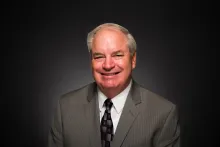
Robin Webber was born in Chicago, Illinois, in 1951, but has lived most of his life in California. He has been a part of the Church of God community since 1963. He attended Ambassador College in Pasadena from 1969-1973. He majored in theology and history.
Mr. Webber's interest remains in the study of history, socio-economics and literature. Over the years, he has offered his services to museums as a docent to share his enthusiasm and passions regarding these areas of expertise.
When time permits, he loves to go mountain biking on nearby ranch land and meet his wife as she hikes toward him.
