

Background to the Book of Daniel
Given on
Given in
Downloads
Downloads
To download a file, right-click (or long press) a link above and choose Save As.
The prophecies of the Book of Daniel are so accurate that many scholars want to date the writing of this powerful book much later than it was actually written. Why? The prophecies contained in the book are so rich with detail and have come to pass so unerringly that those same scholars have a hard time thinking that those prophecies came to pass as predicted! The Book of Daniel, along with the Book of Revelation, reveal events that we now see playing out in world news. What is to come? Read Daniel to see! (Handout available - click "Downloads")
Transcript
This transcript was generated by AI and may contain errors. It is provided to assist those who may not be able to listen to the message.
Okay, let's get into today's material. I want to go through, as I said, some general information regarding prophecy. And then the latter part of the sermon will go through a little more specifically some background to the book of Daniel. What I also did in preparation for the sermon today, and probably all the sermons I'll be giving, is I was going through the ABC program that Mr. Rhodes gave on the subject. I went through this very nicely, and there were a number of things that I learned. I had not known or had thought about that I gleaned from his classes. So I'll give you the benefit of that. Many years ago, when Mr. Herbert Armstrong was still alive, he had three major points of emphasis in his ministry. This is something that we need to keep in mind as we are thinking about the subject of prophecy, as you and I are reading our daily news or watching the news on TV or wherever we get our news.
Those things have not changed. Mr. Armstrong died back in January 1986, but these three things have not changed at all. If you want to have your pulse on Bible prophecy and to have an idea of what's coming down the road and how that's going to affect you and your family, then these three things are still something you need to keep an eye out for.
I'll letter these, letter A, Mr. Armstrong said, we need to watch the decline of the English-speaking peoples. When my parents were growing up, back in the 20s and 30s, the English Empire dominated the world scene. If you were taking geography back in the 1920s and 1930s and you looked at a map of the world and they would color-code the map, anything that was British was red. Back in the 20s and 30s and going even further back than that, one quarter of the world was shown in red. That was the influence of the British Empire. One quarter of the world.
Today, that is not the case. Britain, the sun, does set now on the British Empire. It's not the British Empire as it once was. As most of us have been growing up, we have what we might call the American Empire. And the American Empire is now losing its domination. There are proxies that talk about how we as a nation are going to be losing the pride of our power.
We lost the pride of our power. That began probably back with Korea. Got worse in Vietnam and is very bad right now in terms of the way we handle things. So definitely our nation, Britain, Canada, Australia, New Zealand, all the nations that are the English-speaking peoples, the brotherhood of those peoples, we are very much on the decline.
The second thing Mr. Armstrong would emphasize is the rise of Europe. The rise of Europe. Winston Churchill was one of the greatest statesmen, England, or the English-speaking peoples, if you want to put it this way, ever had. He was truly an insightful individual. I believe very strongly that God used him as a powerful tool back just prior to World War II and, of course, during World War II.
In 1945, after the Second World was over, Winston Churchill said that Germany will never rise again.
It was 1945. By 1959, Germany had eclipsed England as the most dominant economic power source in Europe. So Winston, as wise a man as he was, got that one wrong.
What we need to be watching for now with Europe is the fact that there's going to be a great personage, a great political individual, a great religious individual coming out of Europe, could possibly be a pope, but a great religious individual. So great, in terms of a spiritual entity, performing mighty miracles, all sorts of signs and wonders, to the place where once he's got the world where he wants to have the world, he will then say, I'm God. And people won't dispute that because of the level of what he's doing. Of course, along with that, we're looking for Europe to have a combined military presence. They've got a very weak military force right now, but they're going to need to have something because, as we see, as we understand prophecy, there's going to come a point where Europe is simply going to get tired of what's happening with the Middle East, and their army's going to go down and surround Jerusalem and quell what's happening there in the Middle East. So rise of Europe is something we want to keep an eye on. A third thing is the Middle East. It was interesting, about a month ago, the various pastors here in Michigan got together for lunch. We do that once a month. We always invite Mr. Shafer, even though he's retired, and we invite Mr. Rhodes, even though he's not in the ministry any longer. So the five of us will sit down, Mr. Joseph, Mr. Murray and myself, and the other two gentlemen. We got to talking about this issue. Mr. Rhodes was reading a book, and the man was writing this book right around 1900, the year 1900. The man was saying, you know, I don't know why anybody, anybody would ever go to the Middle East. Nothing ever happens there. So it just goes to show you how times are a-changing, right? We have 1948, the establishment of the Nation of Israel. So those are three things that Mr. Armstrong thought that we really should pay attention to, and I would agree wholeheartedly with that. That's kind of a little bit of a primer along those subjects, along those lines. Now, something else, you know, Mr. Rhodes taught the ABC class on Daniel and Revelation for a number of years. He made a comment that I hope we take to heart when it comes to our view of prophecy in general. Mr. Rhodes made mention that too many times we in the church want to get too specific. Something happens on the world news. People want to phone Mr. De Los Andros. Where do I find it? What chapter and verse is that? Well, brethren, if that's what you're looking for in this series, if you go through the book of Daniel, if you're hoping that I'm going to definitively give you a chart, graphs, you're going to know the social security number of the beast and what its phone number is and all that sort of stuff, you're not going to get it. You're simply not going to get that. What we do want to look at is we do want to look for trends. How are things trending? Now, there may be individual activities. If all of a sudden we see that somebody is building an altar there in the Holy Land, that's going to get our attention, isn't it? Because there's supposed to be sacrifices taking place just prior to the return of Jesus Christ. Don't have to have a temple. Do have to have some sort of an altar.
That would keep our interest. We see something like that. What we want to do is be a little more, looking more for generalities. We'll have some specifics, but sometimes people want to have, in terms of a month by month, below by below, between now and the second coming of Christ, we don't know that.
Now, when I was coming up in the church back in the 60s, I heard these powerful sermons on prophecy. Entertaining, just spellbinding, and you didn't want to leave the room when you wanted the guy to speak for five hours, because he was laying it all out. And how the Jesus Christ was going to return in 1972. We taught that. Hopefully we learned a lesson from that.
We had people who weren't going to the dentist, because Christ was coming just around the corner. You know, brethren, as individuals grow and mature, so does a church organization. And hopefully, as a church organization, we have grown. Now, I would like to point out something to you. Let's take a look over at the book of Daniel, chapter 7.
And, by the way, should I pronounce his name Danielle from time to time? Excuse me, since my daughter's name is Danielle. Am I slipping to automatic mode? But here in Daniel, chapter 7, there's something here that's going to prove the point I was just making about looking at trends and not wanting to be so terribly specific on some issues. Daniel, chapter 7, started here in verse 1. In the first year of El Shazar, king of Babylon, Daniel had a dream and visions in his head while on his bed. Then he wrote down the dream, telling him the main facts. Daniel spoke, saying, I saw on my vision by night, and behold, the four winds of heaven were stirred up by the great sea.
And four great bees came up from the sea, each different from the other. The first was like a lion, and they had eagle's wings. I watched until its wings were plucked off, and it was lifted up from the earth and made to stand on two feet like a man, and a man's heart was given to it. And suddenly another beast, a second like a bear, it was raised up on one side and had three ribs in its mouth between its teeth. And they said to it, rise, devour much flesh.
After this it looked, and there was yet another, like a leopard with its back four wings of a bird. The beast also had four heads, and dominion was given to it. Lastly hear verse 7, after this I saw in the night visions, behold, a fourth beast, dreadful and terrible, exceedingly strong. It had huge iron teeth that was devouring and breaking into pieces and trampling the residue with its feet. It was different from all the beasts that were before it, and it had ten horns. What do we have in those seven verses, brethren?
In those seven verses we have world history from roughly 600 B.C. until the return of Jesus Christ. In those seven verses we have 2500 years of human history. That's 42% of all the time mankind has been on this earth. And God allowed seven verses to show about these four great world-ruling empires. Now when we come to this section of Scripture, I will have a chart, not against charts. We'll show what each of these symbols represent, and so forth.
But I'm not going to be able to tell you who's running this and who's running that. The Bible doesn't say that. We've got to use our minds as these things are going along. But here we see seven verses showing 2500 years of human history. I may mention that Mr. Armstrong had three major points of emphasis in his ministry. Now there's another way for us to look at that.
The church of God, in the church of God, in our church of God culture, we're no better than anybody else. We're no different than anybody else other than the fact that God has opened up your heart, your mind, to give you truth. He's not done that to your next-door neighbor. Maybe he's not done it to your relatives. But for whatever the reason, you're here because God has been working with you to open up your mind.
Does that make us better than anybody? No. As a matter of fact, 1 Corinthians says, God's called the weak of the world. So maybe that says something about us. But here we see there are four major keys that the church of God understands that the world does not. Four major keys to prophecy that the world simply doesn't get. Let me give you those four keys. And of course, the Bible, going back just a little bit before I give you those four keys, the Bible is composed of 66 books. You know that. Of those 66 books, 17 of those are primarily prophecy.
Prophecy is the major component of 17 out of those 66 books. You don't need to write all of those down, but you've got the major prophets. Isaiah, Jeremiah, and Ezekiel. You've got those 12 minor prophets at the end of the Old Testament. Hosea, Joel, Amos, Obadiah, Jonah, Micah, Nahum, Habakkuk, Zephaniah, Haggai, Zechariah, and Malachi. You've also got the books of Daniel and the book of Revelation. 17 books. 25% of the Bible talks about prophecy. When you include the quotes in the New Testament that refer back to some of those books, it's closer to one-third of the Bible.
So prophecy is not something that is meat and potatoes, but it is something we need to know. It can be a salvation issue if God is showing us some things and we just simply thumb our nose at God.
But if we don't know prophecy, we do need to know Jesus Christ as our personal Savior. We do need to know the grace of God. Those are definitely salvation issues.
But what are these four components that the church knows about that the world doesn't? Number one is the identity of modern Israel. It doesn't make any sense that the Bible would talk about Ethiopia, the Bible would talk about Egypt, the Bible would talk about Turkey, the Bible would talk about Italy or some of these other nations that today just aren't that great a deal.
And that the Bible would not talk about the United States of America, the most powerful nation this world has ever seen or ever will see. Does that make sense? Of course it doesn't. There are many people today who think Israel, from a biblical perspective, is that nation over in the Middle East. Well, we know better than that, don't we? We know where the so-called lost ten tribes migrated to. We know what this nation is. And the United States of America is modern Israel. Number two, another key to prophecy that the world simply doesn't understand, number two is the identity of the two women of the book of Revelation. The identity of the two women in the book of Revelation.
Both of those women are churches. One is the true church, one is the false church. One is a very small church. Christ called his church a little flock. The other church would be rich and powerful and influential in this world. But that's not God's church. A third major key to understanding the church has that is lost to the world is the plan of God. The plan of God. And we see that encapsulized in the Holy Days. And you know, brethren, when you look at the Holy Days, starting with trumpets and atonement and feasts of tabernacles in the last great day, what do we see? In those four Holy Days, obviously there is information about salvation.
But in those four Holy Days, we see an awful lot about prophecy. An awful lot. Trumpets representing the return of Jesus Christ. Atonement. What's going to happen to Satan at the end of the age. The feasts of tabernacles representing the millennium. The last great day representing the Great White Throne Judgment period.
Those are all things in the future. Those are all prophetic things. And the world simply doesn't know because they don't know about the plan of God. A fourth major key to prophecy that the world doesn't understand, but the church does. A fourth key is that prophecy is, in many cases, prophecy is dual.
We're going to see that as we go through the book of Daniel. There's something in the book of Daniel called the Abomination of Desolation. And Jesus Christ refers to that. In the book of Daniel, you actually have two different times in history where there is something that we can refer to as the Abomination of Desolation. And then there's an end time fulfillment of that. So you'll normally have something in the past, something in the future. In this particular case, you've got three episodes.
Now, continuing on with the general information about prophecy, how should you and I view prophecy? I'm going to make a statement, and you may not at first agree with me as I make this statement, but give me a chance to explain myself. The way we should view prophecy is that prophecy is positive. What? Positive? We went through the book of Isaiah where it seems that at some point in the future, this world is going to be knocked off its axis.
We read the prophecies that talked about how the world is going to be teetering like a drunken man. We read the prophecies in Amos that talks about nine out of every ten Israelites dying. We've read about World War III chemical warfare. We've read a book in the book of Revelation about how all the life in the sea is going to die. Can you imagine all the life in the sea dying, all those bloated dead fish coming up to the surface?
How many feet thick of dead fish? What the world will smell like? The disease where God has to tell the angels, don't hurt any more green things because if we do, people won't be able to take a breath of air. Randy De Los Andros says, prophecy is positive. The poor guy must have fallen out of bed, hurt his head. No, prophecy is positive. Let me give you three reasons why I feel that. The central focus of prophecy, brethren, is the establishment of the Kingdom of God. Nothing is more important than that.
Nothing is more positive than that. We have in our midst today a number of little kids. Beautiful little children. Every time I see any one of our children, or even my kids, they're beautiful or not, but they're my kids. One is 34 and one is almost 31. I hate the fact that my kids have got to live in this world.
I look at the little kids in our midst here and I think, I wish they had a different world. I wish that moms and dads didn't have to watch over their little ones and protect them because there's evil people out there who want to hurt them or go to war.
So when you and I think about the establishment of the Kingdom of God on earth, and there is that prophecy in the book of Isaiah about the stranger, how the stranger will be a help in time of need.
In the world tomorrow, after Christ returns, you hear footsteps behind you. You don't have to worry if that's somebody who's got a knife or a gun. Maybe you're lost in the world tomorrow and you hear footsteps behind you and somebody says, Can I give you a hand? Would you like some directions? Can I give you a lift? So the central focus of prophecy is the establishment of God's Kingdom, which is very positive. Let's turn over to Isaiah 2. Isaiah 2, starting in verse 2 and going through verse 4. Isaiah 2, verse 2, Now shall come to pass in the latter days, and you and I believe we're in those days, that the mountain of the Lord's house shall be established on the top of the mountains. In a biblical terminology, a mountain represents a nation or a government. So here you've got God's government established over all the other governments of the world, and shall be exalted above the hills, the lesser governments, the smaller nations. And all nations shall flow to it. And why should the nations flow to Israel? Verse 3, Many people shall come and say, Come, let us go up to the mountain of the Lord, to the house of the God of Jacob, and He will teach us His ways.
You know, brethren, as you and I studied the book of Revelation a number of years ago, we saw just how hard-hearted human nature is. When people were going through all the plagues of Revelation, they were cursing God. All they needed to do was repent, and they wouldn't do it. And God had to curse them even more. But after the Great Tribulation and Day of the Lord have come and gone, I think the humankind will be a lot of very dysfunctional people. I would imagine everybody who God did not protect will be very dysfunctional by the time the return of Jesus Christ takes place. And people are going to realize, you know, our way just didn't work. It just didn't work. And so this is why people are going to flow, not trickle, they're going to flow into Jerusalem to be taught His ways. He says, and we shall walk in His paths, for out of Zion shall go forth the law. How can the law go forth if it's been done away? It's not been done away, has it? And out of Zion shall go forth the law... The only people who want law done away are criminals. For out of Zion shall go forth the law, in the word of the Lord from Jerusalem. He shall judge between the nations and rebuke many people. Yes, we look in the book of Zechariah, Chapter 14, we see that nations like Egypt, they don't get it! And if they don't get it, they don't come up to keep the Feast of Tabernacles, they don't get rain. So God doesn't force people to go His way, but if they don't, God's going to say, well, you know, as a loving parent, I've got to discipline you. As a loving parent, I've got to spank you. Because you're going away that the world went for 6,000 years, it's nothing but aches and pains. So they will rebuke many people, they shall beat their swords... Now, other people will beat their swords into plowshares, their spirits into pruning hooks, and nations should not lift up sword against nation. Maybe they shall not learn war anymore. So prophecy is positive because it focuses on the establishment of the Kingdom of God.
Another reason that I feel a prophecy is positive is because prophecy strengthens our faith. Prophecy should strengthen our faith. Do you know, there are some scholars who want to dispute the date that the book of Daniel was written. We believe that the book of Daniel was written probably around 530 B.C. And our scholars say there's no way that book could have been written then. Do you know why they say that? Because the prophecies are so detailed, the prophecies are so accurate, that people thought, well, Daniel, he must be writing that after it took place.
He's cheating. He's calling a prophecy, he's foretelling these things, but they've come and gone, and he's writing them down in great detail. No. That's not the way it happens. God is a God who, and we're going to look at some scriptures in a moment, but God can tell the beginning from the end. In Daniel 11, I'm not counting these out, but a number of scholars have counted them out. In Daniel 11 alone, there are over 100 different facets of prophecy that have been completed. In Daniel 11, the longest chapter of the Bible. So let's take a look at some scriptures and see why prophecy should strengthen our faith.
Because we've got a God who intervenes in world history. We've got a God who intervenes in personal history. One of the great stories of the book of Daniel is a man who lived through all 70 years of the Babylonian conquest. Daniel, who lived during the time of two Babylonian kings and two Persian kings. Four rural ruling kings, or regional ruling kings, which are where you want to phrase that.
And he was like the Prime Minister. He was so well thought of. But we see that, you know, it's an interesting story. All we hear today is, who's running for president in 2016? And we think about politicians. We don't tend to have a favorable view of any politicians, do we? We think if you're a politician, you have much of the majored and stealing candy from babies.
And here you've got Daniel, who under four different kings, rose to the place where he had their respect. He had a tremendous position. And yet, as the Bible says in Ezekiel 14, Daniel was one of the three most righteous men, along with Job and Noah. He's one of the three most righteous men who ever lived. So you can rise to great power in a worldly government in charge of so much under you and still be a godly person.
People say, well, my environment wouldn't allow me. Well, what kind of environment did he have? Daniel had an environment where people were continually... they couldn't find any fault because he was a man who was such an upright man, but they tried to find fault with him regarding his religion, which is going to happen to you someday if it hasn't already. And they wanted him killed! But he still remained faithful to God, a man of conviction, a man of prayer.
We'll see that as we go through the book. Let's take a look at Isaiah 46. You'd be surprised at the amount of Christian living we'll see as we go through a book. The most people think it's just prophecy. Isaiah 46, verses 9 and 10. Isaiah 46, verse 9, Remember the former things of old, for I am God, and there is no other. I am God, and there's none like me. Verse 10, Declaring the end from the beginning, and from ancient times things that are not yet done, saying, My counsel shall stand, and I will do all of my pleasure.
Shame on those scholars who don't want to think that Daniel wrote as God was inspiring him, because God certainly can do that. Take a look at Daniel 4, verse 25. I just want to read the last portion of that verse, Daniel 4, and verse 25. It says, Till you know that the Most High rules in the kingdom of men, and give it to whomever he chooses. I don't care who you vote for if you vote for President of the United States.
The way you vote and the way I vote would vote, which I don't. I don't vote because I don't know who God wants in. And I don't want to fight against the will of God. God doesn't always want the best person in office. He may want the worst person in office for his own reasons.
And it says here that God gives the government, whether it be Mrs. Clinton or Donald Trump or whoever, but God's going to put that person in office. So here we see how our prophecy should strengthen our faith when we see God working behind the scenes. But also remember, and let's turn over to Romans 8, verse 28. We're going to see time and again how God intervened on behalf of a righteous man, Daniel, to protect him, to be there for him.
And the same thing, brethren. God has no respecter of persons. God has no respecter of faces. Just as God was there for Daniel, God will be there for you. Romans 8, verse 28. And we know that all things work together for good to those who love God, to those who are the called according to his purpose.
You know, I don't know the last time you went to the zoo.
Sometimes if I feel really thirsty on the way home, you know, giving two sermons in a day and two announcements period, you get a little dry. And sometimes I want to stop at McDonald's, get myself a nice, tall diet coke. And I'm sure some people will throw stones at me because I've had open heart surgery and I'm drinking diet coke.
But I will drive. If I go down Woodward down to 13 Mallory Road is McDonald's for a buck six, I get myself a giant diet coke. And then when I'm going home, I'll pass the Detroit Zoo. Now, one of the great stories of all time is Daniel and the Lions Den. Can you imagine yourself one of those critters? 1,200 pounds of nothing but muscle and teeth. And, you know, if they still have their claws, their claws are as long as my fingers and one swipe of one of those claws, you're going to be eviscerated. And yet Daniel was thrown into the Lions Den. And it made the king mad that he was outmaneuvered. And they did this to his friend. But because this was during the time of the Persians, the Persians were very proud people. Once they wrote a law, you couldn't rescind it. That was the way they did things. And so the king said, yes, if you don't worship me just like this, then throw in the Lions Den. So they threw him in the Lions Den. What did the king say? Oh, Daniel, I know God's going to protect you. And God did just that. So prophecy is something that should increase our faith and encourage us. Thirdly, and I'm giving you a number of different points here, but prophecy also is positive in that it helps us to watch world news and to watch our spiritual condition in relation to what we're watching. You know, it's so easy, brethren, for us, and I understand because I sometimes feel the same way. It's so easy for us to say, I just don't want to turn the news on anymore. You know, there's this mass murder or that mass murder or this awful situation, or people are drowning here, or there's this mudslide there or an earthquake, or, you know, just the negative news is what gets the headlines. It can be so hurtful to us to see that. And yet we need to keep our eye on the ball. Turn to Romans 13, Romans 13, verse 11. Romans 13, verse 11. The New King James says this, And do this, knowing the time that now is high time to awake out of sleep, for now our salvation is nearer than when we first believed. Our salvation is nearer than when we first believed. And of course, that's true. Time stands still for nobody. So we need to watch world news. But again, brethren, even if we knew every single instance of what was going to happen in prophecy between now and the second coming of Christ, we could, if we knew it perfectly, so what if we don't have a relationship with God, the Father, and Jesus Christ? What good will all this knowledge be if we don't have a saving knowledge of Jesus Christ as our personal Savior? It's of no use whatsoever. Let's look at Mark 13. Mark 13. Starting here in verse 33, going to the end of the chapter. In my Bible, this is all red lettering, the words of Christ. Christ gives us some counsel here. He gives us some instruction. Mark 13. He says, Take heed, watch, and pray. Pray over what you're watching. Ask me to help you understand what you're seeing. Watch and pray, for you do not know when that time is. That's why, like I told the people over in Ann Arbor today, you can get zealous, you can come to me with your chart, showing just exactly when Christ is returning. And I don't want you to be offended, but I tell you, I don't want to see it.
I don't want to see a chart that's like that. Because the Bible says very clearly, you'll not know when the time is. Not specifically, not to the day. It's like a man going to a far country who left his house and gave authority to his servants. And to each his work, there is a work we are to be doing. Christ commissioned his church to do a work, to get the gospel out. He didn't commission us just for our own personal salvation, to stay smugly in our home and let the rest of the world burn. No, we are to get behind a work that proclaims the gospel of Jesus Christ.
And commanded his doorkeeper to watch. Verse 35, Watch therefore, for you didn't know when the master of houses coming, in the evening, at midnight, or in the morning, lest coming suddenly he finds you sleeping.
Coming suddenly.
Now, we read there in Romans where we need to awake out of sleep.
We don't want to be asleep at the switch. And what I say to you, I say to all, watch.
So, there are a number of things that Christ is saying to us, and saying to us in here in Mark chapter 13, or into the chapter, He's saying to take heed to what He is telling us. He says we are to watch for the signs He has outlined.
He tells us that we need to be praying regularly and earnestly so we can stay close to God, and we need to keep doing God's work.
Now, that's all I wanted to say in terms of the generalities regarding prophecy. Let's go now into some specifics about the book of Daniel.
The author of the book, let's take a look at Daniel chapter 7, verse 1.
The author of the book, as the book says itself, is Daniel.
All this pull one, there are a number of verses that would prove that, but let's just look at Daniel chapter 7, verse 1.
The first year of El Shazar, king of Babylon, Daniel had a dream and visions in his head while on his bed. Then he wrote down the dream, telling the main facts.
In nine of these twelve chapters, we see this sort of thing taking place, where there's somebody's having a dream, and God is telling Daniel how to interpret the dream.
I'm not going to turn there, but in your notes you might want to jot down Matthew chapter 24, verse 15.
Matthew 24, 15 says this, Therefore, when you see the abomination of desolation spoken of by Daniel the prophet standing in the holy place, let him understand.
So Jesus Christ himself, said Daniel, was the one who wrote that book.
If you're still in the book of Daniel, turn over to chapter 1, verse 1.
When was the book written?
In the third year of the reign of Jehiachim, king of Judah and Nebuchadnezzar king of Babylon came to Jerusalem and besieged it.
Daniel wrote about the events he himself experienced during a period that we see right here, which is 605 BC. I'll give you some dates as we understand, dates from history as we go through the studies.
He wrote from the period from 605 BC to around 536 BC.
He wrote notes to himself.
Most scholars believe he then took those notes, put them together into what we call the book of Daniel, and wrote that around 530 BC.
Around 530 BC.
Most scholars think that he was somewhere between the ages of 15 and 20 when he was taken captive by the nation of Babylon.
If he was in his teens when he was deported to Babylon, when he died, he would have been somewhere between 85 and 90, somewhere in there.
He lived to a very old age, serving four different world ruling kings.
Now, who did Daniel write the book to?
He wrote the book. He wrote it about 530 BC, the events that he experienced.
Who did he write to?
Firstly, he wrote to those four kings.
He wrote to Nebuchadnezzar. He wrote to Belshazzar. He wrote to Darius. He wrote to Cyrus. He wrote to those four kings.
Two from Babylon, two from Persia.
But more than that, if you expand out, he wanted the people he went into captivity with to be encouraged.
So Daniel also made it a point. He wanted the people, his countrymen, to be encouraged.
And so he had them in mind when he was writing.
But we expand out even more.
Daniel was looking to address the issues that all future kings, all future presidents, all future prime ministers, all future leaders of peoples need to understand.
And that is, there comes a time for all of them to face God, to face the music.
And so he wrote to the leaders of all ages.
There are four major purposes in the book of Daniel. This will be the last thing we go through before we quit for today.
Four great lessons in the book of Daniel. Let me go through those real and spend a long time.
Again, this is an overview. We'll cover this in much more depth as we're going through the book.
The first great lesson of the book of Daniel is the absolute sovereignty of God.
The absolute sovereignty of God. And you know who makes that point as well as anybody in this book?
You may not know this. Daniel didn't write the whole book of Daniel.
Chapter 4 of the book of Daniel was written by Nebuchadnezzar.
Written by a Gentile king, Nebuchadnezzar.
Let's take a look at Daniel 4, verse 1.
Nebuchadnezzar came to all peoples, nations, and languages that dwell on all the earth.
Peace be multiplied to you.
I thought, this is Nebuchadnezzar speaking, I thought it good to declare the signs and wonders that the Most High God has worked for me.
He's adding his personal touch here.
How great are his signs? How mighty his wonders? His kingdom is an everlasting kingdom.
His dominion is from generation to generation.
That's an awful lot from a man who was a world leader and was very prideful and so prideful that God said, you know, I need to take this guy down a few pegs.
And so for seven years, this guy was eating grass. He lost his mind for seven years. He was roaming around like an animal. Then God gave him his mind back.
And Nebuchadnezzar saw, well, you know what? As mighty as I think I may be, I'm sure that in those seven years when I was living like an animal, I was probably pretty gamey to be around.
You know, not showering or brushing my teeth or all those things.
He probably didn't want to get downwind of me too much.
Verse 37, Now I, Nebuchadnezzar, praise and extol and honor the King of heaven, all of whose works are truth, his ways justice, and those who walk in pride he is able to put down.
He experienced it. He experienced that in aces and spades.
So one of the great lessons of the book of Daniel is the fact that God, not man, God is absolute ruler.
The second great lesson of the book of Daniel is the mighty power of prayer.
As I mentioned, there's a lot of prophecy, interesting prophecy in this book, but there's a lot of tremendous Christian living in this book.
The second great lesson of the book of Daniel is the mighty power of prayer.
There were those who wanted to get rid of Daniel.
He was a, in the early chapter here of chapter one, what do we see about Daniel?
The Bible says he was good-looking.
He and Hananiah, Mishael, and Azariah, his three companions, who we came to know, Shabrak, Meshach, and Abednego.
Now, the Babylonians knew what they were doing when they conquered the people.
They took the best and the brightest, in this case it would have been Daniel and his three friends.
They brought them back to Babylon.
They changed their names.
When you look at their given names, Daniel, the last two letters of the name Daniel, E-L, name of God, L, God-L, God the Strong.
When you take a look at, the same was true of Mishael, but Hananiah and Azariah, their last three letters of name was I-A-H, which stood for Jehovah.
When they were young Jewish people back in Jerusalem, they were named after the true God.
But Shabrak, Meshach, and Abednego, all those names are names of pagan gods.
So they took these three young men, who were bright, who were handsome, and frankly, from what you read here in chapter 1, they probably were either nobles or royalty.
They took them to Babylon to brainwash them. Of course, Daniel would have none of it.
He needed a Shadrach, Meshach, and Abednego.
So they had this plot where they were going to get these other people who were jealous native Babylonians.
They wanted those four guys killed.
And they rigged up this thing about, well, if you don't worship the king in just a certain way, into the Denilions, you go.
But let's just cut to the chase here. Daniel 2, verses 17 and 18.
Daniel 2, verses 17 and 18.
When he knew that therefore lives were on the line, what did Daniel do?
Then Daniel went to his house, made the decision known to Hananiah, Mishael, and Azariah as companions, that they might seek mercies from the God of heaven.
And how did they seek those mercies? They sought those mercies because they were praying men.
So that Daniel and his companions might not perish with the rest of the wise men of Babylon.
You've got the example of Daniel saying, well, you want to spy on me because I'm praying to the great God? What does he do three times a day? Does he go into the most secret part of his house, under a bed someplace, and say, well, God, you understand. They want to kill me. I'm going to pray under the bed here.
Daniel opens up the windows to his house so they can see him.
He says, you don't need to spy. You don't need to be really hard on me.
We're not going to make this hard. You want to see if I'm praying? I'm praying.
My God's going to back me up. Don't worry about that. And God did.
The mighty power of prayer. Daniel 10. Daniel 10 and verse 12.
There are a number of unique features to the book of Daniel. One of them is the naming of the archangels.
One of them is coming to Daniel here, verse 12. Daniel 10 and 12.
Then he said to me, do not fear Daniel, for from the first day that you set your heart to understand, and to humble yourself before your God, your words were heard.
In other words, your prayers were heard. And I have come because of your words, because of your prayers.
So if you think you're up against it, Daniel was up against it, and God delivered him.
The third great lesson of the book of Daniel is that God's plan is being worked out.
God does have a plan. He is working that plan out, step by step.
We would like to have God speed up this plan. But, you know, God knows what he's doing.
And he's on time for what he wants done, and he's the wise one. He's the wise one, not us.
If we wanted things the way we wanted them, and God the way we wanted them, we'd be half-baked.
God doesn't want any half-baked Christians. He wants us fully cooked.
That means we've got to go through more trials, we're going to go through more trials.
We're going to be really cooked. Not burnt, but cooked.
The fourth great lesson of the book is the mighty grace of God.
The mighty grace of God.
Over in Genesis 17, we see where a gentleman by the name of Abram, his name is changed to Abraham.
God said he's going to bless his descendants.
He's going to give them all this land, all this progeny like the stars of the heavens.
Of course, when Abraham died, what did he have? He had the land he was buried in.
But God did fulfill that promise to him, and we are a part of that fulfilled promise.
You and I, we're the sons and daughters of Father Abraham.
Last scripture for today is found over here in Romans 11.
Romans 11, verse 29.
Romans 11, verse 29.
For the gifts, and I'm reading here from the New King James, for the gifts and the calling of God are irrevocable.
The gifts and the calling are irrevocable.
You know, God had to test Abraham, and then when Abraham passed the tests, God gave them all those tremendous blessings.
And God's not going to take them back.
That's something for us to remember.
So, just a couple final thoughts and conclusions here.
We're referring to Daniel as an individual.
Daniel, as you're going to see as we go through the...
And again, I would like your input whether you'd want me to go through this once a month or every week until we're done.
As a man, he was a remarkable individual.
His ministry spanned the entire duration of Judah's seven-year captivity in Babylon.
He was in a horrible environment.
He changed his name, brainwashed him, wanted to eat different kinds of food.
And yet, here was a man of conviction.
He said, I'm not going to eat that food.
He said, I'll tell you what, let's perform a little test.
Me and my three friends here, we're going to eat the food we're used to, we'll make it ourselves.
And you look at your other special people. You have that other food.
And let us have a test of ten days.
And after ten days, you take a look at us and you decide who's the healthier.
So after ten days, they looked at Daniel, Shadrach, Meshach, and Abednego.
And these guys were in good shape. They're still handsome, still smart.
The other guys, you know, they're kind of probably looking kind of old-peeked.
And he proved the point. You follow God's laws and you're going to prosper.
It only took ten days for that particular test.
So, as we said, he was probably between fifty and twenty years of age when he was taken captive.
He could have been somewhere around, his birth date would be somewhere around 625 to 620 B.C.
He probably was born, if that was the case, during the reign of Josiah, one of the great reformer kings of Judah.
Josiah had a great influence on the young Daniel.
Jeremiah, the prophet, may have had a great influence on young Daniel.
And again, as I made mention a few moments ago, it is thought that either Daniel and his three friends were noble, or even, perhaps, royalty.
So, even though he had to serve, God allowed him to be taken captive, allowed him to be put into negative circumstances.
Just as God has allowed you many times to be put into negative circumstances, he relied on God.
You and I can rely upon God. God blessed him. God can bless us. No reason why not.
So, let me know what your thoughts are regarding whether I'm going to go through Daniel next week for sure.
Then, after that, I do want to give that sermon about demonism.
Then, after that, the question is open whether we want to do this once a month or just go through it until we're done.
Let me know.
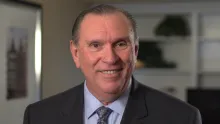
Randy D’Alessandro served as pastor for the United Church of God congregations in Chicago, Illinois, and Beloit, Wisconsin, from 2016-2021. Randy previously served in Raleigh, North Carolina (1984-1989); Cookeville, Tennessee (1989-1993); Parkersburg, West Virginia (1993-1997); Ann Arbor and Detroit, Michigan (1997-2016).
Randy first heard of the church when he was 15 years old and wanted to attend services immediately but was not allowed to by his parents. He quit the high school football and basketball teams in order to properly keep the Sabbath. From the time that Randy first learned of the Holy Days, he kept them at home until he was accepted to Ambassador College in Pasadena, California in 1970.
Randy and his wife, Mary, graduated from Ambassador College with BA degrees in Theology. Randy was ordained an elder in September 1979.
playlist
