

Why Do We Study the Book of Daniel?
Given on
Given in
Downloads
Downloads
To download a file, right-click (or long press) a link above and choose Save As.
The prophecies of the Book of Daniel are so accurate that many scholars want to date the writing of this powerful book much later that it was actually written. Why? The prophecies contained in the book are so rich with detail and have come to pass so unerringly that those same scholars have a hard time thinking that those prophecies came to pass as predicted! The Book of Daniel, along with the Book of Revelation, reveals events that we now see playing out in world news. What is to come? Daniel helps us see into the future!
Transcript
This transcript was generated by AI and may contain errors. It is provided to assist those who may not be able to listen to the message.
Brethren, starting today, I want to go through every other week that I'm here a study on the Book of Daniel. Back in March, when Mary and I first came to Chicago to introduce ourselves to the congregation, we had a lovely service here that day, and then in the evening we went over to the Bradford's for dinner.
Mrs. Bradford made comment that her father felt very strongly that it's good for us to just go and go through parts of the Scripture, bit by bit, and try to cover as much as we can on a regular basis. And of course, Mr. Fay excelled at that. He was one of our very best teachers along those lines. I certainly concur with what Mr. Fay said, that it's really good to go through the Scriptures in a systematic way to see what God has there for us.
And so I do want to go through the Book of Daniel. And by the way, please forgive me if I sometimes ask you to turn to the Book of Daniel, as that's my daughter's name. I'm getting up there in years, and you have those senior moments. So just bear with me if I make mention of Daniel, Daniel chapter 3, or whatever it may happen to be. But before we get into the Book itself, I think it's important for us to look at some background regarding prophecy in general.
There's some important concepts I think that you and I need to take and be aware of prior to us getting into one of the most fascinating books of prophecy in all of the Bible. Mr. Herbert Armstrong had three major points of emphasis in his ministry. I'd like to cover those with you for the next few minutes, because it's very important as you and I think about what we're looking at in world news, and especially now that we've elected a new president, it's interesting to see the reaction of our country, the various pundits and commentators.
I think we're taken very much by surprise that Mr. Trump won the election. Typically, when a Republican gets in as president, you've got people on the far left who always say the end is now here, and that's been taking place. One of our neighbors, her son, lived the block behind us, and he has been putting on his Facebook account on a regular basis the fact that he truly isn't here and he feared for his life.
But we do want to take a look at what Mr. Armstrong had to say about his emphasis when it came to prophecy. I think we can learn quite a bit about that. The three major points that he had as he looked at prophecy, those three things are still important today. Those have not changed at all. These points give us a pulse of what takes place in the world. We want to have this as background information. What are the three things Mr. Armstrong used to look at when he was thinking about prophecy?
The first thing he looked at was the decline of the English-speaking peoples. The decline of the English-speaking peoples. What's happening in world news along those lines? He would ask himself. He would preach about. Think about the days that Mr. Armstrong first came into the church. God was working with him in the 1920s, 1930s. Think about what was happening in the world scene at that time. The British peoples were dominating the world. If you were taking a course in geography back in those days, the 1920s, the 1930s, you looked at a map of the world.
The map would be color-coded. And you would see all this red on the face of the earth. And that was the color that was used to show the British Empire. Fully 25% of the world back in those days was under the control of the British Empire. Not true today.
Not true today. The sun very much has set on the British Empire. For those people like myself, if you're a baby boomer like I am, you've lived in the age where America was the next big empire. Not that Britain has totally gone into the sunset, but its power has been greatly diminished. But America, the great empire, certainly true in my life, true in most of our lives since we're living right now.
But again, as prophecy shows, we are going to lose and have lost the pride of our power. Starting with Korea and Vietnam, probably reaching a low point these last eight years. Who knows what the next four to eight years are going to bring? So this is something that Mr. Armstrong said we need to be watching as we're looking at Bible prophecy, the decline of the English-speaking peoples. The second thing was the rise of Europe.
The rise of Europe. Winston Churchill was a powerful tool in the hands of Almighty God. He was not a converted man. But God gave him tremendous insight into what was happening in the world at the time he was helping Britain through World War II.
Very insightful man. And yet, in 1945, Winston Churchill made the statement that Germany would never rise again. He made that statement in 1945. But by 1959, Germany had eclipsed England in terms of their economic output. They were now the big boy on the block, economically speaking. So the rise of Europe was something that Mr. Armstrong kept an eye on.
Of course, we realize as we're going to get into some of these prophecies in the next coming weeks, there's going to be a very powerful political and religious leader coming out of Europe. Perhaps somebody with a great deal of charisma, a charismatic leader, perhaps a pope in terms of the religious leader. Somebody so powerful spiritually that he may come onto the scene as a great charismatic speaker, a great charismatic healer, doing powerful miracles, winning the people of the world over until it comes to the point where he says, you know what, it's time to be honest with you.
I'm God. You know something, brethren? We may be living in those days. That man may be walking the earth right now. So we need to pay very close attention to what's happening in Europe, the king of the north. A third thing Mr. Armstrong felt that we needed to be very careful attention to in terms of prophecy was trouble in the Middle East. When I lived in Michigan, it was an interesting situation in that there were only three pastors in the whole state, and we lived so close together that we could get together once a month for lunch.
It was only a matter of an hour, a little more than an hour drive for any of the three of us. So the three pastors would get together for lunch, and we always invited Melvin Rhodes. When I was giving this back in Michigan, this material on Daniel was having a conversation with Mr. Rhodes. He had just finished reading a book. He read voraciously. In one of the books he had just finished reading, the author had written this book right around 1900. The author said, why would anybody, again, 1900, why would anybody ever want to visit the Middle East?
Nothing ever happens there. Of course, you realize great things are happening there, great in terms of import, and of course, more so as time goes along, especially with the back in 1948, the establishment of the nation of Israel. So when you take a look at these three things that Mr. Armstrong focused in on, and that we should focus in on, the decline of the English-speaking peoples, well, that's well underway.
Well underway. The rise of Europe, there's some work to be done there. There is some work to be done there. Trouble in the Middle East, it's there, and we're going to see more of that as we go down the road. Now, speaking about Mr. Rhodes, he had an interesting comment when it came to prophecy. Of course, he taught classes on prophecy at ABC. You read many of his articles in years gone by, and then he still has a blog that you can read today.
But Mr. Rhodes gave a caution, and I want to echo that caution for all of us here. He said, in a church, we want to be entirely too specific. This is where we get into trouble, he said, when we speculate. We need to view trends, not get too bogged down on trying to nail down each little detail in world news. You know, when he said that, it just rang so true to me, because over the years I found it to be quite interesting as a church pastor.
You know, in every congregation you've got those who are, some people would say, loosely attached to the vine. Their attendance is rather sporadic. You'll see them, and maybe you don't see them for several weeks, and you'll see them again, and then they miss several more weeks and so forth. But over the years I found that if something happens in world news, that a lot of those people start coming to church real regular, thinking the end must be near.
And then as time continues to go on and the end isn't near, they go back to their ways. And it's always fallen that was very interesting. So anyhow, as Mr. Rhodes would continue saying, he says, and I would again concur, over the years some of the best sermons in terms of interest and color and so forth that I've ever heard were on prophecy. And unfortunately most of those sermons were all wrong. You know, 1972, we're fleeing! 1975, we're gone! Well, have we gone? Have we fled? Brethren, some of you I sure are too young to remember those days.
You probably weren't born back in those days. But I know of people who were, they would not go to a dentist. Why? Because we're fleeing! And just like God gave the Israelites, their clothing didn't wear out, their shoe leather didn't wear out, we go to a place of safety, God's going to take care of my molars. Well, as time went along, they had some real expensive dental work to catch up on.
So again, look for trends. Look for trends. Let's take a look at Daniel 7 for a moment. I want to just highlight something. Daniel 7. Now, I will be going through this verse by verse in the future. I just want to make a point here as we generalize on something about trends, about not wanting to be overly specific with each little thing we see in world history or the news.
Daniel 7.1. In the first year of Belshazzar, king of Babylon, Daniel had a dream and visions on his head while on his bed. Then he wrote down the dream, telling the main facts. Daniel spoke, saying, I saw in my vision by night, behold, four winds of heaven were stirring up the great sea.
And four great beasts came from the sea, each different from the other. The first was like a lion, had eagles wings. I watched those wings were plucked off, and it was lifted up from the earth and made to stand on two feet like a man. And that a man's heart was given to it. And suddenly another beast, a second, like a bear. It was raised up on one side and had three ribs in its mouth between its teeth. They said to it, arise, devour much flesh. After this I looked, and there was another, like a leopard, which had on its back four wings of a bird.
The beast also had four heads, and dominion was given to it. After this I saw in the night visions, behold, a fourth beast, dreadful and terrible, exceedingly strong. It had huge iron teeth. It was devouring and breaking in pieces, and trampling the residue with its feet. It was different from all the beasts that were before it, and they had ten horns. Now, when we get to this chapter, I will go through this phrase by phrase, and we'll cover exactly what is being meant here, from a historical point of view and from a prophetic point of view.
But one of the things that Mr. Rhodes made a comment on as he was discussing this with his students in one of his ABC classes, he said, here you have in the first seven verses of Daniel chapter 7. In his first seven verses, you've got 2,500 years of human history. 2,500 years of human history. Brethren, that's 42% of the history of mankind, from time of Adam and Eve to the end of the age.
So God here is being very general in terms of giving an overview. So we've got to appreciate that as we're taking a look at prophecy. So we've had Mr. Armstrong's three major points of emphasis. We've seen Mr. Rhodes's cautionary note.
I'm not at a lack for points today. I want to look at major keys to prophecy that we in a church understand that the world doesn't. We understand that the world doesn't. I would like to begin, though, by going to 1 Corinthians chapter 1.
1 Corinthians chapter 1.
1 Corinthians chapter 1 and verse 26.
So, brethren, when I talk about the fact that there are major keys to prophecy, we understand, and the world doesn't. It's because God has not performed a miracle in their life yet, like He has in ours. So we don't want to get big-headed about this. We don't want to get vain about this. God has chosen us as the weak of the world, generally speaking, to give us this understanding.
There are 17 books in the Scriptures of the 66 books we've got in our Bible. 66 books you've got on your lap. 17 of those books are largely prophecy, where prophecy is the major component. You've got the three major prophets, Isaiah, Jeremiah, and Ezekiel. You've got the 12 minor prophets. I'm not going to go through all the names of those. Those little books at the end of the Old Testament. You've got the book of Daniel. You've got the book of Revelation. 17 books, which comprises roughly 25% of the Scriptures. If you take other sections of the Bible and the New Testament, for example, where some of those prophecies are reiterated, then perhaps you'll go from 25% to 33% of the Scriptures.
Deal in one way, shape, or form with prophecy. Brethren, please understand something, because I know prophecy is something that people really get so excited about. And largely, when I came into the church, when many of you came into the church back in the 1960s, the church seemed to have, I think, an unbalanced view in terms of prophecy, in terms of how much time we spent on it.
But it brought a lot of people into the church. Maybe that was God's design. But prophecy is not the meat and potatoes of the Bible. We need to understand that. It is not. You can have all the understanding of prophecy in the world. You can have the greatest beast chart or whatever in the world. But if you and I don't have a relationship with God, if we don't have an understanding of the matters relating to salvation, what good is an understanding of prophecy? So prophecy is not the meat and potatoes.
It's not a salvation issue, necessarily, unless God shows us some things that we just rebel against God. But generally speaking, it's not a meat and potatoes issue. So what are the four areas, and there are four of them, four major keys to prophecy, that a church understands but is lost to the world. And when you put all this together, it helps us to appreciate prophecy.
Number one is the identity of modern Israel. People can't understand prophecy if they think modern Israel is only the land in the Middle East. And as we've said for so many years, it doesn't make sense in talking about the end of the age that God would spend time talking about Ethiopia and not spend time talking about the United States of America, the most powerful single nation that the world has ever seen, and especially at the end of the age. So the identity of modern Israel, we understand that, but the world doesn't.
It helps us understand prophecy where the world would not. Number two is the identity of the two women of the Book of Revelation. The identity of the two women of the Book of Revelation. Two churches, one large, powerful, influential. The other, very small, in terms of world influence, almost non-existent, but in terms of spiritual impact, very powerful along those lines. So the identity of the two women, the two churches of Revelation, is something that we understand that the world doesn't.
Number three, the plan of God. The plan of God. We understand that, but the world does not. And of course, when you take a look at the fall Holy Days, trumpet's atonement, the feast, the last great day, all with tremendous prophetic import, the world does not understand that. And yet we do. And lastly, the duality of prophecy. Again, something the world doesn't understand, but we do. It helps us put the pieces properly together. And not only are some prophecies dual, some are triple. If you look at, and we'll go through this when the time comes, the abomination of desolation. You've got three fulfillments of that.
Two are historical. They are prophecies that took place in the past. One is a future event. You've got Antiochus Epiphanes in 167 B.C. The first fulfillment of that, abomination of desolation. You've got Titus and the Roman armies back in 70 A.D. And of course you've got what says there in Matthew 24, verse 15, which will be a prophetic future fulfillment. So those are then four areas that we understand that the world doesn't. Again, I wanted to give you some information that we can build on as we go through every other week the book of Daniel.
As an overview, brethren, how should we view prophecy? I'm going to make a statement that you may find where I'm contradicting myself. Especially when you think about the sermon I gave to you on trumpets. Going through all the plagues, all the various events, the war, the death, death on a massive scale. That's all prophecy that's going to come to pass.
But how should you and I view prophecy? We should view prophecy as positive. As positive. Why so? Why should you and I, with all the death and destruction and mayhem, why should we view prophecy as positive? Let me give you a number. More points. Letter A. The central focus of prophecy is the establishment of the kingdom of God. That's the central focus of prophecy. The establishment of the kingdom of God. Let's turn to Isaiah 2. Isaiah 2, verses 2-4. You know what I'm turning to.
You've read it so many times in the past, but we're going to read it again. Isaiah 2, verse 2. Now it shall come to pass in the latter days, talking about the end of the age, that the mountain of the Lord's house, the mountain representing a government, the mountain of the Lord's house shall be established on the top of the mountains, God's government on top of all the other governments, and shall be exalted above the hills, the lesser governments.
And all nations shall flow to it. Not trickle, but flow to it. After what they've gone through at the end of the age, what we talked about on trumpets, people realize we want something better. Many people, verse 3, shall come and say, Come, let us go up to the mountain of the Lord, to the house of the God of Jacob. He will teach us His ways. We shall walk in His paths, for out of Zion shall go forth the law.
Boy, it's hard to go forth in the law. When the law's been done away, well, God's law isn't about to be done. It hasn't been done away, it never will be. For out of Zion shall go forth the law, in the word of the Lord, from Jerusalem. He shall judge between the nations and rebuke many people. They shall beat their swords into plowshares, their spears into pruning hooks. The nations shall not lift up sword against nation, neither shall they learn war anymore. Now, of course, we appreciate the fact. We know other prophecies that talk about, for example, in Zechariah, where Egypt is not going to get on the bandwagon so easily.
They're going to be a hard-hearted, stiff-necked God won't give them rain in the millennium.
There's a sermon I can give, and we'll give sometime in the future, going through Ezekiel 38 and 39, where it talks about maybe a generation or two inside the millennium, after the return of Jesus Christ. Again, other peoples, Gog and Magog, who aren't with the program, God's program, they're going to rise up, and the Bible says there's this sand of the sea and number, great numbers of people, inside the millennium to march down to Jerusalem to try to conquer Jerusalem. That's inside the millennium. For those who think that everything is just hunky-dory from the word go, not so.
But the central focus of prophecy in God's way will be done. For those people coming to the chase in that story, when Gog and Magog goes down to surround Jerusalem, a place of unwalled villages, is Israel today a land of unwalled villages? No. But the Bible talks about it when it is a land of unwalled villages, showing a millennial atmosphere, that when those armies come and surround Jerusalem, God brings fire down and destroys them. They don't have to raise up a spear or a sword or bow and arrow, because God's going to take care of them. But brethren, that's inside the millennium. Just like at the other end of the millennium, after a thousand years are done, you've got, again, Satan being released, and a great number of people a second time are going to want to go to war. After one thousand years of Jesus Christ ruling. And again, that's something that's hard to understand. Now, I gave a sermon at the feast this year on the seventh day, going through that. If you want to go back and review that, I may give that some time down the road, let some of you who were there in Oklahoma walk for a get what I said. Maybe six or eight months from now go through that. The idea behind the sermon was, are we spiritually drifting? Because the people at the end of the millennium certainly were. Those people who had you and I as spirit beings to talk with, to discuss things with, people like Noah and Abraham and Moses and Peter and Paul and all those folks, Jesus Christ, all through a thousand years. And yet Satan's released for a while. We don't know how long. And perhaps millions of people, the Bible says, as a sand of the sea, rise up to rebel after the millennium before the last great day. Those people then, under ideal circumstances, were drifting. Are we in less than ideal circumstances? Drifting. Something for me to ask myself and for you to ask yourself. So why is prophecy to be viewed as positive? Letter A, the central focus, is the establishment of the kingdom of God. Letter B. Letter B. Why prophecy is positive is because prophecy should strengthen our faith. Prophecy should strengthen our faith. When you and I see prophecies being fulfilled, we understand that our God is all-powerful. He intervenes in human history. He intervenes in personal history. In terms of human history, we will go through Daniel 11. Now, I've not counted these up, but a number of Bible scholars say that in Daniel 11 alone, there are 100 prophecies that have been fulfilled. And it's interesting. We'll talk more about this the next time. I'll give you a little more background into the book of Daniel specifically. We'll have a little bit of that today, but more next time. In the scholarly world, they don't want to accept the date that we believe the book of Daniel was written, 530 B.C. The Bible scholars say there's no way in the world that book could have been written in 530 B.C. What's the reasoning? The reasoning is that there are too many prophecies, and they are too specific, and they are too well-documented as having been completed. So they feel that the book was written much later on, that basically Daniel was not talking about things prophetically, but he was talking about things historically. That's why he got it right. That's what some of the scholars say. Well, our faith is strong because we know that God did exactly what we know He did. Daniel made the prophecies, and in time those came to be. As a matter of fact, let's turn to Isaiah 46.
Isaiah 46, verses 9 and 10.
Isaiah 46, verse 9, Remember the former things of old, for I am God, and there is no other. I am God, and there is none like me, declaring the end from the beginning, and from ancient times things that are not yet done, saying, My counsel shall stand, and I will do all my pleasure.
Daniel was such an interesting fellow. We believe he was probably taken captive when he was somewhere between his fifteenth and twentieth birthday. He spent the whole seventy years of his nation's captivity in two world-ruling kingdoms. And he served under four of the greatest world-rulers that the world has ever seen. We think we've got some issues. We think we've got some problems at work. How would you like to work under the likes of people he had to work with?
How would you like to be thrown into the lion's den? Mr. Efremoth was talking about one of his daughter's favorite stories of Jonah. Well, certainly one of the great stories of the Bible is Daniel in the lion's den.
So when you see what he was able to accomplish, what he did, that strengthens our faith. That he took on two of the top world empires and never blinked. Daniel 4 Daniel 4 Daniel 4 Daniel 4 Daniel 5 Daniel 5 Daniel 5 Daniel 5 Daniel 5 Daniel 6 Daniel 6 Daniel 6 Daniel 6 Daniel 6 Daniel 7 Daniel 7 Daniel 7 Daniel 8 Daniel 8 Daniel 8 Daniel 8 Daniel 8 Daniel 9 Daniel 9 Daniel 9 Daniel 9 Daniel 9 Daniel 9 Daniel 9 Daniel 9 Daniel 9 Daniel 9 Daniel 9 Daniel 9 Daniel 9 Daniel 9 Daniel 9 Daniel 9 Daniel 9 Daniel 9 Daniel 9 Daniel 9 Daniel 9 Daniel 9 Daniel 9 Daniel 9 Daniel 9 Daniel 9 Daniel 9 Daniel 9 Daniel 9 Daniel 9 Daniel 9 Daniel 9 Daniel 9 Daniel 9 Daniel 9 Daniel 9 Daniel 9 Daniel 9 Daniel 9 Daniel 9 Daniel 9 Daniel 9 I've been in heaven.
I've circled this grain of sand. I don't see God. Well, prophecy helps us watch world news, helps us watch our own individual conditions spiritually. Romans 13. Romans 13, verse 11. And do this knowing the time. We have an understanding of things the world doesn't. Do this knowing the time that now it's high time to wake out of sleep. If we are asleep. For now our salvation is nearer than when we first believed. Certainly that is true. We've got a congregate. You know, Chicago is an interesting group. And it's interesting because we have got such a good cross section of elderly, middle-aged, young folks, little tiny ones.
It's a really nice cross section. But on the other hand, we've got some members in this congregation who are so mature spiritually. So well aged. So well aged. And we understand, some of us come into the church in the 50s, some in the 60s. And certainly, we're closer now, as it says here, we're closer now than when we first believed. Back in the 50s or 60s. Mark 13.
Mark chapter 13 verses 33 through 37. Mark 13 is similar to Matthew 24, the Olivet prophecy. Christ going through the things that are going to happen at the end of the age. Mark 13 verse 33. Take heed. Take heed of what? Take heed of what he just talked about, the things that are happening at the end of the age. Take heed. Watch world news, watch world conditions, but also watch your own spiritual relationship with God.
Take heed. Watch and pray. As Mr. Kubik said, let's pray for our president, no matter who he is or she is. Let's pray for the leadership. God has God's will for us. You know, Mr. Armstrong made an interesting comment many years ago. People asked him how he prayed for his enemies. And I'll never forget the comment he made. Was it a Bible study back when I was a kid? Boy, that was a long time ago. Going to Friday Night Bible Studies. How would you like to go to a Friday Night Bible study after a hard week of work? Friday Night Bible studies there in the gym in Pasadena, California, where we'd have 1,500 people for Friday Night Bible study.
And that was just one of the Bible studies that night in Southern California. I remember the one time, you know, Mr. Armstrong wasn't in town much when I was going through college. But the one time he was, and he just made a...it was kind of an incidental comment.
What do I do with how do I pray for my enemies? And he responded in a way that I thought was quite interesting. He said, I pray for my enemies that God would convert them. Or that God would show them enough light where they would see the error of their way and change.
Maybe they don't come into the church, but maybe they see just enough to change, to repent of the way they're treating me or whoever. And I thought that was an interesting concept. So then, take heed, watch, and pray, for you do not know when the time is. And as I may have mentioned so many times in the past, you know, people love to break out their various charts and graphs. Brethren, I love you, but I don't necessarily want to see your charts and graphs. Because we just don't know.
If Christ doesn't know, why do we think we should know when all these things are going to take place? Again, general trends. It was like a man going into a fire country who left his house and gave authority to his servants, and to each his work. Talking about Jesus Christ going up to heaven after his crucifixion, who gave authority to the church. The church has its work to do. Watch, verse 35, watch therefore, for you do not know when the master of the house is coming.
We don't know the specifics on that. In the evening at midnight at the crowing of the roost door in the morning, lest coming, suddenly he finds you sleeping. He finds us drifting.
When you're drifting, you don't know you're drifting. We'll get into that some other time, but we have to ask ourselves, are we drifting?
What I say to you, I say to all, watch. Watch.
Okay, let's get specific now about the book of Daniel. I'll cover a little more next time I'm with you, and then we'll actually get into verse by verse discussion of the book.
We're not going to worry about who the author is. We know who the author of the book of Daniel is. It's Daniel. Daniel, chapter 7. If you turn over there with me, Daniel, chapter 7.
Verse 1.
In the first year of Belshazzar, king of Babylon, Daniel had a dream and visions on his head while on his bed. Then he wrote down the dream, telling the main facts.
So Daniel, chapter 7, verse 1, where we see that Daniel says he wrote this book that bears his name.
You don't need to turn here, but in Matthew 24, 15, Jesus Christ speaking, He said, Therefore, when you see the abomination of desolation spoken by Daniel the prophet, standing in the holy place, whoever reads, let him understand. Jesus Christ. In Matthew 24, 15, Jesus Christ credited the book with Daniel. If we go to Daniel, chapter 1, verse 1.
Daniel 1, verse 1. In the third year of the reign of Jehoiakim, king of Judah, Nebuchadnezzar, king of Babylon, came to Jerusalem and besieged it. The book of Daniel was completed around 530 B.C. It opens with the account of Daniel being deported by Nebuchadnezzar to Babylon during the rule of Judah's king, Jehoiakim. That was 605-604 B.C. Daniel wrote about these events. He experienced the visions he received from the period of 605 to 536 B.C. and then began to write his book in 530.
Who was the book written to? Interesting. Interesting, you know, the book was written initially for these Gentile kings. Nebuchadnezzar, Belshazzar, Cyrus, Darius. God wanted the kings to appreciate what he as a king was going to do. It was also written to encourage the Jewish exiles abroad that, again, God rules that the nation of Israel in time, the nation of Judah in time, would come back to their former glory. Secondly, this book was written to end-time kings, presidents, prime ministers. You know, God wants those in control to put... He wants to put them on notice that he is in control and that they'd better rule properly.
Thirdly, Daniel has written to all peoples of every nation and generation. Let's look at 1 Corinthians chapter 10.
1 Corinthians chapter 10.
1 Corinthians chapter 10 and verse 11. Now all these things happen to them as examples, and they were written for our admonition upon whom the ends of the ages have come.
So again, this is what the Scripture is there for. When you and I think about the various issues we have... You know, brethren, the book of Daniel is so compelling. We think of it as a book of prophecy. But as we go through those 12 chapters, you're going to find fully, in my estimation, fully half of that book is very solid Christian living.
Daniel was a man who was a devout person of prayer. And you see that so strongly in this book. He's a man of tremendous prayer. And we need to appreciate that. So we know Daniel wrote it. We realize he wrote it roughly 530 B.C. There are four great lessons of this book.
You can't wait until we get to the eating today, because I'm pointing you to death here. But there are four great lessons to learn in the book of Daniel. And pay particular attention to what they are. The first great lesson of the book of Daniel is the absolute sovereignty of God.
The absolute sovereignty of God. Let's go back to Daniel 4.
Daniel 4. And here's something interesting you may not have known. Maybe you did. I had to be reminded of it when I was doing my initial study on this back before I gave it in Michigan a year or so ago. But chapter 4 of Daniel is written by Nebuchadnezzar. Daniel 4. Written by Nebuchadnezzar. Let's take a look at Daniel 4, verses 1-3. Nebuchadnezzar the king, to all people, nations, and languages that dwell on all the earth, peace be multiplied to you. So Nebuchadnezzar speaking here. I thought it good to declare the signs and wonders that the Most High God has worked for me. How great are His signs! How mighty His wonders! His kingdom is an everlasting kingdom. And as dominion is from generation to generation. You drop down to verse 37. Now I, Nebuchadnezzar, praise and extol and honor the King of Heaven, all whose works are truth, His justice, and those who walk in pride He is able to put down. So the first great lesson of the book of Daniel is the absolute sovereignty of God. The second great lesson of the book of Daniel, the second great lesson, is the mighty power of prayer. The mighty power of prayer. To go back to Daniel chapter 1, again we'll cover this in more detail in future weeks, but Daniel chapter 1, we know that the nation of Judah was carted off.
Take a look at verse 6 of Daniel chapter 1. Now from among those of the sons of Judah were Daniel, Hananiah, Mishael, and Azariah. We know them as Daniel, Shadrach, Meshach, and Abednego, because part of the plan from the people of Babylon was to basically brainwash these young people. They may have been in their late teens, early twenties. It may well be that they were of royal lineage. Nobleman says they were good-looking, they were bright, they were gifted, they were articulate. The nation of Babylon wanted to take these people, turn them, brainwash them, and use them for the betterment of Babylon. But when you take a look at verse 6, look at their given names from a spiritual perspective. Daniel, the end of his name, ends in EL. Mishael, end of his name, ends in EL. EL in Scripture, EL in Hebrew, is a name for God. God the strong, God the mighty. It's used over 250 times in the Old Testament. So these young men were named after the true God. They were given names to honor false gods. Hananiah, Azariah, you look at the end of their names, IAH. IAH, we feel that's a derivative of Jehovah. A derivative of Jehovah. So these men were named after the true God of Judah, the true God of Israel. And of course, the nation wanted to break them. They started with wanting to change their food. Daniel would have none of it. Then it got to the place where they were going. They passed a decree. Nobody can pray except to the man who was in charge of the government. What did Daniel do? Did he shrink? Did he go under his bed and pray secretly? No, he went back to his home. He opened up the doors, the windows. He said, if you want to spy on me, take a good look, because I'm about to get on my knees and pray to my God. So prayer is something, and again, we'll cover this more in the next time we get together. Prayer is a very important part of the man Daniel's life. And certainly, brethren, as we're thinking about prophecy, we have to appreciate the fact that prayer has to be an important aspect of our lives. Daniel 2, verse 17. Daniel 2, verse 17.
Daniel 2, verse 17. Then Daniel went to his house, made the decision known to Hanah, Mishael, and Ezra, his companions, that they might seek the mercies from the God of heaven concerning this secret, so that Daniel and his companions might not perish with the rest of the wise men of Babylon. Chapter 2, Nebuchadnezzar is asking about a dream he had. They were asked to say, well, tell me what the dream was, then interpret it. They realized they were out of their depth unless God helped them. So what did they do? They prayed. Brethren, are you and I right now out of our depth in terms of something happening in our lives? Not if we go to God. 1 Corinthians 10, 13. He makes a way of escape, but that way of escape is through God. It's not through our strength or our intelligence or our ingenuity. It is through our great God. Daniel chapter 10. And this is something that I've always found so encouraging. Daniel chapter 10. You know, our spiritual lives, there's an ebb and flow of our lives. There are days when we are stronger. There are days when we are weaker. There are times when we, I'm sure probably all of us, when we go to Passover, we hang our head and say, Father, we're going to pass over. But notice what it says here in Daniel chapter 10, verse 12. Then he said to me, Do not fear, Daniel, for from the first day that you set your heart to understand and to hold your heart to understand, and to hold your heart to understand, and to hold your heart to understand, Then he said to me, Do not fear, Daniel, for from the first day that you set your heart to understand and to humble yourself before your God, your words were heard, and I have come because of your words. So, brethren, regardless as to where we have been, if we come before God in a humble, repentant attitude, God is no respecter of persons. What he says to Daniel here, he says to you and I today, Do not fear, you put your name in a blank, for from the first day that you set your heart to understand, understand about ourselves, understand about what we need to be doing before God, and to humble yourself before your God through prayers and fast things and so forth, your words were heard, and an archangel came because of those words. A powerful, mighty archangel.
Third great lesson of the book of Daniel, third of the four, third great lesson of the book of Daniel is that God's plan is being worked out. God's plan is being worked out. We've already read Daniel 2 and verse 44, The kingdoms of this world will come and go and come and go, but the kingdom of God will come and stay. God's plan is being worked out. Fourth great lesson of the book of Daniel is the mighty grace of God. Now, think about those four major lessons we've talked about. They're spiritual in nature. The book of Daniel has so much spirituality in it. We think about kings of north, kings of south, and all that, and that's in here. We'll go through that. But when we take a look at the overarching ideas in this book, the fourth great lesson of the book is the mighty grace of God. Genesis 17.
Genesis 17, verse 1.
When Abram was ninety-nine years old, the Lord appeared to Abram and said to him, I am Almighty God. The all-bondiful Blessed walk before me and be blameless, and I'll make my covenant between me and you, and it will multiply you exceedingly. Then Abram fell on his face, and God talked to them, saying, Ask for me, behold, my covenant is with you, and you shall be a father of many nations. No longer shall your name be called Abram, but your name shall be called Abraham, for I have made you a father of many nations. And, brethren, you and I are enjoying the fruit of being a recipient of the answered prayer, this covenant God made with Abraham so many years ago.
Even though our peoples, over the course of history, from this point to today, even though our peoples have been rebellious toward God, God has been full of mercy and grace toward his people. God has answered the prayer. God has been there to fulfill this covenant, to fulfill his words to Abraham. And we're going to see, again, as we go through the book of Daniel, the mighty grace of God.
So, we can look forward to that. I look forward to going through it. I learned an awful lot when I went through this about a year ago, going back in Detroit and Ann Arbor. I look forward to refreshing my mind on these great things that we see in the Scriptures. And I look forward to going through it with you.
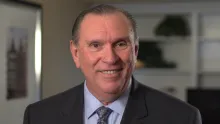
Randy D’Alessandro served as pastor for the United Church of God congregations in Chicago, Illinois, and Beloit, Wisconsin, from 2016-2021. Randy previously served in Raleigh, North Carolina (1984-1989); Cookeville, Tennessee (1989-1993); Parkersburg, West Virginia (1993-1997); Ann Arbor and Detroit, Michigan (1997-2016).
Randy first heard of the church when he was 15 years old and wanted to attend services immediately but was not allowed to by his parents. He quit the high school football and basketball teams in order to properly keep the Sabbath. From the time that Randy first learned of the Holy Days, he kept them at home until he was accepted to Ambassador College in Pasadena, California in 1970.
Randy and his wife, Mary, graduated from Ambassador College with BA degrees in Theology. Randy was ordained an elder in September 1979.
playlist
Related Sermons
