

Greg Thomas
Unedited video available: https://www.youtube.com/watch?v=p-yyu6xbRQ8
This transcript was generated by AI and may contain errors. It is provided to assist those who may not be able to listen to the message.
Thank you again, Mr. Blankey. Thank you again, Mr. Graham. And once again, Happy Sabbath, to all of you. The Son is trying to break through there. It actually came out when we were singing that last hymn, and hopefully we'll yet have a beautiful afternoon. You know, God gives us many great promises about the future, and His promises are encouraging, and they're hopeful, and they're absolutely sure.
But aside from the future, Jesus Himself wanted us to share a quality right now that was very important to Him. It's a quality that He constantly had in spite of all of the trials that He faced. He always maintained this certain quality. In a similar way, the Apostle Paul also had this quality in spite of the challenges and trials and the difficulties that he experienced. Well, what is this quality? And what holds us back from enjoying this quality that Jesus Christ wants us to have right now and continuing into the future? Well, let's find out what it is.
In John chapter 15 and verse 8, we'll go there. The words spoken here are by the same individual who absolutely knows prophecy, and around this same time would be kneeling and would be asking God if there was another way that prophecy could be fulfilled. And He accepted His role as the Messiah and realized that He must die. The same being who knows that in a short period of time He's going to be arrested and He's going to be mocked and humiliated.
He's going to be stripped. He's going to have crown of thorns slammed on His head. He is going to be scourged, whipped with a bone or glass in the end of leather tongs and whipped with that. Ultimately, He's going to be crucified. He's going to have nails hammered through His hands and His feet, and He's going to have a spear jabbed into His side. And in spite of that, here's what He says in John chapter 15, beginning in verse 8.
By this my Father is glorified that you bear much fruit, so you will be my disciples. And that's what our life is all about after conversion. It's about growing into the grace and knowledge of God and taking on the mind of Jesus Christ. And that means bearing much fruit. It means overcoming our carnal human nature. It means using that awesome gift that God gives us, the power of His Holy Spirit, to take our lives in new and a greater direction. So you will be my disciples as the Father loved me and I have loved you. Abide in my love. If you keep my commandments, you will abide in my love just as I have kept my Father's commandments and abide in His love.
And here's the powerful point. Remember, I just mentioned all the things that He absolutely knows that He's going to be going through. These things I have spoken to you that my joy may remain in you and that your joy may be full. Jesus doesn't say, it's my hope that you have a little bit of joy. He's not saying, it's my hope that occasionally you really have some good times, that you have some joyous times. No, He says, I want my joy to remain in you the same level of full joy.
Jesus says that I have, I want that to remain in you and I want it to be full, complete. Verse 12, this is my commandment that you love one another as I have loved you. Greater love has no one in this than to lay down his life for his friends. You are my friends if you do whatever I command you. So that trait, that quality that I want to talk about today, that Jesus Christ wants us to have right now and forever is that quality of joy.
Joy is defined in the dictionary as the emotion evoked by well-being, a feeling of great pleasure and happiness. So let me ask this question, how much joy have you been experiencing lately? Jesus Christ wants us to be joyful. He desires that the same joy that existed within himself, even before, a few hours before, some really horrible events would occur.
He wants that same joy that existed within himself to be in us. I want you to notice the connection he makes between loving God and loving each other and joy. It's kind of as if he knew what Paul would say in Galatians 5.22. Paul begins to list the fruit of the Spirit and let's see. The first one is love. Jesus just talked about that.
And what's the second one again? Joy. Love. Joy. Joy is the result of love. And Jesus says here, the love of God and our love with each other. Yet most religious people I have known in my lifetime don't appear to be very joyful. I've kidded before about people that I call who come from the kingdom of the lemon suckers. And they always look so soured. They look. Their physical parents is like before they come to church they sucked on five or six lemons before they walked to the door and they just, oh, the weight of the world is on our shoulders and we're just so burdened and this is just all so hard.
But is that really what God intended for us? As human beings we have limited resources and if we're spending all of our emotional resources unfortunately thinking about ourselves and being selfish then we don't leave many resources to be joyful. If we are using up our emotional resources on judging and condemning other people then there's not going to be a lot left over to experience joy in our lives because those are two contrasting contradictory emotions. Judging and receiving joy and being joyful.
You can't have both at the same time. They just don't work together. Let's go to John chapter 10 and verse 9. If you'll turn there with me. John chapter 10 and verse 9. John wrote in his Gospel, quoting Jesus, I am the door. If anyone enters by me he will be saved and will go in and out and find pasture. So Jesus said I am the gate to the pasture. The pasture is where there's peace and there's plenty of food. It represents the kingdom of God.
He says that I'm the gate that allows one to get into that pasture of peace. The Lord is my shepherd. We're all familiar with that Psalm and he says something else here in verse 10. The thief does not come except to steal.
The thief of course, a Satan, does not come except to steal and to kill and to destroy. I have come that they might have life and that they might have it more abundantly. He doesn't mean just someday in the future having life abundantly. He means now. He means as a result of God's Spirit dwelling in us that we can have life more abundantly in full abundance, filled with joy, contentment, peace of mind. Verse 11, I am the good shepherd.
The good shepherd gives his life for the sheep. So one of the things that the thief that Satan steals from us is our joy. We can allow those attitudes that wave that invisible mindset. I like to liken it to a wi-fi system. It radiates the whole world. We can allow that to affect us and pull our moods down, make our attitudes negative, and begin to develop some very poor thinking and some poor habits in our lives, and that steals our ability to be joyful. So again, one of the things that the thief does is he steals our joy.
He can steal it from us. He can steal a high level of joy that the fruit of God's Holy Spirit is willing to make available to us. This happens because we develop bad habits, and we allow those habits to creep into our lives and into our minds, and those habits result in poor thinking. And it's that poor thinking, those poor habits, that steal, destroy our capacity to experience true joy.
You see, here's the key. Joy is a choice. And like almost every other thing important in life, we either choose to be joyful or we choose something else. Joy is something that comes from the inside of us. Too many of us rely on outside circumstances to make us joyful.
And the world doesn't owe us anything. So we have to understand that the key to having joy is that it's something that comes from the inside, and it transcends everything else going on around us. Let's see if the prophet Abacak understood this. If you'll turn to the prophet Abacak with me, obviously, one of the minor prophets near the end. I think it might be the fifth book back from the conclusion of the Old Testament. We don't turn to the book of Abacak very often. Chapter 3 and verse 17. I want to focus on what he knows and what he understands.
It's the key to what I want to talk about today. Chapter 3 and verse 17. I want you to think of these external circumstances that's going on in his prophecy and what he sees.
Though the fig tree may not blossom, nor fruit beyond the vines, though the labor of the olive may fail, meaning there are no olives that year. Obviously, he's describing a famine.
And the fields yield no food. Though the flock may be cut off from the fold, and there be no herds in the stalls. Sounds like a pretty tough external environment to me, right? There's an environmental disaster. There's nothing to eat. There are no fruits. There are no vegetables. There are no animals to eat. There's hunger. There's deprivation. He says in verse 18, yet I will rejoice in the Lord. I will joy in the God of my salvation. What did he understand?
Joy comes from the inside. It has nothing to do with external circumstances. And if we rely on those external circumstances aligning up beautifully to make us happy, we're going to go through most of our lives. Grumpy, sour, discouraged, instead of being joyful.
In spite of our circumstance, beyond what is happening to us, we either choose to be happy, or we're choosing, every day, we're choosing another course, another direction. We either choose to be joyful or we're allowing our thinking to choose to be miserable, to choose to be unjoyful, unhappy. So today what I'd like to do is discuss some bad habits that diminish our joy.
To a certain degree, we have these habits. The more these habits that are rooted in our hearts and minds, the more these habits steal our joy. They're a tool used by the thief. Who doesn't want us to be happy? Doesn't want us to live that abundant life that Jesus promised? Doesn't want us to be joyful? Wants us to be discouraged and despondent and unhappy. And we can't allow that to happen. We live in a world that thinks that joy is a season, that joy is receiving a gift, or some other external event. Joy is driving around and seeing pretty lights on trees, bows, buying stuff, receiving gifts. We tend in our culture to think joy is a result of all these happy things that happen on the outside. And, brethren, that's a deceptive lie.
Bad habits make and keep us unhappy. They keep us stuck in a negative cycle. They prompt us to do things we don't want to do. And what I want to encourage God's people to do today is to start right now to eliminate these bad habits from our lives because they steal our joy. When you do, then you will open up room for new habits, positive thinking, and you'll be able to replace those bad habits with the fruit of the Spirit. And that is so essential, so important. In past sermons, I've spoken about our self-talk and how destructive it can be many times. And that's not my topic today. Mr. Howson mentioned that a little bit about our self-talk pulling us down, making us feel like failures, making us want to quit. And, indeed, our self-talk is very, very powerful. And we have to get to the point where we challenge our self-talk that any time we think something is negative, we say, no, I don't accept that as truth. And when we begin to challenge our thinking, we will begin to eliminate that negativity instead of just accepting it as truth.
That we lie to ourselves, brethren, we lie to ourselves continuously. And that's why we need to challenge the negative self-talk that's in our heads, because that's a part of every one of these habits that I'm going to talk about today. So here's the first one. First bad habit. First bad habit is postponing your goals. We've talked about the importance of having goals in our congregation in the past. How are we doing on those goals? How are we doing on that personal mission statement?
Or are those notes in a drawer with a thousand other notes undone, unread, unfulfilled? Proverbs chapter 6 and verse 6. Let's see what we can learn from the book of Proverbs. Proverbs chapter 6 and verse 6.
The author was inspired to write, go to the ant. In other words, observe. Take a few minutes and just look at an ant colony. You sluggard. Consider her ways and learn something just by watching an ant. Be wise. Which having no captain, no overseer or ruler without any leadership at all, the ants know what to do. They don't need someone to tell them what to do. That's a very powerful principle.
They know what to do. Verse 8 provides her supplies in the summer and gathers her food in the harvest. How long will you slumber? How long will you procrastinate? The author of Proverbs asks us. How long will you put off the things you need to do? How long will you slumber? Oh, sluggard. When will you rise from your sleep? A little sleep, a little slumber, a little folding of the hands to sleep. And the author says, wake up! Very powerful scripture. What's the lesson here? Without being told what to do, ants are busy being productive. They're busy being productive. They instinctively plan for both their present and their future.
Now beyond ants, we're human beings. We were created in the image of God. God is a planner.
Just take a look at Genesis 1 and see how he planned the world through the creation. Step by step, he knew exactly what he was doing. He's organized. He's a planner. He's a God with big goals. And you know what his biggest goal is? Getting you and me to the point where we are growing and changing and filled with his spirit and can someday be part of his family. That's been his goal for millennia. That is very important to God. And we were created in God's image. So like our Creator, we too are to find fulfillment in being busy doing productive things. Now I want to emphasize something here. Not busy for the sake of avoidance. I've known a lot of people like that in my lifetime. To avoid confronting a problem they had personally or in their marriage or on their job or with someone in the church, they would try to hide the pain by just being busy. Avoid the confrontation. Avoid dealing with the problem by just being busy.
That's not what I'm talking about. I'm talking about busy doing productive beneficial things.
Because the bottom line is, is we are human beings, not human doings.
All right? Everything we do should have a purpose. It should be part of a plan. A plan that we have for our lives. It should be productive. It should take us someplace good, someplace where we want to go. Proverbs chapter 21 and verse 5 states, the plans of the diligent lead surely to plenty.
Ants do things out of instinct. We must choose to be motivated. We won't be motivated simply because of instinct. We have to choose to be motivated. That means we must have personal goals and we need to be working on them daily. How are we doing on those goals? Jesus taught us to seek the kingdom of God and God's righteousness is our first goal. He mentions that in Matthew chapter 6 and verse 33. By the very fact that he says, seek first the kingdom of God, doesn't that imply, since that's first, that we should have a second and a third and a fourth goal? It's just common sense because God wants us to be productive. He wants us to be busy doing productive, positive things in our lives.
So what's your second and third and fourth goal in life? You see, procrastination will keep us from reaching our goals more effectively than any external obstacle out there. And we can blame our procrastination on all kinds of external things, roadblocks, and barriers. But the truth is, it's happening on the inside. We just don't have that will to say, I'm going to buckle down, I'm going to do it, and I'm going to reach my goals. Start today. Whatever your goals are, take one baby step towards a personal goal and then do the same thing tomorrow. A small thing, and the same thing the day after that, and the same thing the day after that. Brethren, it doesn't have to be much. But do something every day, and in time, those many small steps will be a giant leap.
And you'll say, hey, I'm making progress. I'm doing productive, positive things. It's consistent effort. That's the key. And that's why we should never give up on our goals. We should not postpone our goals.
All right, let's take a look at a second bad habit. The second bad habit is living a mediocre life.
Living a mediocre life. Colossians chapter 3 and verse 17. If you will kindly turn there with me. Colossians chapter 3 and verse 17. Here Paul is addressing different groups within the congregation. He's going to have something to say to the wives. He's going to have something to say quickly to the husbands, to the children, to the bond servants. And then he's going to make a statement here in verse 23 that applies to all of us, every one of them, including you and I. So let's read through it. Chapter 3 and verse 17. And whatever you do in word or deed, do all in the name of the Lord Jesus Christ, giving thanks to God the Father through him. And he begins talking to various groups. Wives, submit to your husbands, as is fitting in the Lord. Husbands, love your wives, and do not be bitter towards them. Children, obey your parents, and all things, for this is well pleasing to the Lord. Fathers, do not provoke your children, lest they become discouraged.
Bond servants, obey in all things your masters according to the flesh, not with eye service, as men pleasers, but in sincerity of heart, fearing God. And then for all of you, just include you and I. And whatever you do, do it heartily as to the Lord and not to men, knowing that from the Lord you will receive the reward of the inheritance, for you serve the Lord Christ. I'm going to read to you what Believer's Study Bible says, their notes say about this phrase, heartily. Whatever you do, do heartily. Quote, heartily is actually ex-su-keh, that's the Greek word ex-su-keh, and it means out of the soul. Whatever you do, it should come from the core of your being. It should come deep from inside of us with passion and enthusiasm and our whole heart. Heartily, I'll go back to Believer's Study Bible, is the Greek word ex-su-keh, Greek out of the soul. It says continuing all Christian endeavor ought to be characterized by enthusiasm, confidence, and diligence not found in the attitude of others. End of quote. So how are we doing on that? Are we passionate about everything? Do we wash dishes with enthusiasm?
Cut the grass with enthusiasm? Or do we look like we're walking the green mile? Right? We're asked to do something we don't like to do at home. We act like we're going to be putting the electric chair in an hour. I hate dishes. I hate washing clothes. I hate vacuuming the house.
Are we doing things hardly? Or are we allowing a mindset and an attitude within us that makes our lives mediocre? We read earlier in John chapter 10 in verse 10, Jesus stated, I've come that they may have life and that they may have it more abundantly. God wants us to do things with enthusiasm and passion. And in order to do that, we have to step out of our comfort zone and remember that the greatest pleasures in life include some degree of risk. Now, we Americans, we don't like to hear that because we in our culture think the purpose of life is pure comfort without ever having to face anything that's uncomfortable. We want comfort. We want the government to provide for us things that we don't have. Happiness is not about avoiding the painful things in life. It's about chasing our dreams and our aspirations. And that is risky because, as Mr. Howson mentioned, you just might fail a few times before you get it right. And that's okay.
If we do things with joy and enthusiasm, even when we fail, we at least fall forward. I want to say that again. If we do things with joy and enthusiasm, even when we fail, we at least fall forward. And this allows us to grow even through our mistakes. It's okay to fall.
Just at least try to fall forward. You're a little bit closer to the destination.
Let's take a look at another bad habit that many of us have. And as a pastor, I witness it in my own beloved congregation. Self-sabotage. Self-sabotage. We just say and do things impetuously that harm ourselves or harm others. Let's take a look at three quick proverbs. We'll begin with Proverbs chapter 14 and verse 29. And I'll read these proverbs and I'll read these proverbs and I'll just make a few comments about them. Proverbs chapter 14 and verse 29.
It says, He who is slow to wrath has great understanding, but he who is impulsive exalts folly. When we do things knee-jerk, when we do things impulsively without thinking things through, we end up making a fool of ourselves. We become a folly. It's exalted in our lives.
Proverbs chapter 16 and verse 32. Proverbs chapter 16 and verse 32.
A few chapters back, He who is slow to anger is better than the mighty, and he who rules his spirit than he who takes a city. You see, there's no impulsiveness with someone who rules his spirit.
There's no impetuousness. There's no knee-jerk reaction to things because they've got control of themselves. They stopped themselves.
Proverbs chapter 25 and verse 28. Proverbs chapter 25 and verse 28. Proverbs chapter 26 and verse 28. Whoever has no rule over his own spirit is like a city broken down without walls. You know what a city broken down without walls is? It's vulnerable to destruction. That's what it is.
So it's very important that we not allow ourselves to say things, to do things impetuously, because we get angry or we get frustrated, and we snap and we say or do something that derails the progress we have made or hurt our relationships. It's like the old expression, you take one step forward and two steps backward. Brethren, we've got to stop self-sabotaging our lives by reacting impetuously. And that again, that's just a lack of self-discipline. Any pattern that keeps disrupting our growth, our success, our joy, we just have to put a stop to it. We have to say to ourselves, when I get angry, I'm going to bite my tongue, I'm going to count to one million by haves, and by then I won't say or do something that I will regret. What's keeping you stuck? What's keeping us stuck? Develop positive patterns and habits that support your highest goals and values, and let's not sabotage the progress that we make.
Let's talk about the fourth habit. Number four is running from our problems.
Running from our problems. Psalm 19, Psalm 19, and verse 7. God gives us something to help us to compare our lives and how we're growing, so that we can make those adjustments, so that we can say, yep, this is a problem and I need to deal with it. And here's the rule and the standard that we are told to live by here, mentioned in Psalm chapter 19. The law of the Lord is perfect, converting the soul. The testimony of the Lord is sure, making wise the simple. The statutes of the Lord are right, rejoicing the heart. The commandment of the Lord is pure, enlightening the eyes. The fear of the Lord is clean, endearing forever. The judgments of the Lord are true and righteous altogether, more to be desired are they than gold, yea, than much fine gold, sweeter also than honey and the honeycomb. Moreover, here, verse 11, by them, that is by God's laws and his judgments and his statutes, your servant is warned.
God's law, the spiritual aspects, is there for us so that we can say, you know, I've obviously got this problem, I need to deal with it. I'm being warned by God's spiritual law that I'm missing the mark, and I need to begin to clean up my life. I need to begin to face this problem, this issue that I have, instead of denying it, instead of running away from it.
Verse 11 again, Moreover, by them your servant is warned, and in keeping them there is great reward. The more we conform to God's law, the greater level of our personal joy and happiness, because we're in harmony with God. And the more problems that we avoid, excuse away, and run away from, it's going to mute our level of joy. It's going to hold us back from being all that God wants us to be by using the power of his Holy Spirit to create change in our lives. Verse 12, Who can understand his errors? Cleanse me from secret faults. Those might be the problems that you and I have that no one else knows we have, but we do. The secret faults.
Who can understand his errors? Cleanse me from secret faults. Keep back your servant from the presumptuous sins. Let them not have dominion over me. Then I shall be blameless, and I shall be innocent of great transgression. Let the words of my mouth and the meditation of my heart be acceptable in your sight, O Lord, my strength and my Redeemer. So what is the psalmist saying here? He reveals to us that God's law, his testimony, his statutes, his judgments are there so that we can clean up our act, so that we can deal with our problems and not avoid our problems, not run away from our problems. The more we conform to God's law, the less discord and internal dysfunction we will experience in our lives. When we compromise with God's values, we end up compromising with our potential level of joy. We allow the thief to steal our joy because we're not quite in sync with God yet.
Let's truly face our problems and deal with them. Start chasing after the right things instead of running away from the wrong things. As we repent, don't look at problems as something to avoid, but as an opportunity to grow and learn, as an opportunity to learn and grow. God gave us this physical life as a training experience so that we can learn to reject what doesn't work and to accept what does work, to accept God's instructions. Facing our problems is a choice. Overcoming our faults brings us closer to God's will and it will result in greater joy and greater peace of mind.
And what happens when we run from our problems? In the back of our mind, we feel a sense of guilt, a sense of personal shame, a sense of uneasiness that we know we've got this problem that we haven't dealt with or we're putting off. And what's the end result of that? It steals our joy.
It takes it right out of our lives.
The fifth habit is worrying about your flaws. Worrying about your flaws. Now, I'm not talking about sins here. I'm talking about our flaws. We all have foibles and we all have personal idiosyncrasies that are not necessarily sin, but they might not be that attractive either.
Part of who and what we are. Let's turn to 2 Corinthians 12 and verse 8.
I know, again, that our self-talk often says to us, I'm not good-looking enough.
I'm not smart enough. I don't have enough money. I don't have enough faith. It constantly will pull us down, focusing on our weaknesses, what we lack, and what our flaws are. Well, Paul struggled with one here, 2 Corinthians 12 and verse 8, and the so-called scholars argue over what this was. Some say this may have been an eye problem. Some say it was an evil spirit that was tormenting him. But no one really knows what this affliction, this thing was that he refers to. I think the probably the most balanced approach are those who do say that he had an eye problem that probably was very unsightly, perhaps as a result of a beating that he took. And he had an eye that didn't heal completely. And when you looked at him, it was not very pretty to look at. And it caused him problems with his sight, the ability to write, and that's what I think probably makes the most sense, but no one really knows. But let's read what he says. He says, concerning this thing, this personal affliction, I pleaded with the Lord three times that it might depart from me, and he said, My grace is sufficient for you, for my strength is made perfect in weakness. Therefore, most gladly, I will rather boast in my infirmities, that the power of Christ may rest upon me. Therefore, I take pleasure in my infirmities, in reproaches, in needs, in persecutions, in distresses, for Christ's sake, for when I am weak, then I am strong. Paul is saying, when I get beyond the ego, when I push my ego aside and stop worrying about whether people I think I'm good looking, or whatever everyone thinks I'm smart, or whatever everyone thinks about me, when I push that aside and I have pure humility, I'm not thinking about my weaknesses anymore, then God can work with me and do great things in my life. There was a woman who was quite popular when I was growing up. Her name was Phyllis Diller. Any one here remember a comedian, Phyllis Diller?
Well, she was a 38-year-old woman with five children, and all of them were living on welfare.
At night, she cleaned offices to earn a little bit of money to help pay her bills. And one night, she was supposed to clean an office, and she found a book in a trash can. It was titled The Magic of Believing by Claude Bristol. And that night, instead of cleaning, which is what she was supposed to be doing, she decided to sit down and read that book from cover to cover, and it changed her life. The book gave her a valuable insight. It suggested that you take your greatest weakness and turn it into a personal strength. This is a similar kind of metaphor what Paul is saying here. By looking at the mirror, Phyllis Diller believed her greatest weakness was her looks. She said to herself, I am downright ugly. Well, then she proceeded to create comedy skits that focused on poking fun at her appearance, at her ugliness. And she even created a fictional husband named Fang. And in three years, she was working as a stand-up comedian in Las Vegas shows. She went on to have a long, successful career. By the way, she was a very talented painter. Many people don't know that. She's now considered to be one of the pioneers of female stand-up comedy. Why? Because she confronted her weakness, and she stripped away the ego. I'm not going to let it torment me. I'm not going to feel embarrassed anymore. I don't care what people say. And that weakness became her strength. How about us, brother? And every one of us has physical, mental, emotional, or spiritual flaws that we're struggling with.
But it's up to us whether we give them the power to keep us from reaching our goals, or give them the power to hold us back. Instead of allowing them to have that power, take your flaws and find your strength in them, and make them work for you. If we're humble, our flaws can strip away that pride and that ego, and with this wall removed, God can do great things in us, even with those flaws. But it only happens when we strip away that ego and stop worrying about what everyone else thinks of, the way I look, how I walk, how much money I make, what my supposed social status is. When I stop worrying and thinking about that and strip away that ego, then God can turn my weakness into a strength.
All right, let's take a look at the sixth bad habit that can steal our joy. Trying to control everything. Trying to control everything. Philippians chapter 4 verse 4. If you'll turn there with me. Philippians chapter 4 and verse 4.
Philippians chapter 4 verse 4. Rejoice in the Lord always again, I will say, Rejoice! Let your genuineness be known to all men. The Lord is at hand. Be anxious for nothing, but in everything by prayer and supplication. Give thanksgiving. Let your request be made known to God. And the peace of God, which surpasses all understanding, will guard your hearts and minds through Jesus Christ. Rather, trying to control everything clearly causes stress, because you can't control everything. Thinking you can control things is an illusion. If you try to control everything in life, you will constantly be frustrated, aggravated, and angry. Because, you know, there's only one thing that you can control. There's only one thing that Greg Thomas can control, and that is how we react to things, not the things themselves. The only thing we can control is our reaction to negative events. That's the only control that we have. To have command of yourself is a much more reliable source of joy than trying to control everything around you. As Paul told us here, leave it to God. Go to prayer. He says, in everything in prayer and supplication with thanksgiving, let your request be known to God. Stop trying to control people. Stop trying to control every circumstance, every event, because it just doesn't work.
The next point that I would like to bring out here, the next habit, is...
Oh, I'm sorry. I'm out of time.
We will conclude part one of this sermon today.
Virtually everything we do every day is from habit, and most of them become automatic because of something called conditioning. We do something a few times, and then we are conditioned to do it. We do certain things, and because of repetition, they become habits in our lives. And first, we establish our habits, and our good habits help us, and our bad habits hinder our growth.
I want to encourage you, between now and when we finish the sermon next time, to think about discarding the habits that are stealing your joy. To realize that it is possible to experience joy even during a trial, even during a personal crisis, because joy comes. It's generated from the inside, not from external circumstances.
So that's the end of part one today. I wish all of you a wonderful and fulfilling Sabbath, and hope to see all of you after services.
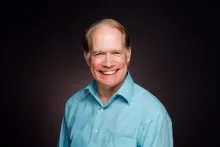
Greg Thomas is the former Pastor of the Cleveland, Ohio congregation. He retired as pastor in January 2025 and still attends there. Ordained in 1981, he has served in the ministry for 44-years. As a certified leadership consultant, Greg is the founder and president of weLEAD, Inc. Chartered in 2001, weLEAD is a 501(3)(c) non-profit organization and a major respected resource for free leadership development information reaching a worldwide audience. Greg also founded Leadership Excellence, Ltd in 2009 offering leadership training and coaching. He has an undergraduate degree from Ambassador College, and a master’s degree in leadership from Bellevue University. Greg has served on various Boards during his career. He is the author of two leadership development books, and is a certified life coach, and business coach.
Greg and his wife, B.J., live in Litchfield, Ohio. They first met in church as teenagers and were married in 1974. They enjoy spending time with family— especially their eight grandchildren.
