

Don Ward
This transcript was generated by AI and may contain errors. It is provided to assist those who may not be able to listen to the message.
The title of the sermon today is To Be or Not to Be? In Shakespeare's tragic play, Hamlet, the opening lines of Hamlet's famous soliloquy reads, To be or not to be, that is the question. Whether it is nobler in mind to suffer the slings and arrows of outrageous fortune, or take arms against a sea of troubles, and by opposing in them to die to sleep no more, and by asleep to say, We end the headache, and the thousand natural shocks that flesh is heir to, tis a consummation, deviously to be wished, to die, to sleep. So Hamlet is faced with the deadly dilemma of taking a stand against the evil king, and risk death, or just let things slide, and deal with the consequences. This is the backdrop of the question to be or not to be, and this is the historic question of the ages, from the Garden of Eden to the present day. The verb to be has to do with existence, the state of being. Hamlet winds up killing the king and himself. A rather tragic course to take, so this afternoon I want to examine this question to be or not to be from several different perspectives and hopefully encourage all of us to be. The more you try to forget this question, the more you'll remember it, so try to forget it. I challenge you to forget the words to be or not to be. On January 6, 2004, early one Friday morning, my mother died, and on Sunday, January 8, we buried her in Laurel, Mississippi, or near Laurel, Mississippi, in a little community called Lebanon. So Mother's Day that year was different for us. I have one sibling, a brother, and his wife, and they have two boys. My wife and I had two daughters. She had fallen and broken her legs. She got up in the middle of the night, which she was not supposed to do by herself to go to the bathroom. She was 87 years old, and when she got up, her leg snapped. She had had four replacements in that leg, hip replacements, and she had broken the femur on the leg four years before.
This time, she broke the femur just above a kneecap, and the doctor said there was nothing they could do. They could not fix it. So she was facing being an invalid the rest of her life, in a sense, but my mother had an indomitable spirit to be, to continue on. So after we received the news that she had broken this bone, Wanda and I was over there by her side, along with my brother and his wife, doing everything we could, and then suddenly she came down with pneumonia, and she was fighting for her life. Pneumonia is somewhat analogous to drowning. You bob up two or three times. I've seen two people bobbing out there, drowning in both cases of rescue.
One was my brother, which a neighbor rescued, and another was first cousin, which my dad rescued. So when you have pneumonia, you're struggling oftentimes for breath. My mother was not in God's church, but she was a woman of deep spiritual convictions, and hopefully we'll see her in resurrection. And of course, one of the reasons why I want to be and to make it into God's kingdom is to see my family once again, and congratulate you to those who have been able to keep their families together, because that's the only way you're going to survive in the world that we're living in.
So I want to see my mother, my wife wants to see her mother, father, and we want to see children, grandchildren, and others in the life to come. Hopefully they'll be in that resurrection. So the question to be or not to be is of vital importance. As my mother fought for her life the week we were there by her side, my brother and my wife and his wife and my mother, my mother and my wife and my mother and my mother and my mother and my mother and my mother and my wife from time to time tried to comfort her as she struggled for life.
I suppose that I made about every appeal to God that one could make. At one time the going was especially rough and I laid my hands on her and I began to pray as if I were anointing someone in our fellowship and she did come out of it for a short period of time, but it was a short period of time. So over and over during that week I thought on the question to be or not to be.
You realize that a person that is lying there struggling for air is not just the physical body. There's life, there's mind, there's heart, there's personality, there's belief system, hope, dreams, relationships, ad infinitum. Then upon death there's just flesh and a great vacuum in our lives, unless. See, our hope is that we will be reunited with my mother and many others in resurrection.
So let's turn now to John 6.63. There are many different scriptures you could turn to see the differentiation between there is a physical birth, there is a spiritual birth. Here John makes the case here that the word of God is the word of God life and it is spirit.
So in John 6.63, one of the great memory verses of the Bible, it says, it is the spirit that quickens the flesh profits nothing. The words that I speak unto you, they are spirit and they are lie. And in verse Corinthians 15 we read very clearly that flesh and blood cannot enter into the kingdom of God.
Being consists of five verses far more than just the physical elements that make up the flesh. God created us in His own image, and that's a wonderful thing we talked about in the last sermon that I gave here, that God's infinite love for each one of us. He even created us in His own image. That includes the ability to think, to reason, to hope, to dream, to speak, to communicate, to show emotion, project our personalities.
But we know that being life in the eternal sense is not inherent within human beings. We do not have immortal souls. We do not have inherent immortality. That only comes through the spiritual birth into the kingdom family of God. Physical life and eternal life are our greatest gifts. If we never lived in the flesh, obviously we'd have no chance of being in God's kingdom. And God has developed, ordained, He in the Word, this great plan of salvation whereby we can be in God's family and in His kingdom.
We know that apart from God, we cannot and will not live eternally. So let's consider more deeply the question of to be or not to be. One of the first questions that we usually ask when we are growing up or we've been asked or we ask someone else, well, what do you want to be when you grow up?
I've asked this question to my children and to lots of other children through the years. I remember being asked that myself. Well, what do you want to be when you grow up? And the question of what you want to be when you're a child is usually asked in terms of the occupation, vocation, or profession that you want to be in.
And oftentimes it's, well, I want to be like my parents. I want to do the same thing that they're doing. I did not want to be my vocation. I did not want to be the same as my parents because they were farmers and my dad worked in town at a door mill. And I was following the meal from the age of 10 to graduate from high school when I was graduated in March of 56, so I had turned 18 and that was the last time I followed a meal.
Very rarely do youngsters under the age of 10 say, I want to be a person of character and integrity, or I want to be a person who makes the world a better place. I want to be a person who serves others, and I don't recall anyone ever saying they want to be a Christian.
It's usually in the mid-teens or later before the question changes from what do you want to be when you grow up to what you want to do with your life. As you sit there this afternoon, whether you're 9 or 90 or younger or older, what do you want to do with the rest of your life? There are probably people sitting here this afternoon of every age, including some over the age of 60, 70, and 80 or 90 who are asking themselves, what I want to do with the rest of my life? I ask that to myself quite often now.
What kind of footprints in the sand do I want to leave? So as you sit here this afternoon, regardless of your age, ask yourself the question, what do I want to do with the rest of my life? What do I want to become? What do I want to be? And if you should cease to be in the flesh, what would be the main thing that you would want people to remember about you? As noted earlier, my mother died early on Friday morning. We received a phone call around 4 o'clock a.m. My brother and I, we rushed to the hospital along with our wives.
After taking care of many details, we finally went down to the cafeteria, and as we sat there having breakfast, my brother looked at me and said, Donald, do you think you'll be able to speak at this time? I said, I don't think you'll be able to speak at Mother's General. And I said, I don't know if I will be able to or not. But let's schedule things so if I can't, we just proceed to the gravesite and skip that part. It turned out that both of his sons, my nephews, fine young men, they're both medical doctors, and my brother and I were able to speak after the Baptist minister spoke briefly.
My mother was a staunch Baptist, and she read our, I did the correspondence courses, let them, wrote them out in longhand and gave them to her, and she read them and finally said, well, son, if I could find a Baptist church and met on Saturday, I would go.
The Baptist minister was aware to some degree of what my wife and I believe, so I thought he did a good job among the topics I addressed. I read and commented on Proverbs 31, the virtuous woman, and indeed my mother was a virtuous woman. Who can find a virtuous woman? Because her price is far above that of Ruby's.
So what will they read about you and me when the time comes? Who do you want to be? Is it to be like Christ? So let's now turn to 1 Peter 2, verse 21. Once again, a great anchor. Memory Scripture should be committed to memory. 1 Peter 2, verse 21. For even hereunto were you called, because Christ also suffered from us, leaving us an example that we should follow in His steps.
So Christ is to be our measure. He is to be the one that we strive to be like. So what did Christ tell His parents at the age of 12 concerning what He wanted to do and what He wanted to be? So if you would, turn to Luke 12, verse 41. Luke 12, starting with verse 41 and going to the end of the chapter there in verse 52. They went to the services there. The Feast of the Passover was near, so they went. They were returning home. They missed Jesus. He wasn't not among them. They were worried sick. They went back to see where He was. They found Him. Verse 46 came to pass after three days. They found Him in the temple sitting in the midst of the doctors, both hearing them and asking them questions. And all that heard Him were astonished at His understanding and answers. And when they saw Him, they were amazed, and His mother said unto Him, Son, why have You dealt with us? Behold, Your Father and I have sought You sorrowing. Boy, in today's world, if that had happened, you probably would never see Him again. Unfortunately, of course, God had a great plan for Jesus Christ, and Jesus Christ was part of the plan and so on. Notice the answer that He gave to them, and He said unto them, How is it that You were sought Me?
Why did You even... It's a funny answer to me. Don't you know that Jesus Christ was said, I must be about my Father's business at the age of twelve. Now, we read of 1 Peter 2.21 that Christ said as an example that we should walk in His steps. And they understood not the saying which He spoke unto them, and He went down with them and came to Nazareth and was subject unto them. But His mother kept all these sayings in her heart, and Jesus increased in wisdom, stature, and favor with God and with man. Jesus said at the age of twelve, I must be about my Father's business. And remember once again, He said as an example that we should follow in His steps. I know that the age of twelve, I was beginning to fairly well try to map out my life and what I wanted to be. Unfortunately, I wanted to be a professional athlete. And that took away a lot of things that I could have been that I wasn't because I pursued that. I ran, there's no telling how many hundreds of miles I ran after some kind of football ball, but I was a professional athlete. And I was a professional athlete so I was pretty strong. I guess I just had ability to say thus that I am higher than I shades at one, and So, by the age of 12, I was trying to map out my life, and I hope that you are doing the same. Now let's go to Ecclesiastes 12 and verse 1. Ecclesiastes 12 and verse 1, we don't turn to Ecclesiastes every day, but first little flip I landed right on it. Ecclesiastes 12 and verse 1, Remember now your Creator in the days of your youth, while the evil days come not, nor the years draw nigh, when you shall say, I have no pleasure in them. And so you may finally come to the point some people are very fortunate. I know I had an aunt to die in her sleep, and many of you heard of people dying in their sleep. They didn't go through a long drawn-out process of dying. They did not suffer all of that much. And of course, if that's a, I guess you would say, if you got to go, that's a good way to go. So the admonition in Ecclesiastes 12.1 is very strong. Remember your Creator. I know that we made some progress in the church with our youth and with youth education, and I hope that we make a lot more progress. Of course, we cannot leave education of our youth to the church or to the public schools, especially the public schools. Public schools are becoming a cultural war zone, as you know and you've read and you've heard about all of the silly things that are going on. I believe that we need to teach responsibility and accountability to our youngsters at a very early age, and I believe that we have made some progress in the recent years, as noted, and I hope that we're able to continue with that and come up with ways more meaningful to teach the Word of God. I remember when I walked into services the first time worldwide Church of God appeared on campus of ambassador, and it was July of 1961. I think 6061, somewhere along in there, and then I looked out there. I was expecting something totally different.
All these children, all the blankets were out on the floor, and the coloring books and the cookies and the pretzels and all the other stuff was out there, and I thought, well, is this services or is this church picnic? Well, it turned out it was services, and it lasted a long time.
We will today. I don't know how long it will last, but it was in my mind because I grew up going to Sunday school and being taught from an early age the scripture, and by the age of six, quoting scripture in church. I thought, man, wouldn't it be great if we had a Sabbath school program? I began to lobby for that, and that was 1960. Somewhere around 1970, two or three, we were finally able to launch a Sabbath school program. There were all kind of things made. Some people had said it was pagan. Some said it would interfere with their child's schedule. Some said all kind of things. Now, we continue here in Ecclesiastes 12 and verse 13, Let us hear the conclusion of the whole matter. Fear God and keep His commandments, for this is the whole duty of man, for God shall bring every work into judgment with every secret thing, whether it be good or whether it be evil. So, it begins in the home, teaching the child, giving them the vision, what do you want to be? Christ said at the age of 12, I want to be about my father's business.
Teaching and accountability must begin in the home, must be reinforced over and over in the home. In the Jewish culture, when a youngster reaches his or her 13th birthday, certain ceremonies are held that mark a passage from childhood to adulthood, especially when it comes to accountability. Many of the church denominations have a systematic program in which they train their youth and they don't leave it to chance what they are going to be.
I remember, I just remembered, I made a mistake there with a date. It wasn't 1960, it was 1969. Not 1960, the college had even started in 1960.
I know that's important to you.
So, this passage in the Jewish culture from childhood to adulthood has to do with being well-schooled in the Torah, the law and the responsibilities of living according to the law of God. Many of the church denominations have a systematic program in which they train their youth and they don't leave it to chance what their youth are going to be. It used to be that Catholics say, give us your child when he's five years old and he will be a Catholic the rest of his life. The catechism has a strong effect on the children. Cultures and religions that are successful in retaining their youth and transmitting their values to the next generation do not leave it to chance. They don't leave it to the child to focus on and hope that time and chance will serve him well. They have a plan. Today we are having children as young as six or seven years old that are being given the opportunity to choose what they want to be in terms of sexuality.
It's incredible! It's unheard of. It strikes against the very heart and core of the teachings of the Word of God, the very plan and purpose of God in every dimension.
So they don't wait for youngsters to experience an on-the-road to Damascus calling.
They realize that whether or not the child is called is to a large degree up to them. So youngsters must be taught early and taught clearly. Time and time in Scripture we're instructed to train up a child in the way that he should go. And life depends to a large degree on how you set your sails. Where do you want to go? If you don't set your sails, you will drift along.
You will drift along whoever the wind wishes to carry you. One must not wait for some kind of magical, mystical calling from somewhere out of the blue and charting the course of what you want to be. You decide what you want to be. It may change over the course of time, but you decide along with your parents guiding you.
One of the most notable publications that the church ever published is The Seven Laws of Success by Herbert Armstrong. I want to read these seven laws of success at the present time, just briefly, without comment except on the seventh one. Fix the right goal.
Where do you want to go? Education. You have to prepare.
Strive to have good health. Drive. Initiative. You've got to want to. We are raising more and more a generation of couch potatoes. We have more couch potatoes than you could sack in a lifetime.
Resourcefulness. Perseverance. And then number seven, close contact with God. We have a song in our hymnal written by one of the members here, Mary Beth Phelp called the title, God is Calling Children. One of the first things that the church of God did in regard to publication was to publish an article titled, God is Calling Children. That's not the exact title, but it's along those lines. So it's very important to fix the right goal and set the sail in the right direction before anything can become real in the world. The seed must be planted from which it is to grow. You might know all about planting seed. We planted in March and early April.
And today's world, it's either too wet or too cold or too dry.
But then you had rain and dew season in the late 40s and early 50s.
So what kind of fruit do you want to produce? You've got to plant the right seed. You've got to nurture it and take care of it so that it germinates and it comes to fruition so it can be harvested.
So today, plant the seeds of those conditions and things you want to harvest tomorrow. You can't harvest them today, but you can tomorrow, even in this life and in the world to come.
The world is filled with distractions. And if these distractions are misused, like television, cell phones, iPads, you become addicted to being, and also rain, a couch potato. Even in early adulthood, some are content to sit on the sidelines of life and play stupid computer games.
See if they can chase the mummy or whatever it is, the mummy or the monkey or the pac-man or whatever it is. Pac-man was the beginning of all this craziness way back.
The world is filled with distractions. Don't let them distract you. In Matthew 24, the Olivet Discourse, if you'll turn there to Matthew 24, the disciples came to Jesus and asked him, Master, what is the sign of your coming and the sign to the end of this age? And he gave them several signs. Verse 2, Jesus said unto them, See you, not all these things, bearless, and you there shall not be left one stone upon another that shall not be thrown down.
Verse 4 says, Take heed that no man deceive you. Five, many will come in my name, saying, I'm Christ, and deceiving many, you'll hear of rumors of wars and rumors of war.
You'll hear of famines, pestilence, earthquakes, and the earthquake all over the world, especially in Iceland and other areas where the landscape is laden with volcanoes are increasing. All of these are the beginning of sorrows. Verse 9, Then shall they deliver you up to be afflicted, shall kill you, and you shall be hated of all nations for my name's sake. And then shall many be offended, and shall betray one another, and shall hate one another. And many false prophets shall rise and shall deceive many. And because iniquity shall abound, the love of many shall wax cold. And here we have the main reason why things are the way they are. It's because iniquity abounds, and no one does anything about it. Couple this with what the Scripture says, as in the days of Noah, as in the days of Lot, as in the days of Sodom and Gomorrah. There have been great leaders in human history that have come on the scene, and they have created a vision. But the greatest leader that ever has come on this scene in human history is Jesus Christ. He came on the scene, he created a vision, and he helped us to set our priorities. Matthew 6, 33, which surely everybody in this room can quote, everybody that can read. ZQ first, the kingdom of God and his righteousness, and all these things shall be added unto you. Christ also states in John 14, 12, greater works than these shall you do. How many really believe that they can do greater works than Jesus did here on earth? I didn't write it. Jesus said it, and it was recorded. How many of you really believe that Christ is what he stated?
I'm not turning there, but it says in John 4, 12, greater works than these shall you do.
You know there's not much difference between human beings. Some are a little more intelligent than others when it comes to an IQ test. Some are a bit stronger, some are a little more gifted and talented one way or another than others, but there are a lot of world leaders, educators, doctors, lawyers, nurses, sports figures, authors, media personalities, political leaders, religious leaders, do not have any more ability than you have. I know I've had the opportunity to rub shoulders with some of the great and near-great of the world, so I know there's not much difference in human beings. I played alongside an outfielder, Billy Williams in the minor leagues, who is now in the Hall of Fame. I could run faster, had a better arm, and had more power, though he hit basically 40 home runs a year with the Cubs, but I was released and I still don't know why. The last, the back, I should last a single up in the middle of the field, started a ninth inning rally.
So sometimes you're caught in a political spiral, and at that time in the 50s, people from the South were not welcomed very much, and take that for what it's worth.
To a large degree, I believe it depends on self-will, on inspiration.
How many people have you inspired along the way? It depends on, as we already mentioned, how you set your sails. People have willed themselves to do all kinds of things. One Greek philosopher, Diogenes, lived his life in a barrel. He did it all right there in a barrel.
Paul talks about will worship and collisions, too. May have a little profit, but it doesn't.
No matter how you set your will, you cannot will yourself into the kingdom of God.
It takes what you heard in the sermonette. It takes faith.
You cannot earn salvation through self-will, but you can overcome a lot of things through self-will.
When I was a boy around four or five years old, my daddy was still smoking.
You can roll your own with good PA and take a puff or two.
One day he came home and said, I don't want my son growing up and me smoking. So he put the tobacco away and never touched it again.
And I've had people who come say, I want to be baptized, but you know, I'm smoking, but if I had God's Holy Spirit, I could overcome it. I could stop smoking.
Well, you don't have to have God's Spirit to stop smoking.
It may help, but you don't have to have it.
A lot of people have stopped smoking and done other kinds of things.
Success in life to a large degree depends on how you set your sails.
In 1916, Ella Wheeler Wilcox wrote the following. One ship sails east and other sails west by the selfsame winds that blow to the set of the sails and not the gales that tells the way we go.
It depends on what your goals are. It depends on what or whether you're willing to pay the price.
The point is this that I'm trying to make.
I know from personal experience that most people are only limited by self, imposed limitations that are oftentimes result of preconditioned notions, preconditioned notions about life. Anything from you're too short to you're too tall to you're too fat to you're too ugly to you're too whatever.
And the story of the elephants might illustrate this.
Do you know that people who raise elephants hold them when they are little by driving stakes in the ground 10 to 15 feet deep and chain the elephants to the stake?
For a long time the baby elephant tries to pull free and then he learns that he cannot. The stake is too deep. After the elephant grows older and stronger and more capable of pulling the stake out of the ground, they only drive the stake six inches into the ground and he never tries to pull free. His past conditioning has taught him he cannot so he doesn't try.
There have been elephants who have burned to death when they were only held by a stake driven six inches into the ground. What limitations have you placed on yourself? Now to show you the conditioning process. We're conditioned here in churches. You know, we stand on cue, we sing on cue, we sit on cue, and oftentimes we do it without even being told.
The greatest limitation that has been imposed on this generation or any generation is the tyranny of the peer group.
Imprisoned by the peer group, imprisoned by friends and maybe neighbors. Researchers now say that the number one socializing force in a child's life is the mother, followed closely in the second position by the peer group.
And then media and toward the end of the list are fathers.
I think fathers rank about eight or nine. One of the tragedies of our time is that fathers have abdicated their God-ordained office as a moral and spiritual leader of the family. The prophet Isaiah prophesied of this time, if you would turn to Isaiah chapter 3. Isaiah chapter 3, and we'll see here in Isaiah in chapter 3 that people abdicate. They don't want to lead. I'll just hit the highlights here.
Verse 1, for behold the Lord, the Lord of hosts, does take away from Jerusalem and from Judah the stay and the staff, the whole stay of bread, and the whole stay of water. Verse 4, and I will give children to be their princes and babes, will rule over them, children to be their princes. Verse 5, the people shall be oppressed, every one by another, every one by his neighbor. The child shall behave himself proudly against the ancient and the base against the honorable. There is no one considered honorable today.
It's we want to look behind the scenes and see the the sins of every people, every person, People Magazine and whatever magazine, national, tabular, whatever it is, because we want to know, inquiring people, want to know what's back there. Surely they have sins, and everybody does. I'm not whitewashing anybody, but you know what happens.
Verse 6, when a man shall take hold of his brother of the house of his father, saying, probably the oldest one, you have clothing, be you our ruler, and let this ruin be under your hand.
Verse 7, in that day shall he swear, saying, I will not be an healer. Don't call on me.
I want to take care of me and mine, maybe, for in my house is neither bread or clothing.
Make me not a ruler of the people. I don't want to lead. I don't want to take the hits that are out there. And you know from Isaiah 59 where it talks about he would stand for righteousness and stand up for judgment, makes himself a prey. And we look down the result in verse 12 as for my people. Children are their oppressors, women rule over them, because fathers have abdicated their God-given, their God-ordained position as head of the family to teach them both physically and spiritually the way to go.
O my people, they which lead you cause you to err and destroy the way of your paths.
Oh, we don't read these scriptures very often, do we? Do we want to hear them or not?
The Lord stands up to plead and stands to judge the people.
The Lord will enter into judgment with the ancients of his people and the princes thereof. For you have eaten up the vineyards, the spoil of the poor is in your houses. Regardless of your age, choose your peer group carefully, for it is through this group you are known. If you turn to Revelation 12 in verse 4, we can see the powerful influence of negative leadership.
The devil exercised over the angels. How in the world could Satan the devil, who can only...you know what the main thing that Satan has to offer? What is the main thing he has to offer? Death! That is the main thing he has to offer. Death and hopelessness. So how could he persuade a third of the angels?
Revelation 12.4 says, and his tale draws the third part of the stars of heaven and it casts them to the earth. And the dragon stands before the woman that is about to be delivered, that when she is delivered he may devour her child.
So here we see what kind of leadership can do. Negative leadership. In the peer group, it can do this. In the pre-flood world, they followed the way of Cain.
Cain led them away from God. He led them into gross wickedness. To the point that God said, I'm going to have to start all over. Genesis 6.5, because their thoughts and intents of the heart of man was only evil and he had to destroy the pre-flood world because of the way of Cain and the way of negative leadership. In John 9, verse 19, you'll see another example of this, how people can be enslaved so quickly by pure leadership. Negative leadership.
This story here in John 9, we'll start in verse 19.
There was this person who was born blind and Jesus healed him. He healed him on the Sabbath. And of course, they took great exception to that. Then eventually, he got around to saying, well, how can you see? What happened?
Pick up verse 19. They asked him, saying, ask the parents, is this your son whom you say was born blind?
How then does he see? His parents answered and said, we know that this is our son and that he was born blind, but now he sees we know not who opened his eyes. We know not ask him. He's of age. He shall speak for himself. These things said the parents because they feared the Jews. For the Jews had already agreed that if any should confess him to be Christ, he should be put out of the synagogues. It is said, and I think it is a truism up to a certain point, the greatest fear of human beings is social ostracism, to become a pariah, to be cast out. Of course, that has changed somewhat.
You cannot no longer say a homeless person. You have to say an unhoused person, not a homeless person. You have an unhoused person. Well, there are so many examples of that. No need to pursue that. But you see how negative pressure can have tremendous influence on human beings. There was a group of people when Christ was being tried before a pilot.
Pilot turns and asks, whom shall I release unto you, Barabbas or this man? And they cried out, Barabbas! Christ's own pure group, his inner circle, the twelve apostles, all fled the night before he was tried. In fact, one of them betrayed him.
The person who is true to his convictions or takes action because he is right is made of prey.
No force or power other than God can dissuade a person of true conscience. So what do you choose to do? Do you choose to be like Jesus Christ? Or do you choose to be like Judas?
The seven laws of success fix the right goal, education, good health, drive, resourcefulness, perseverance, close contact with God. Let's focus more now on close contact with God. Let's go to Deuteronomy 30 and verse 19.
In Deuteronomy 30 and verse 19, I call heaven and earth witness against you this day that I have set before you life and death. There have only been two options from the Garden of Eden to the present time.
And those two options are to believe and trust God or to go the way of Satan and sin. Another way of saying is verse 19 is to be or not to be. Do you want to live or do you want to die? Do you want to be? I know a lot of you who are sitting here this afternoon are as old as I am or older and probably your parents are crossed over to the other side. And Tennyson, Lord Tennyson, a famous poet writes, sun-satted evening star and one clear call for me and may there be no moaning when I put out to see.
And he talks about crossing over the bar, that is to die. But burning within the hearts and minds of most humans is hope that they're going to live again. And God says, verse 19, I call heaven and earth to witness against you this day that I've set before you life and death, blessing and cursing. Therefore, choose life. I not only give you the option, but I tell you which one to choose and the length of days that you may dwell in the land which Yahweh swear unto you the eternal to Abraham, Isaac, and Jacob to give them. For he is your life.
Obey his voice and cleave to him, verse 20, for he is your life, your spiritual life if you have any hope.
That is, you will not exist after this short life in the flesh if you don't turn to God with your whole heart. You know it's almost impossible to conceive of thinking about your non-existence. Have you ever tried that?
Think about your I'm not going to exist anymore at some point in life.
It's hard to do. You know, on that morning after my mother died, I walked into the room where she was lying. She was dead, but her body was still there. It was difficult to conceive of her not existing. It's hard for me to conceive of myself not existing because I believe I have this hope, which we're going to talk about a little more, that we will live again. And Job asked the question, and he answered his own rhetorical question. He said, if a man die, shall he live again? And he said, all of my days I will wait until my change comes, and you will have a desire to the work of your hands. So it is very difficult to conceive of not existing. Even those who contemplate death, I believe even the atheists, do really not believe that they're going to die eternal. I don't believe that they believe they're going to cease to exist forever.
You know, maybe they can change from their foolish ways.
Psalm 14.1 says, the fool is set in his heart. There is no God.
You know, I believe even those who commit suicide may even think they will live again.
Hamlet killed his tormentors and then killed himself, as we noted up front. I think suicide is one of the most selfish acts that people can commit, because people become obsessed with themselves and think there's no way out and they take their life. But even there, I just think there's a burning something back in their hearts and minds of being. If you're going to be in the eternal sense, that is, if you want to exist forever, then you must become as God is through the process of conversion. God is looking for people who are convicted, committed, people who will act courageously in the critical, crucial times in which we're living. I see them on news channels from time to time who are willing to come forth and tell the truth. A scripture that I've quoted so often, Ezekiel 22 verses 29 through 31 and especially verse 30, and I sought for a man among them that should make up the hedge and stand in the gap before the land that I should not destroy, and I found none.
And as Randmaw used to say, the people who are willing to stand in the gap today are becoming as scarce as hen's teeth.
And God says, therefore have I poured out my indignation upon them. I've consumed them with the fire of my wrath. Their own way I have recompensed upon their heads, says the Lord God.
So see yourself for what you can become, not what you are now. So many times you've heard of people who have high IQs but have a low self-will. You must have the will, as we've already mentioned.
It is not a wish just to win. It is an iron will to do, to accomplish, to succeed, regardless of the obstacles. An iron will will overcome frustration, disappointment, and an iron will will know no defeat.
And you must have inspiration. Inspiration sees potential beyond the present.
A man is inspired when he sees himself, not as he is, but as what he can become.
Jesus did not focus on human weakness, but on overcoming our human weakness to become God indeed to be as he is. Now we have some outstanding human examples.
Fanny Crosby. I just saw a documentary on her this week. We're going to be closing with one of the songs in our hymnal written by her. Fanny Crosby, as a young child and infant, maybe less than two years old, had eye trouble, went to a doctor, a quack, and he put some kind of potion on her eyes, and she became blinded for the rest of her life. And she wrote more verse than any other person in history. She wrote hundreds and thousands of hymns.
She wrote hundreds and thousands of verse. Wilma Rudolph won three gold medals in the Olympics as a sprinter. She could not walk. She had braces until she was 10 years old.
She never ran until she was 13, but she won in the Olympics. How?
Shelly Mann had polio and at five could hardly move a muscle. She went to the water to try to get a little strength in her feeble muscles. She considered it a major triumph when she was able to lift her arm above the water. She went on to win Olympic medals as a swimmer. Walt Disney.
I would think Walt Disney. I would hope he'd turn over in his grave.
He saw what is happening today. I saw a little trailer about the new Barbie, this movie, Barbie.
There it was right in my face. All of a sudden, Barbie appeared, not like the slim trim Barbie of old.
There were people out there. Her first announcement was, I have no genitals.
Walt Disney had polios so badly that at the age of nine, he could not move a muscle in his entire body.
He became an Olympic gold medalist in the high jump. He once jumped seven feet and attracted me. That is what will can do, and so can you. All things are possible when you really believe and trust in God. God is more interested in what you are becoming than what you are right now.
God is love. God wants us to become as He is, as it says in 1 Corinthians 13. If I don't have charity, if I'm not, God is love. So if I'm not becoming as God is, it profits me nothing.
Though I give my body to be burned, if I have not charity, it profits me nothing.
So God is more interested in what you are becoming than what you are doing.
If you really want to become as God is, and that is our goal here this afternoon, and that is to hide the Word of God in your heart.
God is faithful who has promise. God who cannot lie has promise. God wants us to completely and totally trust in Him, just as the Hebrew children did in Daniel 3, Shadrach, Meshach, and Abednego when they faced the fiery furnace. They were asked to bow down and worship the image, and they said, being known to you, O King, we know that our God is able to deliver us, and whether or not He will at this time, we don't know. But we know this. We're not going to bow down and worship your image. And when Nebuchadnezzar looked in the fire furnace, those three were alive, a similar story with Daniel and the lion's den. Nebuchadnezzar also saw a fourth figure.
And on this road to eternal life, he wants us to be looking to Jesus Christ, the author and finisher of our faith, looking to Jesus, who suffered what He suffered for the joy that was set before Him. What was the joy? Why did Christ do what He did? He did it for you and me.
We are accomplished in the Scripture with so great a cloud of witness.
We have so many inspired examples in the Bible, the great men and women, as chronicled in Hebrews 11, the faith chapter, who decided to be.
And you know at the right hand of God, the throne of God at the present time, sits as one who is our High Priest, Jesus Christ.
Hebrews 7.25 says that He ever lives to make intercession for us so that He is able to save them to the uttermost. So today I leave you with this question, to be or not to be?
That is the question. Whether it is nobler in the mind to suffer the slings and arrows of outrageous fortune, or to take arms against a sea of troubles, and by opposing in them to die, to sleep no more, and by sleep to save, we end the heartache and the thousand natural shocks.
That flesh is heir to tis a consummation. Hamlet chose the wrong path. Not only did he end his life with a king, but he ended his own life. He took his own life. He chose not to be at that time. Brethren, we must not take that course. We must choose life. We must choose to be.
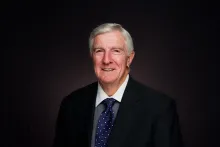
Before his retirement in 2021, Dr. Donald Ward pastored churches in Texas and Louisiana, and taught at Ambassador Bible College in Cincinnati, Ohio. He has also served as chairman of the Council of Elders of the United Church of God. He holds a BS degree; a BA in theology; a MS degree; a doctor’s degree in education from East Texas State University; and has completed 18 hours of graduate theology from SMU.
