

Ken Loucks
This message explores the deep spiritual process of transformation that prepares us to become equally yoked with Jesus Christ as a Bride made ready for His return. Through real sacrifice and overcoming we change and transform our lives. We are called to bear the yoke Christ offers and be changed by it. This message challenges us to confront what holds us back, yield to the Spirit, and become fully aligned with Christ in purpose, character, and direction — now and forever.
(5) Ken Loucks - Becoming Equally Yoked - YouTube
https://www.youtube.com/watch?v=uMraLGCj7Wg
Transcript:
(00:01) Okay. So you know that I have previously given two sermons and they were intended to be about issues where we need to transform ourselves. So we came out of the days of unleven bread. We were we got we went into the days of unleven bread thinking and and talking about what things we have to get out of our lives to become.
(00:23) You know that's what the whole thing is. You know we've got sin in our lives and we need to overcome that. We need to become equally yolked one day with our, you know, our bride, the bridegroom when he returns, right? We have to be preparing for that. So, we've talked about that. And so, as we came out, I was I was like, "Okay, so what are some areas that we can be maybe put some special attention on?" So, we talked about forgiveness, right? Not only how to forgive, but how to know that you've forgiven because that's probably the
(00:46) harder part of that. And then we talked about taming the tongue, which was last Sabbath, and because that's kind of challenging, right? And so I wanted to I wanted to kind of wrap up then the three messages that I will be giving before Pentecost with I wanted to kind of go back and pick up that thread of um of becoming equally yolked with Christ.
(01:12) And I want to dive a little deeper into that because there are three things that I think we need to be uh mindful of in this whole transformation process. So I want to cover today how sacrifice, overcoming and transformation or change are interrelated with one another. Sacrifice, overcoming and change. So the title of the message is becoming equally yolked.
(01:38) Becoming equally yolked. So we are the and obviously the reason that we're focused in this area is because we are supposed to be walking in newness of life. But if we're going to do that, that requires that we have to change who we are. You know, the popular notion today is, you know, love yourself and you're okay just exactly the way you are.
(01:57) And that you should be loved and appreciated and accepted exactly the way you are. And yet, God calls us to not be exactly who we are. To change into something better, something that looks like his son, cuz right now, the day that we were or the day that we were called, we didn't look anything like Christ. I hope we look a little more like Christ as we get into the journey, but we're not going to look a lot like Christ until we're done.
(02:17) And so the question then is, well, how are we supposed to do this? And it's interesting to me that when Christ invited people to follow him, he tended to use like very familiar things. So I want to start today over in Matthewap 11. Hopefully you can hear me and I'm being loud enough for you. Matthew 11:es 29 and 30.
(02:52) Matthew 11:29-30 where Christ says, "Take my yoke upon you and learn from me, for I am gentle and lowly in heart, and you will find rest for your souls. For my yoke is easy, and my burden is light. Some of you are probably familiar with yolks and oxen and working a team. Some of us have seen pictures of that, watched a movie or something that had those elements in it, but like having never personally done it.
(03:36) So, it's interesting imagery, isn't it? To the people at the time, pretty much everybody understood what he was talking about. What is a yoke? It's that bridal that goes across a pair of oxen, right? It's that thing that they are bound together by that they labor under that allows them to pull a plow or whatever else you I suppose not being an expert here and I'm not claiming it so I don't know what all you would put somebody put behind a yoke but it's how you bind two animals together.
(04:03) So the first thing that we need to understand about this yoke is is that this is not saying that we are yolked to Christ. He says, "Come under my yoke." He's the owner of the yoke. It's his yoke. But we're not told to come under that yoke with him. He's not putting it on himself. So, we're called to be under this yoke together.
(04:28) We are the ones being called to put that yoke on. It's really important imagery that we need to start with understanding that piece. We together, the church today, the first fruits are under that yoke together. If we said yes, I will accept the yoke which is our calling. This is this yoke is intended to have these animals work together in unity.
(04:57) They're not supposed to be working opposed to one another. They're not supposed to be working against one another. They're supposed to be pulling together. And obviously two pulling together is going to be more powerful than two separately pulling. So this is this imagery that we're given by Christ. He says, "Take my yoke." He is the owner of the yoke.
(05:17) So he's calling us to come under his training and his authority for I am gentle and lowly in heart. The master of the yoke is gentle and lowly of heart himself. So he's not trying to put us under hard labor, but he is trying to get us to work together in the same direction, doing the same things at the same pace.
(05:42) Paul later helps us to understand that Christ was not talking about us being yolked with him. He was talking about us being yolked together. So over in 2 Corinthians chapter 6, 2 Corinthians chapter 6. Now this is very important for us to understand and verse 14. 2 Corinthians 6:14 where he says, "Do not be unequally yolked together with unbelievers.
(06:13) " Like if you didn't know what that meant before, now you do. He's not talking about us being unequally yolked with him. He's talking about those of us who have taken that yoke on have to understand he's not offering that yoke to everyone. And we are not supposed to be trying to become equally yolked with those who are not called to the yoke.
(06:32) We're not to be unequally yolked with the world. This is why it's very important why we talk about especially with our young adults, our young people who are thinking about dating that it be careful here like be careful here because you could yoke yourself to somebody who's not being called and not being converted. Right? Your life will become infinitely harder in that relationship than you can imagine today.
(06:58) That's the principle that you have to understand. You're going to enter into a relationship with somebody at some point. And if they're not yolked to the same beliefs that you are, you're going to make your life much harder. They won't be pulling with you. And what you want in this life is someone pulling with you.
(07:14) It is very important principle to understand. Yes, I'm looking at my young people in this room right now. You guys know I am thinking about you though because I love you and I want you to succeed in life and I want you to have great relationships. So, you see what Paul's talking about here then? He's pointing to the nature of the yoke itself.
(07:32) When two are bound together, their values must be shared. Their goals have to be the same because a yoke by design requires cooperation and agreement. So taking on the yoke of Christ then means yielding to his purpose, not as an equal with him. He's the master. We are the students. We are the disciples. We're the learners. He's the teacher.
(08:00) So, we need to be willing to let him lead, to submit and follow that lead. Paul understood this firsthand. Before he ever taught about being yoke, he resisted the yoke himself. This is why Paul serves as a great example for us of what conversion looks like, of getting to that place where you say, "Yes, I will pick up and put that yoke on.
(08:26) " over in Acts chapter 26. Acts chap 26 and verse 14. Acts 26:14. Let me find it here. It says, "And when we had and when we had fallen to the ground, I heard a voice speaking to me and saying in the Hebrew language," this is Paul saying what happened to him when he was called on the road to Damascus. Saul, Saul, why are you persecuting me? It is hard for you to kick against the goats.
(09:03) Do you know what that means? Some of you probably do. Okay, I'm going to give those who know credit, but some of us don't. I had to look it up. I've heard this phrase before, being goaded into something. I'm like, in fact, if I'm honest, I probably grew up using that term all the time. I'm always trying to goad somebody into doing something.
(09:20) And yet, you know, there's just these words you just sort of accept that they mean a thing and maybe don't even know really fully what it does mean. And I did not know. I just kind of thought it just meant to entice somebody into doing something. And that's actually true. But a real goat is an actual stick with a sharp point on it. And if you've got that team in front of you under the yoke and you're behind them, if you want them to go a certain direction, you use the code to get them to cooperate.
(09:46) Okay? Okay, so we know what the tool is now and we know what its purpose is. It's to get them to cooperate. And so here Christ is saying, I was trying to get you to cooperate by using a spiritual go and you kept resisting me kicking. Now if if an animal doesn't like being poked with the go, it might kick at the go. And this is the imagery that we're given of us spiritually resisting the direction of Christ by kicking against the goat.
(10:23) So Saul then must have been resisting the truth that God was trying to show him. You know, he had seen and heard everything that Steven said, right? He was there. It says they laid his clothes at the feet of one named Saul. He was standing. That means he heard the whole message. And it was Saul who nodded his approval at the stoning of Steven.
(10:46) So he heard, you can't say that he didn't hear the truth because he heard the whole sermon. He didn't want to hear the sermon. He didn't want to hear the truth. So he resisted. from that moment forward where Christ strikes him with blindness and then speaks to him and tells him, "You've been doing this, Saul.
(11:13) You've been resisting, but I have a purpose and a place for you and you're you're going to go to work that and it was in that moment, remember that Paul finally woke up." He realized the master was talking to him and he was was he open? This is the decision point. Is he open to that? Is he going to listen? Is he going to accept this yoke offered by Christ? And of course he did.
(11:39) He became Paul the Apostle and his life became the model of what it means to take on the yoke of Christ. But it was not easy for him because in that moment he had to live he had to realize at least in at some point he had to realize that he was going to have to live a life that was going to require him to sacrifice. He was going to have to overcome and he was going to have to change.
(12:06) Same as us. Saul is our example. Paul is our example. Because when he was willing to do all of that, he then taught us what it means to do what he did, to walk the way he walked, to follow him as he followed Christ. And all of that to prepare to become equally yolked with Christ. See, the the deal is we are invited into a relationship with Christ today as under the yoke.
(12:34) But when he returns, we have prepared ourself like the bride to become equally yolked with him as spiritual husband and wife under the father. That's what we've been invited to. And God does not want his son, as Paul said to us, don't be unequally yolked with the unbelievers. Neither does God want his son to be unequally yolked. So, we have to be preparing.
(13:00) And that was the whole point. We have to be preparing to be equal with Christ. Which means we have to change. He's already perfect. It's us who have to change and to become like him. So the first step then is to submit to Christ's yoke, the yoke of the master, which prepares us for that union down the road that we ultimately desire to have with him.
(13:31) But before that there is a journey in front of us that we have to travel first and that requires us to sacrifice to overcome and to transform our life. You know, each of us was born with human nature. And if your human nature is as naughty as my human nature, it wants what it wants when it wants it. And it doesn't like being told no.
(14:04) And so there's this thing we have to deal with all the time, fighting and resisting ourselves and overcoming the man in the mirror because he doesn't want to sacrifice. But sacrifice is the price of change. If we're going to change, we're going to have to sacrifice. I remember at camp this last year, I was talking to the boys and we were talking about some of the hard things.
(14:31) We had the oldest boy's dorm and one of the things that I wanted them to be thinking about was if you hope and aspire to be a husband and father one day then start right now sacrificing something in your life to get used to the idea that to become the best version of yourself requires sacrifice. Deliberately saying no to yourself.
(14:58) Like who likes to do that? Nobody likes to do that. But we have to do that to change, to improve, and to overcome. We have to be willing to sacrifice. Over in Luke chapter 9 and verse 23, Luke chapter 9 and verse 23. Am I in the right? I always have to double check myself now. Like like no. See, I wasn't. I was in Luke 8. All right.
(15:36) Luke 9:23. Meticulously double-checking. Now, this is Christ speaking. He says, "Then he said to them all, if anyone desires to come after me, let him deny himself and take up his cross daily and follow me." I mean, that's the truth of it, isn't it? That's what Christ says. If you're going to be under my yoke, you have to sacrifice.
(16:00) You've got to deny yourself your desires, what you want, and you have to put God first. So, it begins with denial. The word deny means to refuse. To disown or to reject, to refuse, disown or reject. That's what the word deny means. So Christ is not asking us to reduce our selfishness. Maybe just lower it down a little bit.
(16:28) He's saying it's got to go. Got to go. The whole the whole selfish attitude thing that's got to go. You have to change. No one could say that they were a better Jew, quote unquote, than Paul. He was the best of the best. But you notice how how and what these elements are that he describes because they represent social respect, national identity, and his purpose in life. All of these things.
(17:04) Now, notice that he gave these things up willingly. And notice what he says in verses seven and 8. verses 7 and 8 he says but what things were gained to me all of that stuff and more he says these I have counted loss for Christ yet indeed I also count all things loss for the excellence of the knowledge of Christ Jesus my Lord for whom I have suffered the loss of all things and count them as rubbish that I may gain Christ counted loss comes from the Greek word which means to forfeit something damaged or completely
(17:49) lost. We know what it means to forfeit, right? It means to let something go deliberately. To deliberately let something go is to forfeit that thing. In sports, a a team might forfeit a game which means to lose on purpose. the other team will claim a victory if you forfeit. And so we we we have a sense of what this means.
(18:18) In secular usage, the term referred to the loss of property in a legal judgment. Paul's language shows that he didn't simply feel like he lost something. He recognized that his former life was incompatible with his new calling. And so he let the whole thing go deliberately. Paul made that choice to walk away from those things that he had thought was important before.
(18:44) That was the cost for Paul of picking up the yoke offered to him by Christ, letting everything go. But his sacrifice didn't end there. Because it doesn't just mean to let go of what's behind. It means to endure what comes next. no matter how hard it gets to keep enduring it. Because what followed Paul after he gave up those things was hardship and rejection and pain.
(19:15) He described his experiences in great detail to the Corinthians, but not to gain sympathy, but to show the reality of what he endured for the sake of remaining faithful to his calling. over in 2 Corinthians chapter 11. 2 Corinthians chap 11 verses 24- 27. Paul described some of what he had to endure moving forward.
(19:48) He said, "From the Jews, five times I received 40 stripes minus one. Three times I was beaten with rods. Once I was stoned. Three times I was shipwrecked. A night and a day I have been in the deep. In journeys often in perils of waters and perils of robbers and perils of my own countrymen and perils of the Gentiles and perils in the city, in perils in the wilderness, in perils in the sea, in perils among false brethren.
(20:18) Like on and on and on he goes describing his journey. He says in journeys often I I just read that. Sorry. Verse 27. in weariness and toil, in sleeplessness, often in hunger and thirst, in fastings, often in cold and nakedness. Like, sign me up. Like, who's going to volunteer for that if you knew in advance that that's the price you're going to pay? So, in other words, looking at his life, we're we're asking ourselves and we're evaluating what's the requirement for change, for transformation, and it is sacrifice.
(20:52) Paul describes not only giving up all of the respect and all of the life that he had, all the promise of his future, but it wasn't just letting that go, it was also enduring all the things that he had to afterwards and continuing to remain faithful. That's our calling and that's the sacrifice. Look, as I was preparing this, you know, I'm thinking about we're not immune from sacrifice.
(21:20) Over in Acts chapter 20 and verse 24, Acts chap 20 and verse 24, Paul says this. He says, ' But none of these things move me, nor do I count my life dear to myself so that I may finish my race with joy and the ministry which I received from the Lord Jesus to testify to the gospel of the grace of God. This is somebody who's at peace with having made the choice he made.
(21:53) No matter how hard it was, no matter what he had to give up, and no matter what he had to endure, he was at peace with it. It meant literally meant nothing to him by comparison. That of course is a mature man who is fully mature in the faith. Some of us maybe have a bit further to go to get to that place.
(22:15) And of course that's the mindset of somebody who sacrificed and who's okay with it. That's what we're called to sacrifice and be okay with it or we won't be able to change. Not the way that Christ wants us to, not the way God the Father wants us to, to become equally yolked with his son on that day of marriage when Christ returns.
(22:38) This is where transformation begins with the willingness to give up what no longer belongs in a life yolked to Christ. Yolked together under the master of the yoke, Jesus Christ, and to be willing to endure whatever comes next with faith and conviction. So, we have to recognize as the first step that we have to be willing to sacrifice or we're not going to transform our lives to become equally yolked with Christ.
(23:04) And we're certainly not going to be able to sacrifice if we're unwilling to overcome. So, sacrifice is the price. Overcoming is the process. Overcoming is the process. So, once we accept the yoke of Christ, the question is no longer if we will change. Now the question is how much are we willing to be changed? How much am I willing to be changed? Hopefully the answer is over.
(23:39) I'm willing to change everything if I have to. To overcome we have to ask what do I have to overcome then? Well, this is the focus of our preparation for the observance of the days of unleven bread over in James chapter 1. James chapter 1 verses 14 and 15. Well, you'll remember we ended a message in preparation for Passover in the days of unleven bread with this scripture.
(24:14) But each one is tempted when he's drawn away by his own desires and enticed. Then when desire is conceived, it gives birth to sin. And sin when it is fullgrown brings forth death. So we begin with inward desire. And the Greek word for that means longing or craving. That's what the natural man wants. That that human nature we're trying to overcome.
(24:40) That's what it wants. The things it longs for and craves are selfish. Satisfying the self. What I want, what I need, that's what's most important. And of course, our human nature strives diligently to try to get us to do exactly that. You know, this question of what do I have to overcome is really going to be different for each and every one of us.
(25:03) But the process begins the same way. Holding up the mirror of Jesus Christ. Where am I not like that? If he's the standard, if I'm supposed to become like him and become equally yolked to him, I need to hold him up, put his picture on the mirror. So when I'm looking at myself and I'm looking at him spiritually, and where they don't look the same, he doesn't need to change, I have to change.
(25:29) So that guy in the mirror has to do some work to make himself look like that. over in Ephesians chapter 4. Ephesians chapter 4 and verse 13. It says until we c until we all come to the unity of the faith and of the knowledge of the son of God to a perfect man. I'm not perfect. It says to the measure of the stature of the fullness of Christ.
(26:07) Wow, that's a high bar. That word perfect means mature com or complete. It's the intended end. It's what God wants us to become, equally yolked with his son. For some, we might have to overcome pride, the desire to be right, to be seen, to be regarded, to be elevated in other people's eyes. Others are going to have different challenges to overcome.
(26:42) Some might, it might be ambition, that drive to achieve even in spiritual settings. Some might have that issue. It might be the pull of wealth or the desire for control or certainty, maybe power for some status, reputation. I mean, we all have our own stuff to wrestle with. And so, what's something to overcome for one person might not be somebody else's issue.
(27:06) It doesn't mean that we don't have issues. We all have something to be working on. Maybe if you're like me, maybe more than one thing. Paul understood this. His early life was built around these things. That achievement and recognition, that control, that certainty. All of those things were the life he had built until Christ knocked him down on that road to [Music] Damascus.
(27:31) And I kind of in my mind I'm like, did he you might think to yourself, did Paul willing that yoke on? He did, but it kind of looks like Christ smacked him upside the head first. Get attention, maybe. We've all had kids. Probably all of us had that one kid. Yeah, I know. I I think I was that kid. My mom would probably say, "Yeah, you were that kid.
(27:59) " Over in 1 Corinthians chapter 9, 1 Corinthians 9:es 25- 27 where Paul said, "Everyone who competes for the prize is temperate." But he says, "But we compete for an imperishable crown. Therefore, I run thus, not with uncertainty. Thus I fight, not as one who beats the air, but I discipline and bring it into subjection, lest when I have preached to others, I myself should become disqualified.
(28:36) " The word discipline here means mean means to bruise, wear down like in a fight. So it carries the idea of steady exertion. You just keep going. No matter how tired you get, you just keep going. You just keep going. You just keep going. You don't quit. You don't give up. Barnes, Albert Barnes notes writes this.
(29:00) It is expressive of the severity of the struggle with fleshly inclinations. So Paul's describing fighting himself and then winning that fight by submitting to the master. Submitting is what we have to do. There is no overcoming without conflict. Paul, you remember Paul describes this sort of conflict in Romans chapter 7 where he is constantly fighting within himself.
(29:28) And it is our fight, the war within where we are fighting to overcome ourselves. We can't transform ourselves unless we're willing to change ourselves. And that's going to be a violent spiritual inward struggle for most of us. Hopefully, by the time we get to be quite a bit older, it's not so hard as it is when we're younger.
(29:55) Hebrews chapter 12. Hebrews chapter 12. Interesting in this context. I could say look around this room. We have people that have been doing this walk for decades, many decades in some cases. So notice what Paul says. Therefore, Hebrews 12 and verse one, therefore we also since we are surrounded by so great a cloud of witnesses, let us lay aside every weight and the sin which so easily snares us and let us run with endurance the race that is set before us.
(30:40) But who do we look for? Look to Christ Jesus, the author and finisher of our faith, who for the joy that was set before him, endured the cross, despising the shame, and has sat down at the right hand of the throne of God. That word weight where he said, "Let us lay aside every weight." That word refers not only to sin but to anything really even neutral things that hinder spiritual progress.
(31:12) So anything that's going to stop me, anything that's going to get in my way, anything that's going to prevent me from becoming spiritually mature, that's the weight I have to get rid of. 2 Corinthians 13:5 that this is what we must be willing to do. This is why this message is tied directly back to Passover and leads us directly to Pentecost.
(31:41) 2 Corinthians 5 13:5 where he says, "Examine yourselves as to whether you're in the faith. Test yourselves. Do you not know yourselves that Jesus Christ is in you?" So, we're supposed to examine ourselves. And that word examine carries the same kind of meaning as what a lawyer would do if you were being indicted for something and they're going to prosecute you for believing what you say you believe.
(32:11) They would do a thorough examination of your life to know everything about you and what you truly believe and whether or not what you say you believe is what you believe. Because the evidence is the life you live of what you believe. That's where the truth is. And so we have to be willing to examine ourselves if we're going to change to see those things I have to overcome and to be honest with ourselves about those things that I need to overcome.
(32:37) Because I'm pretty sure what I have to overcome is probably not exactly the same as something you would identify as something you need to overcome. But really, when we submit to the yoke of Christ, that's where that work begins. So, we're trying to align ourselves with one another. We're on the same spiritual journey. We're all supposed to be overcoming, walking the same direction, following the lead of the master who's trying to tell us how we should live to look like, become like him, become equally yolked with him one day. Like, we have to overcome. That's
(33:10) the whole point. So we have to be willing to go and do the hard work of analyzing where we're at so that we can overcome. So these first two things are of mindset. Am I willing to sacrifice? That's not a Holy Spirit issue. That's a you issue. Are you willing to sacrifice? Number two, are you willing to put in the work it takes to overcome? The Holy Spirit isn't going to do those things for us.
(33:38) It's going to help us if we're willing to let it help us. But the clue in looking at those two issues is how on earth am I going to be able to sacrifice and to overcome if I don't have the help of the Holy Spirit because we need help to overcome. Colossians chapter 3 and verse 9, he says, 'Do not lie one another since you have put off the old man with his deeds and have put on the new man who is renewed in knowledge according to the image of him who created him.
(34:17) But this is what's supposed to be happening to us spiritually. We're supposed to be changing whatever this is inside. You know, God is not trying to make me a better version of me. He's trying to make me like his son. That's not about personality. It's about choices. And it's about desire. Who I serve, who I obey.
(34:44) That's what he's talking about. So if we're going to become like that, we have to overcome. And that is not by accident. We have to do it deliberately. Take deliberate actions in our lives to do that overcoming that we need to do. Because overcoming is the evidence that the yoke is real and we've accepted it. We are in the process.
(35:06) That is the Christian life. So a changed life is the actual fruit of the sacrifice and the overcoming. the changed life, becoming ready, preparing ourselves to be equally yolked with Christ when he returns. That's the fruit. Hopefully, we're start to look like that as we get a little older. We've been in the process long enough.
(35:36) We've been overcoming long enough and we've sacrificed enough that we somewhat look a little bit like the bridegroom. And maybe we'll be ready when he returns to become equally yolked with him. So it is this changed life. You know the beautiful thing about that I was thinking about too though is God is not he doesn't just say go do these things this all this sacrificing and and endure all these hard things for no benefit at all.
(36:09) Our heavenly father is a loving father and he's up there and he wants to bless us if we're willing to do those things. And so you look at a real transformed life and do you see misery when you look at I you know physically we're not maybe in a great place but look at who a person is who's been in the trenches of this way of life for many years.
(36:28) Do you see a miserable person an unhappy person? I guarantee you do not. At the end of the day you find a person who has a lot of inner peace. There's a kind of joy that is hard for them to describe why they feel that way, but they do feel joy in life. You feel good when you please the father. When you walk correctly under the yoke, you can't help but feel good about that.
(36:53) You're at the same pace with your brothers and sisters in Christ. We're all walking towards the kingdom. And we are on this road together. I don't have to do it alone. I'm trying to find a way to be yolked equally with you and you with me as we serve our master. We learn to walk this walk together going to the same place without leaving each other behind to the extent that we can do that.
(37:19) This is this newness of life that the scripture talks about over in Romans chapter 6. Romans 6:4. Therefore, Romans Yeah. Romans 6:4 it says, "Therefore, we were buried with him through baptism into death, that just as Christ was raised from the dead by the glory of the father, even so we also should walk in newness of life.
(37:46) " This is this transformed life we're trying to make for ourselves, to make ourselves to transform and change ourselves to become like our older brother. This word newness does not mean improved or enhanced. It means new in kind, fresh in quality, different from what was before. Different from what was before. That's the newness we've been called to.
(38:15) It implies something that did not exist before. A life that has been redefined in direction, desire, and outcome. So those are the things that we talked about when we went through the issues. Say, for example, of forgiveness, of really changing ourselves, to learn what it means to forgive and how to intercede on someone's behalf, to know that I've forgiven them.
(38:42) I'm willing then to begin to intercede for them for God. Standing in that gap that's between them and the father from their own sins, and to pray for them. So, if they've wounded me, they've certainly hurt their relationship with God. All of us do. When we sin against one another, we sin against God.
(38:58) That's the sin and that's where it really is. So, can we pray for each other? That was the whole point. What about the tongue? Because this is the sharpest implement of the body. And this is the way we hurt one another the most often is with what we say. If I'm transforming myself, am I trying to overcome this hand that comes out of the mouth and slaps people around that would throw rocks at them in anger or frustration? So these are just a couple of ways.
(39:29) I mean there's many ways in which we can be transforming our lives. But the person who learns to control this, are they miserable? I have to say it's not miserable not to upset people. It's not. It feels good to actually have a conversation with somebody when you're trying not to upset them or hurt them.
(39:52) It feels good to forgive. It feels good to intercede. like these are good things that God wants us to do these things. So yeah, and so notice again what Paul says here in 2 Corinthians chapter 5. 2 Corinthians chapter 5 17 he says therefore if anyone is in Christ he's a new creation. Old things have passed away.
(40:27) Behold, all things have become new. Well, that's what's supposed to happen with us. Become new. Not a patched up version of the old. Something new. Something that looks like Jesus Christ. Notice here it says that if anyone is in Christ, he's a new creation. That word creation refers to something brought into being by God's own initiative.
(40:54) So we're not, this isn't our own effort making us look like Christ. This is God transforming us through his spirit, which we ultimately end up learning, which is why it's so important that we celebrate the day of Pentecost because it's about God's spirit. It's about how we were given that spirit to do the very overcoming to be able to sacrifice and to be able to change to become like Jesus Christ to become equally yolked with Christ.
(41:26) Notice that Paul says that it's really Christ in us that's happening. And that's what we should want. Galatians, turn over to Galatians here for a second. Galatians chapter 4. Galatians chapter 4 19 verse 19 it says now the works of the flesh that's five sorry 4:19 I'm determined to do this every single sermon Galatians 4:1 19 he says my little children for whom I labor in birth again un until Christ is formed in you like That's the objective is allowing Jesus Christ to be formed in me.
(42:14) That word formed in you means to take on the shape, the structure or the likeness of another. So he's not trying to make us look like a better patched up version of ourselves. He's trying to make us look like Christ. That's what newness of life looks like. over in Ephesians 4 as we wrap up here. Ephesians 4:es 22- 24. Ephesians 4:22. Determined to get this right.
(42:43) There it is. All right, we'll start here. 4:22 says that you put off concerning your former conduct the old man which grows corrupt according to the deceitful lusts and be renewed in the spirit of your mind and that you put on the new man which was created according to God in true righteousness and holiness.
(43:10) What he's saying here here is that we have to have a reworked attitude. We need to have our aim changed. Our perspective has to change. It's this is the process of transformation. It's deliberate. It's proactive. It's spiritdriven. And if we're doing those things, that is the evidence that we're preparing for something more.
(43:36) Because we're not yet yolked with Christ. We're being prepared to be yolked with Christ. Each act of forgiveness that we do, each word that we bridle, each impulse that we control, each prayer and act of repentance, that might seem like small, insignificant things, but we keep stacking those up in our life. You just keep stacking those up in your life.
(44:08) And you know what? After a while, that's who you are. Those things that you're doing is who you are. You are a person of sacrifice, a person who's overcoming, and a person who's changing to become like Christ. That's who you are. And it's evident in your life if someone were to examine you as an attorney, a lawyer might, that they would have no problem getting enough evidence to convict you of those beliefs that you say that you have.
(44:38) Every decision we make today to sacrifice what holds us back. Every choice we make to overcome what resists Christ in us. Every time we submit under Christ's yoke, it matters. We're not yet what we're going to be, but we are being changed. Every day a little bit more. Every day a little closer to the image of Christ.
(45:06) We are transforming. We're changing. We're becoming like him. Not just in the name but literally in our nature. Because those things that we do every day, that is the nature that we are becoming. That is the character that's forming in us. I'm going to end in Philippians chapter 1. Philippians chapter 1 and verse 6.
(45:35) He says, "Being confident of this very thing, that he who has begun a good work in you will complete it until the day of Jesus Christ." That day is coming. The day when Christ receives his bride, who has prepared herself, made herself ready to be equally yolked with him in purpose. So we walk in that yoke today so that we can walk with him in glory when he returns.
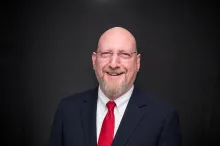
Ken Loucks was ordained an elder in September 2021 and now serves as the Pastor of the Tacoma and Olympia Washington congregations. Ken and his wife Becca were baptized together in 1987 and married in 1988. They have three children and four grandchildren.
