
Mark Welch
Unedited video available: https://www.youtube.com/watch?v=Kt6aviZ7qZY&t=728s
This transcript was generated by AI and may contain errors. It is provided to assist those who may not be able to listen to the message.
Well, good afternoon, brethren, and welcome to the Festival of Trumpets' special thanks for that beautiful music for the Offertory and also the two chorale numbers. Kudos go out to Mr. Graham, who was involved in everything, Mrs. Fader, who not only played the flute, but joined in in the singing, multi-talented people, and we sure appreciate their great effort to help us to worship and enjoy this service today on the feast of Trumpets 2018.
As we know, by the meaning of this day, it's a festival that focuses on the significance of trumpets. We just heard about that in our song. And today the Jewish people call this day Rosh Hashanah, which is not a biblical term and not a biblical way to refer to this day. And the scriptures it's referred to is Yom Teruah, which literally means a day of shouting, a day of blasting. Let's take a look at that. If you'll turn with me to Leviticus chapter 23 verse 23, we'll see the closest thing that we can come to to a name for this day. And of course the New Covenant Church refers to this as the Feast of Trumpets. Leviticus chapter 23 verse 23, if you'll turn there with me. It says, And the Lord spoke to Moses, saying, Speak to the children of Israel in the seventh month, on the first day of the month, you shall have a Sabbath rest, a memorial of the blowing of trumpets, a holy convocation, you shall do no customary work on it, and you shall offer an offering made by fire to the Lord. The phrase that you see blowing of trumpets is the Hebrew word teruah, and it means, depending on whether you're in God's grace or not, it means an acclamation of joy or a battle cry. It can mean an alarm, a sound noise, a loud noise. It can mean rejoicing.
But that primarily is the title that God gave this day, the blowing of trumpets.
But what about the actual instrument that was used to make the sound here, as outlined in Leviticus 23 and other places in the Old Testament? What about that instrument? Well, let's go back and see the kind of instrument that was originally used to make either a joyful noise or an alarming sound. We'll be going through Exodus chapter 19 and verse 10. Exodus chapter 19 and verse 10, if you'll kindly turn there. We're all familiar with the nation of Israel going to meet God in Mount Sinai and preparing for it, so we're going to pick up the story here beginning in verse 10. Here in Exodus chapter 19. Then the Lord said to Moses, Go to the people and consecrate them today and tomorrow, and let them wash their clothes and let them be ready for the third day. For on the third day the Lord will come down upon Mount Sinai in the sight of all the people. And you shall set bounds for the people all around. In other words, there has to be a respect of dignity. There's a difference between the physical and the divine, the profane and the divine.
So he said, continuing here, Take heed to yourselves that you do not go up to the mountain or touch its base. Whoever touches the mountain shall surely be put to death. Not a hand shall touch him, but he shall surely be stoned or shot with an arrow. Whether man or beast, he shall not live. When the trumpet sounds long, they shall come near the mountain.
So Moses went down from the mountain to the people and sanctified the people, and they washed their clothes. And he said to the people, Be ready for the third day. Do not come near your wives. In other words, no romantic interludes between now and then. Then it came to pass on the third day, in the morning, that there were thunderings and lightnings and a thick cloud on the mountain and the sound of the trumpet.
There's a particular Hebrew word that's translated into English trumpet. It's shofar. And the sound of the shofar was very loud, so that all the people who were in the camp trembled. And Moses brought the people out of the camp to meet with God, and they stood at the foot of the mountain. Verse 18, Now Mount Sinai was completely in smoke, because the Lord descended upon it in fire. Its smoke ascended like the smoke of a furnace, and the whole mountain quaked greatly.
And when the blast of the trumpet, the shofar, that's that Hebrew word again, sounded long and became louder and louder, Moses spoke, and God answered him by voice. We'll stop this particular account right here, because what we have seen, and the point of our message today, was that the type of trumpet used to make that trumpet sound was a shofar. And these verses, we need to understand, they represented the voice of God in His presence. When you heard the trumpet, it represented God using that instrument that represented His voice and His presence.
If we were to go back in Genesis chapter 22, it's interesting that Abraham was about to sacrifice his son. But God stopped him and said, now I know you, and I know what's in your heart, and I don't want you to sacrifice your son. And a substitute was found when a ram was caught in a thicket by its horns. And after that, God immediately spoke to Abraham and told him not to do it. In biblical prophecy, the trumpet also represents the voice of God and His presence. So as we talk about this instrument, as we talk about a trumpet today, I want you to realize and appreciate that it represents the voice of God and His presence.
The shofar is a Hebrew word, and the root meaning of that is, hollow tube. And originally, it was a ram's horn used to send signals by blowing through the horn. Announcements to the people of Israel are various signals. The shofar was used to introduce each new month. They would blow the shofar. It was also used during the Feast of Trumpets, the day that we're celebrating today, on the Day of Atonement, during the Jubilee year, and at other times. It was also used to trumpet war, as the Israelites were campaigning against their enemies.
For modern Jews today, the Feast of Trumpets includes the blowing of a shofar on this day, and it represents awakening. If you were to ask a Jewish individual today, someone who is a believer in Judaism, what does the Feast of Trumpets represent to you? They would say, it's awakening. It's a time where we look at our lives, we are awakened from our doldrums, and we repent, and we examine our lives, and we prepare for the Day of Atonement.
Some of the very symbolism that we understand, that spring holy days represent, is what a modern Jew today would tell us about the Feast of Trumpets, and the days that are leading up to the Day of Atonement. Hearing the sound of a horn was considered a commandment to the Jewish people of Mitzvah.
Later, two silver trumpets in Numbers chapter 10 were made for specific purposes, but my goal today is not to talk about the silver trumpets, it's to talk about the shofar. The shofar is thought to be the oldest wind instrument known to man. Long, long, even before there were Hebrews, there were individuals who most naturally found discarded animal horns, cleaned them up, blew into the short end of it, and it made a sound.
So it's considered the world's oldest wind instrument known to man. Over the centuries, many different Jewish communities have used different types of ram or antelope horns, depending on what region of the world they live in. For example, this one here is just a ram's horn. This is on the short side. But there are others, like the Yemenite kudu shofar. It's made from the horn of the kudu antelope from Africa, and it's three feet long. So they come in varying lengths and styles. As the Jewish communities were driven to various areas of the world, they had to rely on the animals that lived in their region in order to make shofar. So there's quite a variety today of different styles and types and lengths of horns.
Someone who's really good at blowing the shofar can blow a high note and a low note, but it takes a lot of work and a lot of talent to do that. The Jews today blow the shofar for four different techniques. And there's a very long blast, there are shorter blasts, and then there's a blast like a little staccato, which they blow through this. Four different techniques. Before the industrial age, and we started using machines like drill presses and grinders and all of those kind of things that speed up the process, it took a skilled craftsman about three months to make a shofar.
What I'd like to do is blow into the shofar now. This is going to be as interesting for me as it is for you. We'll see how well we do in this.
So, as you can see, this little thing here...
You know what I was going to do? I'm going to have to tell you what I was going to do, but it didn't work out. I was going to record the blowing of a shofar on my phone and pretend, turn it on, and pretend like I was blowing it. And then I was going to pull it out of my mouth while it was still blowing, drink some water, and tell you that it was a ventriloquist shofar. But I couldn't get it working on my phone, so I apologize for that. But there were some restrictions on the kind of horn that was used. For example, you could not use a cow's horn. Why? Well, because cows were a god in ancient Egypt, and that was a violation of God's law. Remember the story of the golden calf? Israel was worshiping one of the cows that had existed in Egypt, so for that reason a cow's horn was absolutely forbidden, even though a cow is a kosher animal with a split hooves. Also, deer or elk antlers are not used because they're not hollow. They're designed a little differently than antelope or ram, so those cannot be used. As I said, anciently it took a skilled artist in a long time to create this wonderful instrument, and the purpose of the shofar was to magnify the breath of the individual blowing into the mouthpiece here, and when God formed himself a lump of clay and breathed into Adam the breath of life, Adam became animated. The presence of God was intended to be reflected in Adam's life. Well, brethren, we too are instruments that God is using today, and it's his intent to use us as his instruments to preach the gospel message to the world. Our individual lives, much like this horn, are intended to be a magnified reflection of the voice of God through his Spirit working in us, a magnified reflection of his voice through our lives. Today I'd like to draw a metaphor between what it takes to create a kosher shofar as an instrument and how God is working with us to become powerful instruments in his hands to send out a clear message to this world now and, of course, for all eternity.
So the first thing that one does in making a kosher shofar, and by the way, you can see videos of this on YouTube. This is where I got a lot of this information. It's amazing that most of the larger manufacturers of making shofars are family-owned businesses. They've been doing it for hundreds and hundreds and hundreds of years. They just know how to do it. It comes natural to them, and the whole family is involved in making these things. Well, the first thing that has to be done is something has to be removed from the horn in order for it to become useful. On the inside is kind of a bony material called keratin. It's a fibrous protein that forms on the inside of the horn where it connects to the head. Now, on the narrower part, that oftentimes about one-third of the horn is hollow, but the part that gets closer to the head has this keratin in it. It's also called cartilage, by the way, similar to the material that's on our fingernails. The artisan must heat the horn, and in some cases he not only does it heat it, but to get that rough material out of it, he has to knock it out of the horn in order for anything else to be done before it can be made into a beautiful instrument. Brethren, this is a metaphor of how we need to empty ourselves of our vanity and of our carnality in order to be useful to God. That's what our calling was all about. That's what our repentance was intended to do. Let's go to Romans chapter 8 and verse 5, if you'll turn there with me. Romans chapter 8 and verse 5.
We'll see what Paul said about the importance of getting that stuff out of our lives, that flesh, fleshly thoughts, that carnality that we all have, that impedes God from being able to work with us.
Romans chapter 8 and verse 5. Paul wrote, For those who live according to the flesh, set their minds on the things of the flesh, but those who live according to the Spirit, the things of the Spirit. For to be carnally minded is death, but to be spiritually minded is life and peace. Because the carnal mind is enmity against God, it is not subject to the law of God, nor indeed can be. You see, when we're struggling with a carnal mind, God cannot work with us. We are impeding being used as an instrument by God because of our carnal, fleshly thinking. Verse 8. So then those who are in the flesh cannot please God. But you, he said, are not in the flesh, but in the Spirit, if indeed the Spirit of God dwells in you, a transformation has taken place if you receive the Spirit of God. And you are in the process of eliminating those fleshly carnal, selfish thoughts and replacing it with the fruit of the Spirit. Continuing now, if anyone does not have the Spirit of Christ, he is not his. That's what brings us into the family. That's what makes us a member of the family, is having the Spirit of God. The same Spirit that the Father and Son share that they give to us upon repentance and baptism and the laying on of hands. Verse 10. And if Christ is in you, the body is dead because of sin, but the Spirit is life because of righteousness, because primarily his righteousness dwells in us through the presence of the Holy Spirit. Verse 11. But if the Spirit of him who raised Jesus from the dead dwells in you, he who raised Christ from the dead will also give life to your mortal bodies through his Spirit who dwells in you. Therefore, brethren, we are debtors not to the flesh to live according to the flesh, for if you live according to the flesh, you will die. But if by the Spirit you will put to death the deeds of the body, you see, saying if you live by the Spirit, you're going to work to get that junk out inside of you. That stuff, fleshly, carnal, selfish, that stops God from being able to use us as a powerful instrument. Continuing here, but if by the Spirit of God you put to death the deeds of the body, you will live, for as many as are led by the Spirit of God are the sons of God.
So, brethren, like a natural ram's horn, we have stuff inside of us that's not useful, that needs to be removed, in order for us to become useful instruments of God. Our examples are important.
People are watching us. If we want to be God's presence and God's voice to the world in our communities, where we shop and the person looking at us across the street, how we interact with our neighbors. If we want to be the right kind of instrument, our examples are very, very important. Thankfully, God has given us the Spirit of God to help us to put the hardness out of our hearts, to work on getting that stuff out of us so that we can be useful as an instrument to God. You know, sometimes a loving father may even need to knock it out of us. If we're not listening, if we're not paying attention, I've had a number of episodes in my life where God obviously determined that I wasn't listening and he needed to get my attention about something. So he had an event blow up, spiritually speaking, emotionally speaking, to get my attention. Something had to be knocked out of me. I had to be shocked. I had to be driven in the grief. He needed to do that to work with me. Let's take a look at Hebrews chapter 12 verses 6 through 15. These are verses today that are not politically correct. People in our culture today want to make God to be this just gentle, caring being who never has a strong, harsh thought anymore, never does anything to correct people. He's just sweet and nice and filled with grace. But the author of the book of Hebrews presents God as a loving father, taking the responsibilities of a loving father to correct us, to get that junk out of us so we can be useful to him. Let's pick it up here in verse 6. For whom the Lord loves, he chastens. He scourges. Knocked out of us. Does this sound like something that you've experienced in your life? I can raise my hand. I can raise both hands. Something that I've certainly experienced. Our father wants us to represent the voice of God and his presence.
He wants us to be a living instrument in his hands. But there's a problem with being a living instrument. It's the same problem as Paul referred to us, that we should be living sacrifices. You know what the problem is with a living sacrifice? A living sacrifice can squirm a little bit and crawl right off the altar. We're free moral agents. We have choice. And the challenge with being a living sacrifice is that we can choose not to do it anymore. The problem with being a living instrument is we have to be humble enough, and that gets back to this being hollowed out, we have to be humble enough to allow God to work with us, to acknowledge the things that we struggle with, stop living in denial, stop blaming everyone else for our problems, stop enduring our dysfunctions, and deal with our problems and dysfunctions. So the very first thing is the artisan has to get that junk out of the inside of the horn. The second thing the artisan does is the horn has to be straightened. To drill a hole in the mouthpiece often requires that the horn is straightened. Now the goal isn't to make it perfectly straight. All of these horns are crooked, and that's okay. But oftentimes they are too crooked, and they are crooked in an area that literally would impede the ability to the air to flow through the horn. It's twisted, it's misshapen, so the horn is heated with fire, and this heat softens the horn so it can be reshaped. Again, it doesn't have to be reshaped to be perfectly straight, but to remove the crookedness that impedes the sound that's trying to be magnified through the horn. Let's go to 1 Peter, chapter 1 and verse 3, if you'll turn there with me. 1 Peter, chapter 1 and verse 3. If you see a video of this part of making the shofar, it is heated sometimes over a direct fire. Some families use boiling oil, and then they reshape it. They will use something like a soft hammer or something to literally pound the horn to reshape it so that it's not as crooked as it was before. And that fire, that heat is what it takes to make this material more malleable so that you can reshape it. 1 Peter, chapter 1 and verse 3. Blessed be the God and Father of our Lord Jesus Christ, who according to his abundant mercy has begotten us again into a living hope through the resurrection of Jesus Christ from the dead.
To an inheritance incorruptible and undefiled that does not fade away, reserved in heaven for you. And of course, Jesus Christ is bringing our reward back with him when he comes to this earth, represented by this very day the Feast of Trumpets. Verse 5, who are kept by the power of God through faith for salvation ready to be revealed in the last time. In this you greatly rejoice, though now for a little while, if need be, you have been grieved by various trials. You see, sometimes if we're not listening, we need to go through a trial. We don't like trials. I don't like trials. But sometimes he says, if need be, you have been grieved by various trials. And obviously the congregation here had been struggling with persecution or particular things they had been going through. Let's continue his thought that the genuineness of your faith being much more precious than gold that perishes, though it is tested by fire, may be found the praise, honor, and glory of the revelation of Jesus Christ, whom not having seen you love. He says, so we're occasionally going to go through trials. We're going to be grieved by those trials, and we are going to go through fire. Why? To test the genuineness of your faith. Anyone can be happy when times are good. Anyone can be a nice person when everything in our life is going great. That doesn't even take any effort. But the real challenge is when we're going through the crucible of a trial, a challenge, an issue, something we're struggling with, something that happens to us, that is going to test the genuineness of our faith. God uses various trials to reshape us and to get rid of the twistedness, the crookedness in our lives. Sometimes we go through trials feeling the heat. I've gone through trials where I felt the heat, so much emotionally that it literally felt like physical heat. You know, Winston Churchill once said that if you're going through hell, keep going. In other words, don't stop and admire the environment, and boy, it's kind of hot in here. Did you notice that there's a lot of heat in here? No, just keep going and eventually you'll get through it. And that's what we need to do when God puts us through a trial, is have faith. It's testing the genuineness of our faith. Keep going forward, keep doing the things God wants us to do, and eventually we'll get through it. Let's go to chapter four, verse 11, and take a look here in chapter four and verse 11.
Peter wrote, if anyone speaks, let him speak as the oracles of God. Are we allowing God to use us as an instrument? Are we projecting His voice, His presence in our little corner of the world, our neighborhood where we work, people we see at the department store, the person in the checkout line, whoever that we are communicating with through the week? Do we speak as the oracles of God or as an instrument? Are we reflecting the presence and the voice of God in our examples and how we treat other people that aren't in the church as well as are in the church? If anyone ministers, and that word is serves, it's in context, it's not talking about the title of minister. If anyone serves, let him do it with the ability which God supplies that in all things God may be glorified through Jesus Christ to whom belong the glory and the dominion forever and ever. Amen. Verse 12, Beloved, do not think it's strange concerning the fiery trial which is to try you.
When you go through a difficult period, don't think it's strange. It's part of the plan, and though it's not pleasurable, though it's not easy, we shouldn't think of it as strange, and we don't even necessarily have to look at it as us being punished because the truth is, is usually we set ourselves up for those situations. God just takes advantage of what we set up and prepared in advance to be honest with you, to be very frank with you. Again, the fiery trial which is to try you as though some strange thing had happened to you, but rejoice to the extent that you partake of Christ's sufferings. Think about his sufferings. Now, there's someone who went through a fiery trial.
Think of the literal scourging that he went through. Think of the mocking and humiliation he received, continuing that when his glory is revealed, you may also be glad with exceeding joy. So there's a purpose behind God working with us to straighten us out, to get rid of that crookedness that's inside of us. Sometimes our character is being forged and straightened by a fiery trial. The master craftsman knows what we need, and he knows what he's doing, and we need to trust in him to bring us out stronger and better than we were before. God desires to make crooked paths straight.
We read just a few minutes ago in Hebrews chapter 12 and verse 13, make straight paths for your feet. So God is trying, much like the artisan with this horn, to straighten it out a little bit, to get rid of the crookedness so it can be useful.
God is also working on eliminating the crookedness in our thinking and in our lives. Philippians chapter 2 and verse 14. Let's turn there together. Philippians chapter 2 and verse 14.
Paul wrote to the congregation here at Philippi, do all things without complaining and disputing, that you may become blameless and harmless, children of God without fault. Straight. Walking down that straight path. The path of God's law, the path of God's blessings, his value system.
Children of God without fault in the midst of a crooked and perverse generation among whom you shine as lights in the world. Keep that thought in your head because later on we're going to see that one of the processes is polishing the horn. So we have been called to be lights and examples to a crooked and perverse generation. And how can we properly demonstrate the voice and the presence of God? That is, if we're not crooked, if our lives are straightened out, that's how we present the best example. Verse 16, holding fast the word of life so that I may rejoice in the day of Christ that I have not run in vain or labored in vain. Paul said, I've worked hard for you and my prayer is that you are faithful to the end and all my work wasn't in vain. Verse 17, yes, and if I'm being poured out as a drink offering on the sacrifice and service of your faith, Paul says, if I'm a living sacrifice, I am glad and rejoice with you all for the same reason you also be glad and rejoice with me. So we can encourage one another, Paul says. We can appreciate each other's sacrifice and encourage each other. Rather, we live in a diseased society that's deceived. It's spiritually crooked and perverse. In contrast to this, our personal example is to be someone who walks down God's way of life down the straight path and is a light to the world.
The third thing that's done to the shofar, to make it a fine instrument, is once the new shape is achieved, it's made firm with either fresh, cold running water or being dipped in clean water. So depending on the family who's making it, once they have pounded in with a soft hammer and gotten the crookedness out of it, then they want to firm it up so that it doesn't go back to the way it was and they either put it under cold, fresh running water or some dip it into like a tank or a bath of cold, clean water. Hebrews chapter 10 and verse 19. Just one scripture on this particular point we'll read. Hebrews chapter 10 and verse 19.
So the shofar has a new shape, and that new shape has been made firm with water.
Hebrews says chapter 10 and verse 19. Therefore, brethren, have in boldness to enter the holiest by the blood of Jesus by a new and living way in which He consecrated us. In other words, He wants us to be firm in this new way of living. Through the veil that is His flesh and having a high priest over the house of God. Let us draw near with a true heart and full assurance of faith, having our heart sprinkled from an evil conscience and our bodies washed with pure water. We were dipped in that baptism tank that represented that we were making a firm commitment from that point on the walk into way of life. Not to go backward, but we were looking forward and we asked for God's holy spirit and we were asking for the firmness to continue our calling. Verse 23. Let us hold fast the confession of our hope without wavering, for He who promised is faithful, and let us consider one another in order to stir up love and good works, not forsaking the assembling of ourselves together. By the way, thank you for accepting God's personal invitation to come and worship Him on the Feast of Trumpets in 2018. Thank you very much for doing that. As is the manner of some, but exhorting one another and so much more as you see the day that is His return approaching. So just like the horn is given a new shape, it's the Spirit of God that makes us new creatures in Christ. Just like the shofar can't go back to its old shape and possibly be useful, we too can't go back to the way that we were because we cannot be a useful, valuable instrument that reflects God's voice and His presence if we go back to our old way of life. If we decide, we want to go backward. James chapter 3 verse 11. James wrote, Does a spring send forth fresh water and bitter from the same opening? Can a fig tree, brethren, bear olives or a grapevine bear figs? Thus no spring yields both salt water and fresh. It's either one or the other. The water that we're tapped into is either the powerful, positive presence of God's Holy Spirit or it's something else. Who is wise in understanding among you? He says, Let him show by good conduct that his works are done in the meekness of wisdom.
Verse 14, But if you have bitter envy and self-seeking in your hearts, do not boast and lie against the truth. This wisdom does not descend from above, but is earthly, sensual, demonic. For where envy and self-seeking exist, confusion and every evil thing are there. But the wisdom that is from above is first pure and then peaceable and gentle, willing to yield full of mercy and good fruits without partiality and without hypocrisy.
Now the fruit of righteousness is sown in peace in those who make peace. And what makes that possible? By drinking in of God's Holy Spirit, using his Spirit like a fresh spring of clean water.
And it's that flowing presence of the Spirit represented by water that helps us to gain the wisdom that we need to develop the fruit of righteousness. The next step is the horn is scraped or placed on a grinder, if they have modern equipment, placed on a grinder to remove unwanted bumps and cracks and ridges in it. In its raw state, it's very harsh. It feels rough to the skin. It's not something that you would want to hold in your hand. It's not something that you would enjoy holding or playing as an instrument. There are outer imperfections. There are hard ridges. There's roughness that needs to be removed. Luke chapter 3 verse 1. If you'll turn there with me. Luke chapter 3 and verse 1. This is now in the 15th year, the reign of Tiberius Caesar.
Pontius Pilate being governor of Judea, Herod being Tetrarch of Galilee, his brother Philip Tetrarch of Aetura and the region of Trachontus and Lycenius, Tetrarch of Abilene. While Annas and Cephaeus were high priests, the word of God came to John the son of Zacharias in the wilderness.
And he went into the region around the Jordan preaching the baptism of repentance for the remission of sins. Very important step in that process of God working with us and making us his instrument. That's the first valuable step that we take. Verse 4, as it is written in the book of the words of Isaiah the prophet saying, the voice of one crying in the wilderness, prepare the way of the Lord, make his path straight. Every valley shall be filled and every mountain shall and hill brought low. The crooked places shall be made straight. We just talked in a previous point about the importance of removing the crookedness in our lives and the rough ways smooth and all flesh shall see the salvation of God. Brethren, are our rough ways being smoothed by our life experiences? Are the jagged edges of our personality being smooth? The jagged edges of our thoughts? The jagged edges of our relationships? Or are we prickly? Or are our relationships smooth and balanced? Are these things happening in our life much like the artisan needs to do in order to make this a useful instrument? Or have we become jaded, cynical, harsh, sarcastic?
Again, God wants to use us as a fine instrument to magnify his presence and his voice.
The next step is the craftsman cuts off or grinds the tip of the horn and then a hole is drilled in the direct center. You probably can't see that because of the distance. For an air passage, it's a great an air passage that goes all the way through the shofar to make it useful.
To be considered kosher or acceptable, the horn cannot be cracked and it can't have any other hole except a mouthpiece. If you're drilling this and you slip and you crack it or you put a little hole in the side, sorry, it's no longer kosher. You can't use it. And also, I know what you were thinking, you can't put putty in that hole or he'll not. If that is defiled, we drill a hole in the wrong place. If we make two holes, it can't be used. Only one mouthpiece. That's all that is allowed. So let me ask you this question. When we look at our lives, do people see holes in our theology?
Do we speak consistently on the things that we believe or are we speaking out of both sides of our mouth? Again, it can't have any hole in any other place aside from the mouthpiece and it can't have a blemish filled with putty. As a matter of fact, a rabbi examines it and the rabbi gets up there and he closely examines it and if there's a crack, if there's an additional hole, nope, doesn't meet the test, sell it to Greg Thomas on eBay. That's what the rabbi says.
So again, the craftsman cuts off or grinds off the tip of the horn. Let's go to Exodus 4 and verse 10. Exodus chapter 4 and verse 10.
We're familiar with this story. God said, Moses, I have a very special and important job for you to do and Moses said, no thanks. Can't you use someone else? I would rather not do it. I have a stuttering problem. I don't speak well. I'm an old man. Find someone else to do it. So let's look at the conversation beginning in verse 10. Then Moses said to the Lord, oh my Lord, I'm not eloquent, either before nor since you have spoken to your servant, but I'm slow of speech and slow of tongue. I've always been slow. I've never been eloquent. I'm not eloquent now and I don't expect to be eloquent in the future. So the Lord said to him, look who made man's mouth? I'm sorry, you don't understand something here, Moses. I am the designer of the human body. Who made the human mouth?
Who makes the mute, the deaf, the seeing, and the blind? Have not I the Lord? Don't I allow those things to happen? Don't I, being the creator, have the power and the ability to have those things happen? Now therefore, go and I will be with your mouth to teach you what to say. Verse 13, but he said, oh my Lord, please send by the hand of whomever else you may send. That's just a little cryptic here in our New King James. He's basically saying, oh Lord, send someone else. No, not me.
I'm not cut out for this. Please send someone else. Verse 14, by the way, it's not a good idea to arouse the anger of the Lord, just in case you were wondering. Verse 14, so the anger of the Lord was kindled against Moses, and he said, is not Aaron the Levite your brother? I know that he can speak well, and look, he's coming. Surprise! He's coming out to meet you, and when he sees you, surprise! He's going to be happy to see you, because he's going to be working with you, Moses.
Verse 15, now you shall speak to him and put the words in his mouth, and I will be with your mouth and with his mouth, and I will teach you what you shall do. So he shall be your spokesman.
A number of translations like the Amplified says, and he will be your mouthpiece.
Instead of you talking, I'll work through you. You will teach him, and he will speak for me, that ultimately as a mouthpiece, to the people. And he himself shall be a mouth for you, and you shall be to him a God. In other words, you'll be a leader. You will be the one who is most prominent in the community. Moses was hesitant to be an instrument in God's hands and become God's mouthpiece in his day. So are we allowing ourselves to be instruments in God's hands?
Is our personal example, by words, fitly spoken, a reflection of God, a true reflection of a fine instrument? Or are we holding back? Are we holding out on God like Moses wanted to do? Find someone else, God. Send her or him or anyone else but me.
Jesus said in Luke chapter 12 and verse 11, he said, when they bring you to the synagogues and magistrates and authorities, do not worry about how or what you should answer or what you should say, for the Holy Spirit will teach you in that very hour what you ought to say. You see, brethren, when we're connected to God through the power of his Holy Spirit, we are expected to be his mouthpiece to the world. Not to the whole world, but in everyone that we communicate with and have a relationship with our families, our neighbors, the people in the store that we may ask questions to, the person on the telephone where we're trying to get help or resolve a problem.
We are God's mouthpiece. He is speaking through us, and he wants us to be a fine instrument reflecting his voice and his presence. When he gave us the gift of the Holy Spirit, we became his appointed instruments. So how are we doing on that? The next step is to do fine polishing to bring it to a luster or a sheen. Now this is shiny. I hope you can see that, maybe through the lights. And I did buy this in eBay, and I only paid like $10 for it. So they obviously did not spend a lot of time on this, but it works, and it gets the point across of what a shofar is. But the ones that I saw on YouTube, it was like looking into a mirror. They shine so beautifully. It's like buffing your fingernails because it's made out of the same material. It just reflects light, and it's really rich looking. You see the marbling type figures in it. Very, very beautiful. And this is what makes it beautiful. 2 Corinthians chapter 3 and verse 12. 2 Corinthians chapter 3 and verse 12.
Paul wrote in his second letter here to the Corinthians chapter 3 and verse 12.
Verse 15.
Nevertheless, when one turns to the Lord, the veil was taken away. Verse 17. Now the Lord is spirit, and where the Spirit of the Lord is, there is liberty. Are we living that life of liberty? What does he mean here by this? When Jesus Christ is your personal Lord of Savior, you're repentant of your sins, you've received the gift of God's Spirit, you no longer have to relive the past. You no longer have to feel shame for the things that you've done. You no longer have to feel guilt for your past mistakes. You no longer have to live a life of fear or allow people to manipulate you or make you fearful. Why? Because when you have God's Spirit dwelling in you, there is liberty. Liberty from all of those dysfunctional emotions that were created by sin.
Verse 18. But we all with unveiled face, beholding as in a mirror, the glory of the Lord are being transformed into the same image from glory to glory. Greater to greater glory as God puts us through that refining process, as God polishes us as we grow in the grace and the knowledge of our Lord, from glory to glory, just as by the Spirit of the Lord. So this step in making a shofar is polishing it until it shines like a mirror. Again, if you see the ones on YouTube, much shinier than this one here. It reflects the skill and the talent of the artisan.
In a similar way, the Spirit of God is transforming us to be a mirror image of God's glory, to develop the mind of Jesus Christ. We already read in Philippians chapter 2 earlier that we are to shine as lights in the world holding fast through the Word of Life. Are we being polished?
Are we reflecting the glory of God as an instrument, reflecting His voice in a beautiful and positive way? By our personal example, are we shining like a mirror reflecting the glory of the Lord from glory to glory? And then in the final step, the last step, the artisan tests the horn, blowing into it to see the quality of the sound that it makes. If you went through all that and you blow into it and it doesn't make a sound, then you can't use the horn. So the final step is to test it, to blow into that horn. Let's see a metaphor of Paul uses here about blowing into an instrument and human language. 1 Corinthians chapter 14 and verse 6. And I'm going to take this slightly out of context because he's talking about foreign languages and the emphasis that the Corinthians had on foreign languages and the fact that if you spoke in a language that no one else in the congregation could understand, that it was useless, you were giving an uncertain message. If there isn't someone there that can translate your foreign language, then it is worthless as far as worship and glorifying God goes. Chapter 14 and verse 6. But now, brethren, if I come to you speaking with tongues, what shall I profit you unless I speak to you either by revelation, by knowledge, by prophesying, or by teaching? I've got to have something that you recognize as a true message. I've got to either prophesy and say, oh, that's prophecy. I've got to teach, oh, we're learning about doctrine. I've got to give you spiritual knowledge or revelation. This is what God revealed to me. He says you've got to understand and recognize what the intent of the message is or it's useless. Verse 7. Even sounds without life. Let's go to immaterial things like instruments that can't think, the cat reason, he says. Even things without life, whether flute or harp. We heard a very beautiful flute today. When they play, make a sound. Unless they make a distinction in the sounds, how will it be known what is piped or played? It wouldn't be very interesting if that only plays one note, right? You hear that for five minutes.
Verse 8. He says, for if the trumpet, so now he goes into the metaphor of a trumpet, for if the trumpet makes an uncertain sound, who will prepare himself for battle? If I don't know what the sound is, how do I know that you want me to prepare for war? That's, I think, something very interesting to think about. And as instruments in God's hands, as we begin to conclude the sermon this afternoon, are we making a certain sound by our examples, by our lives?
Or is the message that we're sending as an instrument an uncertain sound? For example, if I were to say, yes, I believe in the Seventh-day Sabbath, I observed the Sabbath, but I don't consistently publicly worship or fellowship after all the Sabbaths in Leviticus 23. It's a holy convocation. You know what a convocation? That's where people gather.
So if I say on one hand, yeah, I observed the Seventh-day Sabbath, but I don't publicly worship or fellowship on the Sabbath day, am I sending out an uncertain sound? If I say, yeah, I love God's law, but when I get myself in trouble, I provide lots of white lies and excuses, am I sending an uncertain sound? If I say that I love God, God is the center of my life, I really love this church, I love being a part of God's way of life, but I never pray or study. No one knows if you pray or study. That's between you and God and Jesus Christ and the Father, and only about 300 billion spiritual beings and angels and archangels. So very few people know about that, but if we say that we love God and we never pray or study, is maybe what we're sending out an uncertain sound? If I say I love my brothers and sisters in Christ, but we never serve, there's nothing we do in the congregation to serve, or we never give a personal sacrifice to someone else financially or a time or anything else, we may be providing an uncertain sound. Are we trumpeting an uncertain sound? If I say I live by the Spirit of God, but we're constantly making compromises, or we have hidden addictions known only to us, Jesus Christ, God the Father, and 300 billion spiritual beings looking at us, are we maybe providing an uncertain sound? You see, the final step is for this to be tested, for that whose voice is to be magnified to blow through it and see if it's functioning properly. Verse 9, he says, so likewise you, unless you utter by the tongue words easy to understand, how will it be known what is spoken, for you will be speaking into the air. And if our example is contradictory to what we say we believe in and what we are, we're speaking into the air. No one's going to take us seriously. We're not going to have credibility to anyone, not our neighbors, not our family members. No one's going to look at us as credible if our conduct is different than what we say our beliefs are. As Paul would say, you will be speaking into the air. Nothing's going to register. Nothing's going to happen.
God is working in each of us to create a unique sound. And our God, the master physician, to him it's vital that we allow him to remove our carnality, to reshape us, to cut within us the different facets of his character, to smooth our rough edges, to polish us, and ultimately to test us to see if we are a reliable instrument that projects his voice and his presence to the world. But none of this can happen unless we allow God to work within our lives. So as we begin the fall Holy Day season, I encourage you to think about how God is working with you as an individual and working with me and how he wants us to be fine instruments that project who and what he is.
It begins today with the Festival of Trumpets on this Holy Day that pictures the return of Jesus, the first resurrection of the saints, then as we move on we'll be talking about the removal of Satan's influence, the thousand years of the kingdom of God, the second resurrection, all of which are beautiful and wonderful events. But before those events happen, we're here to preach the gospel, not just simply to the world through the efforts of God's church, and that's wonderful and awesome, but also to preach the gospel in our personal lives. Are we allowing ourselves to be the instruments of God? Are we committed to do our part in preaching the good news of the kingdom of God to everyone whom we come in contact with and meet? Are we living as a shining example, growing in the grace and the knowledge of our Lord? Let's promise ourselves today that we're going to make a better job, each of us as individuals, in living lives that reflect a true and fine instrument of God to everyone whom we meet and associate with. Let's take one final look at a scripture, a very beautiful prophecy. Psalm chapter 47, a beautiful prophecy that talks about the time when there will be the sound of a trumpet, a shofar is the Hebrew word, but remember that until this prophecy is fulfilled, you are God's shofar. Your life is his trumpet to the world.
Oh, clap your hands, all you peoples. Shout to God with the voice of triumph. For the Lord Most High is awesome. He is a great God over all the earth. He will subdue the peoples under us and the nations under our feet. He will choose our inheritance for us, the excellence of Jacob whom he loves, Selah, meaning just stop and pause and think about that statement for a minute. Verse 5, God has gone up with a shout. Think of the return of Jesus Christ. The Lord with the sound of a trumpet, a shofar. Sing praises to God. Sing praises. Sing praises to our King. Sing praises. For God is the King of all the earth. Sing praises with understanding. God reigns over the nations. God sits on his holy throne. The princes of the people have gathered together. They've gathered together to awesomely worship the great God and acknowledge his supremacy. The people of the God of Abraham for the shields of the earth belong to God and he is greatly exalted. A beautiful prophecy that this day pictures the return of Jesus Christ and that trumpet sound. And please don't ever forget, until that day comes, you are his trumpet sound.
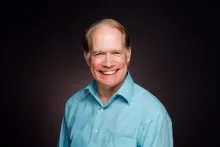
Greg Thomas is the former Pastor of the Cleveland, Ohio congregation. He retired as pastor in January 2025 and still attends there. Ordained in 1981, he has served in the ministry for 44-years. As a certified leadership consultant, Greg is the founder and president of weLEAD, Inc. Chartered in 2001, weLEAD is a 501(3)(c) non-profit organization and a major respected resource for free leadership development information reaching a worldwide audience. Greg also founded Leadership Excellence, Ltd in 2009 offering leadership training and coaching. He has an undergraduate degree from Ambassador College, and a master’s degree in leadership from Bellevue University. Greg has served on various Boards during his career. He is the author of two leadership development books, and is a certified life coach, and business coach.
Greg and his wife, B.J., live in Litchfield, Ohio. They first met in church as teenagers and were married in 1974. They enjoy spending time with family— especially their eight grandchildren.
