
Robin S Webber
This transcript was generated by AI and may contain errors. It is provided to assist those who may not be able to listen to the message.
Well, it's so good to be able to speak to all of you today. Whenever we come up to a holy day, I always remember what a good friend and one of our mentors said so many years ago that I passed on over the holy days of, what is the holy day about? And some of you may be experiencing the holy days whether here or whether those that are watching for the very first time. Why do we assemble? Why is it a holy convocation and what's going on? And there's a gentleman now deceased. His name was Vern Hargrove.
But Vern, in his Texas wisdom, just put it so succinctly and concisely, right to the lowest common denominator, and allow me to share it with you for just a moment. When we come together on the festivals, God is gathering his family. That's you, the children of God. We're breaking the bread, which is God's word, and we're telling the story. Not just any story, but we're telling his story. And maybe in the years to come, I hope that you will always remember that it is so simple. And why, what is the beauty of God's holy days and why do we assemble to gather the family?
And we are family today. It's so nice seeing so many of you that we have not been able to see for 12 or 14 months, or years, perhaps. And we're here to get together, because we may have a different mother, but we all have a same common Heavenly Father. So he's gathered the family, and we're breaking the bread. We did that in the first message with Mr. Young. We're going to do a little bit more in the second message, and we're going to tell the story.
Not just any story, though. We're going to be telling a story that is older than time. It's as new as today, and it's yet to be shared in the lives of millions and millions of millions of people, perhaps billions of people in the future. We're just in a part of the story today. It's the story of the first fruits. And that story is about God's great love, and it's about His perfect timing. That's really what the Gospel is about. It's about God's great love, and it's about His perfect timing.
And His timing for you and for me, as Mr. Young was bringing out again, is in the here and it is in the now. We don't have to wait for it. It has come to us. But I want to take you back to a moment in history, same moment that Mr. Young started with, and we'll build upon that fine foundation, because it came to a man, and it was his moment in time.
And it was on that Pentecost in 31 A.D. It was his moment. It was his story, but it is also our story. Yes, indeed, it was God's miraculous production. If I can use a Hollywood term, seeing I grew up in the L.A.
area, it was His production from beginning to end, because grace is all about God. It's His initiative. It is His involvement. It is His inclusion into His greater story for you and me. But He used the microphone of one man's voice. Join me if you would for a moment in Acts 2.38. Join me if you would there. In Acts 2, in verse 38, here is this large audience on the temple complex, and they all of a sudden came to realize that they'd done something horrible.
Some of those that were in that audience, not tall, because some of them may have been followers and disciples of Jesus, but a lot of those people there all of a sudden got it. What have we done? We have actually, in that sense, we have killed God in the flesh. And then we notice what it says then in verse 37, what shall we do? And then Peter said to them, repent and let every one of you be baptized in the name of Jesus Christ for the remission of sins and you shall receive the gift of the Holy Spirit.
Now let's understand again, it was God's miracle with all the different miracles that were occurring on that day that we've discussed up until this festival day. But why did God utilize Peter? That's the question I have before you. Why did he utilize that man? And I want to share it with you. Again, I'm going to use Doug's name often. It's not one of the books of the Bible, the book of Doug, but I'm going to make it Doug because he said, we too are witnesses.
But what made that message that Peter gave so profound? And there was this link, there was this, you know, like this, there was this link, but it wasn't just the eyes, it was the hearts, and it moved people.
What was it? I will share it with you because it is the beginning of eternal life. He spoke to those individuals, those men and those women that were in that temple complex.
He spoke as a dying man to dying men.
He spoke as a dying man to dying men. But now he was alive, and he was on fire, not only what was on top of his head, but he was passionate. He was now living truly for the very first time. What happened? What went on? How could Peter be you? You know, the Peter that was always saying, oh, you know, everybody else, if they leave you, I will be there. Don't know about the other love, but don't worry, I'll be the one that's there. The one that was always kind of bucking Christ, you know. Christ finally just said to Satan, you know, would you please just, you know, Satan get behind me. How would you like that to be told to you when you're talking to Messiah? Just get behind me. Peter and Peter and Peter. But then he recognized what happened.
He recognized that it was not about him. He had nothing to offer other than to accept that invitation and to die before he lived. That's a concept that I'd like to pin on all of us as first fruits in the making. That before we grow, we have to give ourselves away. We have to surrender ourselves and then begin to allow God to live in us. What happened here? What's going on? Well, he took Christ at his word. Jesus had said in John 14, 18, I will come to you. He took him at his word. In Luke 24, he said, you will tarry. You will wait in Jerusalem. Now, let's go over to Acts 1 for a second. Join me if you would there, please, where it says this in Acts 1 and verse 5, for John truly baptized with water, but you shall be baptized with the Holy Spirit not many days from now.
If I can dare say this, that was not only a declaration, that was a promise.
That was a promise that Peter could die on.
Not necessarily literally, he would later, but figuratively. To die on, to die to the self, to die to human pride, to die to human machinations. And then it says in verse 7, it is not for you to know the times of the seasons the Father has put in his own authority, but you shall receive power when the Holy Spirit has come upon you, and you shall be witnesses to me in Jerusalem and in all Judea and Samaria and to the ends of the earth. He said, you will be a witness. Now, I know I covered this last week here, and I did last yesterday in Redlands, and Mr. Young mentioned that right now, but I want to share with you, we are called to be witnesses. Firstfruits are called to be, and this is the Feast of We're Called to be Witnesses. How do you know whether or not a tree is growing if there is fruit? Now, that became very clear to Susie and me recently when we had a peach tree, Susan, that had been giving us some fruit for years and years, but it's not giving us any fruit anymore. It's not bearing fruit. So, thinking of what Jesus did, as Susan was talking about, we'll give it another year, and if not, we might give it two years because it's kind of pretty without the fruit, but there's fruit, and we're to be witnesses. And so that's what we want to talk about here, that we understand that with that believing, again, comes a responsibility, and that is to die in the flesh, that the Spirit might live.
Now, many of us here have been baptized for perhaps years, perhaps scores of years, but sometimes we wonder, okay, still on the journey, am I really getting it? Do I have God's Spirit? Okay, I academically or intellectually understand I have God's Spirit, but do I really have God's Spirit? And that is what this message is designed for today, to match the same declaration, the same call that went out from the man with the son that had the issues that he asked Jesus to deal with. He said, I believe, help thou my unbelief. And that's what I want to do for the next few minutes, is to move beyond unbelief, to help your belief in what God is doing with each and every one of us as a first fruit, as one that has been called at this time and not in the future, and no matter who we are, to recognize that we have that calling. So today's message is designed to establish and to gird up our belief in God's calling, your calling, initiated by God as a first fruit in becoming a witness of the new creation. And that's the title of my message, becoming a witness of the new creation. There is so much new to talk about, especially when it comes to the day of Pentecost. Join me if you would in Ephesians 1, the epistle thereof in Ephesians 1.
And notice the opening of Paul's declaration to the church at Ephesus. Blessed, verse 3, Ephesians 1, verse 3, blessed be the God and the Father of our Lord Jesus Christ, who has blessed us with every spiritual blessing in the heavenly places in Christ.
So what it says here is that He has blessed us with every spiritual blessing. But you know, sometimes have you ever gotten a gift that we can... well, that was a blessing. But you know what? We don't know how to use it. And we really don't kind of know all the components within it. So what good is having a blessing and a gift if you don't unwrap it and unpack it and know the components of that gift? Just as He chose us in Him before the foundation of the world, that we should be holy and without blame before Him in love.
Remember, years ago, we used to have it in our hymnal. I don't think it's in there anymore.
It's what I call a raising of the rafters hymn, you know, where it says, count your many blessings and name them one by one. When's the last time we did that? Count your many blessings. So we're going to unpack some of those today. Just what it means that once we have died figuratively to God through Christ and raised in a new life, what is it that God is going to give us? We need to understand that. So we're going to do some unpacking. But first things first, before we go any further, you know, sometimes we can jump into the movie and not know what's going on. If I were to ask any of you here today, just for sake of time, I'll give out a couple answers. What does Pentecost mean? What is Pentecost? Probably, I would suggest that you would say, well, Pentecost is when God gave us spirit.
I'm just watching your faces. Are we all kind of agreed on that? God gave us spirit broadly. Okay, go ahead. Glad to hear that. And some people, okay. Secondly, you know, it's really hard to talk for somebody. Okay. Secondly, we'd probably say, well, that was the birth of the church, the ecclesia coming together and being blessed with the Holy Spirit. How often have you heard that? Or how often have you heard that in a sermon? And that's good. And that's okay. But there's more to it. That's, that's kind of getting in the middle of the movie. You're saying, where is this sermon going? Good. Stick around. We'll find out. To recognize something that is even further back. Sometimes we take just a part of it, but we don't recognize that part is a part of a greater whole. Join me if you would in 2 Corinthians 5. In 2 Corinthians 5, and picking up the thought, if we may, in verse 17, therefore, if anyone is in Christ, he is a new creation. Old things have passed away, and behold, all things have become new. Now all things are of God who has reconciled us to himself through Jesus Christ and has given us the ministry of reconciliation, Paul speaking. But here it says, a new creature, a new creation, everything else has passed away. So when we're dealing with this, the word creation comes out. So often when we say, well, when was creation? When was creation? We will probably say, well, it was back at the beginning of the Bible. You go to Genesis 1, you go to Genesis 2, and you say, that is the beginning of the creation.
You would be partially correct in that.
But you see, God is not just simply first cause. He is the divine interrupter, and he is continuing to create. The creation is not over. That is what the day of Pentecost tells us. Creation is not over. He rested from making man and making woman in his physical image. But now he is making man and woman in his spiritual image. The sculptor, the great artist of the divine tapestry is continuing to create. He's creating in us a world that transcends the physical creation. How is the physical creation basically motivated by the senses, by what we touch, by what we taste, by what we hear, by what we see, and by what we smell?
All of us are here today because of the divine interruption, and by the divine interrupter to move beyond simply the physical creation and allow his spiritual creation to dwell in us.
You know why Peter was so effective? When you think about it, I'm going to go back a second. It was actually a thought that Susan shared with me this morning that I kind of bubbled on it. I didn't bring my props with me later on. That's when Susie, when I was going down the freeway, I forgot those things. If you have a cup, and you go to pour, you want to give somebody a gift, a beverage, but you notice the cup is all filled up. Well, how can you pour in what is already a full cup?
Right? Think that through. This is big physics, first grade. You can't do that. You have to empty that cup because God can't use a full cup of self.
You have to empty it. You have to empty your own cup. And then God can take His gift of drink, and He can give you a full dose, just pour and pour and pour. And like David said, my cup overflows. But first of all, you have to empty your cup. And that's why we're here today in part during this Pentecost, is to remember that with the Spring Festivals that we said that we would, part of the covenant, was that we would empty our cup so that that new beverage, that new life might dwell in us. That new, all that God wants to give us could be a part of us. But we have to empty that. Why is God offering that? Because all of the festivals, going back to again what I said, that to gather the family, God wants a relationship. See what happens so often, we say like with Pentecost, well, it's about a new spirit and it's about a birthday of the church. But it's much more than that. That's a part of it. We have to get the overview. So join me if you would, if you would, for a second in Exodus 6. In Exodus 6 and verse 7, come with me, please. In Exodus 6 and verse 7, this goes back to the Israel of old. And God clearly tells us what He's doing here with the people that He chose, with the people that were not a people, that were slaves. And He brought them together and He washed them up.
He took them through the Red Sea and then He brought them out on the other side. And He said this, therefore, it says this, to the children of Israel, I am the Lord.
Now that's not actually what I want. Pardon me. We're going to go back here. Yeah, that's where I want it. Yeah, yeah, that's what I want. Therefore says the children of Israel, I am the Lord and I will bring you out from under the burdens of Egypt and I will rescue you from their bondage and I will redeem you with an outstretched arm and with great judgments. And I will take you as my people and I will be your God. And then you shall know that I am the Lord your God who brings you out from under the burdens of the Egyptians. This is what God always wanted from the beginning. He wanted a relationship. Sometimes people just look at the Bible as being about rules and the rules, especially from God, are wonderful. But the rules are only designed to allow that relationship to develop. And that's what God wanted. That's what He wanted with Adam and Eve. And we know how that story went. Then He chose beyond a pair, He chose a confederation of families called Israel. And He says, I'm going to be your personal God and you are going to be my people. We're going to be family. And then in Exodus 24, which I'm not going to go to, you can jot that down. Then He made a covenant. In Exodus 24, He made a covenant.
And He said, I'm actually going to go to it just for a moment. Then He took the book of the covenant and read it in the hearing of the people. And they said that all that the Lord has said to do, we will do and be obedient. God even said later in Deuteronomy, He said this, that He said, Take heed lest you forget the covenant of the Lord your God. Now, it's very important. Stay with me. It's very important that we understand what a covenant is because we're going to be talking about the old covenant and the new covenant. The Greek term used in the Septuagint and later on in the New Testament is simply this. The Greek term normally for covenant in society is where people enter into an agreement on equal terms.
Equal terms. I give, you give, we agree, we shake hands, we become blood brothers, however they did it back then, we're going to have a covenant. But that's not what God gave to Israel. And it's not what He gives to the Israel of God today. The word in the Greek for just that simple equal terms covenant is suntake.
But in the New Testament, it is called diathake. Now, allow me to share this with you. This is important. This will tell you why Peter did what he did on the day of Pentecost. That the term diathake, which has a sense, but not an agreement on equal terms, but more like a will. This isn't a bartering agreement, okay? This is not a bartering agreement, but dictates by the testador. And it's God that gives the Testament. The other party cannot alter the terms, but accept them or refuse the inheritance. It's the forward motion of God's grace. It's His loving initiative that makes this possible. It is God. Have any of you ever been to the reading of a will?
I mean, everybody before you is alive still? I'm just chatting. Okay. Normally, you have your will read. And like myself, Susan and I, we have a will and we have a trust. And we put all the terms down. We have determined the terms and it's notarized so that then the party will then receive what we have stated they will receive. It's interesting. The great Hebrew Rabbi Philo of Alexandria put it this way. It is fitting for God to give and for man to receive. Now, we know what Israel did. And Israel was to be the first fruit of the nations. But then God began to see and look ahead and he offered hope in the midst of the challenge. Just as much as that audience in Jerusalem said, oh no, what have we done? And what shall we do at that moment? At that moment, God inspired the Apostle Peter to say, repent and be baptized and receive the Spirit. You repent. You change. You unload your glass. Let me fill it. Let me give you a gift. And I will be your God and you will be my people. And it was the beginning of the spiritual Israel of God. But God back in Jeremiah said something beautiful. Join me if you would real quickly. Jeremiah. In the book of Jeremiah 31. And this is when things were going south for Israel and Judah. In Jeremiah 31.
And picking up the thought if we could in verse 31.
Even as things were going south, God showed what due north would be like in the future. Behold, the days are coming, says the Lord, when I will make a new covenant with the house of Israel and with the house of Judah, not according to the covenant that I made with their fathers in the day that I took them by the hand to lead them out of the land of Egypt. My covenant which they broke, they broke it. Though I was a husband to them, says the eternal. But this is the covenant that I will make with the house of Israel after those days. Not now, but after those days, says the Lord. And I will be their God and they shall be my people. And no more shall every man teach his neighbor and every man his brother, saying, know the Lord, for they shall all know me from the least of them to the greatest of them, for I will forgive their iniquity and their sin I will remember no more.
But let's build upon that for a second and let's understand where this goes. Join me if you would in Ezekiel 36, speaking of a covenant, where God is saying that he would gather up his covenant people from all of the nations in the future. And it says in verse 25, then I will sprinkle clean water on you and you shall be clean and I will cleanse you from all your filthiness and from all your idols. And I will give you a new heart. I will give you a new spirit and within you I will take the heart of stone out of your flesh and give you a heart of flesh and I will put my spirit within you and cause you to walk in my statutes and you will keep my judgments and do them. Notice what the testator says. I will give you a new heart and I will give you a new spirit. Forward to the book of Hebrews. We're putting all the parts together here in Hebrews 8, which comes off of Jeremiah, but there's more added here in Hebrews 8. In verse 10, it says this, For this covenant that I will make with the house of Israel after those days. Now understand, for those that are new to this, God has unfinished business with the house of Israel, with the house of Judah. Absolutely! Their hope is not lost. Just look at what it says in the book of Ezekiel and other places. But now He's dealing with the spiritual Israel. Galatians 6, 16. He's dealing with the body of Christ. He's dealing with the elect. He's dealing with the Jesus followers that honor the heavenly Father just as He did. For this is the covenant that I will make the house of Israel after those, says the Lord, I will put my laws in their mind and write them on their hearts, and I will be their God, and they shall be my people. So where does this lead us? The gifts of God. Think of God as being the great testator, whose will is being accomplished. And He is granting things in this covenant that is written in the blood of His Son. And you have accepted it. If you've accepted it, you don't even have to wait to know what's coming your way, because it's right here in the Scripture. There are three things that I want to share with you in the remainder of this message. That is that God has given us a new spirit. Number one, a new spirit. Number two, He has given us a new heart. And number three, He has given us a new mind. Why was Peter able to share that incredible message in Jerusalem? Was it because of his good looks? No. Was it because what he had done in the past? No. God gave him, because he had become a dying man. He recognized that he needed to be redeemed. That God gave him a new spirit. He gave him a new heart, and He gave him a new mind. What's this all about? Join me if you would. Let's go to the book. Let's start just with, number one, the new spirit. Join me if you would in the book of John.
In the book of John, we're going to cover new spirit first in the book of John, Gospel thereof. And join me if you would in John 3.
In John 3, I'm picking up the story, if we could. In verse 1, there was a man of the Pharisees named Nicodemus, the ruler of the Jews. And this man came to Jesus by night and said to him, A rabbi, we know that you are a teacher. Come from God, for no one can do these signs that you do, unless God is with him. And Jesus answered and said to him, Most assuredly I say to you, unless one is born again, he cannot see the kingdom of God.
Unless one is born again, he cannot see the kingdom of God. Let's think about that for a moment. To be born again, to be born from above. Let's just put it this way, whatever handle you want to put on that, born again is fine.
It's not once saved, always saved, as was mentioned by Doug. But to be born again, to be born from above, let's just put it in the way, to have a miracle by the great interrupter. And to have a new birth, a new identity. Back in the time of Rome, when somebody was adopted, they took on a brand new identity, a new name, a new title, new clothing. Everything was new. Everything was forgotten in the past. And that's what God gives us under the new covenant, as we come underneath those terms. And he begins by this miracle. To be born again. Now Nicodemus didn't quite understand this. Nicodemus didn't quite understand this. He said, well, wait a minute. I've been there, done that. I was already born. Can they do it? But Jesus said, if you don't do that, you cannot see the kingdom of God. You know, birth is incredible.
I've had the honor and the pleasure to be with my wife through the three births of our daughters.
It really is quite incredible. And all of a sudden, you see that little baby coming out.
Excuse my technical term, crowning. See, I was in, okay?
And to see that crowning and to see that birth come out. I mean, it is just, you say, oh man, there is a God. When you see that, you know, your big men go down crying. I mean, it's just so incredible. You say, there is a God in heaven. And you look at that. Three times I've been able to see that little one come out, sometimes inch by inch. One of them came out and just, oh, you're here. Welcome. That was our firstborn. Just kind of, okay, welcome. There was a life.
That's what happens when we die in Christ. There's a new birth. There's a new opening. There's a whole world that is awaiting us. And God gives that to us. It is so incredible to think about. Join me if you would in 1 Corinthians 2. In 1 Corinthians 2, and picking up the thought in verse 9. Remember what Jesus said? You can't see the kingdom of God. You can't even know the values of the kingdom or exist in them or have them exist in you without this spirit, without this being born from above experience. And we notice in 1 Corinthians 2 in verse 9.
Let's notice Paul's words on this. But as it is written, I has not seen, neither has been heard, nor has entered into the heart of man the things which God has prepared for them, those who love him. Notice what it says. I has not seen, neither, notice, neither ear heard, the senses, the touch, the taste, the feel. Nor has entered into the heart of man the things which God has prepared for those who love him. But God has revealed them to us through his Spirit. For the Spirit searches all things, yes, the deep things of God. For what man knows the things of a man except the spirit of man which is in him, even so no one knows the things of God except the Spirit of God. Now we have received, not the Spirit of the world, but the Spirit who is from God, that we might know, that we might know. Notice the things which have been freely, it's a gift, as a spoken in Acts, to receive the gift of God that when we die, as it were, to self, and we allow God to pour himself in us by his Spirit. We begin to breathe, literally, for the very first time in the new life. What is that new Spirit?
The Spirit is the flow of the essence of the Creator himself. No longer just, stay with me. I'm the PowerPoint up here, second. We all have a brain. No matter what you said about anybody that you know or love, we all have a brain. We have a brain. A brain is an organ. It's physical. God breathed the Spirit of man. God breathed the Spirit of life into man. That's the Spirit in man. That is what moves us from having a brain to having a mind that is able to reason. But then, by God's grace and his calling, the great interrupter calls us. And then, as we say, okay, your will be done, not ours, the great testator, then what happens is he gives us the Spirit. Now we have the converted mind. Now we're able to see things for the very first time. Join me if you would in the book of Galatians, Galatians 4. Galatians 4. And let's pick up the thought if you could in verse 4. Galatians 4 and verse 4. But when the fullness of the time had come, God sent forth his son, born of a woman, born under the law, to redeem, to bring back, to make good that which could not make good on its own. Those who were under the law that we might receive the adoption as sons. And because you are sons, God has sent forth the Spirit of his son into your hearts. Now, stay with me. Let's read that again. It's worth repeating. And because you are sons, God has sent forth the Spirit of his son into your hearts, crying out, Abba, Father. Therefore, you're no longer a slave, but a son. And if a son, then an heir of God through Christ. What is this speaking about? That what is God doing here? God pours his Spirit into us. He pours his Spirit into us. What is that Spirit? It is his essence. The Spirit of God is the essence of the Father. It is the essence of the Son. Go to Romans 8. Do some homework. Do some heart work. Romans 8, 10 through 14. The Holy Spirit is no less than the essence of God poured into us. Not because we deserve it, but because he loves us and he wants us to grow in it. And that Spirit then begins to flow, to move in us, to reach out to every aspect of our life of what we do with our brains, what we do with our reasoning, what we do with our hands as we reach out, being the witness that Doug is talking about. How we walk into a crowd, how we walk away from a bad crowd, how we serve rather than be served when issues come up on the moment where there's an issue that's going on and you're looking, well, who's going to help? Then you become involved. Not only here in church, but in your neighborhood. For those of you that are in school, for those of you that maybe have a rooming buddy that you're with, wherever you are, you have different eyes now. Your eyes are not only mirrors on yourself, they're like a lens to the rest of the world to be like Jesus Christ. So, one thing that we want to think about here, as we unpack the will of the New Covenant, is God grants us a gift. It's called a new spirit. A new spirit. And with that new spirit, sometimes we might say to ourselves, I just wish I could start all over. We've all said that. I've said that. Boy, I'd love to go back into my past, whether it's individually, whether in my marriage, whether with the children, whether as a minister, later as a pastor, all these many years, I'd like to just start right now.
I'd like to start right now rather than going back. But here's what I want to share with you, and here's the encouragement. Every day we can start anew with that new spirit and to recognize how important it is. Number two, God says in the Old Testament that He's going to give us a new heart, a new heart. Let's think about that through a second. Not a transplant, not a bypass, He's going to give us a new heart. What does that mean? The spirit can flow through us, but it's also buckling up sometimes against our own human spirit still. They know Paul spoke to that. All the things I want to do, I do. I don't do all the things I shouldn't do, I do. And all the things I shouldn't do, you know, it goes back and forth. Our heart is the repository of our motives. At times it's in a lockbox known to ourselves. But our heart is the motor of our life.
I want you to think about that for a moment. Our heart. And I'm not talking about the fleshly heart, per se. I'm just talking about the heart in general, the heart that is being spoken here. It's the motor of our life. It's what makes us run. And God says here that He's given us a new heart. I know I see our good, dear friend, Mr. Clark here recently. He had a little rub-a-dub-dub with his heart and a little bit here and a little bit there and working it all over. And we're glad he did. And he's up. But, Roland, I've got something to share with you. You also have a new heart from God. And you've been working on it. And it's so much better and so much more incredible than anything that doctors can do. Because a doctor can bandage us up. He can do part A, part B, put this here, here a little, there a little, line upon line. But you know what? You can have a heart transplant. You can have a heart bypass. And without that new spirit in us and without that new heart that God has given us a gift, we will go to the grave. The new spirit and the new heart that God gives us that allowed Peter just to let it out on that day of Pentecost.
That's what motivated him. He knew that God was true to his promise, that Jesus was true to his word, that he said, I will come to you. And he knew that the covenant promises spoken in Jeremiah, spoken in Ezekiel, had come true. He had a new heart.
Jeremy, if you would for a moment, just in 1 Thessalonians 3. In 1 Thessalonians 3.
Verse 11. Now may our God and Father himself and our Lord Jesus Christ direct our way to you. And may the Lord make you increase and abound in love to one another and to all just as we do to you. He's encouraging to grow as first fruits. So that, verse 13, he may establish, notice, your hearts blameless. Blameless means to be above reproach. Blameless means not only to be in the fire, but not even in the smoke zone. Not only good, but holy. So that he may establish your hearts, blameless in holiness, before God and Father at the coming of our Lord Jesus Christ with all his saints. Now notice what it says. May our God and Father himself and our Lord Jesus Christ direct.
This message is given to establish your heart. To know that God has given you a new heart and you've got to keep it. What does that heart do? Let's go to Mark 12 for a second. In Mark 12.
I tend to go to Mark, as you probably well know, rather than Matthew in this account. Because I love it because it brings the Old Testament and the New Testament together. In Mark, this is what it's about. This is what should be circulating in our heart. Jesus answered him, the first of all the commandments is, Hear, O Israel, the Lord our God, the Lord is one. And notice where a heart goes, what it should be pumping out. And you shall love the Lord your God with all your heart, with all your soul, with all your mind, and with all of your strength. This is the first commandment and the second is like and unto it you shall love your neighbor as yourself. And there is no other commandment greater than these. God is love. God's Spirit is outflowing and outgoing concern away from self. God's love is about cooperation.
It's not about resistance. It's about forgiving and forgetting. It's about distancing the punishment from what occurred. It's love. It's outward. It's incredible. And you look at this. This comes out of Deuteronomy 6. Jesus is only repeating what he had given Moses as the word back in the Old Testament. Join me if you would in Ephesians 6 and verse 6. In Ephesians 6 and verse 6. It says this.
When it says, Bond servants in verse 5, Be obedient to those who are your masters according to the flesh with fear and trembling, insincerity of heart as to Christ, not with eye service as men-plasers, but as bond servants of Christ doing the will of God from the heart. The love that we have is pervasive. It is to be all in all. It's not just to be when people are looking. See, that's the difference between the Old Covenant and the New Covenant, between the Israel of old and the Israel of God today. It's not just what people are seeing from the exterior, but what's happening in your mind with that new spirit and with that new heart.
And it's not only that, not just for eye service, but to worship God. Join me if you would in Philippians 2 on this one point. In Philippians 2.
Philippians 2. Notice what it says here. Therefore, my beloved, as you have always obeyed, not in my presence only, but now much more in my absence, work out your own salvation with fear and trembling. Now, this is not trepidation. This is not speaking of, uh-oh, a thunderbolt is about to come down from heaven. No, this is speaking about a relationship as if when you love someone. And if you truly, truly love someone, the last thing you want to do is to hurt them, to make them hold on you. You want to please them. You would not want to disappoint. You'd want to do everything that you could to honor them. That's what it is saying here.
When you love God, when you have that new spirit and you have that new heart, you are keeping... stay with me, please. You're no longer just simply keeping the commandments of God because you have to. And they are the borders of our life, please understand. But out of desire, you know, the difference between a converted mind and an unconverted mind is an unconverted mind looks at the commandments of the don'ts. Can't do this. Can't do that. Can't do this.
A converted mind, whose eyes are now open, as Jesus said, looks at all of the opportunities, looks at all of the possibilities, looks at living a life without accidents.
And we're worshiping God.
Question to a people that keep the commandments of God.
Why do you keep the commandments? Simply because something might happen or because something already happened that God graced you with his love. God shared his son with us. And so in worship and in desire, because you see beyond just simply the law, but the relationship with God and with man. And that's the witness that Doug was talking about. Let's just go to the last point. First is he gives us a new spirit. He gives us a new heart. Number three, he gives us a new mind. What does that mean, a new mind? What do you do with your mind? What do you do with your mind? Most of us, most of the time. It's a new way of thinking.
He gives us a new mind. That's the promise. It's a new thinking cap. You know, my dad, when I was growing up, he'd go like that to my head. That's why it's kind of flat on this side. And he'd say, you got to put on your thinking cap. Well, it's a new kind of thinking cap. Philippians 2 and verse 5, let's just jot that down. Let this mind be in you, which was in Christ Jesus.
We have to have his mind. And that's the importance of meditation, of soaking in God's real world rather than the world of self.
Here's the challenge that's going to be with us as we move from Pentecost, this newness that God visits upon us, to the fall festivals. And that is simply this, diminishing the kingdom of self and loading up with the new mind and the new heart and new spirit of the kingdom of God.
I'm going to share something with you. Confession is good for the soul.
My human cup still has too much of Robin Weber.
And I suggest looking at you, and I love all of you. I'm your pastor.
All of us have to give more space to the spirit and believe that it is really true and that our time is now as Mr. Young brought out, that we are either being molded by the experience of the kingdom of God or we're being molded by the kingdom of self. You cannot bring them together. You just simply cannot bring them together. So how do we have that new mind? We go to the Gospels. We drink in. We understand. We think, what would Christ do in this dead? What would He do over here? But we don't know it unless we're meditating on that word. Join me if you would in Romans 12 and verse 1. Romans 12 and verse 1.
And then I'm going to conclude.
I beseech you.
And that is what I do today, dear brethren, and those that are listening here.
As Paul and as a minister of Jesus Christ and as your pastor right here, I will use his words in my voice. I beseech you therefore, brethren, by the mercies of God. And that's why we are here. It's not because of what we have done, but because of what God is doing. He is the initiator. He is the interrupter. It is His Spirit that's flowing through us. It's that new heart that He's given to us. But we have to have a mind that wraps that all around to present your bodies a living sacrifice, holy and acceptable. Not a dead duck! Peter was not a dead duck. He died in Christ. That he might live for Christ. That he might be a witness. That you present your bodies a living holy and acceptable, which is your reasonable service. And do not be conformed. Don't be shaped. Don't be molded by the world. But be transformed by the renewing of your mind. And God promised us a new mind, renewing of the mind, to prove what is good and acceptable and the perfect will of God.
We will renew our minds by knowing God's will. And when we read the Word of God, when we meditate on it, and I said this, I think, last week to all of you, there comes a space. There comes a space of a moment of opportunity between when something comes to us and when we act upon it. Whether we act upon it as a citizen of the kingdom of self or whether we act as a child of God and the citizen of the kingdom of heaven. And there is that space. But we have to know in that space that we have that new spirit in us that will say, this is the way walk you in it. But we also have to have a mind, the mind of Christ, to know how did he walk when he came up against that situation. So, brethren, in conclusion, why did Peter do what he did on that glorious, glorious day that started everything? He became a citizen of the kingdom. He became a recipient of the new covenant. God gave him a new spirit. God gave him a new heart. God gave him a new mind. God has given to each and every one of us that believe in it. Believe in it. Know it. Understand it. Call upon it. It's not by our might. It's not by our power or by our spirit that's going to allow us to happen, but to know that there's a good God up above that on this day has called you to be in the forefront of a story that's yet to unfold. And he wants you with that new spirit and that new mind and that new heart to create a harvest in your life that you might glorify him by your words, your thoughts, and your actions. And thus, let's rejoice that we have the first fruits that God has granted us.
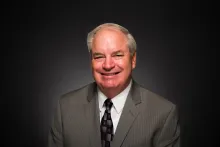
Robin Webber was born in Chicago, Illinois, in 1951, but has lived most of his life in California. He has been a part of the Church of God community since 1963. He attended Ambassador College in Pasadena from 1969-1973. He majored in theology and history.
Mr. Webber's interest remains in the study of history, socio-economics and literature. Over the years, he has offered his services to museums as a docent to share his enthusiasm and passions regarding these areas of expertise.
When time permits, he loves to go mountain biking on nearby ranch land and meet his wife as she hikes toward him.
