
Robin S Webber
This transcript was generated by AI and may contain errors. It is provided to assist those who may not be able to listen to the message.
Greetings to each and every one of you. To be able to be here with you is certainly a pleasure and an honor for Susan and I to share the day with you. As we approach Pentecost, there is a concept that is latent in the Bible, and that is the approach to this day.
Let's talk about that for a moment. By tradition, Israel came up against Sinai to receive the laws of God. It is very interesting that God told Moses to tell them to clean up and to prepare to meet their Maker.
There was a preparation as they came up against Mount Sinai. There was an inherent expectation that something was about to occur that was going to change lives. Also, when we just think of the Greek term of Pentecost, which means to count 50, we recognize that there is inherent again an expectation, just as much as when we were children and we would simulate Cape Canaveral back then, 10, 9, 8, 7, that there was some kind of blast-off.
The expectation of the second group, the disciples, was based upon a promise that Jesus had given them on the last night of his human life. And that was that he said, I will come to you. I will come to you. Now, by him saying that, I do not suggest for a moment that they fully understood what that meant. And at the same time, he also had said that the Holy Spirit, that comforter, will be coming to the degree that they understood that, I think, is a lesson of life that it would expand as it came and for many, many years after that, coming to understand what the Spirit of God was.
We have a lot of expectation as we come up to what we call Pentecost, Feast of Weeks, Feast of First Fruits. It has a lot of handles on it. What I want to share with you today, Assembly, is that God also has expectations. As we have expectations from God and through Christ, likewise, God the Father and Jesus Christ have expectations from us that are, as Stephen mentioned, the first fruits of God.
What I would like to build this message around is simply this. It is about expectations. Pentecost is about expectations. We have expectations. God has expectations. The emphasis that I want to share with you today is where Stephen left off and that I will continue. He has expectations in the here and in the now. I'm going to build upon that in a few minutes. Join me, if you would, in Mark 1. Let's take a look at verse 14. This is a scripture that you may be familiar with.
I often use it, glad to do it, because it is the very words of Jesus Christ to show exactly what His ministry was about, what this day of Pentecost is about, and what your life and why you breathe and why you draw breath and why you interact with God and why you interact with family and interact with the world around us is all about. Let's take a look at what it says in Mark 1. Now, after John was put in prison, Jesus came to Galilee and it says that He was preaching the gospel of the kingdom of God, which is a great theme of what the ministry of Jesus was all about, and saying, the time is fulfilled, and notice, and the kingdom of God is at hand.
Repent and believe in the gospel. This was the heraldry of yester-age. Mark, by tradition, wrote to the Roman community. The Romans understood what a herald was about. He heralded. He gave an announcement coming forth from a general and or from a Caesar that when the Caesars would come to their throne, that it was good news. It was good news that peace, Pax Romana, would reign. But now Jesus comes and talks about another kingdom.
And it is in Mark 1.14-15 that the inauguration, the announcement of that kingdom is given. Let's talk about that for just a moment, because we don't have a lot of kingdoms around us today. We have nation-states, but empires, as it were, and or kingdoms, by and large, are something that are somewhat foreign to Americans, seeing we got rid of our king 230 years ago. Let's talk about rulership. Let's talk about a kingdom, what it means for a moment. The kingdom comes from the Interpreter's Bible.
And it's the defining of what it means that the kingdom of God is at hand. And let's listen to that. And ask ourselves, personally, if that kingdom of God is extant in our lives. The kingdom is the reign of God. It says sovereignty over mind and heart and will and in the world.
That kingdom that Jesus speaks about, it's sonship to God and brotherly relationships with men. It's the future. But, but, wherever a human life is brought into harmony with the Father's purpose, it is present. It's in the future. It's in the present.
You might want to put this word down. There's a tension. There's a oneness. It is in the future, in all of its fullness. But it's also in the present.
Going on, Jesus called men to repentance as emphatically as John did, his cousin. But there is here this notable addition to believe in the gospel, that good news of a kingdom that was being inaugurated by Jesus Christ on this earth.
And in that, Jesus never minimized sin or repentance. But he did proclaim this. He proclaimed a new order is at hand.
And basically what he was saying is, get a mind, get a new mind that fits it.
In all of this sin, that announcement that he gave with that inauguration of the kingdom, because the world was then used to a Roman kingdom, or before that, a Macedonio-Graco kingdom, before that Persia, before that Babylon, before that Assyria. And you can go back, back, back, back, back.
Normally, when another kingdom came, it was not a good thing. But this kingdom was different. He brought more than judgment. He said, yeah, you get a mind that fits it. But that was to get their attention. But he brought more than judgment and an inflexible demand for turning away from sin. He also brought good news. Pentecost is about good news, isn't it? He brought good news. He was, he, being the personification of Jerusalem above, now below, he was good news.
It was voiced in the phrase that he shared with others to pray to our heavenly Father.
It spoke in his words, come unto me. There was the good news of reliance on God, of utter confidence in his love, of his invitation to believe that love, and to accept it.
Now, this is all going to be very important as we build a foundation, as we come up against Pentecost. Thus, let's put this down again. If you jot anything down, Mark 1, 14-15, we have the inauguration of the kingdom of God on earth. Oh, no, not the full item. You understand that, and I understand that. But just as Jesus himself would say that the kingdom of God was like a mustard seed, that would grow and grow and develop, and we recognize ultimately, in the future, it's going to cover the entirety of the earth.
The one thing that is very important, and what I really want to get across to you today as one Christian to another is simply this. Jesus said, the kingdom of God is at hand. Other translations say that the kingdom of God is near. The kingdom of God is at hand, the kingdom of God is near. There is no sense in these scriptures of time and or distance when it comes to the kingdom of God coming into our lives, and that it is at hand for those that will believe, those that will accept it, those that will surrender, and those that want to be citizens of that kingdom, citizens of heaven above. So we look at this, we recognize that this kingdom is not defined by time or distance. It is here, it is now, where Christ is, wherever He is, the King of that kingdom, heaven, is on earth and touched by earth.
Wherever people come up against this one, then let's make this a decision is made. When you come up, when you come up into the presence of Jesus Christ and He is made known to you, you have a decision to make.
You can accept Him, you can reject Him, you can ignore Him, but ignoring that invitation is just secondhand rejection. You will make a decision, and every act and every decision that you will make the rest of your life will be based on that decision, whether or not you have accepted Jesus Christ as the King of that kingdom, and not that that kingdom is simply at hand, but in heart. There's a difference, isn't there? We can say the kingdom of God is at hand, but there's a great difference, and that's what Pentecost is going to bring to us tomorrow as Mr. Budge and the others and Mr. Sharf will be speaking to you. It's more than just simply being at hand. That kingdom of God has got to saturate our heart. We'll be talking about that a little bit later. I'm going to be sharing a few props along the way.
So we take a look at this. What was Jesus saying to those individuals at that time? It's here that God's Word is taken literally by those that are first fruits, that they believe and respond by their daily actions, that they have a mind, that they have a heart that fits it. The bottom line, Pentecost, is about our witness as first fruits of God, that God is in charge.
Just think that through. We're going to build on that again, which is throwing out some little things to build upon. God is in charge. Not in charge of every other action. Not in charge of every third action, not like the old posy. He is in charge. He's not in charge. He is in charge. He's not in charge. You know where you go around the daisy and do the petals? No. Pentecost reminds us that Jesus Christ did come. He is that Passover. He is that new life, as the days of 11 bread bring out, and that we recognize that He also gave a promise that He would come and dwell with us through His Spirit. The reason why I bring this up is that at times, individuals, and even church cultures, can develop what I call a postponement theology. A postponement theology. You might want to jot that down. That might be a new phrase to you. A postponement theology. A little bit like Manana, always looking to tomorrow, always hoping for something over the hill, over the horizon. Putting off their happiness. Putting off their growth. And this fits in very much with what Mr. Richardson just passed a baton to in this message, that now is the time when the kingdom of God is in us, and we are its citizens, to be filled with that life of Christ, to be filled with that Spirit, and to be a witness, as we found in Acts 1, verse 8, you will be a witness.
And we're going to be talking about what a witness is later, to understand what our role is in all of this. And to recognize we just are not called to simply wait until Christ comes back and then develops that fullness of the kingdom as we understand it. But to recognize that each and every one of us in this room, from the front row to the middle rows to the back row, have been called to be a light. Jesus said, you are the lights of this world. Now, we don't reflect our own light. It's a lot like the moon and the sun. We reflect the light of God. We reflect the light of Christ. But we are to be reflecting. We are a witness. And we also are part of a witness protection program. Did you know that? Because God's looking after us at the same time. So we're going to talk about all of that as we go along. Here's what I'd like to share. Here's the title of my message with you. The role of a first fruit. The role of a first fruit. Here and now. Not just receiving a reward in the future because we kind of waddled through, slugged through, kind of got through, kind of made it, hope we did all right. No. We are to understand the role of a first fruit in the here and the now. Let's develop a moment, just a little scriptural pattern, foundation about the feast of weeks and first fruit. Turn to me if you would for a moment in Exodus. In Exodus 23. In Exodus 23, we notice here, verse 16, where it mentions, let's start in verse 15. You shall keep the feast of unleavened bread. You shall eat unleavened bread seven days, as I command at you at the time appointed in the month of Eibib, for in it you came out of Egypt. None shall appear before me empty. For some of you that may be hearing this message for the first time, God gave them the days of unleavened bread for a specific purpose. To always remember that when God is involved, that God will render forth his promises and that Israel was delivered from Egypt so rapidly, so rapidly, that the bread was not able to rise. That's why God gave the days of unleavened bread. There are other constructive theology beyond that in the Old Testament and New Testament, but that was the initial reason.
He said, you will remember that I am your God, and when I deliver and when I say I'm going to deliver, get ready. Just as Stephen was saying, get up, get out, get going. Get up, get out, get going. That's simple.
And the Feast of Harvest, one of the names for Pentecost, the first fruits of your labors, it's also called the Feast of First Fruits, which you have sown in the field in the Feast of In-Gathering at the end of the year, when you have gathered in the fruit of your labors from the field.
Three times a year. So we have the Feast of Harvest, we have the first fruits of your labors, and the Feast of Harvest, as you mentioned, Stephen, that Pentecost does go back to the wave sheet, goes back to that time. And so all of these days are interconnected. Now let's take something, another look at here. 1 Corinthians 15. Going from the Old Testament to the New Testament. 1 Corinthians 15. 20.
And in 1 Corinthians 15, verse 20, again, this is what we commonly call the resurrection chapter, but notice, But now Christ is risen, and that's what Stephen was talking about. Christ is risen from the dead, and notice, has become the first fruits of those who have fallen asleep and or have died. For since by man came death, by man also came the resurrection of the dead. Now notice, For as an Adam all die, even so in Christ all shall be made alive. But each one in his own order notice Christ the first fruits, afterwards those who are Christ at his coming. So we might want to put this down for a definition. Christ, Jesus of Nazareth, Son of God, born in Bethlehem, ascendant is the first of the first fruits.
The wave sheaf, that acceptable offering that went up. And he set us the example as a first fruit. And the most powerful example, and you've probably heard me say this before, but if you want to jot something down, that will really stick in your mind better than a bumper sticker, because it's going to cover the rest of the message. First fruits put first things first. You want to know how to be a first fruit? First fruits put first things first. And they will always put God's way and God's will and God's purpose ahead of their own. That's what a first fruit does. Now, Jeremiah 2 and verse 3. Going back and forth between the Testaments. Jeremiah 2 and verse 3. It was not only Christ, this term of first fruit goes throughout the Scriptures. In Jeremiah 2 and verse 3, let's take a look at this. In Jeremiah 2 and verse 3, speaking of Israel, was holiness to the Lord. And it is identified, Israel, the first fruits of his increase. All that devour him will offend, and disaster will come upon them, says the Lord. Israel was planted by God, and the increase was given of God, and the label was put on them by God, that they would be a type of first fruits, those that were first dealt directly with by God. That he, in a collective sense, he would be their God, and that they would be his people. They were the first people, I want you to think about this for a moment, because it's going to tie into you and me in a few minutes. They were the first collective people that were under covenant with God. You might want to jot that down. We're going to do some building blocks here, okay? So you've got to kind of stay with me to get to the end. They were the first collective people that had a covenant with God. Not a contract, not a contract, but a covenant. Covenants are for life. Covenants are for the duration of the two parties.
Covenants back then were, in that sense, sealed by blood. So we take a look at that. What I want to share with you in thinking about this for a moment, and then we're going to talk about it, is we're coming up against Pentecost tomorrow. Just to give you some things to think about over the night, is that when we look at covenant, we need to understand two things that are happening here. Two words, two C words I'm going to put together. There is a creation and there is a covenant. You might want to jot that down and take that home and mull about it. Whenever there is a covenant, there is a creation. Something is being birthed. Something is coming to life. Let's realize, and just to paraphrase, that as we know, as it says in Ephesians through Paul's words, that God called a people that were not a people. And he's likening also back to Israel of old, that Israel was not a nation of them by itself. It was a confederation, a conglomerate of family types, twelve desperate tribes that were in slavery, and God took them out of slavery. People that were overlooked, people that were in slavery for hundreds of years, and he created something.
It was a new creation. It became a people who were not a people. And he was going to claim them for his own. He was going to claim them for his own, and that relationship, that great overarching theme of Scripture, that I will be your God and you will be my people, and I will be in the midst of you.
This was the Israel of old. When God does this, when he creates, when he makes covenant, he, in that sense, takes that which is nothing and makes it something. He takes that which is not and makes it full. He takes that which is non-existent at times and makes it exist, that it might be his world, his people, in his time and in his way. And he remakes everything or creates everything for his purpose.
That's Israel of old. Do you remember me now in James 1.18?
Again, this tag of firstfruits in James 1 and verse 18.
It says this, of his own will. Again, just what I've been saying, he brought us forth by the word of truth. Notice, speaking to the saints, speaking to the Jesus followers of that day, that we might be a kind of firstfruits of his creatures.
So we see Israel of old in the Old Testament. We see the Israel of God, and they are tagged with this definition of being a firstfruit.
Now, what does that mean to you and to me? Let me share a thought with you for a moment.
Jeremiah talks about firstfruits. In the book of James, it talks about firstfruits. And, of course, we put in 1 Corinthians, the first of the firstfruits being Jesus.
One of the blessings that you and I have that we should never take for granted, and I hope some of our younger people are listening to that, we should never take for granted, is that we look at the word of God being all of it between these two covers.
What a blessing that we have that we recognize that in these covers we are not dealing with two different stories or two different gods.
We are dealing with the God of creation. We are dealing with an ongoing story. We are dealing with God's plan.
It is one story that expands. And, yes, new chapters are added, but it is the ongoing story. It's the story of God drawing out of this world and creating by His grace, by His design, by Him looking to the future what He wants to do with those people.
That it might be according to His will and according to His purpose. And this is incredible.
In one sense, we recognize it's an on-flowing, ongoing story. And each and every generation of God's first fruits, whether of old or new, are on the cutting edge of that story.
It's like a wave that just keeps on going through because God is not going to be stalled. He's not going to be stopped. Oh, man thinks He can stop Him, but it's going to keep on going.
And I think this is what Steve was trying to bring out as we talk about the excitement and the joy and the dynamism of what Pentecost is about.
That you and I at this time in 2019, we are on the cutting edge. We are those first fruits today in the making and in the creation. We have something to do now.
Oh, not just to go up in the clouds with Jesus in the future, but now to be that candle in the darkness, to be a light, to be an example, to be a first fruit, to be ready, to be harvested by God. And this is the piece of harvest. You know, right now, our blackberry bush? It's a raspberry bush. Thank you, Susan. Whatever it is, I pick them.
But, you know, you just kind of stand. Those first fruits are just unbelievable. But they're kind of susceptible because they're kind of the first ones out there.
They're kind of the first ones that feel the heat, first ones that feel the cold, first ones that get the bugs, first ones that have to hope that the birds don't see them, and on and on and on.
There's a lot that happens with the first fruit, just a little bit like the firstborn. And that's why God honors the firstborn. He also honors the first fruits because He recognizes that in one sense, humanly at least, we're a little alone.
Just as Israel was alone amongst all of the nations. But one thing that's very important when we think about what Stephen mentioned, that now is our time. We're on that cutting edge. And you can't be a first fruit in isolation.
You can't be a first fruit in a cave that didn't work for Elijah. He said, Get out of that cave. Get out of there, boy. You've got work to do. That's what you basically said, right, Stephen? Okay, just checking with Stephen. That's what he said. Get out of that cave. You just think you're going to kind of wait this thing out. I think sometimes we have Christians that just think they're going to wait it out until the seventh prompt.
Rather than recognizing that we have activity, we have a job and we have a witness to do.
Let's talk about the word witness for a moment. The word witness is a fascinating term. It comes from the Greek. I'd like to share it with you. It's martyrs. You might want to jot it down or spell it. M-A-R-T-U-S. Martis.
Now, that's where we derive the word martyr. But normally when we think of a martyr, what do we think of? We think of a dead witness. Somebody that was marched into the Colosseum or crucified upside down like Peter by tradition or this or that. We normally think of it as being dead. But the Scriptures did not necessarily wrap it around just death. He said in Acts 1 and verse 8, he said, They had seen something. To initially have been an apostle, they had to be able to be walking with Christ. They had to be a part of his life. They had to have witnessed his death.
And a very important part of the early witnesses was that they had to see the resurrection of the dead. That was going to be very, very important.
Now, again, let's understand. We're not putting ourselves up with the apostles, as it were. They have a very special calling. I think sometimes we have to be very careful about that.
They are literally going to be in the foundation, as it were, of the heavenly Jerusalem.
But you and I are witnesses. You and I have been given by God's Spirit guiding and directing us a vision and an understanding of that life, of that death, of that resurrection, of that ascension, of that position by God's throne.
Stephen brought out that Jesus is at the right hand of God. And to recognize that no matter what condition is occurring here on the ground, we have a position in heaven through Christ to his Father.
That gives us an assurance. That gives us a confidence as we are called out as ones that are ahead of time.
But let's talk again in a moment for about a martyrs. Let me give you a definition of martyrs. It's a legal term to bring forth a case. You bring forth people and or martyrs and or witnesses who give truth to what they have seen or observed.
They speak truth to what they have seen or observed.
What have we observed through the Scriptures? What have we observed by God opening our mind and opening our heart and by God's grace seeing things that people around us don't see?
You ever done that before? Well, it says right here, right, right here, right, right here.
And you're kind of just waiting for everybody to chime. Oh, I'm so glad that you showed that to me.
Hello? Anybody out there?
It's not about us. It's a miracle. Being a first fruit. It's a creation.
Paul says that 2 Corinthians 5, 17, Behold, I create all things new. You're a new creation. And a creation always is accompanied by a covenant because God is in charge of his creation. Here's another thought about a witness. A witness is one who pleads a cause and holds to his testimony even when under pressure. Holds to his testimony because, you know, you're in the court and you had the lawyer from the other side, and you know, lawyers get paid for a reason. They know what they're doing. They start trying to change the testimony. You just change one aspect of that story, right?
I mean, I go all the way back to Perry Mason days. Raymond Burr, okay? I have found that with Mr. Garnett, you know, the famous John Garnett, who comes out every so often. He is due. He's on the schedule. He's going to come out. I never called John between 9 o'clock and 10 o'clock in the morning because it's holy time for him. It's Perry Mason. So I don't disturb him. But those lawyers try to make you change your story. You just try to change your story a little bit. They try to break you down. But this witness, this martyr, is one who pleads the cause. And you and I plead the cause that God so loved the world that he gave his only son. But he didn't just bring his son back up to heaven. His son said, I will come to you and I will give you a gift. Under pressure, you and I have an incredible opportunity to share the same title as Jesus Christ of being a witness. Join me if you would in Revelation 1 for a moment. Revelation 1, verse 4. Notice what it says here. Grace to you, peace from him who is and was and who is to come, and from the seven spirits who are before his throne. And notice, and from Jesus Christ, the faithful witness. The faithful witness. The Greek there is Martus. The first born from the dead. The first to the first fruits. 1 Corinthians 15, 23. And the ruler over the kings of the earth. To him who loved us and washed us from our sins in his blood. Hebrews 12, verse 1. Is Jesus the only witness? Are the apostles the only witness?
Hebrews 12, verse 1. Therefore, we also, since we are surrounded by so great a cloud of witnesses, plural, let us lay aside every weight, and the sin which so easily ensnares us, and let us run with endurance the race that is set before us. God has demands on us. I'll be very blunt. He does have a demand on you, on me. He does have expectations. He does place demands on his first fruits. Let's think about some of what we might call the first fruits down through the ages for a moment. Stay with me, okay? First fruits down through the ages, that cloud of witness that is before you and me. At times, he asks first fruits to build boats when they are 480 years of age. Think of Noah. At times, he asks them to leave their cushy Manhattan pad of the day, like a brahm from Ur of the Chaldees, and to leave everything behind. He asks them to go back where they fled from and to rescue others. Think about all these as they might relate to your life. He asks his first fruits at times to go back, where it wasn't safe to go back, to return, that they might rescue others. Think of Moses. He asks them to leave an old life and to join a new family in faith and in confidence that it's God's will and that they've come underneath the wing of his protection. Sometimes he asks us to become a part of a people that we never thought that we would become a part of. Just think of Ruth. He asks them at times to tell rulers what they don't want to hear, but they are a true witness. Think of Joseph. Think of Daniel. He asks them at times to walk into places where they might face certain death according to the rules. And yet they recognize that for that moment, for that moment, the kingdom has come upon them. You think of Esther.
He asks them at times to have babies without a physical father. And we think of Mary. He asks someone who is perfect to give themselves away and to die for the imperfect, the first of the firstfruits. And we think of Jesus Christ. With all of this, a question, dear friends. What's God been asking of you recently that maybe you've been putting off because of postponement theology? Thinking that firstfruits just determine the Bible to be understood in the Greek. Thought simply applied to Israel of old or the people that James was talking to, or a tag that is one more title of all titles upon the name of Jesus Christ, our Lord and Master.
What has God been asking of you recently that you think is just simply impossible and beyond you? And so a little bit like Elijah, you've said, Elijah, move over. I want to sit on this stone bench with you and wait this one out. No, firstfruits, the day of Pentecost is one of the great days where God puts the high in the high day and says, Rise! Awake! You come up against the mountain of the Lord, and you come up to that one that spoke from the mountain, the Word. Now, Jesus Christ, who says that you are His witness, you are to be that candle in the darkness. You are special. So we look at that and we wonder. Let's talk about for a moment as we move into the last portions of this message. What does a first fruit look like? What does a first fruit sound like? What resides inside of a first fruit? It's very interesting that in John 4 it says, Jesus speaking to the Samaritan woman says, There will come a day when your people and also my people are neither going to worship on this mountain or that mountain, but they will worship God in spirit and in truth. Neither on this mountain nor that mountain, not on Samaria, nor on Moriah. Jesus was talking about a different kind of temple that was beyond the imagination of the people then. Join me if you would in 1 Corinthians 3 for a second, because Paul kind of gives definition, then, of what Jesus was speaking about.
In 1 Corinthians 3, you notice this, Do you not know in verse 16 that you are the temple of God and that the Spirit of God dwells in you? And if anyone defiles the temple of God, God will destroy him.
For the temple of God is holy, which temple you are.
This grants us understanding what Jesus was talking about.
A first fruit is an edifice of God's indwelling. The term there, temple, is actually out of the Greek neos, which speaks of the holy place in the Greek. Paul really moves it out and you just kind of drop your jaw and recognize what he's saying is that we are the temple of God. That is not just simply nice language, brethren. That is the reality.
The indwelling of God, the indwelling of God the Father and Jesus Christ, their spirit in us allows us to be sealed, allows us to be the children of God, allows us to in part take of the earnest of the Spirit, but it is in there. As much as when that cloud, the Shekinah, came into the holy place and filled it.
That's the great joy. That is the excitement of what Pentecost is about. That is what a first fruit is. A first fruit is that temple of God, that indwelling. We need to appreciate that. We need to grow upon that. We need to get excited about that. We need to understand that. You can also go to 1 Corinthians 6 and verse 20, which amplifies that as well. But beyond that, to make a greater sense of it, in Galatians 2 and verse 20, join me if you would there for a moment. Galatians, another one of Paul's writings. In Galatians 2, Jesus said to his disciples that last night of his life, I will come to you. Is that just kind of nice talk? It's alright, boys. I'm going away. No. It was a promise. Galatians 2 and verse 20 notice what it says. I have been crucified with Christ. It is no longer I who live, but notice Christ lives in me. That Spirit, Christ living in us, the Spirit of the Father, Romans 8, 10 through 12. That is the juice that keeps the first fruit alive. Gives it life, gives it meaning, gives it purpose. And from that essence, then, come the attributes of God's power, God's love, God's sound-mindedness. Paul says, no, no, no. The life which I now live in the flesh, I live by faith in the Son of God, who loved me and gave himself for me. Notice again, let's just, dear friends, fellow first fruits, let's just let these words sink in and saturate our minds for a moment. Or is this Pentecost just going to be another Pentecost? Well, I've now kept a 56 Pentecost. What's next?
Next one, move on, notch that one up. Or is there going to be real life? Is there going to be more juice? Is there going to be more spirit? Is there going to be more Christ dwelling in us? I have been crucified. I'm dead. Jesus came with that inauguration and said, the kingdom of God is at hand. Get a mind that fits it. Get a new mind that fits it. The old mind is not going to work, but Christ lives in me. Oh, that's just kind of a saying. He had to be poetic there. He had to kind of bring out a little prosaic.
Brethren, this is reality. This is what makes Christianity Christianity. This is what makes us be the children of God. It allows us to have that connection with the kingdom of heaven. Ezekiel 11.19. I want to share something with you, because this speaks of the covenant that God desires us to have. Then I will give them one heart, and I will put a new spirit within them and take the stony heart out of their flesh, and give them a heart of flesh, that they may walk in my statutes and keep my judgments, and do them, and they shall be my people, and I will be their God.
Just for time's sake, I'm going to give you another verse here, and that is simply to remember Hebrews 8. You might want to look at it, about God's laws being written in our heart and our mind. But notice what it says here. It says, I will put a new spirit within them. Man doesn't have it of him by himself.
1 Corinthians 2, verse 9-10, 11, says, the spirit of man is only going to take you so far, but I've given you a new spirit. I have not seen, neither has it, nor heard, the wonderful things that God has in store.
You see, that's why we're a new creation. Allow me to share. This is the PowerPoint. You want to look at the first section. Let's understand how it works. As much as we can kind of understand it, no, Mr. Sharpe, the medical background, way more different, more expanded. Nice way of saying it, I'm just going to do it in my clear fashion, though.
At creation, we are given a brain. That's what we call the old gray matter, the noodle. That's the gray matter. That's an organ. We have the brain. But God breathed into Adam. He gave the breath of life. He gave that what we call the spirit of man. So then we have brain plus the spirit of man equals what we might call the mind. Are you with me so far? I want to leave and tell you what we find.
And then we recognize because of Adam's choices and our choices sense that unfortunately the spirit of this world, the spirit of Satan infiltrates.
Takes us on a bad tour, a detour. We have what we call human nature. The brain plus the breath of life plus now Satan's influence in being in this microwave of the world. We have what we call human nature. Human nature is a part of God. The carnal mind is enmity against God, isn't it? That's what it says when we say it. Now, that enmity is not always this way. Remember this years ago. Imity is not always this way. I am against you, God! You know, loud and hoistress and you know, like just a fist. No, no. Imity can just be like this.
Imity is not always loud, but it's very loud. It results whether you're waving your arm or you're just nodding your head. Then God says, no, I give that. Like Stephen was talking about, I'm going to give you the gift of the Holy Spirit. And I'm going to give you something very special. And not only that, but I'm going to take away that heart of stone. I brought a couple of pops here, a little t-shirt. I'm going to come up to you. 10 up. You're up. You're on. You start moving. You start changing. You can't change the shape of the temple. You should move on. How will you change the shape? How do you want it?
Any, have you made any dent in that thing yet? Sure. Okay, thank you. We have to see the second time. We're built.
I hope you don't think. Yeah. No, you're a goliath. I'm going to tell you what you're okay with. Give me a very good shot of trying to bend that button. It's time to get out.
Bring your face home and do your best to just wait for time. It's not that exciting. It's all about you. Now you work with that.
Now, look at that. That's like us. Thanks, guys. I hope you have a great day. We'll start with Matthew. Show me how to push you to believe.
I want to share something with you. Thank you. Here we go. Okay.
Perfect.
Dear friends, sometimes we can have been on this journey for so long. It started out with enthusiasm, excitement, and self-reliance. We have been called to be the elective God, not because of us and him. But we have it sometimes because of disappointments along the way, because we're not in that kingdom yet. We experience the lack of that kingdom in us or in others. Because, after all, we that are here below are about a imperfect representation of Jerusalem, a lovely little tribe. What can happen over the years? We can kind of get calcified. We can become hardened.
We can become petrified.
We can have so much dead weight from living.
I think they have a heavy burden on us. Thank you.
What I want to share with you is your friend. I want you to remember the promise of God to give you. Not only in the future, because the kingdom of God is now that expands in the future. We'll encompass this entire world, but right now you and I have been privileged to be citizens of that kingdom. You and I have been called to be witnesses. You and I have been called to be a light in the darkness. What I want to really encourage you to think about is, you know, God, I've just been stuffed with that stone. I've just hardened myself. I've calcified myself. I know you're down there deep inside of me, but I've gotten so hard, it's kind of hard to deal with you. And that you're going to ask God that you're going to take that promise, that through that covenant, that you remember, to hold a new creation, creation to the man of covenant, because God is in charge now. You ask Him to begin just through that miracle, that I'm going to give you life. I was given new life when I was 16, and I had spinal meningitis, and basically did not go back to an amazing life.
I was given new life, and I will never forget that. I was saying, and about that miracle of God. And God used that, and in perfect rule like me, we would share with others down the line when all of our, that I worshiped of God, that's alive, and feels, and raises the dead, that is alive as well, and still working, and is not the man that is in person. And God wants to do this with you. He wants to mold you into the completeness of what Jesus Christ is like in that first verse. But sometimes within the Church of God community, because we've been through it all, or we've seen it all, or we've come to this point of my human beings, we forget that our model is that faithful and true witness, Jesus Christ.
At times we have modeled ourselves after too many false models. And there's only one great model that God has set before us. And that model says, if you've seen me, you've seen the Father. Isn't it time that we come up and we're going to make this Pentecost, this beast of harvest? You know, you ever seen a farmer? If a farmer goes out, you'll hear him in the river section, and you'll see farmers all the time. And that's what God wants through to you. He wants to work with us in His hands so much, and that Spirit that He puts in us gives us that liquid.
And we've got to do that, because what happens, I've got one more little thing I want to show you here in a second. What? I don't have to. Uh-oh. That's what's happening. Susie, what did I do with it? Is it over there? I bet I left an indication. Well, that takes an hour. Is that okay? Let's go show you something here. I don't know what that amount of thought said. Make us stand still. Make us discount what maybe God is doing.
Discount ourselves, guide you over to everybody else, but not me. One thing that we want to do is, when you're the first group student, you really go over there first group. They bring every problem and captivity. Every problem and captivity. And that means that every filter is your God's Holy Spirit. Because what happens, we become what we think. And God has not called you to be that stone. You're not going to be a stone in despair. You have to have the high calling of God the Father and Jesus Christ just to remain awake around your neck.
But to be like that claim. And that we break every problem and captivity. You know what happens? That means we use the filter of God's Holy Spirit. You know, that's kind of like us.
That's kind of our hearts sometimes, and our minds. And what we want to do is, we want to use God's Holy Spirit. And we want to begin then to, you know, we think we're doing alright. Don't worry, we're not going to see that. When we use the filter of God's Holy Spirit, we begin to think about what we're doing. We begin to think about what we're saying. We begin to think about how we come into the community of believers in the world around us. God has not only called us to be a part of the people, but He's also called us on how we can impact other people.
That makes us begin to think about our words, our thoughts, our deeds. The great, every thought and captivity. If I could just give you one thing, because you're not going to see Sue tonight for about three weeks. Here's the homework of science. With the Holy Spirit, the God has given us with the new creation that we're supposed to be. That is, think about the Holy Spirit. We think about it as a power tool.
Power is not the right way of us. Those are attributes of the Holy Spirit. You've got to get a grip over the Holy Spirit. The Holy Spirit is like, get us, not apart from us. I think some of us have not have ended the Spirit as much as God wants us to have been. I think it's worth it. I'm not wearing keys. I have a wallet. I forgot, I forgot where I left it. Unfortunately, when I'm not exercising, I go to pieces, and I go ahead and do all that for my keys.
And when Susan comes up with both eyes and come up with it, I say, go for your bobbins and get a hand of mine. But that doesn't help anymore, does it? God is working with our hearts and working with our minds. He works from the inside out. So often we're trying to be external in our relationship with God. God works from the inside out, not the outside in. Remember, Elijah, in the cave, the wind comes by, the fire comes by, the earthquake comes by.
And God says, no, no, no, I'm not in the fire. I'm not in the wind. I'm not in the earthquake. I am that still, small place that the silence is going to be. That the waste of eternity that we're going to have. That will be done. Unless I think that's possible. Maybe. Let's come up against Pentecost. Come up against the mountain of the Lord, Sinai. But we're more than coming up against that great mountain, the heavenly Jerusalem from which the Spirit flows. We are God the Father, Jesus the Holy Spirit. Let us honor the worship of not I said you better. Like what we don't have done. Do what we are and we thank God for any Christ that we have in the Lord.
Okay? Have a blessed and wonderful high day tomorrow. And allow our Father above and with Christ to put the high, that high day in great share of us. God bless you.
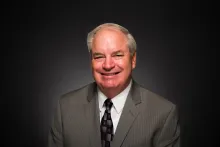
Robin Webber was born in Chicago, Illinois, in 1951, but has lived most of his life in California. He has been a part of the Church of God community since 1963. He attended Ambassador College in Pasadena from 1969-1973. He majored in theology and history.
Mr. Webber's interest remains in the study of history, socio-economics and literature. Over the years, he has offered his services to museums as a docent to share his enthusiasm and passions regarding these areas of expertise.
When time permits, he loves to go mountain biking on nearby ranch land and meet his wife as she hikes toward him.
