
Jorge de Campos
This transcript was generated by AI and may contain errors. It is provided to assist those who may not be able to listen to the message.
Good afternoon, brethren. Good afternoon, brethren. Oh, that's bad. I can hear you now. What a lovely rendition, and what a wonderful, beautiful time it will be when all of mankind will give glory to the living God. What a beautiful time that will be, and you and I can only but have a glimpse of understanding what that beautiful day will be and that glorious day will be. Greetings to you from some of the brethren that stayed behind in Cincinnati. I know that you had many of them just recently in the Personal Appearance Campaign, but a few of us stayed behind, kept the fourth going, and those that stayed behind said greetings to you. Also, my wife and I had the pleasure of attending the feast in Brazil. We had a steady attendance throughout the feast of 72. Every day the attendance was 72, but one day it was 70 because one mother and the baby were ill, and another day was 73 because the people that were doing the sound system in the hall, which are not members of the church, they stood there and listened to the sermon. So, their attendance was steady 72, and the brethren said they're loved, and they're very excited to have had a feast there. And we look forward to the day where some of you will be able to share a feast with them as well. Brethren, when you go on a long road trip, it's always good to check a few basic things. For instance, is your maintenance record in your car up to date? Are your tires in good condition? Is the tire pressure okay? Are your brakes functioning properly?
Are the windscreen wipers working well? That's particularly important if you're out in a snow area and you make sure that you've got water that doesn't freeze and the windscreen wipers are working properly, because I tell you, if they're not working properly, you can't see a thing. And obviously, there are many other things that you may want to consider about your vehicle before you go on a long trip. It does not mean, obviously, that you are rebuilding your car from scratch, because that's not what you're doing, but you're just maintaining and making sure that everything is functioning and working properly. Brethren, in a Christian life, the same principle is applicable.
We, you and I, need regular maintenance on the basics, and particularly on the beginning of those very basics. We need to give it thought.
Do you do regular maintenance on the basics of Christian life?
And may I ask you, do you really even know what the basics of the Christian doctrine is all about? Would you know where to turn in the Bible to see where they are defined? And so today, brethren, I want to talk to you about a very important principle, which is the beginning of the Christian basics.
It was the starting point, and interesting enough, that starting point is also a very important point towards the end point. So it remains an important point throughout our Christian life.
And so where would you turn to look at those basics?
Let me give you a tip. It's in the New Testament.
Okay, a little bit more of a tip. It's in Hebrews. And so let's turn. In fact, they are at the beginning of Hebrews chapter 6, but we're going to start reading from Hebrews chapter 5.
So I'd like to ask you to please turn to Hebrews chapter 5.
And what do we see in the book of Hebrews? To put it into context.
And obviously your personal situation or your personal context in your life might be different.
But it is important to understand a little bit of the context in which Paul was putting the book of Hebrews and when he was writing to the Hebrews.
But what we want to take out of that is the principle which is applicable to in whatever context of your life you and I are in.
And so looking at the situation of Hebrews, we basically have a church.
A church, probably, very probably, the Jerusalem congregation.
A church which probably had observed and seen Jesus Christ walking in the streets and healing.
So, yeah, we are 30 plus, nearly 40 years after Christ had died. So a good 30 plus years.
And Paul is writing to them and telling them, listen, we need to look at the priesthood of Melchizedek.
We need to understand what Christ represents, not just to the vertical priesthood.
And you see that continuously being brought out in the book of Hebrews and elevating the priesthood of Christ, of Melchizedek, of our high priest, Jesus Christ, and how important that is and bringing a number of lessons from that.
That's basically from the book of Hebrews.
And so let's focus now into a small section starting from chapter 5, verse 5.
And then Hebrews chapter 5, verse 5, Christ is talking about, Paul is talking about Christ, and he says, So also Christ did not glorify himself to become high priest.
Because he wasn't Christ that kind of made himself high priest.
But it was he who said to him, it was the father who told Christ, You are my son, today I have begotten you.
And as he also says in another place, that's the father, says, You are a priest forever according to the order of Melchizedek.
Now, Christ obviously was not a Levite.
And so this is a change of order from a Levitical priesthood to a priesthood of Melchizedek, because Christ was not a Levite, he was a Jew, as we know.
And so he's elevating this to a higher priesthood than a Levitical, but to the Melchizedek, because Abraham himself, from whom the Levites were born, as grandchildren or so, Abraham himself worshiped and gave tithes to Melchizedek.
So he's elevating this priesthood to a higher priesthood.
And then he continues in verse 7, For in the days of his flesh, that's Christ, when he had offered prayers and supplications of vehement cries and tears to him, who was the father, who was able to save him from death, and of course he would save him.
I mean, obviously, Christ knew that was going to happen, that he would be saved, but he still prayed and he said, and was heard because of his godly fear.
Though he was a son, yet he learned obedience by the things which he suffered.
Yes, he learned obedience because the father had discussed with him the plan they had, and he willingly obeyed, and he willingly emptied himself of all his glory that he had, as you can read in Philippians 2, I'm not going there, and he emptied himself from the glory they had to become a human being, and he even died on the cross, or on the pole. And then he continues in verse 8, verse 8, Though he was a son, yet he learned obedience by the things which he suffered, and having been perfected, he became the author of eternal salvation to all who obey him. He became the author of salvation to all that obey him.
Interesting. It's not just believe, it's obey. Quite often, I emphasize in my sermons that whenever you see the word believe, you need to read behind it, obedience. Because if I tell, for instance, one of my children, when they were small, they're standing on a table and say, jump, come to Daddy, Daddy will catch you. If they don't jump, they don't believe me.
But if they jump, it's because they believe me, and obviously I'll catch them. So they trusted me, they believed me, so they obeyed.
So whenever you see the word believe, see obey behind it. And so he says, yeah, to all who obey him. You and I have to obey God.
There's no questions about it. And he was called, that Jesus Christ was called by God, by the Father, as high priest, according to the order of Melchizedek.
In Ummu, we have much to say and hard to explain, since you have become dull of yearning.
Well, that's a powerful statement. Paul is saying, listen, there's a lot I want to tell you, but you know what?
I can't tell you because you're going backwards. That's what he's saying. I can't tell you because you are slipping up.
You're becoming dull of yearning. Now, he has a congregation that had seen Christ making the most amazing miracles that had ever been made, ever, because that was a proof that he was the Messiah.
And the people were slipping back. What were they slipping back? Well, they were slipping back to the Levitical type priesthood.
And the people were talking about, look at the Melchizedek. They were slipping back to those Levitical Jewish type things. That is the context.
Our context might be different. Our your and my individual context might be different.
Our background in our lives might be different. And, of course, it is different.
For one, we are two thousand years later, or nearly two thousand years later, for two, the society we live in, it's very different.
But you and I as Christians, we could be caught up in growing or becoming dull of yearning. In other words, slipping back.
Now, whose problem was it? Was the teacher's fault? The teacher was not teaching them properly. Or was the student's fault?
And I think you and I will say very clearly, it's the student's fault.
You see, the problem I have is the following, brethren.
If you fall back, if you fall back, look at chapter 6, verse 6. To see the context, it says, if they fall away to renew them again to repentance, it's basically saying it is impossible. You read that in verse 4.
It is impossible for those who were once enlightened if they fall back to renew them.
The lesson that Paul is saying here in context is, they were going back to the vertical type things, neglecting Christ, or potentially getting into the danger of neglecting Christ.
And once you do that, and you follow on that trap, be careful, because you can't renew that again.
You cannot kill Christ the second time. If you have considered, when Moses left the Promised Land, and he went into the desert, and the Word, which became Christ, the Word, told him to hit the rock, and water came out. Symbolically, who's the rock? Christ! Hit the rock! Kill Christ! Water came out, and we, through God's Spirit, you and I, can receive the blessing of being called in the Church and growing and growing into sanctification, so that you and I can grow to full grown-up sons and daughters of God.
But you know, at the end of the 40 years, they went to the same spot, they went to the same rock, and what did Christ say? Speak to the rock. What did Moses do? He hit the rock.
Spiritual symbolism. You cannot hit the rock twice. You cannot kill Christ twice.
Result. Moses did not go to the Promised Land. Result. If you and I hit Christ twice, you can't renew that. You can't, therefore, go to the Promised Land.
And so, Paul is here saying, be careful. You people are growing dull of hearing. You are going backwards.
And be careful, because if you go backwards too much, then he says in chapter 6, verse 4, it is impossible to renew them again. Once they are enlightened, it is impossible to renew them again to repentance.
You can't kill Christ twice. Christ was sacrificed once, not twice.
So, in context, now that was the context for those people. Let's extract the context to us, to our age today.
In context, whatever physical situation you are, and you come into the church and you know the truth, baptized or not, you are held accountable for what you have known. Baptized or not, you are held accountable. And therefore, beware. Beware.
And so, he is giving us a spiritual principle for us to be careful, for us to be very, very careful. Here in verse 11 of chapter 5, where it says, you have become dull or veering, he was implying there that they had not become completely deaf, but they were kind of in that road, and he was warning them, he says, be careful, don't go that way.
So Paul was giving them a warning not to fall backwards.
Adam Clarke, one of Bible commentaries, puts it this way, explaining verse 11.
It says, your souls, you know, it was your life, your life, the way you're living, do not keep pace with the doctrines and exhortations delivered to you.
It is yet elegantly applied to those who are called to the Christian race, have had the road laid down plainly before them, how to proceed, it has been clearly specified, and the blessings to be obtained have been clearly enumerated as Christians, and yet they make no exhortions to get on.
But always learning and never able to come to the knowledge or to the full knowledge of truth.
Yeah, people are always learning all this technical, technical knowledge.
But where is the application and really the application of that truth? That is a big problem.
So, that's why it then continues in verse 12, For though by this time you ought to be teachers.
I mean, you ought to have been well-learned, well-educated in the basic doctrines of Christianity, because you've been in the church for a long time, and you need someone to teach you again the first principles of the oracles of God.
And that's where I got the title of the sermon, the beginning, the very beginning of the oracles of God.
And what are the oracles of God?
Some people debate, what are the oracles of God? Well, the oracles of God is what God taught us.
I think it's pretty simple, isn't it? You know, it's the Bible and all that is required to do what the Bible tells us to do.
So, you have to get into a place, you are saying, you guys are, you should be teachers, but now it is as if we have to teach you the beginnings of Christianity.
Of the way, of the way that Christ taught us.
And you have become, have come to need milk and not solid food.
You've come to a point that you need the basics instead of solid food.
For everyone, verse 13, who partakes only of milk, is unskilled in the word of righteousness.
For he's a babe.
And the line here, two points. The word of righteousness.
It's not your self-righteous acts, but it's the word of righteousness.
You see, it's not our self-righteousness, but it's us submitting to God's righteousness.
And us submitting to God's righteousness leads to action, leads over a process of time to a changed human being from the old man to the new man, to put on that new man.
And then, our second point, our underlying YAH on this verse, is the word babe.
For he's a babe.
The Greek word YAH is not infant, it's not necessarily a child, but it's a word that comes, a word called nepios, which comes from a meaning of immaturity.
For you become immature.
And then verse 14 says, But solid food belongs to those who are of full age.
In other words, those that are mature, that is, those who by reason of use, those by long usage, have their senses exercised.
In other words, have put to practice, for using this for a long time, they become mature, to discern both good and evil, to distinguish, to discriminate between what is good and what is bad.
In other words, it's people that over a period of time have consciously thought about and made that a life goal of distinguishing, of being able to separate, able to discern, able to judge what's right and what is wrong.
Or you and I making that as part of our mental and thinking process every day of our lives.
Because that is the strong meat. That is the goal.
You know, after all, it's part of one of the Beatitudes, says hunger and thirst for God's righteousness, to distinguish between good and evil.
In other words, hunger and thirst for what is right in God's eyes. This discernment between good and evil is the beginning of true Christianity.
Because you know, it's something you need to do at the beginning, but as you mature and grow in age and years in the Church, it's something you have to do even more, and those decisions become even more difficult over time.
To discern between evil and good. And I'll give you some examples for you to understand in a moment what I mean by that.
So the meat is that discernment that making a choice and deciding with character to follow what is good. That is the meat, and that is the beginning of Christianity, but it's also the end point, as I'll explain to you in a moment.
And what is the milk? It's in the next verse, which is chapter 6, verse 1.
Therefore leaving the discussion of the basic elementary principles of Christ. The elementary principles of Christ.
In that context, they were thinking about other things rather than Christ as the high priest, and the beginnings of that, and how we can have Christ as our priest, how can we change our lives to become true Christians.
And it says, it enumerates six basic doctrines. Six basic doctrines.
Let's go on reading. It says, Let us go on to perfection, that is the meat, not lay again the basic doctrines, which are, number one, repentance from dead works, two, faith towards God, three, doctrine of baptisms, four, laying on of hands, five, resurrection of the dead, and six, eternal judgment.
And obviously seventh is the meat, learning to discern good and evil throughout our lives. So the foundation of Christianity starts with a choice between what's right and wrong. That is the beginning.
Once we know and we make that choice, we have to repent from dead works.
We've got to repent from dead works. Or what are dead works? Obviously, they are works that we don't do anymore, and that's why they're dead.
But you know what? It's a matter of life and death. It's dead works.
It's forsake the works that lead to death, and rather practice the works that lead to life. So it starts with a choice between good and evil, and we make that choice, and we have to repent. We've got to change.
And then from that repentance, what is next? We've got to believe that Christ can forgive us.
Then we've got to make the commitment that you and I make it baptism.
Then we need to receive God's Holy Spirit through the laying on of hands, that is the helper, to help us persevere to the end.
And the end is, at the time of the resurrection, of the dead, because we know there's going to be judgment, eternal judgment.
So you can see that those basic doctrines that they follow very closely align one into another.
And indeed, very closely align with God's feasts.
I understand you had a Bible study about that same point earlier on today. Very close align with that.
Very close align, in other words, with God's plan of salvation.
But where is the beginning? The beginning is a choice.
Now, I want to show you how that is actually the beginning that Adam and Eve had to start with, a choice.
So you and I turn with the beginning of the law, which is in Genesis 2 and verse 7.
In Genesis 2 and verse 7.
And there we know the story of the two trees.
Those of you that have been around for many years have heard, Mr. Armstrong, time and time again, going back to the two trees.
Why again? And you know what, brethren?
We didn't get it. We didn't get it.
And so Genesis 2 verse 7, it says, And the Lord God formed a man out of the dust of the ground, and breathed into his nostrils the breath of life, and man became a living being.
In other words, man became, as some other translations put it, a soul, a living being.
It doesn't say man is a soul.
It says man became a soul. Slight difference, but very important.
You know, we don't have a soul, but we became.
We don't have a soul. We became a soul. We are a living being.
I should have said man does not have a soul early on. Sorry, I apologize for that. Verse 8, Then the Lord God planted a garden eastward in Eden, and there he put the man whom he had formed, and out of the ground the Lord God made every tree grow, that is pleasant to the sight and good for food. The tree of life was also in the midst of the garden, and the tree of the knowledge of good and evil.
So yeah, we have two trees, a tree of life and a tree of knowledge of good and evil.
Now look a little bit beyond in verse 15 through 17.
And it says, And then the Lord God took the man and put him in a garden of Eden to tend and keep it. And the Lord God commanded a man, saying, Of every tree of the garden you may freely eat, but of the tree of the knowledge of good and evil, you shall not eat it. For in the day that you eat of that tree of the knowledge of good and evil, you shall surely die.
So basically we have a tree of life, which says the ultimate end result leads to life. And now we have a tree that says the ultimate end result leads to death. So basically we have two trees, a tree of life and a tree of death.
So the tree of life is the one in which God tells us what is the knowledge of good and evil, and you and I believe God and trust Him, and we follow His instructions of what is right and what is wrong.
The other tree is where you think and I think and mankind thinks and the leaders of these nations think that we know better what is right and wrong, and we decide for us what is marriage and what is not marriage, for instance. That is a tree of death, leads to death.
And so the beginning point of the law.
God gave to Adam and Eve a choice. They had to make a choice. And choosing two trees, a tree of life or a tree of death.
The choice at this moment, you and I could say it was pretty easy. I mean, you could look at the two trees, take from this fruit or take from that. Very simple choice. You know, when you and I come into the church, it's simple choices.
Quite often, things are pretty much black or white, quote-unquote. You know, either this or that.
Now look at the end of the law. Where is the end of the law? There's five books of the law. The last book of the law is the Autonomy. So let's look at the end of the law towards the end when it closes that book in the Autonomy 30.
The Autonomy 30.
In the Autonomy 30, you have a section here that's pretty important, where God tells mankind the summary of this whole law, which is basically saying something very similar to what he said right at the beginning.
So let's turn to verse 15.
And we'll start reading from there till the end of that chapter.
It says, See, I said before you today, life and good. I said before you the tree of life, life and good, and the tree of death and evil.
The interesting thing is that this tree has got in it good and evil. So it's easy for us to think you and I know it better because there's some good, and I can make my own decisions. And that's the problem! When you and I think we know it better, you and I need to get on our knees and say, God, I've got this decision.
It's difficult for me to see what is the right way, this way or that way. Well, there's good points, yeah, there's bad points, yeah.
But you know, you and I need to say, God, I actually don't know what is the right. I ask you, God, to tell me what is the right. I ask you to help me make the right decision.
You see, as life gets on, and that's why this is right here at the end of the law, those decisions get more difficult.
Sometimes the decision might be, how do I answer this question? And you and I may think, oh, well, this is the right answer. But maybe we need to stop and get on our knees and ask God, God, how would you want me to answer this question so it is to your glory and honor?
Maybe the decision is we come to a point we realized we got cancer.
And maybe we talk to people in the wall and it says, yeah, this is good and this is bad, da-da-da-da-da-da-da. And that may appear a pretty good decision. But maybe you and I need to stop and say, God, how do you want me to decide this? You see, the decisions get more difficult as time gets along. You see, at the beginning was a tree and he asked two trees and I did this one. The decisions were kind of pretty plain and simple. As life gets along, that maturity is required to discern between evil and good because it becomes more difficult as we go along the Christian life.
And so, Yah's the law continued reading in verse 16. In that I command you today, this is God, says to love the Lord your God, to walk in His ways, to keep His commandments, His statutes, His judgments, that you may love and multiply. And that the Lord your God will bless you in the land which you go to possess. Yah's the tree of life, in other words. But, but, if your heart turns away and you decide to follow the tree of the knowledge of good and evil, in other words, that you make your own self-decisions what's right and wrong. That you think you know it all and you've got the knowledge of what's right and wrong.
And you do not hear. And you are drawn away and worship other gods. Yah, you put other things before God, whatever they may be, and serve them. I announce to you today, says God, that you will die. You shall surely die. Exactly that He said to Adam and Eve. You shall not prolong your days in the land which you cross over the Jordan to go in and possess. Verse 19, I call heaven and earth as witnesses today against you, says God, to you and I, to us. That I have set before you life, the tree of life, and death, the tree of death. I have put before you the tree of blessing, and I've put before you the tree of cursing. Therefore, choose life. Please! God is telling you and I, choose life. Please! That both you and your children and your grandchildren may live. That you may love the Lord your God, that you may obey His voice, and that you may cling to Him, for He is your life and the length of your days. Yeah, eternity! Eternity in the end! That's the length of our days! And that you may dwell in the land for eternity, which the Lord swore to your fathers. Brethren, what we have here is a choice. Or, put it in another way, it's a matter of life and death. That's what it is. And indeed, at the beginning, it might be easier.
At the beginning of our Christian life, it might be easy. But later on, as you and I mature in the church as the years go by, it requires perception and discernment through the exercise of doing it. That exercise of doing it. It's not just for us, brethren. I mean, throughout the Bible, that instruction is there. You can go to Proverbs. You can go all over. The Bible is full of it. Even nations have to make a decision. I think it's pretty pertinent, particularly about, particularly we as a nation, and not just we as a nation. All nations are encountered now, encountering this decision point. It's not just the United States of America, or Germany, or Brazil, or whatever it is. All nations are now at this decision point. And this, that I'm going to read, it is applicable to Israel at that time, but it's applicable to Manasseh, or the United States, today, and it's applicable to other nations as well. Turn with me to Isaiah, chapter 1.
Because it's not just us individually that have choices to make. Our leaders and our nations have choices to make. In Isaiah, chapter 1, verse 1, we see the vision of Isaiah, the son of Amos, which is so concerning Judah and Jerusalem, in the days of these kings of Judah. And then we look in verse 2. It says, Here, O Evans, and give ye our earth, for the eternal has spoken. I have nourished and brought up children. This is God talking. And they, that is, you and I are children of God, right? Ever abelled against me.
In verse 3, God is saying, the amazing thing is that the ox knows its owner. The donkey knows its master's crib. But Israel, think about America, Brazil, Portugal, Germany, the nations of the world today, do not know. They don't know who they create a east to create a god. My people do not consider it. Alice, Alice, sinful nation. Now put the name of our nation, our beloved country. Put the name in there. A people laden with iniquity. A brood of evildoers. You just have to listen to the news, and now people talk, and now politicians talk.
Wow! Does this apply? You answer that question? Children are corruptors. You look at what's happening in Jerusalem, and now teenagers are going around and causing havoc in Jerusalem. They forsaken the eternal. They have provoked to anger the Holy One of Israel, and they've turned away backwards. And this is God is now asking in verse 5, why should you be stricken again? Why are you going to go again through trials and difficulties?
And why are you going to have to go through tribulation again? You will revolt more and more. Your whole head is sick. Now remember it's talking now for instance, let's say, to America, and he's saying, your whole head is sick. That's the leadership of this country, regardless of party. And the whole heart faints. I mean, jump a little bit ahead in verse 10. It says, Hear the word of the Lord, you rulers of Sodom. Now he's talking to America and to other nations, you rulers of Sodom, quote-unquote. I don't think God was very politically correct here, was he?
Give here to the law of our God, you people of Gomorrah! If he didn't get the point, you are Sodom and Gomorrah! To what purpose is the multitude of your sacrifices to me? For what purpose it is that you are going to church and going to all these churches and praying and all this and giving up and it says, says the Lord, I have had enough, says God, I have had enough.
I have had it up to you. That's what God is saying. Of your offerings and your prayers and your, whatever it is that people do in churches today. Sure, it applies you up to the context of that time, but you put it to today's society and those offerings, etc., what do Christianity in general are doing? And God is saying, I have had enough. He says, I do not delight in your sacrifices, in the blood of bulls and the things you do.
When you come to appear before me, when you come to church and you go to your different Christian churches and things like that, who is required this from your hand to trample my courts? Bring no more futile sacrifices. Don't come there with your prayers and all your stuff and your offerings and things like that.
License is an abomination to me. A big part of incense is an abomination to me. Do you know what incense is? Incense represents prayers. It's saying, your prayers are an abomination to me. Your new moons and sabbaths and the calling of the sabbaths, you know what's your vocations and your holy days and pagan holy days, and we heard that in the sermonette and things like that.
It says, they are an abomination to me. It says, I cannot endure iniquity and the sacred meetings. I can't endure your assemblies. It says, your new moons and your pointed feasts, my soul heights, they are trouble to me. I'm wary of bearing them. When you spread your hands, when you spread your hands in prayer, I will hide my eyes from you. And even though you make many prayers, I will not hear. Your hands are full of blood. Oh, you say, our brethren, just look at the statistics.
I saw a pie chart the other day, which showed how many people have died through different sources. And something like the wars, like Second World War and Third World War and things like that, was just a little slice in the pie. And like 97% or so of that slice, do you know what it was? Abortions. Abortions. Like 97% of all the people have died over the last, say, 50 years or 80 years or whatever the pie represented. Pretty, I didn't kind of take a note of where that was from.
But it's a statistic that more people have died through abortions. They are living human beings, albeit yet unborn. He says, your hands are full of blood. What does God want us to do? Look at verse 16. Wash yourselves, make yourselves clean, put away evil, make a choice to choose life. Seize to do evil, learn to do good, seek justice, rebuke to oppress, and defend a fatherless, plead for the widow. It's a choice, brethren.
It's a choice. And then he goes on. Come on, let's reason together. Verse 18 says the Lord, Though your sins are lack's call, they shall be white as snow. If you repent, if you make the right choice, and if you repent, it will all be as white as snow, because I'll forgive you. If you, verse 19, if you are willing and obedient, you shall eat the good of the land.
But if you refuse and rebel, you shall be devoured by the sword. For God's mouth has seated. You know, brethren, God will deal with the nations. You and I have got to be very careful, brethren, that we do not, we do not get involved in the politics of this world. Brethren, it's easy to get involved. Brethren, we are representatives of another nation, of another kingdom. For instance, do you think the ambassador of Germany in the United States gets involved in American politics? He doesn't, or at least he shouldn't.
And you and I are ambassadors of Christ, of God's kingdom. You and I should not get involved in the politics of this world. So we've got to be very careful, brethren. But we get back to a point that it is a choice. Individual, it's a choice of the leadership of the nation. And we know God is going to punish the nation.
Regrettably, it's going to happen, because this nation is not going to repent. But you and I can. I mean, at the end, I think that was the message that you heard in the Personal Appearance Campaign as well. You and I can make an individual choice. It's a choice that you and I have to do. And you and I have to obey God's spiritual law. As simple as that. But the problem is, brethren, there's a war. There's a war. And this is what a lot of people don't understand. There's a war inside YAH and inside YAH.
And that's what you and I have to be aware of. You see, there's a scripture. I'm not going to turn there. You can just make a note. Jeremiah 17, 19. I'll be apart. 17 verse 9, which says, The heart is wicked, desperately wicked. And brethren, you and I need to be aware that our heart, if allowed to go and make its own decisions, it will determine some good and evil, but it will go along the roads of the tree of death because that's kind of a natural tendency of the flesh.
And you and I, when we've made the choice that we want to follow the tree of life, and when we have repented from these dead works, and we've made a commitment through baptism and believe in Christ to follow this way, then we need to use God's Holy Spirit to help us, and through prayer and Bible study and meditation, asking God to guide us to make the right decisions in our lives.
Because our hearts, by natural tendency, will lead us the wrong path. And we have to be careful and be aware of that. Turn with me, please, to Romans 8. In Romans 8, we're going to start reading in verse 5. Romans 8, verse 5.
For those who live according to the flesh set their minds on the things of the flesh. You see, so brethren, we have to be very careful not to allow our minds to be inclined or towards the natural thoughts of our human nature. We have to desensitize to this, and we have to say, Whoa, whoa, whoa, wait! That's kind of my first tendency. Wait a bit! God, through prayer, through Bible study, through meditation, and we say, please guide me through the power of your Spirit, so that whatever I do is to your honorary glory, and help me choose the other way of the tree of life. This is the beginning of true Christianity. It's a choice. But it's not only the beginning, it's the road, it's the final end of perfection. Learning to make that choice every day in our lives. And brethren, it's not easy. How many times have I made the wrong choice? Because it's easy to just bang! I remember when I used to work at a company, I used to work there for 30 years or so. I don't want to mention names, I don't want to advertise a company or something like that. But anyway, they had e-mail many years before it even became popular. I mean, we had e-mail already in the 70s. And I was young, and I was so quick to just answer to these e-mails, zap, zap, zap! And boy, did I get it on my neck! Because I do not think, and I do not take time to answer correctly. And it's taken me like 30 years to kind of get to the point through maturity and exercise, whoa, whoa, whoa, this e-mail, I'm just going to put it there. I've prepared the answer, and I'm not going to answer it. I'm not going to press send. Just leave it overnight. And I pray, and during the morning, way, press the look how the whole e-mail needs to be changed. And I change the wording, and then, still before I press send, I go back on my knees and say, God, it is better. Is this what you want me to do? Is this the way you want me to follow? And then I pray about it, and I meditate a bit about it, and then I may say, well, maybe I want to wait a little longer or not, whatever the situation may be. But the point is, you and I need to reach this maturity, and I'm still growing, I still make mistakes forever, but we all need to learn to just kind of, in other words, not be trigger-happy, you know? I don't mean pulling a trigger, but I'm just trigger-happy in pressing that send button, or whatever it may be. You know, just kind of, whoa, whoa, whoa, just, as James says, you know, quick to hear, but slow to speak. It's a lesson. It's part of that growing maturity in the Christian life. And so, reading here in Romans 8, verse 5, But those who live according to the flesh, set their minds on the things of the flesh, but those who live according to the spirit, the things of the spirit. So that means we're going to set our minds, we're going to meditate on it, we're going to say, God, what do you want me to do? For to be carnally minded, you know, was to have the mind set on the things of the flesh, and that first mental inclination, because you and I think we know it better, what's right and wrong, bang, and we go. So, oh, just wait a bit, because to be carnally minded is the tree of death. But to be spiritually minded is the tree of life and peace.
Because carnal mind, the mind following the natural tendency, quick thinking, trigger-happy, quote-unquote, carnal mind, is enmity against God.
It is not subject to the law of God, nor indeed can be. So then those who are in the flesh cannot please God. But you're not in the flesh, but in the spirit. If indeed the spirit of God dwells in you.
Now, if anyone does not have the spirit of Christ, he's none of his. If you and I don't have the spirit of God, which in the same verse calls it the spirit of Christ, so it's the same spirit, for you and I don't have the spirit of God, which we receive through the laying on of hands after baptism, after making that commitment, and therefore growing in that road of persevering till the end, till we get to the time of the resurrection.
If we are not persevering on those basics, we might just make the wrong decision.
But we have to have God's Holy Spirit to be a true Christian.
And then Paul again emphasizes in a section that you know very well, which I don't have to go there now, which is in Galatians 5 about the fruits of the flesh and the fruit of the Holy Spirit.
In Galatians 5, you know that very well. I don't have to turn there.
Well, maybe I should. Let me just go there. Let me go there, because it is an important point. Let's go back there.
Galatians 5.
We'll start reading in verse 16.
I say then, walk in the Spirit, and you shall not fulfill the lust of the flesh. Walk in the things of the Spirit on the trio of the tree of life, and you will not fulfill the natural tendency, inclination of the things of the tree of death.
For the flesh, the things of the natural human tendency, lusts against the Spirit, and the Spirit against the flesh, and these are opposites like the North and South, they are contrary to one another, so that you do not do the things that you wish. You've got to be careful, because these are kind of tend to be the things that you want to do. You feel like, I want to kind of do this. And you say, no, no, that's not the godly thing. It's got to do it different.
You've got to hold it back.
Verse 18, but if you are led by the Spirit, you're not under the law.
You see, if you're led by God's Spirit, you're not under the law. Oh, therefore, I don't have to obey God's law. Hogwash, brethren. That's not what it says.
Let me give you an example.
Let me give you a simple example. There's a law that says that if you drive under the influence of whatever alcohol, drugs, or whatever it may be, you're going to see the sun in little squares for a certain period.
Now, if you never drive under the influence, are you under that law? No!
Because you're not driving under the influence. You're always driving sober. That law doesn't apply to you. It doesn't affect you. You're not under it. You're not under its penalty, and it's... you know, the wages of the law is death.
And so, if we sin, the law says we'll die. But if you and I don't sin, we're not under that. The law will not die.
Now, obviously, we all have sinned, so we all deserve death.
And you and I cannot buy ourselves back, because it's blood for blood, life for life. And you can't give another life for your life. Only Christ can do that, and only Christ can do that because his life is far more worthy than all our lives together. Why? Because he's the one that created us. But, getting back to what we're saying, we are not under the law. Now, what it means is, even though you've sinned, Christ has forgiven you freely. Now, you're out of jail, quote-unquote, free, record clean, can I now go back and drive under the influence? No! Ridiculous! You see, now we're not under the law, we've records being made clean. Now, we've got to be careful not to do it again, even more, more careful.
So, if you're led by the Spirit, you're not under the law, you're not under the penalty of the law. Now, verse 19, the works of the flesh, the things of the flesh, which are self-evident, are... And then it goes on, adultery, fornication, uncleanliness, lewdness, basically various impurities. Just put it that way, impurities, mostly sexual impurities. Then, idolatry, sorcery, it's kind of a second category, which is basically putting something else before God.
And what in this world is idolatry? Well, anything that kind of becomes more a higher priority than God, that you put before God. Could even be such a thing as your cell phone, with Facebook or whatever. If you put it, if that becomes your priority, instead of prayer and Bible study and contact with God, maybe that is idolatry. And I'm not saying there's anything wrong to Facebook, I have Facebook, but it's a question of priorities. Then it goes on to things that are dealing more with, like for instance, Yahweh says, hatred, contentions, relationships with other people.
Look at it, contentions, jealousies, outbursts of wrath. Things that deal with, how you deal with other people. And then it gets into more things and says, like, things that are related to being selfish, such as selfish ambitions, dissensions, heresies, false truth. Why? To promote your own idea. So those are things to promote your own selfishness. Envy's murders. There it goes into a different layer of... and then it goes into drunkenness and revelry, which is related to excesses and others. I mean, the rest is not complete. So those things are things of the flesh. And it says, those that do such things or practice such things, it's not a slip-up, it's a practice.
It's a continuous way of life. We'll not inherit the kingdom of God. Verse 22, But the fruit of the Spirit, singular fruit, fruit is singular. Which means it consists of all those things. It consists of basically three things that are more outwards towards other people, like love, joy and peace. Then three things that are like our interaction and reaction with other people, how we relate with other people, which is being patient or long-suffering, kind and goodness, kindness and goodness.
And then three things that are kind of our inner core characteristics, such as faithfulness, being faithful, being gentle or meek or teachable or humble, a humble, gentle teachability and self-control. These nine are components of this one fruit, or characteristics of this one fruit. They all have to be their present to be the fruit of the Holy Spirit.
Because if you look at the fruit, for instance a peach, and maybe it looks like a peach, whatever it is, it's got the texture of a peach, but it does not taste like a peach and does not have a pip of a peach. It might not be a peach. It's got to have all the characteristics or the components for it to be a peach. And God's Holy Spirit must have all of these, otherwise it's not the fruit of God's Holy Spirit. Yes, we bear fruits in our lives, and there are fruits and things like that. That's a different point. But this is talking about the fruit of God's Holy Spirit.
And against such, there is no law. And those that are Christ have crucified the flesh with its passions and desires. If we live in the Spirit, let us also walk in the Spirit. Let us not become conceited. It was puffed up, thinking that we know it all, provoking one another, ending one another. You see, that's a decision. That's a choice. Brethren, it's a choice. We have a choice, brethren. Christian life is a choice. Yes, it starts with the two trees, maybe as a simple choice. But as we mature, as we grow, and our life as we get older, those choices seem to be getting more and more difficult.
And you and I need to exercise perception with God's Spirit, with God's help, to discriminate between right and wrong, between good and evil. And brethren, the problem is, you and I cannot slip back and throw it away and then think that one day later we'll get it back onto it because we can't. We've got to keep always maintaining, keep checking that our Christian life, that our decision-making process is growing and maturing the right way.
We need to maintain this on ongoing because we know, brethren, that we've got a big reward. We've got a big reward. Our reward is to be children of God. You read in Romans 8, it says, we are to be heirs of God and coheirs with Christ. If we suffer with Him, we'll be glorified like He is glorified. Obviously much lower, but of that same type of glory. Brethren, you and I have a choice. Is it worth it?
Yes, it's more than worth it. It's more than worth it. Is our spiritual maintenance up to date? Are we reviewing this on a daily basis and are we kind of, oops, I've slipped up a bit. Let me get back. Because if we allow ourselves to get too far back, we could get to a point where we actually lose it. And don't think it cannot happen to any one of us.
The wall today, brethren, is hateful and violent, is full of distortion. The wall today, as it says in Isaiah 5, verse 20, they call evil good and good evil. You know, brethren, you and I have to be very discerning to really discern what is the true, godly good and the true evil. You and I need to walk in the Spirit, not in the flesh.
It is an individual choice. Please remember, please remember that God is crying aloud and saying, I call heaven and earth as witnesses against you, that I've set before you life and death, blessing and cursing. Therefore, please choose life that both you and your children and grandchildren may live.
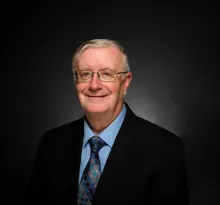
Jorge and his wife Kathy serve the Dallas (TX) and Lawton (OK) congregations. Jorge was born in Portuguese East Africa, now Mozambique, and also lived and served the Church in South Africa. He is also responsible for God’s Work in the Portuguese language, and has been visiting Portugal, Brazil and Angola at least once a year. Kathy was born in Pennsylvania and also served for a number of years in South Africa. They are the proud parents of five children, with 12 grandchildren and live in Allen, north of Dallas (TX).

