


Robin S Webber
This transcript was generated by AI and may contain errors. It is provided to assist those who may not be able to listen to the message.
I have a question for you. Always like to start out with a question. That means you have to respond with an answer, at least in your mind. Remember being given a nickname when you were young. Maybe at home, maybe by the family, maybe at school, maybe in the locker room, etc., etc. Some of those childhood or teenage nicknames were enduring. They were endearing. There were others that we received at school, or sometimes by the family, or somebody in the neighborhood, that were not quite so endearing.
And sometimes we did have to endure them. And we couldn't wait until we left the school, left the locker room, left the neighborhood, and or time and space would take care of everything else, and people might forget what we were nicknamed as a youth. Well, one of the most enduring nicknames of all times, I'll just lay it right out there in front of you, is Doubting Thomas.
Doubting Thomas. And there's no way that he's been able to leave that behind for, are you ready, for 2,000 years? He got that tag over 2,000 years ago. Well, the purpose of this message this afternoon, friends, is simply this. This afternoon, we're going to remove the mask of doubt from Thomas. And we're going to come to understand that there was no doubt what the risen Christ was striving to accomplish in the life of Thomas when they had that encounter after his resurrection.
It's an account. It's a moment in Thomas's life, but not only Thomas, but also in the life of Christ, the life of the apostles that were there, that sometimes can seem frozen in time. Well, we want to break the ice today. We want to take another look at Thomas and say, well, this is not just going to be taking a look at Thomas, because if I was just taking a look at Thomas, then I'm wasting your time being here.
Because we're going to find, friends, that Thomas's story, Thomas's encounter with Jesus, the risen Lamb, is also our story. It's also the way and the manner that Jesus Christ is dealing with each and every one of us. So the reason why I want to give you this message this afternoon before we plunge into the Bible, so it's good to know why, is simply this. We're going to come to appreciate how Christ does, number one, intervene, number two, and how He broadens our understanding.
What does He broaden? And what do we come to understand? How He ultimately relates with you and me today. And beyond that, stay with me, please, because this is going to be important. How we relate with one another. Because how often do we bump into somebody in some portion of their life, some decade of their life, some situation in their life, and we take a snapshot. And we put it in the wallet of our heart, and we keep that snapshot of that individual, that man, that woman, that teen, that person. And we carry it around as if nothing has happened since.
They're that same person. They haven't changed. The photo is the same. Sometimes if you took a good shot, you say, good, I'm glad they got that one. But I think you know what I'm saying, that how often do we humanly capitalize people, freeze that moment, and never allow them to expand and or to grow? And the reason why I'm so excited to be able to give you this message is because when we think of the aspect of how do we follow Christ as disciples, there can be perhaps no greater exercise than being able to restore an individual, to consider where an individual is today rather than leave him behind in the dust and not allow him to move forward, not allow him to grow, and not to allow him to be everything that he can be to God and to we that are here in this church family.
So we're going to come to see today the purposes that so often you know, and I know you know the story by and large, and if not, you're going to get to know it. So often we think it is Jesus. Excuse me. We think that it is Thomas. Pardon me. We think it's Thomas that is doing the probing.
We think it's Thomas. Are you with me? That's doing the poking. But that's only half of the story, and that's not the great part of the story. The one that is actually doing the probing, and the one that is actually doing the poking, is none other than Jesus Christ, our Lord, our Master, and the Lord, the Master of Thomas, and the apostles that we're watching.
And we're going to find then that this master prober, this one known as Jesus of Nazareth, he knew exactly what, where, when, why, and how he was relating to Thomas. And I think you're going to find a little bit of Thomas in each and every one of us before this message is over. So the title of this message is simply this, the probing, the probing of the master prober. And I have some news for you. He's not done.
There's plenty of fresh clay down here below for him to do his work. So with that said, what I'd like to do for a few minutes with you as a church family is we're going to exist in that room in which Jesus would enter. We need to get a feel of what was going on before we understand the entrance of Thomas, before we understand the intervention of Jesus in the life of Thomas. So let's move into that setting right now. It's called, we're going to exist into that scripture, kind of enliven it, make it real. We need to understand that we understand that when we go to the account here in John, that Jesus had been crucified on Golgotha.
It's now three days, three nights, a little bit more than that. And they're in a room. And the accountant, John 20, says they're in a room. They're all together, basically all together. And they've got the door shut. And they're there. And the reason why they are there is because Jesus had said that one of his last words was, wait in Jerusalem. And by the way, I will come to you. Now, you and I, having seen this movie we played before, we get it. We understand what is happening, but they didn't. They're there. Their knees are shaking. They've got the door bolted. They've got it shut. Their knees are shaking. And I don't think their hearts are too far behind. And then all of a sudden they begin to hear that, well, they're there. They are something in the air. That Jesus is alive. That he is no longer in that tomb. Maybe Mary of Magdala is onto something, but they have not seen him themselves. So that begins to set the story. And they begin to ponder as they hear that master, rabbi, their friend is alive. They begin to maybe mull over in their mind. You know, it's always easier to go back than when you're going through something like you ever watched a movie the second time and you get so much more out of it because you begin to connect the dots and they begin to think, well, you know, he did say something that the sign of his Messiah's ship was going to be that he was going to be in the belly of the earth just as Jonah the prophet was in the belly of the great fish for three days and three nights. And, you know, he did say, kind of putting it together now, that he said that he would come to us. But we might say today, really? But how could that be? And then suddenly, as they're up there mulling in their mind what is going on, they're behind closed doors. He can imagine being upstairs. It's a little heated, a little crowded, and then all of a sudden the room gets a lot more crowded because someone unexpectedly enters into that room. But wait a minute, the door was shut, but now there's somebody else that's gotten a little bit more crowded. There's somebody else in the room, and it's their master. It's Rabbi. It's the teacher, and it's their friend. It's the one that they knew had died. But now he's in that upper room. They begin to rejoice. You can feel the joy in the air. What he said was true, that he did say that I would come to you.
So they're going through all of this. As he comes in—let's go to John 20 for a second now. Let's open up our Bibles, and that's why we bring our Bibles to church, to open them up. An open Bible means that you want to receive the Word of God, and as you open up that Bible, we're opening up the heart to receive the message of the day. And we find here in John 20, in verse 19, he greets them twice with this greeting, which is going to be very important by the end of this message. He says, as he walks through, he says, peace to you. As the Father has sent me, I also send you. The first thing that he says to them that is recorded here is peace. We also notice, as we go down a little bit further then, he again mentions in verse 26, peace to you.
Now, that's interesting. Now, for a moment, let's backtrack for a second. It's very interesting that the one that said, I am the door, one of the great seven IMs that Jesus offered self-disclosure of, he said, I am the door. It's very interesting that he didn't use the door. The one that said, I am the door, didn't knock on the door, came through the wall. However, that is.
Can look over here to the left, kind of a concrete looking kind of a wall. Can look over here to the right, kind of a concrete looking kind of a wall. Somehow, he wasn't, and he is, and he's there. He wasn't, and he is, and he's there. The one that is on the door. But Jesus didn't come to knock on the door. Are you with me? Jesus didn't come to knock on the door. He came to knock on hearts.
He came to knock on hearts. There's a big difference between knocking on a door and knocking on hearts, and that's exactly what he did. And so, we take a look at this, and we understand something that begins right here, and I'd like to share a thought with you here. In this entrance into this room, we begin to understand something the way that God the Father and his son, Jesus Christ, deal with those that are disciples, those that are learning about them. Simply put, come to expect the unexpected from God. Come to expect the unexpected from God. They're going to come into our life in their time and in their way, and how they enter, whether it's a time in our life which is bright or a time in our life which is dark, and or in a time which is in between. They will know when to come. They know when the time is right. They know whose heart to knock on, and things are going to begin to happen. But wait a minute. As we look at this account, as we look at this account, someone is missing. And what they missed was what Jesus had told them here on that account. When we look at verse 20, when they're all assembled, when He's talking to the disciples, He said, He showed them His hands, and He showed them His side.
The hands are where the Roman nails had been driven in. The side is where the Roman guard had pierced Him before they took Him down. And then the disciples were glad when they saw the Lord. But so they were there. That first time in the room, everybody was there except one person, and it was Thomas. It was Thomas. We then have the mention of Thomas here. Verse 24, now Thomas called the twin. One of the twelve was not with them when Jesus came. And the other disciples therefore said to Him, We have seen the Lord. So He said to them, Unless I see in His hands the print of the nail and put my finger into the print of the nails and put my hands into a side, I will not believe. Now let's make this real for a moment. Okay. Mr. Brown, would you please come up again for a moment? Bob is not prepared for this. Okay. But let's just get a hold of it. This is called the PowerPoint. You know, I can't operate PowerPoint, so I have to always bring somebody up.
So He said, you know, He's sitting right here. Until I see, until I can do this, are you kidding? I'm not going to believe. By the way, He doesn't have a hole in His hand. And until I put my hand, tickle, tickle, tickle, until it's a part of the blessing of the service today, until I can put my hand, I'm not going to believe. Thanks, Bob. He says, great. But that's what happened. He threw down a gauntlet. He threw down a verbal shot that comes down to our day and our age. Now here are the disciples. Here you know, they're all going, whoa, this is so exciting. This is wonderful. Now, and they can't keep still. They can't keep quiet. I mean, when's the last time you saw somebody raised from the dead? You're going to say, somebody was raised from the dead. No, you're going to say, you won't believe it. It's incredible. The master is back. He's here. We saw him. He showed us his hands. He showed us his side.
Full disclosure. But Thomas didn't bite at that point.
Thomas, at that moment in time, was stuck in Park. Wasn't going to go anywhere. It wasn't going to do anything. Now, let me ask you a question. Did Jesus somehow make a mistake with Thomas?
Did he kind of make an error somehow of calling this man that would not believe that he had been risen from the dead? Let's talk about that for a moment. We need to understand the backstory on Thomas. Remember how so often we just take a quick snapshot of an individual, sometimes an embarrassing snapshot, and then we hold that individual, that picture, for the rest of their life. So we need to kind of get a backstory here on Thomas. We need to look, take a look at that.
A couple of thoughts from him. Let's recall that Jesus spent an entire evening praying for the disciples. Join me if you would in Luke 6. In Luke 6, let's take a look here. In Luke 6, before he went forward, he chose his disciples. And in Luke 6, and we find it here in verse 12, Now it came to pass in the days that he went up to the mountains to pray, and continued all night in prayer to God. And when it was day, he called his disciples to himself, and from them he chose twelve whom he had also named disciples. Jesus had been thinking about this, then he was praying all through the evening upon the selections of those that would be his witnesses. Be his witnesses.
Witness to what? Of his life, of his death, of his resurrection. Of his life, his death, and his resurrection. They were going to be his witnesses. You can jot down Acts 1 and verse 8. He says, you will go for in the book of Acts right before he ascends. He says, you are to be sent forth as witnesses throughout Judea, Galilee, Samaria, and to the ends of the earth. The word witness there is a word from the Greek language. I'll spell it for you. Martis, M-A-R-T-U-S. A martyrs is a witness, and it was used in a legal sense in Greek literature as to one that gave an account in a legal setting. That's what a martyr says, and that they were to give an account that was truthful, that could not be broken. Could not be broken. Had to be truthful. Now, we have a couple of lawyers in our midst here, and maybe more than I know of. You know who they are. And lawyers, when they're in a case, they're going to try to unwind the other side's testimony, aren't they? Just break them a little bit, and you create the doubt. So when you have a witness, you better have a witness that is not going to be broken down the line. Now, so often you and I, in reading books about those that have been martyred for the cause, martyred for believing in God, believing in Jesus Christ, we often think of those individuals as being dead witnesses or dead martyrs. When you used the word, well, they were martyred. Yes, they were martyred. But before they endured that physical martyrdom, they were witnesses. They were martyrs. So keep that in mind, because that's going to be very important as we begin to connect the dots. Now, you think about the group that, okay, say, well, I guess he prayed for Thomas, also known as Didymus. Maybe that's why he went by Thomas, I'm not sure. But that, who else did he select? He selected Simon. Not Simon, yeah. Am I thinking right? Pardon me.
Judas Iscariot. He picked Judas Iscariot. Who would he betray him? He also picked Peter.
Boy, that was a caseload when you read the Gospels. He also picked two brothers that had a nickname, James and John, the sons of thunder, that he had to rebuke. He said, you don't know what spirit you're operating on. Some were operating on a not-so-good spirit. Others were sinking on their walk of faith on the water. Here's the treasurer taking out of the bag. Hello, is this any way to start a church? Is this any way to call witnesses? And then there is Thomas.
But let's take a look at this for a moment. One more thing I want to share with you. Join me in Revelation 21. This is the backstory in Revelation 21. And let's take a look at these individuals. Other save, save Judas Iscariot. Save that. But notice what Jesus talks about here, or is revealed in the book of Revelation, where it says, verse 14, now the wall of the city, speaking of the heavenly Jerusalem, had 12 foundations, and on them were the names of the 12 apostles of the Lamb. Now, as we go through this story, let's recognize I'm kind of going to the end of the story. We're going to work our way back. Thomas, his name is going to be on the foundation of the new Jerusalem. So we're trying to create a context to be able to understand that Jesus is now going to go to work on this disciple, and it's very important.
So again, a little bit further, what's the backstory in Thomas? We're going to connect some dots and understand again why it's not wise of us to pigeonhole people in a moment in time. You know why? Because Jesus Christ and his Father and our Father do not pigeonhole people.
We are about a work of the Father and the Son of restoration. Are you with me? Of restoration.
And God is always available. Christ is always available as the Good Shepherd to see and bring people to restoration and intimacy with Him. Often overlooked when you say, there's doubting Thomas. You're doubting Thomas. Often overlooked is a prior time when Thomas spoke up. It's the story that is found in John 12, the story of Jesus and Lazarus. The sisters have sent a message that their brother is ailing, perhaps even unto death. Please, Master, please, friend, you come. Jesus said, and all the disciples, no, no, no, no, no, no, no, you can't do that. Can't do that. No, no, no, can't do that. Not good, because there are those that want to do you in. And yes, there were those that wanted to do Christ in. But it was Thomas in John 11. Join me if you would there for a second in John 11. And we find it here in verse 7, where it says, let us go up to Judea. And the disciples said, listen, the Jews are out there to stone you. And then Jesus finally said, it's time to go. And everybody, no, no, no, no, no, no. Then notice verse 16 of John 11. Then Thomas, who is called the twin, Didymus, that's what that means in Greek, said to his fellow disciples, let us also go that we may die for him. And so when Jesus came, he found that he had already been in the tomb for four days. Other than Jesus, Thomas is the one who's the stand-up guy. Let's go with the master. And if he dies, we'll die with him. Now, I might ask, you don't need to raise your hand, how many of you knew of that account of Thomas? Or do we still have that, just that one snapshot of him? You see, what Thomas did know, and he did know that in his mind, that death was basically a brick wall of no return at that moment and at that time. But what he did know, he was willing to act upon. The knowledge that he did have, he was not going to stand still, and he was willing, are you with me? He was willing to give his all for the master.
That's interesting. Another two things that we found out about Thomas, if you want to jot it down, he was courageous. Here's what we say today, he was a stand-up guy. He wasn't kind of looking around at everybody's face. Like, you know, those windshield wipers kind of going back.
He wasn't sizing up the crowd. He said, let us go up and let us die with him.
Secondarily, you might want to jot this down. It seems as if Thomas was persuasive, his leadership, the way that he stood up. He had a way with his fellow disciples. He was persuasive.
There must have been some oomph to this man, that with his courage and with his persuasion, he could bring other people along. Now, let's connect all the dots together, then. On the night of Jesus' death, he shared with his disciples, I will come again and receive you to myself. It's Thomas who inquires something. Join me if you would in John 14 verse 6. In John 14 verse 6. And you may never have seen this before. That's why we have to read the whole Bible. This is kind of interesting. Here, Jesus is saying, let not your heart be troubled. You believe in God, believe in me in verse 1. He talks about, in my father's house or many mansions, many offices, and I go to prepare a place for you. And I go and prepare a place for you. I will come again and receive you to myself that where I am there you may be also. And where I go, you know, and the way you know. Now, here's where we want to center. Are you with me? We're going to park it here for a moment. Notice. Thomas said to him, Lord, we do not know where you are going. How can we know the way?
And this is the tremendous setup in the inquiry of Thomas that brings forth one of the most majestic verses in the Gospels. Jesus said to him, I am the way, I am the truth, and I am the life. No one comes to the Father except through me.
But little did Thomas know that he was going to have to wait on that answer to fully understand what Jesus meant by I am the way in which the way that he would deal with Thomas in that upper room.
So we're going to connect the dots. Here we go. Things that maybe you've never associated with Thomas, but that's good. That's why we're here to learn. Number one, he is persuasive. Number two, he is courageous. And number three, he is not afraid to ask questions. You begin to see his personality here. He could have done this when Jesus was saying everything. He could have gone like this.
You ever done that? You ever found yourself nodding in a conversation with somebody when you don't even know what they're talking about? But you just have to kind of learn to nod at the right time. Kind of watch this. You got to kind of lean forward. Well, how did that work out for you?
God hasn't called you and he has not called me. He did not call the disciples. He did not call Thomas to operate on fake nods, to operate on fake faith. And we'll deal with that a little bit later.
So now, so now we come to the next part of the story. So now, why wasn't Thomas in the room at Jesus' first appearance? We don't know. None of us are that old, kids. I'm not that old, okay? I thought just a heads up there. We don't know, but we can use some informative imagination. We can use some plausible considerations recognizing the human condition that you and I are going through, maybe why he wasn't there. We all, in one part, sometimes we all, to a degree, experience illness and or grief and death differently from other people. There are some people when they are ill, they just simply, I know a very good friend of mine that is like this, that when they're ill, they just go into their room and they shut the door and they are in solo hibernation. And when they feel better, the door opens and they come out and they say, Robin, I'm talking about my wife, Robin, I'm feeling better.
There are people that do that. There are people that, you know, oh, I know I need this and I need that and honey, go down to the drugstore, get this, get that. When Susan's not feeling well, I know she's going to go to her room and after three days and three... no, not just teasing.
And so people are like that. There are other people that want to immediately get a prayer update around the world. I've got the flu. This too will probably last three days and three nights, but pray for me anyway. Send me any cure, any elixir, anything that you have. I'm right here, here's my address and if you don't have my snail mail address, here's my email.
At the same time, there are other people that we grieve differently. There are some people that they want community. This is... there's not a right or wrong to this. Please understand. Are you with me? We're all different. There are some people that when there's a death in their family, they want to bring everybody along all at once. They want everybody to know they want this, they want that. They need the companionship of the Spirit. They need some bodies around them. There are others that grieve silently. I would suggest, perhaps, using informed imagination that perhaps Thomas is that kind of a person. But beyond that, let's think about this for a moment. Let me bring you along a little bit closer here. Perhaps Thomas didn't show up because he was the guy beforehand early on in the ministry when he said, let us go up and die with him. And yet, when his master and his friend needed him the most, he scooted out of the Garden of Gethsemane just like everybody else. The stand-up guy, the persuasive guy, the courageous guy. We knew that Peter could talk a big talk, but we'd already found that Thomas not only talked a big talk, but he was willing to do it and go all the way to Bethany. But he wasn't able to do that in Jerusalem. Maybe he was ashamed. Maybe he couldn't not only face himself, perhaps he couldn't face others. There was a lot of pressure to bear and to think about. But we find here then in John 20, coming back a second, in John 20, we find the rest of the story. Our father above and his son Jesus, they have eyes, they have ears that probe down into our heart and they know exactly what we need. And so we find that again, we find here that comes eight days in verse 26, and after eight days his disciples were again inside and Thomas was with them. And notice Jesus came.
The door is being shut and stood in the midst. And once again, for the third time, he said, peace, peace, peace to you. And then it looks like if we get a sense of the Scripture, he knew exactly who he needed to deal with. He didn't knock on that door in the room, but he was ready to knock on a heart. He was ready to go into his restorative work with this bruised lamb. The good shepherd, the sensitive shepherd, knew exactly what Thomas was going to need, have done. And so we take a look at this and it says here. Then he said to Thomas, reach your finger here and look at my hands and reach your hand here and put it into my side. And do not be unbelieving, but believing. Interesting.
Come on up.
Just in case we forget the first PowerPoint.
Looking good. Okay. Is that, again, he's not Thomas and I'm not Jesus, okay? Understand. But we're just using such an example. Did you notice when Jesus comes through the wall and is ready to go into the heart of Thomas? He does not condemn him. Did you notice that? He says, oh, you know, he doesn't say that. He's not insulting. He's not condemning Thomas. He's actually welcoming. He's actually welcoming Thomas.
To go inside of him. To probe him. To poke him. To create an incredible intimate experience that is his and Thomas's alone. So my question to all of you so often is, we think of it's Thomas that's doing the poking. We think it's Thomas that's doing the probing, but we miss the story. Okay?
It's Jesus that is probing. It's Jesus that is poking into more than holes. He's poking to the holes of Thomas's heart to restore him. Again, you can go ahead. Here's my hand. Go ahead. Just let's give an example. Go ahead. There's a hole in my hand. Okay. Yeah, that's it. Yeah, that's really, you know, you could play Thomas, you know, because, you know, once he started doing this, I don't think he stopped in just one second. Yeah, there you go. I love it.
And in the side, get a grip. Go ahead. Right. Makes it a lot more real. Pictures worth a thousand worth. No, just the side and the head. Go back there. Thank you.
So we look at this. Now, why was Jesus doing that? He was restoring somebody, just as he would later on restore Peter. Mr. Hotshot. Mr. Big Mouth. Oh, if everybody abandons you, I will be there with you. You know, the same guy in another chapter, he says, you know, you got a bad spirit. Satan, get behind me. And yet he never gave up on Peter and he doesn't give up on time. And the whole point of this is not just to amuse you. It is to bring you into alignment as a disciple, that the Lord of our life, the head of the body, is not going to abandon any member of the body, even in our darkest hour. He knows, he's sensitive. He is that good shepherd in whom I shall not want. Now, why is he doing this? This very tangible exercise. He recognizes that on that night of prayer, he was praying for those that would be a witness. And the things that Thomas was going to do on behalf of Jesus of Nazareth, that he recognized that his disciples, and they are utterly incredible and very special, a very special twelve, including Matthias that would come along, they were going to be sent out around the known world at that time. And they could not operate on fake faith, because they were going to be fact-checked all the way along. You know, today, in society, on both sides, apolitical, on both sides, we hear the term fake news. Well, that's fake news. That's fake news. Well, can you imagine telling somebody that, you know, the man that I served, the man that I walked with for three and a half years on the dusty roads of Galilee, they killed him, they crucified him, they nailed him alive to a piece of wood.
And just to make sure he was dead, they stuck him with the spear. But he's risen. He's risen.
Can you imagine people saying fake news, fact-checking, because they'd never seen another human being resurrected. He recognized that not only Thomas, but all the others, could not operate on fumes of fake faith. Remember, what Thomas knew he would act upon.
He was willing to die when he thought death was an end to itself. Can you imagine how much more willing he was to die for Jesus of Nazareth when he recognized that there was something beyond death, that there was a resurrection, that there was a hope, that Jesus had said, as we read, that I go to repair a place for you, and if I am there, I will bring you to me.
Interesting. Interesting.
Tradition tells us, and it is tradition, please understand, that the 11, save John, were martyred and killed, slaughtered one way or the other.
Thomas, by tradition, evangelized what is now Iraq, Mesopotamia. Later on, that he would, as tradition says, would actually reach India, recognizing that, remember when Jesus said, this gospel will be preached in Jerusalem, in Judea, in Samaria, and noticed to the ends of the earth. Jesus was actually setting up how the book of Acts would be written as the disciples went out of Jerusalem, then they go to Samaria, Galilee, and ultimately they go to the ends of the earth, like, again, the aspect of the Ethiopian eunuch. Ethiopia, in the Greek world, was thought to be at the ends of the earth. India was thought to be at the ends of the earth, and of course, there were many Jewish synagogues scattered around wherever there was trade, wherever there was commerce, wherever there was a port. And even when the Portuguese came into India and began to touch it back in the 15th century, they were finding Christian communities in India that traced their origin back to Thomas. He wasn't going to be able to do that on fake faith, was he? He wasn't going to be able to do that. And I'm sharing this message with us today, brethren, to let you know that if your faith has waned, if you are operating on fumes, we have a Savior that probes and pokes into us when we need it the most and He does it the best. Now, notice what it says here in verse 27. Then He said to Thomas, okay, we read that, and Thomas answered that, notice what the probing, not Thomas's probing, that was good for him, but notice the probing and the poking of Jesus did. And Thomas answered after Jesus said, don't be unbelieving but believing. And verse 28 is incredible. And Thomas answered and said to him, my Lord and my God, my Lord and my God, the confession of every disciple, everyone that is called the Father, that Jesus is not only Lord, He is not only sovereign, He is not only King, but He is God in the flesh. He is the Son of God.
I'm sharing a lot with you here. I want you to process it for a moment.
What Christ, a lot, no wonder Christ didn't say, no, no, no, no, no, no, no, no, no touch. Don't walk on the grass and don't touch me. No. There was no moat. There was no moat filled with water and filled with alligators between Thomas and Jesus. And actually Jesus was most likely the one that moved towards Thomas. Didn't ball him out. Well, everybody else believes. Slowpoke.
No, he just said, don't be unbelieving. Be believing. And then he gives this. And Jesus said to him, Thomas, because you have seen me, you have believed. Blessed are those who have not seen and yet have believed. My question is simply this, or my statement first, and then the question. The statement is this.
This is talking about you and me today. This verse travels down through the centuries and through the millennia to us. Jesus has us in mind because you have seen me, you have believed. And blessed are those who have not seen and yet have believed. No, we have not been able to literally, graphically probe and poke into the risen body of the Lamb. But you and I believe that He lived. You and I believe that He was resurrected. You and I believe that the Father sent Him to this earth. The one that was identified as Jesus of Nazareth. And when you go to John 17, you might look at it sometime. There's two or three times when Jesus gives God praise and thanksgiving in John 17, that ultimate Lord's Prayer, where He says, thank you and be with those who believe that you sent me. That's why we're here. But how do we translate that belief into everyday action, friends? Not just to believe, but to do. Not only to hear, but to obey. Not only to know that Christ lived and died and was resurrected, but we follow that model. We follow that example today. I'm going to give you some very quick takeaways that I want you to tuck into the pocket of your heart and pull them out on Sunday and Monday and Tuesday and Wednesday. There are a lot of takeaways from this brief story, and this will not take long. People always say, well, I wish that the preacher would give us something to do. How to? How can we? How can we emulate the example of Jesus Christ to walk into where there is doubt? To walk into where there is sorrow? To expand more and understand the mind of the heart of our Father and Jesus Christ? Okay, here we go. Quickly.
Our Heavenly Father and Christ don't mind being questioned. They don't mind being questioned.
Think of Thomas next time. When you have your list of questions to ask God, they don't mind being questioned. I know we have a lot of people sometimes... No, we get into that little bandy rooster.
No. You're questioning me!
Who do you think you are? You've never seen anybody like that, right? Why are you laughing?
You're stepping on my territory. Don't you think I know what I'm doing?
And we might think that God knows what he is doing. Our big question is, when's it going to get done?
Don't be afraid to question. Think of Thomas. And while you're at it, think of Job 42 chapters of questions. And you and I would question if we were Job and Mrs. Job. Here's what I want you to understand about our Father and about his Son, about the Lord of our life. God doesn't view questions as a wall. God and Christ view questions as a bridge to understanding.
If we do not question, we do not learn. And if we do not answer, ask the right questions, we will not get the big answers. We only learn if we ask questions and poke around and probe and reach for answers that only God can supply. We say, well, I couldn't do that to God. He might... No, no, no. Let me share something about your questions and my questions. I've got questions.
Say, well, you're the pastor. I thought you had all the answers. No, you've known me too long. You know I don't have all the answers, but I keep on seeking. Is to recognize this, God doesn't mind a little tangibility and poking and probing. You know, he's used to wrestling. Just think of Jacob, where he wrestled in the flash in that theophany with Jacob all night long. And even after that, after all the wrestling and all the... Talk about up close and personal.
He gave Jacob a blessing.
And he changed his name. Jacob, which meant supplanter, usurper, nice nickname, right?
And he said, I'm going to call you Israel. I'm going to call you a prevailer.
And Jacob would not let go until he understood more, and God was willing to do that.
One of the blessings that I have in growing up is my mother would always say, I remember this from the time it was five or six, Robin, always ask questions. Never be afraid to ask questions, because after all, all they can do is say no. But at least you've asked the question. So I invite you to that process, this fellow Christians, ask our father through his son questions about what's going on in your life.
It's interesting that Socrates said that the unexamined life, the life without questions, is not worth living. You say, well, thank you, Mr. Weber, for bringing up a Greek philosopher.
Great. Well, let's put it in the Bible then. Proverbs 14 and verse 12, prove all things. Hold fast that which is good. I'll tell you something. Those inquiries, Jesus saying, you know, I'm going away, but you'll know they need Thomas. Nobody else's.
Excuse me. Don't quite understand this. You see, Thomas was not afraid to say he didn't know. I think sometimes even in church cultures, we think we have all the answers. And then when the answers aren't melting altogether, we're kind of afraid to say, because it might reflect on years or decades, sometimes, of understanding that we come to a point where we have to say, no, I really don't know. But I'm ready to be probed. I'm ready to be poked. I'm ready to broaden my understanding of what God wants. See, Thomas understood about death, but he didn't understand about the resurrection until he was right there with the risen Lamb. Here's my recommendation to all of us. Keep on wrestling.
Keep on asking questions. That's what life is about. Number two, come to expect the unexpected from God and Jesus Christ. Come to expect the unexpected. Recognize that the one that said, I am the door, I am the gate, comes through a wall. Not once, but twice. Why did you do that? Because we're so used to thinking that God thinks like we do. Chot down Isaiah 55, 7 through 8. Go home and ruminate on that this week. God says, oh, but he doesn't really mean that. Yes, he does. My ways are not your ways. My thoughts are not your thoughts. And by the way, let me just add to that, that our very best ideas and thoughts or plans or schemes or schedules are lacking compared to the perfection that God wants to entertain in each and every one of us.
God answers when we least expect it. But we should expect it because God's eyes are always honest.
They're always honest. His ears are always honest. And we worship this God if we believe this book. You know, Jesus said, blessed are you because you believe. And blessed are those that have not seen, will believe in their future. What do we believe? What do we, what do we, hundred that are here in this room this afternoon, what do we believe in? We, we believe that we have a God and a Christ that opens seas, opens seas before their people.
We worship a God who showers bread down from heaven. We worship a God that comes through walls. We worship a God who opens hearts that are dead. So here's my comment. Be aware and get used to it. That's a part of the journey. That's a part of following Jesus Christ. Always be ready for God's intervention. Point number three. Take away. Maybe you can use this one on Wednesday or Thursday this coming week. Christ is a good shepherd, knows our personal needs and learning styles, and comes to us individually. And how we can best learn and embrace genuine faith, not fake faith.
We've had those that have come and we've had those that have gone. And God has been merciful to us, and maybe some of us have are operating right now in fumes of faith or think that fake faith is enough. No, no. Fake faith is not enough. We are to be called to have the faith of Jesus in us. That same faith that comes by the Spirit. Not a subordinate faith, not a different faith.
The New Testament talks about the faith of Jesus. Not just faith. Are you with me? In Jesus.
This is what the Holy Spirit that we've been talking about during Pentecost is all about, as that essence dwells within us. But God knows how to come to each and every one of us.
I know it's interesting when we're... I'm not going to call it third person up here. Don't worry about it, okay? But what happens here is that we all have, you know, different styles being sick, different styles when it comes to grief. We also have different styles of when it comes to learning. You that are teachers and instructors know this. And also, as parents, you know, they are... our kids all come out of the same factory, but they all learn. They all go through life differently. There are some people that are what we call auditory learners, you know? It's just like they pick it up like radar, you know? They don't even have to read a book.
They're just listening to the instructor. All those... And they get an A on the test when everybody else is studying for five hours the night before. No, just teasing. So...
So there are people that are auditory learners. I tend to be... personally, I tend to be an auditory learner. But that's me. But there are others that have to literally get their hands on a book. They have to get their hands on a book. They have to read it. They have to absorb it, line by line, paragraph by paragraph. They have to build their own Lincoln Log set of understanding to create a structure of learning. You know, how often have we, with our children or grandchildren, we go to a children's museum? Aren't those really cool? They're neat. To where the young kids can actually get their hands, like in a science museum or an industrial museum, to where they they get what we call hands-on. Well, I would suggest not being that old again. I was not there, but perhaps Thomas was a hands-on learner. He had to feel. He had to hold. He had to wrap his hands around something so that his mind and his heart could ultimately wrap around.
If you treat everybody the same, you might lose them all. And Jesus knew exactly how to come at Thomas. And on this Father's Day weekend, we have a Heavenly Father, that good Father above, that knows exactly — are you with me, friends? — exactly how to get to us, that we might learn, that we might grow, that we might expand. I remember that there's an Asian proverb that goes like this. I see and I forget. I hear and I remember. Over. But I do. I understand.
I'm here to encourage you today as one believer to another, that God knows exactly what you need.
And will walk into your life and probe you and poke into you, not to hurt you, not to harm you, but to be able to have peace.
Number four — just two more — Christ always introduces himself with peace. Three times in John 20, he says, my peace, my peace, like he did in that upper room.
It's interesting that he says, and that last night of his life in John 14, my peace I leave with you, not as the world gives, but my peace I will give to you.
Now, that's translated — the New Testament is translated in the Greek — but let's understand that Jesus, being the son of man, was a Jew. And as a Jew, the Hawaiians say, Aloha, coming and going, for those of you that have been to Hawaii. Well, a Jew always said, Shalom, coming and going. It was a blessing. It was a blessing. Peace.
And then when they would leave, they would say peace. It was the bookend of God's provisions towards us. Not a peace that is absent free of conflict, but a peace and a knowing and a blessing that God will provide for us the way that no matter what comes in our marriage, on our job, in our life, in the death of a child — and I might say, God forbid, but his will be his will — that there will be a peace that comes that surpasses understanding. That's what Jesus was saying.
He'd said in that same line in John 14, 26 through 27, don't be troubled. Don't be afraid.
I'm going to leave a peace. And the peace that he offered in that upper room is, I've risen.
I am alive. And I'm here for you. And I will come to you recognizing that you are individually wrapped as a persona, as a person, as a human being with learning skills, with life skills, and I, as that sensitive, good shepherd. I'm going to make a straight line right towards you, if you'll allow me.
I'll be there at the right time and the right right time. Last point. Come to see and remember people as God does. Come to remember and see people as God does. Don't freeze them in time.
Do you want to be frozen in time when you were a teenager?
Now, some of you, like the hellgays, have known me since I was a teenager. Sometimes people still remember me going up and down the basketball court in college. Having been here for 45 years serving this community, God's people here have been very patient and very kind and probably thrown out a lot of pictures of me that they had in their mind and their heart when I was in my 20s, 30s, 40s, 50s, and up to today. That's what a Christian does. That's our calling. That's what we're about. Now, when you think of Job, 42 chapters, the one comment that is made in the New Testament is about the patience of Job. You think about Peter being restored. You think about Thomas being restored. You think about all of these. So, what picture are we holding of the people in our minds and our hearts that we have not let go? We're still holding them. We've freeze-framed them. We're not connecting the dots. We don't perhaps don't realize that God through Jesus Christ has restored our wife, restored our husband, restored our child, restored that church member that every week when they would walk and say, well, what are they doing here? They've been restored.
Are you ready to restore somebody today? Are you ready to restore somebody this week?
Are you ready to have that faith of Jesus, that action of Christ in us that brings people together where they don't have to be outside the family, outside your love, outside your compassion? You see, Jesus did this for Thomas, not alone. Jesus set this example for you and I to understand how God and Christ act so that you and I on this day and on this week, or when the opportunity comes, we can restore somebody as you and I have been restored as well. I'll conclude with this thought. It's a happy thought. We all want a happy thought as we conclude. I've got news for you. In the book of Revelation, it says that when Christ comes back, He says He's going to put a new name on His saints.
Whoo! Thomas has been waiting 2,000 years.
I can share one thought, and I do believe in this thought. Bless her you if you believe. I believe this thought that doubting will not be a part of it, and I hope you don't doubt either.
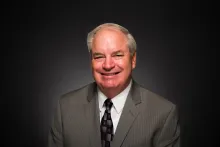
Robin Webber was born in Chicago, Illinois, in 1951, but has lived most of his life in California. He has been a part of the Church of God community since 1963. He attended Ambassador College in Pasadena from 1969-1973. He majored in theology and history.
Mr. Webber's interest remains in the study of history, socio-economics and literature. Over the years, he has offered his services to museums as a docent to share his enthusiasm and passions regarding these areas of expertise.
When time permits, he loves to go mountain biking on nearby ranch land and meet his wife as she hikes toward him.
