

Robin S Webber
This transcript was generated by AI and may contain errors. It is provided to assist those who may not be able to listen to the message.
We've been through quite a time period over the last year and a half, the challenges of being in this age of COVID with matters and issues and events that perhaps we had wished that we could have handled better. Might have been there to help somebody as much as possible. And I don't think we need to limit that just simply to the age of COVID. I think that's our lifetime experience where, at times when, perhaps when we were needed the most, we just simply did not show up.
And so we're going to build on where Mr. Butler left us about. He actually mentioned a word that I'm going to allude to here in a moment. And we all know this phraseology, this triple hurdle of what lies in front of us sometimes, and that is simply could have, should have, and would have.
But we didn't. I'm looking at all of you, and you're all looking at me. And so, to be honest, we all realize that there have been times when we were MIA. We were missing in action for something that was really needed, for somebody that was really hurting, for some event in our life. And as I explore this with you, my dear friends, this afternoon, it is not to cast blame or shame or to make you feel less than you are, because after all, you are here to learn and to grow and to think. So anything I'm going to share with you this afternoon is to lift us up and to build us up and to be aware. Susie and I are both 70 years of age, and coming up to this year and living through this year of three score and 10 has caused us to really think about what we want to do with the rest of our lives and how we allow God to function in us and how we approach others and we'll be there for others. Because just like you, there have been times, whether as an individual, whether as a physical family member, whether as a pastor now for 40 years and an elder for beyond that, is to recognize at times, even with God's dear people, there have been times when I could have, should have, would have, but something comes up. And some things will come up, but let's talk about this in a sense, a story that I've often used at the Feast of Tabernacles, but I'd like to share it with you for a moment, and then rise above the pronouns that are used here and understand that we've been called to be more than a pronoun. We have been called to be a disciple of Christ.
It's just a little story with a big thought behind it. Are you with me? This is a story about four people named everybody, somebody, anybody, and nobody. There was an important job to be done, and everybody was sure that somebody would do it. Anybody could have done it, but nobody did it.
Somebody got angry about that because it was, well, after all, everybody's job.
Everybody thought anybody could do it, but nobody realized that everybody wouldn't do it.
It ended up that everybody blamed somebody when nobody did what anybody could have done.
You and I have been called to be more than just simply an anonymous body. In the body of Christ, we have been called to be kingdom-bringers. We have been called to be disciples of Jesus. We have been called to be a child of God, and so it is with that thought that I'm going to share a story with you today, and I'm going to call this message, if you want your taking notes, Seizing the Moment for Christ. Seizing the Moment for Christ. For life is made up of moments, and I've shared with you before one time I was in the kitchen with my wife, Susan, and I, being her man and wanting to say something profound, I said, Susie, all we have is today. I thought that was pretty good. I was narrowing it down, and wrong. I know you gentlemen have been there yourselves, wrong. And she said, all we have is the moment. And that's really true. In the course of this last year and a half, much less times in our life, I think of my childhood going all the way back to when my brother was alive, is to recognize a very basic truth about life. Not all of us are going to have three score in 10.
Not all of those that we come into contact with are going to have three score in 10. And if by reasoness of strength of art, you have four score. Basically this, if I can make this comment, you might want to jot it down. My words will be short and simple today. Time is short. And we always think it's going to go on and on and on.
And it's going to be everybody's job, somebody's job, nobody's job that we know. And it winds up not happening. And that's why I want to share a story with you today. It's a story that is lodged in the Gospels. And if you want to, you can go to John 12 and verse 2. Because John 12 and verse 2 through verse 8 is an amazing antidote.
It can be a cure if we learn by this example of how to seize the moment for Christ. You and I not only look forward to the kingdom of God in its fullness in the millennium. We not only look forward to the kingdom of God in eternity, but you and I have been called to be kingdom bringers today in our life.
That's what we do as disciples of Christ. Jesus Christ said, coming, he said in Mark 1, 14 through 15, the kingdom of God is at hand. It was not distant. Wherever Christ is, the kingdom of God is. And a recognized has baptized members within the body of Christ. We literally have Christ living in us. And thus, all the more responsibility we have to seize these moments of life for him and for his father above, that they might have the glory.
This is a simple story. I will give you just a little bit of background here for a second. And that is that this story in the Gospels actually shared in two other stories in the Gospels. In Matthew 26, you might want to just jot this down, because let's remember church is not the end, but the beginning of your continual study. So we're going to go to John, basically. I may wander over to the other Gospel counselors.
Matthew 26, 6 through 13, there is Mark 14, 3 through 9. And there's also then what we're going to cover, John 12, 2 through 8. Most of our focus is going to be on John, and we'll wander over to the others a little bit. And that's the beauty of the Gospels, because each of them was sharing their insights of what they experienced at that moment, or how God crafted and inspired them to write down the events that happened.
Let's understand this is an incredible story. Maybe some of you have never just kind of lodged into it and read this, but it says that they made him a supper, that's speaking of Jesus, and Martha served. But Lazarus was one of those who sat at the table with him. Now, so often we leave Lazarus, you know, coming out of the tomb looking like a Boris Karloff, you know, with the mummy robes on, you know, come forth, and he's coming out with a... and they say, take it off. That's kind of where we leave him. But this is the exciting part, because it says, then they made him a supper.
Martha served. Now, notice this, but Lazarus was one of those who sat at the table with him. Is that not cool? That's Hebrew for cool. Okay, that is neat, you know. He's not, you know, like some zombie coming out of a out of a sepulcher. He said, and there's a point to this, to show that he really was alive.
Now, let's understand something. When Jesus raised up Lazarus, that he himself would be crucified and killed 30 days later, basically. He was coming and knocking on the door of Jerusalem. Bethany is just a stone throne away from from Jerusalem. So what he was doing was he knew that once, once that Lazarus was resurrected, that now the Passover would come. Now was the time. For three, three and a half years, he had been yo-yoing back and forth between Samaria and the Galilee, come down to Jerusalem, go back, because timing was everything.
That's why sometimes he'd say, don't tell anybody that you've been healed, because it was too soon. They didn't really always cooperate with that. Okay, what would you do if you be healed? And so they go out. But we now notice that the time is there. Here's Lazarus, and he's sitting at that table with them.
Now, if you, if you go over to the accounts, and I'm just going to allude to them so we can see, so we're not whiplashing and, you know, creating wind in your scriptures. If you go to the accounts in Matthew 26 and in Mark 14, it defines where this is occurring. It is in Bethany, which again, is just outside of Jerusalem, and they're at the house of Simon the leper. Other translations will say, Simon who was a leper.
So it's identifying it. There are other places in the Gospel. There's actually over 20 Simons mentioned that it will talk about Simon the Pharisee. And this does not necessarily allude to the account that you find in Luke, and that's why I'm not referencing it, because that seems to be another individual altogether. But now to set the story again.
They are sitting down, and it's wonderful. There's Martha. Martha's serving, and she's not chided for her service. She had taken Jesus' instruction, but she's still serving. But there's Lazarus, so it sets the stage. And there's others gathered around. Then Mary took a pound of very costly oil of specknard and anointed the feet of Jesus and wiped his feet with her hair. And the house was filled. I want you to think about this for a moment. The house, you know, when you really get pungent fragrance, it just can fill a room. But there's more that's filling this room than just simply the specknard. The specknard or the other Gospels will call it nard, n-a-r-d, which was a fragrance that came further from further east than Palestine, more India, Afghanistan, and that area. It was extremely expensive. It would actually cost basically a year's wages to have what she had in this setting. And the other Gospels say that it was in an alabaster flask, which is certainly an ornament, you know, and she took it and she wiped his feet with her hair and just filled the room. But there was something else that was filling the room that comes down to our day. Then one of the disciples, Judas Iscariot, Simon's son, who would betray him, said, Why was this fragrance oil not sold for 300 denarii and given to the poor?
And then he said, Not that he cared for the poor, but because he was a thief and had the money box, and he used it to take what was put in it. It's like it says in Numbers 32-23, Your sins shall find you out. And it kind of gives you the feel of what the other disciples thought about Judas. But Jesus said, Let her alone, and she has kept this for the day of my burial. For the poor you have with you always, but me you do not have always.
None of these men, stay with me, please. And there were more because when you go to the other gospels, it said that there were other men, there were others that were in the room that were complaining, What is, ladies, you'll like this, okay, what is this woman doing? She was doing the Lord's work.
And this story is for us to recognize. None of those men there, because you really realize, even on that night of the New Testament Passover, the night before his betrayal, they still didn't get it. They really didn't get it. He had to keep on telling them, all through his ministry, from John 2 onward, he's telling them, as they raised up the serpent in the wilderness, so they are going to raise up the son of man. He would talk about this crucifixion coming. He would talk about that. They just, it was like, you ever talk to somebody, just kind of goes over their head, like that, just goes over their head. And it was still over their head on that night. They were still looking for the classic understanding of what the Messiah would do, and throw off the yoke of Rome. And they didn't recognize the aspect of that first coming that was in preparation for that which would come. And you notice this, it says here in verse 7, but Jesus said, let her alone. She has kept this day, she has, excuse me, kept this, speaking of the of the specknard, for the day of my burial.
Bottom line. The time was short. I don't even know necessarily if Mary, I will not surmise, I was not to fly on the wall at this festivity. But did Mary know that it would be that short, maybe five or six days away, whenever it was? Because you see somebody, you know somebody, you're involved in something, and you think it's just going to always can be. The world's always going to turn, the sun and the world's going to rise, and you're going to see that individual.
Mary was driven, I think, by God's Spirit to do this for our Savior, in a moment that he needed the most to know that people did believe that his Father had sent him. When you look at the greatest witness that is mentioned, especially in what we call the Lord's Prayer of John 17, he keeps on thanking people. Thank you, Father, that there are those that believe that you have sent me. And to recognize them, that is the faith. When it talks about the faith that is once delivered, that of God Almighty, our Father in Heaven, sent his uncreated being, the Word of God, and to this earth to take on this fleshly tabernacle, and to die at the hands. He who was the Creator died at the hands of the creation. And here's Mary doing this.
Now, what I want to share with you is I've got some points I'd like to introduce here. Because here we are. Are you with me? How do we seize the moment for Christ? We are at the intersection. We're turning a corner. We're in December, and we're about to go into January, in a whole new year, 2022. What lessons can we learn? Because what I'm sharing this with myself, because I'm talking to myself, but to all of you, there are people that are in this world that make resolutions. How's that work? I'm talking about more than resolutions, but to, as Jim was bringing up, to allow the Spirit of God to give us resolve. There's a difference between resolution and resolve. To resolve to learn some of the lessons of Mary. Now, I'll just put them out here for you.
The Clarks were here last week. They were in relevance with Susan and I last week, so this is scene one, take two for them. But, as you know, I was saying, Diane, if you want to walk out, go ahead. I was just teasing on that, but she said, you know, it's like a movie or like a book. You get more of the second reading. This is what I want to share with you. I'm going to make this very basic. I do want to give William Barkley, not Charles Barkley, William Barkley, full credit, the commentator. And I'm just going to share some of his thoughts in my own way as well.
Some of this is cobbled from his three of his commentaries, the one on Matthew, the one on Mark, and the one on John. But what does that expression, Paul, that you always use? How do you improve on what?
You always have this expression of how do you improve on what? You have a...
Oh, better to create a medioc, or borrow from genius and create medioc. There you go. Yes, okay, good. You can go back to sleep now. No, I'm just joking. Okay.
You got to have fun in church, right? But now with all seriousness, what do we find out here?
Number one. Point number one, there's going to be about four points. I'm going to go very quickly. Number one, Mary had a love affair with Jesus Christ.
And I'm not talking about a physical love affair, but Mary had a love affair, an agape, an affiliate love affair with Jesus Christ. Why do I say that? And how was her love, the love of God in her manifested? She took the most precious thing that she possessed, the most precious thing, and spent it all on Jesus. A year's wages. Are you ready, folks? I'm not asking you to immediately. That's tomorrow. But you just think a year's wages in this priceless gift. And think of it. She spent it all on Jesus, but it was more than the fragrance that was spent on Jesus. It was herself recognizing that as a woman, she's going through this gauntlet of men that are criticizing her. And she went forward.
What do we learn from this? Simply this, the preciousness, even the cost of the spiknard. Love is not love if it nicely calculates the cost. If you're trying to figure out what you're doing and how much it's costing you, are you with me? And can we talk? It's not love.
It gives its all. And it only regrets. I want you to think this through. I hope it kind of really sinks down. Because again, as Jim said, that it, you know, it starts with your mind. I'm going to go a step further. No, it begins in your heart. It begins in your heart. If you're just working off your mind, we're going to have problems. Because our minds get fickle. It's got to be so deep and so entrenched in us of the special calling that Jesus has given us. And God the Father has called us to that we can be kingdom bringers. And in this story, she is a kingdom bringer. It gives its all. And it only regrets that it does not have more still to give.
And it was something as precious as that which that Mary gave to Jesus. And she gave it because it was, after all, the most precious thing that she had. Here's the bottom line that I want to share with you. I want to make it simple. Love never, love never calculates. Love does not calculate.
Love never thinks how little it can decently give.
Love's one desire is to give to the utmost limits. When it has all been given and then thinks it is too little. That works against our human nature. This kind of love is not from below. It is from above. It's outflowing and outgoing concern without regard to self because of God's love for us and what He is granted to us by His grace, not by what we know, not by our digging into Scripture. Our minds have been opened by His grace, by His favor, by His involvement, by His intervention. And recognize the high calling that we have.
To be able to seize moments for Jesus Christ and the life of others.
Think about that. Can I make a comment, borrowing Hebrew again? That's a biggie.
But that's the start because, as the Apostle Paul said, love, faith, and hope. But love, that's the booster rockets. Love is the greatest of all. And the word love there is agape. That is something that is heaven sent. It's not earthbound. It's not human made. We can know every Scripture in the Bible, and many do. But if we don't have this kind of love, then we are nothing. Number two. What Mary did shows us at times that common sense itself will fail.
And again, I think this is what our friend Jim was alluding to. There is common sense, and then there is spiritual sense. And we're going to discuss more spiritual sense in this sense. On this occasion, the voice of common sense was simply this. It came up to the crowd that was surrounding them. You've got to recognize that when they were sitting, they were reclining, much like they did at the New Testament Passover. You know how Romans would sit, and they were reclining at a dinner table? Well, that's also how the Jews did it. They would have been on reclining couches, and they would have been moving in. And so there would have been kind of a group circle, most likely. Again, I'm not the fly on the wall. I'm not that old. Don't go there. But that to recognize that that's basically how the Jews would do it. And to recognize in the murmuring, the looking, you know, I mean, sometimes body language tells at all, you know, you don't have to say a thing. And your body language will tell about either your approval or your disgust at an issue. And to a degree, these people were disgusted. It would have set its place, and no doubt it was right. But there is a world of difference between the economics of common sense and the economics of love. Common sense obeys the dictates of prudence, but love obeys the dictates of the heart. Hmm. There is life in a larger place. There is in life a larger place for common sense, which is sometimes, humanly speaking, the most uncommon thing of all. But that's a whole different subject right there. But there are times when only love's extravagance can meet love's demands. A gift is never really a gift. Hear me, please. When we can easily afford it, a gift truly becomes a gift when only there is sacrifice behind it. And when we have given far more than we can afford. That is not just simply in money, but that is in showing up when nobody else shows up. Praying when nobody else prays. I'm going to share a story at the end about that.
That's spiritual sense. Point number three. We see that love, in a sense, the love of God, and when you really love somebody, and I see couples that are here that have been married 30, 40, or 50 years, or maybe you've got it all together at first year of marriage, second year of marriage, but when you love somebody, you really love somebody. I see the sparks here. They've been married over half a century. Paul, out here with Jack, had been married over half a century. These are the half a century. And, you know, they got married when there were five, so they're not married. So anyway, I'm just joking. Susie and I have been married for 48 years. When you love somebody, you really love somebody, but not just only the man-woman relationship. But when you really love God, there's no mistaking by the crowd, by the family, by the individuals that are around you, that you have a love affair going on. And it's unconscious. When Mary came in, I want to share something with you you maybe never thought about. All of us have been called to a walk of life, a walk of life. We talk about being in the way. There are some very famous walks in the Bible. We think of the walk of a Brahm out of Ur at God's calling, depart. He was a walker. We think of David going down, walking as a maybe an older teenager, or just simply a very, very young man, walking down into the valley of Elah and standing there waiting to confront Goliath.
We think of Peter so often, and we know about Peter. He's the one that petered out on the water. He had that sinking feeling and followed through. And we think about Peter that he took his eyes. Here's the thing with all levity aside now. Peter, in that sense, for that moment, took his eyes off of God, and he sank. And of course, Jesus went over beautiful sea, whoop, and walked him back on the water to the boat because Jesus loved Peter. And the bottom line about Peter is, and this will follow through with me, wherever Jesus was, he wanted to be as close as possible. You ever thought about Peter? You think about Peter, you know, he's just a character. But the one thing is he kept on showing up, even after he had, in a sense, ran away from Jesus in the Gethsemane Garden, as you were bringing out Jim, is to recognize he shows up in the courtyard. He's there trying to still get as close as possible, even as Jesus is being interrogated. So think of Peter's walk for a moment, and he sank. Now, let's think about this woman's walk, this Mary, who made a... she came into that room, and that door opened. This is Mary, the sister of Martha, who had been Jesus' dear friends. Her brother is at the table, but she's not looking at her brother. She's making a B-line. She's making a straight line for her master, and she's unconscious about it. She doesn't care what other people are going to say. Have you ever sometimes seen couples, you know, especially young couples, especially young married couples, and you know, they're just handsy, handsy, and they're holding hands, and you know, etc., etc. You know what? They don't care. Maybe they should a little bit more sometimes when they're walking around, but they don't care. They're in love.
It's almost like you can't get a knife to separate them. That's the kind of love in Agape and Billy in love that she had. She didn't care what others thought. Sometimes we become hesitant as disciples of Jesus Christ, because we're looking at the crowd, rather than looking at the Word of God. We're looking around us, rather than looking up and recognizing our calling comes from God. We sometimes stop because we wonder, what is the world thinking, rather than what is God desiring for us to seize the moment?
Another thing that you see here, point number four, is we see humility.
Humility, the sense that you see here that she goes and she anoints her Savior. You know, it's kind of interesting when you go to the 23rd Psalms, which has a lot of the life of Jesus in it, that 23rd Psalm. You anoint us my head with oil. Now, it's very interesting. John's Gospel says that she anoints the feet, but in the other Gospels, it says she anoints the head. So somewhere between the head and the feet, there's a lot of anointing and there's a lot of fragrance going on. But the key thing here is, if you just join me for a second, here's the incredible thing. Notice what it says in verse three. We're back on John 12 now. You with me? In verse three, she opens the spiknard anoints. Here it says the feet of Jesus and wiped his feet with her hair. This is the ultimate intimacy. And what she does is she unbundled her hair.
She unwinds it and it flows freely. A grown Jewish woman did not do that. That would be basically a woman of ill report. But she's lost in the moment. She's at the the feet of her Savior. She's at the feet of her innocent brother. You know how we have brothers and sisters that were not blood related to? And that's how close Jesus was with Lazarus and Martha and Mary. Can you imagine the sense of taking your hair and you're actually drying the Savior's feet? Your hair? It's incredible. It's beautiful. And she didn't care.
She was not lost in the moment. She was making the most of the moment for us to understand. The beauty of love for God, of love of Christ, and the shortest distance between two dots is a straight line. She went right for Him, right up to Him. There was an intimacy that was beautiful and divine and holy and special. And giving that to our Savior.
Fifth point. Nobody in that room probably fully understood that Jesus was going to die within days.
But she took an opportunity to come forward. So often, opportunities come our way, and we don't seize the moment for Christ. Opportunity is a word that comes out of the Latin. Op means to move towards or to. And then maybe you've never thought of it before, but opportunity.
It speaks of a port. And an opportunity comes out of the aspect that sometimes when you're out on stormy seas or you need to land, there is a moment when the wind is in your sail, is behind your sail to get you into port. And or the tide is just at that moment, that moment when you can come up into the harbor. Opportunity. That's why it says in the Scriptures to redeem the time. The total term there of redeem actually means that there is a season, just like the harvest. And some of you that come out of the Midwest or other spots, you know how important it is that when the crop is up, you've got to get to it immediately right away. Lest you miss that moment of total ripeness. She sees the moment and it was a beautiful thing. Notice what the report is here at the end. Let me just read this. Let it sink into you. But Jesus said, and he is the ultimate defender of the faith, you said, let her alone! She has kept this day for my burial. For the poor you have with you always, but me you do not have always. Moses had said, 1500 years before, the poor are always with you. And there are things that you will be able to get to because they're always there, but he was not always going to be there. So Mary took that moment. Two things I'd like to share with you. Number one, Mary, Mary, portrayed a Christ-like attitude. Judas and the others on the other side portrayed what they were like. This is a beautiful story. And when you go to Mark 14 in verse 6, I'll just read this, but Jesus said, let her alone! Why do you trouble her?
She has done a good work for me. The word there, good, is actually from the Greek, calos, with a k, calos. It doesn't simply mean good. It means something that is beautiful. And Jesus said that from this time forth, it says in Mark 14 in verse 9, that surely I say to you, whenever this gospel is preached in the whole world, what this woman has done will also be told as a memorial to her. Amazing! Why did she do that?
The time was short. I want to share a story with you and with the thought right now, unfortunately, with what's happening back in the Midwest, and we certainly pray for our fellow citizens with these horrible hurricanes that are occurring right now, and perhaps over 100 dead already in Kentucky, Missouri, Illinois, etc. I'd like to share about another hurricane. I'll kind of be a little familiar with this when you think of the Wizard of Oz and, you know, them going down in the basement, and where is Dorothy? But there was another family that was in the midst of a hurricane, and when you're in the Midwest, that's right for all of you there from the Midwest. That's why you have basements, right? And so everybody is squaring around, and they're getting this in, and they're getting that in because the hurricane is approaching, and they're getting all of the physical things down there, and they think they're really cooperating. They're doing everything they can, and you know, you need to do that too, right? And they're looking and looking, and then all of a sudden they say, where's Clara? Where's Clara? And they're nervous, because they think she's, you know, up somewhere. But Clara wasn't helping all of them. And all of a sudden, a voice came from behind the staircase to the basement coming out, out of the dark, and into the light where they could see him. And they say, Clara, where were you? And she said, I did what I could. I was praying.
I was praying. Little Clara and the other has to be done, but as a child, she was talking to her Heavenly Father. I'm talking to myself, and I recognize that more and more as the years go by, while I have life on this earth, I want to be more like Clara. I want to be more like Mary.
I want to seize moments for Jesus Christ that we all might honor our Heavenly Father that is above.
I'd like to share a story here with you, then we'll conclude. We show up at church.
We have our Sabbath best on, rather than our Sunday best. I grew up a Sunday best, and when I started keeping the Sabbath, the best just went from Sunday Sabbath. And I still try to wear my best, as an example for all of you. But to recognize that, we realize that people come. And yet, we're people. We're human beings, and we're smitten with our human nature at times. I'd like to share a story. It's from one of my favorite books, one that has really molded me over the years. It's called, Light for Many Lambs. And it goes back to a story by a preacher. His name was Philip Brooks. He's at the turn of the century, not this one, but the one before. We grew up saying the one before, thinking of the 1890s, 1900. You got to go back a little bit as you get older. And it's by a famous Fifth Avenue preacher. Fifth Avenue, if you've been in New York, that's where all the big, you know, that's where Saint Patcote d'Ivoire is, and all the big churches. So this man was kind of a spiritual muckie muck in New York. And his name was Philip Brooks. And the title of his message was simply this. The time is short. The time is short.
And it just mentions here, as usual, the great church was filled in those big churches on Fifth Avenue. Philip Brooks faced the enormous, hushed congregation, as he had so many times before Sunday after Sunday. The expectant, the well-dressed congregation, waiting for its weekly message. He looked into the faces of men and women. He had known men and women who had come to him with their problems, who had asked him for his help and for his guidance. How well he knew what seeth behind the pleasant smiling mask of their Sunday best respectability. And for we that are Seventh-day Sabbath keepers, just change the wording. And know that I'm a pastor that knows the lives of many of you. How well he knew the petty spites that embittered their hearts, the animosities that set neighbor against neighbor, the silly quarrels that were kept alive, the jealousies and the misunderstandings and the stubborn pride. Today his message was for those bitter, unbending ones who refused to forgive and forget. He must make them realize that life is too short to nurse grievances, to harbor grudges and resentments. And he would plead for tolerance and understanding for sympathy and kindness, and he would plead for brotherly love. Maybe he was pleading that they might seize the moment for Christ. My add-on. And he said, oh, my dear friends, he said, and as he was going to speak to each and every one of them personally, which perhaps I will do through his words now, you who are letting miserable misunderstandings run on from year to year, meaning to clear them up someday, you who are keeping wretched quarrels alive because you cannot quite make up your mind that now is the day to sacrifice your pride and to kill them. You who are passing men solemnly upon the street, not speaking to them out of some silly spite, and yet knowing that it would fill you with shame and remorse if you heard that one of those men were dead the next morning. Could have, would have, should have. You who are letting your neighbor starve till you hear that he's dying of starvation, or letting your friends heartache for a word of appreciation or sympathy, which you mean to give him, which you mean to give him, someday. I'm sure the disciples were having some days in their minds in that house of Simon the leper.
If you only could know and see and feel and all of a sudden that the time is short, how would it break the spell? How you would go instantly and do the thing which you might never have another chance to do.
Should have, would have, could have.
Think of that versus what will come into your life in the moments ahead, moments, for all we have is the moment, but those moments connect to a day, and connect to the day that by God's grace we are allotted to, of how we can make a difference. Don't worry about what other people are thinking. You be a kingdom-bringer.
We can't go back, and all of us have tripped over could have, should have, and would have.
All we have is today, but we have a God above, we have the example of Jesus Christ, so as we go out from this gathering today, I ask all of us, and I encourage all of us to learn the lesson of Martha, to learn the lesson of little Clara, to learn, not Martha has her own lesson, but that the lesson of Mary, the lesson of little Clara, and that can be our lesson, and be a light and a world of darkness.
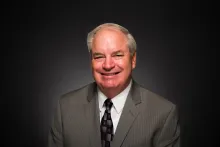
Robin Webber was born in Chicago, Illinois, in 1951, but has lived most of his life in California. He has been a part of the Church of God community since 1963. He attended Ambassador College in Pasadena from 1969-1973. He majored in theology and history.
Mr. Webber's interest remains in the study of history, socio-economics and literature. Over the years, he has offered his services to museums as a docent to share his enthusiasm and passions regarding these areas of expertise.
When time permits, he loves to go mountain biking on nearby ranch land and meet his wife as she hikes toward him.
