

Barry D Korthuis
We live in a time when many hold tightly to their own opinions but resist instruction. God looks for a heart that is humble, willing to listen, and ready to change. The account of Apollos in Acts 18 shows how even a capable and knowledgeable man became stronger when open to instruction—even from tentmakers. A teachable spirit keeps us growing, shapes our character, and ensures we remain useful in God’s hands.
(7) Ken Loucks - Being Teachable in an Unteachable World - YouTube
https://www.youtube.com/watch?v=ot8oe_Uy9rk
Transcript:
(00:00) The title of my sermon, if you if you need one, some people like one, so I'll give you one. It's called Being Teachable in an Unteachable World. Being teachable in an uneachable world. I want to begin over in Proverbs chapter 1. Proverbs chapter 1 and verse 7. See if I can coordinate these two things.
(00:25) Verse 7 of chapter 1 says, "The fear of the Lord is the beginning of knowledge, but fools despise wisdom and instruction." I was thinking, man, we sure live in a world today that despises instruction. the idea of being teachable, that you could potentially even be wrong when your opinion matters more than anything else.
(00:51) Your truth is just as important as anybody else's reality. But the idea of being corrected then, how does that settle with how does that settle with the world? How does that settle with us? Opinions are often held today as facts. Even though they may be based on nothing more than personal experience or popular opinions, they can still be held that strongly.
(01:23) And people can become convicted by those things, whether it's right or wrong, maybe even worse if it is wrong. But what about this idea of humbly receiving instruction? Because that seems to me increasingly rare, not just in the world, but maybe even in the church. We can be susceptible to that and it's something I think we can look at and analyze and consider for ourselves in this journey that we're on.
(01:46) Being teachable is not the same as being informed. You can read a lot of things and be informed about a lot of things. That doesn't necessarily mean that a person is being teachable. You can know a lot of facts. You can be skilled in communication. But you can still be closed off to the idea of being corrected.
(02:12) Teachability means we're open to being guided. We're open to being refined. If necessary, changed. So it's an attitude that says, I want to grow in what is right. That's what being teachable, I think, at the heart of being teachable is. And this is what I think matters to God. The Bible speaks clearly about the kind of heart that God is looking for in us.
(02:39) one that is humble, one that's willing to learn, one that's responsive. That kind of attitude is valuable because it remains moldable. And without a teachable attitude, we risk becoming stagnant, maybe spiritually resistant, or even spiritually blind. God's not impressed with how much we think we know. He wants what's in our hearts to be that attitude that trembles at his word.
(03:14) That doesn't magnify myself. That doesn't say I already know what it says, but that says, "Every day I can be taught something new if I just open the pages of my Bible and read again what it says." I want to look at something that you might not have considered carefully as an example, but it's an example of teachability. That's really quite remarkable.
(03:38) The individual's name is Apollos and the story is recorded by Luke. It's just a few verses and it's here in chapter 18 of of the book of Acts. So, Acts chapter 18 and I want to read verses 24 and 25 because what what Luke does here is he introduces this character but he he reveals a lot about this person. What's one of the things that's challenging I think for us when we look back upon scripture especially let's take the book of Acts which is really just a a a journal by Luke recording the the events that he was a part of what he witnessed he captures lots of things that happened and he does it in really short bits so it's hard to to consider
(04:26) everything that would have been going on in something that he records in such a short period of time but he lived through the things he records for us and so we have expand our thinking a little bit to say okay well what's he trying to what's he trying to show us because he writes about Apollos that he was eloquent and mighty in the scriptures which shows us that he was impressive in both skill and knowledge let's read about Apollos here acts 18 24 and 25 he says now a certain Jew named Apollos born in Alexandria an eloquent man and
(05:00) mighty in the scriptures he came to Ephesus this man had been instructed in the way of the Lord. And being fervent in the spirit, he spoke and taught accurately the things of the Lord, though he knew only the baptism of John. The Greek word here that's translated as eloquent is defined as learned, skilled in speech, cultivated, versed in literature and the arts.
(05:40) Consider how much is packed into that one word, eloquent. And this word now is given by Luke to describe Apollos. It describes someone highly educated, refined in expression and respected as an intellectual. Apollos was not an ordinary speaker. He was polished. He was persuasive and he was well trained.
(06:06) The phrase mighty in the scriptures means powerful, capable, strong. Robertson's word pictures notes that it carries the sense of someone able to do something effectively. Now that's combined with the writings. It tells us that Apollos was not just familiar with the Old Testament. He was a master of it, able to handle it with force and authority.
(06:37) His education in Alexandria explains part of that. The city was one of the intellectual capitals of the Roman world. famous for its vast library, for blending Jewish learning and Greek philosophy, and from such a a background, Apollos would have been articulate, confident, and commanding in his presentation.
(06:58) Everything that a minister of Jesus Christ today would envy, would desire, would be jealous of, would love to have said about them is being said here about Apollos. But Luke adds a limitation. He says, if you'll recall, he knew only the baptism of John. So while he knew the scriptures, what did he really fully know? He really fully only knew about the baptism of John.
(07:32) Now this word knew only, he knew only the baptism. That word knew only is a verb which means to know well to understand. Okay. Apollos thoroughly understood John's baptism of repentance. But there's no salvation in the baptism of John. It was a baptism short of something that was needed because there's no path to the Holy Spirit through the baptism of John.
(08:03) Acts 18:26. Acts 18:26. It goes on. It says, "So he began to speak boldly." This is talking about Apollos. He began to speak boldly in the synagogue. When Aquilla and Priscilla heard him, they took him aside and explained to him the way of God more accurately. The word boldly here means to speak with confidence to be fearless in declaring.
(08:36) So you know you imagine a man trained in Alexandria who knows the scriptures as well as or better than most I would I would suggest speaking with confidence authority in and from those same scriptures. This is Apollos. He taught with conviction. Yet Aquilla and Priscilla who learned from Paul, if you recall, they recognized a gap in his understanding because they explained to him the way of God more accurately.
(09:09) Now, that adverb, which is translated accurately, means more exactly, more precisely. His teaching wasn't wrong. It just was incomplete. So, let's notice something important here. Let's go back to Acts. We're at 18. Let's read the first three verses. After these things, Paul departed from Athens and went to Corenth.
(09:34) And he found a certain Jew named Aquilis. Now, we're talking about Paul meeting Aquilla, born in Pontis, who had recently come from Italy with his wife Priscilla, because Claudius had commanded all the Jews to depart from Rome. So he came to them. So because he was of the same trade, he stayed with them and worked for by occupation they were tent makers.
(09:59) Now this is an important piece of the backdrop to understanding the characteristics of being teachable. Apollos, we just learned all these wonderful things about the strength, the knowledge, the wisdom, the eloquence, the power of how he spoke and taught from the word of God. And these two tent makers taught him more precisely to understand beyond the baptism of John.
(10:33) He didn't argue or defend his reputation. He listened. And that humility is the heart of teachability. Let's go back to verses 27 and 28. Now still in a in in Acts chapter chapter 18 let's finish this with 27 and 28. And when he that is uh that should be Apollos desired to cross to Aaya the brethren wrote exhorting the disciples to receive him.
(10:59) And when he arrived he greatly helped those who had believed through grace. for he vigorously refuted the Jews publicly, showing from the scriptures that Jesus is the Christ. It's pretty remarkable that he was refined through these two tent makers, his understanding and his knowledge and he obviously took that to heart. This is what we just read.
(11:28) Luke uses words of increase. He greatly helped which means contributed a lot. He vigorously refuted which is an intensive for which means he powerfully disproved with strong reasoning where the Jews were wrong and that Jesus was the Christ. That's because Apollos accepted correction. He accepted instruction.
(11:54) Because of that, his eloquence and his knowledge were sharpened into something more useful. He became a more effective tool for God because he remained teachable. What are the attributes of a teachable person we can learn from this story about Apollo so short yet so powerfully given to us? Well, I would suggest and while you may find other things, I'll give to you five that I've observed here and you may come up with more of your own. Some of you likely will. But I begin with this.
(12:27) He had a love for the truth. Apollos had a love for the truth. Our passions flow from what we care about. So you you know if if you know as well as I do, men, if if you if you speak, for example, it's much easier to speak on a subject that you are passionate about. You've studied it, you understand it, it makes sense to you, and you desire to teach it. You want people to know what you know about it.
(12:58) And so you feel a burning a more burning passion in that. It's the same thing in your Bible study. When you find something that is truly engaging to you, you're truly learning about it. Don't you want to dive deeper, dig in more, learn more? It's that kind of passion that's being described here. That love for the truth, that's what enabled him to receive instruction.
(13:18) When somebody else from his background may have said, "Who are you to tell me? over in Psalm 119 verse 97. Just little tidbits that help us to understand this beautiful attitude of Apollos. Psalm 119 verse 97. The attitude we need to have. Oh, how I love your law. It's my meditation all the day. That's what God wants from us to love his truth.
(13:57) That that's what we're thinking about while we're working, while we're playing, while we're cooking, while we're eating, whatever it is that we're doing. That our mind is on the words of God. That that's what's driving our spiritual bus. That we have that kind of passion for the truth. Without the foundation of love for the truth, correction hurts more than helps.
(14:22) But if we have that love of the truth, we can look at correction or instruction as a gift to help us be better, be stronger, more powerful, more useful to God. The second attribute that we see is humility. Now, that flows from his love for the truth. The love for the truth, the truth becomes the God's word and what God wants me to know and to understand becomes the pinnacle of what I'm trying to learn and to stay at the height of where I focus myself on the truth of God. That has to be more important than anything else. That attitude is what
(14:56) enables humility. I can be taught because that's more important to me than what I think, how I feel. The truth is more important than that. Apollos was the word is the Greek word is log g i o s logios. He was learned and eloquent and he was the Greek word dunatos du n a t os mighty in the scriptures by every measure of human ability. He stood above Aquilla and Priscilla.
(15:29) They were trades people. You look around the world today and for a long time now the trades have been diminished. lampuned, ridiculed. If you have to go to the trades, it's because you were uneducated. You didn't even finish high school. Maybe like your only avenue is the trades. It may not be everyone's attitude, but it certainly has been a prevailing attitude.
(15:54) Now, that's that's being writed a bit more these days because people are seeing that quality rel quality education doesn't guarantee quality of life. You can have a quality of life in the trades every bit as good as anything else. And so we have these two tent makers. They weren't necessarily all that much that that respected in those days, especially in Greece and its outer colonies. Yet Apollos listened to them.
(16:23) He was willing to receive instruction from those the world would consider beneath him. Great lesson for us. Proverbs 11:2 Proverbs 11:2 it says when pride comes then comes shame but with the humble is wisdom. Our ability to humble ourselves to be teachable no matter what is essential. So really we ought to stop and think not Does it matter who's teaching me or does it matter whe what what they're saying or trying to teach me is correct? If we can start there, come from a teachable, a humble attitude, then we will care far more about what they're saying than who they are. Analyzing
(17:16) oursel to say maybe that is true. I need to look at that. The third attribute that I I identified was open. He was open to correction. Luke says that Aquilla and Priscilla explained to him the way of God more accurately. Remember, more precisely. So, it's not that his teaching was wrong. It just wasn't complete.
(17:46) To accept this, Apollos had to acknowledge that despite everything he knew, he did not yet have the whole picture. He could still learn something. And if Aquilla and Priscilla, the tent makers, could help him get there, he was open to that. He was willing to let them help him.
(18:11) That requires setting aside the natural defensiveness that can come when we are so educated on our on our own terms. I'm so smart. What can you actually teach me? Proverbs 9, this is a beautiful one. Proverbs 9:9 it says, "Give instruction to a wise man and he will be still wiser. Teach a just man and he will increase in learning." This is the attitude that God wants us to have. We're in the teaching mode all the time.
(18:43) I am in the teaching mode all the time. A fourth attribute, spiritual hunger. Because Apollos already knew a lot, yet he still wanted to grow. The verb describing him as fervent in spirit literally means to boil with heat. This is how Luke describes Apollos. His zeal drove him to press forward in understanding, not settle for what he already had in knowledge.
(19:20) A teachable heart is never satisfied with partial knowledge. It hungers for a better, more full understanding of the truth. Matthew 5:6 Matthew 5:6 Christ giving us this instruction in the biatitudes Matthew 5:6 Christ says blessed are those who hunger and thirst for righteousness for they shall be filled that made me think about conversations even last night with with various people and how awesome it is to be here with you all, to be able to share this crazy weird way of life with crazy weird people who think the same way that I do, who believe the same things that I do. And it isn't anything the world loves or
(20:14) cares about it. So, it makes us weird. It makes us stand out. It makes us at at at at teen camp this year, I was I was I was doing a sidebar. I was was doing a lesson trying to teach about the foundation of Jesus Christ. This is a complex notion for pre-teen and teens. Yet it was the theme of camp this year and I was trying to help them to understand.
(20:40) So one of the exercises that I did during the excellence in living was I had them form up in groups and then they all they had a big stack of of various shaped blocks. Some of them were squares, some were rectangles, some were circles, and some were uh, you know, odd-shaped triangles, right triangles, and some of them were uh arches and and half circles. So, there was lots to play with.
(21:00) And I had them had four groups of them. And I had them build I was I was trying to teach them. This was their second lesson. So, I was trying to get them to understand that they are a part of the church, too. and that each one of these piles represented a congregation of the church where they were being called in.
(21:17) God was calling all these different shapes of people a lot like us. And yet he's making one church. Here's a congregation that God wants to come together as one congregation, as one family. Could they do it? Could they build a a what? Look, I'd have them build towers. I had them build a tower. The first one I said, "Make me a tower as beautiful as you can make it." And so they built this fantastic structure.
(21:42) And you know where all the odd pieces got? They were the decorations. They never, it was funny, but all the odd shapes never really looked like they were a part of the structure itself. They were just sort of decorations on the structure. I thought, okay, that's interesting because almost every team did the same thing with the odd shapes.
(22:00) And then I said, you know what's going to happen to every congregation at some point? There's going to be an earthquake. And so I would bump the table. And of course, these structures just shattered all over the place. So then I said, "Okay, here's what I want you to do next. Now I want you to build me a congregation that can withstand an earthquake.
(22:18) " And instead of being these tall, beautiful things where all the odd shapes were just accessories to it, they figured out a way to incorporate every single piece into the core of that structure. And then afterwards, one young man came up to me and he said, he said, "Mr. Alex, I feel like I'm the oddshaped piece.
(22:43) And I said, you know, God doesn't look at the shapes like we do, right? Uh here I am try I'm in the moment trying to figure out how do you explain to this young man that God doesn't care about what he looks like if he feels like an odd-shaped piece. So in the next class I taught that same lesson and then afterwards after they built those structures then they built the ones that were durable.
(23:07) Then I asked everybody in the classroom and this was the oldest B4s and G4s and I said okay let me ask you one question. How many of you feel like you're an odd block in the structure? How many of you think it was just a few hands? It was virtually every hand. Every single kid in that room of the B4s and G4s, these are the oldest dorms said they felt like the odd block.
(23:39) Think about that because don't we all tend to feel like the odd block in this world. And God calls us out of that and he puts us into this church. He makes us a part of this family together. I went and told that young man that story and he was shocked because he had not said or asked or talked to any of his contemporary kids, anybody his age.
(24:04) He had never said that that same statement to them or he would have learned the same thing. And he said, "I really have to think about that. I thought I was the only one." No, you're not the only one. Anyway, God fills those who continue to seek after him with eagerness. We need to hunger and thirst for righteousness. This way of life has to mean something more to us than anything else or we won't stay with it.
(24:33) And God has room for all of his odd blocks. The fifth point I wanted to comment about is or to note is that Apollos demonstrated obedience. obedience. He didn't just hear correction, he acted on that. And of course, the fruit is immediately seen afterward because what did he do? He went on to help believers greatly to refute opponents and even greater effectiveness because of that.
(25:02) Truly teachable people do not just listen. They apply what they learn. Jame, this is what we get from James chapter 1 verse 22. For those of you who don't know, Mr. Pebbworth put out a email which I only realized I got this morning with an announcement or with a um commentary before the upcoming council of elders meeting. I'll email that out to all of our Tacomaites later so they get that.
(25:26) Uh but he and that actually mentions this exact same concept over in James 1 and verse 22. And in Tacoma, you know, we've actually we went through this recently. James 1 22. But be doers of the word and not hearers only, deceiving yourselves. And this is a part of what faith is was what is faith. It isn't just believing.
(25:54) It's belief followed by action based on trust. It's built on the foundation of hope. So we have to be doing what we're taught to do. So we don't just agree with the correction itself. We actually have to apply the correction when we realize it's right. For the sake of time, I'm going to just point you to the fact that you can walk through each of these five elements and you can see how Jesus Christ fulfilled every single one of those attributes himself.
(26:30) I would encourage you to do that. The last point I want to make today is that a teachable spirit is what God wants from all of us because we've seen the example of Apollos. We identified these five characteristics, these five attributes of what makes one teachable. So we need to step back and consider that God expects teachability from us.
(26:55) The question really is then why? Well, the first part of that answer is simple, but it's profound because being teachable is the very essence of disciplehip. The word disciple means a learner. We call ourselves disciples of Jesus Christ, which means we call ourselves learners of Jesus Christ. Notice over here in John chapter 8 John chapter 8 uh verses 31 and 32. So John 8:31 and 32.
(27:37) Then Jesus said to those Jews who believed him if you abide in my word you are my disciples indeed. So Christ connects abiding in God's word with being a a disciple, being a learner. It rema means to remain under instruction, remaining connected to the source of truth and then letting that truth that truth shape us and the result is freedom. Verse 32.
(28:15) And you shall know the truth because Christ is going to reveal it to us. And you shall know the truth, and the truth shall make you free. The world thinks it's free. Do you see freedom when you look at this world? I see people trapped in an ungodly world in the sins that they adopt, the ones that they think sound great, that look great, but always have negative consequences.
(28:42) Real freedom is living God's way of life. It's the freedom from the negative consequences of not doing that. Here's the thing. The truth cannot set us free if we're unwilling to receive it. The second reason that God wants us to be teachable is because a Christian life is a life of transformation. The Apostle Paul in Romans chapter 12 reminds us Romans chapter 12 the first the first and second verse I'll read them both he says I beseech you therefore brethren by the mercies of God that you present your body as a living sacrifice holy acceptable to God which
(29:26) is your reasonable service. It says and do not be conformed to this world but be transformed how? by the renewing of your mind that you may prove in that process. You may prove what is that good and acceptable and perfect will of God. The word transformed is not going to be surprising to you if you haven't looked it up recently.
(29:55) It comes from the Greek word metamorphu. Metamorphu, the same root as metamorphosis. You know, a caterpillar to a butterfly. But that kind of change is only possible if our minds are continually being renewed. And a closed, unteachable mind resists renewal. But a teachable mind is open to God reshaping it every single day.
(30:26) The third thing God wants from us is to be a child of God. That's our destiny. Teachability matters because God who sees us as his children when we are called and converted describes what he does for those he loves. He disciplines, he instructs, and he corrects. Hebrews chapter 12 brings this out. Hebrews chapter 12 verses 6 and 8:es 6-8 sorry.
(31:09) So Hebrews 12:es 6-8 it says for whom the Lord loves he chastens and scourges every son whom he receives. If you endure chastening God deals with you as with sons. For what son is there whom a father does not chasten? But if you are without chastening of which all have become partakers, then you are illegitimate and not sons. If God is not in your life offering you correction, instruction, chastisement, that should be a scary place to wake up because it says if you're not receiving that, you're not a son of God because that's what he gives to his children. The word chasen comes from the uh the
(31:54) Greek word which means to train, instruct or discipline as a father educates a child. That's not random punishment. It's not done because you've irritated God. It's because God wants us to change. He wants to shape us into holy and righteous character like his son. The word scourge literally means to whip or flog, but it's not being used literally here because God doesn't come down with a whip and a flog and beat us all into submission.
(32:30) So, it's figurative in its application here. It does mean severe discipline, even painful trials. If you want an example of that, reread the book of Job. God truly chastised Job. Now, you might say, "Well, I don't want to be chastised like that." Well, I hope you don't. But who decided what the chastisement would be? God did.
(33:06) And if you have to go through something hard and you're in the process and God thinks of you as a son or a daughter, then that means that he's trying to refine you. and this is the way he's going to do it. If we can accept that, then we can get through that. Albert Barnes notes says it does not necessarily denote punishment by scourging, but any dis any discipline fitted to correct faults and make better men. So together, these words show the range of God's discipline.
(33:40) steady training through instruction and sharper correction when needed. And both of these are signs of his love. So for us to reject correction and however in whatever form that comes to us to simply I'm just not going to tolerate that. I'm simply not going to listen takes us out of the process. So teachability then is not just about improving our character.
(34:04) It's about conf confirming our identity as sons and daughters of God. And that's why we're willing to do it. That's why I put truth as the most important thing because I want to be in the kingdom of God. I want to be a spirit being in God's family. So, let me leave you here with just a few points to consider about how do we live this out in an unteachable world? How do we do this? First, we have to remind ourselves that the source of truth is God's word.
(34:32) It's not social media. It's not the opinions of co-workers or friends. It's the word of God. We don't assume the word of God is deficient and we make it prove itself. We assume the word of God is right and we start from there. This is right. Anything else is incorrect. But notice here something a word that you'll find interesting I think.
(34:57) 2 Timothy 3 16 and 17. 2 Timothy 3 16 and 17. Notice about scripture. It says all scripture is given by inspiration of God. Means God breathed, right? But here's what it's profitable for. Doctrine, for reproof, for correction, for instruction in righteousness.
(35:26) And you know what's funny about that word instruction in righteousness? It's the same word we read earlier as chastisement in Hebrew in Hebrews where it says and is translated God chastises those sons he loves. That same exact word is translated here as where was I at? Verse 17 instruction in righteousness. Verse 16. Same word. Second point I want you to consider is we must be willing to receive correction from those God may use to teach us.
(36:01) Whether that's ministers or brethren or even those we might not expect. Apollo shows us that God can use a tent maker to sharpen the understanding of a scholar. If we dismiss correction based on the messenger, we might miss the truth God wants us to learn.
(36:26) The third lesson I want you to think about is the third way we might do this is we must pray for a softer heart. David prayed this after his own failure in Psalms 51. Psalms 51. [Applause] This was David's prayer after he was chastised for his sin. verse 10, Psalm 51:10 where he says to God in prayer, create in me a clean heart and and renew a steadfast spirit within me.
(37:05) A teachable heart is not natural to our carnal mind. We like to think we're so smart. And because our carnal mind is filled with pride and defensiveness, complacency comes far more easily to us. But God can renew our hearts if we ask him to, giving us a spirit that remains moldable and responsive. Finally, the last thing I want to suggest to consider about how do we live this way of life being teachable in an unteachable world is we have to see teachability as a lifelong pursuit.
(37:44) It's not something we achieve and then oh we're done. Even Paul near the end of his life. Let's look at what he says here in Philippians 3:12. Philippians 3:12 where Paul says, "Brethren, I do not count myself to have apprehended, but one thing I do, forgetting those things which are behind and reaching forward to those things which are ahead.
(38:24) " Did I read 13 or 12? I read 13, didn't I? See, I do this once in a while. We're going to go back to 12. Not that I have already attained or am already perfected, but I press on that I may lay hold of that which Christ Jesus has also laid hold of me. Well, they work together in tandem, both of those passages, both those scriptures. So, it all works.
(38:47) Paul wasn't saying, "I've got it made and I don't need to learn anymore." He was saying he's always being a student. And that's what we need to be always in the teaching mode. I'm ready to learn. Some of you might have some thing you might want to say to somebody like me to help refine me. Do it gently and in love. I'm human like everybody else.
(39:14) But notice Paul said he was still pressing forward. That's the thing. Keep driving towards the kingdom. That's our job. Keep our priority and our focus on learning and being learners of Jesus Christ. Disciples. Being teachable is not a minor quality. It is the foundation of being a disciple.
(39:36) It is the attitude God looks for when he says he will regard the one who is humble, contrite, and trembles at his word. And it is what will keep us useful to him until the return of Jesus Christ.
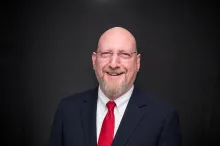
Ken Loucks was ordained an elder in September 2021 and now serves as the Pastor of the Tacoma and Olympia Washington congregations. Ken and his wife Becca were baptized together in 1987 and married in 1988. They have three children and four grandchildren.
