
Robin S Webber
This transcript was generated by AI and may contain errors. It is provided to assist those who may not be able to listen to the message.
The Jews have a saying related to this day which the Jewish community calls Rosh Hashanah.
There is an expression that they use on Rosh Hashanah that simply goes like this. May your name be found written in the book of life. May your name be found written in the book of life. Now, it is interesting in this message that it is a two-edged blade, as it were. Number one, if you've never thought about it, number one, it's a blessing. It is a blessing. May your name be found in the book of life. But number two, it is also a warning. It is also a wake-up call.
And that is why in these days, as practiced by the Jewish community, the Feast of Trumpets begins 10 days to the time of the Day of Atonement. And these are the days called the Days of Awe. And there's a reason for it. For the Jewish community, it is a time to consider. It is a time to review life. It is a time, in turn, to perhaps do turn, do consider, do change, recognize that perhaps we have not been worshiping and or praising and or glorifying God by our life's actions and or too much of our self has gotten in the way, rather than recognizing that covenant people practice a life of self-sacrifice. Then what happens in these days of all, as that blessing is given in the Jewish culture, Jewish tradition, going back afar, it is simply then that that name is put into the book of life again on the Day of Atonement for another year. Now let's consider something about the Feast of Trumpets. And we've already heard a little bit of it from Mr. David Hall. Let's remember that this day that Mr. Hall mentioned out of Leviticus 23, with this sounding forth and with this blowing, was first given to ancient Israel. And we are not simply going to stick with ancient Israel and the Jews. We are going to develop and speak about our new covenant responsibilities as the body of Christ. But stay with me for but a moment. Let's go back for a second and let's remember that when this day was first given to ancient Israel, there was a living memory. There was a living memory of an empire that seemed immortal and seemed ageless. And that empire, Egypt, which had already seemed to be around forever, was weighed in the balances by God. Weighed in the balances by God and that empire with the god-king Pharaoh was found wanting. And as God passed over, remember, as God passed over one people in mercy, he passed through the empire of Egypt with judgment.
With judgment. And so in ancient times, in the wilderness, when the trumpet, the shofar, would blow and the people would shout and they would remember their God as that shield and as that champion and as that judge that had protected them. They remembered his blessings. They remembered what he had done. They remember that they were a covenant people that had not been a people that were now a people and that this same God that had passed through Egypt and passed over them, now granted them a relationship. And he says again and again in Scripture, I will be your God and you will be my people. Price is privilege. People that were swept up from the mud of the banks on the River Nile that had been in slavery for 250 years were washed off by the Red Sea, brought up to the sure shore of freedom and given an opportunity to worship and to follow the one true God who said, I am. And so that's where we do it. And that's why we go again. Let's go back to Leviticus 23 for a minute to build upon what David mentioned to us. In Leviticus 23, and we pick up the thought in verse 23, and sometimes repetition is the best form of education. Then the Lord spoke to Moses, saying, Speak to the children of Israel, saying, in the seventh month on the first day of the month, and you shall have a Sabbath rest, a memorial of the blowing of trumpets, a holy convocation. You can just imagine being out in the wilderness.
I think about this a little bit when we go to Las Vegas and we travel to 15 up to Vegas. I get that kind of Moses feeling. I get that kind of ancient Israel feeling as we go through there and we kind of look to the left and there's this just massive valley going down and going down and away and away and away. The desert can be so enormous it can just swallow up even thousands if not millions of people. It's so vast. And yet just imagine that as they worshipped, as the Feast of Trumpets came upon them, that you would hear these trumpets blowing in the wilderness and that you would hear even this shouting going up, as I believe Mr. Clark spoke about last week about the shouting that would occur during the Feast of Trumpets. And they were making a noise. They were blowing their horns. They were blowing the shofar. The people were shouting. Why? Why? They knew that they were not alone. And they were recognizing what God was doing in their lives and in their community. I'm looking for a point here in my notes, which is what I want to bring to you, that the Feast of Trumpets, by its very nature, is very expressive.
The Cal D version of the scriptures, they called it literally a memorial of shouting, which is really the truest sense of the original Hebrew, in which the trumpet is not even mentioned. So we might say that that'd be very interesting if we put that in our web page. Please join us for the Feast of Shouting.
Remember, after you heard David's message, then you would have to proclaim that. The Feast of Shouting. They got excited about their God. They got excited about what God was doing with them. And all of that actually goes back to Job 38 and verse 7. In Job 38 and verse 7, remember when it says, when God created things, it said that the angels did what? They shouted for joy. It was the beginning of God's creation. It was the beginning of that creation that would first be in dust and later in spirit by God's grace.
And they were excited. And we ought to be excited on this, the Feast of Trumpets. All of this should remind us of what God is doing, not only for us today, though, but one day for all. I'd like you to join me in Revelation 14. For what we know today is one day going to be made manifest to all of humanity. And we find a verse back in Revelation 14. Join me if you would there. For many it will be one that is known. For others, maybe you're just looking at it for the very first time. We often talk about what does the gospel, that good news, that revelation from above to we that are below, what does that consist of? And then if there is a consistency, then what is— are you with me? What is our response? And here it is in Revelation 14. Then I saw another angel flying in the midst of heaven, having the everlasting gospel, ageless— this is it— to preach to those who dwell on the earth, to every nation, tribe, tongue, and people, and saying with a loud voice. Now, that's very interesting. When you see that term loud here in Revelation, or sometimes when you see where it says that Jesus spoke with a loud voice, why is that? Have you ever asked yourself that? Is that because they didn't have microphones in those days? No, because many of the people back then, and many of the mystery religions, were involved in mysterious talk, and or they chanted, or they babbled, and or they even spoke in glossiailia, and or in the speaking of tongues of his mystery. When God says something, and when God reveals something, it is loud, it is clear, it is direct. You don't have to say, hmm, I wonder what he is saying. Once his spirit begins working with your mind, and we surrender ourselves to him, it's clear, it's loud, it's only up to us then to follow the assignment. Here's the assignment then of what that everlasting gospel is about, and it says, to every nation, saying with a loud voice, number one, fear God. That means to respect him, to honor him, to have reverence towards him, to give him all, and all divine due deference. Then it says, notice, and give, then it says, and give him glory to him for the hour of judgment has come, and worship him who made heaven and earth the sea and the springs of water. So we are to worship God, we are to glorify God, we are to respect and revere God, because notice what it says here, for the hour of judgment has come.
That is why the Jews, long ago, stated, may your name be written in the book of life, for indeed there is a judgment. The question I have for you this morning as we move into afternoon, and hopefully not evening, will simply, that was to wake you up, and that is simply this, will your name be written in the book of life when that hour of judgment comes? And that's the title of this message.
Today, you and I, we look forward to, in a sense, what this day portrays in the future. We often center on that as a church culture. We often look at the Feast of Trumpets. We reflect on the sounding of the trumpets in the book of Revelation, and so, in a sense, we accelerate to the future. And we do look forward to that sound of the trumpet. The trumpet that is a doorbell, a cosmic doorbell, that God is about to arrive and intervene in human history once and for all. I know many of us reflect on the trumpet that sounds in 1 Thessalonians 4, 13 through 18. That trumpet that will literally, with that loud voice, raise the dead to immortal life, and we which are living at that time to be raised with them. And that's incredible. And we look forward, and we remember that sequence of trumpets, what it leads to. Join me, if you would, for a moment in Zechariah 14. In Zechariah 14, notice what it says in Zechariah 14 in verse 4, and in that day, his feet will stand on the Mount of Olives, which faces Jerusalem on the east. Now, we don't know when Christ is going to return. We do not know when, but we do know where. He's not landing at Edwards Air Force Base. He's not landing at Cape Canaveral or Cape Kennedy. He's going to land. His feet are going to land on the Mount of Olives. And we look forward to that time, as Almighty God intervenes and shatters once and forever the self-deception that man can take care of himself apart from God. And he's going to come, and all nations are going to unconditionally at that time surrender to him. And then that commences the millennium, that which is called the thousand-year period in the Bible. We look forward to that, especially what we see today all around us, humanity apart from God. And we pray that prayer. We pray for the peace of Jerusalem. We pray, thy kingdom come with all of our heart. We follow those words in the Old Testament that there is a blessing, and God notes those that sigh and cry for the condition of humanity. But brethren, that is also in the future while we have responsibilities now. But what I'm here to tell you today is the hour of judgment has come upon us. For now, as members of the body of Christ, we are already experiencing those future days in our lives. In discussing the festivals and the holy days of God, there is always a tension that cannot be cut between that which is past, as Israel observed it, that which is now as the body of Christ observes it, and that which God is yet to bring forth in the future. And we need to understand that right now, that judgment is upon us. For the body of Christ, what the scriptures define as the firstfruits, we that have, by God's grace, not by our own human merit, not by our own human doing, not by our human works, have been selected and elected. And this festival means and reminds us, awakens us, that we now have voluntarily surrendered our lives to God. When we think, stay with me, this is the PowerPoint for a moment, okay? When we think that in the future that Christ above is going to come down and He is going to land on the Mount of Olives.
And we long for that, and we look forward to that. But that is for the world at large.
That perhaps does not even know that at this time. It's not even considering that. But we've got to recognize that that same Christ that will be sent by His Father above to this earth has been sent by His Father above to land in us at this time. What is the difference, you ask? Thank you for asking that. What is the difference? The difference is that this world is going to have to be forced and unconditionally surrender to God Almighty.
To the contrary, you and I have voluntarily surrendered our lives to God.
We heard His trumpet call through His Spirit leading us. And at baptism, we laid down our arms.
Unlike the world in the future, when Christ comes back to this earth, we laid down our arms. We said we get it. We can no longer go on our own. And we invite you, Father. We invite you, Christ. We ask for your Spirit to be in us. When you consider the future with Christ landing on the Mount of Olives, let's understand right now, as Paul says, he says in Colossians 1 and verse 27, that Christ is in us, who is the hope of glory. With that state, it comes incredible, wonderful, fantastic responsibility. When I say, and I hope you'll hear this, please, if you don't get anything else out of this message, when we surrendered our lives and when we repented of our sins, we did not surrender to God in fear, but we surrendered to God in faith that he is the righteous judge, that he is the author of mercy, that he of all that is in the universe constitute love. And we understand then that our relationship with the Almighty is not predicated on fear because love cannot, as the Apostle Peter says, cannot be perfected by fear, because love casts out fear. So when you and I were baptized and we received the Spirit of the Father and we received the Spirit of the Son and we became that temple by which they dwell in, that holy place, we had a peace, we had a confidence, we had a knowing. And with that peace and with that confidence and with that knowing came, in that sense, a shouting, a proclaiming, as David talked about, a thrill that came about, a joy that came about just as the angels of old sang at creation for what God was doing and what God is doing with us now. Let's understand then point number one. I'm going to go quickly through this, hopefully. Number one, judgment is upon the household of God now. Judgment is upon us. And there is judgment.
You say, well, Mr. Weber, I wish you didn't bring that up this morning. I really like the worship. I really like the praise. I really like the glorifying. The judgment just gets me a little nervous. But when we recognize who the judge is, who the judge is, and how he judges, he judges us now as he will judge the world tomorrow. Join me if you would for a moment in Isaiah 11. In Isaiah 11, it talks about the judgment of Messiah. It's what we call a messianic prophecy. And in Isaiah 11, let's take a look here for a moment. And let's pick up the thought if we could in verse one. Then shall come forth a rod from the stem of Jesse, and a branch shall grow out of his roots. The Spirit of the Lord shall rest upon him. The Spirit of wisdom and understanding. The Spirit of counsel and might. The Spirit of knowledge and of the fear of the Lord, or that reverence towards the eternal. And his delight is in the fear of the Lord. And notice what it says, And he shall not judge by the sight of his eyes, nor decide by the hearing of his ears. But notice with righteousness he shall judge the poor, decide with equity for the meek, the humble, or the teachable of the earth. And he shall strike the earth with the rod of his mouth, and with the breath of his lips he shall slay the wicked. Notice what it says in verse five, And let us rejoice, and let us shout, and let us be bolder than ever of what God is doing in our life, not only in the future, but now as he's already landed in our heart. We talk about the throne of God being set up in the future when all nations will come to Jerusalem.
They will come to Jerusalem. God loves Jerusalem. It is going to be his capital during the wonderful world tomorrow. It's going to be the capital of all humanity, and he loves it. And that's where the throne of David is going to be, under the seat of David, Jesus Christ. But brethren, what we have said, and why we are here today, are you with me? We have said that we have voluntarily surrendered our government, our kingdom to God. It is not our will, but thy will be done. What you and I have literally stated, be with me please, is simply this, that we have gotten off our throne. We've gotten off our high horse. We have relinquished the seat of our life, and that our heart, which is the seat of our motivation, which is the seat of our understanding, which is the seat of why we do what we do, when we do, how we do, and how we do it to people, and how we serve God, that you and I have said today, as we are here, that Jesus Christ, the Lord of our life, the one sent by God the Father, rules our heart, sits on the throne of our heart. We are His servants. That's what allows you, that's what allows me. Therefore, then, to proclaim what the Old Testament says, that God is our God, and we are His people. That's how it works. Let's notice what it says here, then. Righteousness shall be the belt of His loins, and faithfulness the belt of His waste.
You and I, as we understand point number one, judgment is upon the household of God now.
So what can we expect?
Susan and I were just recently watching a movie, and did not look good for the man, and so, you know, there's always the head jury man that stands up. You know how that is? You know, the one guy gets up to tell what the jury's determination has come to, and he stands up, and we know it's fiction, but it's like it's like really real, you know, you're on the seat of your chair. What's going to be said? Guilty or not guilty. You're waiting. You're waiting. Brethren, when we accept the call of our Father, when we have accepted the life, the death, the resurrection, and the knowing ascension of Jesus Christ, now at the right hand of God, as Savior and as High Priest, and we, in no works of our own but in our response, continue in that vein to worship, to praise, to honor, and to glorify. Our sins are covered, and we know that through Scripture, there are times when it says that Satan would appear before God. You go, oh boy, not him again. And there is a Satan, and we need to be aware of that, and we'll talk about that perchance on the day of atonement. And Satan appears, you go, oh boy, have there ever been anybody that is in your life and you don't expect them, and they appear, and you go, oh boy, they're still around. Am I the only one that's ever had that? You're looking at me like I'm the most carnal person here again. And you say, oh boy, but we need to remember that Jesus Christ is our advocate, 1 John 2 and verse 1. He is there, and you know, Satan can come up and say, oh God, you know, you're looking down on Brian Bell. Don't mean to scare you, you know. You're looking down on Brian Bell. You're looking down at Larry Sharp. You're looking down on Susan Weber. That'll get my wife into this message. You're looking down on, and you know, I want to really tell you the full skediddle on them. You thought you knew them, I'm going to tell you more. Perhaps, you know, I know you do not sleep, you do not slumber, but maybe you winked on this one.
I want to tell you what they did while you had that wink.
But we've got to remember who's all swept there, Jesus Christ. And Jesus Christ says, you know, Satan's right. Yes, they did do this. See, when Jesus is up there as our champion, he's not excusing us when we get off the beam for a moment. He can't lie, but he knows our heart, and he reminds God the Father of our heart. Not our knowledge, but our heart. Not what we've done wrong, but what is the thrust of our life? What is the motivation of our life? And having been in this life, and being a man, he knows that the Spirit is willing, but the flesh is weak. And he says, Father, yeah, they did that, but remember what you allowed me to do for them. And you remember that viewpoint from heaven above, where you were when I was on that stake, when I was on that piece of wood on Golgotha, and when my blood ran down, and that's for them. That happens constantly in heaven above, in the true tabernacle, not made with hands. This is the Christ. This is the God, that when you think about some of the judgments that he made, and that's why the gospels are laid out for us to understand how God thinks and how God judges. To think of the different stories of how he talked to the woman that was caught in sin, or the woman that was castigated by Simon and the Pharisees for washing his feet, or the man who simply wanted to be made, well, oh, take him, take him away. He doesn't belong here. Or the thief on the cross, when he looked over at him and judged him as he was dying and looking at that man dying, but recognized that that was a man that he could do business with when he was resurrected again. Not on Golgotha, but on the mountain of the Lord at that resurrection and at that time, he judged that man. He saw through that man. He saw through the cross and the nails that were in that man and said, my judgment is this, assuredly I say unto you, this day, which we know over here, it's a whole other sermon, Paradise. He was looking forward to meeting that man again and bringing that full story to fruition. He looked at Saul and saw something in Saul that he wanted. Now, brethren, that's why when we talk about judgment is upon the household of God today, it is. 1 Peter 4, 17 says that. But we have, here's what I want to share with you on this first point, have faith in that judgment. Be glad that you have placed your life in the judgment and the grace and the mercy of God. Shout about it, proclaim it, live it, understand it, embrace it, internalize it, that on this, when we think about our names being written in the book of life, and we come before that righteous judge, that he loves us, gave his life for us, and we can be a part of that. 2. These will go much quicker. 2. God's judgments are unavoidable.
God's judgments are unavoidable. After all, a part of the everlasting gospel is there is an hour of judgment for every individual. Absolutely. Join me if you would in Luke 13 for just a moment. In Luke 13, William Barkley, the Scottish commentator, says that in one sense, others have said that the fullness of the gospel can be found in Luke 13 in verse 6. It's a very short parable, but I think we can make some sense out of it. Luke 13, let's take a look at it here. Jesus, it says, also spoke a parable. A certain man had a fig tree planted in his vineyard, and he came seeking fruit on it, and he found none. And then he said to the keeper of the vineyard, Look, for three years I have come seeking fruit on this fig tree. I don't find any. Cut it down. Why does it even use up the ground? But he answered, and he said to him, Sir, let it alone this year also, until I dig around it and fertilize it. And if it bears fruit well, but not after that, you can cut it down. Brethren here in Redlands and San Diego, we live in agricultural areas. Some of you that came up from San Diego today came up through what I endearingly call Guacamole Alley, otherwise known as the Avocado Highway.
All of those tropical green trees that are on the slopes through the Paula area and up into Fallbrook, all of those individuals put those trees in, and you think how long that took? All the probably millions of trees that are in Escondido and Paula and in Fallbrook. And they did it for a reason. They didn't do it for the leaves. Don't want to break it to you. It wasn't about the leaves.
It was that they might bear fruit over here, just east of us. Some of you may be visiting there in an hour or so and going to a lovely restaurant in the Vineyard District. All of those vineyards out there and all those grapevines that are out there that just take so much work and so much labor. There's a reason for it. It is to... I don't want to break it to you. It's not just to look at the vines. It is to bear fruit. God has called you and me to bear the fruit that Mr. Hall spoke about.
To be active in prayer, which I'll speak about in a moment. To be active in proclaiming by how we live, how we communicate with others, how we respond to God. When we think about the hour of judgment now upon us, this is not to make our knees shake, but it is to firm our hearts up. I want to proclaim to you today that we worship a good God, a fantastic God. Of all people on earth, you and I have the priceless privilege of recognizing the expansiveness of God's plan and mercy that He wants every human being to one day know Him through Jesus Christ, that none should perish, that all should repent.
You and I on this day when we speak of judgment know that there is not an ever burning hell.
It's a fable. It comes out of the Iliad. It comes out of Enid's saga by Virgil. It has nothing to be found in the Bible concerning a tortuous God. You and I worship a magnificent God, a loving God, the God that has called us, the God that has said, I will be your God and you will be my people.
But, but with all that said, this gospel tells us something. God has incredible mercy. He says, okay, let it go. Let's give it more time. Let's give it more time. But there is a time in which I will call things due. There will be an hour of judgment on the household of God, on us individually, we will not be able to hold on to the togas and the skirts of a Job and the others that are mentioned in Ezekiel. We will stand before God and we will stand before God alone. That is the power of the scripture.
But understand that God, Susan and I were just actually talking about this coming to church today, we have active church talk when we're coming to church.
That God will, don't be frightened in all this. Again, the power of the Holy Days reminds us that this God that you and I have the privilege of worshiping is a God who opens up the universe to our eyes. He opens up our hearts to Him. He opens up seas to His covenant people. He does all of the opening, but you and I then have to do our part. God does His part, then we have to do our part. When God opens up seas, we have to do the walking.
This is not a Greyhound bus ad. Sit back and just leave the driving to Him. We also have a part, and that is what God is looking at us about. Jesus Christ and that blood covers our sins, but God is then interested in our works of how we respond to understanding this and galvanize our heart to worship Him, to praise Him, to sacrifice for Him.
Point number three, we are going to be judged individually. Hebrews 9 and verse 7. Hebrews 9 and verse 7. Let's take a look. And as it is appointed for men to die once, but after this the judgment. After this the judgment.
Each and every one of us will be judged. But let's remember something, brethren, in judgment. In our human sphere, because of the naughtiness of our human nature at times, we think of judgment as a bad thing. Judgment is a good thing as well. Just as it says in Deuteronomy 30.19, you can jot that down, I set before you blessings and cursings, life and death. Therefore, choose life. And when we choose life, and when we choose allowing the life of Jesus Christ to dwell in us and draw upon that and expand upon it and become more like Him and to fill every cavity of our body, there is indeed a blessing. Join me if you would in 2 Corinthians 5. 2 Corinthians 5.
And notice what it says here. In 2 Corinthians 5 and picking up the thought in verse 9.
Therefore we make it our aim, whether present or absent, to be well pleasing to Him. For we must all appear, the judgment seat of Christ, that each one may receive the things done in the body according to what He has done, whether good or bad.
Now, the one thing I want to share with you before we conclude is simply this.
Because sometimes we in our studies of history and looking at drawings and paintings of old, I think of what's up in the Sistine Chapel, you can kind of look up there and see some of those pictures. Some of them are glorious. Some of them are a little scary. And you can all kind of be a little bit like the cowardly lion.
You want to go? No. We are going to all have to stand before the judgment seat, starting with me.
How glorious is that going to be? You're saying glorious? Yes. How glorious is that going to be?
When you recognize the one that is the judge, is not dressed in black, but is dressed in white, to represent His holiness, to represent His purity, and the judge that sits on the other side of the table looking at us as we appear before him, is the only one that has the holes in His hands. He who of all people was judged unjustly, illegally, he who was a part of the Supreme Court of Heaven, condemned, condemned by man, and the courts of Rome, the courts of Jerusalem.
But what man does, but what man does, because of the way that God the Father sees, that which was done here in the courts of earth, have been overturned by the Supreme Court of Heaven. That's the judge that will judge you and me. That is why on this day we blow loud, why we trumpet, why we think of long ago when Abram and Isaac were on the mountain, and Isaac was to be sacrificed, and Abram thought he was going to have to sacrifice his son, and that goat appeared then, that became the substitute offering that was initially to be Isaac.
And it is from that moment that the horn became essential in the life of Israel, because on that, in that horn, was the phrase on that mountain that that mountain was named, that God shall provide.
God will provide. God will show away, so that when you and I observe the Feast of Trumpets, we are shouting, we are proclaiming, we are living, we are praising, and we are glorifying God as whatever faces us this week. That there is that horn of salvation, that you and I worship a good God, and that one day this entire world is going to worship it. I'm going to conclude with one verse. Join me if you would, and Daniel. For today, you and I, judgment is upon us.
We have responsibility. We can look around and say, oh, look at this world! Look at the look what's happening in the United States. Look, look what's happening around the world. Look what's happening to culture. Look at them. Look at them. Look at them, and we can get into what we call the finger-pointing mode. When we recognize that on this day of days, remembering what the Jews did, it's not at this moment so much thinking about all of them that that will be God's business.
My comment to you is simply this. Will you be written in the book of life? This is the attitude that will allow it. And Daniel 9, join me if you would there, please. Daniel 9, it's the prayer of Daniel. And I would like to ask that this might be our prayer when we consider it, that when we look at Daniel 9 in verse 3, then I set my face forward toward the Lord God to make requests by prayer and supplications with fasting and sackcloth and ashes.
And I prayed to the Lord my God and made confession. He made confession. He wasn't worrying about everybody else confessing, but He made confession and said, Oh Lord God, great and awesome God who keeps His covenant and mercy with those who love Him and with those who keep His commandments. Notice what Daniel says. He doesn't say they have sinned. He's not reflecting on what they have done, but on this and in this prayer, He's saying, we. We means me too have sinned and committed iniquity. We have done wickedly and rebelled even by departing from your precepts and your judgments.
Neither have we heeded your servants and the prophets who spoke in your name to our kings and our princes, to our fathers and all the people of the land. So often we can, as Christians, we can say, Oh, I'm so glad I'm called now. And yes, indeed we are. That's been the whole thrust of the sermon. But look at all of them out there. Look at them. But notice Daniel's approach was this, Oh Lord, righteousness belongs to You, but to us shame a face as it is this day to the men of Judah, to the inhabitants of Jerusalem, to all Israel, those near and those far, and all the countries to which You have driven them, because of the unfaithfulness which they have committed against You.
Oh Lord, to us belongs shame. Daniel put himself right in there. It wasn't like he had already made it. It wasn't like he was, well, here they are over here. And I'm, I'm over here.
David wanted, excuse me, Daniel wanted his people to repent. And he also recognized that he had a role in it. Brethren, while we look at the prophecies that we see in Daniel in the book of Revelation, and they are there, our heart should be like the heart of Daniel. Our heart should be that God will yet intervene and have mercy on this earth. Prophecies state otherwise because of human nature. But it also says that prophecy shall fail.
How big is our heart that we might not pray that all humanity might understand what you and I understand today, and that we still have room like Daniel instead of them. Use the pronoun we.
And remember that before God touched our lives and intervened in our existence, we were them.
We were them. And to pray that one day, like us, that their name might be written in the book of life. For indeed, for me, for thee, for all of humanity, it is appointed unto all men who wants to die. And then the judgment. And because of that, then I give you a blessing. And I give you an admonition. I give you a wake-up call. May your name be written in the book of life.
Look forward to seeing you after services.
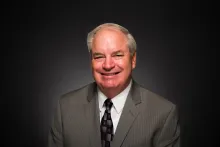
Robin Webber was born in Chicago, Illinois, in 1951, but has lived most of his life in California. He has been a part of the Church of God community since 1963. He attended Ambassador College in Pasadena from 1969-1973. He majored in theology and history.
Mr. Webber's interest remains in the study of history, socio-economics and literature. Over the years, he has offered his services to museums as a docent to share his enthusiasm and passions regarding these areas of expertise.
When time permits, he loves to go mountain biking on nearby ranch land and meet his wife as she hikes toward him.
