
Robin S Webber
This transcript was generated by AI and may contain errors. It is provided to assist those who may not be able to listen to the message.
Well, I have a message for you this afternoon, and it's one that really comes off the recent autumn festivals that we've been keeping. We just came off those festivals, and we conclude it with the eighth-day festival. Oftentimes, a minister will turn to Revelation 22 or 23 on that day, the eighth-day festival, to kind of direct us and point us to that world which is yet to emerge, the realm of God which is called the new heavens and the new earth, when all of humanity is going to have that opportunity to bend the knee to Jesus Christ.
And ultimately, God welcoming so many of His immortal children and allowing them to step into eternity and to experience Him fully. Well, we've gone through that, and oftentimes a minister will turn to Revelation 22 as I did. And I invite you to open up your Bible. It's turned to Revelation 22, and I'd like to just focus on something that really, really struck me, this feast.
That's why we observe the feast year by year, because each year we get struck by a new concept, a new thought, a new revelation, at least in our heart and in our mind, or words that come to us and just kind of pow, you know, just smack you like a 2x4 across the head, and you just go, wow, that's incredible. And you cannot help but think when you look at Revelation 21 and 22, just what a welcoming God that we have, a welcoming God, a God that says that in this Jerusalem that's going to come down out of heaven, that there are 12 gates. Just a welcome.
He wants people to enter this realm, this spiritual realm of a new heaven and a new earth, that He wants to give all of us as a gift. And with all that is then said through the book of Revelation, with all of its high highs and sometimes with some of its low lows due to human nature, and having this story, as it were, in Revelation put out before John and to the body of Christ, it's interesting how it crescendos. And we find that in Revelation 22 and beginning in verse 17, And the Spirit and the bride say, Come, and let him who hears say, Come, and let him who thirst come, whoever desires, let him take the water of life freely.
For I testify to everyone who hears the words of the prophecy of this book, if anyone adds to these things, God will add to him the plagues that are written in this book. And if anyone takes away from the words of the book of this prophecy, God shall take away his part from the book of life from the holy city and from the things which are written in this book. God is a straight shooter. God gives to truth. In him there is no lies, it says in the beginning of the book of Titus. And God the Father reveals through Christ that John writes down, he writes down in a sense, the good, the bad, and the ugly that would occur from Jesus' first coming to his return to ultimately this coming of the new heaven and the new earth.
But it's fascinating the word that I would like to center on today. You might want to jot it down. It's only four letters, but it's the word that pops out to me as one that reads the Bible, and that is the word come. The word come. And let's talk about that for a moment.
And to realize that, especially all of us, whether we were in Kenya or Maui or Steamboat Springs or wherever we might have been for the feast, or maybe we weren't at the feast, we weren't able to go to the feast, but maybe we experienced the feast at home or we sincerely read these things and we kind of get excited about it. I know that at the Oceanside feast site when we conclude, traditionally we always conclude with the New Jerusalem sung by Ingrid Helge and by Greg Hildjian, and then the whole congregation gets up and sings the chorus.
And you know, by the end of that time, you're kind of wanting to high-five to the Kingdom. I mean, you want to go up. You know, beam me up, Scotty. We are ready and everybody's excited. Not emotionalism, but there's emotion, there's feeling, there's desire. You've been with God's people full of the Spirit. You've heard wonderful truths. You recognize what God has in store in contrast to what we're going through sometimes today. And so you're going, yeah, come, you know, come, let's come, come, come, and you get excited about it. But what I want to share with you and all of this, friends, is simply this. You know, and I know, sometimes we can get caught up in the moment, sincerely so, but you and I also recognize that as your parents talk, you probably at one time or the other talk is cheap.
We can say come, but our actions need to be synonymous with those words. We can mouth the words come, we can read come, we can hear somebody else say come, but at the end of the day, brethren in San Diego, by what we do moving away from the feast, by what we do day by day, deed by deed, person by person, sometimes persons that we had not necessarily, are you with me, planned for?
Because it would have been easier a different way. We always want the easy way rather than develop the spiritual muscle. That's when God knows that we really mean come. Allow me to use some verses to bring this out as a point. Let me, if you would, in Matthew 7 and verse 21. Matthew 7 and verse 21. It's a verse that may be known to us, but again, I think it plays into the word come as well.
Matthew 7 and verse 21, where it says, not everyone who says to me, Lord, Lord, and or we could substitute, come, shall inherit the kingdom of heaven, but he who does the will of my Father in heaven. Interesting thought to consider. Again, join me a little bit further into the New Testament towards the rear in a book of wisdom called The Epistle of James. James 1. And let's see what the Apostle James has to say to direct our thoughts appropriately on this Sabbath day. James 1 and verse 21. Therefore, lay aside all filthiness and overflow of wickedness and receive with meekness the implanted word which is able to save your souls.
Interesting, the implanted word, because we're going to delve in that implanted word today.
But be doers of the word, and not just simply hearers, only deceiving yourselves.
For if anyone is a hearer of the word, an outer doer, he's a man like observing his natural face in the mirror. For he observes himself, goes away, and immediately forgets what kind of a man he was. But he who looks into the perfect law of liberty and continues in it, and is not a forgetful hearer but a doer of the work, this one will be blessed in what he does. So it speaks about an implanted word, and it speaks about being a doer, and not simply a hearer. I remember many years ago when I, Susan and I were in the Garden Grove congregation, had a conversation with a young man there, and it's always struck me the words that he said. Actually, I think it was a part of the speech that he was giving. And he said, you know, when the time of judgment comes, when the time of judgment comes, he said that in Jesus Christ is there at the judgment table, the first thing he's going to ask is, not what you know. He's going to ask, what did you do? He's going to ask you, not what you know, but what you did. And I've always remembered that. And that's why I'm bringing this message to you today. The title of this message is simply this. If you'd like to jot it down, I know some of you like to have a specific purpose statement. This is a specific purpose question, and this is it.
And this is it. When does come really mean come? When does come? Come, Lord Jesus, come!
We raise our hands and we really want his kingdom to come, but when does it really mean come?
And when does the rubber touch the road? And that's what I'd like to talk about today. And that is beyond words and talk, but to deal with action. How can you know? More importantly, how does God know that you really want him to come back to this earth? And thus, not only simply to talk the talk, but to walk the walk. There are always three parts to our millennial exercise that we do when the Feast of Tabernacles comes up, based upon the verses in Isaiah and Micah. Number one, we go up to the mountain of the Lord. We go to where God has placed his name. Number two, we implore, teach us your ways. And then number three, we go from that and say, we shall walk in your ways.
This message heavily deals with walking in his ways. And there really is not any mystery to that, as we will come to see. So let's consider how our Heavenly Father's will is and how we proclaim come. Again, when we take Jesus' model prayer, where he says, our Father, which heart in heaven?
Which heart in heaven? Hallowed be thy name. Your kingdom come. Your will be done in earth as it is in heaven. Is that only speaking of a time when the trumpet sounds? Is that only speaking of a time when the spiritual heavenly Jerusalem appears? When does that happen? That's a good question. Might be a good thought in an after-service informal Bible chat. When does that occur? When does the coming come? And how can we show God that we really want him to come back? We do it, brethren, by performing his will now. You say, well, what is that? How can we know? Well, we go to the implanted words of the Bible, like James said, and I think we can understand his will.
Allow me just to give you several thoughts today. This is not going to be complete. You can build upon it. No sermon should ever, any message should ever be thought as complete and a finish line. Whether it be Mr. Miller, who spoke first, or myself this afternoon, messages should be considered not crossing a finish line, but just simply the starting blocks for you then to go through the week and to develop and perform your own study of God's Word. Allow me to share one thought here. We proclaim come when we recognize God has called us to worship him in spirit and in truth. Join me, if you would, in the Gospel of John, John 4, and let's understand what Jesus was alluding to here as he spoke to the woman at the well in John 4. I'm picking up the thought in verse 23.
But the hour is coming, and now it is. When the true worshipers, hmm, so there must have been people that were, shall we say, less or lacking in true. When the true worshipers will worship the Father in spirit and truth, for the Father is seeking such to worship him. God is spirit, and those who worship him must worship him in spirit and in truth. I think to fully understand this passage, we have to understand the word worship. The word worship comes from the Greek, Greek root, proskun, which means literally to kiss the ring, those that would kiss the ring.
At the same time, the word worship comes actually from an old Anglo-Saxon derivative, and you might want to jot this down, is worth, comma, not comma, dash, ship. In other words, we respond to God because of what he has done and what he desires in us, and we give him reverence. We give him worth commensurate to what he has granted us, which he leaves for you and me to determine, and hopefully to come to understand as he does. When we understand that God has called us to worship him in spirit and in truth, this changes the whole equation because it's not on this mountain or that mountain. What Jesus was saying was that true worship of God no longer simply happens in a spot on a mountain and or a place. It's a 25-hour job in a 24-hour day. In days of yore, but it's being spoken here, there was a temple in Jerusalem and there was also a temple up on Mount Samaria up in the north. And so people were locked into that, oh, we'll go find God there. We will worship there. We will meet him there. It was very locked into a very black and white time and space kind of scenario. What the Christ is saying here is, as Paul would later illuminate, that we are the temple of God. We're the temple of God. We are that walking and talking temple, and that presence of God comes into us. And because it does, then we return worship or worship to him. So we need to understand that. And the worship moves beyond, let's think this through, the worship moves beyond just simply the black and white of Scripture. This kind of worship, what is being talked about, is not only what you do. You might want to jot this down. It's not just what you're doing, but why you're doing it.
Why you're doing it. Oftentimes, people are, in a sense, as you and I look at them and see them from our observation point, it looks like they're doing all the right things for all the right reasons.
Outwardly so. But the question that we have to ask ourselves and the homework that we have as we now move forward off to the feast is, why do we do what we do? Because sometimes there's something about human nature that, well, do I dare say it, is self-deceiving. We don't see ourselves for what we really are or why we are doing things. Everybody can be saying, well, you're really doing very nice things, and oh, thank you for doing that good thing. And it might be a very good thing that's done, the end result, good. But what is our motivation for doing it? What is in our underlying current and motivating us? What is our motor that is running our life? Is it about of outflowing and outgoing concern? Or is there something down deep that you and I haven't wrestled with, and that perhaps we're doing even right things for, unfortunately, all the wrong motives, unlike Jesus Christ? Let's go to another one. We proclaim come, not just simply talk the talk, but walking the walk when we fully believe that God is love. When God is love. Join me if you would, a very foundational scripture. Sometimes it's used in trivia games as to what might be the shortest one of the shortest sentences in the Bible. But in 1 John 4 and verse 8, you know, we can say a lot about God. We can say He is the Alpha and the Omega. He is the banner. He is, and all the words that we can use out of the Hebrew and the Greek. And we could fill up all a whole page of who and what God is. But it's very interesting that the one man that at the end of the first century summarized it this way in 1 John 4 and verse 8, he who does not love, he who does not have agape, he who does not have that outflowing and outgoing concern away from self without any strings attached, without any hope of return of and by itself in the moment or the week or the month they had, and is truly doing it as God did. Notice that it says this, he who does not love does not know God. In other words, God's a stranger to Him. He's gone through an exercise, but it had no effect. I want you to think about that for a moment. It says, he who does not know love is a stranger to God. Now, growing in Christian love and godly love is not an event. Are you with me? It's an exercise. It's a journey. It goes over rivers. It goes over torrents. It goes down into valleys. It goes down into deep valleys. It pops over hills. And sometimes there are mountain peaks that need to be climbed. But it is your desire to do so that God looks at. Will any of us love perfectly on this side of the trumpet? I don't think so, because we're in this human tent. But again, notice what it says in 1st John 4. He who does not love does not know God, for God is love. That's incredibly important. Can I ask you, as people here in San Diego, that this year, that you and I can explore further in our messages and in our informal Bible chat groups, in our emails back to one another, in our conversations as husbands and wives from the oldest of us that have been married to the youngest, that we can explore and discuss the subject of love and what it means. And also recognize that the one that you might be talking to is exactly the individual that you have to learn to love more, like God. Love is everything. When you, basically what the Apostle John did, around 85 to 90 A.D., he boiled down the Bible and everything that it says about God, and he came up with this definition.
God is love. I know sometimes, because of our ability to study Scripture, and we move into Genesis, we move before time, we move after time, we move into the time of Israel, we move into the time of the Apostles, and we put God here, and we put God there. And by the way, that's all well and good, because God is all of that. But sometimes we just miss the point, brethren. Sometimes the obvious is so obvious that we do not claim it as our heritage, as Christians. God is love.
Let's take it a little bit further here. How is that love defined? Okay, God is love. And then how is that love, that outflowing, outgoing concern defined? Look at just over the chapter, 1 John 5 and verse 2. By this we know that we love the children of God when we love God and keep His commandments. Love is keeping of the commandments. Now that's very interesting, because the commandments are love. That's the mind of God that is outlined in action points that you and I can understand. We can go to Exodus 20, you know, sometimes you say, our Father, which art in heaven, hallowed be thy name, thy kingdom come, thy will be done on earth as it is in heaven.
So what is God's will? God's will for a covenant people, whether of old or new today, is to observe these commandments. And that's homework in itself. They're not the ten suggestions, they are the ten commandments. And when you look at it, you recognize that this is the will of God.
And it goes back to God revealing Himself in Exodus 20 and verse 2 when He says, I am the Lord your God, which brought you out of the land of Egypt, out of the house of bondage.
And so God identifies who He was, lest Israel made a mistake. And because He did do this, because of God's favor to a slave people who had no future on their own, because of God's grace, because of God's favor, thus you will respond, I will be your God, you will be my people, but you will respond to that grace by yielding and obeying my word.
Commandments don't earn salvation. The commands don't merit salvation. There's nothing that we can do in this world that merits God's grace. But we can respond to it, that when we recognize He is Jehovah, that we recognize that in our life today He's more than a pillar of cloud by day and a pillar of fire at night, but that that's the kind of presence, as Paul says, is in that temple which is our heart, that the presence of God, His Spirit, is in our heart. Then we respond to the King. We've said the God-King of Israel, Jehovah, now Christ, is enthroned in our heart, and thus we will obey what God implores us to do, such as, notice Exodus 20, verse 2, you shall have no other gods before me. What a challenge that is in today with all of the disturbances and all the distractions and all the interruptions and all the things that are out there to distract us from the one true God.
So, yeah, well, I know who God is, and I come to church. I'm not distracted. I'm not talking about right now. I'm talking about during the week. I'm talking about Monday. I'm talking about Wednesday. I'm talking about Thursday. With everything that is coming your way, what do we put first in our hearts and our minds? And we could go right down the line. I'd like to really encourage you. You want to let God know that you want Him to come, and that you realize what He has to bring is so incredible. Then we have to walk the walk before we talk the talk, and we have to abide by the Ten Commandments. I'd like to ask all of you to please do a study on the Ten Commandments. And when you study them, and then when you integrate them even further into your life and embrace them even further into your life, and we are yielding ourselves to it from no other gods before me to honoring your father and your mother, not just dad above, but our physical father and our physical mother. And when we in a modern-day America, which is so mercantile by nature, stop coveting everything and putting everything on charge cards, that's a whole other story of the Tenth Commandment.
Then we will be walking the walk, and not just simply talking the talk.
We proclaim, come, and perform God's will on earth as it is in heaven when we accept a new life in us. Join me if you would in Galatians 2 and verse 20. Galatians 2 and verse 20. When we've come to recognize that we've been rescued, and when we've turned our life over to God the Father and Jesus Christ, and to recognize that of and by ourselves we are nothing and less than nothing, and that before God began working and dealing with us, all that we did was, as the Scripture says, like filthy rags, and we turn our attention to what God is doing in us by allowing the Spirit of Christ to be in us, and to recognize that of and by ourselves we can do no good thing apart from God, we are going to be saying, come. Galatians 2, verse 20. Let's notice what it says.
I have been crucified with Christ. It is no longer I who live, but Christ lives in me, and the life which I now live in the flesh. I live by faith in the Son of God who loved me and gave himself for me.
It's very interesting when you think about it that ancient Israel was given 10 commandments. Later on, Jesus Christ brought that down in Matthew 22 when he said, and it was asked, what were the great commandments? He says, this is a great commandment. You shall love the Lord your God with all your heart and all of your mind and all of your soul, and the second is likened unto it. You shall love your neighbor. So it's interesting that it went from 10 into the New Testament. It went to 2. The 2 did not do away with the 10. The 2 just defined what all 10 are about. But then you break that down a little bit further. You just break that down. Let's move beyond commandments and let's just synthesize what is the essence of the Scripture itself when it comes to commandments and why we observe them and why we keep them.
Join me if you would here for a moment in Habakkuk 2 and verse 4. Habakkuk 2 and verse 4. Behold the proud. His soul is not upright in him.
But then notice what it says here, but the just shall live by faith.
You know when you boil again, one of these boil down moments of the Bible to get an anchor Scripture, it says that those that are justified before God are those that live by faith and really believe. This kind of goes back to the 10 commandments. Why would an individual observe the 10 commandments? Just simply because they're written in black and white?
Just simply because they sound good? And or do we believe in its authorship by a divine being who knows what is best for us? The Apostle Paul brings this out again in Romans 1 verse 17. So it is both in the Old Testament and the New Testament, and it's really one of those clarion statements that comes out of the book of Romans in Romans 1 and verse 17. When he speaks about what direction the world is going and then in verse 17 he says, for in it the righteousness of God is revealed from faith to faith as it is written, the just shall live by faith.
Now the question is, faith, are you with me? Faith in what? What is our faith in?
Is our faith in man? Is our faith just simply in a law for law's sake? Is our faith focused or should be focused in something greater? My dear, and I think it is. I'd ask you to join me in Acts 4 and verse 12. These are statements of faith to encourage us as we move away from the Feast of Tabernacles in the eighth-day festival and prepare to walk the walk. In Acts 4 and verse 12, notice what it says. This is where John and Peter were cornered by religious authorities.
They were asked to deny the one that they had walked with for three and a half years.
And then notice what it says here in Acts 4 and verse 12.
Nor is there salvation in any other, for there is no other name under heaven given among men by which we must be saved. If I were to ask what is the core element of the faith of Robin Weber, and hopefully that's the core element of the faith of any Christian, it stems upward, not just simply the whole book here, but upward to the divine and what the divine did. And to recognize that there is no name under heaven, that is an article of faith that what is behind that name, and you have to understand some of you that are new to the scriptures or beginning to study, so often in, oh I don't have my mic on today, I can't wander, okay, so anyway, that to recognize that, you know, when we think of a name, we think of a signature. We talk about putting down your, you know what, your John Hancock. That signature is not a humble signature, by the way, as we all know. It's pretty, pretty big and pretty loopy. So we confine it to writing. When Peter mentions that there's no name under heaven by which man might be saved, this is not just a name, it's not just Yeshua, it's not just Bill, it's not just John, it's everything that supports and is behind that name. It's the whole essence, it's the whole substance of what God is, and that there's no other name. Now when we come to faith that God the Father has given Christ to us, then we will observe the Ten Commandments more carefully. We will be looking at our motives more clearly, more carefully. When we recognize that there's no other name under heaven by which man might be saved, we'll understand why when we go to John 3. John 3 and verse 16. To recognize the divine did the incredible. John 3 and verse 16. For God so loved the world that he gave his only begotten son. He did that which he even removed Abram from doing with Isaac, but he gave his son that whoever believes in him should not perish but have everlasting life. For God did not send his son into the world to condemn it, but that the world through him might be saved.
It might be saved. So this is an article of faith, and this article of faith makes everything else come together as to being worshipping God and spirit and truth, yielding ourselves to the Ten Commandments. You say, well, yeah, but those Ten Commandments, those are for Sinai. Those were written on stone, absolutely. But you know what? They've also been written somewhere else, haven't they? Shot down Romans 7.14, a very important verse when it comes to the discussion of grace and law, and that is to recognize that the Apostle Paul himself says, the law is spiritual.
The law is spiritual, absolutely. It's not just black and white. There is a sweet reasonableness that lies just beyond the black and the white of the letter of the law. It's called justice.
It's called mercy. It's called grace. It is that which God wants us to exercise with the wisdom of the Holy Spirit. In Hebrews 8 and verse 10, join me if you would there for a moment just to complete this thought, Hebrews 8 and verse 10, let's take a look here. For this is the covenant that I will make with the house of Israel after those days, Israel being a type and being a model. And God still has unfinished business with the house of Israel. But under the new covenant, this applies to us, that I will put my laws in their mind and write them in their hearts, and I will be their God and they shall be my people. That has always been God's desire since Eden. God was telling Adam and Eve, I want you to be mine. I want you to worship me. I want you to have relationship with you. I want to be in the middle of you. I want to walk with you. I want to talk with you.
But we know the rest of the story. They went AWOL. Why did they go AWOL? Because they broke God's holy and righteous law. And you know what? They did not believe. Why do we, like Adam and Eve, sometimes, do I dare say it, fall short and break the Ten Commandments? Because somehow we think God has gone somewhere. We think that somehow God hasn't delivered. We think somehow that God doesn't understand. We think somehow that God is a, this is an old-fashioned term to the millennials here. God is a butterfingers. His hands got stuck up there. And so therefore, we feel that somehow we've been left out of the loop of opportunity. You name the commandment and you figure it out. We've been left out of the loop of opportunity. So we see that no trespassing sign, but God will understand this one time because he's fallen asleep. No. That crossing those trespassing signs cost us our Savior's life. And when we understand that there is no name under heaven by which man might be saved other than the Lord Jesus Christ.
And I keep on emphasizing what it means, the Lord Jesus Christ. That is not just poetry. That is the full mantra of the gift of God to us. Lord being King, right? Jesus being Yeshua, Jesus being Joshua, Jesus being salvation has come, saved salvation. And then, of course, the Lord Jesus Christ. He is the anointed of God. He is that what? Fulfillment of prophecy. Hundreds of prophecies in the Old Testament coming forward into Bethlehem that you and I might have a relationship with God and one day be able to say, Come. Let me drop down, going over about five or six comes, but I'd like to conclude. We proclaim, Come, when we acknowledge 2 Corinthians, chapter 12, verse 9. You say, Well, what is there? Well, please join me. Let's open up our Bibles and see what's over in 2 Corinthians 12 and verse 9. It's a famous or infamous, I think it's famous, story about the thorn in the flesh that was a flicking paw. And, you know, so often people get distracted by trying to figure out what the thorn was rather than the big picture in the big story here.
You know, and I know, that Paul had given himself as a living sacrifice to the church and to Jesus Christ for decades. And then, seemingly, doing everything right. The one thing that perhaps he asked of God more than once was, Please alleviate me of this. And God chose not to.
Notice what it says here. And he said to me, Oh, let's go back up here. Let me go up to verse 7.
And, lest I should be exalted above measure by the abundance of the revelations, pride-filled, in other words. Oh, look what God's revealed to me. Look at my wonderful voice. Look at my wonderful teaching. Look at how God is using me. Lest I should be exalted above measure by the abundance of the revelations. A thorn in the flesh was given to me. A messenger of Satan to buffet me. Lest I be exalted above measure. Ladies and gentlemen, members of the San Diego congregation. What the Apostle Paul is telling us is that pride. Pride is always just around the corner.
You don't believe me? Just monitor it this week in your life. By the things that you do, by the things that you say, and also by the things that are you with me? You don't do because of pride. And then because of things that you don't do because of pride, thus you sin. For it says in James, for him that knoweth to do good, and does it not? It is what?
It's sin. I remember long ago, the first time I ran across that saying that said, that said, pride is the handle that fits all sins. Thus, Paul was going into God's University here. Notice what it says. He appealed three times. And then he said, verse 9, and he said to me, My grace is sufficient for you, my grace, that which you received as unmerited forgiveness, and that you were pardoned. And not only unmerited forgiveness, but continuance of favor and blessing. Once Christ is accepted, after the Father is called, and we surrender our lives, God moves that which we were and that which we did away from us. He removes the judgment, and he drops it into the ocean in the deepest spot. And he puts a sign up there on the way. This is a vision proverbial. He puts a sign up there, and it says, No fishing allowed. Nobody can go fishing for your sins, including yourself. So we have this unmerited pardon, and then this blessing, this grace, this favor, all the blessings that God shares with us in the chapter of Ephesians 1, that he has held nothing back of spiritual blessing. He doesn't say that he's going to take out every thorn, but he does give us blessing. My grace is sufficient to you, for my strength is made perfect in weakness. Therefore, most gladly, I will rather boast in my infirmities that the power of Christ might rest upon me. When we come to that point, when we say that, Father above, your grace is sufficient to what you've done by revealing yourself to me, and giving me your Son, for giving me of my sins, empowering me to be a member of your kingdom, and that my citizenship is in heaven now, and for me to realize that humanity is not destined for disaster, but is designed for a future that you have in your time and your way for all humanity, and that your Son bore himself on that cross, for the joy that was set before him, that one day I might sit in his presence.
Can I ask you a question as a thinking Christian? Does God need to do anything more for you in this life? Are there things that you would want God to do for you in this life? Yes, I'm right there with you. But does he have to do anything more? Is his grace sufficient? Or is he only as good as the last bend in the desert as he was within Israel, who were destroyed because they did not have faith that God was good? Sometimes we can feel that because God has gone away, we say, well, does God love me? How do I know that God loves me? It seems like he hasn't been listening to me recently.
It goes down to that faith, Acts 4.13, John 3.16, that God so loved the world that he gave his only Son. You either believe that or you don't because it is in that belief that will shadow and shape everything else that you do that's in this Bible in black and white. If you do not fully believe that the way that God desires for us to believe it, you will share the Bible in black and white.
You will be able to live by the letter of the law. And we know those that live by just simply the letter of the law, that God has a spot for them because the law cannot save you. But because God has offered us salvation, therefore our desire, therefore our heart, therefore our bent is towards observing what God wants us to do.
A simple question that only you can answer this week in one of Will's informal Bible chats.
See, Will, I'm going to remember this one, is simply this. And only you can answer this is God's grace through Jesus Christ sufficient. What else do you want?
You know, I don't try to say this pride-filled. I hope not, or otherwise I'll hear it later from Susan, probably. But, you know, over the years many of you have, I hear a lot from Susan sometimes, depending. Not a lot. I'm going to get it now. Anyway, that sometimes some of you see me walk up these steps and you ask, am I all right? Are you okay, Mr. Weber? Robin, what's wrong with you? You walk funny. How are those knees doing? And I keep my knees in the shape that they are.
At this point, this is not to dispel those that have had any operation, but I keep my knee the way they are because it's the only thing that's never really worked in my life since ball days.
And that allows me to know what other people are going through. It allows me to know that at times when you come up against a door and there's only one inch of ledge, just one inch of ledge, not a foot, you already feel the pain. You already know what it's going to look, feel like, and you're looking for another exit. You're looking for another doorway.
Now, that's just minor. I'm using that as a comparison. God never promised us a rose garden.
Jesus Christ never said that it would be easy. He did say that it would be worth it, though.
Let's conclude this message today about when does come really mean come by turning to 2 Timothy 4 and verse 8.
In 2 Timothy 4, which is thought to be the Apostle Paul's last epistle because of some of the writings there, he says, Finally, there is laid up for me the crown of righteousness, which the Lord, the righteous judge, will give to me on that day. It doesn't mean today. It doesn't mean yesterday.
It is a time yet in the future. And not only to me, but also to those, notice, who have loved his appearing. This is not saying that will love his appearance. It doesn't say those that are looking forward to the new heaven and the new Jerusalem coming down. Notice carefully the words those who have, those who right now are experiencing the come because Christ has come into our life now. What we've gone through in these autumn festivals talking about the Feast of Trumpets, talking about the Millennial World, talking in part the eighth-day festival in part.
For those under the new covenant, for those that have surrendered their personal kingdom to God now, and that Christ is enthroned as our sovereign in our life and has claimed our heart and sits on it, and therefore his Spirit governs our actions. It says, notice, those who have loved his appearing. That appearing is not the perousia. It can in part be the perousia or that second coming. This is another term. This is another Greek word that means that the light of God has already shined forth in our personal darkness. There's a shining that is mentioned, a shining. A bright light has come amongst us, and we couldn't do but anything like Moses and take off not only our shoes, but to give God our heart, surrender our existence, give him our words, give him our thoughts, give him our motives that are behind our deeds, and ask the Lord Jesus Christ to live fully in us, that he has come in that sense. And thus we become a light for him to this world at school, on the job, in the neighborhood, me with Susie, Susie with me, with those that are family members that have not at this time for one reason or another been called at this time.
But they see something different. They see somebody that said, Come, Lord Jesus, come.
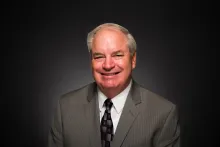
Robin Webber was born in Chicago, Illinois, in 1951, but has lived most of his life in California. He has been a part of the Church of God community since 1963. He attended Ambassador College in Pasadena from 1969-1973. He majored in theology and history.
Mr. Webber's interest remains in the study of history, socio-economics and literature. Over the years, he has offered his services to museums as a docent to share his enthusiasm and passions regarding these areas of expertise.
When time permits, he loves to go mountain biking on nearby ranch land and meet his wife as she hikes toward him.
