
Don Ward
This transcript was generated by AI and may contain errors. It is provided to assist those who may not be able to listen to the message.
The sermon today is the blood and body of Jesus. Or you might say the blood and body of Christ. There is a distinction between how the Gospel writers use Jesus and Christ. Jesus is the one who suffered and died from the sins of the world. Christ technically means the anointed one, the Messiah. After the resurrection, Jesus is basically referred to as Jesus Christ or Christ more than just Jesus. We ask the question today, is the sacrifice of Christ divided into two parts? The official doctrinal position of the United Church of God and International Association is that the sacrifice of Christ is a whole sacrifice, body and blood, and that the sacrifice of Christ is not divided. Now, this is a controversial issue, and some who are in united do not hold this position. I don't guess you would say this is a life and death matter. We're going to examine it from the Scripture. I've given sermons on this since the early 1990s. One of the bloggers of the Living Church of God makes much over this issue. He quotes some of my quotes in a sermon, saying that I say this, that, or the other. Other of the splinter groups probably would make similar statements. This particular blogger writes on issues in which the doctrinal position of the United is a little different from the Living Church of God. The implication is that their position is more biblical and hence more accurate than united. What I was talking about in the sermonette, anything to try to get people stirred up, emotionally involved, say, oh, they're falling away from the truth, and they're going this way, and they're going that way. Of course, we're always admonished, and I always admonished, to be as the Bereans. Search the Scriptures daily whether these things be true. The historic reason that some teach the sacrifice of Christ as divided into two parts is based on the belief that Christ gave His body for our physical healing, though we know that there are numerous healings, even raising from the dead in the Old Testament. One of the most notable healings, that of Hezekiah, had 15 years added to his life.
Healing of Naaman. There are many healings that are recorded in the Old Testament. The healing of Miriam, after she was stricken with leprosy, after she and Aaron had said that Moses takes too much to himself. They're all kind of healings.
God, as we heard in the sermon at, created humankind. He created them, created man from the dust of the earth, created woman from a rib that was taken out of Adam.
They say 16 basic elements. If God created human beings, He can heal any of them. He can raise them from the dead. You can read about Hebrews 11, about the great men and women of faith.
And there were many healings that took place before Jesus Christ came on the scene.
But no matter... it seems that once people get certain things in their minds, no matter what you say or how many scriptures you show, it still have a yay-butt. A yay-butt.
So the historic reason that some teach the sacrifice of Christ is divided in two parts. It's based on the belief that Christ gave His body for our physical healing and gave His blood for our spiritual healing and the forgiveness of sins.
This position also divides sin into two categories.
Physical sin and spiritual sin. Is sin divided into two different categories?
Physical sin and spiritual sin. Or is sin sin?
Before we see what the Bible instructs us on the sacrifice of Jesus, the Christ, let's see if the Bible divides sin into two categories.
First of all, I shall read from the paper, and I assume this study paper is on the members' website.
I copied this directly off the minister's website this morning.
In fact, I was on the council. We spent considerable time developing this study paper. It's rather short. It's about five pages. The title of it is, Divine Healing. And I lifted from that two or three paragraphs to read here today.
The body of Christ has a direct connection to divine healing, but one must be careful not to think in terms of two sacrifices of Christ.
One physical and the other spiritual, although there are both physical and spiritual aspects to Christ's sacrifice.
Through Jesus Christ, we do get physical benefits. One of them is healing.
And first and foremost, Christ died for the sins of the world, so we don't have to die, and that we might receive God's Spirit and live forever.
This thinking leads to equating all illness with sin in a cause-and-effect relationship.
Deuteronomy 21, verses 22 and 23, shows that the one put to death on the stake is a curse for our sakes, for our sins. Our reconciliation to our Father and healing of the breach comes through the complete sacrifice, including the preliminary sufferings. From the first time that that Roman soldier took his whip, that whip on the end of it, I don't know if you've ever used the bull whip, I've used it a little bit. On the end of that were spikes of steel, nails, and you put that out there and you jerk it back, and you rip the skin, and you cut into the skin, and you rip the skin off the person that you hit with it. So they took Christ's robe off, and they beat him unmercifully.
And we'll read from Isaiah 52, verse 14 in a bit, that his visage was more marred than any other man, the kind of beating that he took.
We cannot conclude in all cases that illness, reading from the paper again, is associated with sin, although it is true that in many cases there is a definite relationship.
The term physical sin does not appear in Scripture.
Therefore, we must question its validity. James 5, verse 15 states, and the prayer of faith will save the sick, and the Lord will raise him up, and if he has committed sins, he will be forgiven. There is not a one-to-one. Later in the sermon, we're going to show at least seven causes of why people get sick. In some cases, it might be an injury or sickness or whatever, and we call for the elders of the church in both cases, whether we are injured, whether we suffer bodily damage, injury, or whether we have some kind of disease, and we are sick.
If sins have been committed, he will be forgiven. The phrase, if he has committed sins, identifies a qualification. We also have the example of Christ and the blind man in John 9.3. He states that neither this man nor his parents sinned. While in all cases, illness is a trial, we must not judge that all cases of illness are the result of some sin in the person's life.
We can all learn lessons from trials, but we may not have committed a particular sin that produced the trial. God's people can expect trials and persecution, but these are not necessarily related to disobedience. You know, it says in John 15 that God is the husband, and then that He is the great pruner, and He prunes the vine, that it may bring forth more fruit. So, in some cases, the chastisement or the pruning may not be directly caused by sin, as we shall see with Job.
Job did have a problem, and apparently God knew that the only way to get to that was by allowing Satan to afflict him.
Reading from the paper, there is only one sacrifice for sin. We should emphasize that the suffering and death of Christ constitute one sacrifice.
Yet, we read in 1 Corinthians 11 that, "...profit is sermon of the body, and blood of Christ is essential." Paul discusses judgment and illness in the Church and relates them to an improper understanding of the Passover, symbols of unworthy manner. And when I covered the essentials of keeping the Passover, we talked about what unworthy means. It means the Greek word is an axios, a-n-a-x-i-o-u-s, and it means irreverently. So, participating irreverently, this does not divide the sacrifice of Christ into two parts, but it does connect the body of Christ with the physical healing of our bodies.
Christ gave His sacrifice that we may be made whole in every sense of the word, both physically and spiritually. But some people get more riled up over physical healing than they do spiritual healing. And more about that later. So, first of all, let's examine whether there is such a thing as physical sin that would require Christ to be beaten in the manner that He was beaten to so-called pay for physical sin. 1 John 3, verse 4. Let's turn there. 1 John 3 and verse 4.
I know there have been people who have accused me.
I would speak along these lines. It was like, he doesn't believe in divine healing. The title of this paper is divine healing.
I would venture to say that probably as many people have been healed when I anointed them as anybody else. Some of you have said, you've been healed after being anointed by me, by other ministers, as we heard in sermonette last week. 2 John 3, verse 4. Who shall ever commit sin?
As we read from the paper, you'll find no place in the Bible where the term physical sin appears. It's just sin. Whosoever commits sin transgresses the law.
For sin is the transgression of the law.
Now we go to Romans 7, a little bit more complete explanation of the law in sin.
In Romans 7, beginning in verse 7, What shall we say then? Is the law sin? God forbid! No, I had not known sin, but by the law, for I had not known less, except the law had said, you shall not covet.
But sin, taking occasion by the commandment, wrought all manner of concupiscence, for without the law sin was dead. For I was alive without the law once, but when the commandment came, sin revived, and I died.
And the commandment, which was ordained to life, commandment does not give life.
Commandment can help sustain life because the wages of sin is death, and there's only one way it can be paid for. It is through the sacrifice of the Son of God, Jesus Christ the righteous, and the commandment which was ordained to life I found to be unto death.
Why? For sin, taking occasion by the commandment, deceived me, and by it, that is sin, slew me. Therefore, the law is holy, the commandment holy, and just and good.
If the commandment is holy, it has God's active presence in it. If it has God's active presence in it, God is spirit. As we shall read, Paul concludes in verse 14 that the law is spiritual.
Therefore, if I transgress that law, I am committing a spiritual act.
Now, can I sin by doing something physical? Yes, I can. We'll talk about that.
Wherefore the law is holy, the commandment holy, and just and good.
Was then that which is good made death unto me? Was it the law that killed me?
God forbid. But sin, no, it wasn't the law, it was sin that was the transgression of the law.
That it might appear sin, working death in me by that which is good, the law is good, ordained for life.
That sin by the commandment might become exceeding sinful. In other words, the law highlights it, defines it, points it out, convicts you that you are a sinner.
It is through the Word of God and the Spirit of God that you are convicted. For we know that the law is spiritual, but I am carnal sold under sin.
Now we go to Hebrews 8 and verse 12. Hebrews 8 and verse 12.
The law is spiritual, sin is the transgression of the law. And let's notice Hebrews 8 and 12.
For I will be merciful to their unrighteousness and their sins and their iniquities will I remember no more. Through the sacrifice of Christ, the sins can be remitted.
Now, who is sin against? We go to Psalm 51.
And about every time after the Passover service, if I told the song leader here, let's not sing Psalm 51 after the Passover this year. There are other hymns in the book.
Psalm 51 verse 4. David confessing after his great sin of adultery and premeditated murder.
We go around talking about David, a man after God's own heart.
I don't have time to go into it, but what that means is that God chose David and not man, whereas the people man chose Saul and not God. David was subject to every passion, just like Elijah, that we are. And except for the grace of God, he would still be in his sins.
Against you, and you only have I sinned and done this evil in your sight, that you might be justified when you speak and be clear when you judge.
So we could conclude from that that all sin is against God.
Against you, and you only have I sinned and done this evil in your sight.
Now we go to 1 Corinthians chapter 8. In 1 Corinthians chapter 8, Paul is talking about the problems that some had with some who were eating meat sacrificed to idols.
Some were being offended that there were brethren who were buying meat in the public marketplace, the shambles, and they were eating this meat that had been sacrificed to idols.
And Paul said, you know, the meat is nothing. We know the idol is nothing.
But if I cause my brother to offend, I'll not eat meat as long as the world stands.
Verse 12. 1 Corinthians 8, 12.
But when we sin so against the brethren and wound their weak conscience, we sin against Christ. So we saw from Psalm 51.4, David said, against you and you only have I sinned and done this evil in your sight.
Paul writes here that if we offend the brothers, the conscience of the brethren, we sin against Christ.
And there's one more dimension to sin. Back a page or so in 1 Corinthians chapter 6. In 1 Corinthians chapter 6, verse 18.
Flee fornication. Every sin that a man does is without the body.
But he that commits fornication sins against his own body.
What know you not that the body is the temple of the Holy Spirit, which is in you, which you have of God, and you're not your own?
So now we get into this thing of you can commit a physical act and it be sin because you are destroying the temple, the abode of the Holy Spirit. 1 Corinthians 3 16 talks about know you not that you are the temple of God. That the Spirit of God dwells in you. It goes on to talk about how that if any man defile the temple of God, him will God destroy. So if I do the physical act of smoking, you know a lot of people want to be baptized because they're smoking and saying, I need the Holy Spirit to help me stop smoking.
The Holy Spirit might help, but there are a lot of people who stop smoking without the Holy Spirit.
When I was a boy, when my dad and mother first got married, he was one of those roll your own with good PA and take a puff or two.
He used to advertise that on a grand old Opry. Most of you too young know anything about it. But anyhow, he smoked Prince Albert.
So when I was about four years old or so, he came home one day and he said, I'm never smoking another cigarette. And he didn't. It was him. Put it away.
If you want the Word of God and the Holy Spirit, do convict you of sin, as it says in John 16, 7, and 8, and convict you of sin, of judgment and righteousness.
Once that conviction is there that you know that it is right or wrong, then the Holy Spirit is not going to force you. It may tug and your conscience may pull you and tug you and say, you ought to do this. Not going to make you.
It's basically what the Holy Spirit does is the old farmer saying you lead a horse to water, but you can't make him drink. If I eat too much, if I just stuff my belly called gluttony, and I eat too much, and I pay whatever consequences there are from that, from being overweight to gout to any number of things that you could name, maybe diabetes, whatever might be the result of overeating certain foodstuffs, it is a physical act, and it may make me sick, but I'm defiling the temple of God. It is spiritual. Any man defile the temple of God, him, will God destroy. Like drugs.
People take drugs, and not only do they defile their own bodies, but in the case especially of mothers, if they take drugs or alcohol when they're pregnant, their child may be born with deformities or something like that.
There's no place that you can find in the Bible that says that X, Y, or Z is a physical sin.
Sin is sin. And if you can show it to me, then we'll have a point of discussion there.
We are reconciled. Well, one other one, 1 Corinthians 6. I think I asked you to turn there.
1 Corinthians 6 and verse 9.
Know you not that the unrighteousness shall not inherit the kingdom of God, be not deceived, neither fornicators nor adulterers nor effeminate, nor abusers of themselves with mankind.
See, Paul goes a step beyond just what we would call homosexuality. He says effeminate or abusers of themselves with mankind, nor thieves, nor covetous, nor drunkards.
See, a physical act I can drink, but if I exceed moderation to the point that I become an alcoholic and drunkard, through physical action I have brought on a sin. Now, Alcoholics Anonymous and the world, and I used to teach psychology and many other things and know all about the 12-step program, and I think in some cases it's good, but basically the medical profession today defines alcoholism as a disease. The Bible says that a drunkard will not inherit the kingdom of God. I didn't write it. Do we believe what the Bible says?
Nor revelers nor extortioners shall inherit the kingdom of God.
So, if we're reconciled to God by the death of Christ, why did Christ have to be beaten?
Why was he beaten? Why was he beaten worse, perhaps, than any other person had ever been beaten to the point? Let's just turn there and read that, unless you think I'm making it up.
In Isaiah 52 and verse 14. Isaiah 52 and verse 14.
As many were astounded at you, his visage was so marred more than any man, and is for more than the sons of men. I take it from that you basically cannot recognize him, because his visage, he had been beaten so unmercifully. So, if sin is not divided into physical and spiritual sin, and since the sacrifice of Christ is not divided, why was Christ beaten if it was not to pay for physical sin? Well, as we have seen, there's no place in the Bible that shows physical sin, per se.
The Roman scourgings were designed to inflict the maximum pain, and suffering without causing death. You came to the very verge of death. Remember that when it came time for Jesus Christ to trudge up the hill to the hill of the skull to Golgotha, that he was so weak that he couldn't carry the stake, and this man came along and carried it up there for him.
So, if there's no such thing as physical sin, why did Christ have to suffer? The answer to that gives us great insight into why we go through suffering. And these passages I'm about to read are virtually not understood. Go to Hebrews 5 verse 7.
Hebrews 5 verse 7. Remember Hebrews, comparison and contrast of the Old and New Covenants, that the elements of the New Covenant far surpass the elements of the Old Covenant. In this particular chapter, comparing the priesthood of Melchizedek with that of Levi, in verse 7.
Hebrews 5 verse 7. Who in the days of his flesh, when he had offered up prayers and supplications with strong crying and tears, unto him with strong crying and tears unto him that was able to save him from death, and was heard in that he feared that Jesus Christ was not a kamikaze. He was not just some wild-eyed fanatic who underwent martyrdom.
He was thoroughly aware in conscience of what was happening. He voluntarily went through it, though he prayed, if it be possible, let this cup pass from me. His prayer was so intense that he sweated great drops, and the sweat as drops of blood as it talks about in Luke 22. Verse 8. Though he were a son, yet learned he obedience by the things which he suffered. Now, how do you understand that passage?
Though he were a son, yet he learned obedience through the things which he suffered. The Scriptures say clearly that he was without sin, that he had committed no sin. So how did he learn obedience through sufferings? He had gone through many, many trials up to this point. Many of those trials had to do with the spiritual, human relation kind of domain. Soon after, he was baptized and led away into the wilderness to be tried and tempted of Satan.
After fasting forty days and forty nights, the tempter came to him. They called him illegitimate. They called him every name under the book. They accused him of being of the devil and all of those kinds of accusations and persecutions. But now, at this, in that final hours of his life, he faced this suffering that perhaps no other person has experienced. And he was tested to the very bitter end, as it says.
You know, it says at one point, don't you know that I could call out my father and he would send legions of angels and deliver me? Though he were a son, he learned, yet learned, he obedience through the things which he suffered. But in being made perfect, he became the author of eternal salvation unto all them that obey him, called of God and high priest after the order of Melchizedek. So he had to suffer the most painful death known in order to prove that he would remain obedient through the most painful death known to mankind.
At any point, he could have cursed God or perhaps call for the legion of angels. He had to remain perfect in mind and spirit, even unto death. And he went through that trial and he remained perfect and without sin. Notice Romans 5.19. We spoke of this briefly the other day. We turned to Romans 5, 1 Sabbath in the recent past, where the comparison and contrast were made in Romans 5 between the first Adam and second Adam, through one man's sin.
And because we've all sinned, we had the death penalty on our heads. In Romans 5.19, for as by one man's disobedience many were made sinners, so by the obedience of one shall many be made righteous. And Jesus Christ was obedient even unto death through that terrible ordeal. Now to Philippians 2. I'm turning to all of these and let's turn to these. Philippians 2 and verse 7. But made himself of no reputation, took upon him the form of a servant.
We want to talk about servant leadership, Christ-like service. Jesus Christ is the absolute epitome of humbling himself and taking on the form of a servant, made in the likeness of men and being found in fashion as a man. He humbled himself and became obedient unto death, even the death of the stake. Now in 1 Peter 2 and verse 21. 1 Peter. 1 Peter 2 and verse 21. For even hereunto were you called, because Christ also suffered for us, leaving us an example that we should follow in His steps.
Who did no sin, neither was guile, found in His mouth. He loved not His life unto the death. Brother, there are no shortcuts to learning obedience. There's no shortcuts to the creation of holy righteous character. Notice I said the creation of holy righteous character. I did not say the development of holy righteous character. We talk about developing holy righteous character. We do our part and the Holy Spirit spreads abroad in our hearts the love of God. Go to Romans chapter 5. I better show you that or you'll... In Romans chapter 5, we do our part. We are new creations. We are a spiritual creation.
That is the new man. A new mind. See, the old man remains in a person to the day that they die, but the spiritual man, the new creation, can rule over the old man. Romans 5, 5, and hope makes us not ashamed because the love of God is shed abroad in our hearts by the Holy Spirit which is given unto us. One of the main reasons why healing is not just a matter of whether one has the faith to be healed, is because we go before God and we confess our...
If you want to divide, let's say it's divided, the sacrifice of Christ. Some people talk about, oh, if I just had the faith, I could be healed. I could be physically healed. But then they commit a sin. It could be a grievous sin. They get out on their knees. They say they've repented and they cry out to God, please forgive my sins and heal me spiritually and get up and go. No problem. I've been healed spiritually, but I don't have enough faith to be healed physically. Which one's more important? Living in the flesh or living forever in the kingdom of God.
Now, let's notice the causes of sickness. One is sin. You can sin and it can result in sickness. You can smoke too much. You can drink too much. You can use drugs. You can eat too much. And it can result in you being sick. But is that, as we have talked about, just a, quote, physical sin? There are sins against...we read scriptures that says sin against God, sin against Christ. Sin against your own body. We didn't turn and read 1 Corinthians 3, 16, 17, where it says, You are the temple of the Holy Spirit.
If any man defile the temple of God, him will God destroy. Another reason for sickness is sins of the fathers. Turn to Exodus 20 in verse 14. Exodus 20 in verse 14. In Exodus 20, I said 14 is 4. Exodus 20 in verse 4. You shall not make unto you any graven image or any likeness of anything that is in heaven above, or that is in the earth beneath, or that is in the water under the earth. You shall not bow down to worship it, nor serve them for the Lord your God, am a jealous God, visiting the iniquity of the fathers upon the children, unto the third and fourth generation of them that hate me.
You can become an alcoholic through drinking too much, and the susceptibility, the probability that your children will be alcoholics are greatly enhanced. You can go the route that causes diabetes. The probability that your children will be diabetic are greatly increased. You can go the route of any number of things that causes disease, and the probability is greatly enhanced, that that will be passed on to the third and fourth generation. Another cause of sickness was in the introduction, but let's turn there in John 9.
John 9 and verse 1, And as Jesus passed by, he saw a man who was blind from his birth, and his disciples asked him, saying, Master, who did sin? So there has been this in the minds of men, a link between sin and sickness. This man or his parents, that he was born blind. And Jesus answered, neither hath this man sinned, nor his parents, but that the works of God might be made manifest in him. Another reason for sickness, and we covered this in essentials of taking the Passover, go to 1 Corinthians 11, and that is not thoroughly discerning the body of Christ.
In 1 Corinthians 11 and verse 27. Failure to examine ourselves can come in taking the Passover unworthily, irreverently. Remember the two greatest requirements for keeping the Passover, reconciled to God, and reconciled to one another. Wherefore, whosoever shall eat this bread and drink this cup of the Lord irreverently in Axios, shall be guilty of the body and blood of the Lord, but let a man examine himself, and so let him eat of that bread and drink of that cup.
For he that it eats and drinks unworthily, eats and drinks judgment to himself, not discerning the Lord's body. That word discerning is diacrino. It means to thoroughly judge all the way through the body and blood of Jesus Christ, and also the body of Christ, the Church of God. For this cause many are weak and sickly. Here is a cause of sickness. For this cause many are weak and sickly.
Many are weak and sickly among you, and some are even dead. Because if we don't judge ourselves as it says, God will judge us. For if we would judge ourselves, we should not be judged. But when we are judged, we are chasing of the Lord that we should not be judged with the world. So another reason, tying in with this, is that the Lord, God, chases every son that he loves.
Hebrews 12 and verse 6. Another reason why we may be sick or we get injured, go to Ecclesiastes 9 and verse 11. Ecclesiastes 9 and verse 11. We can be in the wrong place at the wrong time. Now driving up here today as I pass Pearland and this strip on 288 between Pearland and Beltway, the traffic was slowing and there had already been two policemen who, with sirens blaring, came around the traffic. And I got up there and there were three police cars and here was this car just off the lane on the right-hand side that was facing the wrong way like the wheels were sort of coming off.
And lying on the ground was a man sort of writhing with his head up and a policeman approaching him with a big pistol about this long pointed at him. At a powder puff football game in recent days at Worthing High School over here in southeast Houston, a gang came in on them. Vengeance being taken by the gang. They fired shots. An 18-year-old boy, totally innocent, was killed. Others were injured. See, you can be in the wrong place at the wrong time.
You can be in Walmart or in maybe it's the doctor's office. As my wife was on Tuesday and everybody in there seemed like they were coughing their heads off. God does not put necessarily a plastic bubble around us and protect us in every case. I believe I've been spared at times of accidents where it just seemed like for sure I was going to be hit or I was going to hit somebody, but it just I don't know it it didn't happen. It's like something intervened. In Ecclesiastes 9 and 11, I returned and saw under the sun that the race is not to the swift nor the battle to the strong, neither yet bred to the wise nor yet richest men of understanding nor yet favor to men of skill, but time and chance happens to them all. You can be in the wrong place at the wrong time.
And you may have to suffer the consequences.
Another thing, God allows Satan to try us. This is especially instructive. Go to Job, please. Job chapter 1, especially when we're talking about this thing of sin and sickness and that there's not a one-to-one relationship between sin and sickness. In Job 1, verse 1, there was a man in the land of eyes whose name was Job, and that man was perfect and upright and one that feared God and is few and evil. Now, verse 6, Now, there was one day when the sons of God came to present themselves.
The sons of God can refer to the good angels or to the bad angels. The bad angels were cast down.
Apparently, I don't know of all of them, but Satan or not. But anyhow, Satan still has access to the throne of God. Now, it was a day when the sons of God came to present themselves before the Lord, and Satan came also among them, and the Lord said unto Satan, Where do you come from?
Satan answered the Lord and said, From going to and fro unto earth, and from walking up and down in it.
And the Lord said unto Satan, Have you considered my servant Job? Now, this is the Lord speaking, that there is none like him in the earth, a perfect and upright man, one that fears God and eschews evil.
Then Satan answered the Lord and said, Does Job fear God for nothing?
And Satan says, Remove the hedgerow and let me get at him, and he'll curse you to your face.
And God said, Okay, you can't, but don't take his life.
And so Satan took away all the material goods, took away his sons and daughters, and all his material goods. You're talking about a grievous thing. Job remained faithful.
And Satan came back, let me at him.
I strike him. God said, You can smite him, but you can't take his life. And so he did. And Satan was allowed to bring a captivity upon Job.
Notice how the Bible in Job 42, see, sometimes the sickness or whatever it is that is gripping us may be the result of, we have let our guard down, and God is allowing us to bring our guard down.
And he has to be tested and tried. It's a type of captivity. Notice this, Job 42, verse 10.
And the Lord turned the captivity of Job when he prayed for his friends. Also, the Lord gave Job twice as much as he had before. So now let's notice and discuss the symbolism of the blood and the life in the Bible. The blood is used synonymously with life in the Bible. We want to go now to Genesis 9, verse 4. Genesis 9, verse 4. Back two or three years ago, I think it was, I'm pretty sure I gave you the handout on the administrations or the dispensations. First of all is a dispensation of innocence. See, when man was created innocent in the Garden of Eden not having sinned, then it's cast out of the garden, and he was then to let his conscience and knowing within himself be his guide, which brought on terrible consequences. And the flood, and after the flood, God vested human government. In other words, this what we call an eye for an eye and a tooth for a tooth. We see this here in Genesis 9, verse 4. Every but flesh with a life therein, which is the blood, thereof shall you not eat. And surely your blood of your lives will I require at the hand of every beast will I require at the hand of man, at the hand of every man's brother will I require the life of man, who so sheds man's blood. And it's speaking generically as well. It doesn't mean that you necessarily, literally, have to do something that causes a person to bleed or to bleed to death, but you injure him or take his life. And surely your blood of your lives will I require at the hand of every beast will I require at the hand of man, the hand of every man's brother will I require the life of man, who so ever sheds man's blood. By man shall his blood be shed, for in the image of God made he man. So God uses in the Bible blood in the generic sense at times indicate the life.
Life is in the blood. When capital punishment was administered in the Bible, we saw here the admitted the institution of an eye for an eye and a tooth for a tooth. Under the old covenant there were at least 10 things you could be put to death for. But when they were executed, they were not bled to death, they were stoned. And that in the sense, in the generic sense, they gave their life's blood. So the point is to show that blood is used to indicate life generically oftentimes in the Bible. You cannot have life without blood and body. You have to have both. So we go to John chapter 6. John chapter 6 and verse 53. And notice here how the Christ in no way divides the sacrifice of Christ. I would challenge you, ask you, whichever word you want to use, to read John 6 carefully. And every time the four-letter word life appears that you highlight.
And the subject matter is eternal life. It's not physical life. And John 6 verse 51. I am the living bread which came down from heaven. If any man eat of this bread, he shall live forever. And the bread that I will give is my flesh, which I will give for the life of the world. Is he talking about physical life or is he talking about eternal life?
I will give my flesh for the life of the world.
The Jews therefore strove among themselves, saying, how can this man give us his flesh to eat?
Then Jesus said unto them, verily, verily, I say unto you, Do you accept you eat the flesh of the Son of man, and drink his blood? You have no life in you, unless you do both.
So eat his flesh and drink his blood. Whosoever eats my flesh and drinks my blood, hath physical healing. No, eternal life.
Has eternal life, and I will raise him up the last day, for my flesh is meat indeed, and my blood is drink indeed. He that eats my flesh and drinks my blood, dwells in me, and I in him. As the living Father has sent me, I live by the Father.
So he that eats, eats me, even he shall live by me.
And we know also about the bread of life, that we have to eat and drink of the bread of life, as he says in verse 6, 63. The Spirit quickens the flesh prophets, nothing the words I speak. They are spirit, and they are life. To say that we are healed physically just because Christ was bruised, beaten, and broken, is to say that if you believe that sickness is caused by physical sin, you would be saying that penance or suffering can pay for the sin.
Wherefore, as the scriptures teach us, that only the death of Christ can pay for our sins, as we just read right here.
Sometimes, as we have seen, blood is used for life. To be redeemed from sin, required the life of Christ. Now we go back to Isaiah. Isaiah. We read Isaiah 52 and verse 14. We'll pick it up in chapter 53, which we oftentimes read at Passover.
Isaiah 53.
In Isaiah 53 verse 4, In Isaiah 53 verse 4, Surely he hath borne our griefs and carried our sorrows.
Yet we did esteem him stricken, smitten of God, and afflicted.
He was wounded for our transgressions.
The Hebrew word there is pasha, transgression. Transgression has to do with breaking the spiritual law. He was bruised for our iniquities. Iniquities means lawlessness.
He was bruised for our iniquities. The chastisement of our peace was upon him, and with his stripes we are healed. The Hebrew word for healed is rafa, R-A-P-H-A.
It means to be made thoroughly whole. Is physical healing a part of it? Yes.
But does that divide the sacrifice of Christ? Because Christ gave his life, I have direct access to the throne of God and can come before his throne boldly. All we like sheep have gone astray. We have turned everyone to his own way, and the Lord hath laid on him the lawlessness of us all.
Verse 8, he was taken from prison and from judgment, who shall declare his generation. He was cut off out of the land of the living for thy transgression.
The breaking of the law of my people was he stricken.
So throughout Isaiah 53, it is he paid the penalty for iniquity, that is for lawlessness, or for transgression, that is breaking the law of God.
You know, if blood was the only thing that was required for Christ, I guess you could say, well, you could have bled Christ.
So healing has to do with being made whole in every sense of the word, spiritually and physically.
Can a terminally ill person repent and have sins forgiven, and yet not be healed?
Can you have deathbed repentance?
God will... you know, you come and you know that you are terminally ill, and you repent of your sins, and you cry out to God, and ask for his forgiveness.
Will he make you whole in the spiritual sense, being the kingdom of God?
And yet at the same time, you say, well, he won't heal me physically.
Well, maybe he didn't heal you physically.
That leads back to what I've already talked about. We fret over faith to be healed physically, but it seems we fret not at all about faith to be healed.
spiritually.
This book, this Bible, is about eternal life.
It's about being in the kingdom of God.
Yet, and why has some of this happened? It is because people have tried to draw out followers for themselves.
I'm not talking about anything recent in the Church of God. I'm talking about historically, going back through time.
They want to set up some kind of physical standard, whereby they can proclaim their righteousness over somebody else's.
The scriptural references of blood concerning Christ means the death of Christ, not just shedding of the blood.
Notice Romans 5-6.
Romans 5-6.
In Romans 5-6, now the reason we're talking about, remember, in this division of the sacrifice of Christ, some say, okay, sin is divided into two different spheres.
Physical sin and spiritual sin.
Then they say, well, the sacrifice of Christ is divided into two aspects.
Physical beating to pay for, quote, physical sin, and then his life's blood to pay for spiritual sin.
Whereas the Bible says, as we've read from John 6, and we'll read them in a minute from Hebrews 8, that it is the total body and blood that pays for our sins.
And sin is sin is sin.
In Romans 5-6, when we were yet without strength in due time, Christ died for the ungodly.
For scarcely for a righteous man will one die.
Yet, for adventure for a good man, some would even dare to die.
But God commends his love toward us, and while we were yet sinners, Christ died much more than being justified by his blood. And when he died, he died all over, as they say.
We shall be saved from wrath through him.
For when we were enemies, we were reconciled to God by the death of his son.
Much more being reconciled, we shall be saved by his life.
Now go to Hebrews 8 in verse... I think it's 8. I'm not sure if I want 8 or 10. I'll see when I get there.
Hebrews...
Pretty sure it's chapter 8 beginning verse 6. I'll see in just a moment.
It's Hebrews 10. In Hebrews 10 verse 5, wherefore when he comes into the world, he says, sacrifice and offering you would not, but a body you have prepared me.
In burnt offerings and sacrifices for sin you have had no pleasure. Then said I lo, I come in the volume of this book as it is written. He said, sacrifice and offering and burnt offering and offering for sin you would not, neither had you pleasure therein which are offered by the law. Then said he lo, I come in the volume of this book.
I come to do your will, O God. He takes away the first and he may establish the second. By the which will we are sanctified through the offering of the body of Jesus Christ once for all.
Now that case in Romans 5 mainly emphasizes the blood. Here it emphasizes the body.
Now, later in this chapter, in Hebrews 10, verse 18, now where remission of these is, there is no more offering for sin.
Having therefore, brethren, boldest enter in the holiest by the blood of Jesus, by a new and living way which have consecrated for us through the veil, that is to say, his flesh. And having in high priests over the house of God, let us draw near with a true heart and full assurance of faith, having our hearts sprinkled from an evil conscience, and our bodies washed with pure water.
So Jesus Christ, who was without sin, gave his body and his blood. And you can't have one without the other. His sacrifice was a total sacrifice.
The sacrifices under the Old Covenant, even with the animals, they were, those sacrifices were, a total sacrifice.
So Jesus Christ came, and through his total sacrifice, we can be made whole, we can be freed from sin, and yes, we can be healed physically.
Now there is the scripture that says that he took upon himself our weaknesses and our sicknesses and our infirmities. That does not mean that the sacrifice is divided into two parts.
That does not mean that the sickness and the infirmities were caused by sin, per se.
As we have noted, in some cases, it is caused by sin. In some cases, it is caused by our parents.
In some cases, it's caused by God allowing us to be chasing. In some cases, it's caused by us not judging ourselves. In some cases, it is caused by God allowing Satan to inflict harm, or to try us. In some cases, it's time and chance. But whatever the case may be, when you call for the elders of the church, it says, you call for the elders of the church and have them pray. And if sins have been committed, they shall be forgiven, and the prayer of faith will save the sick. That word save is an interesting word in the Greek. I don't have time to pursue it now. I taught the general epistles for years at ambassador. We thoroughly went through Isaiah 52-53, James 5, looked at all the Hebrew words, all of the Greek words that relate to healing and the subject that we're talking about. So, you cannot separate flesh and blood from Passover and reconciliation.
You're reconciled by the flesh and blood, the death of Jesus Christ. Then you receive the gift of the Holy Spirit upon faith, repentance, and baptism. So, when we take that Passover, we take the bread and we take the wine. It symbolizes the total sacrifice of Jesus Christ.
He gave His body and His blood.
And we can eat it and we can drink it and confidence, knowing that if it is His will, in certain cases, we can be healed physically. There's another aspect to this, if you would turn to Romans chapter 8. I mentioned this one time in the past here. I think it was over in the other building, but these things tend to go over a person's head. I told the story of how this young man, once upon a time, died in my arms. And after we read Job 42 and prayed, that was when he died. Before he died, his dad talked about how he wasn't really doing what they ought to do, that we didn't have a faith and we ought to have a three-day fast so that the sun could be healed. And he also said, well, the Bible says that if you obey your parents, one will be your days upon the earth. And I looked at him and I said, I'm sorry, but I don't agree with that. Because he has entered the covenant of sacrifice. And once you enter the covenant of sacrifice, you're saying, not my will be done, but yours be done. I am the clay, you're the potter. Mow me, make me, shake me after your will, your way. And I will be obedient even unto death. And I have counted the cost.
So it may be or it may not be. I suggest that you read Romans 8, beginning with verse 26.
Let's do it. Romans 8, 26, Likewise, the Spirit also helps our infirmities. For we know not that we should pray for us who we ought, but the Spirit itself makes intercession for us with groanings which cannot be uttered. Not only are you praying for you or other brethren praying for you, this says somebody else greater than anyone else. All of us put together is praying for you.
And he that searches the heart knows what is the mind of the Spirit because he makes intercession for the saints according to the will of God. For we know that all things work together for good to those that love God, to those who are called according to his purpose. And a few days later, the man came back and said, I understand. I retract my statement. I now understand. So, brethren, I hope that we understand the price that was paid for us to have access to the Father through Jesus Christ. It required the total sacrifice of Jesus Christ, the Son of God, no less sacrifice and no greater sacrifice could be offered.
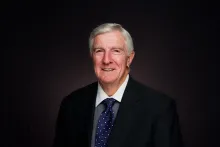
Before his retirement in 2021, Dr. Donald Ward pastored churches in Texas and Louisiana, and taught at Ambassador Bible College in Cincinnati, Ohio. He has also served as chairman of the Council of Elders of the United Church of God. He holds a BS degree; a BA in theology; a MS degree; a doctor’s degree in education from East Texas State University; and has completed 18 hours of graduate theology from SMU.
