
Don Ward
This transcript was generated by AI and may contain errors. It is provided to assist those who may not be able to listen to the message.
Why did God send His only begotten Son to the earth? The most basic answer possibly that we could come up with. I would think might be Romans 6.23. Do you know what Romans 6.23 says? For the wages of sin is death, but the gift of God is eternal life through Jesus Christ our Lord. Because the death penalty is on our head. Why is the death penalty on our head? Because we have sinned, we have broken God's immutable spiritual law, and the wages of sin is death. In order for us to be redeemed, to be brought back, to be bought back, Jesus Christ went in our stead.
Perhaps a summary of this would be John 3.16. For God so loved the world that He gave His only begotten Son, that whosoever should believe in Him should not perish, but have everlasting life. Now, note further, if you would now, let's turn to John 1 and verse 29. This particular person identifies Jesus Christ as he saw Him coming. And note what he says, John 1.29. The next day John sees Jesus coming unto Him and said, this is John the Baptist, Behold the Lamb of God who takes away the sins of the world. Now, in Matthew 28 and verse 28, these scriptures here show the, as it were, the bottom line reason that Jesus Christ came to the world. And of course, it all has to do with a great plan and design of God, bringing sons and daughters to glory in His family, which gets into why we were born. We were born for that great purpose, that great transcendental purpose of becoming sons and daughters in the family of God, eventually to be glorious, radiant spirit beings living forever and ever. In Matthew 20 and verse 28, in 1 Corinthians 15 and verse 3, what are we doing here? We're establishing the fact that Jesus Christ came into the earth to redeem us from a sin. He paid the price. What does this have to do with healing? Because overall, the sermon deals with healing and the relationship of the sacrifice of Christ to healing, which has been, in my view, grossly misunderstood through the years. In 1 Corinthians 15 verse 3, For I delivered unto you, first of all, that which I also received, how that Christ died for our sins according to the Scriptures. Now in 1 Timothy, forward down to 1 Timothy 1 and verse 15. 1 Timothy 1 and verse 15. All of these Scriptures here dealing with Jesus Christ coming into the earth to pay for the sins of the world because the wages of sin is death. 1 Timothy 1 and verse 15. This is a faithful saying and worthy of all acceptation, that Jesus Christ came into the world to save sinners of whom I am chief. So how do these Scriptures relate to healing? If you're going to understand healing under the terms of the New Covenant, you must understand the Scriptures we have just read. The purpose for the sacrifice of Jesus Christ is to serve as a ransom to buy us back from sin and death. God's great purpose is for us to become spirit beings in his family and live forever. He did not send his Son to the earth just so we could live forever in the flesh. No one has ever lived forever in the flesh. It is obvious from Scripture that God is our healer, and there are numerous examples of physical healings in the Old and New Testament. Let's turn now to Genesis 20, the days of Abraham, long before Jesus Christ came to the earth and died for the sins of the world. Long before Jesus Christ came to the earth and died for the sins of the world. In this particular situation here, Abraham and Sarah were traveling, and they came upon this king, Bimilek. Abraham was afraid that Bimilek would try to claim Sarah for his wife. Sarah was apparently a beautiful woman, and Bimilek did just that. He tried to claim her. So it's a little bit of the background. Verse 5, Genesis 25, She is not unto me. She is my sister. So Abraham told his lies, saying, She is not my wife. She is my sister. Technically, she was his half-sister.
Abraham's father fathered her, but by a different mother than Abraham's mother. She is my sister. She even herself said, He is my brother. In the integrity of my heart, this is Bimilek talking here. In the integrity of my heart and inefficiency of my hands have I done this.
Bimilek said, Well, I'm going to take this woman because he said she's my sister. She said he's my brother. And so Bimilek intended to take her for his wife because his wife was barren. God appeared to Bimilek in a dream and told him what the straight story was. So now we come down to verse 17. So Abraham prayed unto God, and God healed Bimilek and his wife and his maidservants, and they bare children. For the Lord had closed up all the wounds of the house of Bimilek because of Sarah Abraham's wife.
Look at verse 7 there. Maybe you've never focused on this in this way. I looked at this this morning. Now therefore restore the man, his wife, for he is a prophet. God says Abraham is a prophet. He is a prophet, and he shall pray for you, and you shall live. And if you restore her not, know that you shall surely die, you and all that are yours. So Abraham prayed for them after Bimilek had realized a mistake that is made. So here we have a healing of a man's wife, and Abraham prayed long before Jesus Christ came on the scene and died for the sins of the world. There are numerous places in the Old Testament where people were healed. In one case, even a person raised from the dead. There are examples of the waters being healed in various places. Now to go to Hosea 7. There are examples of spiritual healing of peoples.
And in this first particular case, Hosea 7 verse 1, the God's intent was to heal Israel, but it's like Israel wouldn't let him heal them. This healing is talking about in the spiritual sense, to make them whole.
Almost every place in the Old Testament where you see the word healed, the Hebrew word is ratha, spelled R-A-P-H-A-S, and pronounced as R-A-W-F-A-W, ratha, fa.
Hosea 7.1, When I would have healed Israel, then the iniquity of Ephraim was discovered and the wickedness of Samaria. That had to do with forgiving their sins, raising them up, restoring them as a nation.
Hosea 11 verse 3, So God was the one that had delivered them up to that point. The healings that were done in the Old Testament, and the main point here is showing that the healings that were done in the Old Testament, and there were many. were done before the birth of Christ and his crucifixion. Even the healings that were done during Christ's earthly ministry were done, of course, before he was crucified. Thousands of people who go to the doctor around the world every day, there are thousands who go to the doctor around the world every day, some of them have probably never even heard the name of Jesus Christ. They surely have not had the gospel preached to them. And many of them are helped, and they get well. Some of them know nothing about the God of the Bible. So there are natural laws in effect that have to do with healing. And there are things that you can do to help how many lives have been saved in the physical sense through various medical modalities. A lot. But these doctors, whether using drugs, vaccines, surgery, or so-called natural potions, can only help heal one physically. The Bible is about eternal life. That's the bottom line. It's about eternal life. How do we get there? The road to eternal life. About becoming a spirit being in the family in the kingdom of God. And there is only one great physician who sent his son to the earth to pay for the penalty of sin. So we could be redeemed, reconciled to God, and receive a gift of eternal life. Look at Romans chapter 5.
Romans chapter 5. Satan is the author of sin and death. People ask about Satan. God could have stopped Satan at any point. When he was using whatever skills he used of flattery and so on to draw one-third of the angels into rebellion that became demons, he could have stopped them at any point. But he didn't. He could have kept Satan out of the garden and never allowed them to tempt Adam and Eve. But he didn't. Adam and Eve would have sinned eventually even without Satan. Because, as it says in Romans 8-7, the carnal mind is imminently toward the law of God, neither subject to it, neither of thee can be. But here in Romans 5, for when we were yet without strength, in due time Christ died for the ungodly. Verse 8, but God commended his love toward us, and that while we were yet sinners, Christ died for us. Much more then, being now justified by his blood, sometimes body is used and sometimes blood is used. Some have tried to divide the sacrifice of Christ, saying that the body is strictly for a payment of so-called physical sin. We'll deal with that more later. And his blood for spiritual sin. Much more then, being now justified by his blood, blood is put for life is in the blood. So when you see blood, you could just as easily put life. He gave his life. As we read Matthew 20, verse 28 says, he gave his life as a ransom for many.
Much more now, being justified by his blood, we shall be saved from wrath through him. For if when we were enemies, we were reconciled to God by the death of his Son, much more being reconciled, we should be saved by his life.
So the Bible is about eternal life. As we read earlier, Jesus came to save us from our sins so we could have eternal life, that we could be reconciled to the Father.
And when the Father, when we make peace and reconcile to the Father, he views us as sinless, without sin, that is, and we can receive the gift of the Holy Spirit. I believe that one of the main reasons why healing came to be such an issue in the Church was a belief by some that Christ's sacrifice was divided into two parts. That is, the official teaching of United is that the sacrifice of Christ was a whole sacrifice. Now, some of the other groups teach that it was divided. Some people won't associate with United because United teaches that the sacrifice was a whole sacrifice and not a divided sacrifice. And we shall explore a lot of this as we go along. A belief that there is a sacrifice that is divided in two parts, the parts being that the body of Christ was bruised, beaten, broken to pay for, quote, physical sin, and the blood of Christ was shed to pay for spiritual sin.
So the teaching was that Christ gave his body to pay for physical sin and he gave his blood to pay for spiritual sin. There's no place in Scripture that teaches this. You can assume, yes, there are sins to the flesh, gluttony, smoking, drug abuse, and you can go on and on with a long list of things that could happen. I've listed here some things with regard to what could happen to you. You're in your bed and you're in your sleep and you're bitten by a brown recluse spider. You didn't do anything.
I would assume that you would call for the elders of the church and have them to anoint and pray for you. You're walking on the sidewalk. At night, it's dimly lidded, lighted, whichever you want, and a copperhead bites you. I would assume you would call for the elders of the church.
Two times while living on campus, I stepped right outside the door, right there on a patio, about this far outside the door, was a big old copperhead. It happened twice. I like to go outside at night and I barefooted it. It's not probably the wise thing to do. You're in a building and suddenly the roof collapses on your head.
You had absolutely nothing to do with it. You're injured. You probably called for the elders of the church. You're driving along and all is well, and suddenly the oncoming vehicle veers into your lane, hits you head-on, and you're severely injured. You didn't have anything to do with it.
In all cases, you're admonished to stop doing whatever it is might be causing whatever it was, but in those cases, how are you going to avoid it? It would be pretty hard in some of those cases. I mean, in some cases, you just couldn't avoid it.
Now, one thing, and most of the people who write about this really don't get to the heart and core of this, I have here, I believe this is...
The 1948 Plain Truth magazine is all animal flesh good for food. I think it was written by Mr. Armstrong. And if one is going to contend that there are physical sins and that someone is sick because of physical sins, because of physical sins, have not he, she defiled the spiritual temple of God, and isn't that spiritual sin?
Some of the writers try to say, well, Mr. Armstrong said this, Mr. Armstrong said that.
Of course, we want to know what does the Scripture actually say?
And he talks about the spiritual temple. So let's go to 1 Corinthians chapter 3. 1 Corinthians chapter 3 and verse 16. Know you not that you are the temple of God and that the Spirit of God dwells in you.
If any man defile the temple of God, there are many ways to defile the temple of God.
Eating certain foods, eating too much food, smoking, abuse of alcohol, abuse of drugs.
There are all kinds of things.
The diet that most people have today within itself would tend toward destroying the temple of God.
If any man defile the temple of God, him shall God destroy, for the temple of God is holy, which temple you are.
Now, the act might be a physical act.
All sin is against God and Christ.
And all sin is against self because the wages of sin is death.
Do you think about that? Sin is against God and sin is against yourself because the wages of sin is death.
We look, first of all, here with regard to whom sin is against, Psalm 50.
Psalm 50, David's repentance sin after he had committed adultery with Bathsheba and then had Uriah killed.
Now, this phrase here might tend to think, well, the sin only affected was, as it says here, against you and you only have a sin, then this evil in your sight is verse 5.
But, of course, Bathsheba was greatly affected. Uriah was greatly affected.
David himself was greatly affected because the child died and there was a great penalty that David paid.
And you look at verse 5, Psalm 51, I might have said Psalm 51.
I want to go back and my eyes not falling where I wanted to.
Verse 3, verse 3, verse 3, verse 3 verse 3, verse 3, verse 3. So, unlike Job, who didn't understand that God had to be justified regardless of what happens to us, that God is just when he deals with us.
Another thing that people generally don't include in this with regard to sickness and healing is the fact that God chastens every son that he loves. And if you be without chastisement, are you illegitimate and not sons? God allowed Satan to twice. First of all, Job had all of his material possessions taken away and his family except his wife. And then, Job was stricken from the crown of his head to the sole of his feet with this serious illness probably boils or something like that.
And yet, Job didn't understand that God was just in everything that he did, but in that God, Job came to see that he had to justify God regardless of whatever happened to him. Now go to 1 Corinthians 8 with regard to this, who is sin against? In 1 Corinthians chapter 8, here it's about eating meat sacrificed to idols. Some thought it was all right to do. Some thought it was sin to do it and that they would be defiled by doing so.
Paul's admonition here is to those who have knowledge because he writes that the idol is nothing, neither is the food, but if you cause your brother to offend and injure his conscience. In 1 Corinthians chapter 10 verse 10, for if any man see you which have knowledge sit at meat in the idol's temple shall not the conscience of him which is weak be emboldened to eat those things which are offered to idols.
And through your knowledge shall the weak brother perish for whom Christ died, but when you sin so against the brethren and wound their conscience you sin against Christ. Nearly all sin affects God and Christ and yourself and usually someone else is affected as well. Wherefore if meat or food make my brother to offend I'll not eat flesh while the world stands lest I make my brother to offend. Now the understanding of that with regard to sin and what it's about and what it affects, Jesus gave his total being his life essence, body and blood, so we could be bought back from sin and death. Now we go to Hebrews 8.
You don't see anybody focused on this either. In Hebrews chapter 8, remember Hebrews compares and contrasts elements of the Old Covenant with the elements of the New Covenant. Under the terms of the Old Covenant, what did they offer to sacrifice? They offered the blood of bulls and goats. But under the terms of the New Covenant, it is Jesus Christ. He is our sacrifice. In Hebrews 8.3, for every high priest is ordained to offer gifts and sacrifices, wherefore it is necessary that this man, speaking of Jesus Christ, have somewhat to offer.
For if he were on earth, he should not be a priest, seeing that there are priests that offer gifts according to the law, that is the Mosaic law, who serve unto the example and shadow of heavenly things, as Moses was admonished of God when he was about to make the tabernacle. For said he, that you make all things according to the pattern shown to you in the mount. But now hath he obtained a more excellent ministry by how much also he is the mediator of a better covenant, which was established upon better promises. For if that first covenant had been faultless, then there should be no place sought for the second.
For finding fault with that, he said, Behold, the days come when I will make a new covenant with the house of Israel and with the house of Judah. Now we go to Hebrews chapter 10 and verse 5. Here's the principal verse. Wherefore, when he comes into the world, he said, Sacrifice and offering you would not but a body you have prepared me a body you have prepared me. In burnt offerings and sacrifices for sin you had no pleasure. Then said I lo, I come in the volume of this book as it is written, to do your will, O God.
Above when he said sacrifice and offering and burnt offerings and offering for sin you would not, neither had pleasure therein, which are offered by the law, that is the Mosaic law that we're at about innate. Then said he lo, I come to do your will, O God. He takes away the first that he may establish the second by the which will we are sanctified through the offering of the body of Jesus Christ once for all. A total sacrifice. Now you go to 1 Peter chapter 2 verse 24.
1 Peter chapter 2 verse 24. What are these scriptures establishing? That the sacrifice of Jesus Christ was a whole sacrifice. He gave his life, his body, and his blood. In 1 Peter chapter 2 verse 24. Who his own self bear our sins in his own body on the tree. That we, being dead to sin, should live unto righteousness by whose stripes you were healed. The word for healed here is ei ama he. It means to make whole in every sense of the word.
It includes physical healing, spiritual healing, all of that that we have through the sacrifice of Jesus Christ. We have access to the Father. Now you look at verse 22. Who did no sin, neither was guile found in his mouth. Who when he was revile, revile not again. When he suffered, he threatened not, but committed himself to him that judges righteously. Now look at verse 25. For you were as sheep going astray. You were lost. You were dead in sins and trespasses, but are now returned unto the shepherd and bishop of your life essences.
God, through Jesus Christ, bought each one of us back from sin and death. Jesus was crucified so that we might have eternal life as a spirit being. Once again, John 3 16. For God so loved the world that he gave his only begotten son that whomsoever believe in him should not perish, but have eternal life. Now we go to John 6. John 6, the bread of life chapter, as it is called. John 6. In John 6, the first part of the chapter here, Jesus did the miracle of feeding the multitude. He tried to get away from them.
You know, if we were to, if there were to suddenly be a lot of healings in this congregation and the word would spread out, our attendance would increase dramatically.
If we made big announcements and advertising campaign that we're going to give a series of studies on why Christ died for our sins, the attendance would increase by zero, probably.
But if we had multiple healings, boy, fill it up. Fill it up. Let's go there.
In John 6, verse 26, Jesus answered them and said, Barely I say unto you, You seek me not because you saw the miracles, but because you did eat the loaves and were filled.
Labor not for the food which perishes, but for that meat which enters into everlasting life, which the Son of Man shall give unto you. For him hath God the Father sealed.
Now we focus on the words everlasting or eternal life in this chapter. Verse 33, For the bread of God is he which came down from heaven and gives life unto the world. What kind of life? Physical life? Living forever in the flesh? Oh no, eternal life. Verse 40, And this is the will of him that sent me, that every one which sees the Son and believes on him may have everlasting life.
And I will raise him up at the last day. Now we look at verse 47, Verily, verily, I say unto you, He that believes on me has everlasting life. I am the bread of life. Your Father's to eat man in the wilderness and are dead.
This is the bread which comes down from heaven, that a man may eat thereof and not die.
I am the living bread which came down from heaven. If any man eat of this bread, he shall live forever. And that bread that I will give is my flesh, which I will give for the life of the world.
It does not say that he gives it for physical healing, but through the sacrifice of Christ, we have access to the Father. But God has the power. God created all things through Jesus Christ. As it says in Colossians 1, I think it's verse 15 or 16, that whether there be thrones, dominions, principalities, powers, visible and invisible, He created them all and He is over all.
God is interested in us having eternal life.
The Jews, therefore, strove among them, says, How can this man give us his flesh to eat? Of course, they were familiar with figures of speech.
Then Jesus said unto them, Verily I say unto you, Except you eat the flesh of the Son of Man, and drink his blood, you have no life in you.
Whosoever eats my flesh and drinks my blood has eternal life, and I will raise him up at the last day.
Verse 56, He that eats my flesh and drinks my blood dwells in me and I in him.
Then we look at verse 63, which you're supposed to memorize.
It is a spirit that quickens and makes alive the flesh profits nothing the words that are speaking to you. They are spirit and they are life.
Verse 68, Then Simon Peter answered him, Lord, to whom shall we go?
You have the words of eternal life.
Many of them left him after he said, You have to eat my flesh and drink of my blood to have eternal life. They were offended in him.
They were looking for the loose brick. After all the miracles and everything that Jesus Christ did and the multitudes that he healed and the demons that cast out, they come down to Pentecost. And how many people are there? 120. 120 were there. So how many people have come and gone through the doors of the Church of God through the ages?
Of course, only God knows. In defending the belief of some that the sacrifice of Christ is divided into two parts, and there is physical sin and spiritual sin, they're quick to quote Matthew 8, verses 14 through 17.
But before we go there, let's look at the verses with regard to the Bible definition of sin. We've already touched on this, that you can do physical things that will defile the temple of God and get sick. And that becomes spiritual sin. So, probably the scripture that everybody has memorized is 1 John 3-4. Let's look at 1 John 3-4.
There are five places in the Bible that says such and such is sin, and this is one of those places. 1 John 3-4, whosoever commits sin transgresses also the law, for sin is the transgression of the law.
Well, sin has many, many different aspects. One person was trying to make a big distinction between physical sin and spiritual sin by saying, this verse here doesn't prove that all sin is just the transgression of the Ten Commandments. Well, nobody said it was.
There are many, many different ways that you can sin, but it gets back to you. That which is against God, missing the mark, and doing that which would either be against God or defile the temple of God, injure somebody else. Now we look at another place, James 5, back a few pages with regard to sin. I mean, chapter 4. I always make that error. James chapter 4, verse 15, for that we ought to say, if the Lord will, we shall live and do this and that.
But now you rejoice in your boasting, and all such rejoicing is evil. Therefore, to him that knows to do good, and does it not, to him it is sin. Now let's take what some might call a physical sin. Do you know that it's not good to overeat? Do you know that it's not good to have too much fat in your diet? Do you know it's not good to have too much sugar in your diet? Do you know it's not good to drink too much alcohol? Do you know it's not good? And you could fill in the blank with several other things that are physical in nature. But if you do not do it, some of it you must not do it all. Do you know that you're not to eat the unclean meats that are listed in Leviticus?
And you go ahead and do it, and you get sick from it or whatever.
The him that knows to do good and does not, it's a sin.
It could be a physical act depending on how far you take some of it. Now look at Romans chapter 3.
Romans 14 and verse 23. Romans 14 and verse 23.
This is in conjunction with what day should a person fast on and whether or not one should eat meat or not eat meat. They had a big argument and discourse. Paul addresses. Some says, well, you fast on this day, and some says, no, you can't eat meat on that day.
And Paul sums it up by saying, he that doubts is damned, that we eat because he's not of faith, for whatsoever is not of faith, is sin. In other words, when you go against your conscience, knowing that something that you should... you're convicted in your heart, you shouldn't do it. And it is in accord with the Word of God, and you go ahead and do it.
This says it's sin. Now we go to Proverbs.
In Proverbs chapter 21 and verse 4, Proverbs 21 verse 4, Proverbs 21 and verse 4, A high look and a proud heart, and the plowing of the wicked is sin.
A high look and a proud heart, and the plowing of the wicked is sin. Proverbs 24 and verse 9.
This one here is for those who like to do satire and foolish gesturing, sort of the Saturday Night Live mentality. In Proverbs 24 and 9, the thought of foolishness is sin.
I didn't write it. The thought of foolishness is sin, and the scourner of an abomination to men.
The scourner is the sin kind of thing. A few months ago, I had an article in United News about cynicism, sitting in the seat of the scornful, the sinning.
Now look at Romans chapter 8. The 10 commandments summarizes a lot with regard to the spiritual law. Jesus Christ said, the summary is, and you're familiar with loving God with all your heart, mind, and soul, loving your neighbor as yourself. These two hang all the law and the prophets. But there are many, many, many, many, many tentacles to this. Subtitles, as it were, that run out.
Romans 8 verse 14. I don't know what's wrong with me, but anyhow, it's Romans 7 verse 14.
For we know that the law is spiritual. The law is spiritual. But I am sold and understand.
So back now, we go to this Matthew 8.14. The understanding of the purpose and plan of God and what life is all about and why we're here, and the purpose and plan of God is so important to understanding the whole of anything that you want to talk about. And people tend to deal in isolated parts. In Matthew 8 verse 14.
And when Jesus came into Peter's house, he saw his wife's mother, his mother-in-law, laid and sick of a fever. And he touched her hand, and the fever left her, and she arose, and ministered unto them. When the even was come, they bought unto him many that were possessed with devils, and he cast out the spirits with his word and healed all that were sick.
That it might be fulfilled, which was spoken by Isaiah the prophet, saying, himself took our infirmities and bear our sicknesses.
People were being healed of sicknesses and infirmities long before Jesus came on the scene and healed people. We read the example from one example from the Old Testament, Abraham. Even Jesus himself here in healing was before he was bruised, beaten, and broken for the sins of the world. The healing of the physical sicknesses and infirmities in many ways served as a type, a shadow of the greater spiritual reality. What is more important for you to be healed now or to have eternal life in the kingdom of God?
Well, obviously, we all know the answer to that.
The sacrifice of Christ was to pay for our sins, as we've already noted, and as we shall see in Isaiah 53. You know this, it says here that it might be fulfilled what Isaiah the prophet wrote. He took our infirmities and bear our sicknesses. So let's look at Isaiah 53, this word study that I sent to you last week, which we used some of it in the sermon last week. We have the words, some of the key words here from Isaiah in this word study. Isaiah 53, beginning in verse 4, Surely he hath borne our griefs and carried our sorrows.
We did esteem him stricken, smitten, and afflicted of God. Verse 5, but he was wounded for our transgressions. And the word transgression here is pashah, national moral religious sin trespass. He was wounded for our transgressions. He was bruised for our iniquities of on, perversity, moral evil. He was wounded for our transgressions, spiritual sins. He was bruised for our lawlessness. The chastisement of our peace was upon him, and with his stripes we are healed, as it says in 1 Peter 2, verse 24. The Hebrew word here for healed is ratha, and it means to make whole in every sense of the word, both physically and spiritual, just as in 1 Peter 2, verse 24, where ea'ama'i, the word healed there, means to make whole in every sense of the word. All we like sheep have gone astray. We have turned everyone to his own way, and the Lord hath laid upon him the iniquity, the sins of all of us.
Verse 10, yet it pleased the Lord to bruise him. He hath put him to grief.
When you shall make his soul his nafesh, his life essence, and offering for sin.
He shall see his seed, he shall prolong his days, and the pleasure of the eternal shall prosper in his hand. Verse 11, he shall see the travail of his soul, his life essence shall be satisfied. By his knowledge shall my righteous servant justify many, for he shall bear their iniquity, their lawlessness, their sin. I don't see how it could be made any clearer. Some have used misunderstanding, misapplication of Matthew 929. Let's look at that. Matthew 929.
Then touch he her eyes, saying, according your faith, be it unto you. And so it's like some just take that one verse and say, okay, all the healing depends on if you have enough faith.
If you have enough faith, you can be healed.
This means, according to your belief that I am the Son of God, the Messiah, I have the power to heal and to forgive sin, be it unto you. This was a great transitional time to show through whom God was working. God was working through his Son Jesus. He was about to usher in a new priesthood and covenant. A new priesthood and a new covenant.
God does not always work with man in the same way. Now, people like to go around and they quote Jesus Christ the same yesterday, today, and forever. Jesus Christ, or you could put God, for example, in Malachi 3 verse 6 it says, I am the eternal, I change not. God's character, his being, who he is, what he is, never changes. But he has dealt with man in different ways at different times. He dealt with Israel under the terms of the old covenant. He is now dealing with us under the terms of the new covenant. And there are great differences.
I know the law is not done away. Obviously, the spiritual law. The old covenant healings were mainly physical, though there were some mention of spiritual healing, as I read from Hosea 7 and 1 and also Hosea 11 and 4. Under the terms of the old covenant, they had the administration of death. There are at least 10 things listed that you could be put to death for under the terms of the old covenant. And the new covenant is the administration of the Spirit. That doesn't mean that there's not a penalty to be paid and a penalty will be paid.
The people who were healed during Christ's ministry had not entered into the covenant of sacrifice and surely did not have God's Spirit. Because God's Spirit is not given unto Pentecost. Christ even told Peter. Peter says, when you are converted, strengthen the brother. God's character does not change, but the way that he deals with man changes.
There has been a change in covenants. I'd read that from Hebrews 8 earlier.
For those who have entered into the covenant of sacrifice with God the master potter and refiner, he may say, it is not time for your deliverance yet.
You look at Psalm 50. Psalm 50 verse 5, Gather my saints together unto me, those that have made a covenant with me by sacrifice. Psalm 50 verse 5, those that have made a covenant with me by sacrifice. When do you make that covenant with God by sacrifice?
When you go under the baptismal waters and you say, I am going to crucify the old man. I'm keeping the old man underwater, and I'm going to be raised in the newness of life, and I am going to live according to the Spirit for the rest of my life. And through the Spirit and Word of God, I will keep the old man down. I am crucified with Christ. Nevertheless, I live, not yet I, but the Son of Man, who loved me and gave himself for me. Galatians 2.20, as Paul writes in Romans 12, I beseech you, brethren, by the mercies of God, that you become a living sacrifice, that you crucify that flesh.
So we have entered into a covenant of sacrifice.
With God and Christ.
Paul catalogues the men and women in Hebrews 11 that were not delivered.
They died in faith. Paul himself besought the Lord thrice. He was not healed.
God may be teaching you lessons and developing facets of your being that are essential for the job he's called you to do, maybe here or hereafter. God always has our best interest at heart. I believe we believe. Hebrews 11.6.
Jesus Christ is our high priest. He intercedes for us.
Let's notice this. This is so important to understand with regard to what we're talking about, because I'm about to come to a point that should show you something that maybe you have never heard or maybe you've heard it didn't sink in or whatever with regard to what God and Christ are doing and can do for us and will do in 1 John 2.1. One of the continual promises in the Gospel, and especially in the Gospel of John, is God is going to send the Comforter, the Holy Spirit, the Peracola to you, the toast or teas.
And Jesus Christ is that Spirit personified in Jesus Christ. In 1 John 2.1, my little children, these things write unto you that you send not. If any man sin, we have an advocate. That word advocate there is the same one that is translated as Comforter, an advocate, a para-clitos. We have a para-clitos, a Comforter, here it's translated advocate in the Old King James, with the Father, Jesus Christ the Righteous. So we have Jesus Christ, who is the Mediator of the New Covenant, and He is also our Intercessor. He is our High Priest.
We have an advocate with the Father, Jesus Christ the Righteous. He is a perpetuation for our sin. In other words, He went in our stead, and not for ours only, but also for the sins of the whole world. And hereby we know that we know Him if we keep His commandments.
He that says, I know Him and keeps not His commandments is a liar, and the truth is not in Him. Now, notice Hebrews 7 verse 25. Back a few pages, Hebrews 7 verse 25. This should be a memory verse for everybody for all time that is entered into the terms of the New Covenant. Hebrews, of course, talks about the change in the priesthood. Our High Priest now is not from the tribe of Levi. It is evidence that our Lord sprang from Judah. Under the Mosaic law, one who sprang from Judah could not be a priest. He called all priests were Levites. Not all Levites were priests, but all priests were Levites. Jesus Christ was from Judah. There was a change in the priesthood.
Verse 25, Hebrews 7, wherefore, speaking of Jesus Christ, He is able also to save them to the utter most that come unto God by Him, seeing He ever lives to make intercession for them. For such an High Priest became us who is holy, harmless, undefiled, separate from sinners, made higher than the heavens. That is our High Priest, Jesus Christ.
Now we go to Romans chapter 8.
And I have a story here. Well, it's not just a story. It's an experience illustrating this story. In Romans chapter 8, verse 26, Likewise, the Spirit, God is Spirit, Jesus Christ is Spirit, Jesus Christ is our comforter, our advocate, as we read from 1 John 2.1. He is our intercessor, as we read from Hebrews 7.25. Likewise, the Spirit also helps our infirmities, for we know not what we should pray for as we ought. But the Spirit itself makes intercession for us with groanings that cannot be uttered. According to the Bible, Jesus Christ is praying for us.
He is interceding for us. I think that goes right over our heads.
And he that searches the hearts knows what is the mind of the Spirit because he makes intercession for the saints according to the will of God. And we know that all things work together for good to them that love God. Of course, that is the great qualifier, to them that love God, to them who are the called according to his purpose.
Several years ago, an elder named Norval Pyle and his wife that we know so well, Alva Pyle, they had a son named Joseph Pyle.
Age 21, nearly married, came down with cancer, melanoma, a little bump that appeared here on the cheek. And then by the time, though, they went to a doctor, they said, okay, this thing is so spread out in the cheek that if we try to extract this, you know, it may paralyze the face, you never talk again, and on and on, they decided not to have surgery. They tried various natural modalities. Eventually, this thing spiraled out his ear, big black, almost like a top mass. He became a little emaciated hulk. And of course, very often, the elders at that time, I was pastoring Big Sandy, and we would get together and talk. And Mr. Pyle one day said, you know, we just haven't done enough. We need to fast. So the elders did a three-day fast. And then he said, you know, God just has to heal Joe, because there's this promise in the Bible that says, honor your father and your mother that your days may be long upon the earth. And so Joe has done that, so God has to heal him. And I said, I'm sorry, Mr. Pyle, that is not correct. Because Joe has entered into the covenant of sacrifice with God in Christ, and God who is our creator, God who is our Father, he knows what is happening. Jesus Christ, who is our intercessor, our high priest, Jesus Christ is praying for him according to the will of God the Father, and he has not lost faith. And so God does not have to heal anyone.
And he didn't like that very much that day, and he came back the next day and he said, I understand what you were saying. I have accepted that. Now I understand it.
Some people get more emotional about these issues than they do on what are the greatest issues of all. The issues such as, I think there have been three great issues kind of thing that have hindered the church in a way. It's not to say that it's not a concern, and definitely it is, end-time prophecy, place of safety, various organizations like dangle people over the place of safety. If you're not with us, you can't go to the place of safety. I could get you there. I mean, that's stupid beyond belief. And healing.
Now go to 1 Corinthians 13. 1 Corinthians 13.
1 Corinthians 13.
The more excellent way that Paul closed chapter 12 with regarding spiritual gifts is to see what are the things that have to do with healing, and our time has to do with some. You know, if we can have a lot of healings here, I remember one person who came to Big Sandy, who said, you know, we can have a lot of healings here. We have all these outward signs, and everybody knows that God is working through us.
I mean, if you read about what the the beast and the false prophet are going to do at the end of the age of signs, wonders, and miracles, the greatest sign is given right here, of whether or not you're in the faith.
Though I speak with the tongues of men and of angels, have not charity, I become as sound and brass for a tinkling cymbal. If I have not charity, agape, agape love, spiritual love, God is love. If I'm not becoming as God is, become ye therefore perfect even as your Father in heaven is perfect. That's what Matthew writes in 548. And though I have the gift of prophecy, understand all mysteries and all knowledge, and though I have all faith so that I can remove mountains, and have not charity, if I'm not becoming as God is, I'm nothing. And though I bestow all my goods and feed the poor, though I give my body to be burned, and have not charity, it profits me nothing. See, this is bottom line. I think this is what we are beginning to learn.
Now that doesn't do away with cry aloud, spare not, lift up your voice like a trumpet, and show my people their sins and issue a warning, a powerful warning to this world.
Now, this thing about healing, it's caused people to make a lot of misjudgments.
Some people, as I related the story last week of the woman who had surgery, little dear, precious, sweet woman, not highly educated, looked into my face and says, Dr. Ward, is God going to send me to Gehenna because I let them doctors cut on me? It has caused some to dabble in various healing modalities, many persons believing that if they did not seek professional help, it was all right to seek out other help, usually in the realm of the natural. There surely are bonafide natural remedies. I told the story last week of my daughter, who had rheumatic fever, beginning with strep, then scarlet, then rheumatic.
We refused all antibiotics. She got better. Did the vitamin E do it? Or did prayer? I don't know.
I like to think that probably a combination of both.
She was anointed more than once.
So there are bonafide natural remedies and qualified professional chiropractors, nature of path, but seeking their help, hopefully as we've seen today, is no more spiritual or no more show of faith than going to a medical doctor. We've had many persons who've read a few books talk with various people who have come to believe that they are experts on health. I guarantee you, if you tell somebody you have whatever ailment is, warts on the nose, somebody has a remedy. It could be on the nose or on the foot. It could be a mole. It could be any number of things. And some of those things work. But is that where it is in the spiritual sense?
We have faith that Christ forgives us of our sins. And sometimes when we sin, we get up off of our knees and say, God has forgiven me. I know God has forgiven me. But we accept that in faith that God has forgiven me, and then we get on our knees, we're anointed, and we get up off our knees and wonder, well, has God heard my prayer or not?
Is he going to heal me or not? Maybe he doesn't. Maybe he won't. That doesn't mean he hasn't heard us. It doesn't mean that our intercessor is not aware. It doesn't mean that the Father is not aware. Not even a sparrow falls to the ground unless he's aware of it. Even the hairs on her head are numbered. God's will for us must be considered in all things. If we're violating physical principles of health, we need to get in harmony with the physical principles of health.
God did not give us impunity for breaking the physical principles of health.
And if we break them to a certain point and defile the temple, then that's sin.
The body is physical, but yet there is a dimension to it since we are created in the image of God that allows us to think in abstract terms with certain faculties of mind that are akin to God.
The body conforms to a large degree to the laws of physics, biomechanics, biochemistry, zoology, biology. Pagans made the body into a great mystery that housed the so-called immortal soul.
If we want to get in harmony with certain laws of physics that govern the universe, should we go to a physicist or to a shade-tree mechanic?
If you were to be launched on a journey to the moon, who would you want to control the spaceship, NASA or a shade-tree mechanic?
We can send people into space and bring them back.
Yet when it comes to the human body, some consult with people who offer mystical remedies and magic potions, rather than consulting with people who understand the laws that govern the human body.
So it is a lack of faith to do physical things. It depends on what you do, and the attitude of you do it in. Most people do physical things.
Some insist on remaining in the quote, natural realm. They will submit to drinking incredible potions, coffee enemas, or any number of things. Back several years ago, we had a lot of people in the area doing coffee enemas. This homeopathic guy over in Dallas, Kelly, said it's one of the things that cure cancer. In either case, whatever you're doing, you're doing something physical to help your condition. Is this a lack of faith? Well, to a large degree, it depends on the attitude that you do it in. We do not view working for our food as a lack of faith, even though God is our provider. One of the names of God is Jehovah-Yareh. God will provide. Paul writes, if a man will not work, neither shall he eat. God says that he is our protector, yet we lock our doors.
Yet God is our protector and deliverer, and angels watch over us.
Can I water my garden and still pray for rain? Well, I better if I want to make anything. When all is said and done, my life and yours are in God's hands in the ultimate sense. Whether we go to the doctor or take the so-called natural route, we can choose to do nothing and draw a line. This is a very critical point. We can choose to do nothing and draw a line with God and say, you either heal me or I die. You know, God will even allow you to commit suicide.
I faced a bladder infection and blocked kidneys. We were in Tyler, a so-called shopping trip. About time we thought about to drop and was going to go to dinner, and I said, I just can't make it anymore. I got to go to the emergency room.
By the time I got there, I was a very sick person. This was 1986, and very soon I couldn't urinate. Of course, you can put in a catheter, and your kidneys will empty. I mean, your bladder will empty. I had a bladder infection, urinary tract infection, pretty simple matter to unblock it. It was very difficult to get rid of the infection. The first antibiotic didn't work. They took out the doctor said, well, it's better. I said, well, I don't know if it is or not. So they took out the catheter. I couldn't go. I had to put it back in. Finally came up with an antibiotic that worked. You know, I could have drawn the line and said, well, God, either you heal me or I die, because it would eventually kill you.
Of course, people face that with all kinds of things, appendicitis, many other things.
Look at Matthew 4 and verse 5.
Satan tempting Jesus Christ the devil, took him up in the holy city, set him on a pinnacle of the temple, and he sent unto him, If you be the Son of God, cast yourself down, for it is written, He shall give his angels charge concerning you, and in their hands they shall bear you up, lest at any time you dash your foot against the stone. And Jesus said unto him, It is written again, You shall not tempt the Lord your God. So I'm not going to draw the line with God as long as I'm not violating the law of God. On the other hand, you may be faced with a situation in which you must obey God and trust him for deliverance. Shadrach, Meshach, and Abednego did face that situation. You either bow down and worship this image or cast in the fiery furnace. They say, I don't know God will deliver us. He surely has power to do so, but whether he does or whether or not, we're not going to bow down. They were cast in. God delivered them. And even if you do everything that God has asked you to do, he may still say, Your time has come. God doesn't view death in the same way that we do. Precious in the sight of the eternal is the death of his saints. Psalm 116, verse 15. Hezekiah was told to do something physical after hearing, after God heard his prayer, a plaster of figs, and various modalities like figs or go wash in the river or whatever it was.
So, Brother and I hope that through these studies and your follow-up study, we come to a better understanding of where and what is really important in life. Jesus Christ came that we might have eternal life. And God, our great Father, always has our best interests at heart. Don't forget your intercessor. Don't forget all of the things that we've talked about here today. And I hope that we will continue to get a better and better grasp and better understanding of the total picture of everything that God is doing for us. It is so wonderful and so magnificent.
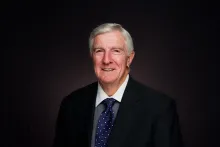
Before his retirement in 2021, Dr. Donald Ward pastored churches in Texas and Louisiana, and taught at Ambassador Bible College in Cincinnati, Ohio. He has also served as chairman of the Council of Elders of the United Church of God. He holds a BS degree; a BA in theology; a MS degree; a doctor’s degree in education from East Texas State University; and has completed 18 hours of graduate theology from SMU.
