
Don Ward
This transcript was generated by AI and may contain errors. It is provided to assist those who may not be able to listen to the message.
The title of the sermon today is Discerning the Body and Blood of Christ, subtitle Christ's Whole Sacrifice. Is the sacrifice of Christ divided into two parts?
The official doctrinal position of the United Church of God is that the sacrifice of Christ is a whole sacrifice, body and blood, and that the sacrifice of Christ is not divided. This is a controversial issue, and some who are in united do not hold this position. Some of the splinter churches do not hold this position either. One of the bloggers of the Living Church of God makes much over this issue. In fact, he quotes me in quite a few places in his blog.
In fact, he writes on several issues on which the doctrinal position of the United Church of God is different from that of the Living Church of God. The implication is that their position is more biblical and hence more accurate than united. The historic reason that some teach that the sacrifice of Christ is divided into two parts is based on the belief that Christ gave his body for physical healing, and he gave his blood for our spiritual healing and the forgiveness of sin. This position also divides sin into two categories, physical sin and spiritual sin. Before we see what the Bible instructs us on the sacrifice of Christ, let's see if the Bible divides sin into two categories. Once again, we want to note the places in the Bible where they say, where it is written, that such and such is sin. Let's go to Proverbs 21. Proverbs 21. In Proverbs 21 and verse 4.
Proverbs 21, for in high look and a proud heart and the plowing of the wicked is sin. The plowing of the wicked is sin. Also in Proverbs 24 and verse 9, Proverbs 24 and verse 9, the thought of foolishness is sin, and the scourner is an abomination to man.
Now, in the New Testament in Romans 14 and verse 23, what we're doing here, looking at the places where it just says, such and such is sin. We've seen here that the thoughts of the foolishness or thoughts of foolishness is sin. So you can sin and not commit a literal physical act in sinning. In Romans 14, 23, and he that doubts is judged if he eats because he eats not of faith, for whatsoever is not of faith is sin. Then in James 4 and verse 17, James 4 and verse 17, James 4 and verse 17, we see therefore to him that knows to do good, and does it not to him, it is sin.
Then in 1 John 3 and verse 4, 1 John 3 and verse 4, this is the one that nearly everybody in the church memorizes, 1 John 3 and 4, that sin is the transgression of the law. And then in 1 John 5 verse 17, all unrighteousness is sin, and there is a sin not unto death. Now note what Jesus says about committing sin without committing the act. In other words, you don't have to do something literally physically to sin. In Matthew 5 and verse 28, Sermon on the Mount, where Jesus Christ is magnifying the law and making it honorable, in Matthew 5 and verse 28, But I say unto you that whosoever looks on a woman to lust after her, hath committed adultery with her already in his heart.
So you don't have to commit the physical act, the literal act itself, to sin. Now I make this statement, all sin is against God. Let's go to Psalm 51. Psalm 51 has been set to music. Psalm 51 is David's repentance psalm after adultery with Bathsheba and sending Uriah the Hittite to the front line, where he knew that he would be killed. So David in this case had adultery and murder on his hands.
He literally committed the adultery. He sent Uriah to the front lines, ordering that he go there, knowing that he would be killed. In Psalm 51, verse 1, Have mercy upon me, O God, according to your loving kindness, according to the multitude of your tender mercies, blot out my transgressions. Wash me thoroughly from mine iniquity, my lawlessness, and cleanse me from my sin. For I acknowledge my transgressions, and my sin is ever before me. Against you and you only have I sinned and done this evil in your sight, that you may be justified when you speak and be clear when you judge.
So David says, even though he literally committed the act, and we'll go to 1 Corinthians in a moment, and we'll see that when you join your body to a harlot, you commit fornication or adultery, that it is also a sin against your body, as well as a sin against God. Let's go now to 1 Corinthians. 1 Corinthians 8, verse 10. 1 Corinthians 8, verse 10. The focus of this chapter of 1 Corinthians 8 is whether or not it is a sin to eat meat that's been sacrificed to idols.
Paul finally comes to the conclusion that the idol is nothing, the sacrifice is nothing, but if your conscience says you shouldn't eat, and you go ahead and eat, you defile your conscience, and it can be sin. So in 1 Corinthians 8, verse 10. For if any man see that which has knowledge, said it, meat at the idol's temple, shall not the conscience of him which is weak be emboldened to eat those things which are offered to idols. And through your knowledge, see, you know that the meat is nothing, the idol is nothing, and it's okay to go ahead and to eat it if it is clean, that is, scripturally clean. You can go ahead and eat it, whether or not it's been sacrificed to an idol, but some people might say, hey, that's been sacrificed to an idol, and I'm not going to eat it.
I believe that if I do, I'll commit sin. And through your knowledge shall the weak brother perish for whom Christ died. But when you sow sin against the brethren and wound their weak conscience, you sin against Christ. So we've read a scripture that David says he sinned against God and against him only has he sinned. Here Paul writes that you sin against Christ, wherefore if meat or food make my brother to offend, I will eat no flesh while the world stands, lest I make my brother to offend.
Of course, I think this is one of the least honored commandments, perhaps, that people just go ahead and do what they want to do, regardless of what effect it might have and influence on somebody else. The Bible is quite clear on it. Now we look back at page two in 1 Corinthians 6. In 1 Corinthians 6 and verse 18, We have sinned against God and Christ. It was a sin against Bathsheba. It was a sin against Uriah, because David took something that belonged to somebody else and then he took a person's life.
What know you not that your body is the temple of the Holy Spirit? That's one of the keys of being able to discern what sin really is, having to do with physical, what some might call physical sin or spiritual sin, and we'll get more into that. What know you not that your body is the temple of the Holy Spirit, which is in you, which you have of God, and you are not your own.
For you are bought with a price, therefore glorify God in your body and in your spirit, which are God's. So what it's saying, once you enter in the covenant of sacrifice with God and Christ, you've been baptized and you receive God's Spirit, you have been bought with a price. You've been bought and paid for. Then you are to become the servant of God unto righteousness.
So as we have noted, when David committed adultery and murder, he says against you, and you only have a sin. Paul writes in Romans 7, 14, we go there, as we go there in Romans 7, Paul says in the first part of the chapter, he would not have known sin unless the commandment of said, you shall not commit adultery. And then he talks about how that the law is good. It is just, it is holy, it is righteous. And then in verse 14, Paul writes, for we know that the law is spiritual, but I am carnal, sold under sin. The law is spiritual.
Now, law can be divided into two parts. There are physical laws and there are spiritual laws.
Did Christ give his body to be bruised, beaten, and broken so we could be healed when we break a physical law?
Furthermore, can we commit a spiritual sin by breaking a spiritual law? Let's go to 1 Corinthians 3, 16, and I'll pose those two questions once again.
There's no question that there are physical laws. We talk about the laws of physics and Newtonian laws and we talk about the law of gravity. And there are many things that we talk about in the physical realm that are laws.
In 1 Corinthians 3, verse 16, Know you not that you are the temple of God, and that the Spirit of God dwells in you. If any man defile the temple of God, him shall God destroy, for the temple of God is holy, which temple you are. If we willfully break a physical law that defiles our bodies, which is the temple of God, we have broken a physical law and committed spiritual sin. Now, let's take, for example, the law of gravity. The law of gravity tends to pull matter toward the earth. The earth has a gravitational pull. The moon has a gravitational pull.
If I willingly jump off a building and injure my body, it could be a spiritual sin, depending on motive and intent. Let's notice now Matthew 4. Matthew 4, after Jesus was baptized, the Spirit led him away into the wilderness, where he was tempted by the devil. After he had fasted for 40 days and 40 nights, tempted by the devil, and the three temptations have turned the stones into bread, and the one we're going to look at here today, this moment has to do with the law of gravity in Matthew 4 and verse 5.
Matthew 4 verse 5, Then the devil took him up unto the holy city, and sat him on a pinnacle of the temple, and said unto him, If you be the Son of God, cast yourself down, for it is written, and he shall give his angels charge concerning you in their hands, and in their hands shall bear you up, lest at any time you dash your foot against the stone. And Jesus said unto him, It is written, you shall not tempt the Lord your God. So we see here that if Christ had have jumped off the the temple, and of course the law of gravity, he would have come in a grand crescendo and smashed on the concrete or whatever was there. I don't guess they had concrete, but stones, and it probably would have killed him.
Now, for somewhat of a humorous and ridiculous example, the space program is based on the understanding of multiple physical laws in order to launch a rocket and bring it back to Earth. The great explosive thrust that occurs when the rocket is launched overcomes the law of gravity, and once you overcome the law of gravity, and so in that sense you're breaking the law of gravity, overcoming it, and you go into orbit, and the thrust of the takeoff sends you into orbit, and you have enough speed accelerated, and according some of this is according to Dr. Dennis Braley, that then the gravitational pull of the moon grabs onto the rocket and pulls you into the moon. And then when you leave the moon, you have to have the thrust off the moon to get back into orbit and come back to the Earth. And as you enter near the Earth, there needs to be some thrust left to enter in, and you got to do it at a certain angle and speed and all of that, unless you burn up. So did Christ give his body to be bruised, beaten, and broken so that everyone that works at NASA can have their physical sins forgiven? Because they are defying. I call it defying. Mr. Braley didn't like defying. He said it was overcoming, defying the law of gravity. Now on the serious side, there are numerous physical acts that we can commit that harm our bodies, which is the temple of God. We can eat too much. Eating too much is a physical act, but it defiles our body, which is the temple of God, wherein dwells his spirit. So is it a physical sin or is it a spiritual sin? Since God is involved in it and he says, if you defile the spiritual temple, he says, him will I destroy? In a similar vein, we can drink too much, take drugs. We can use alcohol in excess, abuse alcohol and drugs, engage in other destructive acts that defile the temple of God. These are physical acts, but the sin is spiritual. Now notice 1 Corinthians 6, verse 9. Some behaviors are listed here that will keep you out of the kingdom of God. In 1 Corinthians 6, verse 9.
1 Corinthians 6, verse 9, Know you not that the unrighteous shall not inherit the kingdom of God. Be not deceived, neither fornicators nor adulterers nor effeminate.
I guess we used to call effeminate sissies.
I mean, the Bible goes beyond, quote, just homosexuality, nor effeminate, nor abusers of themselves with mankind. See, it makes a distinction. Nor thieves, nor covetous, nor drunkards, nor revelers, nor extortioners shall inherit the kingdom of God. Now we go to James, chapter 5. James, chapter 5. So some of those acts and those sins that are listed there are, you physically drink too much. You are a rabble-rouser and you do this, that, or the other. You are effeminate. You have not learned and been taught and have adapted to the proper role that God has so graciously given you, whether it be male or female. And we go to James, chapter 5 and verse 14, which talks about the calling for the elders of the church. Now, once again, we go back to this question where some say the sacrifice of Christ is divided and that He gave His body to pay for physical sin so that we could be healed and He gave His blood so that we could be healed spiritually or forgiven of our sins and have reconciliation with God. In James 5.14, Is any sick among you? Let him call for the elders of the church and let them pray over him, anointing him with oil in the name of the Lord. And the prayer of faith shall save the sick, and the Lord shall raise him up. And if, if, if, He have committed sins, they shall be forgiven him. Of course, the implication is His sickness may not be the result of sin. I've identified at least seven things here that causes sickness or that can result in one being sick. First of all, sin. If sin has been committed, there are certain sins that you can commit. A lot of it is a physical act, abusing alcohol, abusing drugs, abusing your body by eating too much. Or you may be anorexic, which means suppression of appetite. Anna is against and Rexis has to do with appetite, against appetite. Or you may be bulimic, where you purge and bend after you have gorged. So sin can be a cause of sickness.
I remember the first time that I really remember vomiting. You like to talk about vomiting and sermons, but it was Christmas and I think I was five or six years old. And my mother made some great pecan pies and I think I ate a whole one.
And that night I de-gorged and I vomited and vomited and vomited.
That gorging, doing a physical act, made me sick. Another thing that can make you sick, the sins of the fathers. Let's go to Exodus 20 and verse 4. Exodus 20 and verse 4.
In Exodus 20, the account of God thundering the Ten Commandments from Mount Sinai, and here we read in Exodus 20 verse 4, "...you shall not make unto you any graven image or any likeness of anything that is in heaven above, or that is in the earth beneath, or that is in the water under the earth. You shall not bow down yourself to them, or serve them for I the Lord God am a jealous God, visiting the iniquity, the sins, the lawlessness of the fathers, unto the children, unto the third and fourth generation of them that hate me." So, and this sort of ties in with the next cause, we'll treat them maybe as two and three, the sins of the fathers and genetic endowment. When I do my medical history and they talk about heart problems, well, on my mother's side of the family, my mother had heart problems, her mother had heart problems, her mother had heart problems. I had two, well, actually three uncles that died heart-related problems, so I am very susceptible to heart problems, even though, as a kid growing up, I didn't eat fat, I didn't eat the bacon in the morning. Of course, we killed hogs and we always had the bacon and the ham and everything out there. I would only eat the lean meats and lean ham and lean tenderloin, as they called it, and pork chops, and I wouldn't even eat biscuits for a long time. And I didn't drink milk. I hated milk. When I was six months old, my mother just suddenly was not giving any more milk, and they experimented and finally found out the only thing I could tolerate was cow's milk. And, of course, you put that in a bottle and you don't smell it. It was raw cow's milk. And so, it came time to wean me three years old. I wouldn't give it up. Four years old, I wouldn't give it up. Five years old, I had it in my overall pocket back there, and I'd get behind the door and take a nap occasionally. Finally, they said enough of this, and they took the bottle away, poured the milk in the glass, and I thought I would throw up. That's the worst smelling stuff you ever thought about. So, I could not stand to drink milk and don't to this day. So, the sin of the fathers, we see clearly here, the sins of the fathers passed down in the third and fourth generation of them that hate me and showing mercy unto thousands of them that love me and keep my commandments. Another reason you might be sick is time and chance. Let's go to Ecclesiastes 9 and verse 11. Ecclesiastes 9 and verse 11. Ecclesiastes 9 verse 11. I returned and saw under the sun that the race is not to the swift nor the battle to the strong, neither yet bred to the wise nor yet riches to men of understanding, nor yet favor to men of skill, but time and chance happens to them all. God doesn't build a bubble around us. We don't live in a bubble. You maybe have heard of bubble children whose immune system is so low, so weak, that they almost literally have a bubble built around them. So, we go into public places and there we rub shoulders with people who may have influenza, strep throat, or any number of various viruses or bacteria or whatever it is, and we may contact that and be infected.
Another reason, look at John 9 and verse 1. Now, you can see from this verse here in John 9 verses 1 and 2 that the common conception, even in that day, was that if you were sick, you had sinned. And oftentimes, that is the case. Either you or somebody else has. And John 9 verse 1, And as Jesus passed by, he saw a man which was blind from his birth. And his disciples asked him, saying, Master, who did sin? This man or his parents, that he was born blind. Jesus answered, Neither hath this man sin nor his parents, but that the works of God should be made manifest in him.
I must work the works of him that set me, while it is day the night comes when no man can work. So here we see that the works of God might be made manifest. Now we go to 1 Corinthians 11 and verse 27.
1 Corinthians 11 and 27.
Wherefore whosoever shall eat this bread and drink this cup of the Lord irreverently and axios. The Corinthians were having somewhat of a drunken festive occasion, some even getting drunk and bringing fine wine and food while others went without.
Shall be guilty of the body and blood of the Lord, but let a man examine himself, and so let him eat of that bread and drink of that cup. And we heard many things in the sermonette about examining ourselves, a very fine sermonette with regard to what we need to do to prepare for the Passover. For he that eats and drinks unworthily, irreverently, eats and drinks judgment to himself, not discerning the Lord's body. The literal body that Jesus Christ gave for our sins.
In this case, they were not discerning the Lord's body, the church.
And of course, the bread that we partake of can also represent the Word of God. For this cause many are weak and sickly among you, and many sleep. Notice this. Here's a cause of sickness. For this cause many are weak and sickly among you, and some are dead. For if we would judge ourselves, we should not be judged.
So one of the causes of sickness is to take the Passover irreverently, having not examined and judged ourselves. But when we are judged, we are chastened of the Lord, and that introduces another reason why we might be sick. But when we are judged, we are chastened of the Lord, that we should not be condemned or judged with the world.
Of course, sometimes God allows Satan to tempt us, to test us, to try us, as in the case of Job. And God permitted Satan to do everything to Job, basically to torment him, take everything away, but just don't take his life. Wherefore, my brethren, when you come together to eat, wait for one another, gets back to what the real problem was there in Corinth, they were taking it irreverently, that is, the Passover, and if any man hunger, let him eat at home, that you come not together unto judgment, and the rest, well, I said in order, when I come now to Hebrews 12, where God chastens, and sometimes God does chasten us.
Scripture says that God doesn't tempt us with evil, but God does chasten us at times, and he does allow us to be sick, and he does allow Satan to test and try us as well, as we've noted in the example of Job. In Hebrews 12, 6, For whom the Lord loves, he chastens, Scourges every son whom he receives. If you endure chastening, God deals with you as with sons, for what son is he whom the father chastens not? But if you be without chastisement, whereof all are partakers, all of us have needed it, because all have sinned, then are you illegitimate and not sons?
And then he uses the example of the fathers, and he talks about that if we receive it correctly, it works the peaceable fruits of righteousness. So we come here and we say, if all sin is against God, and if all sin is spiritual, is the sacrifice of Christ divided into two parts?
That is one part for physical sin, so you can be healed, and one part for spiritual sin, so we can have eternal life through faith in the sacrifice of Christ. Well, we've just noticed in this list here that sin is not the reason for every case of sickness. The sins of the fathers, genetic endowment, time and chance, works of God manifest. Now failure to judge yourself is sin because it results in you continuing in whatever it is you're doing wrong. Christ offered his body and blood, and you can't have one without the other as a total offering for sin, just as you cannot have life without the body and blood. So let's examine the symbolism of flesh and blood in John 6. John 6 has often been called the bread of life chapter, the bread of life scriptures in John 6.
John 6, verse 33.
For the bread of God is he which comes down from heaven. Obviously, this is spiritually speaking. The bread of God is he which comes down from heaven and gives life unto the world. You will notice in John 6 that the focus is on life, and not just physical life, it is on eternal everlasting life.
He gives life unto the world. Then said they unto him, Lord evermore give us this bread. There were several following him, wanting to be fed again, as in the first part of this chapter, where he performed the miracles and fed thousands. Then said they unto him, Lord evermore give us this bread. And Jesus said unto them, I am the bread of life. He that comes to me shall never hunger, and he that believes on me shall never thirst.
Verse 40. And this is the will of him that sent me, that everyone which sees the sun and believes on him may have everlasting life, and I will raise him up at the last day.
There's nothing in here about physical healing, not a word. It's about eternal life. It's about everlasting life. The Jews then murmured in him because he said, I am the bread which came down from heaven. And they said, is not this Jesus, the son of Joseph, whose father and mother we know, how is it that he says I came down from heaven? And so they began to murmur among themselves. And Christ says, no man can come to me except the father which sent me, draw him, and I will raise him up at the last day. Notice the emphasis on raising up, giving life at the last day. That's the resurrection.
Now we pick it up again in verse 49.
Your fathers did eat manna in the wilderness and are dead. This is the bread which comes down from heaven, which a man may eat thereof and not die. He's talking about eternal life, everlasting life. I am the living bread which came down from heaven. If a man eat of this bread, he shall live forever.
Now some people, I guess, have the idea that if you had faith enough, you would always be healed. I guess you'd live forever in the flesh. You know, it is appointed unto man once to die after the judgment. If any man eat of this bread, he shall live forever. And the bread that I will give is my flesh, which I will give for the life of the world.
What did he give it for? What did he give his flesh for? For the life of the world.
The Jews, therefore, strove among themselves, saying, how can this man give us his flesh to eat? Of course, the Jews were already familiar with this figure of speech because it was used in the Old Testament. In Deuteronomy chapter 8, it talks about man shall not live by bread alone, but by every word that proceeds out of the mouth of God. So it was one of the most common idioms of the day. That is to speak of eating and drinking with using a physical example, but with a spiritual intent.
Then verse 53, then Jesus said unto them, verily I say unto you, except you eat the flesh of the son of man and drink his blood, you have no life in you. Whosoever eats my flesh and drinks my blood has eternal life, and I will raise him up at the last day. For my flesh is meat indeed, and my blood is drink indeed. He that eats my flesh and drinks my blood dwells in me, and I in him. There is not a word in here about physical healing. Does that mean God does not heal today? Last week I talked about how I had this awful pain, and I cried out to God, and it was like immediate pain was gone. Oh yes, God is our healer, and he is the ultimate healer, but understanding the Word of God and really what it says, that's what I'm dedicated to. The Word of God, the Bible, the Scripture.
You know, and if anyone can find Scripture or case or cause or whatever, I'm always willing to hear. Now, after Christ said these things, the Jews strobe among themselves and said, well, what is he in essence they were saying, what is he advocating here? Is he advocating cannibalism, eating his flesh, drinking his blood? How are we going to do that? Then we come to this Scripture I quote every week, John 6, 63.
It is the Spirit that quickens, the flesh profits nothing, the words that I speak unto you. They are spirit and they are life. So when you ingest that Word of God, you are figuratively ingesting his flesh and his spirit, his life essence, because he says the words I speak, their spirit and their life and the flesh can profit nothing. So Christ offered his body and blood. You can't have one without the other as a total offering for sin, just as you cannot have life without body and blood. Now let's note the words of the Apostle Paul concerning how we enter into the holiest of all. That is to have access to God in Christ and the very throne of God. Let's go to Hebrews 10. Hebrews 10 and verse 14. Remember, there is a vast difference between the sacrifices of the Old Covenant and the sacrifices of the New Covenant. We talked about some of that last week.
The Old Covenant focuses more on physical blessings. The New Covenant focuses more on spiritual blessings. In Hebrews 10, for example, the New Covenant is a spiritual blessing. In Hebrews 10, 14, for by one offering he hath perfected forever them that are sanctified. Jesus Christ gave himself body and blood. Whereof the Holy Spirit also has witnessed to us, for after that he had said before, this is the covenant that I will make with them after these days, says the Lord, I will put my laws in their heart, and in their minds will I write them, and their sins and iniquities will I remember no more. Now, where remission of sin is, there is no more offering for sin. Having therefore, brethren, boldness to enter into the holiest by the blood of Christ. The holiest is the holy of holies. Note further, by new and living way, which he had consecrated for us through the veil, that is to say, his flesh, blood and body, blood and flesh. And when Jesus Christ died, the veil of the temple was rent in two, and the partition between the Jews and the Gentiles was rent, and it showed that all men could have access through Jesus Christ to the holiest of all.
Having therefore, brethren, boldness to enter into the holiest by the blood of Jesus. And then through the veil, that is to say, his flesh, verse 21, having an high priest over the house of God, let us draw near with a true heart, in full assurance of faith, having our hearts sprinkle from an evil conscience, and our bodies washed with pure water. Let us hold fast profession of our faith without wavering, for he is faithful that promised. Now we go to Hebrews chapter 4, and we see that through the sacrifice of Christ, his blood and his flesh, we now have access to the holiest of all. Hebrews 4, verse 12.
Here's where you start in your examination in the Word of God, God's spiritual mirror, if you want to see your side yourself from the inside out. For the Word of God is quick and powerful, sharper than any two-edged sword, piercing even to the dividing of the center of soul and spirit, and of the joints and marrow, and is a discerner of the thoughts and intents of the heart. God can reveal what you're really like and lay it out to you. Neither is there any creature that is not manifest in his sight, but all things are naked and open into the eyes of him whom we deal with. Seeing then that we have a great high priest that is passing the heavens, Jesus the son of God, let us hold fast our profession. For we have not an high priest which cannot be touched with the feelings of our infirmities, but was in all points tempted as we are, yet without sin. Let us therefore come boldly unto the throne of grace. That throne of grace is in the heavens, in the holiest of all, that we may obtain mercy and find grace to help in time of need. So through Christ we have access into the holiest of all.
The Old Testament sacrifices were for sin, were whole sacrifices. Let's go to Leviticus chapter 1, and God usually does things in patterns. He told them to make the sanctuary after the pattern of the heavenlies and the sacrifices, various aspects of the sacrifices, symbolizing what was to come spiritually. In Leviticus chapter 1, Leviticus literally means the call to worship, and God is calling out of the sanctuary to Moses. Leviticus 1, 1, 1, The Lord called unto Moses, spoken to him out of the tabernacle of the congregation, saying, Speaking to the children of Israel, said to them, If any man of you bring an offering unto the Lord, you shall bring your offering of the cattle, even of the herd of the flock. If his offering be a burnt sacrifice to the herd, let him offer a male without blemish. He shall offer it of his own voluntary will at the door of the tabernacle of the congregation before the Lord. He shall put his hand upon the head of the burnt offering, and it shall be accepted for him to make an atonement for him.
And he shall kill the bullock before the Lord, and the priest, Aaron's son, shall bring the blood, and sprinkle of blood round about upon the altar, that is, by the door of the tabernacle of the congregation. And he shall flay the burnt offering, and cut it into pieces.
And the sons of Aaron, the priest shall put fire upon the altar, and lay the wood in order upon the altar. And the priest, Aaron's son, shall lay the parts, the head, and the fat, in order upon the wood, that is, on the fire, which is upon the altar. But his inwards and his legs shall be washed in water, and the priest shall burn it all on the altar, to be a burnt sacrifice, an offering made by fire of a sweet savor unto the Lord. Now, in addition to that, there were some parts of this sacrifice that was eaten. We go forward now to Leviticus 6, verse 24 of these sin offerings. Leviticus 6, verse 24. The Lord spoke unto Moses, speaking to Aaron and to his son, saying, This is the law, the law of the sin offering, in the place where the burnt offering is killed. Shall the sin offering be killed before the Lord? It is most holy. And what they would do with this little razor-sharp knife, slit the throat, blood would come out that catch some of the blood. They would sprinkle it on the altar, and then also the flesh was consumed in one way or the other. Verse 26, The priest that offered it for sin shall eat it in the holy place shall it be eaten in the court of the tabernacle of the congregation. Whosoever shall touch the flesh thereupon shall be holy, and when there is sprinkled of the blood thereupon, upon any garment you shall wash that whereupon it was sprinkled in the holy place. But the earthen vessel wherein it is sodden shall be broken, and if it be sodden in a brazen pot it shall be both scoured and rinsed in water. So there was a total, whole sacrifice that they offered. You note the similarity in the symbolism of when Christ instituted the new covenant Passover, and He said, this is, take this bread, this is my body, which was broken for you. Now let's notice some of the symbolism of blood and life in the Bible. Blood is synonymously used with life in the Bible. One place it says that the life is in the blood. Let's go to Genesis chapter 9. Genesis chapter 9, that after the the flood, God invested in humankind the prerogative of executing capital punishment. In Genesis chapter 9, when capital punishment was administered, the method was not through bleeding the guilty to death. They were not bled to death. The point is to show that blood was used to indicate life generically. In Genesis 9 verse 4, But flesh with the life thereof, which is the blood thereof, shall ye not eat?
So blood, of course, carries the nutrients to the body, and it has an oxygen.
And surely your blood of your lives will I require at the hand of every beast will I require it? If a beast killed a man, the beast was to be killed. And at the hand of man, at the hand of every man's brother, will I require the life of man? So capital punishment was to be executed for taking a person's life. And you, be you fruitful and multiply, bring forth abundantly in the earth and multiply therein. If blood was all that was required, there would have been no need for Christ to die. You can lose quarts of blood and not die. I know one time my uncle was trying to raise a window and his hand slipped, and it went through the window and cut all of these arteries and veins here. He barely made it to the clinic in time. He lost about four quarts of blood, but he was able to survive.
The pilty for sin is death, not just blood.
Remember Romans 6, 6, 23, the wages of sin is death.
The wages of sin is death.
And Jesus Christ gave his life for the sins of the world. So the scriptural references to blood means the death of Christ, not just that he bled, but that was a part of it, which we'll get to. Now go to Romans, please. Romans chapter 3. The wages of sin is death, so someone had to die in order for sins to be forgiven. Now you might say, well, sins were forgiven at times in the Old Testament, and they had a ritual that they went through to make them ceremonially clean. But it says in Hebrews 9 that the blood and bulls and goats could never purge the conscience.
In Romans 3, 23, all of sin comes short of the glory of God.
Being justified freely by his grace through the redemption, buying back power that is in Christ Jesus, whom God has set forth to be a perpetuation through faith in his blood. Remember, the life is in the blood, Genesis 9.4, to declare his righteousness for the remission of sins that are passed through the forbearance of God. Now we go to Romans chapter 5. Here it uses death instead of blood. The point is to show that Christ gave his life. He gave his flesh and his blood.
In Romans chapter 5 verse 6, for when we were yet without strength in due time Christ died for then godly. For scarcely for a righteous man will one die yet per adventure for a good man when some would even dare to die. But God commended his love toward us and while we were yet sinners Christ died for us much more than being now justified by his blood. We will be saved from wrath through him for when we were enemies we were reconciled to God by the death of his son. Much more being reconciled we shall be saved by his life. Christ began to bleed with the first lash that was laid on his back. The old Roman whip with his with the shreds of metal at the tip of that whip and when they brought that on the back and jerked it back it literally ripped the the flesh off of the back of the one that they were beating and they would begin to bleed. Jesus continued shedding his blood throughout the whole ordeal of his death. He was innocent in any wrong. He was without sin. Yet he was agonizingly aware of his imminent death. As I've already stated, if sin only required blood then the animals could have been bled for that. The same thing would be true for Jesus. But the wages of sin is death. Christ offered his body and his blood. You can't have one without the other as a total offering for sin, just as you cannot have life without the blood and body. Sometimes a particular scripture will use only one or the other, that is blood or body, but the sacrifice of Christ was a total sacrifice and without the shedding of blood there is no remission. If you would go to Hebrews 9 verse 24, we'll read that verse so you'll know that I'm accurately quoting it in Hebrews chapter 9 and verse 24.
For Christ is not entered into the holy places made with hands which are the figures of the true, but also into heaven to appear in the presence of God. For yet that he should offer himself often as the high priest entered the holy place every year with the blood of others. Verse 22, and almost all things are by the law purged with blood, and without shedding of blood is no remission. Without the shedding of blood is no remission.
You know, Jesus healed people before he was bruised, beaten, and broken for sin.
We're healed through the power of God's Spirit. In the ultimate sense, sins can only be forgiven through the sacrifice of Christ. We just read it here. Without the shedding of blood, there is no remission. Now, some might ask, and next week I'm going to speak on faith and healing, and this lays the background to some degree for that sermon next week, and I hope to have a handout as well on some of the Hebrew and Greek words. See, Jesus Christ gave his life that we may be made whole in every sense of the word. And one might ask the question, if there is no such thing as physical sin, of course, we can commit physical acts, and if it defiles the temple of God, it's a spiritual sin. We can eat too much. It can defile the temple of God. We can go down the list again, and it results in the temple being defiled. That is sin. Defiling the sin is a, the temple is a spiritual matter.
But why did Christ have to suffer? Why did Christ have to suffer? The answer to that question gives us great insight into why we go through suffering. Let's go to Hebrews chapter 5, Hebrews chapter 5 and verse 7.
Hebrews 5 verse 7. Hebrews 5 verse 7. Hebrews 5 verse 7.
Hebrews 5 verse 7.
Hebrews 5 verse 7.
Hebrews 5 verse 7.
This is one of the main reasons why healing is not just, though it is very much involved, as we talked about last week, but it's not just a matter of whether or not one has the faith to be healed. There are many factors that enter in. So we are here today, brethren, two weeks and a day or so from observing the Passover. So let us really view the sacrifice of Christ in the total sense that He gave His body and His blood. He gave His very life essence. He gave all that He had. No greater gift than any man give than He lay on His life for His friends. He gave it all.
And we're hoping that God, and praying and believing, and He will, create His holy, righteous character in us as we faithfully trust Him and submit to Him. And as I said, next week we will follow up and examine faith and healing in more detail.
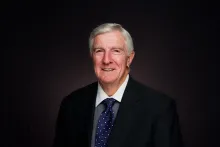
Before his retirement in 2021, Dr. Donald Ward pastored churches in Texas and Louisiana, and taught at Ambassador Bible College in Cincinnati, Ohio. He has also served as chairman of the Council of Elders of the United Church of God. He holds a BS degree; a BA in theology; a MS degree; a doctor’s degree in education from East Texas State University; and has completed 18 hours of graduate theology from SMU.
