

Don Ward
This transcript was generated by AI and may contain errors. It is provided to assist those who may not be able to listen to the message.
Okay, I want to start in Isaiah 10 and verse 17 this evening. Go back and pick up one of the things that we failed to mention last time or failed to pursue. So I want to read Isaiah 10 and verse 17. In the book of Isaiah, the Isaiah is oftentimes called the fifth gospel. It deals so much with prophecies about the Messiah, about the restoration of Israel, about what's going to happen in the millennium, about the Messiah coming and what He'll do. There's so many things in the book of Isaiah. Some of it is redundant in a sense, but in another sense it adds a little bit each time. One of the things that you see so often in the book of Isaiah, if you look there in verse 16, it says, Lord of Hosts. I would encourage you to read every scripture in the Bible that has Lord of Hosts in it. So if you have any kind of Bible software, all you have to do is put Lord of Hosts into it and then read every scripture that has Lord of Hosts in it. I think you'll be amazed.
For a long time—and you can get sidetracked on this, I'd say a long time—but for some time, and at one time, I sort of thought, well, Lord of Hosts may be thus God the Father. And occasionally, God the Father is referenced by Lord of Hosts, but for the most part, Lord of Hosts refers to Jesus Christ. Now, what I'm saying here this evening is very important to really understand the book of Isaiah and so much of the Bible and the nature of God and the relationship of God and Christ. So Lord of Hosts usually refers to the one who is Jesus Christ or who became Jesus Christ. The Hosts have to do with the heavenly Hosts. There are a company of innumerable angels in the heavenlies, and we even have angels that watch over us. And Jesus Christ is over the heavenly Host. Now, at times—and very seldom does this happen—but the Father is referred to as Lord God of Hosts or something like that. So I encourage you to read every scripture in the Bible.
There are certain phrases and there are certain words in the Bible that if you would read every verse in the Bible on it, you'll gain a lot of understanding in a lot of different areas. You may sit in a church congregation for years and never hear certain verses read. And you may occasionally hear a verse that has Lord of Hosts in it, but not much is said about it. So in Isaiah 40—in Isaiah 49 and verse 7, we want to go there. We want to pursue this for just a moment.
Now we want to go to verse 17 and pursue that for just a moment, what it says there. And it says, the Holy One of Israel is Holy One. And once again, who is His Holy One? His Holy One, as we shall see, is Jesus Christ. In Isaiah chapter 49 and verse 7—in Isaiah 49 and verse 7—now while we're doing this, we will be seeing throughout the book of Isaiah about the Lord of Hosts. We'll also be seeing—there are not a lot of verses that say His Holy One. We'll also see about His Redeemer. And another thing that—another title that is so often referred to in the Bible concerning a relationship with God is My Servant. Moses was called My Servant. Jesus Christ is sometimes referred to as My Servant by the Father.
So in Isaiah 49 and verse 7, thus says the Lord, the Redeemer of Israel. So here, you see the Yahweh, the Redeemer of Israel. In this case, that's God the Father and His Holy One.
To Him whom man despises. So that identifies that Jesus Christ came to His own and His own received Him not, and they despised Him, wound up killing Him. To Him whom the nation abhors, to His servant of rulers, King shall see and arise, princes all shall worship because of the Lord that is faithful and the Holy One of Israel, and He shall choose you.
So we see here—and let's go now to Isaiah 44 and verse 6. So we have titles here introduced. One is His Holy One and one is the Redeemer.
Please stay with us now in Isaiah 44 and verse 6. In Isaiah 44 and 6, thus says the Lord, the King of Israel and His Redeemer, the Lord of Hosts. So that identifies the Father's Redeemer is the one who became Jesus Christ. He is the Lord of Hosts.
I am the First, I am the Last, and besides me, there is no other God.
Now we go to Isaiah 47 and verse 4 and Isaiah 47 and verse 4.
As for our Redeemer, the Lord of Hosts is His name, the Holy One of Israel. So we identified in Isaiah 49 and 7 that the Holy One is the one who became Jesus Christ. I'll read Isaiah 49 and 7 again. Thus says the Lord, the Redeemer of Israel, God the Father, and His Holy One, Jesus Christ, to whom man despises to Him, whom the nation abhors to His servant of rulers, kings, shall see and arise, princes also shall worship. In other words, the whole world, including the highest, and all the offices, are going to worship.
In Ephesians chapter 2 verses 10, 11, and 12, it talks about that every knee shall bow and every tongue shall confess that Jesus Christ is Lord, shall worship because the Lord that is faithful and the Holy One of Israel, and He shall choose you. So now in Isaiah 47, 4 again, as for our Redeemer, Jesus Christ, the Lord of hosts, is His name, the Holy One of Israel.
But the Father is also our Redeemer. And as we have said in the past, almost anything that you can say about the Father can also be said about the Son, or almost anything you can say about the Son can be said about the Father. But Jesus Christ is God's agent for carrying out His will, His total plan, for the universe and for mankind. Now, let's read Isaiah 59 and verse 20. Isaiah 59 and verse 20. So time after time, you'll be seeing these titles, and you need to be clear on that. I could send you what I just read as a handout. I might do that. In Isaiah 59 and verse 20, And the Redeemer shall come to Zion, and unto them the term from transgression in Jacob says the Lord. So Jesus Christ came, and He redeemed us in the sense that He paid for our sins. He bought us back from sin and death. We had the death penalty on our head, and we had to be redeemed. So once again, from chapter 11, almost every chapter here could become a course within itself if you pursue it to the very last part that you could pursue it. You can never say everything there is to say about anything. There's always something else that can be said.
So we did reach to the end of the chapter there last time, and we came through that chapter. And now we're going to go on to verse 28. The last record I have is 27. So when Isaiah 10 and verse 28, He has come to Aath. He has passed Migron, Mishmash. He has laid up his carriages.
They're gone over the passage. They have taken up their lodging at Gebiah, and Geba. Rama is afraid, and Gebiah of Saul is fled. Blipped your voice, so daughter of Gollyam, caused it to be heard unto Laish, poor Anathoth. Remember, Anathoth was the birthplace of Jeremiah. It was a very lovely place, looked on as a lower place in the environs of Jerusalem.
Madmena is removed. The inhabitants of Gebiah gathered themselves to flee. As yet shall they remain at Nob that day, he shall shake his hand against the mount of the daughter of Zion, the hill of Jerusalem. Behold, the Lord, the Lord of Hosts, shall lap the bow with terror and the high ones. Here we have metaphorical language as the bow and the high one, and the high ones, those of stature, those in high office, shall be hewn down, and the haughty shall be humble, and he shall cut down the thickets of the forest with iron, and Lebanon shall fall by mighty one. Of course, Lebanon is very much in the days today. Lebanon is sandwiched between Syria and modern-day Israel. Lebanon is on the coast. Lebanon was one of the most beautiful places on earth until the past few decades. A lot of the richy types would go there for vacation. It was also known you've heard about the cedars of Lebanon that Hiram furnished David with the cedars of Lebanon in building the temple.
Now in chapter 11, and there shall come forth a rod out of the stem of Jesse, the stem or the root, and a branch shall grow out of his roots.
And we want to look at those scriptures that deal with the branch.
The branch is identified as none other than Jesus Christ. So let's look at the scriptures here. First of all, we want to go to Zechariah chapter 3. This too is very important because Zechariah 3 and 4 were heavily used by some of the ministers of the Worldwide Church of God toward the end of the life of Mr. Armstrong and wrongly used in some cases. So we want to go to Zechariah chapter 3. I think we'll start in verse 6. Remember that there were two that Cyrus had issued a decree. Cyrus, who was king of Persia, had issued a decree that the Jews could return from Babylon to Palestine to the Holy Land to build the temple, to build what is called the Second Temple or the Restoration Temple. And Haggai and Zechariah were on the scene prophesying, preaching, and encouraging the people. It's one of the few times that the people of God really responded to the voice of a prophet. Zechariah chapter 3 and verse 6, and the angel of the Lord confirmed unto Joshua, not the word protested, and the old King James should be confirmed. That says the Lord of hosts, I will walk in my ways, and if you will keep my charge, then shall you judge my house, and shall keep my courts, and I will give you places to walk among those who stand by. So those people that had returned that were faithful were a type of what was going to come with the church. Here now, Joshua, the high priest, you and your fellows that sit before you, for they are men of symbol. They are symbolic, for behold, I will bring forth my servant the branch. Remember now that this prophecy that we just read verse 1 from Isaiah 11.1, be all I will bring forth my servant the root from the stem of Jesse, the branch. Now, what is the branch going to do? We look now at Zechariah 6. Before we go to Zechariah 6, I want us to go to Zechariah 4 and verse 6. About the time that the last three or four years of Mr. Armstrong's life, we had people going saying that a certain lawyer was one of the two witnesses, and we had people even saying, going around and asking church people, well, who is the second most converted person in the church?
And a lot of people would say this person or that person, and they wanted them to name a certain lawyer. Now, how is the temple of God made? Now, they were laboring Haggai, Zechariah, and the people of Judah that had returned from Babylon and building the Restoration Temple.
But that was just a picture of a forerunner of what was to come, the building not made by hands, which the Lord pitched and not man.
Then he answered and spoke unto me, Zechariah 4-6, this is the word of the Lord and this is the rubber bell saying, not by my power, but by my spirit, says the Lord of Hosts.
Now, we had one evangelist who said that Mr. Armstrong was a fulfillment of the rubber bell. So you read verse 7, who are you, O great mountain, before your rubber bell?
You shall become a plain, and he shall bring forth a headstone, therefore with shouting, crying grace, grace unto it.
And so this one person was saying, verse 9, the hands of his rubber bell have laid the foundation in this house. His hand shall also finish it, and you shall know that the Lord of Hosts has sent me unto you.
So at least one person and some others were saying, if Mr. Armstrong didn't live to the end of the age of Christ's gain, the Bible wasn't true. Well, when you begin to write your name or anyone else's name in the Bible, then you're in trouble. Because now we are down the road some 36 years. Now we see what Zachariah was talking about in chapter 3 and verse 8. I will bring forth my servant the branch. What will he do? It's going to be done through his spirit, and the fulfillment of the rubber bell is in Jesus Christ. There is a physical foundation. There is a spiritual foundation. Paul writes in 1 Corinthians chapter 3, what other foundation can be laid, and that which is laid, and that foundation is Jesus Christ. So in Zachariah 6 and verse 12, speak unto him, saying, Thus says the Lord of Hosts. It's time after time to see this Lord of Hosts. And I've asked you to read every verse in the Bible has Lord of Hosts in it. Thus speaks the Lord of Hosts, saying, Behold the man whose name is the branch.
He shall grow up out of his place, and he shall build the temple of the Lord. Which temple is he going to build? He's going to build the spiritual temple, as we'll see in just a moment in Matthew 16, 18. Even he shall build the temple of the Lord, and he shall bear the glory. He shall sit and rule upon his throne.
He shall be a priest upon his throne. So you see, he will be a king, and he'll be a priest. And the saints are going to be made kings and priests. As it says in Revelation 20, verse 4, I believe it is, and thrones were cast, and they set upon him those who had gotten the victory over the beast and over his mark.
And the counsel of peace shall be between them both. That is, king and priest, church and state are combined. Now we look at Matthew 16 and verse 18.
Leading up to this, Peter was asked, well, actually all the apostles were asked, who do men say that I am? And Peter answered and said, in verse 16, you are at the Christ, the sight of the living God.
Jesus answered, and said, and him, blessed are you, Simon Bar-Giono, for flesh and blood, had not revealed it unto you but my Father, who is in heaven.
And the way of the Father revealed it was through Christ in his revealing of the Father. And I say unto you, Christ speaking, and I say unto you, that you are Peter, Petros, Little Rock, upon this rock, Big Rock, Beatrice, I will build my church, and the gates of hell shall not prevail against it. Now you look at Hebrews chapter 8. Hebrews chapter 8. So this theme of the branch is so very important because it is the branch. He said, I will build my church. It's also the Church of God. Jesus Christ prayed in John 17 that you would keep them in your name. So the official name of the Church is the Church of God.
It is also the Church of Christ, but it is kept in the name of it is the Church of God.
So in Hebrews chapter 8, we have a summary verse here.
Now the things which we have spoken, Hebrews chapter 8 verse 1, now the things which we have spoken, this is the sum.
We have such a high praise who has set on the right hand of the throne of the majesty in the heavens. A minister of the sanctuary and of the true tabernacle, which the Lord pitched and not man. See, I will bring forth my servant the branch, and he shall build the temple. Jesus Christ says, and I will build my church upon this rock, this big rock. And it's done through the Spirit. It's not done through physical means. God does not dwell now in buildings made by hands. He dwells in each one of us. As far as his earthly temple, his earthly temple is the Church of God.
So verse 2 again, a minister of the sanctuary and of the true tabernacle, which the Lord pitched and not man. For every high priest is ordained to offer gifts and sacrifices.
Wherefore, it is of necessity that this man have somewhat also to offer.
So we see here what the branch does with regard to building the temple. Now, there's a lot more to what the branch does, as we will see as we go on through this. We go to read the rest of this verse, but we'll just read the whole thing again. Isaiah 11.1, And there shall come forth a rod, which can mean a stem or a root out of Jesse. Jesse is the father of David, and a branch shall grow out of his roots. Jesus Christ is the son of Jesse, he's the son of David. And the Spirit of the Lord shall rest upon him. The Spirit of the Lord shall rest upon him.
Jesus Christ had the Spirit of God without measure.
So we have seven things here. We have the Spirit resting upon him. We have the Spirit of wisdom.
The Spirit of understanding, the Spirit of counsel, the Spirit of might, the Spirit of knowledge, and the Spirit of fear of the Lord. So look at this. Jesus Christ had reverence, respect, and awe for the Father. Jesus Christ always pointed people toward the Father. Now you look at 1 Peter chapter 1 and verse 21.
Who by him do believe in God that is through Christ, that raised him up from the dead and gave him glory, that your faith and hope might be in God. So Jesus Christ always pointed people toward the Father. So we want the Spirit to rest upon us. We want wisdom. Know there and change the first three verses. I want to read that and show you what that is really about.
And James chapter 1. Are you there? James 1. My brother encountered all joy when you fall into different trials.
Knowing this is the trying of your faith works patience. Now that word can be translated steadfastness and you want to be steadfast. But it's really having to do with patience and being long suffering. And if you look this word up, you'll find that one of the meanings of the word is patience.
But let patience have her perfect work.
That may be perfect and tired of wanting nothing. How does that happen? How do you let patience have her perfect work? It doesn't mean that you just sit there and do nothing. You do whatever you can. And as they say, you pray like it all depends on you. And then you do whatever you can as if it all depended upon you. But let patience have her perfect work that you may be perfect and entire, wanting nothing.
Now this part about patience, you continue. We want to go now to James 5. James 5 and verse 7. Be patient, therefore. You could say, be steadfast.
Be patient, therefore, brethren, in the coming of the Lord.
So there's a time of waiting. There's a time of long suffering. There's a time of enduring.
Behold, the husband waits for the precious fruit of the earth and has long patience for it. He doesn't get discouraged. He knows, he knows, that he knows that in the end, God will deliver.
Until he has long patience for it until he received the early and latter reign. Be you patient. Establish your hearts for the coming of the Lord. Draws nigh.
And see, this was written almost 2,000 years ago.
But be you also patient. Establish your heart for the coming of the Lord. Draws nigh.
Take my brethren, verse 10, the prophets who have spoken in the name of the Lord, for an example of suffering affliction and of patience. Behold, we count them happy that endure. See, patience has to do with enduring to the end. It is staying faithful to the very end. So how can patience have its perfect work?
Patience has its perfect work when you put on the whole armor of God, and especially when you put on the shield of faith.
It says in Ephesians 6, verse 15, Above all, take the shield of faith, wherewith you will be able to quench all the fiery darts of the wicked. You see, when a trial comes, if you have on the shield of faith, and you know and you know that you know that God will deliver. When? We don't know when.
It may be soon. It may not even be in this life. You know that the Apostle Paul had a thorn in the flesh. He besought the Lord three times that it be removed, and it was not removed.
And apparently Paul died with that thorn in the flesh.
But he let patience have its perfect work. He even wrote that in weakness I am strong, because then he relied totally upon Jesus Christ.
The fear of the Lord, even Jesus Christ, had this reverence, this respect, this awe for God. Now back in Isaiah 11.3, and to make him a quick understanding in the fear of the Lord. In fear of the Lord, he pointed people toward the Father. He wanted to please his Father. He did please his Father. He did the will of the Father. He cannot judge after the sight of his eyes, neither reprove after the hearing of his ears. He just doesn't depend upon seeing it or hearing it. What does he depend upon? He depends upon the word and the will of the Father. What does the word and the will of the Father say?
But with righteousness shall he judge the poor. And for some reason, we cannot come to understand that we are supposed to judge. You look at 2 Chronicles, I believe it is, maybe 1 Chronicles. We'll see shortly. And in 1 Chronicles 17, I should have written this down in my notes, but I really don't have much to do with notes. In 1 Chronicles 17, and I want 15, this is not it. Maybe I'm doing this lecture. Maybe it's 1570. No, my eye doesn't see it right now, what I'm looking for. But the verse that I'm looking for says, you shall judge righteous judgment. We are to judge. We are to discern between right and wrong. And one of the reasons that God is so upset with Israel and with the world today, you go now to Ezekiel, we are to discern between good and evil. We're to make a difference between good and evil. Once again, in Ezekiel 22, verse 25, there's a conspiracy of our prophets from the midst thereof, like a roaring lion, ravening the prey. They have devoured souls. They have taken the treasure and precious things. They have made her many widows in the midst thereof. Her priests have violated my law and have profaned my holy things. Now here's where I'm in the key verse. They judge righteous judgment. Jesus Christ is going to judge righteous judgment. We just read it. I say 11-4, but with righteousness, shall he judge the poor. Notice this. Her priests have violated my law. This is Ezekiel 22-26.
Her priests have violated my law, have profaned my holy things. They have put no difference between the holy and profane. Neither have they showed difference between the unclean and the clean, and have hid their eyes from my Sabbaths, and I am profaned among them. See, one of the main duties of the ministry, and for that matter each member of the body of Christ, is to put a difference between that which is good and that which is evil. Do we have discipline in the church? Do we have discipline in our own lives? So, but with righteousness, shall he judge the poor and reprove with equity? Now, this word reprove, we also have this in the Greek, in the New Testament, and it means to convict. It also hears the meanings of it in the Hebrew.
It means to convict, to appoint, to argue, to chasten, to convince, to correct, to dispute, to judge, to plead, to reason together, to rebuke. So, he will do all of those things and has done all of those things, and we are to do the same thing. He set us an example that we should follow in his steps and reprove with equity for the meek of the earth. You see, the church and all of us have been affected by the watchword of the day.
The only so-called absolute of the day is, thou shall not be intolerant.
In other words, thou shall be tolerant of everything. Everything is all right, if it's all right for you. That is the existential philosophy of the day.
So, he shall reprove, he shall convict, to reprove, correct for the meek of the earth, and he shall smite the earth with the rot of his mouth, and with the breath of his lips shall he slay the wicked. That's in Isaiah 11 and verse 4.
Now, this part about slay with his mouth. You see, the worlds were created by the mouth of Jesus Christ. He is the spokesman. He spoke, and they were created. See, at the end of the age, this smiting that is going to take place, if you go to Revelation chapter 19, which pictures Jesus Christ and the saints coming on the great white horse, and they are going to fight the battle of the great day of God Almighty. But that battle is not going to be fought and won by weapons. Now, the beast, the false prophet, and the devil, they're going to gather all the nations of the earth, and they are going to fight against returning Jesus Christ. Maybe one of the things we see going on today is so much talk about aliens and extraterrestrials and unidentified flying objects and that kind of thing. And there are things that can appear. In fact, the demons can even appear as a person, as in the case of what you read about when they came to Lot's house and they knocked on the door and let us in, because we want to know the men that came here today. We want to know them. So the two angels that came in, Lot had dragged them inside the house. They had appeared as men.
So there are things that are in another dimension. They can do things that we cannot do. What we're talking about, he shall smite them with the rod of his mouth.
In Revelation 19 and verse 15, and out of his mouth goes a sharp sword, that with it he should smite the nations, and he shall rule them with a rod of iron. He treads the winepress and the pharisees and wrath of Almighty God. See, he's doing this in the name of and for under the direction of the Father.
And what's going to happen here is that he's going to speak and the flesh is going to fall off of their bones. Verse 18, that you may eat the flesh of kings, the flesh of captains, the flesh of mighty men, and the flesh of horses, and of them that sit on them, and the flesh of all men, both free and bond, both small and great. Now verse 21, and the remnant were slain with the sword, in other words, those that were left of him that set upon the horse, which sword, which is the word of God, proceeds out of his mouth, and all the files were filled with his flesh. Yes, he smites the earth with the rod. So we see here's a prophecy of smiting the earth with a rod 20, at least 2750 years ago. Isaiah prophesied somewhere in the 740s, 730s. He was on the scene a long time. So if this prophecy was done in the 730s, so that's like 750 something years ago.
He smites them with the rod of his mouth, back in Isaiah 11.4, and with the breath of his lips shall he slay the wicked, and righteousness shall be the girdle of his loins, and where to put on the breath plate of righteousness, and where to gird up our loins, and what do we gird up our loins with? Where does it say in the Bible to gird up your loins? It says it in 1 Peter chapter 1. Gird up your loins. Verse 6, the wolf also shall dwell with the lamb, and the leopard shall lie down with the kid, and the calf of the young lion, and the fattening together, and a little child shall lead them, and the cow and the bear shall feed their young ones, and shall lie down, and shall lie down together, and the lion shall eat straw like the ox, and the suckling child shall play on the whole of the ask, and the weaned child shall put his hand on the cockatrice den, on the den of the snake. Verse 8, and the weaned child shall put his hand on the cockatrice den. Verse 9, they shall let hurt nor destroy in all my holy mountain, for the earth shall be full of the knowledge of the Lord, as waters cover the sea.
Can you imagine a society in which, in today's world, how many people really have had the blinders removed from their eyes and really understand what the plan of salvation is? And the plan of salvation, of course, hinges on the sacrifice of Jesus Christ, how He came and bought us back from sin and death, so that the death penalty should be removed from us. In short, it hinges on being begotten of God's Spirit and born into His family. Jesus Christ was begotten, became a man, paid the price, and because He did, we can follow in His footsteps. We can be begotten of the Spirit and born into the family of God. So Isaiah 11, now and again, they shall not hurt nor destroy in all my holy mountain, for the earth shall be full of the knowledge of the Lord, as the waters cover the sea. And in that day, in that day, it ushers in another prophetic utterance, so the subject matter changes. And in that day, I don't know if you...
This is really worth noting what I said when you see that phrase, in that day, and in that day, and almost always in that day refers to merging into the millennium.
In that day, it shall come to pass, that the Lord shall set His hand again the second time to recover the remnant of His people. Now, the remnant of His people is one of the great topics of the Book of Isaiah.
It was also, we talked about it when we covered the Book of Jeremiah. Israel is scattered among the nations at the end of the age, and we're going to turn to scriptures that show that they are scattered but here it says that in that day, the Lord shall set His hand again the second time. The first time was when He brought Judah back to Israel, to the land of Israel, to the Holy Land, to build that Restoration Temple because prophecy had to be fulfilled. The northern ten tribes had gone into captivity in 721 BC, shortly after the days of Isaiah, because they had long gone into captivity. However, many of them did maintain their identity of which tribe they were from. That's a different subject. That's not what we're on right now. So, He shall recover the remnant of His people.
Now, we have turned here once, but we'll turn here again to Zephaniah.
Zephaniah, one of the minor prophets, in Zephaniah chapter 3, talks about the remnant. In Zephaniah chapter 3 and verse 13, the remnant of Israel shall do no iniquity. Now, these are the people who live over into the millennia. There will be, you know, the there's a ceiling of 144,000 in Revelation chapter 6 from the tribes of Israel that will live over into the millennium.
The remnant of Israel shall not do iniquity nor speak lies. Neither shall a deceitful tongue be found in their mouth, for they shall feed and lie down, and none shall make them afraid. They are going to be sifted among the nations.
This scattering of Israel was done before they were scattered.
It amazingly, if you turn to the scattering of Israel, I said it wrong, the scattering of Israel was prophesied way before they were scattered, way before they went into captivity. What has to turn now to 1 Kings 22 and verse 17? This prophecy was uttered by a prophet that we're probably not all that familiar with by Micaiah. In 1 Kings 22, Micaiah was a prophet. He was in the days of Elijah. He was on the scene at the same time that Elijah was, and he is the one who uttered this prophecy in 1 Kings 22 and verse 17. 1 Kings 22-17, please be turning to these scriptures, or please write them down. Please review them. You cannot get all of this information just sitting here listening to it tonight.
We want it to be a guidepost for learning so that you master as much of the Bible as you possibly can. So the post went with letters from the king and his princess, Radol, Israel, and Judah. In 1 Kings 22-17, he said, I saw all Israel scattered upon the hills. Now the prophet who uttered these words was Micaiah. Look at verse 9. Then the king of Israel called an officer and said, facing here Micaiah, son of Imlah. And so Micaiah is the prophet who uttered this word in 22-17.
This is done way back in the days of the kings. And he said, I saw all Israel scattered upon the hills as sheep that have not a shepherd. And the Lord said, these have no master.
Let them return every man to his house in peace. And that day is going to come, in which every man will return to his house in peace. Now in 2 Chronicles 30 and verse 10, 2 Chronicles 1, chapter 30 and verse 10, here we see the background to this is that Hezekiah, when he came to reign, he cleaned out the temple and they found the book of the law and discovered that they should keep the Passover, which they cleaned up the temple and they purified themselves and got ready to keep the feast. So the post-pass from city to city, this is where they sent out an invitation to those who had escaped from the kings of Israel. I mean the kings of Assyria. So I want now 2 Chronicles 30 and verse 6. Now what this is going to show you that, and here's something very important to remember, and what I did, I misstated something so I hope you're not confused. Matthew 16, verse 7, Micaiah saw Israel scattered way long ago, and we read that verse from 1 Kings.
But now we're at 2 Chronicles 30 and verse 10. Israel has gone into captivity, and many of them are scattered, and according to U.S. and B.C. and prophecy, they moved westward into Germany and parts of northern Europe. Now we are reading 2 Chronicles 30 and verse 10. After Hezekiah had discovered the book of the law and that they should keep the Passover, they cleansed the temple, they cleansed themselves, and they said, let's invite the other tribes to the north to come down and keep the Passover, even though many of them had gone into captivity. So we're reading 2 Chronicles 30 and verse 10.
So the post-pass from Sidious is sitting through the country of Ephraim and Manasseh, even under Zebulon, but they laughed them to scorn and mocked them. Nevertheless, different ones of Asher, Manasseh, and of Zebulon humbled themselves and came to Jerusalem.
And all the congregation—now this is verse 25, 2 Chronicles 30 verse 25—and all the congregation of Judah were the priests and the Levites, and all the congregation that came out of Israel and strangers that came out of the land of Israel and that dwelt in Judah rejoice.
So we see here that many of them did maintain their identity.
Now, probably the key verse in the scattering of Israel—and we read it last time, we'll read it again today—because it's so important. It comes up time after time that the remnant will be restored. And it seems that there is a remnant of physical Israel and a remnant composed of those who are converted now and will be in the first resurrection.
So 2 Chronicles 30 verse 25, and all the congregation of Judah were the priests and the Levites, and all the congregation that came out of Israel and strangers that came out of the land of Israel and that dwelt in Judah rejoiced. So now, what is the significance of what many of them had retained their identity? It came to be over the course of time that regardless of which tribe you came from, you were called a Jew.
Now, we talk about the lost ten tribes of Judah, but there's also people of Israelite-ish descent I'll show you this from Zechariah 8. Zechariah 8 is a great description of what will be taking We'll be taking place in the Millennium. Zechariah 8, verse 23. Now, what are we talking about? We're talking about, in regard to which tribe you came from, you came to be known as a Jew. But God knows, as we shall read from Amos, shortly those who are His.
Zechariah 8, verse 23. Thus says the Lord of Hosts, time after time after time after time, and Zechariah you will see that Lord of Hosts. Thus says the Lord of Hosts, in those days it shall come to pass, that ten men shall take hold out of the languages of the nations, even shall take hold of the skirt of Him that is a Jew. So as far back as the days of Zechariah, and we're back to circa 515 B.C. Here Zechariah calls Him a Jew, and we will go with you, for we have heard that God is with you.
So it's not just the Jews, of course, that return, and the second return of the remnant. It is all of Israel that returns. So now we look at Amos, once again one of the minor prophets, Isaiah Joel Amos, Amos right after Joel.
In Amos chapter 9, we'll see that Israel is sifted among the nations. In Amos chapter 9 verse 8, Behold the eyes of the Lord are upon the sinful kingdom. I will destroy it from off the face of the earth, saying that I will not utterly destroy the house of Jacob, says the Lord. Remember Jacob at times is put for all 10 tribes, all 12 tribes. Sometimes for 10 tribes, for lo, I will command, and I will sift the house of Israel among all nations, like a corn is sifted in a sieve.
And we used to have a sifter when I was a boy. He went to the grass mill. He had your corn ground into meal, and of course there would be some coarse grains of corn left. Then you'd put it in the sifter and you would sift it to make the corn bread, and you'd throw the grains away, the broken grains. Yet shall not the least grain fall unto the earth. Not the least grain shall fall into the earth.
So, in Isaiah 11 verse 11, it shall come to pass in that day, that day when you emerge into the millennium. And we read the scripture from Zechariah 8.23, that they will catch hold of the skirt of Jew and say, Show us your God. That the Lord shall set his hand again the second time, to recover the remnant of his people. And the remnant we saw in Zechariah, I mean Zephaniah 3 and verse 13, which shall be left from Assyria, from Egypt, from Pathros, from Cush.
Pathros is part of Egypt. Cush is generally thought to be Ethiopia. Elam was one of the sons of Chihm. And he's a Semite. And he's scattered. And from Shillar, Shillar was a plains of Babylon. And from Hamith. And from the Isles. Hamith is Syria today. And from the islands of the sea. Some translations will say that the dragged around of the coast of the sea. Really what it's saying is that all of the earth, wherever they are, as we read from Amos, I will sift them among all nations and I will gather them. And he shall set an end sign for the nations.
Who is that end sign for the nations? The end sign for the nations, of course, is Jesus Christ the Messiah. The end sign is a standard usually lifted up on the mountains, on some elevated place. And the Messiah would be the one that sends you here. He shall set up an end sign for the nations, be Jesus Christ the Messiah, and shall assemble the outcast. Now another term that we'll see, especially in Isaiah chapter 16, is outcast.
And the outcast generally refers to all of Israel. In Psalm 147 verse 2 it says, The Lord does build up Jerusalem, He gathers together the outcast. That's Psalm 147 verse 2. In Isaiah 11 verse 12, where we are now, we have just read that. In Isaiah 16 verse 3, and we'll cover this in more depth when we come to it, Isaiah 16, Take counsel, execute judgment, make your shadow as the night in the midst of the new day.
Hide the outcast, betray not him that wanders. In Isaiah 16.4, let mine outcast well with you, Moab. Now Moab is a nation that God has nothing good to say about. We could turn to Zacharot and Zephaniah chapter 2, and he'll talk about how God is going to destroy Moab when he comes again.
But here it says, let mine outcast well with you. And some have speculated that, of course, Moab was, remember Lot. Lot had two daughters. Those two daughters got Lot drunk. He impregnated them, and they bore two sons, one Moab and one Ammon. The Moabites and the Ammonites have been bitter enemies of Israel from that day forward.
And it is thought that the Moabites and the Ammonites dwell in modern-day Jordan. In fact, the capital of Jordan is Ammon. So, Ammonites and Moabites. And Petra is located in Jordan. And some people have speculated, well, that's a place of safety. And, but here it indicates it's difficult to understand that it would be Moab. And we'll go more into depth about that later on when we come to chapter 16. But those three verses there are the three verses.
There's one other place that talks about the, well, two other places that talk about the outcast. And one is Psalm 82, in which they are made a decree to destroy. Let's go to Psalm 82, I think.
Let's go to Psalm 83. In Psalm 83, verse 1, keep not your silence, O God. Hold not your peace, and be not still, O God. Below your enemies make a tumult. And they that hate you have lifted up their heads. They have taken traffic counts against your people and consulted against your hidden ones. They have said, Come and let us cut them off of being a nation.
Let the name of Israel be No More in Remembrance. For they have consulted together one consent, one consent. They are Confederate against you. The Tabernacles of Edom, the Ishmaelites, Moab, the Hagarenes, Gebal, Ammon, Hamillic, Philistines, and Habits of Tyre. Asher and Elshur join with them. They will help the children of Lot. So these nations, Middle Eastern nations, have been in the verses we read are outcasts. And among those nations, they consider them outcasts as they want to destroy them. But God is going to deliver them, as he says in Zebaniah chapter 3 to the end of the chapter. And at least 144,000 will be sealed and live over into the millennium.
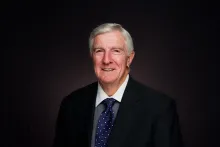
Before his retirement in 2021, Dr. Donald Ward pastored churches in Texas and Louisiana, and taught at Ambassador Bible College in Cincinnati, Ohio. He has also served as chairman of the Council of Elders of the United Church of God. He holds a BS degree; a BA in theology; a MS degree; a doctor’s degree in education from East Texas State University; and has completed 18 hours of graduate theology from SMU.
