

Don Ward
This transcript was generated by AI and may contain errors. It is provided to assist those who may not be able to listen to the message.
Good afternoon, good evening, everyone. Good day, good sunlight for everybody. It's now sundown here at about 7 40, so starting a Bible study, so-called the evening Bible study, in broad daylight, is not conducive to attendance, probably. But here we are. We're in Isaiah 15 and verse 1. The burden of Moab, because in the night R of Moab is laid waste and brought to silence, because in the night, the tear of Moab is laid waste and brought to silence. So we want to briefly rehearse the history of Moab. Who is Moab? Moab today is Jordan. The capital of Jordan is Amman, so Moab and Ammon are closely linked together. If you'll turn to Genesis 19 and verse 35, we will see the origin of Moab and Ammon. As you recall, going back to the days that God warned that he was going to destroy Sodom and Gomorrah, and Abraham's nephew Lot lived in Sodom. And Abraham reasoned with God and asked him that if he could find 10 righteous people, would he spare the city? God agreed that he would. Actually, he didn't find 10 righteous people in the city, but God agreed to save Lot his wife and his two daughters. As you know, the story is they were departing Sodom. Lot's wife looked back and turned to a pillar of salt. So Lot and his two daughters escaped into the mountains, and in Genesis 19 verse 35, we'll see the origin of Moab. Genesis 19.35, they made their father drink wine that night also, and the younger arose and lay with him, and he perceived not when she lay down, nor when she arose. Of course, daughters had reason in their heart, according to the flesh, that our name will not be remembered and will be blotted out if we don't have our father go into us and bear children by him, so that his name not perish from the earth.
In verse 37, the first born bear a son and called his name Moab. The same is the father of the Moabites into this day, and the younger she also bear a son and called his name Ben Ami. The same is the father of the children of Ammon into this day, and as I said, the capital of Jordan is Ammon.
So there's a heavy burden on Ammon and Moab because of what they have done to God's people through the centuries. Now you just think back that this situation with a lot occurred many years ago, probably sometime in the 1700s BC. So it was many centuries ago, but we still have the identity of Moab and Ammon. There are five groups of people that are named, four by name and one by religion, and all four embrace that religion.
Those groups are Moab and Ammon, which we've just read about, and Edom, which we'll talk about in just a moment. And then there's Ishmael, and as we note, they're all related to Abraham, Moab and Ammon. The daughters who bear the sons, Moab and Ammon, are related to Abraham. And of course, Edom is Esau, was a son of Abraham, and Ishmael was Abraham's son by Hagar.
And then all four of these have embraced Islam. So with regard to Esau, we know the story of how Rebecca and Jacob deceived Isaac, and he gave the birthright to Esau. So let's go to Genesis right now, and we'll see that in Genesis, how that Esau hated Jacob. The descendants of Esau are listed in Genesis chapter 36. In Genesis chapter 36. In Genesis 36 and verse 1, we'll see here that the descendants of Esau, which is Edom, Genesis 36. Now these are the generations of Esau who is Edom. Then you look at verse 10. These are the names of Esau's sons.
Eliaphas, the son of Adah, the wife of Esau, Ruel, the son of Bashi-math, the wife of Esau.
And so Esau is Edom, or Edom is Esau, whichever way you want to say it.
The origin of Moab and Ammon is important to understand as it relates to Bible prophecy.
And of course, as we know, also it is important to understand Ishmael, because it is said of Ishmael when Abraham was reluctant to send him away, but because of the urging of Sarah, she sent him away. And it is said that his hand would be against every man's hand. Now, it's interesting to note in Daniel 11 and verse 41, if you go to Daniel 11, 41, with regard to the end of the age, that Ammon, Moab, and Edom escaped the wrath of the willful king of Daniel 11, who is the beast power, apparently. In Daniel 11 and in verse 41, And he shall enter also into the glorious land, and many countries shall be overthrown, but these shall escape out of his hand, even Edom and Moab, and the chief of the children of Ammon, which Moab and Ammon is apparently modern Jordan today, and Edom still, in Bible prophecy, it seems that Edom is so interconnected with the Ishmaelites and with Edom and Moab that it's difficult to separate them. So continuing here, we have the, we see the origin of Moab, we see the origin of Ammon, we see the origin of Esau. Esau was Jacob's twin brother. You remember the story of at their birth? Jacob came out first, Esau came out first, but Jacob grabbed him by the heel, and he returned to the womb, and Jacob came out first. Jacob was mean supplanter, and his name was changed to Israel, ruling with God. And when the birthright came, as we've already noted, that Rebecca and Jacob deceived Isaac into giving the birthright to Jacob. Jacob became the father of the 12 tribes of Israel. So we have identified here Moab, Ammon, Edom, Ishmael, and now we want to talk about the origin of Islam, just briefly here. Scholars date the creation of Islam in the seventh century. So from the time of Sodom and Gomorrah, and the time of Abraham, down to the development of Islam is a long, long time. Probably 1700 years plus seven, somewhere like circa 2400 years from the time of Abraham to the development of Islam. Islam started in Mecca in Saudi Arabia by a man called Mohammed from the clan of Hashim. Now, remember that name Hashim because Jordan, the king of Jordan, as we will talk about later, the kingdom of Jordan is called the Hashemite Kingdom. They claim to be direct descendants of Mohammed, which we'll talk about later. At about the age of 40, Mohammed, while alone in a cave on Mount Hira, encountered an angelic being, he says, that spoke to him. These conversations continued for 23 years and would later be written down as chapters called Surahs in the Quran.
Today, Islam is the fastest growing religion on the face of the earth, largely due to their birth rate. Their birth rate is among the highest in the world. It claims over 2 billion adherents, 2 billion adherents to Islam, which is roughly one-fourth of the world's population.
We'll talk about Islam a little more a little later. Now, let's continue here. We have identified five groups that are very much involved in end-time prophecy, and a lot of people have placed a lot of stock in Isaiah 16 verse 4, which we'll get to a little later. In Isaiah 15 verse 2, Moab has gone up to Bojith and to Dibon. The high place is to weep. Moab shall howl over Nebo.
And Nebo was a very high mountain. You remember that before Moses died, he was allowed to get a view of the Promised Land. It is said that on Mount Nebo, on a clear day, you can see practically all the way to Jerusalem. Nebo is not all that far from the mouth of the Dead Sea. And over Mediba, on all their heads shall be baldness, and every beard cut off.
And it goes into the next several verses here. The destruction that is coming upon Moab by the spoiler that is coming upon them.
In verse 3, in their streets they shall gird themselves with sackcloth on the tops of their houses, in their streets everyone shall howl, weeping abundantly.
And Heshbon shall cry, and Elialay, their voice shall be heard, even unto Jehaz. Therefore, the armed soldiers of Moab shall cry out, his life shall be grievous unto him. My heart shall cry out for Moab, his fugitives. Now notice this word, fugitives, because it plays into chapter 16. Are the fugitives of this verse here Isaiah 15.5 the same as the outcast of Isaiah 16.4. I went to Bible Hub and I got all the translations of Isaiah 16.4, which we'll talk about a little more in which 20-something translations and out of those 20-something translations only to make it more, which some could construe to say, well, it's talking about a place of safety for the church. But this is a real thing that's happening physically. Now, at the end of the age, mark this and mark it well, that all of these countries, especially Moab, Ammon, Edom, and the Ishmaelites, and the world of Islam is going to and the world of Islam is going to pay a very heavy price for what they have done in trying to destroy Jacob. Asa hated Jacob, and one of the things he said was, When my father is dead, I will kill him. And from that day to this day, Isa has desired to kill Jacob. Continuing here, his fugitive shall flee unto Zor, and heifer of three years, a heifer of three years with some mature heifer ready to bear. There are various translations on this that you might want to look up. Some don't even use the word heifer in it.
The word here for heifer is one nearly grown, a calf, so it seems to be literally referring to a heifer. At three years old, they are ready to have their cycle, some cycle, way before then.
One time I was, quote, a rancher, and I know for sure they cycled sometimes before three years old.
Shall flee unto Zor and heifer for three years, for by the mounting of luhith with weeping shall they go it up.
For in the way of orhanam, they shall raise up a cry of destruction.
So everywhere they go, there's grief, there's mourning, there's a cry that goes out, because of the destruction is so great. For the waters of Nimrim shall be desolate, for the hay is withered away, the grass fails, there is no green thing. Therefore, the abundance they have gotten, and that which they have laid up shall they carry away to the brook of the willows. One of the things about Jordan in that area they have had it pretty good through the centuries. They've had it rough at times, but they have had it pretty good at times. You can read Jeremiah 48, which gives a far more detailed and longer prophecy about God's ultimate destruction of Moab.
But at the very end, in verse 47 of Jeremiah 48, it says that yet he will return the captivity of Moab. It'll be a very small remnant. For the waters of Dimaan shall be full of blood, for I will bring more upon Dimaan, lions upon him that escapes the Moab, and upon the remnant of the land. Now we go to chapter 16.
And as we go to chapters 16, we'll read the first four verses, and then we'll talk about place of safety. But there's a lot more in this than just place of safety. I gave a sermon many years ago, and more about that a little bit later on this, where is the place of safety?
Is it in the rocks, or it is in the rock of ages, Jesus Christ? In Isaiah 61, send you the lamb, the ruler of the land, from Selah. Now Selah is a word. Selah means rock.
So Selah could be, it means, to send a lamb from Petra to the wilderness upon the mount, unto the mount of the daughter of Zion. In other words, the Cal D renders this, bear you tribute to the Messiah, the anointed of Israel, who is powerful over you, who were in the desert to Mount Zion. And this understanding by the Messiah is probably referring to the true Messiah.
David conquered that area of the world way back early on. David conquered that part of the world in 2 Samuel chapter 18. By what I'm saying, he conquered the area of Petra or Edom, and they were placed in tribute to Judah for a long, long time.
In 2 Samuel 8.14, and he put garrisons in Edom, that is, David did. Throughout all Edom put garrisons, and all they of Edom became David's servants. Once again, 2 Samuel 8.14, and the Lord preserved David, wheresoever he went. Now in 1 Kings 11.15, 1 Kings 11.15, for it came to pass when David was in Edom, and Joab the captain and the host was gone up to bury the slain, after he had smitten every male in Edom. So Edom was a recipient of the wrath of Joab. Remember, Joab was not allowed to replace David, or eventually, on David's deathbed, he told them to kill Joab. And Joab was slain. He went to the altar and grabbed the horns on the altar, but he was slain. God hates Edom with a never-ending hate. Now I'm reading from Isaiah 34 and verse 5, For my sword shall be bathed in heaven, behold, it shall come down upon Edomiah. Now another name for Edomiah, in addition to Selah, is Edomiah. If you'll remember, Herod the Great, the great builder who refurbished the temple, who built many outstanding things in and around Jerusalem and came to be known as Herod the Great, he was an Edomian. He was from that area of the world, south of Judea, in the area of Petra. He was the second son of Antipater, the Edomian, a high-ranking official, under the Tetrarch, Hichranus II.
Herod's father was by descent an Edomite, whose ancestors had converted to Judaism.
See, David conquered that area way back in Serco 1000 BC, probably in the 900s BC, and Herod was raised as a Jew. But Herod was a very cruel ruler, and as you know, Herod, who was an Edomite, an Edomian, was the one who issued the decree that all the babies under two years of age should be killed in Israel.
So, Herod the Great was from that area, and he was an Edomian, but he was raised in the Jewish religion and it was through the Romans, Antipater, Herod's father, was well liked by the Romans when he died.
When he died, his son Herod became the king of that part of Israel.
Now, continuing here, in Isaiah 16 verse 2, for it shall be that as a wandering bird cast out of the net, so the daughters of Moab shall be at the fords of Arnon, that river there, take counsel, execute judgment, make your shadow as the night, in the midst of the noondays, in the midst of the noondays, hide the outcast, be wary not him, or betray not him, that wanders. Let mine outcast, dwell with you, Moab, and be you a cover to them from the face of the spoiler, for the extortioner is at an inn, the spoiler ceases, the oppressors are consumed out of the land.
Now, who are the outcast? Well, so many of the commentators, there's one commentator says that the outcast are Jews, physical Jews, says nothing about the church. As I mentioned to you, I have three pages of translations from Bible Hub of Isaiah 16 and verse 4. The first one is the what more and more people are quoting for, which I wish it wouldn't do, except in rare occasions. First from NIV, let the Moabite fugitives stay with you, be their shelter from the destroyer. The oppressor will come to an end, and destruction will cease. The aggressor will vanish from the land.
The aggressor here was thought to be by many commendators, one of the kings of Assyria, because Moab, Edom, Israel, and Syria had formed an alliance against the king of Assyria.
But at the same time, as we shall see a little later in this chapter, this chapter also has an end-time setting with regard to paying homage to him that is the king in Mount Zion. A few more of these, the Berean translation, let my fugitives stay with you.
The English Standard Version says, let the outcasts of Moab sojourn with you.
Of course, both the King James and the New King James says, let mine outcast well with you.
The New American Standard says, let the outcasts of Moab stay with you.
There's no need to be reading these. You can go to Bible of yourself and look at the translations for Isaiah 16 verse 4. So about close to 20th and 24th translated it as the fugitives of Moab. Now, through the years in the church, some people have pointed to this verse as if Petra would be the place of safety. Now remember that Moab, Edom, Haman, the Ishmaelites, most all of them are of the Islamic religion. So let's do a little bit of… let's consider a hypothetical conversation between a U.S. church leader and the King of Jordan, let's say, making arrangements for an Islamic king, with an Islamic king, for a church group to flee to Petra during the tribulation. Can you imagine going before a king like King Hussein and saying, as we shall see a little later, Mr. Armstrong was quite a friend of King Hussein, and especially his wife, Queen Noor. I have been to Jordan and even had tea in the yard of one of the possible, before Hussein died, a possible successor to his throne.
He didn't get the throne. King Hussein's son, Abdullah II, got it. Continuing this hypothetical situation, though, an Islamic king, a church leader from the U.S., goes to Petra during… to say, hey, our ghost of Jordan, to say, hey, you know, I'm leading this church group and a tribulation is coming, and if that tribulation comes, would it be possible for us to come to your country and be protected from the great tribulation? If we're not so sad, even the thought of discussing such a thing as a work of the flesh, as if you had to have an earthly king's permission for God to protect you during the great tribulation. But let's say we would actually approach the King of Jordan about a church group fleeing to Petra during the great tribulation. What would you say to the Islamic king? Would you say, I'm the head of a Christian church and the Christian Bible promises or prophesies of a great tribulation to come, and it will be a time of great trouble and distress for all nations. So I was wondering if we could move all our people to your country, say, in Petra, even though it is your number one tourist attraction. We could hide in the rocks there. I know there is no water or food, but God will provide. I know you are a Muslim, and the Qur'an calls on its parents to convert the world to Islam, but maybe you can make an exception for us, even though we believe that Jesus will come and defeat all the nations that oppose him. And there's prophecy after prophecy that talks about the destruction of Moab and Baman, of Edom, and others in the Islamic world. So what do you think the king would say? To begin with, no church leader would ever make such a proposal. The Bible does speak of a definite place where a remnant is during the time of the trumpet plagues.
So we know that in Revelation 12, if you'll turn there, Revelation 12, and Revelation 12, and verse 12, Therefore rejoice, you heavens, and you that dwell in them. Woe to the inhabitants of the earth and the sea, for the devils come down to you having great wrath, because he knows he has no place to be. But a short time when the dragon saw that he was cast upon the earth, he persecuted the woman, which brought forth the man child, and to the woman were given two wings of a great eagle.
She sees she didn't flee. She flew. She didn't flee. She flew. Of course, there are even those who talked about the church buying DC threes to carry people to Petra. As ridiculous as that may sound.
And the earth helped the woman, and the earth opened up her mouth, and swallowed up the flood, and the dragon, which the dragon cast out of his mouth. And the dragon was mad with the woman, which went to make war with the remnant of her seed, which keep the commandments of God, and have the testimony of Jesus Christ.
Yes, there is a remnant we've referred to that is protected, both physically and spiritually, during the Great Tribulation. But it doesn't seem that it is in this place. Now let me tell you a true story. This true story happened. A co-worker later, and you can go to the herbertarmstrong.com, and you can find this co-worker later, dated February 25, 1982. February 5, 1982. 25th. February 25, 1982. Mr. Herbert Armstrong and his those who traveled with him, stopped at Big Sandy.
Of course, we met him at the airport there, the airstrip, and we went to faculty dining, and I sat on Mr. Armstrong's left hand, and Leon Walker sat on his right hand. And we had just had Gerald Waterhouse come through and talking about the ministers who had been de-petrified, who were not preaching Petra. And I said, Mr. Armstrong, we have these ministers who are talking about Petra as a place of safety. He shook his head and said, I've never said Petra is a place of safety, but if the Bible does reveal the place, maybe that's the place.
And that's based on this Isaiah 16.4. But he said, I have never said that, and that is not in my thinking, per se. So that's what happened that night. As I said, you can get this coworker letter dated February 25th. Now, the last paragraph of this letter, the first part, talks about his travels in Japan and so on. Thanks for your prayers, and you have mine. I hope to arrange for the use of Petra as a possible refuge or place of safety during the Great Tribulation. When I see King Hussein, pray about this, please. God is leading opening doors and blessing his work now beyond all expectation. Praise him and thank him with deep love in Jesus' name, Herbert W.
Armstrong. So I would not be. I don't believe I'd be in the Church if it were not for Mr. Armstrong, and I don't believe the Church would be nearly where it is if it were not for Mr. Armstrong. So the trunk of the tree and the basics, he taught me and so many others. But all of us can make mistakes with regard to, in our exuberance, to try to be encouraging and helpful. We can make all kind of mistakes if we're not careful.
So it is very incumbent upon us to be careful as to what we might say, what we might do. All of us will need protection of one sort or another in the days that lie ahead. Let's look at Isaiah 26 and verse 20. In Isaiah 26 verse 20. Isaiah 26 verse 20. Come, my people, enter you into your chambers and shut your doors about you. Hide yourself, as it were, for a little moment until the ending nation be overpassed before the Lord comes out of his place to punish the inhabitants of the earth for their iniquity. The earth also shall disclose her blood and shall no more cover her slain.
People of the flesh try to work out their own safety and protection themselves. But in the ultimate sense, God is our protector. He is the one who will protect us. He is our rock. He is the one who will protect us through every trial and deliver us from every trial that we face.
It may not be in this life, as we often say, but it will be eventually in the life to come. In Proverbs 21 and verse 31, The horse is prepared against the day of battle, but safety is of the Lord.
Our protection, that which protection that we might have from any trial or difficulty or any deliverance, eventually comes from God and Christ and the Holy Spirit. And it is through our faith and trust in God. According to Isaiah 61, at the time of Jesus Christ comes and cleanses the temple, and he does deliver us all. You'll notice that what the church is in a state of mourning.
It will be a very difficult time. But the good news is that mourning is going to be turned to joy and the ashes to beauty. In Isaiah 61, verse 1, when Jesus, after he was baptized, went back to the synagogue in Nazareth, and he read from Isaiah 61, and he stopped reading. As we shall see, I'll point that out. This is what he said on that day, as he stood up to read in the synagogue at Nazareth, The Spirit of the Lord is upon me because the Lord has anointed me to preach good tidings unto the meek.
He has sent me to bind up the brokenhearted to proclaim liberty to the captives, and the opening of the prison to them that are bound, to proclaim the acceptable year of the Lord. And he sat down. And he sat down. He did not continue. That was as far as he went on that day.
On that day, that's where he went. Now we continue in Isaiah 61 to proclaim the acceptable year of the vengeance of our God. So he didn't get into the vengeance of our God. So we have gotten into the vengeance of our God tonight to comfort all that mourn. And there will be great mourning in that day, to appoint unto them that mourn in Zion. And one of the places that it says there is a remnant in Zion after the great earthquake, which we'll read in just a moment. Whether or not it's referring to a remnant of believers, or just a remnant that is spared from the earthquake that happens after the two witnesses are resurrected.
We'll see that in just a moment. Let's continue here. To declare the vengeance of our God to comfort all that mourn, to appoint to them that mourn in Zion. And Zion is symbolic of the church, as we note in Hebrews 12, to give unto them beauty for ashes, the oil of joy for mourning, the garment of praise for the Spirit of Heaveness, that they might be called trees of righteousness, the planting of the Lord, that he might be glorified.
And they shall build. See, here are the resurrected saints. But just before they are resurrected, what are they doing? They are in a state of mourning. They're in a state of ashes. They're in a state of putting oil and ashes on themselves. But that is turned to joy. And then they receive the garment of praise. Instead of the Spirit of Heaveness, they'll be called the trees of righteousness.
They'll build and raise up the form of desolations. They shall repair the waste cities, the desolations of many generations. For your shame you shall have double, and for your confusion they shall rejoice in their portion. Therefore, in their land they shall possess. The double, ever everlasting joy, shall be unto them. So, February 25, 1982, 18-22 is 38 years ago. 38 years ago, I sat beside Mr.
Armstrong in faculty dining, and we had a bad conversation. But you know, as I know, what he believed in his heart of hearts, and that was that God would provide for us, and he will be our ultimate source of protection. In Isaiah 16.5, now we continue, And in mercy shall the throne be established. Now this throne is the throne of the Messiah.
And it could hearken back to verse 1, send the tribute to the Messiah in Zion.
And in mercy shall the throne be established, and he shall set upon it in truth. In the tabernacle of David. Now, I gave a sermon on the tabernacle of David a few years ago. I've referred it to it from time to time since then.
But let's quickly review what is the tabernacle of David. We'll look at the last chapter of Amos. Hosea Joel Amos, chapter 9, last chapter. And Amos chapter 9.
We'll start in verse 9. For lo, I will command, and I will sift the house of Israel among all nations, Like its corn is sifted in a sieve, yet shall not the least green fall into the earth.
All the centers of my people shall die by the sword, which say the evil shall not overtake nor prevent us.
In that day will I raise up the tabernacle of David that has fallen down, and close up the breaches thereof, And I will raise up the ruins of it, and I will build it as in the days of old. What is the tabernacle of David? We'll see in Acts 15, that they may possess the remnant of Edom.
So Edom will have some people that turn to God. They will be a remnant from Edom. And all the nations which are called by my name says the Lord that does this.
Now we go to Acts 15, the famous Acts 15 conference, where the Apostle Paul and Barnabas went because they were so tormented by those who were saying you had to be circumcised according to the law of Moses in order to be justified.
So to settle the dispute, eventually, he and Barnabas went to Jerusalem, to the apostles there, and each one stood up and gave testimony as to what had happened among the Gentiles at the preaching of Paul and Barnabas. So in Acts 15, verse 10, You remember how Simon went to the house of Cornelius in Acts chapter 10, and how the household of Cornelius was baptized, and the Holy Spirit came to them to take out a people for his name. And to this, agree the words of the prophets as it is written. What prophet? Amos that we just read.
After this, will I return and will build again the tabernacle of David, that is, the church of God, composed of Jews and Gentiles, all nations, kindreds, races, peoples, languages, tongues.
After this, I will return and will build again the tabernacle of David, which has fallen down, and I will build again the ruins thereof. And I will set it up, that the residue of men might seek after the Lord, and all the Gentiles upon whom my name is called, says the Lord, who does all these things.
So here we have this reference, the tabernacle of David. Of course, David did build a tabernacle, which was pitched on Mount Zion.
But the tabernacle that has fallen, that tabernacle has fallen down, and is no longer the tabernacle. The old covenant fades away because a superior covenant with greater promises established upon the immutable spiritual law of God is now the new covenant. So let's read five again.
Now, isn't it amazing that you're reading along here, and you suddenly hear an end-time thing that the throne is going to be established, which ties in with verse 1, and yet you have the other prophecies concerning the destruction of Moab. Then it returns to the destruction of Moab in verse 7.
Therefore, thereof they are come, even unto Jaz. They wandered through the wilderness, her branches stretched out, and they are gone over the sea.
Therefore, I will be wail with the weeping of Jaz of the wine, Asimba. I will water you with my tears, O Eshchon, and Elay Elay. I don't know how to pronounce that. For the shouting, for your summer fruits, and for your harvest is fallen.
And gladness is taken away in joy out of the plentiful field, and in the vineyards there shall no singing be. Neither shall there be shouting. The treaders shall tread out no wine. There is no great harvest. You can't have any wine. In their presses I have made their vintage shoutings to cease.
Wherefore my bow shall sound like an harp for Moab, and my inward parts for HaK.
Qarharish. Now just think about all of this destruction of destruction. This is not the main part. The main part is in other places in Isaiah, in Jeremiah 48, in Zephaniah chapter 3, and so on, about the destruction of Moab and Edom, and so on. It is absolutely unbelievable. So it would be incongruous, as one commentator writes, that anyone, Jew who would be saved to live over in the millennium, or anyone from a church group, would be saved in peace.
I have been to Petra. I have been to Petra. The best thing I saw in Petra... well, I shouldn't say that.
In Petra we stayed at the King David Hotel the night before. We walked about a mile or so to the temple that is carved out of rock there. The first thing you see is you walk through the Sikh, as you come into Petra, and then you see the old Dilapala, the destroyed stadium, and then you see the caves that the Nabataeans dwelt in.
They left the holes there so the evil spirits could get out, and the Nabataeans and the Edomites were closely intermingled at that time.
There's virtually no water in Petra. There is no agricultural land. Of course, God could provide anything He wants to provide. He rained down manna from heaven for the Israelites who were out in the desert. He brought water from a rock. He rained manna so God can provide anywhere. Of course, in the time of the Great Tribulation, the time of the Great Wars at the end of the age, and you're just seeing some of the examples of warfare as we watch the events unfold there in Ukraine, of how missiles and smart bombs and all kinds of things can be deployed. Of course, God can put a shield around any place He wants to.
As we see in Revelation 11, I mentioned this, and I said we would turn there, so I want to turn there sort of out of sequence at present time.
But turn to Revelation 11, verse 13. After the two witnesses are killed, there's a great earthquake that comes in Revelation 12, verse 13. It's 1113, not 12, sorry. 1113. In the same hour was there a great earthquake. In the tenth part of the city fell. This is Jerusalem. And in the earthquake were slain of men, 7000. And the remnant were affrighted and gave glory to the God of Heaven.
You see, they wouldn't give, if they were not people who knew God and were trusting in God and all that, they would not be giving glory to God at that time. So that's one time I talked about this when United First began in a sermon at the feast, and I was accused of saying that Jerusalem was a place of safety.
All I know is what this verse says, and I believe what this verse says. I don't think it is necessarily the place of safety. So let's continue here. As I said, it was out of sequence, but I had said that.
So in all of this destruction and all of this being described at Moab, we continue in verse 12, Isaiah 16, 12. And it shall come to pass when it is seen that Moab is weary on the high place, that he shall come to his sanctuary to pray, and he shall not prevail.
The great God of the Moabites was Kimash. This is the word that the Lord has spoken concerning Moab since that time. And now the Lord has spoken, saying, within three years of the years of an hireling, shall the glory of Moab be condemned with all that great multitude, and the remnant shall be very small and feeble.
Now quickly, let's turn to Jeremiah 48 and verse 47. You should read all of Jeremiah 47 to get a full description, I guess you would call it a fuller description, of the destruction of Moab. But notice how the prophet Jeremiah was inspired to close after all of this description, the destruction of Moab. What does God say? Jeremiah 48 and 47.
Yet, while I bring again, that means you'll bring them back from the captivity of Moab in the latter days, says the Lord, thus far is the judgment of Moab.
So we'll close with that this evening.
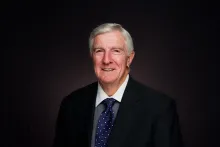
Before his retirement in 2021, Dr. Donald Ward pastored churches in Texas and Louisiana, and taught at Ambassador Bible College in Cincinnati, Ohio. He has also served as chairman of the Council of Elders of the United Church of God. He holds a BS degree; a BA in theology; a MS degree; a doctor’s degree in education from East Texas State University; and has completed 18 hours of graduate theology from SMU.
