
Don Ward
This transcript was generated by AI and may contain errors. It is provided to assist those who may not be able to listen to the message.
So good evening once again, everyone. We are in Isaiah 31 and verse 1, and that's where we'll begin.
Woe to them that go down to Egypt for help. You always go down to Egypt both geographically and morally from Jerusalem. No matter where you live in Jerusalem, you go up. You might live south of Jerusalem, but you go up to Jerusalem. And no matter where the geographical location is, but in the Bible you go down to Egypt. And as we talked about last time, Egypt is a steady and contrast and paradox because Jacob and Joseph and Israel were spared and became a nation in Egypt, then went into slavery, delivered, and then Christ, he went down into Egypt to escape the Herod's decree of killing all those under two years of age. And Egypt plays a big part in end-time prophecy and throughout the prophetic era in the Old Testament. So woe to those who go down to Egypt and stay on horses, of course horses, no matter how big or strong they are, whether they are McClodshales or something else, and trust in chariots because they are many and in horsemen because they are very strong, but they look not under the Holy One of Israel. The Holy One of Israel is talked about over and over in the book of Isaiah. If you would, you could turn to Psalm 16 verse 10. Let's talk about the Holy One of Israel for just a moment.
I think I said Isaiah 16.10. I want Psalm 16.10. For you will not leave my soul. Now listen to this. This is Psalm 16 verse 10, which prophesies resurrection of Jesus Christ. You will not leave my soul, my nayfish, in Hades, in the grave well, in Greek. It's Sheol. You will not leave my nayfish and Sheol. Neither will you suffer your Holy One. So you see here that generally speaking the Holy One is speaking of Jesus Christ because it says you will not permit your Holy One to seek eruption. That's Psalm 16.10. Then in Acts chapter 2, the day of Pentecost when the Holy Spirit was sent, as part of Peter's inspired sermon, I'm now going to read Acts 2.27, which closely parallels what we just read there from Psalm 16.10. Because you will not leave my Sukeh in Hades, in the grave. Neither will you permit your Holy One. So essentially he's quoting Psalm 16.10 to seek eruption. So of course, Jesus Christ was resurrected, and after 40 days he was ascended back to the Father. So that's an amazing thing there to see that as early as Psalm 16.10, the resurrection of Jesus Christ was prophesied. So we continue here in Isaiah 31. So you will not look into the Holy One of Israel. Neither seek the Eternal. And Eternal, of course, once again, I bring to your attention when you see all caps, L-O-R-D, that is referring in the Hebrew, that is Yahweh, it means the Eternal. It can refer to the Father or to Jesus Christ. It depends on the context.
Now verse 2, yet he will also, yet he also is wise. That's talking about God. He is wise.
The Egyptians claimed to have a great deal of wisdom and ability to protect Judah at this time, and Judah was trusting in men and horsemen. But in contrast, Isaiah writes, yet he also is wise and will bring evil and will not call back his words, but will rise against the house of the evildoers and against the help of them that work iniquity. So God will rise up. Jesus Christ is his agent that carries out his mission, so he will rise up against the workers of lawlessness. Now the Egyptians, what are the Egyptians? Now the Egyptians are men and not God, so why in the world would Judah be seeking the help of the Egyptians?
At this particular time, Assyria wasn't that close to them, but they were impending. They were drawing nearer to them, and they thought the day was coming in which they were going to have to stand against the Assyrians, so they decided they would get help to get help from Egypt. Now the Egyptians are men and not God, and their horse is flesh and not spirit. Now the word spirit in the Hebrew is ruach. R-A-U-C-H. That's misspelled. That is R-U-A-C-H. It is ruach, and it can be translated wind.
It can be translated breath. It can be translated breed. And of course, it can be translated spirit. And so when it is speaking of the spirit of God, the translators usually capitalize spirit. So the horsemen, of course, and the men of Egypt were not spirit at all, and they could not really help. We will see eventually who and what really did help them. So keep that in mind with regard to ruach. And of course, when you put holy in front of spirit, holy spirit, then you know it is of God and or Christ. Now, one of the things that I've tried to emphasize with you, and I hope you are getting, is the fact that the Holy Spirit is not a person.
You've heard that over and over in the Church of God. The Holy Spirit cannot be separated from God because God is spirit. That is His essence. So are you going to have a person that is separate from the Spirit going around doing works, whatever they might be? And we know from Luke 1.35 that God the Father, through the Holy Spirit, was the one who began Jesus Christ.
Otherwise, the Holy Spirit, if it were a separate person, would be the Father of Jesus Christ. And some of the things that these so-called—and they are very learned way beyond what I am in some ways—but when it comes to really understanding the Scripture and the purpose and plan of God, they don't understand. So here we see, so the Egyptians are men and not God, and the horses flesh and not spirit, when the Lord shall stretch out His hand, both He that helps shall fall, and He that is open or helped shall fall down, and they all shall fail together.
So if you continue to pursue the Egyptians, you will go down with them, you will go down, they'll go down. For thus has the Lord spoken unto me like as the lion and the young lion, the lion and the young lion, roaring on His prey. So God is usually pictured as kind, gentle, merciful, long-suffering, and all of that.
But when it comes to a time of intervention and judgment, here the prophet is likening God to a roaring lion. When a multitude of shepherds is called forth against Him, He will not be afraid of their voice, nor abase Himself for the noise of them. So shall the Lord a post. And so once again we see this phrase, Lord a post, which occurs some 25 times in the book of Isaiah, the Lord of hosts, generally referring to God the Father's agent, Jesus Christ, who musters and masters the host of the heavenly realm of the Lord of hosts come down to fight for Mount Zion and for the hill thereof.
Now, with regard to Mount Zion, and I bring you this to your attention, perhaps you have read that there is a controversy with regard to where the Solomon's temple and the Restoration temple were pitched or built. David built a tabernacle and pitched it in the city of David in Zion. And when Solomon's temple was built and the day of dedication came, they brought the Ark of the Covenant up out of the city of David, which is Zion.
And it seems, based on those scriptures, it's very difficult to know exactly that the temple mount is the place where Solomon's temple was built. I want us to look at this with regard to Zion. Look, first of all, at 1 Kings 8 and verse 1. 1 Kings 8 and verse 1, I will turn there with you.
In 1 Kings 8 and verse 1, Then Solomon assembled the elders of Israel and all the heads of the tribes and the chief of the fathers of the children of Israel unto King Solomon in Jerusalem, that they might bring up the Ark of the Covenant of the Lord out of the city of David, which is Zion.
So there we have more scriptures here with regard to that. Two more in 2 Chronicles, which makes it seem like that, just in reading this, of course, archaeologists have really studied this. And what we're talking about is Zion, and Zion is the city of David. So we look at 2 Chronicles chapter 5 and verse 11. 2 Chronicles chapter 5 and verse 11.
And it came to pass when the priests were come out of the holy place, for all the priests that were present were sanctified and did not then wait by course. It must be 1 Chronicles chapter 5 and verse 1. And 1 Chronicles 5 verse 11. 1 Chronicles 5 and verse 11.
Maybe I'm just right, it was there. In 1 Chronicles 5 and 11, it has to be 2 Chronicles. Let's go to 2 Chronicles 8 and verse 2. 2 Chronicles 8 verse 2. What we're showing here is they brought the Ark of the Covenant out of the city of David. It seems like they brought it into Jerusalem. It's verse 2. Sorry about that. 2 Chronicles 5 and verse 2. Then Solomon assembled the elders of Israel and all the heads of the tribes, the chief of the fathers of the children of Israel, unto Jerusalem to bring up the Ark of the Covenant of the turtles out of the city of David, which is Zion. So remember that David had rescued the Ark of the Covenant that had been taken by the Philistines, and he brought it into Zion, into the city of David. And now when Solomon's temple was built, it says they brought it out of the city of David, and it seems like it's brought into Jerusalem at the Temple Mount. Now oftentimes Zion and Jerusalem are used interchangeably in Scripture as well. Okay, we'll continue back in Isaiah 31, but I wanted to make that distinction there with regard to Zion and the temple. That's raging in a lot of circles in the scholarly theological circles with regard to where was the temple built, and of course it has to do with the geopolitical situation that is now extant in the Middle East, where the Muslim world has built two mosques on the Temple Mount, and a lot of people believe that the Temple Mount has to be cleansed with the ashes of Red Heifer before the temple can be built, and for prophecy to really be fulfilled in the final sense, as in 2 Thessalonians chapter 2 verses 3 and 4, where it talks about the one who sits in the temple of God, saying that he is God. So there's going to be one who comes in peacefully and then breaks the covenant and then places the abomination of desolation and claims to be God.
So we go back now to Isaiah 31. So God himself will come down and defend Zion, and he will also defend Jerusalem. Now we're at verse 5. Isaiah 31 verse 5. As birds flying, so will the Lord of hosts defend Jerusalem. If you've ever gone near a bird's nest where young birds were, and a mama bird begins to start diving at you at your head and so on. So it's a take-off, a figure of speech from that. The birds flying, so will the Lord of hosts defend Jerusalem. And defending also, he will deliver it, and passing over, he will preserve it.
So what conclusions can you draw from that? People talk about, well, they may nuke Jerusalem or they may do this or that with regard to Jerusalem. Now Jerusalem is going to be greatly disturbed with this great earth of quite when Jesus's feet touch down on the Mount of Olives, and the Mount cleaves in two, and part of it moves to the north and part to the south, and a great valley is created. And you read of that in Zechariah 14 verse 5. But God is going to defend Jerusalem. Jerusalem is not going to be destroyed. Zion and Jerusalem are going to be the headquarters for God and Christ and the saints and the millennium.
Defending also, he will deliver it and passing over, he will preserve it. Verse 6, turn you unto him from whom the children of Israel have deeply revolted.
And of course, modern-day Israel and the nations have greatly revolted against God. As we're talking about that those people in the various high-tech companies, big tech, they are on the warpath with regard to eliminating anything that smacks of Christianity. Now, you can talk about any other religion freely, but not God and Christ and the Bible.
It's absolutely amazing that people would be taken in with this as they have been, and we have seen one of the most dramatic changes and shifts in culture that we have ever witnessed in our lifetimes. Isaiah 31.7, for in that day, remember what in that day is? It's a prophetic utterance that introduces the millennium. In almost every case, when you see that phrase in that day, it is speaking of the millennium. Every man shall cast away his idols of silver and his idols of gold. Which your hands have made unto you for a sin. So that has never happened before in history that all of the idols were cast away. Now, during a couple of revivals in your Hezekiah and Josiah, Judah cast away their idols, but not all of humankind. All of humankind is going to cast away their idols. They're going to play church even if they don't believe in church, because the teachers will not be removed into a corner, and they will say this is the way walk you in it, as we talked about last time. Then shall the Assyrian fall with the sword, not of a mighty man. Now, once again, this phrase, the Assyrian. Sometimes, when you see Assyrian, it is talking about the nation and the people. Another time, in other places, sometimes the Assyrian is talking about a title for the beast power or the beast. Then shall the Assyrian fall with the sword, not of a mighty man. Now, if you read the commentaries, what they will talk about is that when Assyria under Sennacherib had surrounded Jerusalem, and they were going to attack, they had far greater manpower and everything that goes with warfare than did the Judeans. But Hezekiah prayed and God did intervene. And so, at the end of the age, God is going to intervene. If you look at Isaiah 37 in verse 36, you'll see once again that the Assyrian army was destroyed, and that's what the commentators will try to make of this scripture, but it doubtlessly is pointing toward the millennium, as we have already noted. In Isaiah 37 in verse 36, then the angel of the Lord went forth and smote in the camp of the Assyrians 185,000. When they arose early in the morning, behold, they were all dead corpses. So Sennacherib, king of Assyria, departed and went and returned and dwelt in Nineveh. Of course, Nineveh was the capital of Assyrian. At the end of the age when Jesus Christ comes again, he is going to defeat the armies at Armageddon, not by weaponry, not by missiles and atomic bombs and nuclear power. He's going to do it by the word of his mouth. So I'm reading now from Revelation 19.5, and out of his mouth goes a sharp sword that with it he should smite the nations, and he shall rule them with a rod of iron, and he treads the winepress of the fierness and wrath of Almighty God. And he hath on his vesture and on his thigh a name written king of kings and lord of lords. And I saw an angel standing in the sun, and he cried with a loud voice, saying to all the fowls, Come, fly in the midst of heaven, come and gather yourselves together unto the supper of the great God, that he may eat the flesh of kings, the flesh of captains, the flesh of mighty men, the flesh of horses of them that are on them, and the flesh of all men, both free and bond, both small and great. So God does it with the sword of his mouth, but he smites the armies just as he smoked the Assyrians back in the day of Sennacherib. But this is pointing more toward the millennium than the pre- of the historical point of view. So then shall the Assyrian fall with the sword, not of a mighty man, and the sword, not of a mean man, shall devour him.
You see, in the slaughter of those 185,000, call it slaughter, they all died. They were dead when, in the morning, when the angel of God came through.
Well, Sennacherib escaped and went back to Nineveh. At the end of the age, there will be no escaping, because God is going to take a beast and a false prophet and cast them in the lake of fire.
So not of a mean man shall devour him, but he shall flee from the sword, and his young shall be discomfited. Discomfited means to be rebellious, to go your own way, to not have it your way, but the way of others. And he shall pass over to his stronghold for fear, and his princes shall be afraid of the unsigned, says the Lord. And notice this, this chapter closes much like chapter 30, the last verse, whose fire is in Zion. And so the valley of Hinnom starts way up toward the north, and it runs down into the city of David and Zion. And it was there in the valley of Hinnom is the where the hell fire is, and it was top of the place there is where the children were sacrificed, whose fire is in Zion and his furnish in Jerusalem. Now look at the last verse of 30. The last verse of chapter 30 is very similar to that verse, where God keeps his fire going throughout time. And the last verse of Isaiah brings this to mind too. For top it, which is a place in Gehenna, where the children were burned alive, as a sacrifice to Molech. For top it is ordained of old, yes, for the king it is prepared. He have made it deep and large, a pile thereof is fire and much wood. The breath of the Lord, like a stream of brimstone, does kindle it. And if you look at the last verse of Isaiah, it also talks about this ever-burning fire that is abhorrent to all people through all time. Now we go to chapter 32.
In Isaiah 32, and it starts off immediately with the millennium, Behold, a king shall reign in righteousness, and princes shall rule in judgment. The princes, those who are faithful, will be given seats, their own shortcuts they set upon them, and they are going to judge the nations. It even says in Corinthians that you should judge the angels.
It doesn't mean the angels are going to be given a chance for salvation. And I don't know exactly what that means with regard to judging the angels, whether or not it has to do with governing over them and judging them in a way of maybe organizing them. I don't know for sure. But I know once the die is cast, once Satan made his decision and the third of the angels that followed him, there's no turning back.
So a king shall reign in righteousness, and princes shall rule in judgment. And a man shall be as a hiding place from the wind and a covet from the tempest, as rivers of water in a dry place, as a shadow of a great rock in a weary land.
And so at that time, people are going to call upon God, and they're going to seek shade. And of course, the shadow is really a shade, and it is no... represents peace and safety as a shadow of a great rock in a weary land. Now, the word rock oftentimes refers to God and to Christ. We're going to look at some of those scriptures right quickly, because those in the Old Testament and the New Testament, God and Christ are referred to as rocks. We go to Exodus 33 and verse 21. Exodus 33 and verse 21. This is where Moses told God, the one who became Jesus Christ, let me see you. And God says, well, you stand on this rock here, and you can get into this cliff, and I'll pass by, and you can see part of me. So we're going to read that scripture here. Exodus 33 and verse 21.
The Lord said, Behold, there is a place by me, and you shall stand upon a rock. It came to pass while my glory passed by, then, that I will put you in a cleft of the rock. Of course, you have that old hymn, rock of ages cleft for me, let me hide myself in thee. And this is the verse from which that is taken, that I will put you in a cleft of the rock. Now, who puts him there? So God put him there to protect him from his glory and his brilliance, and will cover you with my hand while I pass by. And I will take away my hand, and you shall see my back parts, but my face shall not be seen. Now, in the kingdom of God, we shall see his face. Revelation 22, pretty sure, is verse 3 or 4, says, and we shall look upon his face. And there's another song there that talks about, we shall behold him, that we shall see him face to face in the kingdom of God. Now, continuing with the rock, now, you notice in Deuteronomy, Deuteronomy is a sort of a summary of the first four books of the Pentateuch, and it's a restatement to a large degree of what has gone before. So in Deuteronomy 32 and verse 4, 32 verse 4, let's read verse 3, read into Deuteronomy 32 verse 3. Behold, I will publish the name of the Eternal, ascribe you greatness unto our God.
He is the rock. His work is perfect for all his ways or judgment, for God of truth, a God of truth and without iniquity, just and right is he. You could call the Deuteronomy 32 as the rock chapter of the Bible, because over and over in Deuteronomy 32 and 33, those two chapters especially, you see that God is referred to over and over as rock. Let's look at 33, since we're here, in Deuteronomy 33 and verse 21. Deuteronomy 33 verse 21. And he provided the first part for himself because there is a portion of the lawgiver was he seated and he came with the heads of the people. He executed the justice of the Lord and his judgments with Israel. So this rock carried out the blessings that God had bestowed upon Israel, and in spite of themselves, God dragged them into the Promised Land. And then, in the New Testament, we'll see that the rock was the one who led them into the Promised Land. And here the rock is identified with 1 Corinthians 10 and verse 4. We'll start in verse 1. In 1 Corinthians 10 and verse 1. More brethren, I would not have you be ignorant, have it all our fathers were under the cloud and passed through the sea, and were baptized unto Moses in the cloud and in the sea. So they were leaving Egypt, putting Egypt behind them. That was their final demarcation from slavery, that they crossed the Red Sea, and Pharaoh's host were drowned. A type of Satan, the devil, and the demons were drowned in the Red Sea. And that was their baptism. So we, at a critical point in our lives, are baptized, and we leave sin and death behind to live the resurrected life.
So they all passed through the sea. They were baptized in Moses in the cloud in the sea, and did eat the same spiritual meat, and did all drink the same spiritual drink. And they drank that spiritual rock that followed them, and that rock was Christ.
And then it says in Matthew 16, 18, Jesus says, I say unto you that you're Peter, Petra, little rock, that upon this rock, big rock, Petra, I will build my church and the gates of hell, shall not prevail against it. So oftentimes, rock is a metaphor for protection and shade, and of course, God is metaphorically referred to as a rock in Scripture. Now we continue in Isaiah 32, in verse 3. And the eyes of them that see shall not be dim, and the ears of them that hear shall be hearken. They're not going to just hear as we're going one ear out the other, but they're actually going to do something about it. The heart also, the rash, shall understand knowledge, and the tongue of the stammer shall be ready to speak plainly. So no more deaf people, nor more people struggling to express themselves. The vile person shall be no more called liberal.
That is, to be called noble, to be called magnanimous, because he is vile. We have today people who are parading as liberal and magnanimous, who are, when all is said and done, hypocritically trying to destroy the very fabric of our value system, the value system that is revealed in the Bible especially, nor the cheryl, the cheryl represents an evil one, said to be bountiful.
For the vile person will speak villainy, and his heart will work iniquity, lawlessness, to practice hypocrisy. We have never seen such hypocrisy as its present. Today, almost every program that is introduced is introduced in the name of helping, but at the same time it is tearing away at the moral fabric of the nation, the home, the family, of marriage, of gender identity, and so on it goes. And we know that. And to utter error against the eternal, to make empty the soul, the nayfish of the hungry, and he will cause the drink of the thirsty to fail. The instruments also the cheryl are evil. He devises wicked devices to destroy the poor with lying words. How many programs that have been foisted off in the name of helping the poor of equalizing society, and yet the gap between the rich and poor continues to expand, and the homeless numbers continue to increase exponentially, it seems, dramatically throughout the land, especially in the larger cities.
So they destroy the poor with their lying words, feigning on the one hand to help them, and robbing from them on the other hand, even when the needy speaks right. But the true, now this word, in this case, the word liberal magnanimous here is used in the good sense, but the liberal devises magnanimous helpful things, and by magnanimous helpful things, shall he stand, in contrast to those who are called liberal, who are actually vile.
You know, the word liberty has so many different connotations. It's too bad that the politicians have essentially robbed the real meaning of liberty, and they call themselves liberal, in that they are going to help everyone. And like it says in 2 Peter chapter 2, while they promise them liberty, they themselves have become the subjects, the authors of slavery, of greed, and corruption, paraphrasing. Now in verse 9, Rise up, you women. Now in this case, the word women here is not being used in the gender sense. It is being used to represent the whole nation as weak, and because it even says in the though we've even had people who say that, I know the Bible says that the women are a weaker vessel in the physical sense, and we know that from many different perspectives. And of course, we have this transformation now that is going on where men are changing themselves into women, and have the transgender movement, and people who are men and have had the quote sex change, or competing as women, and in some cases breaking records. There's a big hue and cry about that, but it's what this is talking about is women in the sense of being the weaker vessel, representing the people of the whole nation that are at ease. Hear the voice, you careless daughters. Give ear unto my speech. Many days and years shall you be troubled, you careless women. Careless women means they are confident that they're living in the lap of luxury. They think they have it made, but that, of course, will be contrasted with what the real way really is. Read this again. Many days and years shall you be troubled, you careless women, for the vintage shall fail, the gathering shall not come.
Trimble you women that are at ease, that are confident, that you haven't made. Be troubled, you careless ones. Strip you and make you bear and gird sackcloth upon your loins. Instead of doing what you're doing, you need to wake up and realize that the times in which we are living. Now verse 12 is a very interesting verse.
They shall lament for the teats. That word translated teats is the Hebrew word shad, S-H-A-D, or Hebrew they pronounce it shad. And for back in the early 90s, the special music time after time after time was El Shaddai. All kind of people were singing El Shaddai. I don't think they really knew what they were singing. So shad or shod, S-H-A-D is how it's spelled in English, but the A is within it. Ah sound, so shod. It is the woman's breast. Now, and it literally means the nourisher, the one who sustains.
So they're going to lament for the breast, the one who nourishes, the one who sustains.
There's a very interesting scripture in Exodus 6 verse 3 regarding the names of God, and I have spoken extensively through the years on this with regard to the name of God and the angel of God's presence and who led Israel out of Egypt and all of that. In Exodus 6, you know, in Exodus 3, God asks, I mean, Moses asks God by what name shall you say that I'm coming to represent? What is your name? And God at that point reveals the name Yawe. I'm not going into a discussion of Yawe at the present time, but this point here, because it is in context of what we're reading here in Isaiah. In Isaiah 6 verse 1, then the Lord said unto Moses, Now shall you see what I will do to Pharaoh for with a strong hand shall he let them go, and with a strong hand shall he drive them out of his hand and out of the land. And God spoke unto Moses and said unto him, I am the Yawe, the Eternal, and I appeared unto Abraham, unto Isaac, and unto Jacob, by the name of God Almighty, which is El Shaddai. You can look up the Hebrew, that he appeared to them under the name God El Shaddai. But by the name Yawe, was I not known to them. So to a large degree, God reveals himself through his name, and so here the prophet is using a woman's breasts and comes in through the breasts that the youth are nourished and strengthened, especially in the early years of their lives. So we're back to Isaiah 32 in verse 12. Isaiah 32 in verse 12.
They shall admit for the breast, for the pleasant field, for the fruitful vine, upon the land of my people shall come up thorns and briars, yes, upon all the houses of joy in the joyous city. Because the places, the palaces, shall be forsaken, the multitude of the city shall be left, the forts and towers shall be for dens forever, a joy of wild donkeys, a pasture of clocks, until the spirit be poured upon us from on high. Now, at the Feast of Pentecost, 31 A.D., the Holy Spirit was poured out from on high, and 3,000 souls were added to the church. That is the beginning of the New Covenant church, the Church of God, in the formal organized sense, and it became more and more organized as you read through the Book of Acts. So until the spirit be poured out upon high, now there is coming, of course, a greater pouring out of God's Spirit in the millennium, because it's going to be made available to everyone. It's like the Tree of Life represented the tree of life represented the Holy Spirit in the Garden of Eden. In the millennium, the Tree of Life is restored in the sense that God's Spirit is going to be made available to everyone, and everyone that is the First shall come and take of it. Look at Revelation 22. Revelation 22.
Verse 17, and the Spirit and the bride shall come, and let him that hears say, come, and let him that is the First come. And whosoever will let him, and whosoever will, and whosoever will let him take the water of life freely. So the Holy Spirit is going to be poured out, and it will be available to everyone. And once again, I point out the irony of those who reject God at the end of the age when Satan is loose for a little season.
Okay, verse 15 again until the Spirit be poured upon us from on high. Isaiah 32.15. And the wilderness be the fruitful field, and the fruitful field be counted for a forest. The judgment shall dwell in the wilderness, and righteousness remain in the fruitful field. And the work of the righteous shall be peace, and the effect of righteousness, quietness, and assurance forever. And my people shall dwell in a peaceable habitation, and ensure dwellings, and in quiet resting places. When it shall hail coming down on the forest in the city, shall be low in a low place. Blessed are you that sow beside all waters, and send forth there in the feet of the ox and the donkey. So it's coming a time in the millennium in which, of course, God is going to sow righteousness in every sense of the word, in the spiritual sense, but yet at the same time, He's going to sow physical blessings and spiritual and physical fruit as never before.
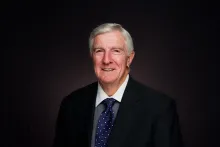
Before his retirement in 2021, Dr. Donald Ward pastored churches in Texas and Louisiana, and taught at Ambassador Bible College in Cincinnati, Ohio. He has also served as chairman of the Council of Elders of the United Church of God. He holds a BS degree; a BA in theology; a MS degree; a doctor’s degree in education from East Texas State University; and has completed 18 hours of graduate theology from SMU.
