

Don Ward
This sermon was given at the Galveston, Texas 2015 Feast site.
This transcript was generated by AI and may contain errors. It is provided to assist those who may not be able to listen to the message.
Here is, I have several different titles, Zion, Past, Present, Future, Zion, God's Dwelling Place. I want to start off here this evening with a few slides here to try to give a geographical perspective of Zion, where today, beginning with the Nation of Israel and on down, we have here this Scripture, the Day of the Lord's Vengeance, the Year of Recompents, for the controversy of Zion. Of course, Zion and Jerusalem are used to a large degree in parallelism, interchangeably in the Bible, like in Isaiah 2.3 and Isaiah 2.4. And so, there is a great controversy over Jerusalem and over Zion at the present time. Now, Zion-specific, we're going to look at this evening.
Can't get this to move. There it is. You see that little blue slipper there? That is the Nation of Israel. Out to the west, there is the Mediterranean Sea. And so, Israel today is surrounded by hostile neighbors. You have Syria to the north, and you have also Lebanon slightly north and, well, north and west. You have Jordan, then you have Gaza there on the Mediterranean, then Egypt to the south. And all of these places, Syria is host to Hezbollah, which is basically taken over Lebanon. And then you have Gaza, where Hamas is taken over. And Egypt sort of plays both ends against the middle in the historical sense. And so, you see the size of Israel in comparison to the other nations.
Here we have here, I can't read those headings. I can't see it at this angle. I don't know if I can see it over here or not.
But here we see the city of Zion. Zion is slightly southwest of Temple Mount, Mount Moriah. That tallest building back there is reportedly the tomb of David.
The tomb of David on Mount Zion is highly controversial. Now, the tomb of David also is a place where it is contended that the Last Supper, as the world calls it, where the New Covenant Passover was instituted. And also, it is contended that that's where the disciples were gathered for the Holy Spirit to come on the day of Pentecost. Of course, they didn't stay in that room. Apparently, they went on to the Temple area. And whether or not some of these things are absolutely true in the absolute sense, I don't know for sure.
King David's tomb is greatly desired by the Catholic Church. And the Catholic Church has recently been given administrative control of that upper room and been given a seat in the tomb of David. And the significance of this is they can lay claim, okay, we control, we administrate the place where the New Covenant Church began. We administrate the place where the disciples were gathered for the pouring out of the Holy Spirit when the New Covenant Church began. And the Jews, I don't know for what reason, have entered into some kind of agreement to give them control of that. That is an inside view of that area. I've been there into what they call the upper room. Really, it's not as good as that looks, as I recall it. And then the Vatican is given, what I've already said, given administrative control over that area, David's tomb and the upper room. Another view of the upper room, the tomb, the upper room at Pentecost. Once again, I've talked about that, how that, according to the legend, is that that's where the disciples were gathered when the Holy Spirit was sent to the New Covenant Church. And the reason why the Vatican so desperately wants that is because, as I mentioned earlier, they could lay claim, okay, we are in control of the place where the New Covenant Church began with the first Passover, where the Holy Spirit was poured out on the day of Pentecost. And so they have greatly desired that for years. There is the Wailing Wall. The Wailing Wall is on the west side of the Temple Mount, and just slightly to the southwest is Mount Zion. The Wailing Wall is also called the Wall of Tears, and the Jews gather there to make their prayers and make little notes and stick them in those crevices there between the rocks. For years in the 60s, Ambassador College, in conjunction with Hebrew University, conducted a dig there at the south wall. That's the south wall of the Temple Mount. Now, if you were standing there looking out, you're looking out to the south, and then to your right, off to your right, would be Mount Zion. And then to the east, which I didn't bring the slide of, to the east is the Mount of Olives. And the valley off to the south is the valley of Hinnom. The valley of Hinnom looks pretty good today, green grassy, but it is better known as Gihinah and sometimes translated as Hell. So, in between the Mount of Olives and Mount Zion is the valley of Hinnom, which is going to be renewed at one of these points, according to Isaiah. So, we can turn the slides off now. Just wanted to get you a little bit of a feel for what it looks like today, the controversy that is there over control of it, and basically the Vatican is in control of the upper room, one of the most desired historical and spiritually oriented kind of sites on the face of the earth.
So, we will be saying many, many things here this evening, and you cannot possibly remember everything. You cannot possibly write down everything. What I suggest you do is that you make short notes, and then you follow up with your own personal study. Zion is used 154 times in the Old Testament. It literally means parched ground, and it is used seven times in the New Testament. In the New Testament, in the King James translations, it is spelled S-I-O-N. Pronounced the same, though, in English, Zion. Zion plays one of the principal roles in the millennium. The wind, the where, the what, the why and who of Zion is one of the most inspiring and sobering understandings that one could possibly come to. I would suggest you go to the Concordance or your search engine. You put in Zion, and those 154 plus seven references will come up. 161. Read every one of those. Read all of those references to Zion. We won't nearly cover all of those here this evening, but I think you'll be amazed at what you will learn just from reading those scriptures. And, of course, the symbolism of Zion is one of the greatest things of what it represents in the spiritual sense. We'll sing at the close, glorious things of thee are spoken, Zion city of our God. And after this study, I think that Him will mean a lot more to you. So, God's desire from the time He created humans to the present day was to have a relationship with the sons of men and to dwell with them and eventually end them. So, Zion is used very often in the figurative sense as God's dwelling place.
In the Garden of Eden, God interfaced with humans in a very personal way. He placed the tree of life in the garden, representing the missing dimension between our physio-chemical existence and eternal life. Apparently, humans were to have free access to the tree of life, but Adam sinned and Eve sinned, and that cut them off from the tree of life. And they were driven out of the garden. We have heard that story many, many times, and it's more than a story. It is the truth of the way things began.
Now, the only way back to access to a right standing before God was through sacrifice as evidenced by Cain and Abel. And you have the account there in Genesis chapter 4 of Cain and Abel bringing the sacrifice. Cain's sacrifice was not accepted because Cain brought a thank offering instead of a sin offering, apparently thinking that he was the promised seed. Remember that Eve says in chapter 4, I've gotten me a man from the Lord. And you remember the first messianic promise is in Genesis 3.15 that Jesus Christ would bruise the head of Satan.
And eventually, of course, Satan will be bound and put away. So the only way back was through sacrifice. Now, God's presence is represented by this tree of life. And then we're going to go all the way now to God's presence was in the tabernacle in the wilderness. After Israel left Egypt, God told them to build him a sanctuary that he might dwell among them. Look at Exodus chapter 25. Exodus 25. When they came up out of the Red Sea, oftentimes when I give a scripture, I'll be talking in between. And sometimes that's a good time to jot down a note.
When Israel came up out of the Red Sea, it is recorded in Exodus 15 how that Miriam led in the singing of the Victory Song of Moses. And it talks about, I will build him an habitation. That's one of the things that Israel was to do after they left Egypt and came into the Promised Land. But they even built this habitation before they got to the Promised Land. And we find here in Exodus 25, God directing them to do so. And the Lord spoke unto Moses, saying, speaking to the children of Israel, that they may bring me an offering of every man that gives it willingly with his heart.
You shall take an offering. Verse 8, And let them make me a sanctuary that I may dwell among them. So initially the promise was not in them, but among them. But God's desire, once again, from the creation of human beings, Adam and Eve was to dwell eventually, not only among them, but in them. Now, you look at Exodus 40. This sanctuary was completed in Exodus 40. It took about a year to build the sanctuary, and it came the time to raise it up. You look at verse 17. It came to pass in the first month and the second year on the first day of the month that the tabernacle was raised up.
Now, you notice in verse 33, And when he reared up the court round about the tabernacle and the altar and set up the hanging of the court gate, Moses finished the work. Then a cloud covered the tent of the congregation, and the glory of the Eternal filled the tabernacle. So the very presence of God filled the tabernacle. Now, God's dwelling place in the tabernacle was above the mercy seat, and there was glory above the mercy seat.
And that glory, the Jews call it the Shekana glory, S-A-T-K-I-N-A-H, or Shekana, or Shekana of glory above the mercy seat. So, after they built this tabernacle, and of course they sinned, and they wandered in the wilderness for 40 years, moving this tabernacle, this dwelling place of God from place to place. And then, after Moses died, God raised up Joshua. And in fact, Moses was the one that went to God and asked him to raise up somebody in his place, and God did.
And Joshua led them into the Promised Land. Now, look at Joshua 18, in verse 1. I recently read the book of Joshua. It's quite an interesting read. The going back into among the various tribes of who was going to get what, and what area they were going to occupy, and all of that is quite amazing to read.
Because Joshua was quite the man. He was a man of courage. He was a man of conviction. I've talked a lot about, through the years, what I call the three C's. Conviction, commitment, and courage. You're convicted by the Word of God, the Spirit of God. God places this sacred trust within your mind and heart, commits it to you, and then asks you to commit it to others, as Paul writes to Timothy in 2 Timothy 3, verses 1 and 2.
Encourage is a product of conviction and commitment. To the degree that you are convicted and committed, you will respond courageously. And Joshua was encouraged by God as he began his ministry and leading them into the Promised Land to be of good courage. So, Israel comes into the Promised Land, and the tabernacle finds a permanent place to be pitched for a season.
This is Joshua 18. I don't know if I said that. Joshua 18. And the whole congregation of the children of Israel is assembled together at Shiloh. Now, Shiloh was in Ephraim. Shiloh, Mark, you need to know Shiloh was in Ephraim. Ephraim, for a long time in the early history of Israel, was the leading tribe. Ephraim, for a long time in the ancient history of Israel, was the leading tribe. Remember the birthright to Ephraim in Manasseh, but also the prophecy that the scepter shall not depart from Judah until Shiloh come.
And they set up the tabernacle of congregation there, and the land was subdued before them. So now, God's dwelling place, the tabernacle, the ark of the covenant, the shakun of glory over the mercy seat, was in Shiloh.
Now, let's notice the origin of Zion.
The ark of the covenant at one time was taken into captivity by the Philistines and rescued at one time. It was at the house of Oedidobun. And David, he deeply desired to build a dwelling place for God in the ark of the covenant. So now, let's take a look at the origins of Zion.
One of the subtitles now is, Zion, God's Dwelling Place. In 2 Samuel, chapter 5, we'll see here that David takes this area from the Jeppu sites, the area that became known as Zion and eventually Jerusalem. In 2 Samuel, chapter 5, verse 6, The king and his men went to Jerusalem under the Jeppu sites, the inhabitants of the land, which spoke unto David, saying, Except you take away the blind and the lame, you shall not come in here, thinking David cannot come in here. Nevertheless, David took the stronghold of Zion. It was the highest place in the environment of Jerusalem. And you saw that slide where that building that Oedipus was standing high up there earlier. So David took the stronghold of Zion, the same as the city of David. So Zion is also called the city of David. Zion is the city of David. And David said on that day, Whosoever sets up to the gutter and smites the Jeppu sites and the lame and the blind that are hated of David's soul. He shall be chief captain. And of course, the Joab was the one. So David took Zion. It came to be called also, as we see there, the city of David. David is a type of Christ, and David dwelt in historical, physical Zion. Say that again. David, a type of Christ, dwelt in historical, physical Zion. David's tabernacle and the Ark of the Covenant were eventually placed in Zion. So you look at chapter 6. I think I'm going to go to... You can also put down 6, because it also talks about that. But I want to go now to 1 Chronicles 13 and verse 6. 1 Chronicles 13 and verse 6.
1 Chronicles 13 verse 6.
And David went up in all Israel to Baalah, that is, chorath-gerim, which belonged to Judah, to bring up there the Ark of God, the Ark of God, the Lord, that dwells between the caribans, whose name is called on it. And they carried the Ark in a new cart out of the house of Abinadab, and Azzah, and Ahiyo drove the cart. And you know the story of Azzah putting his hand on the Ark to steady it, and he was struck dead. The holy things, you have to go through a certain cleansing in order to touch holy things. When Israel was camped at the foot of Mount Sinai before the Ten Commandments were given, Moses was given a lot of instructions about the cleansing. Don't let anybody touch the Ark, because I'm going to come down, and I'm going to speak from that area.
So, you look at verse 9 now in 1 Chronicles 15.
I said, I want now, yeah, verse 9 and 13, sorry. 1 Chronicles 13 verse 9. And when they came unto the threshing floor of Taidon, Azzah put forth his hand, the hole of the Ark, and the oxen stumbled, and he tried to steady the Ark. We've already talked about that. So, you look at verse 13. So David brought the Ark home to himself to the city of David. Remember, we have read the verse that it's also called Zion. But carried it aside into the house of Obed Edom, the jet type. And the Ark of God remained with the family of Obed Edom in the house three months. And the Lord blessed the house of Oded Edom. Now you look at chapter 16.
Chapter 16 verse 1. So they brought the Ark of God and set it in the midst of the tent. The David had pitched for it. And they offered burnt offerings and peace offerings before God. So the Ark of the Covenant, Shiloh, was captured at one time by the Philistines. It was rescued.
David built and pitched this tent, this tabernacle on Mount Zion, also called the City of David. And eventually brings the Ark of the Covenant into that tabernacle. Remember now this part about David, a type of Christ, David dwelling in physical Zion. And now here is one of the... Go to Psalm 78. Psalm 78. God is the one who actually chose Zion. If you just read it as we have read it, and there's so much detail. I mean, we're hitting the high places. There's so much detail behind all of this. You might think, well, it was just sort of a normal course of events. That David takes Zion, he builds a tabernacle on Zion, brings the Ark of the Covenant into Zion. But God is the one who actually chose Zion. Remember also, before we read this, that tabernacle was initially pitched in Shiloh in Ephraim. Now Psalm 78 is a great summary chapter. If you're not familiar with it, it basically traces the history of Israel through a lot of ups and downs. And we're going to break into the thought to some degree in Psalm 78.
Look at verse 67. Psalm 78 verse 67. Moreover, he refused the tabernacle of Joseph and chose not the tribe of Ephraim. Get it? See, in the blessing, he refused the tabernacle of Joseph and chose not the tribe of Ephraim, but chose the tribe of Judah. It was through Judah the spiritual aspect is to be carried out, and the scepter shall not depart from Judah until Shiloh come.
He chose the tribe of Judah, the Mount Zion, which he loved. He chose the tribe of Judah, the Mount Zion, which he loved, and he built his sanctuary like high places, like the earth, which he has established forever. He chose David, also his servant, and took him from the sheepfolds. From following the ewes great with young, he brought him to feed Jacob his people and Israel his inheritance.
When reading the Old Testament, Jacob, to a large degree, remember Jacob's name means supplant here. After he wrestled with God, his name was changed to Israel, which means ruling with God or prince of God. So, Jacob oftentimes is used in the physical sense, as physical Israel, and then the name Israel in the spiritual sense. So, you have both here to feed Jacob his people, Israel his inheritance.
Romans 817 says that we are joint heirs with God. Joint heir, not joint heirs with God. I'm sorry, misquoted. I'll do it again. Romans 817, heirs of God, and oftentimes we read over that, heirs of God and joint heirs with Jesus Christ.
So, he fed them according to the integrity of his heart and guided them by the skillfulness of his hands. Look at Psalm 132 in verse 11. So, God chose Zion. He chose Judah. He chose Zion. It is through Judah and Zion that the spiritual aspect is carried out. You might recall Romans 2 where Paul says, he's not a Jew who is one outwardly, but he is a Jew that is circumcised and hard and not just in the flesh.
In Psalm 132 and verse 9, I believe it is, no, it's 11. Psalm 132 and verse 11. The Lord has sworn in truth unto David, he will not turn from it. Of the fruit of his body will I set up your throne, if your children will keep my covenant.
Now, notice that it says, of the fruit of the fruit of the seed of David. Of the fruit of the body of your body will I set up your throne, if your God will keep, if your children will keep my covenant and my testimony that I shall teach them, their children all shall shall sit upon your throne. Now, you ever read this? Your children shall sit upon your throne forevermore. And of course, you've got the Revelation 20 that thrones were cast and you're going to be kings and priests in the kingdom of God. He is made as kings and priests. Revelation 5.10. Their children shall also sit upon your throne forever, for the Eternal have chosen Zion.
He has desired it for his habitation. This is my rest forever. Here will I joy all, for I have desired it. I will abundantly bless her provision. I will satisfy her poor with bread. I will also clothe her priests with salvation, and her saints shall shout for joy, and I will make the horn the government of David the bud. I have ordained a lamp for mine anointed. His enemies will I clothe with shame, but upon himself shall his crown flourish. That is quite powerful words concerning what your inheritance also going to be. Now look at 2 Samuel 6.12. 2 Samuel 6.12. As I said, I encourage you to read every scripture in the Bible that has the Zion in it. In 2 Samuel 6 and verse 12. I'm turning with these along with you. Of course, I know it's hard to turn with the Bible on your lap and flat on this table.
2 Samuel 6.12. And it was told King David, saying, The Lord has blessed the house of Obed-Edom, and all that pertains unto him because of the ark of the covenant. So David went and brought up the ark of God from the house of Obed-Edom into the city of David with gladness. So Zion and the city of David, once again, are used interchangeably.
This also has the account here where David danced in the street and McCall, the daughter of Saul, saw it and was jealous and all of that. Now, David wanted to build also a temple, the latter stages of his life. He wanted to build a temple for God to dwell in. Now we look at 1 Chronicles 22 verse 7. See, in this, here's a thread that we're going through with regard to God's dwelling place. And God wants to dwell in Zion. Now, Solomon's temple was not built on Zion. It was built on Mount Moriah.
In 1 Chronicles 22 verse 7, we'll see here David's desire to build a house for God.
But God denied David his petition, his request to build this house. 1 Chronicles 22 verse 7.
1 Chronicles 22 verse 7.
Well, verse 6 is where we want to start. Then he called for Solomon his son and charged him to build a house for the Lord God of Israel. And David said to Solomon, My son asked for me, it was in my mind to build a house under the name of the Lord my God. But the word of the Eternal came to me, saying, You have shed blood abundantly, and have made great wars. You shall not build a house under my name. Now, we just speculate in one sense why wouldn't God allow David to build a house? Because, as it says, you've been a man of blood, you've shed a lot of blood in great wars. Whereas the house of God and God's dwelling place, especially in the millennium, represent peace. Jesus Christ is called, we'll read the Scripture later, he is called the Prince of Peace. You shall not build a house under my name, because you have shed much blood upon the earth in my sight. Behold, a son shall be born to you, who shall be a man of rest. And I will give him rest from all his enemies round about, for his name shall be Solomon. Now, Solomon's reign in the initial stages. He got off to a great start, great wisdom. Got off to a great start, but then later his wives and concubines let him astray, and he built altars and edifices and all kinds of things for his to honor his wives. In fact, the name Solomon in essence means peace. And in the days of Solomon, there's one verse that says, in those days each man dwelt under his vine and fig tree of millennial kind of symbolism. So, God didn't allow David to build the temple, because he wanted to be that era, that period of time, the first part of Solomon's reign was like a type of the millennium. And I will give peace and quietness unto Israel in his days. And of course, you read about the reign of Solomon and all the wisdom and all the knowledge and nations, people coming to hear about Solomon, the queen of Sheba, comes up and all the great things and all the bounty that was there and all the things they would have at various feasting times. So, the reign of Solomon was a type of the millennial reign. Now, in 2 Chronicles chapter 3 verse 1, Solomon begins to build this temple. This is 2 Chronicles 3 verse 1. We're talking about Zion, past, present, future, God's dwelling place. Then Solomon began to build the house of the Lord at Jerusalem in Mount Moriah. Mount Moriah is just slightly northwest of Mount Zion, where the Eternal appeared unto David, his father, in the place that David had prepared in the threshing four of Ornan, the Jebusite. And he began to build in the second day of the second month, in the fourth year, of his reign.
Now, these are the things where Solomon was instructed. And so, the instructions, similar to the instructions given for the building of the tabernacle, were given to Solomon. And he followed those instructions. Eventually, the temple is built, and the time for dedication comes. And the temple was dedicated during the Feast of Tabernacles, as we'll see in chapter 5. 2 Chronicles chapter 5, Thus all the work that Solomon made for the house of the Lord was finished, and Solomon brought in all things that David, his father, had dedicated. The silver, the gold, the instruments, he put among the treasures of the house of God. And Solomon assembled the elders of Israel, all the heads of the tribes, the teeth of the fathers, the children of Israel, unto Jerusalem, to bring up the ark of the covenant of the Lord, out of the city of David, which is Zion. Wherefore, all the men of Israel assembled themselves unto the king in the feast, which was in the seventh month of the Feast of Tabernacles' time.
And so, it's brought up out of Zion onto Mount Moriah.
But God is the one who chose Zion, and he shall yet choose Zion, spiritual Zion, as we shall see. Now, when this temple was dedicated, and they brought the ark of the covenant up into this temple, notice verse 11, it came to pass when the priests were come up out of the holy place, where all the priests that were present were sanctified and did not then wait by course. And then it talks about all the different ones, the trumpets and the ceremony in verse 13. It came to pass as the trumpeters and singers were as one to make one sound, to be heard in praising and thanking the eternal. And when they lifted up their voice with the trumpets and cymbals and instruments of music and praised God, saying, For he as good as mercy endures, forever that the house was filled with the cloud, even the house of the Lord. And so the glory of the Lord, verse 14, filled the house.
So God's presence then filled Solomon's temple. So several hundred years passed. This took place in the circle of 900s BC.
In the circle of 604 BC, Nebuchadnezzar began to send waves against Jerusalem. And then, Nebuchadnezzar, the great king of Babylon, heard about him in the sermon this morning, who said he is a great one, began to send waves against Jerusalem. And eventually, Judah was taken into captivity into Babylon. The temple was destroyed, and the Ark of the Covenant disappeared. Apparently destroyed. Now, of course, there are a lot of legends about that. Some say that the Ark of the Covenant still exists. There have been movies made about it. And the one legend is that the priests took the Ark of the Covenant and buried it under the the temple mount. And if you find the right tunnel, there are all kind of tunnels under the temple mount. And one of the controversies at present is between the Palestinians and the Jews, is the Palestinians are saying the Jews are doing this, and the Palestinians are doing that. The Palestinians claim that they have the right to the temple mount. The Jews, of course, claim they do. The Bible says that the blessings go to Abraham, Isaac, and Jacob, not to Ishmael. So, I mean, the Word of God is clear on that. But apparently, there are artifacts under there in things that each side wants. But whether there's no... if the Ark of the Covenant is under there, has not been made known, I seriously doubt the Ark of the Covenant... this is just me, of course, speaking... I seriously doubt the Ark of the Covenant will ever be found.
Now, the Restoration Temple that was built, when it was dedicated... now, I would like to go into the whole story of Ezra and building the temple, going back with Cyrus made the decree in 538 that the Jews could return from Babylon. And one of the first things they did, they were led by Joshua, the high priest, and Zerubbabel, the governor, Zerubbabel was of royal seed. Never called king, though. Zerubbabel and Joshua led them back, and one of the first things they did was they built an altar and offered sacrifice. But there was great opposition to the building of the Restoration Temple. Samaritans resisted it, and a lot of the people of the Persian Empire resisted it. And even some of the Jews said, oh well, the prophecies haven't really been fulfilled. It's not time to build the house of the Lord. There was tremendous opposition from different quarters. And finally, God raised up two prophets, Zechariah and Haggai, to help in the building of the temple. So, from the issuance of the decree in 538 by Cyrus, some eighteen years passed before they really started building the temple in earnest. And it took about five years and 515. The temple was dedicated. Now, when that temple was dedicated, any of this is historical, I guess, near fact as you can get fact, according to Jewish history the glory of God did not fill that restoration temple. You look at Ezra chapter 6. Ezra chapter 6 gives an account of the dedication of that temple. Ezra is just forward there from 2 Chronicles. In 2nd chapter 6 verse 15. Ezra 6.15. This is dedication of the restoration temple.
This house was finished on the third day of the month of Adar, which was in the sixth year, the reign of Darius the king. And the children of Israel, the priests, the Levites, the rest of the children of captivity, kept the dedication of this house of God with joy and offered at the dedication of this house of God. I'm not going to read all of those animals. Verse 18. Set the priests in the divisions as is written in the book of Moses. In verse 19. And the children of the captivity kept the Passover upon the fourteenth day of the first month. For the priests and the Levites were purified together. All of them were pure, killed the Passover. For all the children of the captivity and for their brethren, the priests and for themselves. And there is no record of the glory of God filling that restoration temple. As it had the tabernacle in the wilderness, evidently, of course, as they carried the tabernacle in the wilderness, set it up at Shiloh, the glory of God was still there. It doesn't say when the Ark of the Covenant was brought into David's tabernacle on Mount Zion, it is assumed that the glory of God filled that tabernacle. And then, obviously, we read from 2 Chronicles 5 how the glory of God filled Solomon's temple. But the restoration temple did not fill. Now we want to go to Haggai, one of the prophets that God raised up to help them get on with building that restoration temple. Haggai and Zachariah, along with the Spirit of God, stirred up the people to the point where that they began in earnest to build this house, Zepaniah Haggai. Not Haggai, it's Haggai. That's just a fifth piece. But anyhow, look at verse 3, chapter 1. Well, let's go back and just read down from verse 1. Haggai 1-1. In the second year of Darius, the king in the sixth month and first day of the month came the word of the Lord by Haggai, the prophet untews the rub of El, the son of Sheath El, the governor of Judah and the Joshua, the son of Joshe-Deck, the high priest. Thus speaks the Lord, if I was saying, this people say the time has not come, the time that the Lord's house should be built. Remember I said 18 years had passed. He had the opposition of the Samaritans, opposition of some of the Persians and the empire. Don't let those Jews get a house again. I mean, those be back strong and all this. And then some of the Jews themselves saying, then came the word of the Lord by Haggai, the prophet said, it is time for you to dwell in your sealed houses in this house while I waste. I mean, is that the way it should be? Okay, it's all right for you to build your house, but not to build a house for God. Now therefore, thus says the Lord of hosts, consider your ways. And of course, we could apply this to ourselves today.
Jesus Christ says, I'll have this in the sermon on the last sermon of the last day, with regard to zeal, when he chased the money changers out of the temple there in John chapter 2, let not my house be made a house of merchandise. And the disciples were like, what on earth is going on here? And then it says, and they remembered, and this quote from Isaiah, the zeal of your house is eating me up. And that's one of the things that we're trying to stir up in the church of God today. As you have heard in the sermons here at the feast is this zeal, this commitment, conviction, commitment, courage. Verse 6, you have so much bring in little yeet, but you have not enough you drink, but you're not filled with drink. You close you, but there is none warm and he that earns wages earns wages to put it in a bag with holes, sort of like it is today as well, even in the economy.
Thus says the Lord of hosts, consider your ways. Examine yourselves. Is this the way it should be? Go up to the mountains, bring wood, build a house, and I will take pleasure in it. I will be glorified. Says the Lord.
So you could read the rest of chapter one. There's one of the few times you look at. Well, let's look at verse 14. It's one of the few times in the history of Israel and God's people that the people really responded. Now, back in Moses' day when they took up that offering back in Exodus 25, they had more than enough to build that tabernacle in the wilderness.
And this is one of the few times where people really responded and they built this temple.
Verse 14, the Lord stirred up the spirit, and I'm not going to read their names, of Joshua and Zerubbabel, and all the remnant of the people. They came and did the work in the house of the Lord of hosts, their God, in the 24th day of the six months, second year, and so on. Now, this part is the part, this Restoration Temple pictured what was to come. That is the Church of God, spiritual Zion. The Restoration Temple pictured Zion, or the temple, to come. And here we'll see it right here.
Verse 3, chapter 2, Who is left among you that saw the house in her first glory, and how do you see it now? Is it not in your eyes in comparison of it as nothing? It is a pitiful little edifice compared to Solomon's Temple. Yet now be strong, O Zerubbabel and Joshua. Be strong, all you people of the land, says the Lord, and work, for I am with you, says the Eternal of Hosts.
Verse 6, For thus says the Lord of Hosts, Yet once in a little while I will shake the heavens and the earth and the sea and the dry land, and I will shake all nations, and the desire of all nations shall come, and I will fill this house with glory, says the Lord of Hosts.
Who built the Church of God? Who builds the Church of God?
The silver is mine, the gold is mine, says the Lord of Hosts. The glory of this latter house, that is the spiritual temple, spiritual Zion, shall be greater than of the former, says the Lord of Hosts. And in this place will I give peace, says the Lord of Hosts. So that Restoration Temple, pictured spiritual Zion and the Church, as we will read a little bit later.
There were five things missing in this Restoration Temple. I'll briefly list those, and you can follow up, and I'll give the spiritual counterpart. The Ark of the Covenant was missing. It was gone, having been heard from since they went into captivity under the hands of Nebuchadnezzar. So the Ark of the Covenant was missing. So what about today? The law of God is written on our inward parts through the Holy Spirit. You'll find that in Hebrews 8 and also Hebrews 10. The sacred fire that burned continually.
And they offered up the daily sacrifices, and that sacred fire burned continually. So how is that fulfilled today? Look at Romans 12, verse 1.
The sacrifices that we are to offer up today are spiritual sacrifices.
Notice in Romans 12, where it says that you are to become a living sacrifice. Romans 12, verse 1. I beseech you therefore, brethren, by the mercies of God, that you present your bodies a living sacrifice, holy, acceptable unto God, which is your reasonable service. Now in 1 Peter 2, we'll see that we are to offer up spiritual sacrifices. In 1 Peter 2, verse 3, If so be you have tasted that the Lord is gracious, to whom coming as unto a living stone.
Now hold your place there and let's look at the living stone. Look at Isaiah 28.16. Hold your place. Isaiah 28.16. I'm turning with you. I'm already there. Sir, like Donald Trump, I'm first. I'm first. I'm the best.
I think Mr. Smith should have dedicated his sermon to Donald Trump.
I am the greatest. Okay.
In Isaiah 28.16, Therefore, thus says the Lord God, this is, of course, a great messianic prophecy, Therefore, thus says the Lord God, Behold, I lay in Zion, for a foundation, a stone, a tried stone, a precious cornerstone, a sure foundation, he that believes shall not make haste. And so, you have the 1 Corinthians 3 that says what foundation can be laid other than that which is laid in that foundation is Jesus Christ. So back to 1 Peter, because he's going to reference this stone that was laid in Zion. So, verse 3 again, 1 Peter 2.3, If so be, you have tasted that the Lord is gracious, to whom coming as unto a living stone, disallowed indeed of men, but chosen of God and precious, you also, as living stones, are built up a spiritual house, a holy priesthood, to offer up spiritual sacrifices, acceptable to God by Jesus Christ. Wherefore also it is contained in the Scripture, Behold, I lay in Zion a chief cornerstone, elect, precious, and he that believes on him shall not be confounded. Unto you therefore which believe he is precious, but unto them which be disobedient, the stone which the builders disallowed the same is made the head of the corner. So Jesus Christ is not only in the foundation, he's also the head of the corner.
Verse 9, You are a chosen generation, a royal priesthood, a holy nation. One of the few places, I think there are only two or three places in the whole Bible, the church is called a holy nation. A purchased people that you should show forth the praises of him, who's called you out of darkness into his marvelous light.
So the sacred fire was missing, but we offer up spiritual sacrifices. The second of glory, as we read from Ezra 6, when the temple was dedicated, the glory of God did not fill that temple. So what about today? How's that fulfilled? God's Spirit dwells in us. You are the temple of God. So the second of glory that appeared above the mercy seat, today is in each one of us.
The Urim and the Thummim, that they would be, the priests would consult, should you do this, should you do that? A light here, a light there? Yes, no. The Urim and Thummim were missing. After they went into captivity. What about today? Today, we have a more sure word of prophecy. We have the Word of God. The Word of God. We consult the Word of God. Hebrews 4, 12. The Word of God is sharper than a two-edged sword, dividing us under the thoughts and intents of the heart of man. And of course, there are several other places you can turn to with regard to consulting the Word of God. And there was no continuing spirit of prophecy.
After Haggai and Zechariah went off the scene, there came Malachi. And from Malachi went off the scene, circa 420 BC. These dates are circa, not exact. But from the time of Zechariah to Jesus Christ appearing, John the Baptist was about 400 years.
So, no continuing spirit of prophecy. But now we have the testimony of Christ, and the Holy Spirit.
So, let's look at 1 John 5 and verse 10.
1 John 5 and verse 10.
In 1 John 5 verse 10, He that believes the Son of God hath a witness in Himself, He that believes not God hath made Him a liar, because He believes not the record that God gave of His Son. And this is the record that God has given to us, eternal life, this life is in His Son. He that the Son has life, and He that has not the Son of God hath not life. These things have been written unto you that believe on the name of the Son of God, that you may know that you have eternal life, and that you may believe on the name of the Son of God. And we had when one sermon quoted Hebrews 1.1, God who in former times spoke to the prophets in different ways, in different places, hath in these latter days spoken unto us by a Son. So we have, now you turn back to 2 Peter chapter 1, just back a page or two, to 2 Peter chapter 1, we have a more sure word of prophecy. Now, we don't have... Now, there were prophets in the New Testament church. I mean, a few places in the book of Acts, it just says clearly that so-and-so was a prophet.
In 1 Peter 1 and verse 19, I said first... I mean 2 Peter. I think I said 2 Peter to begin with. In 2 Peter 1.19, 2 Peter 1.19, we have also a more sure word of prophecy, wherein to you do well that you take heed, as into a light that shines in a dark place until the day dawn, and the day star arise in your hearts.
Jesus Christ, who's spoken to us in the latter days, according to Hebrews chapter 1, verse 1, is a prophetic fulfillment of the seed of David. I don't know if we'll ever get this straight, but we'll keep reading the Scriptures, and hopefully we will. I mean, you can just think about what I said there. But anyhow, in Isaiah chapter 9, let's read these Scriptures. In Isaiah chapter 9, remember we read this verse from Psalm that says, of the fruit of your body, the fruit of David's body. What fruit was he talking about? Well, he was talking about Jesus Christ, who was the house of David. In Isaiah chapter 9, verse 6, For unto us a child is born, unto us a son is given, and the government shall be upon his shoulder. His name shall be called Wonderful Counselor, the mighty God, the Everlasting Father, the Prince of Peace. The increase of his government and peace there shall be no end upon the throne of David and upon his kingdom to order it and to establish it with judgment and with justice from henceforth even forever. The zeal of the Lord of hosts will perform this. A finalist, look at verse 7, of the increase of his government and peace there shall be no end upon the throne of David and upon his kingdom to order it and to establish it.
Now, look at Luke chapter 1 and verse 26. Luke chapter 1 verse 26 will see the account of the angel who appears to marry and telling her that she is going to be the mother of the Son of God.
Of course, the Catholic Church has run this in the ground of Marianism and praying to Mary and all of that. It's the mother in the physical sense. In Luke chapter 1 and verse 26, and in the six-month, the angel Gabriel was sent from God. Gabriel is a messenger angel, was sent from God in the city of Galilee named Nazareth to a virgin, his spouse to a man whose name was Joseph in the house of David, and the virgin's name was Mary. The angel came in unto her and said, Hey, O you are highly favored, the Lord is with you, blessed be you among women. And when she saw him, she was troubled at his saying and cast in her mind what manner of salutation this is. And the angel said unto her, Fear not, Mary, for you have found favor with God, and behold, you shall conceive in your womb and bring forth a son, and shall call his name Jesus. He shall be great, and he shall be called the Son of the highest, and the Lord God Himself shall give him the throne of his father David, just like we read from Isaiah. And he shall reign over the house of Jacob forever, and his kingdom there shall, and his kingdom of his kingdom there shall be no end. Then said Mary unto the angel, How shall these things be? I know not a man. Now this verse 35 is the nearest thing and the only thing really directly in the Bible that addresses, well, how did the one who exists in eternity, you don't exist yet in eternity, you exist in eternity, you don't go through eternity, you live in eternity, because eternity has no beginning and no end. And so how did this one who exists in eternity, the word, how was that happened? This was mentioned by Mr. Smith in the sermon today, placed in the womb of Mary.
And the angel answered and said unto her, The Holy Spirit shall come upon you, and the power of the highest shall overshadow you. Therefore also that holy thing which shall be begotten of you shall be called the Son of God. Behold your cousin Elizabeth, she is also conceived to sign in her old age, and that was John the Baptist. Now continuing with this, in Acts 2, 29, Jesus Christ is the prophetic fulfillment of the seed of David. In Acts 2, verse 29, this is Peter's inspired sermon, Day of Pentecost, when the Holy Spirit was sent to the New Covenant Church.
Men and brethren, let me freely speak unto you of the patriarch David. He is both dead and buried, his sepulchre is with us to this day. Therefore, being a prophet, David was a prophet and a lot of prophecy in the Psalms. David wrote a lot of the Psalms. Therefore, being a prophet and knowing that God is sworn with an oath to him that of the fruit of his loins, according to the flesh, according to the Spirit, God the Father, as we just read from Luke 1.35, the Holy Spirit overshadowed Mary, and the Word eventually was born and became flesh and dwelt among us. Now, the fruit of the loins, according to the flesh, he would raise up Christ to sit on his throne.
He, seeing this before, spoke of the resurrection of Christ, that his sukay, his life, essence. That's really what soul means when it really gets down to it. It is life potential. Fear not him who is able to destroy the body in the piano fire, but fear him who is able to destroy both body and soul. That is life potential. And then, when you are thrown into the lake of fire, as an incorrigibly wicked one, the second death, there is no resurrection. Life potential is gone. His soul, his life potential, was not left in the grave Hades, neither his flesh could see corruption.
This Jesus of God raised up where you are all witnesses. Therefore, being by the right hand of God exalted, having received of the Father the promise of the Holy Spirit, he shed forth this, which you now see and hear. For David is not ascended into the heavens, but he said himself, the Lord said unto my Lord, Sit you on my right hand, until I make your enemies your footstool.
And so, the verses here say that Jesus Christ is the fulfillment of this prophecy of one that will sit on the throne of David. Jesus Christ builds the church. Now, the Restoration Temple was under the direction of Zerubbabel and Joshua the High Priest. And Jesus Christ is the one who builds the church. You look at Zechariah 6. Zechariah 3 and 4, we need to get a Bible study sometime on that. Maybe at the feast, Zechariah 3 and 4 were greatly debated and used back during the latter days of the life of Mr. Armstrong, in which we had one evangelist even saying that if Mr. Armstrong didn't live until Jesus Christ came, the Bible was not true. That's a fact.
You know, it says Zerubbabel's hand has started this house and Zerubbabel will finish it.
There were two, of course, aspects going on there. Zerubbabel was the physical governor, and Joshua was the High Priest representing the religious spiritual side of things. And then the two prophets, Haggai and Zechariah, came on the scene. And we talked about how that the Restoration Temple pictured the spiritual temple to come. We read Haggai 2, verses 7-8, where it says, "...the glory of this latter house shall exceed the glory of the former house." Now, we'll see very clearly from Zechariah, who builds the spiritual temple, the Zion in which God dwells spiritually, Zechariah 6-12. Zechariah 6-12. And speaking unto him, saying, Thus speaks the Lord of hosts, saying, Behold, a man whose name is the branch, and that's from Isaiah 11, verses 1-2. That was read, I believe, today. I know it's been read once or twice already. Whose name is the branch, that's Christ, he shall grow up out of his place, and he shall build the temple of the Lord. Even he shall build the temple of the Lord. He shall bear the glory, that is, the spiritual side of it, and shall sit and rule upon his throne, the king. You'll be made kings and priests. We talked about the thrones from Psalm 132, that you would be given. He shall be a priest upon his throne, and the council of peace shall be between them both, king and priest. Theocracy will be, of course, reestablished.
Now in Matthew 16-18, in Matthew 16-18, Jesus is having discourse with the disciples in Matthew 16, and he asks them, who do men say that I am? And some say different things. One of the prophets, finally Peter says, you are the Christ, the Son of the living God. And Christ says, flesh and blood have not revealed it unto you, but my Father in heaven. That's Matthew 16-17. Now we want 18. And I say unto you that you are Peter, Petros, little rock. And upon this rock, Peter, a big rock, I will build my church, and the gates of the grave shall not prevail against it. So you see the perfect harmony between Zacharias 6, 12, 13, and Matthew 16-18. One of the things about the unity of the Bible, and that's one of the classes that I'm now teaching with the labor and the word project for the ministry, this, the Bible is like a beautiful tapestry that is woven together here a little there, a little line upon line, precept upon precept, and it presents this beautiful whole picture that is in agreement. Now let's go to Hebrews 12, verse 22, and we will see very clearly from here that Zion symbolizes the church, and Jesus Christ is building the church. And of course, God the Father is intimately involved in it. God the Father is the one who calls us. God the Father is the one who begets us with His Spirit, else He wouldn't be the Father. Christ plays some kind of role in it, like in Titus 3, verses 5 and 6, where the Holy Spirit is shed on us through Christ. But here's Hebrews 12. Remember I said in the opening day sermon, now these are the kind of notes that so much of what we say, you know, we've heard over and over again, but if you get a little tidbit of what this means or that means that will enhance your study and understanding. The book of Hebrews basically compares and contrasts elements of the Old Covenant with the elements of the New Covenant, showing the superiority of the New Covenant to the Old Covenant. So in contrast to Mount Sinai, you look at Hebrews 12, verse 22, But you are come unto Mount Zion, to the city of the living God, the heavenly Jerusalem, to innumerable company of angels, to the general assembly and church of the firstborn, which are written in heaven, and to God the judge of all, and to the spirits of just men, perfect. God is dwelling in us. We are His tabernacle today. We are spiritual Zion. He is writing His laws on our inward parts.
At the present time, the churches roll before the millennial reign. I read this verse also on opening day. You look at Joel 2, verse 1. What is the church? What is Zion to be doing now?
Blow the trumpet in Zion. In Joel 2, verse 1. Blow the trumpet in Zion. The trumpet is symbolic also of the voice.
Like Revelation 1.10, I heard behind me a great voice the day of the Lord.
Blow you the trumpet in Zion, sound an alarm in my holy mountain. Let all the inhabitants of the land tremble, for the day of the Lord comes, for it is not at hand. The church is to feed the flock of God. To feed the flock of God. Look at 1 Peter 5.
One of the things that we really need to do is to cry aloud, despair not, to feed the flock of God. To not be intimidated. The ministry cannot be intimidated. The parents cannot be intimidated. You need to do what the Bible says to do. Not what is expedient. Not what is politically correct. What does the Bible say to do?
Zion the church. In Galatians 4.26 it says, Jerusalem, the mother of us all, Zion and Jerusalem are oftentimes equated. In 1 Peter 5, verse 1, The elders which are among you I exhort, who am also an elder, a witness of the sufferings of Christ, and also partaker of the glory that shall be revealed. He and James and John were there at the Mount of Transfiguration. That's what that's about. Feed the flock of God, which is among you, taking oversight thereof, not by constraint, but willingly, not for filthy lucre, but of a ready mind, neither being overlords of God's heritage, but being examples to the flock. And when the chief shepherd shall appear, he shall receive a crown of glory that fades not away. The shepherd is referred to in three senses in the Bible, the good shepherd, the great shepherd, and the chief shepherd. The good shepherd gives his life for the sheep, and the chief shepherd is one God the Father who rewards us. The picture of Zion, and there are so many verses here that I have written down, but we are running out of time. But this main one here now that I want to cover, and we'll close with, Glorious Things of Thee are Spoken in just a few moments.
You look at Psalm 87. Look at Psalm 87.
The Bible talks about being comforted in Zion, Zion being rewarded. Here we'll see sort of a summary, and it talks about Zion's resurrection. In other words, the resurrection of the Church. In other words, the resurrection of you and I. One time I was privileged to go to Jerusalem. I stood on the Temple Mount, and I looked over the Mount of Olives, and I saw those little white dots along there, and I asked the guide, I said, what are those white dots? He said, well, they are tombs of Jews, because they believe that, like Zechariah 14, 1 says, in that day, his feet shall stand on the Mount of Olives. So if you're buried on the Mount of Olives, you get a head start on the resurrection. But is that the case? Okay, take the Church of God. Okay, when people die, we've had people that burned to death. We have paid people that drowned at sea. A lot of people are being cremated today.
People in the Church, including elders, are being cremated. You've got ashes. You've got bones. You've got people in graves. You've got people that scattered on the waters, or wherever they may be. You've got people on all the continents that have been buried and died in faith. They are spiritually in Zion. And this is what this this is what this Psalm is about. Let's read it. Psalm 87. His foundation is in the holy mountains. The Lord loves the gates of Zion more than all the dwellings of Jacob. Remember I said that Jacob, to a large degree, represents the physical side of Israel. And of course, Zion is not limited to those who are physical descendants of Israel. See, the great restoration of Israel will not take place until they look on him, whom they pierced, as in Zechariah 1210. They look on him whom they pierced. They turn to God. They are converted. And eventually, Israel becomes the model nation on the face of the earth. But God's goal is to bring all nations, all peoples, kindred races, tongues into the Israel of God. Now, Paul talks about peace be unto the Israel of God in Galatians 6 16. So the Lord loves the gates of Zion more than all the dwellings of Jacob. Glorious things are spoken of you, O City of God. Remember the Hebrews 12 22 23. You are come to Mount Zion, the city of the living God.
Glorious things of the year spoken. I will make mention of Rahab, Babylon, to them that know me, Philistia and Tyre with Ethiopia. This man was born there. Where? On the Mount of Olives? No. In Zion. Spiritual Zion. When Christ comes again and the trumpet sounds and the dead in Christ rise, the dead in Christ shall rise first, those which are alive and remain. And even there, they're scattered all over the earth. See, resurrection and this change is equated with birth. Jesus Christ is the first born among many brethren. Revelation 1 5 says that clearly. And of Zion it shall be said, this and that man was born in her, and the highest himself shall establish her. The Lord shall count when he writes up the people that this man was born there. Where? In Zion.
As well, the singers of the players on the instrument shall be there. All my springs are in you. And springs represent living waters, God's Spirit. So, I hope you will take what we have covered here this evening. First of all, I would really encourage you, as soon as you can, read every scripture on Zion, and then pursue the various elements and notes. You may have jotted down tonight and studied it in greater detail. Now we're going to have someone come forth and lead us in glorious things that be are spoken, Zion, city of our God. And just think about
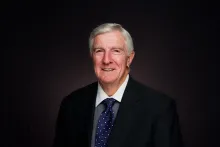
Before his retirement in 2021, Dr. Donald Ward pastored churches in Texas and Louisiana, and taught at Ambassador Bible College in Cincinnati, Ohio. He has also served as chairman of the Council of Elders of the United Church of God. He holds a BS degree; a BA in theology; a MS degree; a doctor’s degree in education from East Texas State University; and has completed 18 hours of graduate theology from SMU.
