

Rick Shabi
This transcript was generated by AI and may contain errors. It is provided to assist those who may not be able to listen to the message.
Good evening, once again, everybody. We are in Isaiah 6. We left off in verse 6.
Isaiah 6, 7, 8, and 9 are two of the most important chapters—not two of the most, four of the most important chapters in the Bible with regard to theology, just what you might call pure theology with regard to what theologians study in the sense of the origin and nature of God. In Isaiah chapter 6, we see identified here that Isaiah saw this vision of one sitting on the throne, and he was greatly disturbed because he says, I have come face to face as a world with God, and how shall I live, seeing that I am a man with unclean lips. So I want to start reading this evening from verse 3 of Isaiah chapter 3. I mean, Isaiah chapter 6 and verse 3.
And one cried unto another and said, Holy, holy, holy! Several times in Scripture the Jews viewed triads of repeating things three times as a completion. Holy, holy, holy is the Lord of Hosts. Now understand the Lord of Hosts. The Lord of Hosts. God has delegated to Jesus Christ to be Lord over all the hosts of heaven. A lot of people in, I remember times in the past I was concerned about this. Who is the Lord of Hosts? Well, Jesus Christ, the one who became Jesus Christ is the Lord of Hosts. That doesn't mean that he is over God the Father. He is not over God the Father, but he is over all of the heavenly hosts. If you remember in John 13, we're not going to turn there, but in John 13, as they were gathered together for Jesus to institute the new symbols of the new covenant pass over, that Jesus, realizing that all power had been given to him in heaven and in earth. And so God has delegated to Jesus Christ the function of governing the universe. That doesn't mean that God is not active and busy because he really is. So this seraphim is from the... it's a plural of seraph, and seraph literally means to burn. Remember that in the wilderness when Israel sinned, God sent forth fiery serpents, and the word fiery is the same word seraph, a burning serpent, so that when they were bitten, they were burning with pain because of this. But fire is also symbolic of purification, as we shall see here. So the seraph is crying, Holy, Holy, Holy, it's the Lord of hosts, the whole earth is full of his glory, and of course the earth will be full of his glory when the kingdom of God is set up here on the earth, and God and Christ and the saints are ruling over the earth. And the post of the door moved at the voice of him that cried, and the house was filled with smoke. Then said I, Isaiah speaking to the first person, Woe is me, for I am undone because I am a man of unclean lips, and I dwell in the midst of the people of unclean lips, for mine eyes have seen the king, the Lord of hosts. Well, you know, in Revelation it says that Jesus Christ is going to come back. Revelation 19, riding on a great white horse, he is Lord of lords and King of kings. That doesn't mean once again, and I shouldn't have to say this qualifier every time that God the Father is not also over all, as it says in 1 Corinthians chapter 15, that only the Father is over the Son. I'm not going to turn to 1 Corinthians 15 at this time, but you're probably familiar with that verse.
So Isaiah is bemoaning the fact that he's just a man, he's a man of unclean lips, he's seen the glory of God. Then flew one of the seraphim unto me, having a live coal in his hand, which he had taken with the tongues from off the altar. Remember that the tabernacle in the wilderness was made after the pattern of the heavenly, and there was an altar in the tabernacle in which the coals were forever burning. One of the jobs of the priests was to keep this sacrificial fire burning all the time, and the priests had that responsibility. So one of the seraphims took coal, which was probably a hot stone, and it was used for the meat sacrifices to burn them. Remember, fire was a symbol of purification. It takes out the dross even of metals in Malachi 3.2. I'll read Malachi.
Well, I just referred to Malachi 3.2. I'm not going to turn there at this time. That fire is a symbolic of being tried and being tested and being purified by fire.
So this seraphim, actually in the singular seraph, took this coal and touched the lips of Isaiah. It wasn't the stone or the coal itself that did the purification.
The symbolism, of course, is taken off of the altar where sin sacrifices were offered. Only God and Christ can forgive sin. So we see verse 6 where we left off last time. Then flew one of the seraphims unto me, having a live coal in his hand, which he had taken with the tongues from off the altar. And he laid it upon my mouth and said, Lo, this has touched your lips, and your iniquity is taken away and your sin purged. Well, only God and Christ can purge the sin, but the altar part of it is symbolic of that. Isaiah then, after having seen God on his throne and saying that he was a man of unclean lips, then he was able to speak to God as God spoke these words. Now look at verse 8. Also, I heard the voice of the Lord saying, I heard the voice of the Lord saying. Now we know that John 5 37 says that no man has seen the shape of God nor heard his voice at any time. And there are three or four times in Scripture where it clearly says that no man has seen God except the Son of Man who came down from heaven or the one who became Jesus Christ. Now verse 9. No, we didn't read all of 8. Also, I heard the voice of the Lord saying, whom shall I send? And who will go for us? Then said I, here am I, send me.
Now a hymn, I mentioned this in a sermon or announcements recently in a church service, that this is a very popular hymn that has been composed of, here am I, send me. It was number one in Great Britain. They have a television program there where they review the the top 10 hymns of the nation. I don't know if it's a weekly thing or a monthly thing. I've heard it a couple of times, and we have had it sung for us by Rebecca Baker in church services. It's a wonderful hymn. So Isaiah responds and says, here am I, send me.
And he said, go and tell this people, hear you indeed, but understand not, and see you indeed, but perceive not. Now look at verse 10. Make the heart of this people fat, make their ears heavy, and shut their eyes lest they see with their eyes, and hear with their ears, and understand with their heart, and convert and be healed. So they are not going to be able to hear and really understand the spiritual import of the message that Isaiah is bringing to them, yet God commands them to command Isaiah to go speak the message anyhow.
So the great lesson for us is, regardless as to what happens, that we are to continue to preach and teach the gospel. In this case, God had sent prophets to Israel over a long period of time, and Israel had not responded. But as a witness, God commanded Isaiah to go and preach this message as well.
And there are references in the New Testament to the fact that Isaiah preached this message, in which their eyes of understanding were not open. We are to continually offer the sacrifice of praise, thanksgiving, and prayer, which are counted as our continual sacrifices before God. And just as Cole was burning on that altar, we are to be always kindled with a fire of God with our feet shod with the preparation of the gospel of peace. It's one of the parts of the armor of God that is mentioned in Ephesians chapter 6, having our feet shod with the preparation of the gospel of peace. In other words, we are ready and willing to go take the gospel to the world.
When it came to the initiation of—we're going back a little bit now—when it came to the initiation of the fire that was kindled, originally, God was the first one who kindled the fire. The Levites, the people, were taught how to build the altar, and God was the one who lit the fire. In Leviticus 9.24, you can read about that. And of course, the people absolutely were astonished when the fire came from God, and they were to keep it, as we've already noted, burning continually. So we're to continually offer the sacrifice of praise, thanksgiving, and prayer to God. These are counted as our continual sacrifice.
As we noted, God kindled the first fire, and the priests were to keep the fire burning continually, and we are to continually offer the sacrifice of praise and fruit of our lips. Now let's note a few scriptures, and let's turn to these scriptures in view of this, because it's so very important, especially in a time like this.
Our society is now being gripped by mass psychosis, in which the government and various forces have brought together a fear upon the people of the world to the point that they are, don't know what to do. It seems that people have lost their common sense altogether, and we do not want to fall victim to mass psychosis. We want to be level-headed. We want to keep our nose in the Bible. We want to understand. We want to do what God wants us to do.
So here's Hebrews 13 verse 15. We want to look at a few scriptures here of what we need to be to keep our sensibilities, and just as they took that coal of fire off of coal of fire off of the altar there, and cleanse Isaiah's lips, we want to continually offer the sacrifice of praise and continually be purged of our sins before God.
So Hebrews 13 verse 15, by him therefore, that is Jesus Christ, let us offer the sacrifice of praise to God continually. That is the fruit of our lips, giving thanks to his name. But to do good and to communicate, forget not, for with such sacrifices, God is well pleased.
So as I've mentioned several times, some of the psychologists say we talk to ourselves 70% of the time, we could fill that time with thinking about and talking about what God has done and what he is going to do with each one of us, and praising him for what he has done for us, and calling us into his marvelous light. Now look at 1 Thessalonians 517.
1 Thessalonians 517. Of course, in our Bible studies, it is good to understand some of the historical information and what symbolizes what, but what really counts is what we are going to do in our lives. We could have all knowledge, understand all mysteries, have faith that we can remove mountains, but if we're not becoming as God is, it really prophets us nothing.
In 1 Thessalonians 517, it says, Pray without ceasing. So it is through prayer that you offer the sacrifice of praise continually. So all of us could be carrying on a conversation with God at any time, at any place. There is no place from the deepest, darkest dungeon to any most lighted place on the face of the earth that we cannot offer up the sacrifice of praise. In everything, give thanks for this is the will of God in Christ Jesus concerning you, which not the Spirit, despises not prophesies, prove all things, hold fast that which is good.
And now I want to look at Ephesians 618, part of the armor of God, which we've already mentioned, having our feet shod with the preparation of the Gospel of peace. In Ephesians 618, praying always with all prayer and supplication in the Spirit, and watching thereunto with all perseverance and supplication for all saints.
So we're to continually offer our sacrifice of praise to God. As we have noted here that Isaiah heard the voice of God, and he responded to it after his lips had been purged of his sin, and he realized who he was. In any case, with regard to having our sins forgiven, the first step is to admit that we are a sinner as the public and the Pharisee went up in the temple to pray, the Pharisee thanked God for all his self-righteousness, but the publican, not so much as lifting up his head to heaven, said, have mercy on me a sinner. And then the Scripture says that this man, the publican, was the one who went down to his house justified. We have been given the greatest opportunity on the face of the earth. Isaiah is called here to take message to a people and God telling him up front, as we have just read, they are not going to hear the message. And as I look back on the history of the worldwide Church of God and our present situation with regard to how many people have dropped by the wayside, do we not understand it? Cannot we comprehend that the calling that we have been given is of God, and that the words that we are hearing spoken to us are of God.
The glorious light of the Gospel must come through, and we must preach it. God is the one who opens our minds and calls us in the glorious light of the Gospel. Some might say, well, it's not the time. It is always the time to do good. It is always the time to praise God. I cannot find a time in which God does not commission his called out ones to go forth and share the good news of the coming Kingdom of God. This calling that we have, let's look at this calling with regard to how individual and specific that it is in Ephesians 1.5. Ephesians 1.5, having predestinated us unto the sonship—the Greek word there is weotheia, sonship. Why is it sonship? Because we have the literal essence of God abiding in us. An adopted child may have the rights and privileges of the one, the parents, that adopt him, but he does not share their genes. He does not share their blood, per se, but we share the very essence of God, which is spirit. God is spirit. We are begotten by the Holy Spirit. We are in the sonship stage. We have been begotten by the Spirit of God, the sonship of children by Jesus Christ himself, according to the good pleasure of his will. Now note further in verse 11, in whom also we have obtained an inheritance, being predestined according to the purpose of him who works all things after the counsel of his own will. This calling that we have is sacred. This calling is like a draft. It's like a summons to appear in court. We have been called by God. We have in that sense been hand-picked. Now look at 2 Thessalonians 2.13. 2 Thessalonians 2.13.
And 2 Thessalonians 2, verse 13. For this cause also we thank God without ceasing, because when you receive the word of God, which you heard of us, you received it not as a word of men. And see, I think that's what so many people can forget. We're not preaching the word of men. We're preaching the word of God. Now, if God cannot reach a person, especially those that have had their eyes open and understanding of the purpose of human existence, is to become a member of the family of God, if you can't understand that, if you cannot realize what a sacred privilege that is, it's no wonder that after you fall away, you cannot be renewed.
But as it is in truth, the word of God, which effectively works also in you, that believe. For you, brethren, became followers of the churches of God, which in Judea are in Christ Jesus. For you have also suffered like things of your own countrymen, even as they have of the Jews, who both kill the Lord Jesus and their own prophets, and have persecuted us, and they please not God, and are contrary to all men, forbidding us to speak to the nations, to the Gentiles, that they might be saved, to fill up their sins always, for the wrath has come upon them to the other most. But you, brethren, being taken from you for a short time, we being taken from you for a short time, in presence, not in heart, endeavored the more abundantly to see you face to face with great desire. So, brethren, there's no way that we can really measure the greatness of the calling that we have received, and what it means. It is a summons. It is an opportunity set before us from God. There is no greater calling. There's no greater opportunity. Now we notice Romans 8.30. Romans 8.30. And Romans 8 and verse 30, Moreover whom he did predestinate them he also called.
If you are predestinated, God has selected you, and whom he also justified them he also glorified. What shall we say to these things of God before us who can be against us? Now it is through what Paul calls in 1 Corinthians 1, the foolishness of preaching that God calls us. So here is Isaiah. He has been commissioned now to go speak to a people that is not going to listen to him because God is not calling them at that time.
And I guess there are other times in which God says, look, I'm going to send forth a witness, but no one may be responding to it. And as we often say, though we don't want to use this as an excuse per se, that it is up to God to call someone into his marvelous truth. But we are to keep going, and Isaiah, when his lips were cleansed, he was ready to go. And so we must be ready, regardless of the situation or the circumstance, we must be willing and take heart the commission that God has laid upon us. So let's read Isaiah 6.9 once again, and he said, Go and tell this people, Hear you indeed, but understand not, See you indeed, but perceive not. Jesus quotes Isaiah on this himself. Make the heart of this people fat. Make it so that they feel comfortable. They feel satisfied. They feel like we know it all. We're better than everybody else. After all, we've been to Harvard, we've been to Yale, we've been to the great universities of the land. Make it lusty, make it pleasurable, and make their ears heavy, and shut their eyes lest they see with their eyes, and hear with their ears, and understand with their heart, and convert and be healed. See, the only way that the world can be healed is to turn to God with all of their heart and mind. And Isaiah 6, 11, then said, I, Lord, how long? How long am I going to have to preach this? And he answered until the cities be wasted without inhabitant, and the houses without man and the land be utterly desolate. So how long is this going to be? Well, in one way, it is a very short time. It's absolutely amazing that these prophecies that Isaiah was speaking back in the 700s BC, and here we are 2,700 years later, plus. And God says, how long is it going to be? Well, it's going to be until God does what He says.
Then said I, Lord, how long? And he answered until the cities be wasted without inhabitant, and the houses without man and the land utterly desolate. And the Lord have removed men far away, and there be a great forsaking in the midst of the land. There has never been a greater forsaking of that which is holy, that which is sacred, that which is of common sense, right thinking, as we have seen in the past two years. And Mass Psychoses has gripped the hearts and minds of so many people, and as if they're running to and fro, seeking this, seeking that, and yet at the same time spinning their wheels and not going anywhere. And the Lord have removed the men far away, and there be a great forsaking in the midst of the land. But yet in it shall be a tenth, one out of ten, one out of ten escaping. With this be high, it's going to be in the Great Tribulation, one out of ten.
And it shall return and shall be eaten as a tail-tree and as an oak, whose substance is in them when the caster leaves. So the holy seed shall be the substance thereof. Well, the great substance is the Lord of Hosts, God and Jesus Christ. They're the ones who will save the world if it's ever going to be saved. And of course it is going to be saved, but how long? We don't know for sure how long. Now in Isaiah 7 verse 1, And it came to pass in the days of Ahaz. Ahaz is one of kings of Judah, the son of Jotham, the son of Uzziah. Remember that Uzziah was a great king, ruling for 50-plus years, but was struck down with leprosy because he offered sacrifice on the altar, which was only the duty of the priest. The son of Uzziah, the king of Judah, that reason the king of Syria. Now Syria and Assyria were closely connected eventually. Eventually Assyria conquered Syria. So this reason is king of Syria and Pekka, the son of Ramalia, is king of Israel. So this the king of Israel in this case is the northern ten tribes. Of course, the northern ten tribes had already been set up under Jeroboam, and they had had kings and so had Judah, where about 300 years removed from that division.
So Pekka is the king of Israel, went up toward Jerusalem to war against it, but could not prevail against it. So here we have a king of Israel, Pekka, and a king of Syria, Reason, who are confederate. They have allied together against Judah. And it was told the house of David, and the house of David, of course, is symbolic of Judah, Judah and Benjamin, the southern kingdom, saying Syria is confederate with Ephraim. And oftentimes Ephraim is used generically for all ten tribes. Ephraim was the leading tribe in Israel for a long time. Remember when Israel came out of Egypt, that the tabernacle was pitched in Shiloh, which is in Ephraim. But God eventually rejected Ephraim, and He chose Mount Zion, as it talks about in Psalm 78. And His heart was moved, and the heart of the people, as the trees of wood are moved with the wind. You know how the wind can sway trees back and forth. We have cedar trees that I can see outside the windows here, and when the wind blows, those cedar trees really sway back in too. So here is the metaphor of the trees swaying back into, representing people swaying back in too. Then said the Lord unto Isaiah, Go forth now to meet Ahaz.
You and Shiar Yahshab.
Shiar Yahshab.
Shiar Yahshab.
Go and meet you with your son, Shiar Yahshab.
At the end of the conduit of the upper pool in the highway of the Fuller's field.
Now we get into some very interesting theological discussion, which no way that we can settle it once and for all, because people through the centuries have debated it back and forth.
Shiar Yahshab literally means the remnant shall return. So this son is representative of the remnant that will return to the land after the destruction that takes place. Of course, at the end of the Great Tribulation in the Day of the Lord, there will be a remnant that is saved alive, and they will then form the physical side of the kingdom in Israel at that time. Of course, there will be seed saved alive from other nations as well. So you're to take this son with you, and a specific place is given here where they should meet. And say unto him, that is, Isaiah is going to say unto you, A has, and say unto him, Take heed and be quiet. Fear not, neither be faint-hearted, for the two tails of these smoking firebrands, that's Pekah of Israel and reason of Syria, for the fierce anger of reason with Syria, and of the son of Ramallah. Because Syria, Ephraim and the son of Ramallah, have taken evil counsel against you, saying. So as we have said at the beginning, that these two kings, Pekah, king of Israel, of the northern tribes, northern ten tribes, the kingdom that was established, first of all, under Jeroboam, after the division of the nation of Israel, Confederate with this Gentile king, reason of Syria. So verse 6, Let us go against Judah and vex it, and let us make a breach therein, for us, and set a king in the midst of it, even the son of Tabiel. Now why in the world would they choose how they chose Tabiel? That's not known.
Nothing is really known, according to commentaries, of this person, Tabiel. Thus says the Lord God, it shall not stand. In other words, the plan that they've had, what they plan to do, the conquered Judah set up a basil king. This Tabiel is not going to happen. Thus says the Lord God, it shall not stand, neither shall it come to pass. For the head of Syria is Damascus. Damascus is one of the oldest cities in the world. It was a crossroads of the nations. It was on the road of a tremendous trade route from North all the way down into Africa, up into Asia, and then a crossroads from East to West, from Europe into Asia, and Asia into Europe. The head of Damascus, this reason, he is the king.
And I don't know why it says, keep saying who the son is, and the head of Ephraim is Samaria, and Samaria was the capital of the northern kingdom, and the head of Samaria is Ramallah's son. You will not believe, surely you shall not be established. In other words, Kotel-e has that what these two have hatched up is not going to come to pass. More the Lord spoke again unto Ahaz saying, and this is really interesting here, so after God tells Ahaz, look, these two nations, these two kings, are in, they are confederate, they are allied together against you, and I'm telling you, they're not going to be successful. So don't you want a sign from God so that you will know for sure that it's not going to come to pass.
So in verse 11 it says, ask you a sign of the Lord your God. Ask if either in the depth or in the height above. So ask anything that exists in the universe, the sign that will prove to you that the words that Isaiah has spoken to them is true, but Ahaz said, I will not ask, neither will I tempt the Lord. Of course, Isaiah was speaking for the Lord at that time, and he said, hear you now, O house of David, is it a small thing for you to weary men, but will you weary my God also?
So Isaiah is perplexed by Ahaz's response, and it's like, okay, you won't accept the word from God. You won't ask for a sign, and what else can we do?
So then comes this famous verse, which has created a tremendous amount of controversy through the centuries. Generally, in the Church of God, we have glossed over this with regard to the questions that surround this. Therefore, the Lord Himself shall give you a sign. I mean, you don't ask for a sign, we're going to give you one.
So give you a sign, behold, a virgin shall conceive and bear a son, and you shall call His name Emmanuel. And of course, in Matthew 1, when the angel appears to Joseph, Joseph is concerned about Mary being pregnant and thinking about putting her away privately. The angel says, don't be concerned about that, Joseph, for that holy thing which is in her is of the Holy Spirit. And so you'll name Him Emmanuel, God, which literally means God with us.
Now, the problem arises with regard to the virgin part because in the first verse here, the Shira Yashub, the first son of Isaiah, by whatever wife that was, Isaiah already had a son when he went to speak to Ahaz.
And now this prophecy that a sign will be given to Ahaz, that a virgin shall have a child.
Now this, if we look at it strictly from the prophetic point of view and not involve the sign to Ahaz, we know for sure what we just said about Joseph, the angel appeared to Joseph, and what he told Joseph was that this one would be the Messiah. Mary was also given a similar kind of visit by the angel Gabriel, which is recorded in Luke 1. In Luke chapter 1 and verse 34, you know, there's a great controversy among, well, this word virgin is not, it can mean just a young woman. There's another word that is used in Hebrew for virgin, which is not that word. So those of Judaism have argued that it really wasn't a virgin. We have to go through this whole thing to see all of it.
So this one shall conceive and bear a son, and shall call his name Emmanuel.
Butter and honey shall he eat, that he may know to refuse the evil and choose the good. So now keep in mind that Isaiah already has a son, therefore he already has a wife, and that wife, having had a son, would not be a virgin.
Far before the child shall know to refuse the evil and choose the good, the land that you Abhorra shall be forsaken of both her kings. The Lord shall bring upon you and upon your people and upon your father's house the days that have not come from the day that he for him departed from Judah. That sounded Jeroboam way back at the death of Solomon and even the king of Syria, of Assyria. And it shall come to pass in that day that the Lord shall hiss for the fly that is in the utmost part of the rivers of Egypt, and for the bee that is in the land of Assyria.
So whatever forces that there might be, they shall come and shall rest, all of them in the desolate valleys and in the holes of the rocks, and upon all thorns, upon all bushes.
In the same day shall the Lord shave with eraser that is hired, namely, by beyond the river, by the king of Assyria. The head, the hair, the feet, and it shall also consume the beard, and it shall come to pass in that day that a man shall nourish a young cow and two sheep, and it shall come to pass for the abundance of milk that they shall give. He shall eat butter and honey, and shall one eat that is left in the land. So then it goes into what it would be like in the kingdom. It shall come to pass in that day that every place shall be where there were a thousand vines at a thousand silvarnings that shall be with beef or briars and thorns, with arrows and with bows, shall men come there because all the land shall become briars and thorns. Then it shifts back to what is going to happen to the land when God intervenes and Assyria takes Israel into captivity. And on all the hills that shall be digged with the mat talk, there shall not come there the fear of briars and thorns, but it shall be for the sending forth of oxen and for the breeding of lesser cattle.
Now we come to chapter 8, and we pick up once again the thought from chapter 7 there with Isaiah having his son, Shiar Yah Shub. He took with him and speaking to Ahaz, and then that prophecy with the sign was that this virgin would give birth to a child, and before the child can really decipher right from wrong that this destruction is going to come upon the land. So moreover the Lord said unto me, take you a great roll and right-in hit with a man's pen concerning Mary Shalal Hashba.
Mary Shalal Hashba has not yet been conceived as we shall see, but here's its name given in verse one. And it took unto me faithful witnesses to record Uriah the priest and Zachariah the son of Jeremiah, and it went unto the prophetess. And so the controversy arises here. Did Isaiah's first wife die, or did he have two wives? And no one can answer that question that I have read for sure, because now Isaiah, and remember a lot of people call the book of Isaiah the second gospel, as it were, that Isaiah in a sense here acts as a type of Christ in that he goes into the prophetess, and she conceives, and the son's name is Mary Shalal Hashba's. Mary Shalal Hashba's means hasten to the prey. And remember that before the the child can discern right from wrong, this destruction is coming. So I went into the prophetess, and she conceived and bare a son, then said the Lord to me, Call his name Mary Shalal Hashba's, for before the child shall no knowledge to cry my father and my mother, the riches of Damascus and the spoil of Samaria shall be taken away. Of course, Damascus has been overrun many times and rebuilt. Currently, about five years ago, the population of the Damascus was like 2.7 million, and then the the Isis came in and such an exodus out of the Syria, especially some 700,000 people displaced. The current population of Damascus from what the source I read was like 2.1 million.
Verse 4, for before the child shall have the knowledge, the king of Assyria is going to come. Verse 5, the Lord spoke also, and me again, saying, for as much as these people refuse the waters of Shilohwa, and water symbolizes life, water symbolizes the Holy Spirit. So the people had refused to listen to the prophets. There's the waters of Shilohwa, and the waters of Shilohwa was a conduit that came down that supplied some of the city with water that goes softly and rejoiced. Reason and Ramallah's son, now therefore, behold, the Lord brings up upon them the waters of the river, strong in many, even the king of Assyria, and all the glory, and he shall come up over all the channels and go over all his banks. So before we go any farther, we go back to this question of Isaiah. And so we see here that Isaiah had two sons. One, he took with him to speak to Ahaz, and then the prophecy is given about the one who became Jesus Christ. And there's duality in the prophecy, of course. And then he is told to go into this prophetess, and she shall conceive and bear a son. And his name is Marishalal Hashbaaz, which means hastening to the prey. So both sons were symbolic of what was going to happen to Judah. One, a sign for them, and secondly, that the destruction was going to come rather swiftly. The question of whether Isaiah's first wife died, and then he took the second wife and fathered the second son, no one knows for sure because it doesn't say. Someone might, you might look into that, see if you could come up with an answer with regard to that. Now continuing.
So Isaiah's wife either first died, the first wife died, and then he took the wife, this prophetess, and conceived Marishalal Hashbaaz, or he had two wives. It's one or the other. And he shall pass through Judah, and he shall overflow and go over, and shall reach even to the neck, and the stretching out of the wings shall fill the breath of the land all Immanuel. And once again, Immanuel means God with us. Associate yourselves, O ye people, and you shall be broken in pieces. Give here all you of far countries. So confederations, alliances, and so on will not save you when God decides that he is going to judge. Gird yourselves, and you shall be broken in pieces. Gird yourselves, you shall be yourselves. You shall be broken in pieces. Take counsel. It shall come to nothing. Speak the word, and it shall not stand for God is with us. For the Lord spoke thus to me with a strong hand, and instructed me that I should not walk in the way of this people, saying, Say you not a confederacy to all them, to whom this people shall say a confederacy. Neither fear you their fear, nor be afraid. And that message is for us today, that we are not to be afraid, with all the things that are going on around about us. We did not want to fall prey to mass psychosis, and fall in with the thundering herd, and forsake God and everything in the calling that he has given us. Verse 13, sanctify the Lord of hosts himself. Let him be your fear. If you're going to fear anything, fear him. Let him be your dread. And he shall be for a sanctuary, but for a stone of stumbling, and for a rock of offense, to both the houses of Israel, for a gin, and for a snare, to the inhabitants of Jerusalem. So you know that Jesus Christ came to his own, and his own received him not. But to them that received them, he gave them power to become the sons of God. In 1 Peter chapter 2, it talks about he became a rock of offense. Isaiah 28 16, please go now to Isaiah 28 16, also talks about how that Jesus Christ becomes a stumbling block. Isaiah 28 16, thus says the Lord, behold, I lay in Zion for a foundation, a stone, a tried and precious stone, a cornerstone, a sure foundation, he that believe shall not make haste. And so now you turn to 1 Peter chapter 2. Please turn to 1 Peter chapter 2. In 1 Peter chapter 2, beginning in verse 6, verse 6. Wherefore also it is contained in the scripture, and he is quoting here what I just read from Isaiah 28 16. Behold, I lay in Zion a chief cornerstone, a lack precious. He that believes on him shall not be confounded. And do you therefore which believe he is precious, but unto them which be disobedient. The stone which the builders disallowed the same as made the head of the corner, and a stone of stumbling and a rock of offense, even to them which stumble at the word, being disobedient, whereunto also they were appointed. But you are a chosen generation. And so now the church is given the commission of taking the gospel to the world. So we have come to the end of our time here together tonight. We shall pick up there at verse 15 in Isaiah 8 15 next time. That often quoted scripture of the speak not according to the law and testimony verse 20 here in chapter eight. It's coming up shortly, and we'll see the context of that.
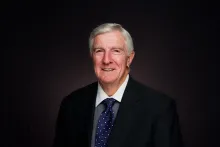
Before his retirement in 2021, Dr. Donald Ward pastored churches in Texas and Louisiana, and taught at Ambassador Bible College in Cincinnati, Ohio. He has also served as chairman of the Council of Elders of the United Church of God. He holds a BS degree; a BA in theology; a MS degree; a doctor’s degree in education from East Texas State University; and has completed 18 hours of graduate theology from SMU.
