

Rick Shabi
This transcript was generated by AI and may contain errors. It is provided to assist those who may not be able to listen to the message.
Brethren, we are today going to revisit our study of the book of Isaiah. It's been a while since we've been there, and certainly want to continue on. Probably we'll go through that the next time I'm with you as well, to kind of catch up a little bit. Today we're going to focus on chapter 8 of Isaiah. Since it's been a while since we've been there in the book, I want to go through some background to kind of give you a track to run on. In the Old Testament, God often used various types of activities to teach His people various lessons.
Political events, military events were often the case. And certainly that's where we find ourselves here in Isaiah 8. Actually, chapters 7 through 12 are one long storyline with the same plot, basically, and a recurring theme. The recurring theme is that we need to stand firm in the faith.
And that is a lesson, brethren, that is always true for God's people. It is a timeless lesson. It is something that you and I always need to be aware of. Going back to the background, after the death of Solomon, Israel had been split in two. You've had the northern kingdom of Israel and the southern kingdom of Judah. At the time of Isaiah 8, Judah was ruled by a wicked king named Ahaz. Israel and Judah were often at war with each other, and this is the case here. These two kingdoms were among several smaller nations in the region, nations like Edom, Assyria, and Phyllistia.
They were often dominated by a larger empire, such as the Assyrian Empire. And again, that's where we're here in chapter 8. Assyria was the big power in the region. Its people were violent, its people were ruthless. As one commentator put it, if you wanted to describe the Assyrian Empire of that time in ancient world, they would be the ancient world's version of the Nazis. They were that kind of a people.
Their emperor, Tiglath Pileser III, was an expansionist. He wanted more territory, he wanted more riches for himself. And one thing he really lusted after was the breadbask of the world, that part of the world, which was Egypt. And in order to get to Egypt, he would have to go through Israel and Judah. And so that made those nations, and it also made Syria, very nervous.
So King Ahaz of Judah was facing this, and so he wanted to make sure that he found some remedy to what he thought would be the solution of Syria coming in and taking over his land. Now the king of Israel, King Pica, and the king of Syria, King Rezen, they had their own ideas. They formed a confederation, they formed an alliance, and they wanted very much for Judah to join that alliance, but Judah didn't want to do that.
The reason Judah didn't want to do that is because Judah had already signed a pact with Assyria itself, that Assyria would not touch them. But they didn't know this, so Judah felt they were safe and secure because Judah would not sign on with Israel and Syria. Israel and Syria decided, well, they're going to take over the land of Judah. So today we're going to take a look at the crisis that is developing in this section of the Bible. And as we take a look at this, we're going to note various lessons to be learned. And certainly, brethren, as you and I look at Isaiah 8 and the other chapters, we don't want to look at this with an eye toward—this is just history.
We want to look at this as an eye toward how do you and I respond when there are crises in our life? Do we walk by sight or do we walk by faith? And that's always a crucial thing for God's people. That is a fundamental spiritual principle. It's essential to God's people at any time to make sure we're walking by faith and not by sight.
So my theme today is what I've said it was last time. It will be the same for the next several sermons. The theme for the sermon today is, stand firm in the faith, not trusting in flesh, or we won't stand at all. Stand firm in the faith, not trusting in flesh, or we won't stand at all. Let's turn in our Bibles to Isaiah 7.
Again, a little bit of background here.
We covered this last time, but it would be good to discuss it here. Isaiah 7.
And verse 9 is our theme statement, Isaiah 7.9. The head of Ephraim is Samaria, and the head of Samaria is Remaliah's son—it's talking about King Peca. If you will not believe, surely you will not be established. If you will not believe, surely you will not be established. The Christian Standard Bible, quoting Isaiah 7.9, that last part, says, if you do not stand firm in your faith, then you will not stand at all. In God's Word, the last part of Isaiah 7.9 says this, if you don't remain faithful, you won't remain standing. Now those are always words that you and I need to listen to. One of the great themes of the Bible. I'm not going to turn there, but in your notes you might want to jot down Habakkuk 2 and verse 4.
Habakkuk 2 and verse 4 in the Old Testament, where it says, the just shall live by faith.
That's in the Old Testament, the book of Habakkuk. The just shall live by faith. Romans 1, verse 17. Again, I won't turn there. You can put this down in your notes if you'd like. In the New Testament, the just shall live by faith. So a theme spanning one end of the Bible to the other. God uses the crises of our life to expose what our faith really is about. We do not stand firm in faith. We're not going to stand at all.
One last scripture I'm going to give before we get into some, as I start drilling down into more of the meat of the sermon today. As an example, Isaiah 31 and verse 1.
This is a tremendous example. This is a different part of the story.
Isaiah 31.1, I'll read it for you. Woe to those who go down to Egypt for help and rely on horses, who trust in chariots because they are many, and in horsemen because they are very strong, but who do not look to the Holy One of Israel, nor seek the Lord? That's Isaiah 31.1, again, talking about walking by sight, not by faith.
Let me outline chapter 8 for you. The way I've outlined this, I've broken this chapter down into five parts.
Verses 1 through 4.
We see the fall of Syria and Israel prophesied.
Verses 5 through 8.
The choice of unbelief and its consequences.
When we choose unbelief as a selection, there are consequences to that. Verses 9 through 15. God's challenge to the faithless. Verses 16 through 20. God's challenge to trust in Him alone.
And verse 21 through 22. The fruits of faithlessness.
Isaiah chapter 8. Most scholars would peg this at about 734 B.C. 734 B.C. Now, let's understand the date. 734. When was Israel conquered? 722. 12 years down the road. So these are some of the last days of the nation of Israel. Okay? Isaiah saw that. Now, the book of Isaiah is largely to the book of Judah, but there are prophecies for both. So verses 1 through 4. The fall of Syria and Israel prophesied. Now, drilling down even a little more background, please bear with me. Due to not standing firmness of faith, King Pekah of Israel, king-resin, of course, now he was a Gentile, but king-resin of Syria, died two years later. They weren't looking to God. They were looking to man. They were looking to the strength of the man. They had an alliance. And instead of looking to God to be there for them, they looked at each other. And two years down the road, Assyria came into their lands, and both kings lost their lives. And result of not walking in faith.
Now, God had given—stay here in chapter 7, Isaiah—God had given two signs that he wanted his people to take a look at, to realize they should look to him. The first sign we see in Isaiah 7, verses 3-9. Let's just take a quick look at that. Isaiah 7, verses 3-9.
And the Lord said to Isaiah, Go now and meet Ahaz, you and Shear Jehoshub, your son, at the end of the aqueduct from the upper pool on the highway to the Fuller's Field. So the king is inspecting the nation's water supply. He knows that some disastrous times may well be coming. He's wanting to prepare. He's wanting to make sure that the nation has its water supply intact. So Isaiah is to meet him with his son. And say to him, Take heed, and be quiet, and do not fear or be faint-hearted, for these two stubs of smoking firebrands, for the fierce anger of the resident in Syria, and the son of Ramaliah. So God is saying to the king here, Don't be worried about these two men. These two men are not going to be very much longer on this earth. And surely two years later, they both were dead.
Now, God is a tremendous teacher. And when Isaiah went to the king with his son, his son had a very special name.
Cher-jeshup means a remnant will return. So God was basically saying to the king, No matter what takes place, I love my people, and a remnant will return. But there was more to that sign than just the son of Isaiah. Isaiah was a part of that sign. I want to read to you from the Kyle and Delish commentary in the Old Testament. And I quote, The two together were a personified blessing and curse, presenting themselves to the king for him to make his own choice. The prophetic name of Isaiah's son was intended to drive the king to Jehovah by force through the threatening aspect it presented. And the prophetic announcement of Isaiah himself, whose name pointed to salvation, was to allure him to Jehovah with its promising tone. Of course, Isaiah means the eternal is salvation, or the eternal shall save, or salvation is of the eternal.
So all of these two men standing together in front of the king were saying, Look, you look to God, He'll take care of you. Salvation will come by looking to God, by walking by faith, and not by walking by sight.
Expositor's Bible commentary says, the name Shearer-Geshub can suggest either a warning of hope, or also a physical return from exile or spiritual return to God. So the king simply didn't want to listen to Isaiah, didn't want to heed the warning God was given to him, and he walked by sight. You know, brethren, one of the problems with walking by sight, when you walk by sight, we don't see everything. We don't see the things God sees. We don't understand the things that God has in store for us, or could have in store for us. We are limiting our vision when we walk by sight.
We don't have all the facts at our disposal when we walk by sight. We are fortunate, because God has called us. We have been baptized. Our sins have been forgiven. We've received God's Holy Spirit. We can walk, in one sense, in another dimension. Now, we're still flesh and blood, but we've got the mind of God to help us see things. We've got God to go to, as we walk in faith, to show us how we should be thinking about the situation that is in front of us. And not just looking at it from a strictly physical point of view.
When you look at the history of the nation of Israel, when Israel came out of Egypt, and all these miracles that took place, they needed to take a look at the miracles God was doing for them on their behalf. When you got to the parting of the Red Sea, by sight you would think, well, we're dead. We're done for here. That's looking by sight. But by faith, the Red Sea parted. And so, brethren, how about you and your life, or me and mine? What's happening in your life right now, where are we, are you, am I, are we walking by sight more than we're walking by faith? That's a question Christians of all times, God's people of all times, have to ask their selves. Now, God says here He's going to stop. Let's continue on in verse 5 here, chapter 7, verse 5. Because Syria, Ephraim, and the sons of Ramalai have plotted evil against you, saying, Let us go up against Judah and trouble it. Let us make a gap in its walls for ourselves, and set a king over them the son of Tabel. Well, this never works. Verse 6 here, they're wanting to put somebody else, a non-Jew, on the throne of Judah. That's not ever going to work, right? We talked about that last time. Verse 7, This is the Lord, it shall not stand, nor shall it come to pass. For the head of Syria is Damascus, and the head of Damascus is Rezen. Within sixty-five years, Ephraim will be broken, so it will not be a people.
Now, that's not a prophecy we speak much about, but it's an interesting prophecy. Now, I made mention that this chapter takes place, as scholars would say, in 734 B.C. If you go forward sixty-five years, what you're doing come to. You come to 669 B.C. Now, that's not a date that just kind of trickles off our tongue. It's not like 31 A.D., you know, the beginning of God's church. What's so important about 669 B.C.?
Well, it says here, when this takes place, Ephraim will be broken, it will not be a people. In 722, Israel was conquered. A series over the course of a number of years, a series of deportations of its people took place. The nation was being carved piecemeal, and there were fairly large, there were some smaller deportations, and there were some larger deportations. But by the time 669 came to be, Ashurbanipal had the largest of the deportations at the very end, and when that took place in 669 B.C., Israel's fate was sealed. No more Israel. Its people were literally taken out of the land. Other peoples over that course of time were brought into the land. And of course, those people, as I'm sure you are aware, those people became known as the Samaritans. That's why the Jewish people didn't care much for the Samaritans. So that's one of the signs, and the king Ahaz didn't want to take a look at that sign. And again, I would ask myself, is God in my life showing me some signs? As I pray and as I study, as I have issues and take a look at my life's issues, and as God tries to work with me, am I listening to God? Am I heeding the signs He gives to me, the warnings He gives to me through Scripture, perhaps through a sermonette or a sermon? Perhaps through a conversation with one of you? Am I listening to God as God reaches out? You know, there's an old story. You've probably heard this, but repetition's good. God repeats things for emphasis.
There was an individual who thought he had faith in God. A big rainstorm, I mean, a horrible rainstorm came. Flooding took place. Levies near his house burst. Floodwaters were just gushing all over the place. And so he said, you know, the water's arising to the place. I've got to get on my roof. I'm going to drown. So he scampers up to the roof, and after a while, a fellow comes rowing by in a rowboat and says, Come on down, I'll help you. And he said, No, I've got faith in God. God will take care of me. Guy rows away. Later on, the house is almost totally submerged. A powerboat comes by. He yells up to the man, Come on down. I can help you. I can help save you. He says, No, I've got faith in God. God's going to take care of me. More water comes. The man's up to his knees, standing on the very tip of his house, and a helicopter comes by. He yells down to him, I'll throw you a rope. Guy says, No, I've got faith in God. God will take care of me. Eventually, the man drowns. In the resurrection, he's mad at God. He said, I had faith in you, and you didn't help me. God says, Wait a minute. I sent you a rowboat. I sent you a powerboat. And I sent you a helicopter. And you didn't want any of that. And you died. So again, brethren, we ask ourselves, Are we the person standing on the roof? You or I? Are we the people standing on the roof? God wants to help us in whatever trial we may be going through, whatever crisis we may be going through. And we're saying, No, I want it done the way I think it should be done. The second sign we see that God gave to King Ahaz is found here in verses 14 through 16 of chapter 7. Therefore, the Lord himself will give you a sign. Again, these signs were given so he would have faith in the true God. Behold, a virgin shall conceive and bear his son, and shall call his name Emmanuel. God with us. Curves in honey he shall eat, that he may know to refuse the evil and choose the good. For before the child shall know, the fused the evil and the good, the land that you dread will be forsaken by both her kings.
So Ahaz, an unbeliever, again, didn't accept us. Now, we see in verse 14, as we talked about last time, a beautiful prophecy about Jesus Christ. But for this to be meaningful to Ahaz, in Ahaz's day, there had to be some kind of event. We talk about a type and anti-type and prophecy. We talk about a first coming of a prophecy and a latter fulfillment of a prophecy. There had to have been somebody that he knew, a virgin, that he was aware of, who conceived and had a son. Now, scholars are divided as to who that can be. Some say maybe it was Isaiah's wife. Some say maybe it was somebody in the royal family. Somebody says maybe just somebody who served in the palace and so forth. But we don't know. But the bottom line is, God has already given this man two different signs, and he rejected them both. That brings us to sign number three. Sign number three. And that brings us now to chapter eight of Isaiah.
Isaiah chapter eight. Again, verse four, verses here talk about the fall of Syria and Israel being prophesied. Chapter eight, verse one.
Now, I know a number of people like to call their children by Bible names.
This is the longest name in the Bible. I don't think this is the kind of name, though, that you want for your son. The name, Maher Shalal Hashbaaz, means quick to the plunder, swift to the spoil. This is a phrase that soldiers would shout to their comrades as they defeated a plundered nation.
So again, God is an excellent teacher. And he's using an object lesson here. God is using a visual aid here to try to get through to the king of Judah. But it's not working. Verse two, and I will take for myself faithful witnesses to record Uriah the priest, who was an unjust and unfaithful priest, and Zachariah the son of...what's his name here? So these two people are going to act as witnesses to what God is saying. Because God wants to make sure that what he's about to do is fully documented. Fully documented. Again, Uriah the priest, a false priest, helped Ahaz build a heathen altar in the temple area. And Zachariah...this is not the Zachariah of the book of Zachariah. It's the father-in-law of King Ahaz. Verse three, so I went to the prophetess...this is thought to be...this is Isaiah's wife. Whether she was a prophetess in terms of what she prophesied or simply because she was married to Isaiah, we don't know. I went to the prophetess, and she conceived and bore a son. Then the Lord said to me, Call his name, Mahar-Shalal-Hash-Baz. For before the challenge, she will have knowledge to cry, My father and my mother, the riches of Damascus and the spoil of Samaria will be taken away from before the king of Assyria.
So again, as we made mention, this takes place, and two years later, you know, 734 is the beginning part of this chapter. Two years later, when his child is old enough to be able to say the proper things, those two kings are now dead. You know, God's Word stands true.
Let's put a marker here. Let's go over to 2 Peter 2.
2 Peter 2. The point here, brethren, with these first four verses in Isaiah chapter 8 is we need to make sure we heed God's warnings. We listen to the advice he gives us. The advice he gives us may be through, as I said, a sermon, a sermonette, a Bible study, conversation with your brothers and sisters in the faith, the things you read in our literature, sermons you hear online. There could be any, your conscience. There could be any number of ways God is talking to you. And we need to make sure we are heeding what God is saying to us. 1 Peter 2, verse 9, The Lord knows how to deliver the godly out of temptations and to reserve the unjust under punishment for the day of judgment. God knows exactly what he is doing. And we need to heed the advice, the counsel that he gives to us. Okay, we go back now to chapter 8 of Isaiah.
We've got verses 5 through 8, and I have titled this, The Choice of Unbelief and Its Consequences. The choice of unbelief and its consequences. The Lord also spoke to me again, saying, Inasmuch as these people refuse, the waters of Shilah that flow softly, and rejoice and reason, and in Remeliah's son, now therefore behold, the Lord brings upon them the waters of the river, strong and mighty. The river referring to Euphrates, which was flowing through the land of Assyria. The king of Assyria in all of his glory. He will go up over the channels, over all of its banks. He will pass through Judah. He will overflow and pass over. He will reach up to the neck, and stretching out his wings, will fill the breath of your land, O Emmanuel. So here we can break this down. The first couple of verses here, 5 and 6, as we're taking a look at this, Judah rejects the gentleness of God. As God is working with the nation, God is being rejected by the king. These are the gentle waters of Shiloh. Apparently there was a small stream in and around the Jerusalem area. Instead of trusting God's care and provision, they are now focusing on the death of Rezen and the death of Pekah. The two kings that were going to go after their nation. Here again, we see the fallacy, we see the tragedy of walking by sight. When we walk by sight, we focus on the wrong things. The people of Judah were not focusing on the proper things. They were thinking, oh, those two kings are gone! They're dead! We're going to be in great shape now because they're gone. Well, they were focusing on the wrong things there. Again, they were walking by sight. They didn't see as God sees. They weren't thinking as God thinks. And they were focusing on the wrong things. Verse 7 and 8, because the people rejected God, Isaiah says, judgment is now coming. He's going to send upon them the mighty army of Assyria because they rejected God's gentle touch. The floodwaters will reach all the way up to the neck. Now, nationally, what that's referring to is the whole of the country other than Jerusalem. And lastly, in verse 8, the Assyrians would be like a mighty bird of prey with its outstretched wings, with all of its destructive power over the nation. They would endure tremendous suffering. But notice God refers to the land that belongs to Emmanuel. God doesn't walk away from His own. Not totally. I'm sure there were people in the nation who were not able to walk away from His own. We're righteous people. There are people in the nation that were trying to do the right thing and live by God's laws.
And when we think about that, brethren, think about our nation. You know, our nation is going to be cursed because of the way we are living. But that doesn't mean that you, as an individual, can't be blessed. As you and I, as God's people, follow the great God and His laws, His statutes, and His judgments, as we walk by faith and not by sight, we can be blessed. So even in the middle of judgment, God protects His own.
Move on now to verses 9 through 15. God offers a challenge to those who are faithless.
Verse 9, Be shattered, O you peoples, and be broken in pieces. Give ear, all of you, from far countries. Gird yourselves, but be broken in pieces. Gird yourselves, but be broken in pieces. Take counsel together, but it will come to nothing. Speak the word, but it will not stand. For God is with us. So here we've got a general truth. We've got some general principles that God is discussing here. That if people walk in faith, they will be okay. But people who don't walk by faith, they are going to be shattered. They're going to be going through all sorts of suffering.
Tremendous suffering.
Even though the nations would do whatever they think is best, they are not going to succeed.
Verse 11, For the Lord spoke thus to me with a strong hand, and instructed me that I should not walk in the way of this people, saying, Do not say a conspiracy, considering all that the people call a conspiracy. Nor be afraid of their threats, nor be troubled. The Lord of Hosts, Him you shall hallow. Let Him be your fear. Let Him be your dread. He will be as a sanctuary, but a stone of stumbling and a rock of offense to both the houses of Israel. Notice, both houses of Israel are being noted here, both Israel and Judah. As a trap and a snare to the inhabitants of Jerusalem. And many among them shall stumble, but they shall fall and be broken, be snared and taken.
So God tells Isaiah, Don't be like the people of the land. Don't be like the people of the land. Now, how do you and I relate to that? Let's take a look at 2 Corinthians, put a marker here, 2 Corinthians chapter 6.
2 Corinthians chapter 6, verse 17 and 18. It says, Therefore come out from among them and be separate, says the Lord. Do not touch what is unclean, and I will receive you. I will be a father to you, and you shall be my sons and daughters, says the Lord Almighty.
Come out from among them and be separate. Isaiah is told to come out from among them and be separate. Verse 12, Do not say a conspiracy concerning all the people that shall call a conspiracy. Don't be afraid of this alliance that's coming up against you, because God will take care of those people. God's prophesied He would take care of those two kings. But, by contrast, in verse 13, You shall fear, you shall hallow the Lord your God. Let Him be your dread. Verse 14, He will be a sanctuary. God will be our place of safety, if you will. Our place of safety. But of stone of stumbling and a rock of offense to both the houses of Israel. Now Peter discussed this as well in 1 Peter 2 and verse 8, referring to those who reject Jesus Christ. 1 Peter 2 and verse 8, I'm not going to go there. Again, one of the great themes of the Bible. The Lord our God is our place of safety. He is our refuge. He is our high tower.
We are to respect Him in all that He stands for.
So verses 9 through 15, God's challenge to the faithless. Verses 16 through 20, God's challenge to trust in Him alone. God's challenge to trust in Him alone. Verse 16, bind up the testimony. Seal the law among my disciples. Now this is an interesting verse here. Bind up the testimony. Seal the law among my disciples. A couple of phrases strike my eye. I don't know about you. Bind up and seal. Bind up and seal.
Now Isaiah's book was to become a part of Scripture.
But it wasn't to be all of Scripture. There's going to be other books that are going to be a part of Scripture.
And notice what it says there at the end of verse 16. Seal the law among my disciples. Seal the law among my disciples. God is giving a some indication here how the Bible is going to be put together, when it's going to be finalized, canonized, and so forth. Now, this is obviously verse 16. It's inspired by God. There are those that would say that God is here speaking Himself in verse 16. He's talking about His disciples. Well, what disciples do we know? We've got Christ's disciples in the New Testament.
Who was the last living disciple? Apostle. John. And who helped put together the final touches of the Scriptures with the things He wrote in the book of Revelation in the late 90s A.D.
So it says there, seal the law among my disciples. Seal the law among my disciples. Let's drop down to verse 20. To the law and to the testimony that they do not speak according to this word is because there is no light in them. The law is generally understood to be the first five books of the Bible. The testimony would refer to all the other pieces of Scripture.
To the law and to the testimony, if they do not speak according to this word, what word? The law and the testimony, all of Scripture. If they do not speak according to Scripture, there is no light in them. There is no light in them. So if we want to seek God, we want to seek His blessing, we want to seek what He has in store for us, we must seek Him through His word.
Seek Him through His word as you are going through your crises in life as I am going through mine. You know, it's four years ago, tomorrow, four years in the past, where I had an appointment to have a heart catheterization.
I had a dull, little, almost insignificant to me, pain in my chest. But, you know, because of my family history, I thought, well, let's get this checked out. So, you know, I went and had the heart catheterization. And I've told you this story, but during the course of the heart catheterization, you're awake through the whole thing. And a doctor said, Randy, what I'm seeing here, you know, you're awake and you're talking to the doctor, and you're looking at the screen, you see all the, I saw all the awful things. I was wondering what those things were, but I knew it wasn't any good. He said, what we can do with you is we can put five stents in you right now, and a year and a half down the road, you'll need several more. He says, to use an analogy, your heart and the surrounding area there is like a bad road system, and you still need a lot of repair there. He says, but what I suggest is we stop this procedure right now and go talk to a surgeon and get his advice. And so two days later, we were in the room with the cardiologist and a surgeon, and the decision, I made the decision, you know, I don't want to have five stents put in. And then, you know, say, well, a year and a half from now, well, what if it's a year from now I need them? And you're too late. Well, bad choice. So I said, no, let's do it all right now. And that's the way that took place. But, you know, I wanted to make sure I was properly seeking God's advice. I want to make sure I was probably asking God, you know, help me with this decision. Seeking all the principles I can find in the Scripture. And God was there to help me. And things worked out okay.
Verse 17. Let's go back to verse 17. I will wait on the Lord who hides his face from the house of Jacob. Why does he hide his face from the house of Jacob? Because Jacob is sinning. And I will hope in him. So notice Isaiah here at the beginning and ending of verse 17. I will wait in the Lord and I will have hope in him.
This is how you and I walk by faith. We wait on the Lord. We hope in him. And those of you who've gone through crises in life, you know how that goes. I'll never forget that day on August 28, 2015, when they were about to wheel me in to have my open-heart surgery. I remember crying. I remember Mary crying. I remember saying goodbye to Mary because I didn't know if I was going to make it out of that room alive or not. I didn't want to be overly dramatic, but that's just the way it is. And told her to have a good life and don't marry anybody else.
She laughed at that. Anyhow, when you have those kind of things in life, it does get your attention. And you want to make sure you're waiting on the Lord. You want to make sure that you're walking by faith and not by sight. Verse 18, Here am I and the children whom the Lord has given me. And so there are two children we've talked about. Chapter 7 and Chapter 8. Isaiah and his two kids. As a witness for signs, we are for signs and wonders in Israel. From the Lord of hosts who dwells in Mount Zion. So right in front of the king's eyes are these three people. Isaiah's two sons and Isaiah himself. The king is without the ability to say, well, I didn't know.
And brethren, I think you and I are also in that same boat. I don't think that if I should not make it into God's kingdom, I could say before God, well, I didn't know. Well, of course I know. I know God's called me. I know what I need to be doing. And if I don't do it, that's on me. The same thing is true for you.
Same thing is true for you. Verse 19, When they say to you, Seek those who are mediums and wizards, who whisper and mutter, should not a people seek their God? Should they seek the dead on behalf of the living? What good is that? Why would you seek those who are already dead?
Obviously, that's not God's way. To the law and to the testimony. If they do not speak according to this word, it's because there's no light in them. So there's a contrast. The people are looking to paganism. The people are looking to the world. The people are walking by sight.
And they're going to have awful fruits to pay. Which leads us to the very last section here. Verses 21 and 22.
Verses 21 and 22, I've labeled this the fruits of faithlessness. The fruits of walking by sight.
Verse 21, They'll pass through it, higher pressed and hungry. It shall happen that when they are hungry, that they will be enraged and curse their king and their god and look upward. Then they will look to the earth and see trouble and darkness and gloom of anguish and they'll be driven into darkness.
So Isaiah issues a strong warning to the people at the end of this chapter.
The occult would leave them, you know, their way of looking to God, a false way of looking to God, would leave them in a hopeless situation. It would lead them into God's judgment.
They would suffer terribly. They would become so enraged, so disappointed, they would curse the king and God for what they thought was God. And they would become gripped with the spirit of hopelessness.
We don't want that. We don't want to be gripped with the spirit of hopelessness. We want to be gripped. We want to rejoice in the fact that as we walk in faith, our great God is there with us.
So brethren, here we are. I'm going to stop here for now in Isaiah. Probably next time I'll go through chapter nine. I'm really hoping, starting with the next sermon, to start doing more of a survey through this and getting through this more quickly, hopefully go through a couple of chapters at a time from now on. And not trying to go up through every verse, but more of a survey, so we can speed things along a little bit. But the overarching lesson we see in chapters seven through twelve is stand firm in the faith. Walk by faith, not by sight. We've also seen a couple of other lessons here in this section of Scripture, chapter eight of Isaiah, to heed God's inspired warnings and to come out from among them and be separate. We're living in troubled times, brethren. You know, all these shootings that are taking place in our country, I think the activity of the spirit world has been increased, and we need God's protection in all ways, and we need to have God's mind stronger in us now than ever before. So let's make it a point that we're going to walk by faith and not by sight.
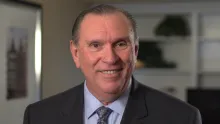
Randy D’Alessandro served as pastor for the United Church of God congregations in Chicago, Illinois, and Beloit, Wisconsin, from 2016-2021. Randy previously served in Raleigh, North Carolina (1984-1989); Cookeville, Tennessee (1989-1993); Parkersburg, West Virginia (1993-1997); Ann Arbor and Detroit, Michigan (1997-2016).
Randy first heard of the church when he was 15 years old and wanted to attend services immediately but was not allowed to by his parents. He quit the high school football and basketball teams in order to properly keep the Sabbath. From the time that Randy first learned of the Holy Days, he kept them at home until he was accepted to Ambassador College in Pasadena, California in 1970.
Randy and his wife, Mary, graduated from Ambassador College with BA degrees in Theology. Randy was ordained an elder in September 1979.
