
Rick Shabi
This transcript was generated by AI and may contain errors. It is provided to assist those who may not be able to listen to the message.
We'll be in Isaiah 8 today. As a little bit of a background, in the Old Testament, God often taught vital spiritual lessons through either political or military events or crises. That's what we're seeing here in chapter 8 of Isaiah. As a matter of fact, chapters 7, 8, 9, 10, 11, and 12, basically tell the same story. Very much the same background, very much the same story. After the death of Solomon, as you're well aware, Israel was split in two. You had the northern kingdom of Israel and the southern kingdom of Judah. At the time of Isaiah chapter 8, Judah was ruled by a wicked king by the name of Ahaz.
Israel and Judah were often at war with each other. And that's always a good thing for you to remember. When people start talking about how all Israel is the Jews, that's simply not the case. As a matter of fact, I think one of the very first times the Bible uses the word Jew, Israel is fighting against the Jews. So two different groups of people, as you're well aware, with the 12 tribes of Jacob. So, anyhow, Judah is being ruled by wicked king Ahaz. Israel and Judah are at odds with one another. Those two kingdoms, along with other kingdoms in the region, like Edom, Syria, and Philistia, were often dominated by other great regional powers.
In this instance, the regional power were the Assyrians. Assyria was the big power in the region. They were violent people. They were ruthless people. As a matter of fact, some historians, in trying to help us understand who they were as a people, would tell us that the Assyrians were that era's Nazis. They were that kind of people. Their emperor, at the time we have in Isaiah chapter 8, was a man by the name of Tiglath Pileser III. It just kind of trips off your tongue, doesn't it?
Tiglath Pileser III. Now, he was an expansionist. He wanted territory. But one of the things at this particular juncture in history is he wanted the breadbasket of the region under his domain. The breadbasket of the region was a country by the name of Egypt. For him to get to Egypt, he had to go through Israel, Judah, and Syria. Now, those three nations didn't like the idea of Assyria just walking through their nations, subjugating them, enslaving them, and so forth.
So King Pica of Israel and King Raisin of Syria got together as an alliance. They thought that if they were together as an alliance, they would be stronger. Perhaps the Assyrians would leave them alone. Now, what they also wanted was King Ahaz of Judah to join their alliance. But King Ahaz didn't want to do that. He didn't want to do that because he already had an alliance. His alliance was with none other than the Assyrians themselves. And so because Ahaz of Judah would not go along with Israel and Syria, Israel and Syria said, okay, we're going to march on Judah.
We're going to take care of Judah. They'll become our vassal state, and we'll be stronger in that regard. So that's the general setting that we find ourselves as we're heading into chapters 7 and 8 of Isaiah. Now, we don't want to go through these sections of Scripture just for the sake of looking at musty old world history.
There is a vital fundamental spiritual principle that's essential to us today as Christians that we see in this section of Scripture. Today, what we're going to be looking at in terms of this vital spiritual principle, this essential principle, is a very simple statement. We need to walk by faith, not by sight. Walk by faith, not by sight. That is true for God's people at any time, in any age. Walk by faith, and not by sight. Let's go to Isaiah chapter 7, because there is some more background here in this chapter I want to get to before we get into chapter 8. Isaiah chapter 7 gives us the theme statement, really, for chapters 7 through 12. That theme statement is found in Isaiah chapter 7 and verse 9.
Isaiah 7, 9.
The head of Ephraim is Samaria. The head of Samaria is Remeliah's son. Now, that's King Peca.
Incidentally, King Peca would be the last king Israel was ever to have.
King Rezen would be the next to last king Syria would have before the Assyrians conquer his land.
But the very last half of verse 9, if you will not believe, surely you shall not be established. If you will not believe, surely you shall not be established. That's our theme statement. Now, let me read that in a couple other translations. In the Christian Standard Bible, that last half of verse 9 reads this way. If you don't stand firm in your faith, you will not stand at all.
If you will not stand firm in your faith, you will not stand at all. In the God's words translation, the last part of verse 9 reads this way. If you don't remain faithful, you won't remain standing.
Very simply put, very profound. If you don't remain faithful, you won't remain standing.
Now, I'm not going to turn to these next two scriptures, but you might want to note them in what you're writing down for your notes. Habakkuk, chapter 2, verse 4.
Habakkuk, chapter 2, verse 4.
The just shall live by faith. That's in the Old Testament. The just shall live by faith. Habakkuk 2, verse 4. In the New Testament, again, I won't turn here, but Romans, chapter 1, verse 17. It says, the just shall live by faith. So this is a theme that goes throughout the pages of the Bible. The just shall live by faith.
Paul writes, and let's turn there, Paul writes in 2 Corinthians, chapter 5. 2 Corinthians, chapter 5, verse 7. For we walk by faith, not by sight. We walk by faith, not by sight. You know, we as Americans are so fortunate. As a nation, we are living in a time of relative peace, safety. Now, of course, I know there is high crime in various areas. There are those who have other issues in their personal lives, where maybe they're not as safe and secure as they would like to be. But generally speaking, as a nation, we're not like the people in Haiti. I've read to you what has been what is happening to our people in Haiti when they come to SABAS services. If they can get to SABAS services, you know, as they're going to SABAS services, they're saying the various places like the supermarkets and places like that being guarded by people with oozies, machine guns. When they get to services, there are services there in Haiti. For our people are behind these 10-foot-high brick walls with barbed wire along the top. Now, what does that do to your mind when you're going to SABAS services? And that's the the atmosphere you're going to. Then you go into service and they lock this big steel door behind you. We don't have to worry about that. We might trip over a piece of something there in the kitchen, but we don't have to worry about the that kind of danger. So the bottom line is, brother, but there is coming a time for you and I. We take a look at prophecy. If we're living at the end of the age, and I think surely we are, if we're living at a time when Christ will return, and maybe that's the case, then you and I will be living at the worst times of human history. And so we need to be people who are walking by faith, not by sight.
One last verse I'm going to quote to you before we start getting to more more detailed background is Isaiah 31 verse 1. Because there's the same principle here. God is talking to Israel and He says, Woe to those who go down to Egypt for help, and rely on horses who trust in chariots because they are many, and in horsemen because they are very strong. But who do not look to the Holy One of Israel, nor seek the Lord? That's Isaiah 31.1, where people would look to alliances, they look to other people. They're walking by sight. They're looking at armies and things like that. God says, that is of no avail at all.
Let me give you an outline for Isaiah chapter 8. And as we get to Isaiah, this is the outline I will follow as I'm going through the material with you. Isaiah chapter 8, the date we believe is 734 BC. And this is going to come into play here a couple of times in a material I'll be discussing with you today. 734 BC. The outline of Isaiah chapter 8 verses 1 through 4, we see the fall of Syria and Israel prophesied. Verses 5 through 8, we see the choice of unbelief and its consequences.
We are free moral agents. We can choose to follow God or not follow God. We can choose to be faithful or unfaithful. We can choose belief or unbelief. Verses 5 through 8 talk about the choice of unbelief and its consequences. Verses 9 through 15, God's challenge to the faithless. God's challenge to the faithless. Verses 16 through 20, God's challenge to trust in Him alone.
In verses 21 and 22, the fruits of faithlessness. The fruits of faithlessness.
Because the kings of Israel, King Pekah, and the king of Syria, King Reazan, because they were walking by sight and not by faith, they died. We're all going to die, but they died two years after this prophecy was given. The prophecy was given in 734 BC. By 732 BC, both of those kings are gone.
They were walking by sight. They wanted to have an alliance that would help them against the Assyrians. It didn't help them. God would have helped them. But their alliance with other human beings did not help them. Two years later, they were both dead.
Now, I'm going to drill down even more deeply into the background because, again, there are spiritual principles at play here. God is warning King Ahaz of Judah not to walk by sight. God is giving him signs that he will be with Judah if the people of Judah, he and the people of Judah, will repent. Again, brethren, let me ask you something right now. Is God giving you a sign about something in your life? Are there circumstances taking place in your life right now where God is trying to get your attention? Maybe as you're praying and studying, there's something that keeps on coming into your mind in sharp focus. Maybe as you hear sermons or sermonettes or Bible studies or your own particular reading or you listen to sermons online. Is there a theme that keeps resonating with you? Is there something your conscience is telling you right now? Is God trying to get your attention right now about something? Are we heeding what God is trying to say to us? We're here in Isaiah chapter 8. He's going to start in chapter 7 and go to chapter 8. God is giving King Ahaz several signs. He's trying to get the king's attention. And I think it's important for us also in our lives to ask ourselves, you to ask yourself, me to ask myself, is God trying to get my attention? Is there certain themes that are recurring in what I'm reading or hearing that God is trying to get a point across? Let me go through sign number one. We covered this last time. Here in Isaiah chapter 7, verses 3 through 9, sign number one.
Then the Lord said to Isaiah, Go now to meet Ahaz, you and Shear Jehshab, your son, at the end of the aqueduct from the upper pool on the highway to the Fuller's Field. Now, what's the king doing here in verse 3? The king here is inspecting his water supply. He understands that the Assyrians may be on his doorstep almost at any time. And if his nation is to survive, it needs clean drinking water. So he's surveying here the water supply. Isaiah meets him here with his son, Shear Jehshab. So you've got two people standing there before the king, an older man and a younger man. And we're going to get into what that means in just a moment. But they're standing there, these two individuals, their names mean something. Their names mean something. Well, let's get into it right now. Why wait? Shear Jehshab means a remnant will return. Now, that's something kind of ominous. A remnant will return. That speaks to the idea that maybe something really bad is going to happen to the nation. But God says, well, even though something bad will happen, a remnant will return.
So that's one thing that the king could be thinking about. God wants the king to think about. The other thing is Isaiah's name. Isaiah's name means the eternal is salvation.
Or the eternal shall save.
Or salvation is of the eternal. So basically, with the two men standing there, the older man, Isaiah, the younger man, his son, Shear Jehshab, you've got the personification of a witness to the king. Good news is Isaiah's name. The eternal is salvation. Bad news is the son's name. A remnant shall return. How is the king going to deal with that? Is he going to poo-poo the sign? Are you and I? Are we being given signs right now? Are we poo-pooing the signs God's giving to us? I'd like to read to you from the Kyle and Delish commentary of the Old Testament. I quote, The two men together, Isaiah and his son, as were a personification of blessing and cursing, presenting themselves to the king for him to make his own selection. The prophetic name of Isaiah's son was intended to drive the king to Jehovah by force, through the threatening aspect it presented, and the prophetic announcement of Isaiah's name, pointed to salvation, was to allure him to Jehovah with its promising tone.
So the king has got two individuals standing in front of him that represent two choices. One is much better than the other.
Now, God wanted King Ahaz to realize that he can rest assured in the great God of Israel and Judah.
That the two enemies would fail. The attack would not take place. Let's continue reading in our story here, chapter 7, Isaiah, verse 4.
And say to him, Take heed and be quiet, do not fear or be faint-hearted, for these two stubs of smoking firebrands, for the fierce anger of Rezen and Siri and the son of Remaliah, because Siri and Ephraim and the son of Remaliah have plotted evil against you, saying, Let us go up against Judah and trouble it, and let us make a gap in its walls for ourself, and set a king over them, the son of Tabal.
Now, I discussed this section last time we were together that we were talking about Isaiah.
God says here in verse 4, Don't worry about these two kings, because God knows in two years' time those two kings are going to be dead. Don't worry about them. But notice something that says here also in verse 6, where they were thinking that the two kings of Siri and Israel, that they were going to take over Judah and put a non-person out of Jewish descent on the throne as a vassal king.
Well, we read last time about God saying there would always be a son of David on the throne, right? That's a tremendous prophecy. And so here you've got Syria and Israel wanting to fight God in prophecy. Not a good idea. Never works out. Never works out.
Verse 7, Thus as the Lord God, it shall not stand, nor shall it come to pass. And then here's an interesting prophecy you probably have not heard too much about over the years. For the head of Siri is Damascus, and the head of Damascus is Rezen. Within 65 years, Ephraim will be broken so that it will not be a people. Within 65 years of this point in time, what point in time are we? We are in 734 BC. 734 BC. If you go down the road these 65 years, you come to the year 669 BC. Now, probably not many of you understand or know why that should be an important date. I had to refresh my memory as I was doing the research on this for us, as to why this is an important date. 669. You know, it's not like some of the dates we know. 722 Israel going into slavery. 31 BC. The New Testament church starts. 669 BC doesn't tend to just drop off our lips. What was being prophesied by Isaiah to the king was that the nation was going to fall.
We know that Israel fell in 722 BC. Now, remember this is 734. So 12 years after Isaiah's readiness, 12 years later, the nation goes down. But that's 722. You keep on going. And when a nation went down in 722, what happened? A series of deportations took place where people from the land of Israel were taken by mass and transported from Israel to other parts of the Assyrian Empire. And it wasn't one big relocation. It was a series of deportations that took place. By the time 669 comes to be, with King Ashurbanipal of Assyria, the last major deportation takes place.
The people of Israel are now scattered to the winds. There is no more Israel. There's not going to be a second coming of Israel. They are gone as a nation by 669 BC.
That's what's so important about that particular prophecy.
Now, the kings of Assyria wanted to be good stewards. They wanted the land to produce. So the kings of Assyria brought other peoples into the land of Israel.
And those other peoples, by the New Testament times, were known as who? The Samaritans.
That's why the Jewish people always had this loathing for the Samaritans. They were not Israelites. Now, some of them didn't marry a few of the... Some of the Israelites remained. Some of the Israelites moved down to the southern kingdom in Judah. They weren't all transported away. And some of the people that were brought in from the Assyrians did marry into the few Israelites that were there. But basically, the Samaritans were not the people of Israel.
And the Jewish people detested them because of that. So that was sign number one. Sign number one. Sign number two we see here in verses 14 through 16. Isaiah chapter 7 verse 14. Therefore the Lord himself will give you a sign, behold a virgin shall conceive and bear a son, and shall call his name Emmanuel. Now, we went through that in some detail last time we were going through Isaiah. This is obviously a prophecy about Jesus Christ.
And, you know, if you want to revisit that, I'm not going to go through all of that here, because there's another aspect of this verse I want to discuss.
For this to be a sign to King Ahaz of Judah, it's got to have relevance to him in his day.
So somewhere, and scholars don't know, somewhere there was a woman who was a virgin, who gave birth. You know, there probably was a woman somewhere in the kingdom who was a God-fearing woman, and gave birth, and called her son Emmanuel. God with us.
Now, how would King Ahaz know that? Well, perhaps, as scholars tend to speculate, this might have been somebody in the royal family. Or it could have been somebody who was a slave in the royal household, but known to King Ahaz. Or some people even think it could have been Isaiah's wife. Most don't go with that particular interpretation.
So, anyhow, there is a mother. A woman has a child, calls his name Emmanuel. But notice now the rest of this sign starting here in verse 15. Curds and honey he shall eat, that he may know to refuse the evil and choose the good. Excuse me, before the child shall know to refuse the evil, and choose the good, the land that you dread will be forsaken by both her kings.
So, in other words, this child that Ahaz wouldn't know of, by the time he's, before he's able to know good from evil, the two kings that I may mention of, that I may mention of, Raisin and Pica will be dead.
That's basically two years down the road. That's why we say the prophecy was given in 734, and by 732, according to history, those two kings were dead. This was a sign. God said this was going to happen two years before it happened.
Now, with all that as background, that brings us now to chapter 8. Chapter 8.
Remember in chapter 8, I broke it down into five sections. The first section talks about how there's a prophecy about Syria and Israel being destroyed, or going into a prophecy regarding those two nations. Chapter 8 of Isaiah, verse 1.
Moreover, the Lord said to me, take a large scroll and write on it with a man's pen concerning Mahur Shalal Hashbaaz.
Now, some of you like to give your children or grandchildren or influence your grandchildren have biblical names. This is the longest biblical name in the Bible. Mahur Shalal Hashbaaz. That just kind of goes off the tongue, doesn't it?
I mean, if I had a son with that first name and my last name.
So what we have here, again, God is saying he's giving a third sign here. God says there's going to be... Isaiah is going to have another boy. We've already seen the Shear Jessup son, you know, a remnant will return. But now there's another son that is not even born yet. The God saying Isaiah is going to have another son. Isaiah is going to call his name, Mahur Shalal Hashbaaz. Okay? Verse 2. And I'll take for myself a faithful witness to record, Uriah the priest and Zachariah the son of Jerakiah. So God says, I want this to be recorded. And I'm calling my shot here, kind of like a pool game. I'm calling my shot as to what's going to take place. The son is going to be called Mahur Shalal Hashbaaz, which means quick to plunder, swift to the spoil. Quick to plunder, swift to the spoil. This is what soldiers will be yelling to one another in glee as they and their comrades are taking over a piece of territory.
So the names of Isaiah's two sons, a remnant will return, and quick to the plunder, swift to the spoil. Do not hearken for very good things for King Ahaz and Judah.
And God says, I'm going to have two people who are going to be a witness to this. One is Uriah, and Uriah was a false priest. He helped Ahaz build a temple to false gods. And Zachariah, this is not the Zachariah of the book of Zachariah. This is the father-in-law of King Ahaz. These two are going to be witnesses to what is happening here.
Verse 3, Then I went to the prophetess, Isaiah is talking about going to his wife.
She was either a prophetess because she herself prophesied. We don't have record of that if that was the case. Or she was a prophetess because she was simply married to a prophet. We don't know which of those two were true. Then I went to the prophetess, and she conceived and bore a son. Then the Lord said to me, Call his name Ahir, Shalal, Hashbaaz.
For before the challenge, shall have knowledge to cry, My father and My mother, the riches of Damascus and the spoil of Samaria will be taken away before the King of Assyria. So once again, you've got that same prophecy. Two years down the road, two years later, these two kings simply will not be.
So the whole idea here is you've got these two kings. They're kingdoms. They're alliances. They're trying to live by and walk by sight.
Their strength, their ingenuity, their cunning, their brilliance.
What does that say to us, brethren, when you're thinking about the trials you're going through or the trials I go through? We must walk by faith and not by sight.
Let's put a marker here and go over to 2 Peter chapter 2.
2 Peter chapter 2. 2 Peter chapter 2.
In verse 9.
Then the Lord knows how to deliver the godly out of temptations and to reserve the unjust under a punishment for the day of judgment. Notice the front half of this verse. The Lord knows how to deliver the godly out of temptations.
God is giving Ahaz, who's not terribly godly here, but he's still the king of God's country. So God in his mercy, God in his grace, is giving King Ahaz all these signs to help deliver him if he'll walk in faith.
And again, I ask the rhetorical question to you, to myself, are we listening to the warnings God gives us? Is there something happening in your conscience where God wants you to do something? And maybe you're hesitant, even though you know it to be something that is scriptural and true and needs to be done.
Okay, that's the first four verses. Let's look at the next section of Isaiah chapter 8, which is verses 5 through 8. 5 through 8. And I've entitled this section, The Choice of Unbelief and its Consequences.
Unbelief and its Consequences.
Isaiah chapter 8 verse 5. The Lord also spoke to me again, saying, Inasmuch as these people refuse the waters of Shiloh, they'll flow softly, and rejoice in resin and Remaliah's son.
We'll pause.
The waters of Shiloh were a gentle stream somewhere in the vicinity of Jerusalem. The people were not looking to listen to God as He is giving them, basically, gentle advice. He's trying to be merciful to them. He's trying to be gracious to them. He's trying to give them an out, much like these gentle waters that flow softly.
But notice the last part.
It says that the people, the Judites, rejoice in resin and Remaliah's son, Pica, the last king of Israel. They're rejoicing because these two men have died. These two kings have been taken out by the Assyrians. As the Assyrians walked in to take their land, those two kings died in the fight.
They died in the fight.
Brethren, when we walk by sight, we don't see things the way God does. We don't see everything that God sees.
God lives in a spiritual dimension. Now, we do, too, to some degree. We've got God's Holy Spirit. And because we've got God's Holy Spirit, we can see and understand things that most people can't. Not that we're better, it's that God has blessed us. We are the weak of the world. God has blessed us to have His Spirit.
But if we walk by sight, we're not going to see properly. And as we see here in verse 6, if we walk by sight, we can focus on the wrong things.
The nation of Judah was focusing on the fact that the two kings who are seeking to come in and take over Judah were now dead. They thought, maybe end of story. Now, Assyria's not going anywhere. They've not just shriveled up and died, but they're rejoicing in the wrong thing.
Verse 7. Now therefore, behold, the Lord brings up over them the waters of the river.
Here we've got a contrast. God is contrasting the soft waters of Shiloh versus this tremendously strong and mighty river, which was the Euphrates. The Euphrates was a mighty river that ran through the Assyrian Empire.
God's saying, you could have had me, but now because you are refusing me, you're going to have to accept this other people, this other river, this other power, strong and mighty. Verse 7. Then verse 7. The king of Assyria in all of his glory. He will go up over all of his channels and go over all of his banks. He will pass through Judah. He will overflow and pass over. He will reach up to the neck. What does that mean?
When the Assyrians come into Judah, they will go throughout the land. And the only thing that will be preserved will be Jerusalem itself. This river, which is a type of the army, will go throughout the land, cover the land with the exception of what's above the neck, which is Jerusalem.
End of verse 8. And he will stretch out his wings like a bird of prey, and will fill the breadth of your land, O Emmanuel. So the floodwaters, the mighty bird of prey, they're going to feast on the nation of Judah.
Because they simply would not listen to what God had to say to them.
And notice, in verse 8 there, this is still God's country. He will fill the breadth of your land, O Emmanuel. So God is still hinting to them, you know, if some of you don't want to be saved as a people, some of you can be saved as individuals. I'm going to get to that in a little bit. Some of you can be saved as individuals, even in the midst of judgment. Some could be saved. You know, we today talk about a place of safety. Now, maybe there will be a place of safety. I don't know. I believe we'll look in the rearview mirror and find out what God has in mind. But certainly God can protect us people. We see that in Revelation chapter 7. But we also see in Revelation chapter 6 there's going to be a martyrdom at the end of the age. So some people will be protected, and some people won't. Well, the people who aren't protected just be people who are faithless? Of course not. Look at the apostles. They were very faithful people. And with the exception of John, to our knowledge, all of them died, grew some down. So unbelief has its consequences. And we see that in verses 5 through 7.
Next section, verses 9 through 15. God challenges the faithless.
God challenges the faithless. Now, verses 9 and 10 in this section. Now, verses 9 and 10 in this section. Talk about a general truth, a general spiritual principle here.
Let's take a look at verses 9 and 10.
Be shattered, O you peoples, and be broken in pieces. Give ear from all of our countries. Gird yourselves will be broken in pieces. Gird yourselves will be broken in pieces. Take counsel together, but it will come to nothing. Speak the word, but it will not stand. For God is with us.
Now, over, this is general, over and over, God is saying to anybody who wants to take over his people, that if his people are standing strong, if his people are faithful people, walking by faith and not by sight, no nation, no group of nations, no individual or group of individuals, can go up against God's people and stand. God says when people are following him, when his people are following him, then the other peoples will be shattered, broken in pieces, and he says that over and over again in those two verses.
And of course, that is a truth for us today. As you and I rely upon the great God, whatever enemies we have will be taken care of.
You know, to bring you into the pastor's study, I was thinking since we've kind of fallen behind in Isaiah here, I'd go through Isaiah next time we're together. But after preparing this sermon, I got to thinking about another sermon I gave years ago that I am going to give next time. We're not going to go through Isaiah next time. Next time, we're going to talk about how we as Christians show love to the sandpaper people of our lives.
Do you have sandpaper people in your life?
The sandpaper people. Now, some people might say I'm being kind of rude or something by calling them. So I developed another name. Well, actually, as I was researching, I came up with another name, people who require extra grace.
Do you have people in your life who require extra grace as you deal with them?
Now, years ago, I gave two sermons, one about dealing with people in a church that are in need of extra grace as you're dealing with them. And we've got people like that in God's church.
But I'm going to give you the second sermon, which is, how do you deal with people in your life that you can't sidestep? Could be a next-door neighbor, could be a boss, could be a co-worker, could be a relative, could be a church member. How do you deal with people in your life that you can't get around, you've got to deal with them? You're sandpaper people. But we're going to talk about that. Basically, it's how do you bear with those around you? Colossians chapter 3 says bear with those and be forgiving. Well, how do you do that? Well, we're going to talk about that next time we get together.
And what I'm seeing here is inspiring me to give that sermon next time that I see you.
Okay, verses 9 and 10. Those are general principles. If you're standing with God, if you're walking by faith, no matter who comes against you, God will take care of the situation. Verse 11, For the Lord spoke to me thus with a strong hand, and instructed me that I should not walk in the way of his people. Don't be like them. You know, brethren, as we ministers get together, one of the concerns we have, and it's been this way for a number of years, is we are concerned when we see the state of God's people. Some of God's people are very, very strong, brings tears to your eyes when you see the things they go through and how they respond. Lovely people, wonderful people, strong people, salt of the earth people. On the other hand, we've got too many people in God's church who are so loosely attached to the vine that we are just really concerned. You know, we see the Scripture or the prophecy where Christ says, when I come to the earth, when I come to the earth, well, I really find faith. He's not talking about faith in carnal people. He's talking about faith in a church. When you look at Matthew 24 and you see this section there, verses 9 through 13, it's talking about how the love of many will wax cold. Well, it's not talking about the world there. They don't have love, not the way God wants us to have love. The love of many in the church will wax cold. There'll be people who have all sorts of backbiting, all sorts of issues with one another, and their love will wax cold. That concerns me. And so God is saying here to Isaiah, don't be like the world. Don't get swallowed up by the world, verse 11. Verse 12, do not say a conspiracy concerning all that this people calls a conspiracy, nor be afraid of their threats, nor be troubled. In verse 12, God's saying to Isaiah, he says, you know, the people in Judah are concerned about the Assyrians. They're concerned about having an alliance with Israel and Syria. You don't need to worry about those things, because I will be there for you. Don't trust in the arm of flesh. Don't trust in horses. Don't trust in armies. Don't trust in worldly kings. God has already said, I'm going to take the king of Syria and the king of Israel out in the next couple of years. Don't rely upon those things.
Verse 13, the Lord of hosts, him shall you hallow. Let him be your fear. Let him be your dread. So this is God's challenge to those who lack faith. Have faith in God. Verse 14, he will be as a sanctuary. He will be as a place of safety.
Think of what God did to Israel, bringing them out of Egypt. The plagues, the miraculous plagues that God used to bring Israel out of Egypt. Think about the Red Sea incident. Think about all the mighty miracles that God has performed for his people. The bread, the quail, the water. God will be as a sanctuary. But, verse 14, a stone of stumbling and a rock of offense to both houses of Israel. Now Isaiah was written primarily to the nation of Judah. As we've talked about, the nation of Israel was going to be... But when Isaiah first started writing, Israel only had about another 20 or so years, 20 or 30 years. But some of these prophecies also deal with the house, the northern kingdom of Israel. So if we walk by faith, verse 14 says, God will be our place of safety. God will be our place of safety. But if we walk by sight, God will be our stumbling block. Because he will indeed punish us. In your notes, you might want to jot down 1 Peter 2 and verse 8, because Peter references this. Peter references this, 1 Peter 2, 8, those who reject Jesus Christ, those who reject God. They will stumble. They will fall.
Verse 15, Isaiah 8, 15, and many among them shall stumble. They shall fall and be broken, be snared and taken.
So Isaiah's message here is emphasizing, again, walking by faith, not by sight.
Let's take a look at 2 Corinthians. Put a marker here. 2 Corinthians chapter 6.
2 Corinthians chapter 6 verse 17.
Therefore come out from among them and be separate, says the Lord. Do not touch what is unclean, and I will receive you. I will be a father to you, and you shall be my sons and daughters, says the Lord Almighty. Come out and be separate.
We can ask ourselves, as God is warning us, how well are we doing about coming out and being separate? With our mind, with our lives, with the way we do things, how well are we doing in that movement? Okay, we go back now to Isaiah chapter 8. We look at the next section. The next section is verses 16 through 20.
God's challenge to trust in Him alone. God's challenge to trust in Him alone.
Verse 16, Isaiah 8.16. Bind up the testimony. Seal the law among my disciples. Bind up the testimony. Seal the law among my disciples. You know, verse 16 is a couple of three words there. Bind up and seal. And, you know, obviously, Isaiah is writing by the inspiration of God. Isaiah is writing by the inspiration of God. There are those who would say that verse 16 is God Himself speaking. Bind up the testimony and seal the law among my disciples. Now, we know that the book of Isaiah is inspired Scripture. We know that the book of Isaiah was going to, you know, Isaiah realized it was going to be a part of the Holy Word. But verse 16 may well talk about not just the book of Isaiah, but the whole of Scripture. The whole of Scripture. Seal the law among my disciples. That goes into talking about New Testament times. New Testament times. How was the law sealed? How was the scripture sealed?
You got the last apostle who lived was John in the late 90s A.D. He wrote those three little epistles plus the book of Revelation. Helping to canonize the Scripture. Now, let's take verse 16 and add it to verse 20. Isaiah 820. To the law and to the testimony. If they do not speak according to this word, it's because there is no light in them. The law represents the first five books of the Old Testament. The testimony is all the rest of the Scripture. So you've got the law and a testimony. The first five books of the Bible and then the rest of the Bible. If they do not speak according to this word, what is this word? This word is the law and the testimony. This word are all of the Scripture. If they don't speak according to the Scripture, then there's no light in them.
We must live by the Scriptures. We are people of the book. If we're going to walk by faith and not by sight, we need to know what the book says. We need to understand its principles.
Let's go back to verse 17 now.
And I will wait on the Lord, who hides his face from the house of Jacob, and I will hope in him.
Verse 17 is kind of like a sandwich. You've got part A, part B, and part C. Part A and part C, I will wait on the Lord, I will have hope in him. It's talking about how Isaiah views God. He loves him, he wants to obey him, he wants to live by him, but in the middle there, part B, but God hides his face from the house of Jacob because of their sins.
They are walking by sight and not by faith.
Isaiah says, I'll wait on the Lord. That's walking by faith. I will hope in him. That's walking by faith. Verse 18, Here I am and the children whom the Lord has given me, those two interesting names. We are for signs and wonders in Israel, for I am the Lord of hosts who dwells on Mount Zion.
Isaiah still had confidence in God, knowing that he and his children were signs, and he was hoping for the very best.
That was going to be a decision, though, that King Ahaz was going to have to make. He's giving them all these signs. He's giving them all this information. He's giving them things to chew on, to think about, but we know how that story ended. Then, lastly, verses 21 and 22, the fruits of faithlessness. Verse 21 and 22, The fruits of faithlessness.
They will pass through it, hard pressed and hungry. And it shall happen when they are hungry, that they will be enraged and curse their king and their God and look upward. Then they will look to the earth and see trouble and darkness gloom of anguish, and they will be driven into darkness.
Bottom line, If we walk by sight and not by faith, this is the fruit. A very strong warning to the people.
Universe 19, I think I missed that. Verse 19, When they say, Do you seek those who are mediums and wizards, who whisper and mutter, should not a people seek their God, should they seek the dead on behalf of the living? Well, that's happening today, isn't it? People going to Spiritus, people going to the occult, people worshiping. They don't know what, as opposed to worshiping the true God. Well, if you'd make that selection, then verses 21 and 22 comes to pass. They would suffer terribly. They would become so enraged, so disappointed in life. They would curse God and King. And they would become so gripped with the spirit of hopelessness, they become gripped with the spirit of distress and despair and misery. That's what comes from walking by sight and not by faith.
So, brethren, today we've taken a look at Isaiah chapter 8. We'll see much of the same discussion in chapters 9, 10, 11, and 12. But there is an important story here for you and I.
Whether you are now going through some tremendous trials, and we've got people in the church who are going through tremendous trials here in Beloit and over in the Chicago church, every one of God's churches has people going through tremendous trials. That's always the way it is. It's always the way it ever will be. But as you and I go through these trials of life, will we stand firm in the faith? Will we walk by faith and not by sight? Will we heed the warnings God gives us? Will we come out and be separate? Those are only things, brethren, that you and I, as individuals, can make a decision on. Let's make the right decision.
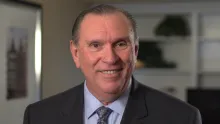
Randy D’Alessandro served as pastor for the United Church of God congregations in Chicago, Illinois, and Beloit, Wisconsin, from 2016-2021. Randy previously served in Raleigh, North Carolina (1984-1989); Cookeville, Tennessee (1989-1993); Parkersburg, West Virginia (1993-1997); Ann Arbor and Detroit, Michigan (1997-2016).
Randy first heard of the church when he was 15 years old and wanted to attend services immediately but was not allowed to by his parents. He quit the high school football and basketball teams in order to properly keep the Sabbath. From the time that Randy first learned of the Holy Days, he kept them at home until he was accepted to Ambassador College in Pasadena, California in 1970.
Randy and his wife, Mary, graduated from Ambassador College with BA degrees in Theology. Randy was ordained an elder in September 1979.
